Complaint Against Tow Boat Operator for Injury to Water Skier for Starting Boat without Warning
Overview of this form
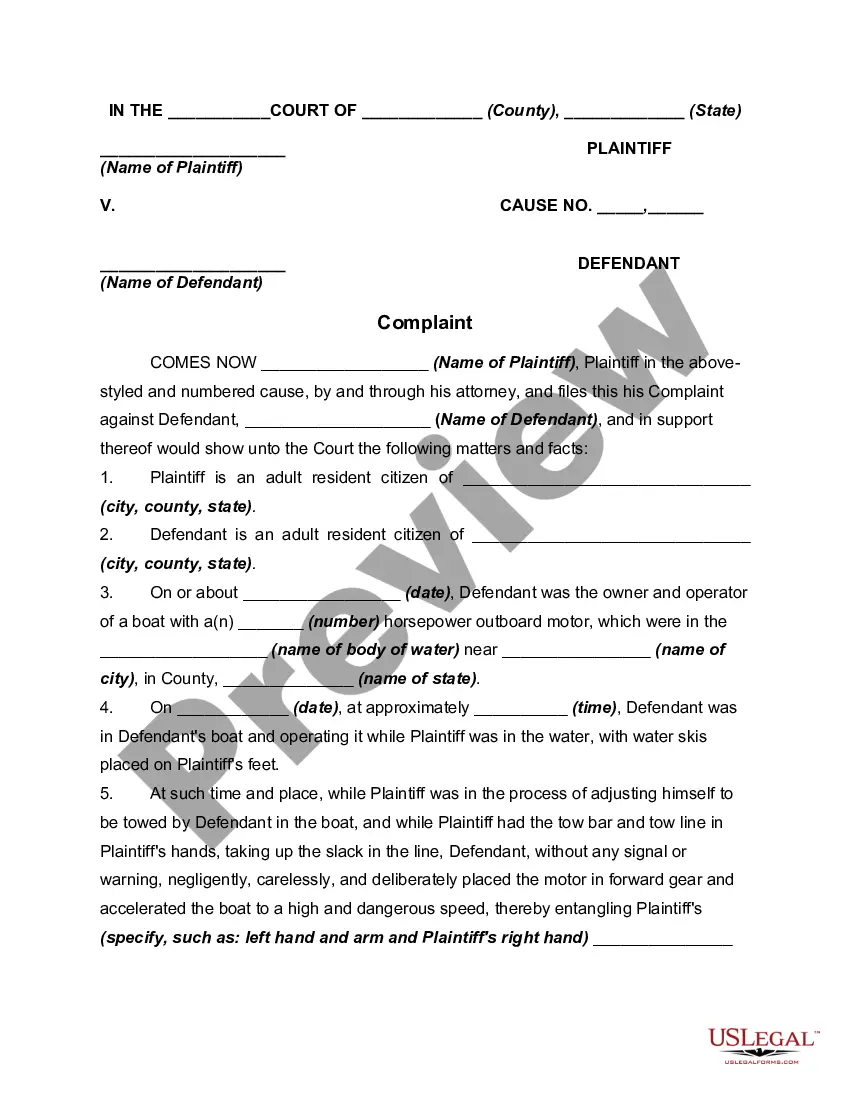
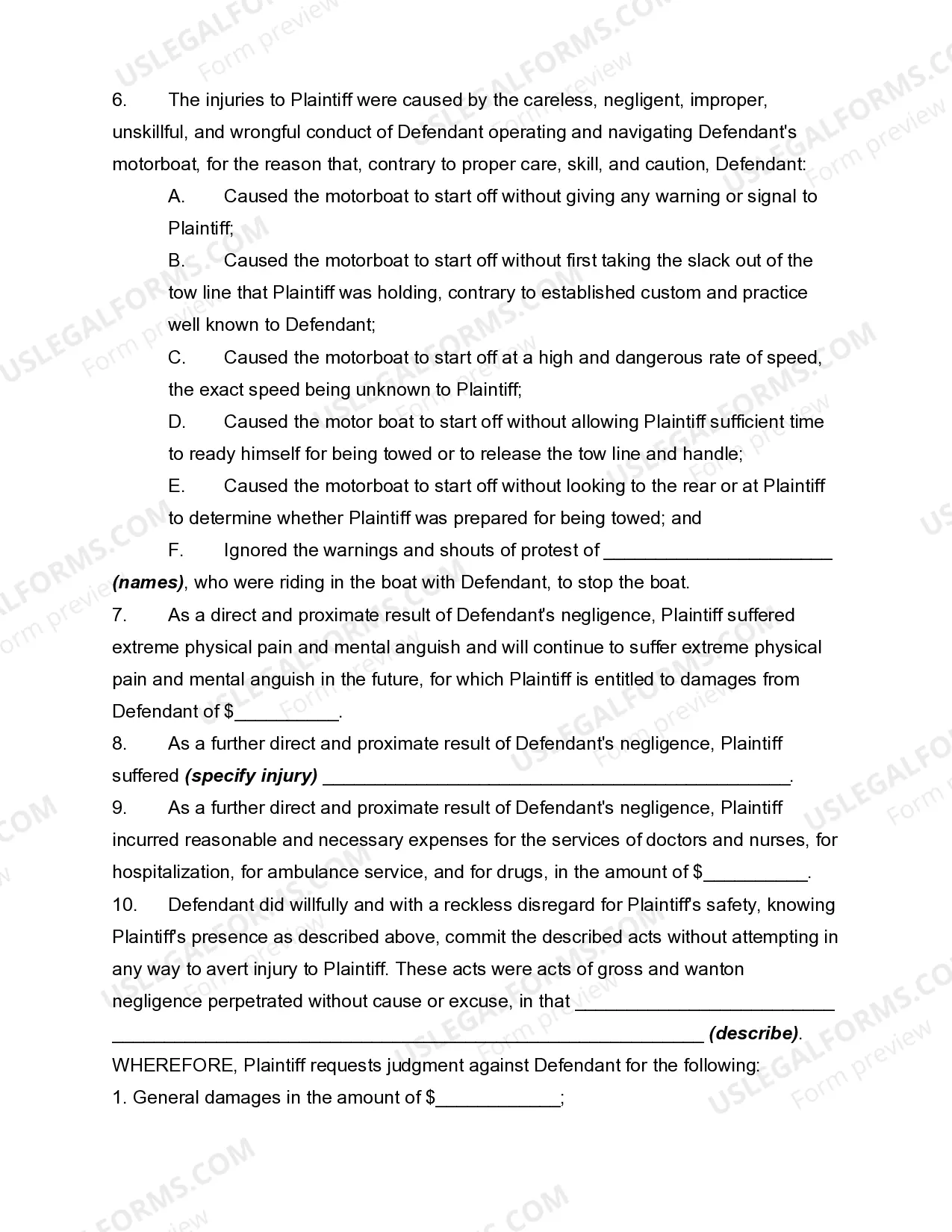
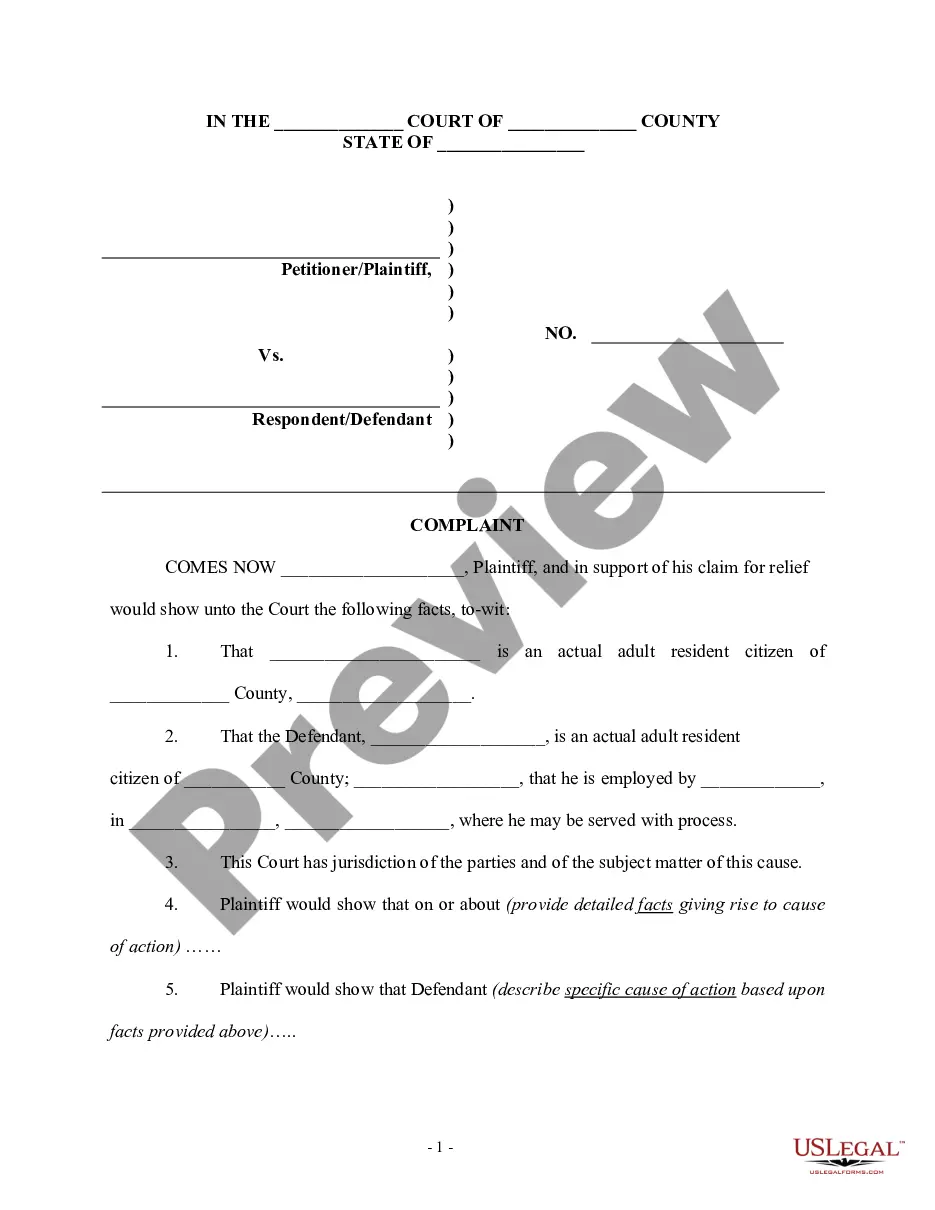
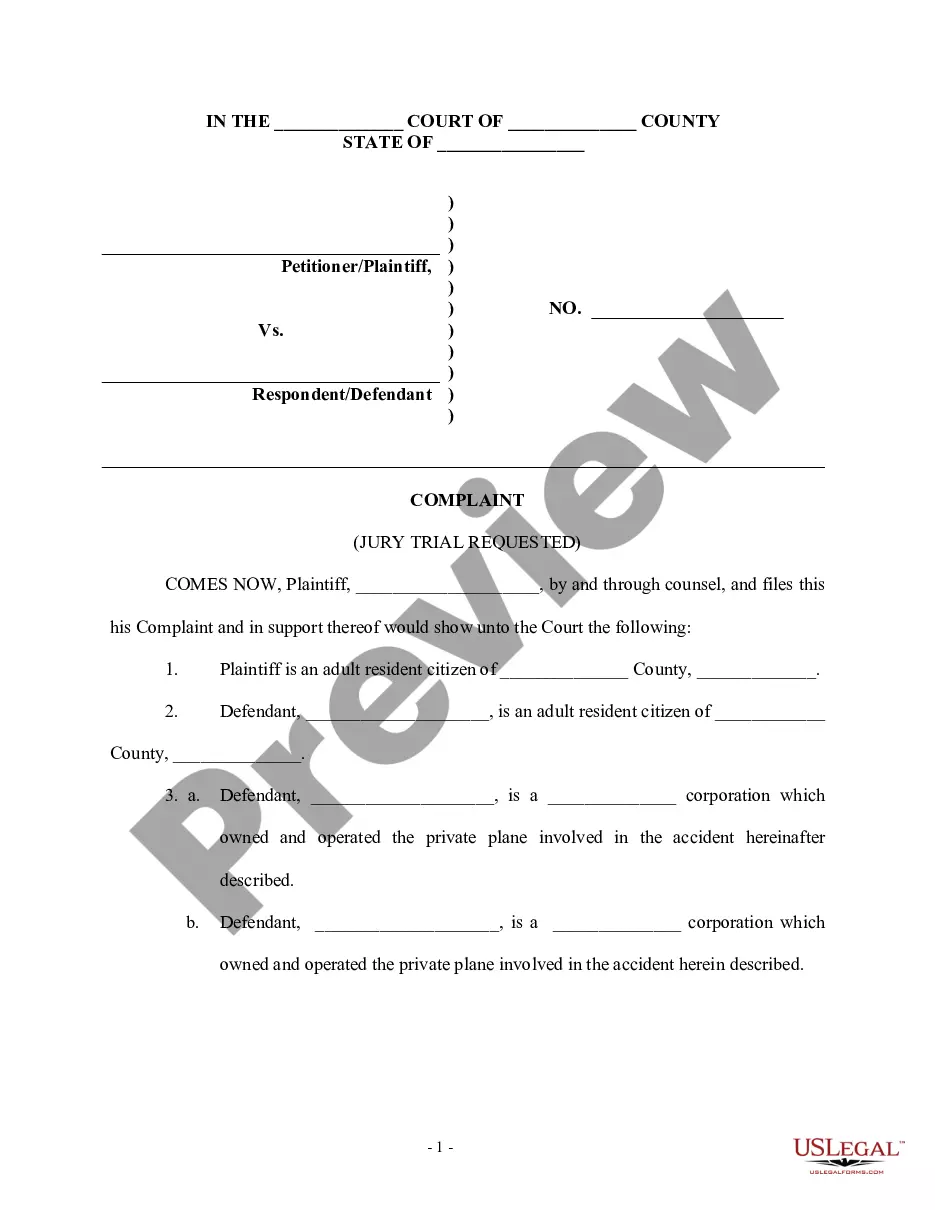
This form is a Complaint Against Tow Boat Operator for Injury to Water Skier for Starting Boat without Warning. It is designed for individuals seeking to file a legal complaint against a boat operator whose negligent actions caused injury to a water skier. This document provides a structured format for presenting claims and ensuring that all relevant details are captured, distinguishing it from general personal injury complaints by focusing specifically on incidents involving water skiing and boat operation.
What’s included in this form
- Name and details of the plaintiff and defendant.
- Date and location of the incident.
- Details of the circumstances leading to the injury.
- Claims of negligence and specific actions that caused injury.
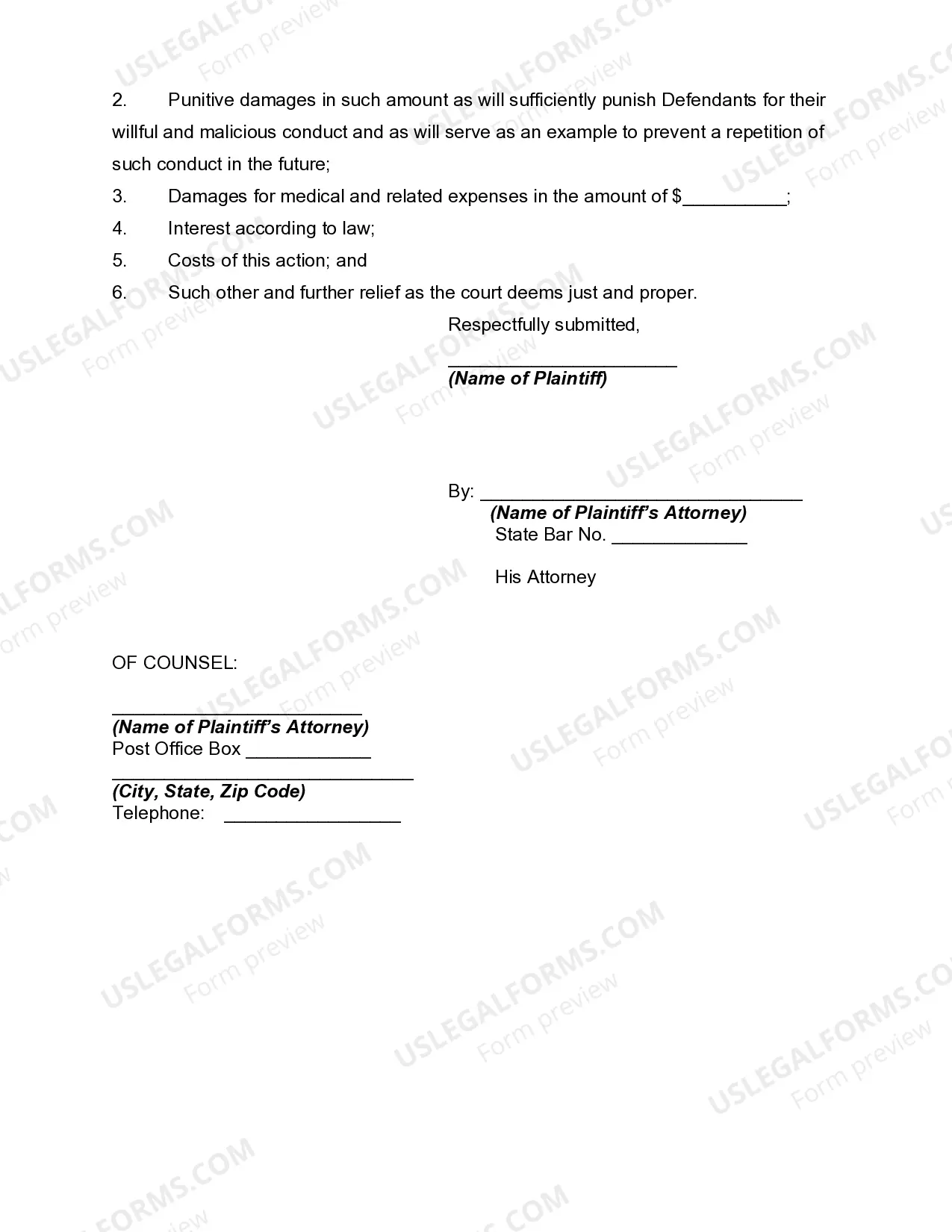
- Types of damages being sought, including general and punitive damages.
- Signature section for the plaintiff and their attorney.

When to use this form
This form should be used when a water skier has been injured due to the negligence of a tow boat operator who failed to provide necessary warnings or acted recklessly. Common scenarios include situations where a boat starts towing without ensuring the skier is ready or when a boat accelerates suddenly, causing injury.
Who needs this form
- Water skiers who have suffered injuries while being towed.
- Individuals seeking to hold a boat operator accountable for negligent behavior.
- Attorneys representing individuals in personal injury cases related to water sports.
How to prepare this document
- Identify and fill in the names and addresses of both the plaintiff and the defendant.
- Specify the date, time, and location of the incident where the injury occurred.
- Detail the circumstances of the injury, including actions taken by the defendant that led to the incident.
- Outline any medical expenses and damages incurred due to the injury.
- Sign the form in the designated sections, including the attorney's signature if applicable.
Does this form need to be notarized?
This form does not typically require notarization unless specified by local law. However, verifying with your local court's requirements is advisable to ensure compliance.
Get your form ready online
Our built-in tools help you complete, sign, share, and store your documents in one place.
Make edits, fill in missing information, and update formatting in US Legal Forms—just like you would in MS Word.
Download a copy, print it, send it by email, or mail it via USPS—whatever works best for your next step.
Sign and collect signatures with our SignNow integration. Send to multiple recipients, set reminders, and more. Go Premium to unlock E-Sign.
If this form requires notarization, complete it online through a secure video call—no need to meet a notary in person or wait for an appointment.
We protect your documents and personal data by following strict security and privacy standards.

Make edits, fill in missing information, and update formatting in US Legal Forms—just like you would in MS Word.

Download a copy, print it, send it by email, or mail it via USPS—whatever works best for your next step.

Sign and collect signatures with our SignNow integration. Send to multiple recipients, set reminders, and more. Go Premium to unlock E-Sign.

If this form requires notarization, complete it online through a secure video call—no need to meet a notary in person or wait for an appointment.

We protect your documents and personal data by following strict security and privacy standards.
Common mistakes to avoid
- Failing to include all relevant details of the incident.
- Not specifying all damages being claimed.
- Omitting required signatures or contact information.
- Using vague language instead of clear and specific statements.
Benefits of completing this form online
- Instant download and easy access to legal documentation.
- Editability to customize the form according to specific needs.
- A reliable structure that adheres to legal formatting standards.
Looking for another form?


Form popularity
FAQ
Make your approach from downwind; this will help you control the boat at the slow speed you should be moving at as you get close. Approaching into the wind also helps to ensure the boat will not drift over the person in the water. Turn the engine off once you reach the person in the water.
All persons being towed behind a motorboat or motorized device on water skis, an aquaplane, or other device must wear a USCGapproved PFD. If towing a person on skis or other device with a PWC, the PWC must be rated to carry at least three peoplethe operator, the observer, and the retrieved skier.
Obey the following rules when towing a water-skierit's the law: A spotter must be in the boat at all times. The towing vessel must be equipped with an extra seat for each person that is being towed in case an emergency recovery is necessary.
Most states won't let you pull something on a Jet Ski unless you have a spotter. Some won't even allow 2-seat jet ski's to pull anything at all, with some saying you need mirrors. It's best to contact your local dealer about the laws on pulling tubes and such with your jet ski.
Make your approach from downwind; this will help you control the boat at the slow speed you should be moving at as you get close. Approaching into the wind also helps to ensure the boat will not drift over the person in the water. Turn the engine off once you reach the person in the water.
Each person being towed behind a boat or PWC must wear a properly secured U. S. Coast Guard-approved PFD. Each person onboard a boat within 800 feet below a hydroelectric dam and/or navigational lock and dam must wear a Type I, II, III, or V U. S. Coast Guard-approved PFD.
Towing Safety Plan aheadknow the area where you'll be boating to avoid hazards, obstacles or heavy traffic. Check the towing line for tangles, loops or knots before you leave the dock.
A PWC must have a rearview mirror or an observer on board besides the operator to legally tow someone on skis or similar device.
When a vessel is towing a person on water skis, surfboards, or similar devices, the operator must have another competent person on board to act as an observer or the vessel must be equipped with a wide-angle rearview mirror.