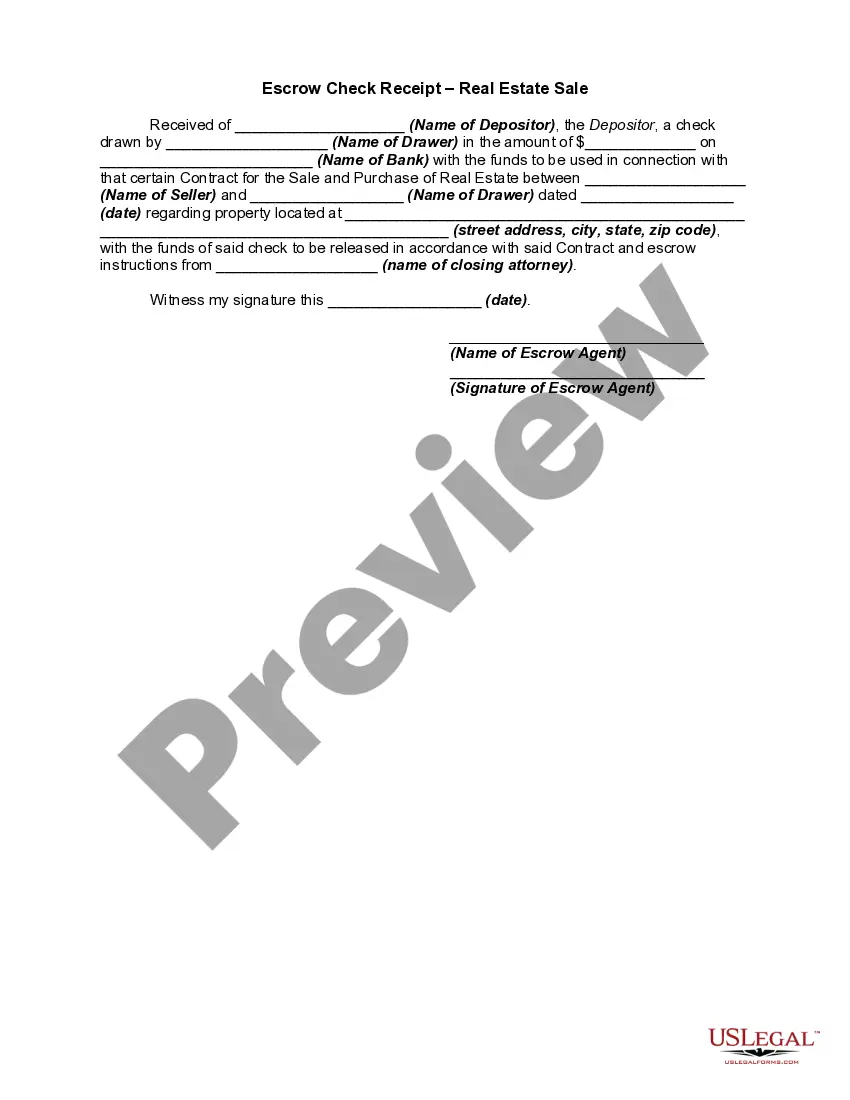
Escrow Check Receipt - Real Estate Sale
What is this form?
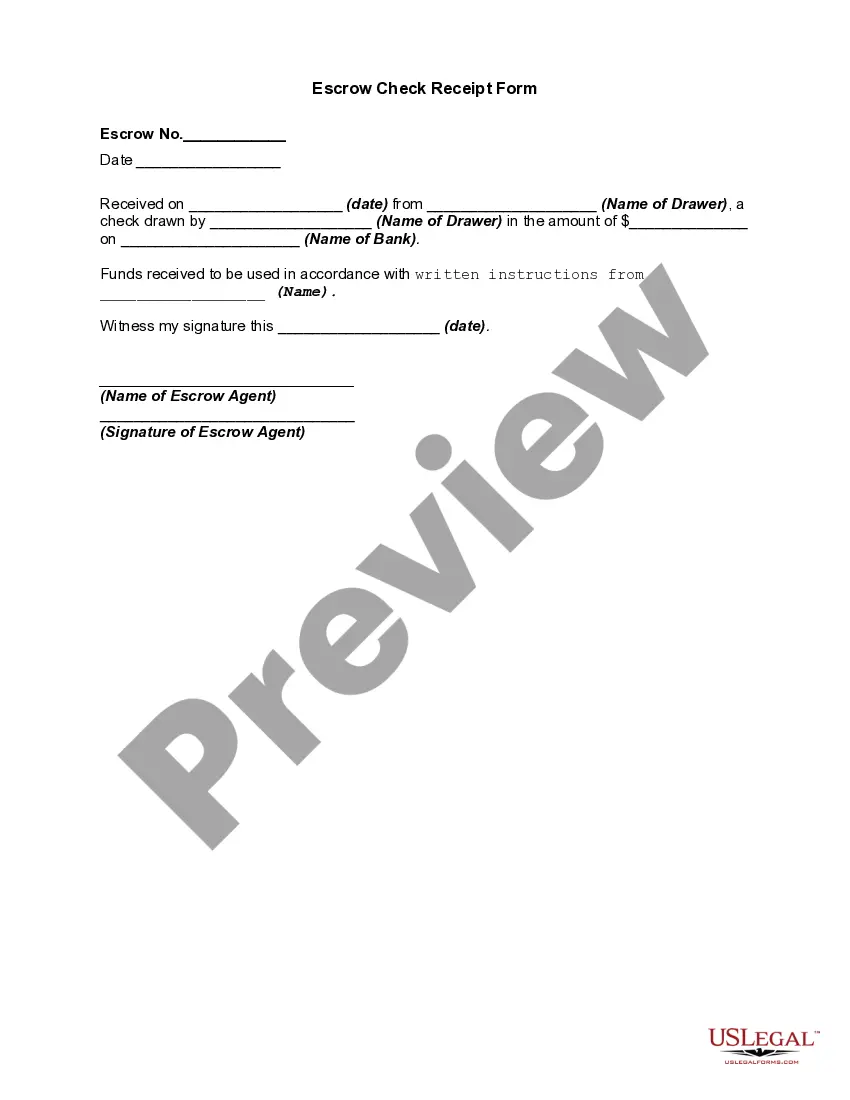
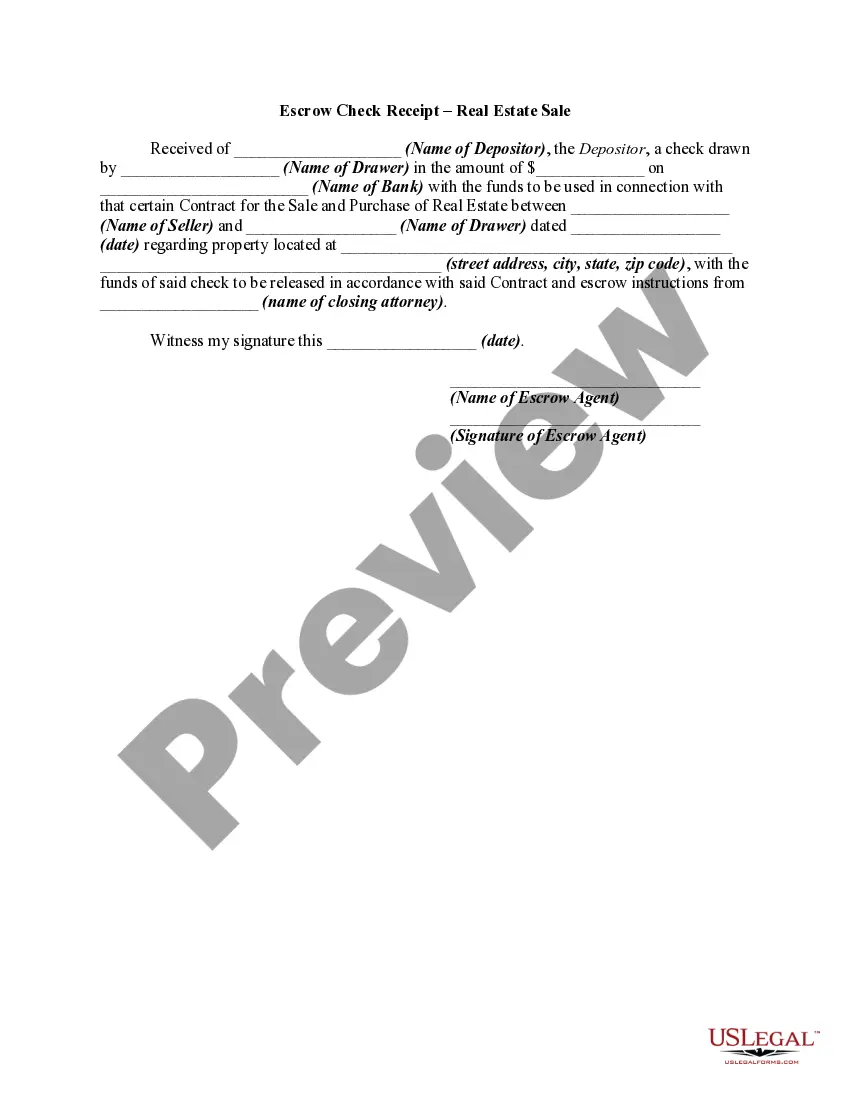
The escrow check receipt for a real estate sale is a legal document acknowledging the receipt of a check placed in escrow. This form specifies the amount of the check, the parties involved, and the conditions under which the funds will be distributed. Unlike other escrow agreements, this specific receipt focuses on confirming the deposit of a check for real estate transactions, ensuring clear communication between all parties involved.
Form components explained
- Name of the depositor and drawer of the check.
- Amount of the check and the bank from which it was drawn.
- Specific real estate contract details, including names of the seller and buyer.
- Property address related to the transaction.
- Signature and date from the escrow agent.

Common use cases
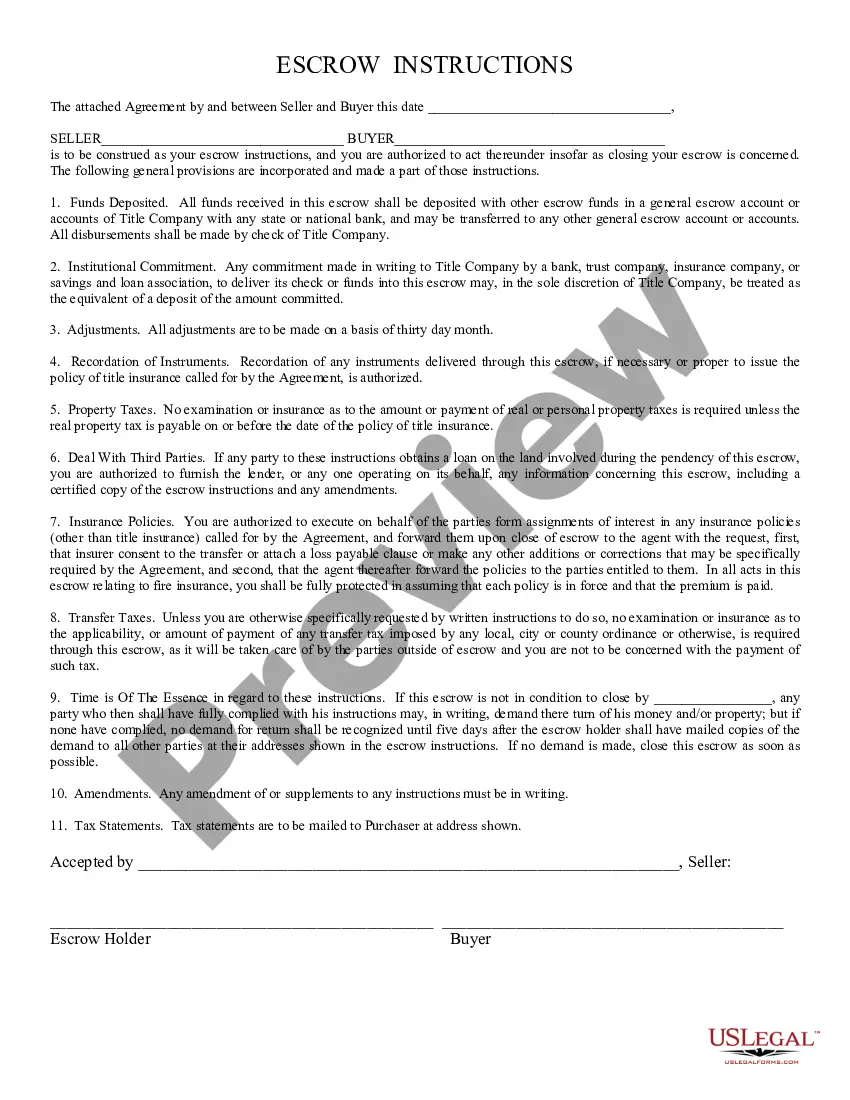
This form is used when a party is making a deposit on a real estate transaction that is held in escrow. It is a crucial document for confirming that funds have been placed in a secure account, overseen by an escrow agent, pending the completion of the sale. Use this form anytime a check is involved in the transaction to ensure all parties acknowledge receipt and understand the conditions for releasing funds.
Who should use this form
- Buyers who are making a deposit as part of a real estate purchase.
- Sellers who require assurance that the buyer has submitted the necessary funds.
- Escrow agents managing the financial components of a real estate transaction.
- Real estate attorneys assisting in the transaction process.
Steps to complete this form
- Identify the parties involved, including the depositor and drawer of the check.
- Specify the amount of the check and the bank information.
- Enter the details of the real estate contract, including relevant parties and date.
- Complete the property address where the transaction is taking place.
- Have the escrow agent sign and date the form to confirm receipt.
Is notarization required?
This form does not typically require notarization to be legally valid. However, some jurisdictions or document types may still require it. US Legal Forms provides secure online notarization powered by Notarize, available 24/7 for added convenience.
Get your form ready online
Our built-in tools help you complete, sign, share, and store your documents in one place.
Make edits, fill in missing information, and update formatting in US Legal Forms—just like you would in MS Word.
Download a copy, print it, send it by email, or mail it via USPS—whatever works best for your next step.
Sign and collect signatures with our SignNow integration. Send to multiple recipients, set reminders, and more. Go Premium to unlock E-Sign.
If this form requires notarization, complete it online through a secure video call—no need to meet a notary in person or wait for an appointment.
We protect your documents and personal data by following strict security and privacy standards.

Make edits, fill in missing information, and update formatting in US Legal Forms—just like you would in MS Word.

Download a copy, print it, send it by email, or mail it via USPS—whatever works best for your next step.

Sign and collect signatures with our SignNow integration. Send to multiple recipients, set reminders, and more. Go Premium to unlock E-Sign.

If this form requires notarization, complete it online through a secure video call—no need to meet a notary in person or wait for an appointment.

We protect your documents and personal data by following strict security and privacy standards.
Common mistakes to avoid
- Failing to accurately fill in the check amount or bank details.
- Not including complete party names or property addresses.
- Omitting the escrow agent's signature, which validates the receipt.
- Using outdated forms that do not comply with current state laws.
Why complete this form online
- Convenience of downloading and completing the form at any time.
- Access to reliable templates created by licensed attorneys.
- Easy editing features allow you to customize the form for your specific needs.
Looking for another form?
Form popularity
FAQ
Find out the name of the title company and make the check payable to that particular title company. Put the property address in the memo line. Write a new check for every offer.
Escrow companies will accept a cashier's check or wire, or a personal check for the earnest money deposit. Just keep in mind, we will cash your check right away.
For example, an escrow account can be used for the sale of a house.In this case, the buyer of the property deposits the payment amount for the house in an escrow account held by a third party. The seller can proceed with house inspections confident that the funds are there, and the buyer is capable of making payment.
Your mortgage escrow account pays your homeowner's insurance and property tax bills. When you sell your home and close, you don't have to pay those bills anymore. As such, your escrow account goes away and you will get a check from your lender for the balance.
The earnest money deposit receipt is given to a buyer of real estate after entering into a purchase agreement with a seller. The deposit slip is given to the buyer after funds have been received which binds the parties into the agreement.
During the home sales process, the buyer puts up a predetermined amount of cash (usually between 1% and 3% of the total home sales price) in an escrow account after an offer is accepted by the homeowner, and is held by a bank or other financial institution in an escrow account until the sale is finalized.
Earnest money is usually paid for with a wire transfer, personal check, or certified check. The earnest money is held in an escrow account by a real estate brokerage, legal firm or title company until the closing.
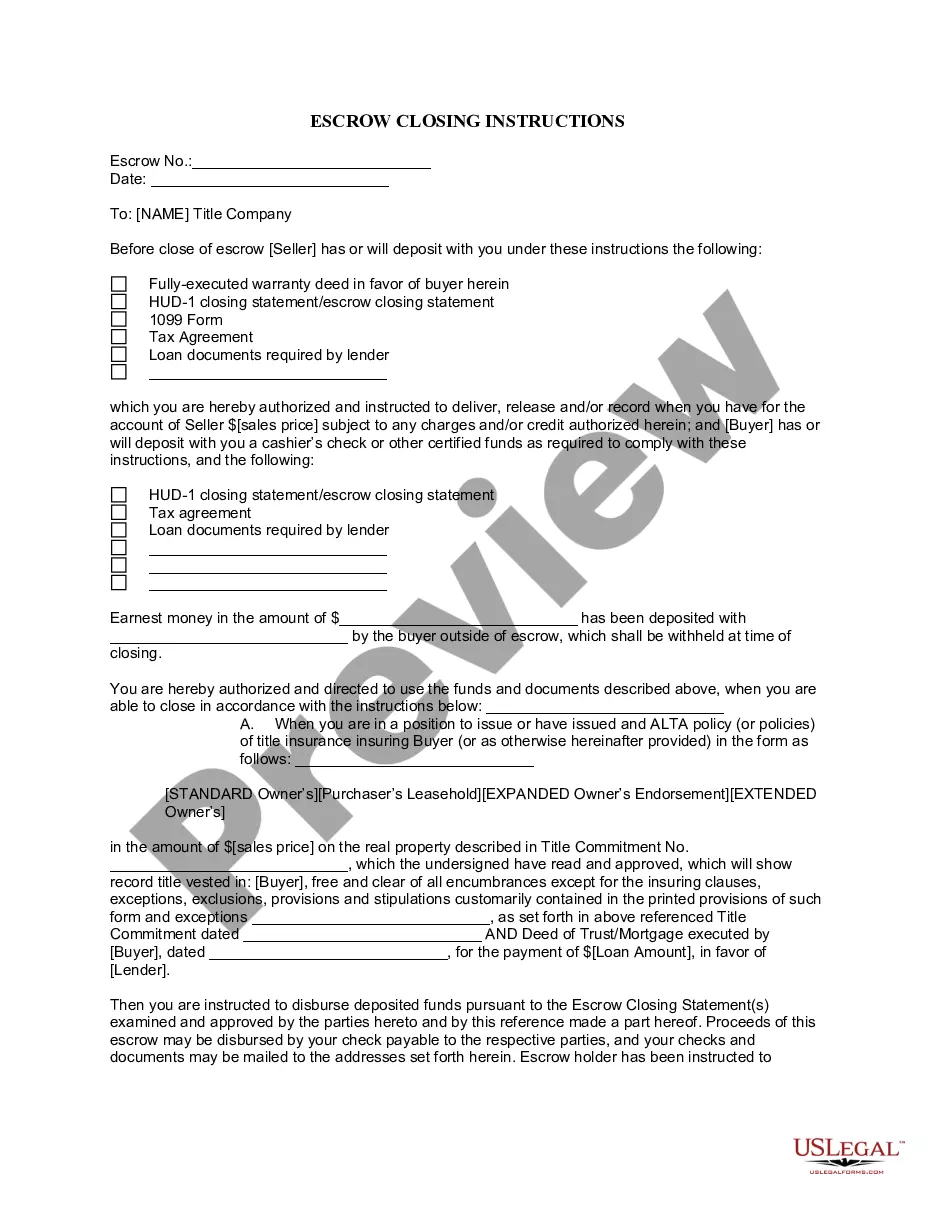
The trend today is for the title company and/or escrow officer to issue the deposit receipt. This is generally issued after the buyer's earnest money deposit has been deposited into the title or escrow company's bank account. It will often contain the following information: Name of title company.
The deposit should be payable to a reputable third party, such as a well-known real estate brokerage, escrow company, title company, or legal firm (never give the deposit directly to the seller). Buyers should verify the funds will be held in an escrow account and always obtain a receipt.