Sale of Copyright to a Published Book
Overview of this form
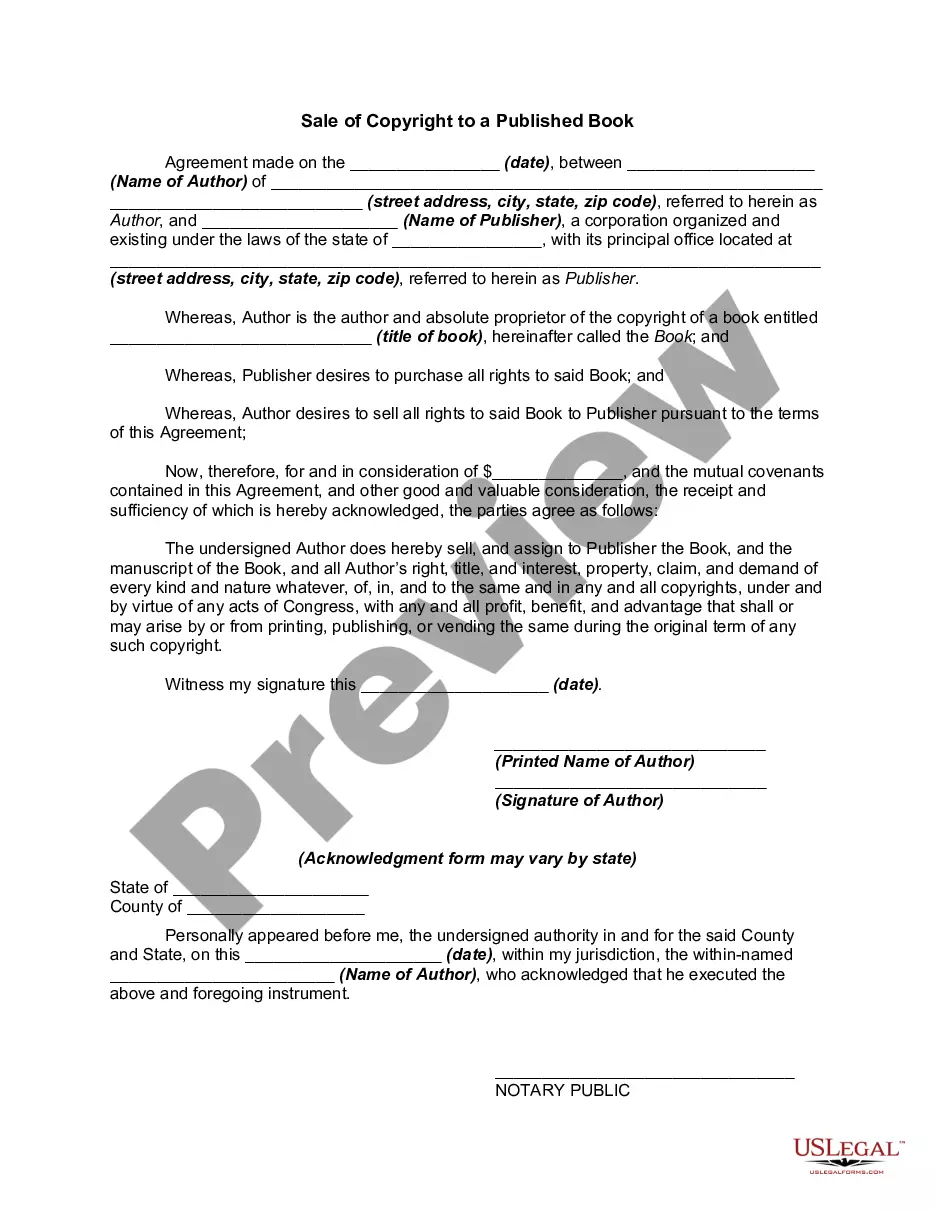
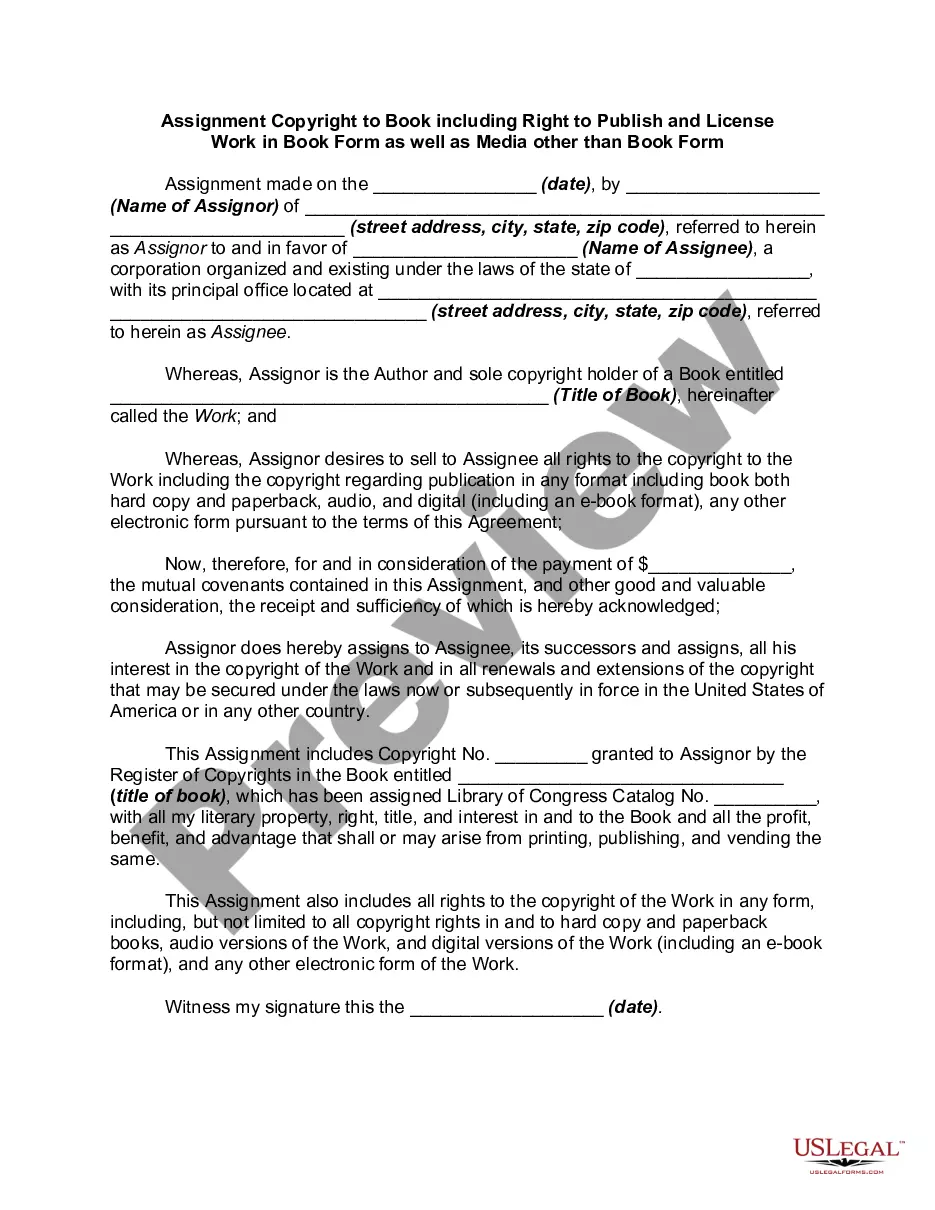
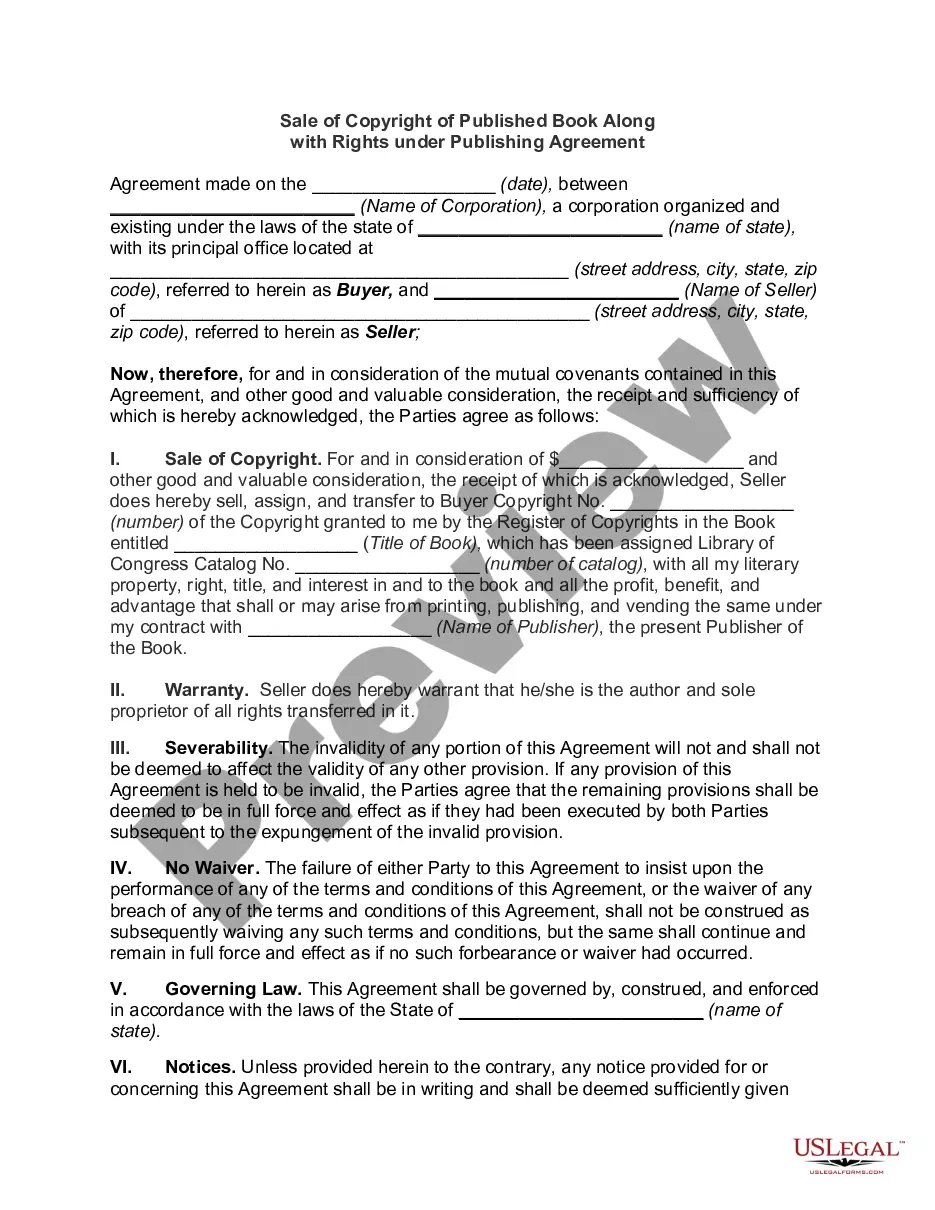
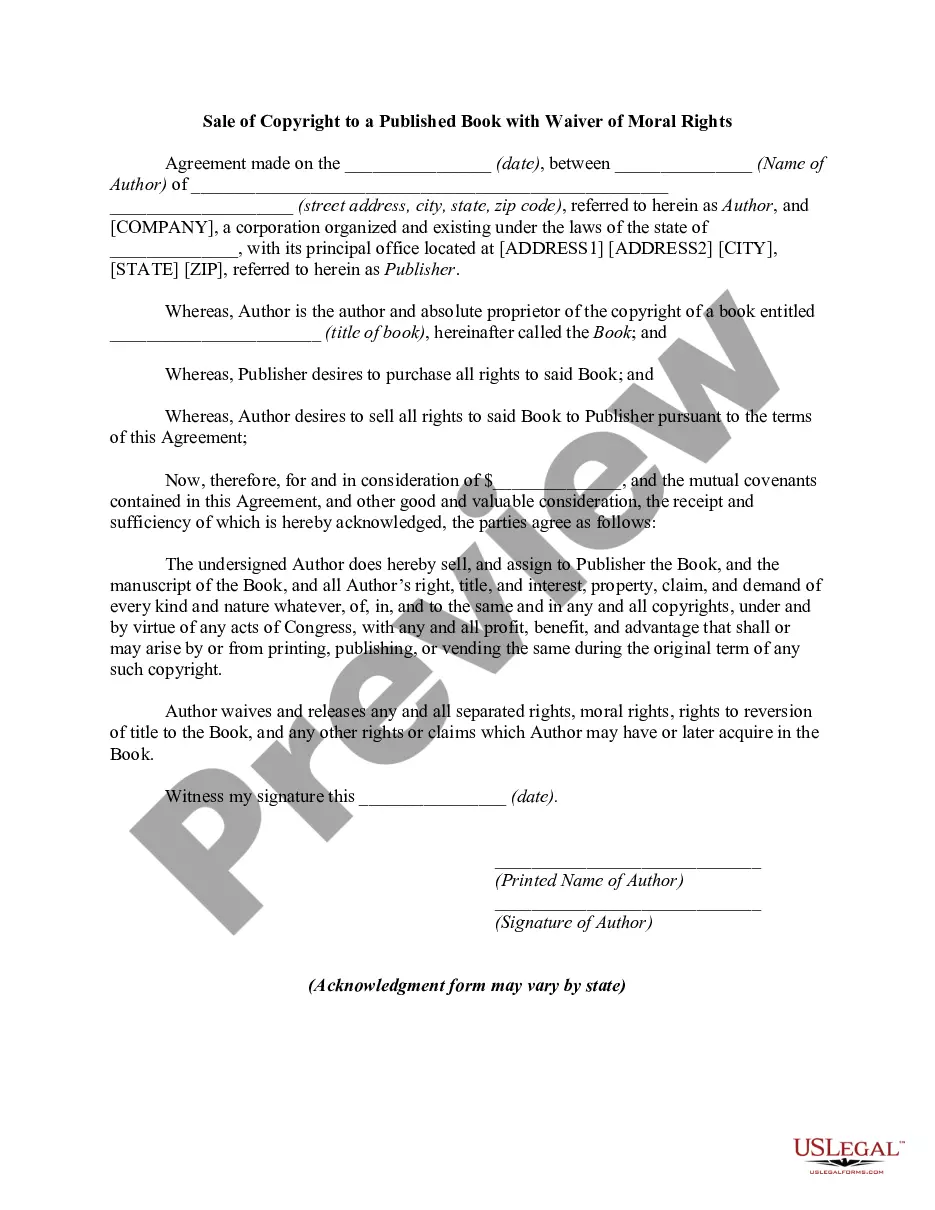
The Sale of Copyright to a Published Book form is a legal document that allows an author to transfer ownership of the copyright of their book to a publisher. This form outlines the rights being sold and ensures that the author receives compensation for the transfer. Unlike other agreements, this form specifically addresses the sale of copyright, distinguishing it from simple publishing contracts or licensing agreements.
What’s included in this form
- Date of the agreement
- Name and address of the author
- Name and address of the publisher
- Title of the book being sold
- Consideration or payment for the copyright
- Signatures of both the author and notary public

Common use cases
This form should be used when an author wishes to sell the copyright of their published book to a publisher. It is essential in scenarios where an author wants to ensure that the publisher has all the rights to reproduce, distribute, and display their work. Utilizing this form protects both parties by clearly defining ownership rights and obligations.
Intended users of this form
- Self-published authors looking to sell the rights of their book to a publisher
- Publishers acquiring copyrights for existing books
- Writers seeking a formal agreement for copyright transfer
- Literary agents facilitating the sale of authors' manuscript rights
How to prepare this document
- Identify the parties involved: Fill in the names and addresses of both the author and publisher.
- Specify the title: Include the exact title of the book being sold.
- Enter the date: Write the date the agreement is made.
- Detail the consideration: State the payment or compensation for the transfer of rights.
- Sign the document: The author must print their name and sign the form, followed by a notary public signature if required.
Does this form need to be notarized?
This form needs to be notarized to ensure legal validity. US Legal Forms provides secure online notarization powered by Notarize, allowing you to complete the process through a verified video call, available anytime.
Get your form ready online
Our built-in tools help you complete, sign, share, and store your documents in one place.
Make edits, fill in missing information, and update formatting in US Legal Forms—just like you would in MS Word.
Download a copy, print it, send it by email, or mail it via USPS—whatever works best for your next step.
Sign and collect signatures with our SignNow integration. Send to multiple recipients, set reminders, and more. Go Premium to unlock E-Sign.
If this form requires notarization, complete it online through a secure video call—no need to meet a notary in person or wait for an appointment.
We protect your documents and personal data by following strict security and privacy standards.

Make edits, fill in missing information, and update formatting in US Legal Forms—just like you would in MS Word.

Download a copy, print it, send it by email, or mail it via USPS—whatever works best for your next step.

Sign and collect signatures with our SignNow integration. Send to multiple recipients, set reminders, and more. Go Premium to unlock E-Sign.

If this form requires notarization, complete it online through a secure video call—no need to meet a notary in person or wait for an appointment.

We protect your documents and personal data by following strict security and privacy standards.
Mistakes to watch out for
- Not including the book's title correctly, which could create confusion about the transfer.
- Failing to clearly state the compensation agreed upon.
- Omitting the notary public signature when required in the state.
Advantages of online completion
- Convenience of immediate download and access from anywhere.
- Editable templates allow authors to customize the form as needed.
- Provides legal protection by ensuring that all terms are documented.
Legal use & context
- The Sale of Copyright to a Published Book is legally binding once signed by both parties.
- This form transfers all rights associated with the copyright, allowing the publisher full control over the work.
- Authors should ensure they understand the implications of selling their copyright and retain the right to negotiate terms.
Quick recap
- The form is essential for transferring copyright ownership from an author to a publisher.
- It outlines clear terms and conditions to avoid future disputes.
- Authors should be aware of the legal implications of surrendering their rights.
- Careful completion and, if necessary, notarization of the form enhances its validity.
Looking for another form?
Form popularity
FAQ
Copyright is a legal means of protecting an author's work. It is a type of intellectual property that provides exclusive publication, distribution, and usage rights for the author.Many different types of content can be protected by copyright. Examples include books, poems, plays, songs, films, and artwork.
But, it does contain lots of technical information about a book: the Author's name, the year the book was published, its ISBN, its Library of Congress Control Number, legal disclaimers, etc. Copyright protects your work.A copyright page is optional. Even without it, your work is protected.
Copyright pages in books published by traditional publishers will include the name of the publisher, address (sometimes just the city), and URL. If you're self-publishing, you can include your name or create a name for your imprint along with an address and URL, if you choose.
The symbol © (letter C in a circle), the word Copyright, or the abbreviation Copr. The year of first publication. The name of the copyright owner, an abbreviation by which the name can be recognized, or a generally known alternative designation of owner.
The edition notice (or copyright page) is the page in a book containing information about the current edition, usually on the back of the title page.
There is no need to copyright your book (with the U.S. Copyright Office) before submitting it.The publisher merely handles the paperwork on behalf of the author, and the copyright is the author's property.
The symbol ©, or the word Copyright, or the abbreviation, Copr. The first year of publication. The name of the copyright holder (presumably, your name)
To register a work, submit a completed application form, and a nonreturnable copy or copies of the work to be registered. See Circular 1, Copyright Basics, section Registration Procedures., and Circular 4, Copyright Office Fees.
The symbol © (the letter C in a circle), or the word "Copyright" or the abbreviation "Copr."; The year of first publication of the work; and. The name of the owner of copyright in the work.