Co-Branding Agreement
What is this form?
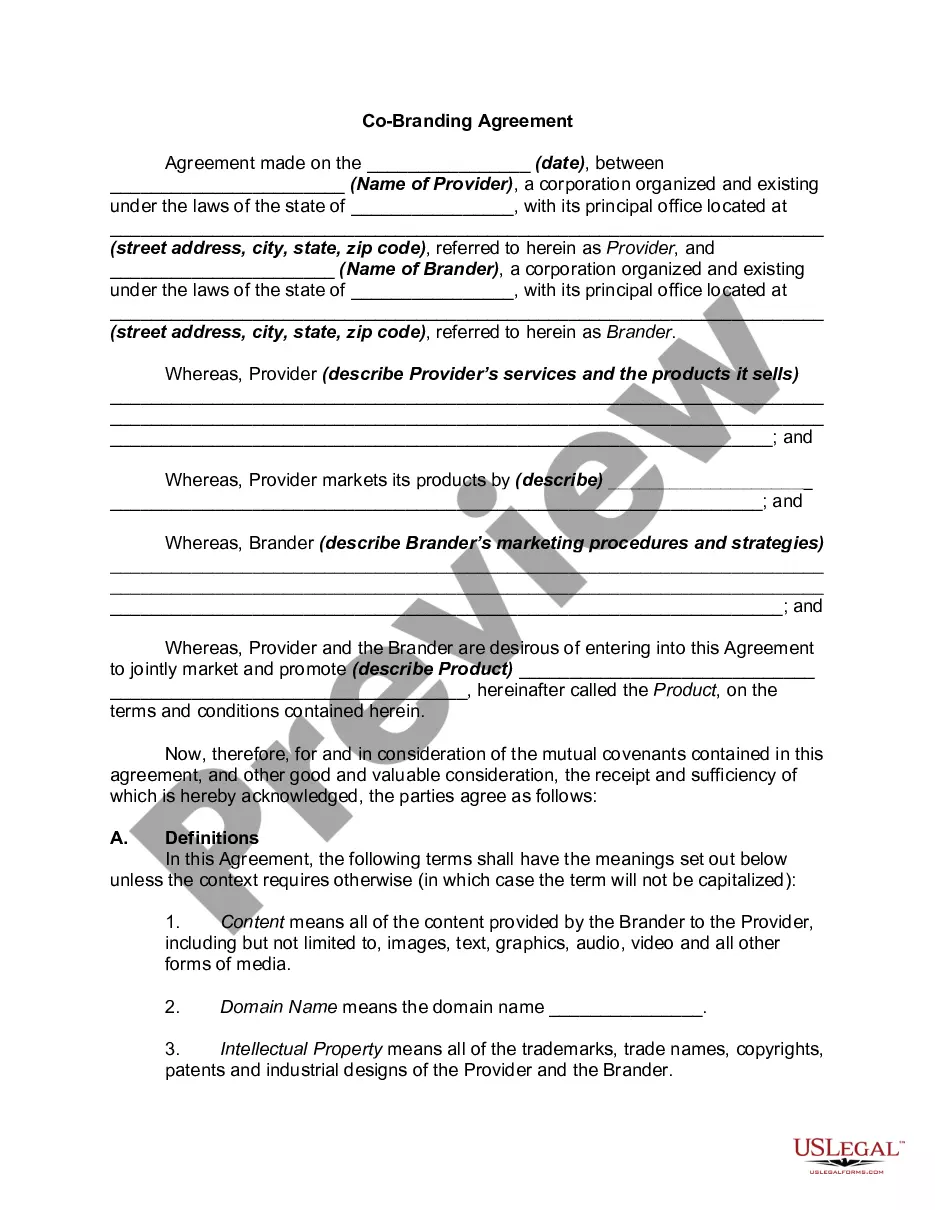
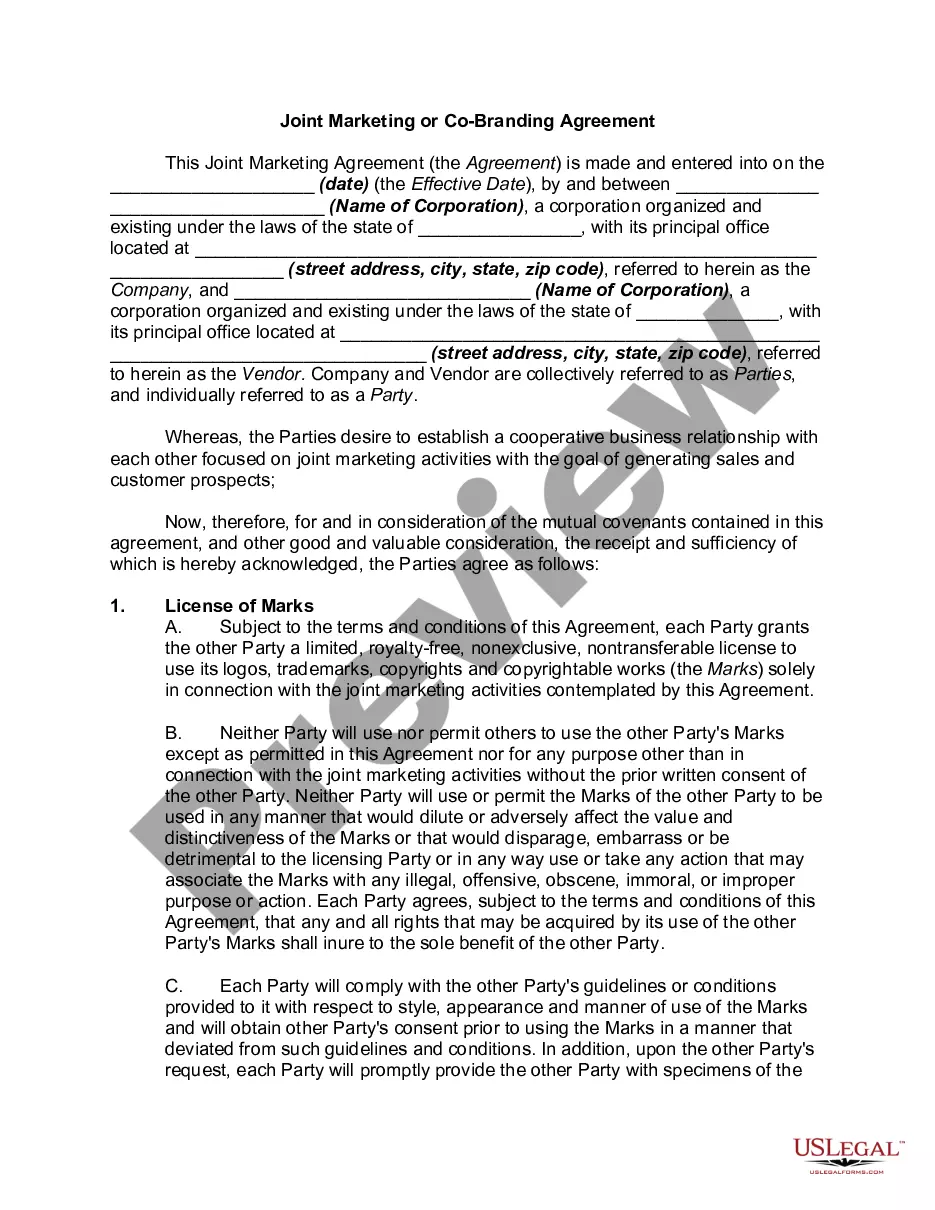
The Co-Branding Agreement is a legal document used when two or more brands agree to collaborate on marketing or promoting a combined product. This agreement outlines each party's roles, responsibilities, and the use of intellectual property while detailing the terms for successful collaboration. It is distinct from standard partnership agreements as it specifically focuses on the shared marketing effort and branding strategy of co-branding initiatives.
Key components of this form
- Definitions of key terms such as Content, Intellectual Property, and Promotions.
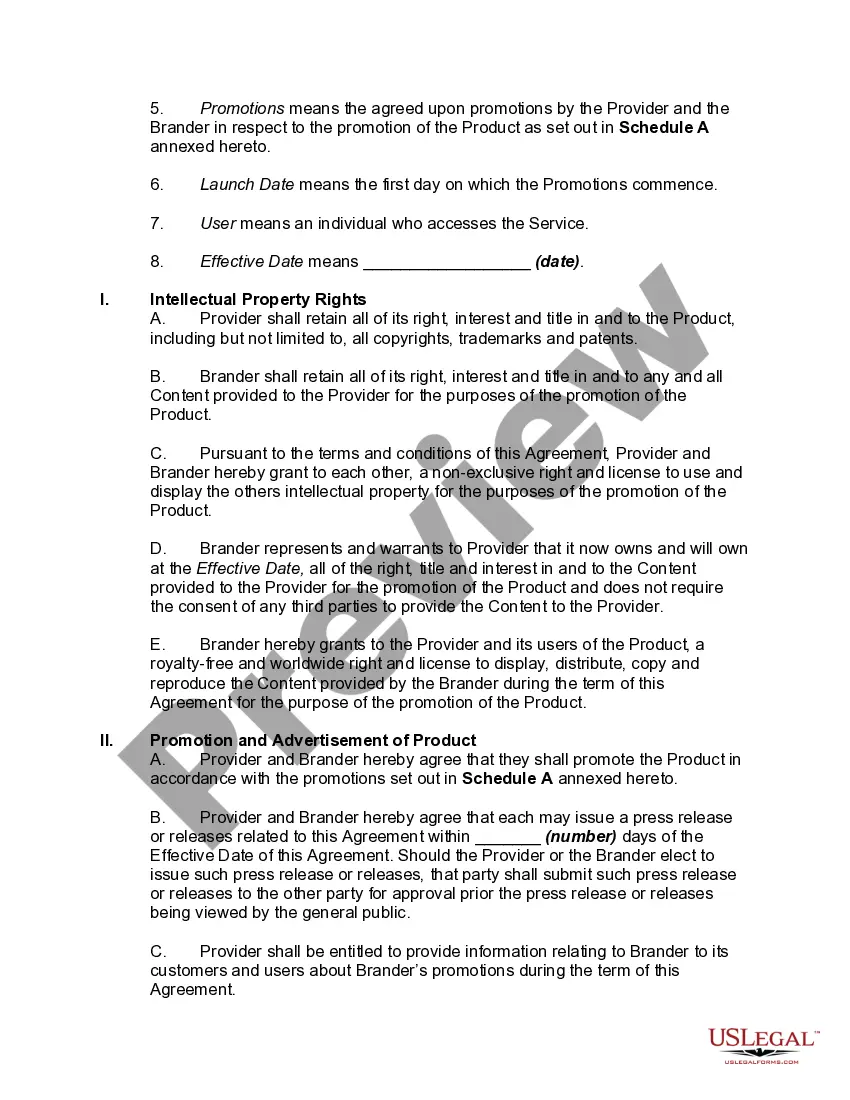
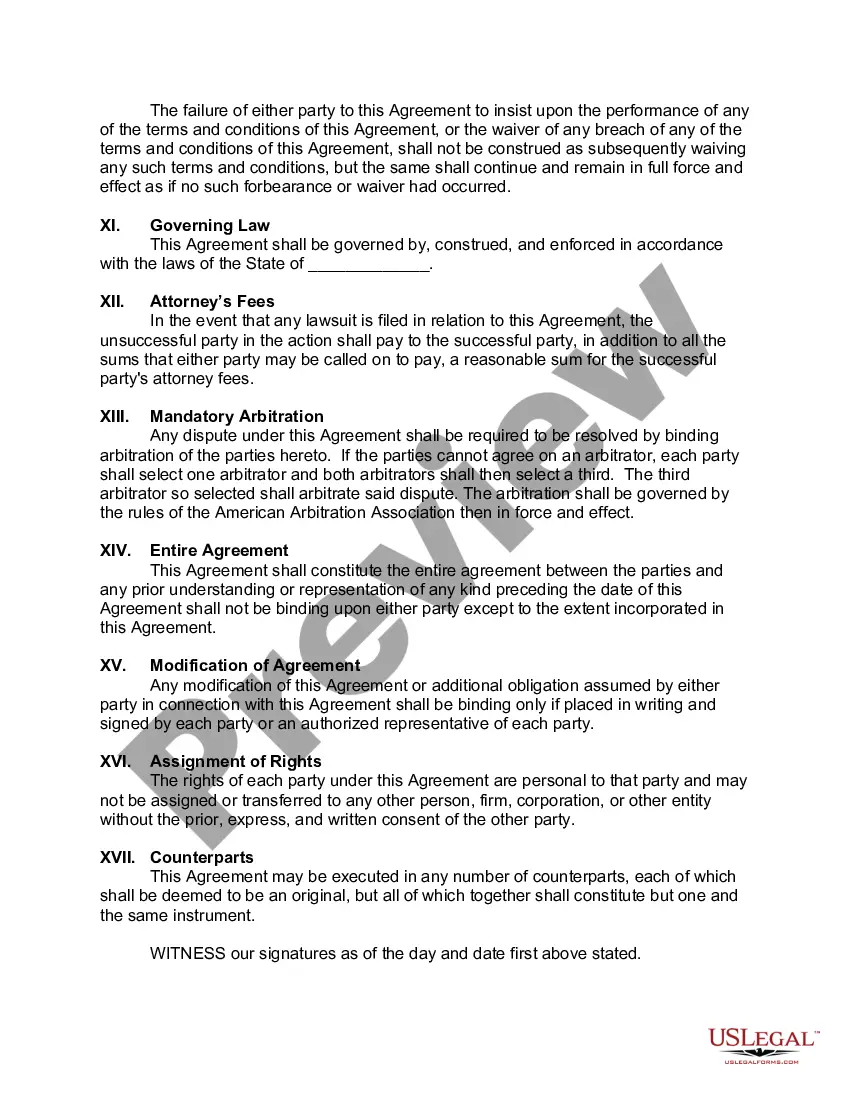
- Rights and ownership clauses regarding the intellectual property and content shared.
- Promotion strategies detailing the agreed-upon marketing activities.
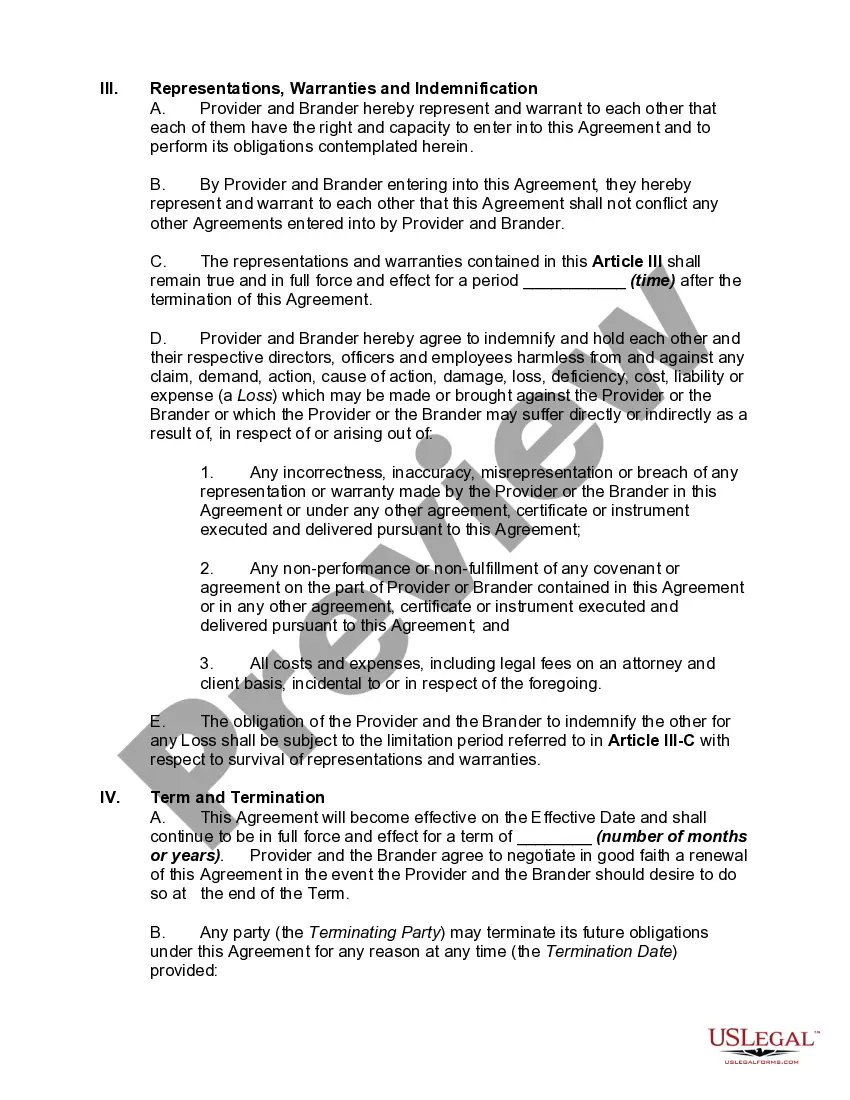
- Indemnification clauses protecting both parties from liabilities arising from the agreement.
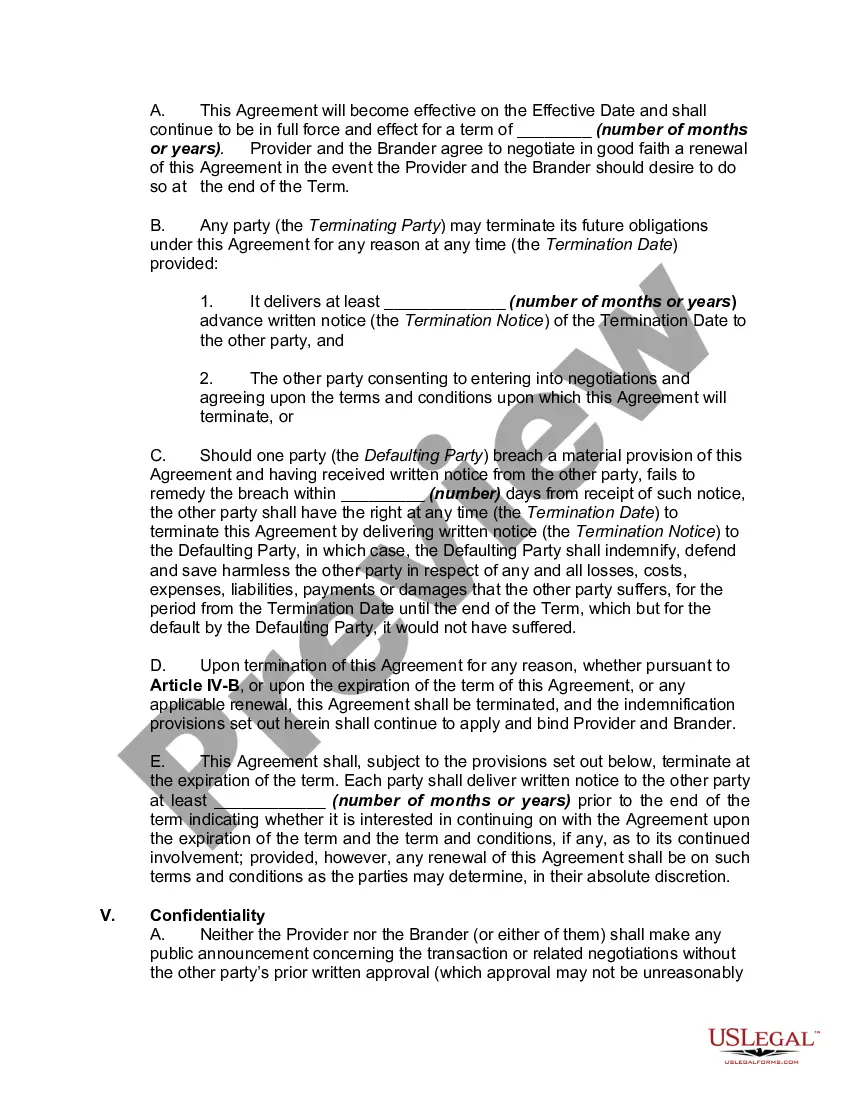
- Termination conditions specifying how and when the agreement can be ended.
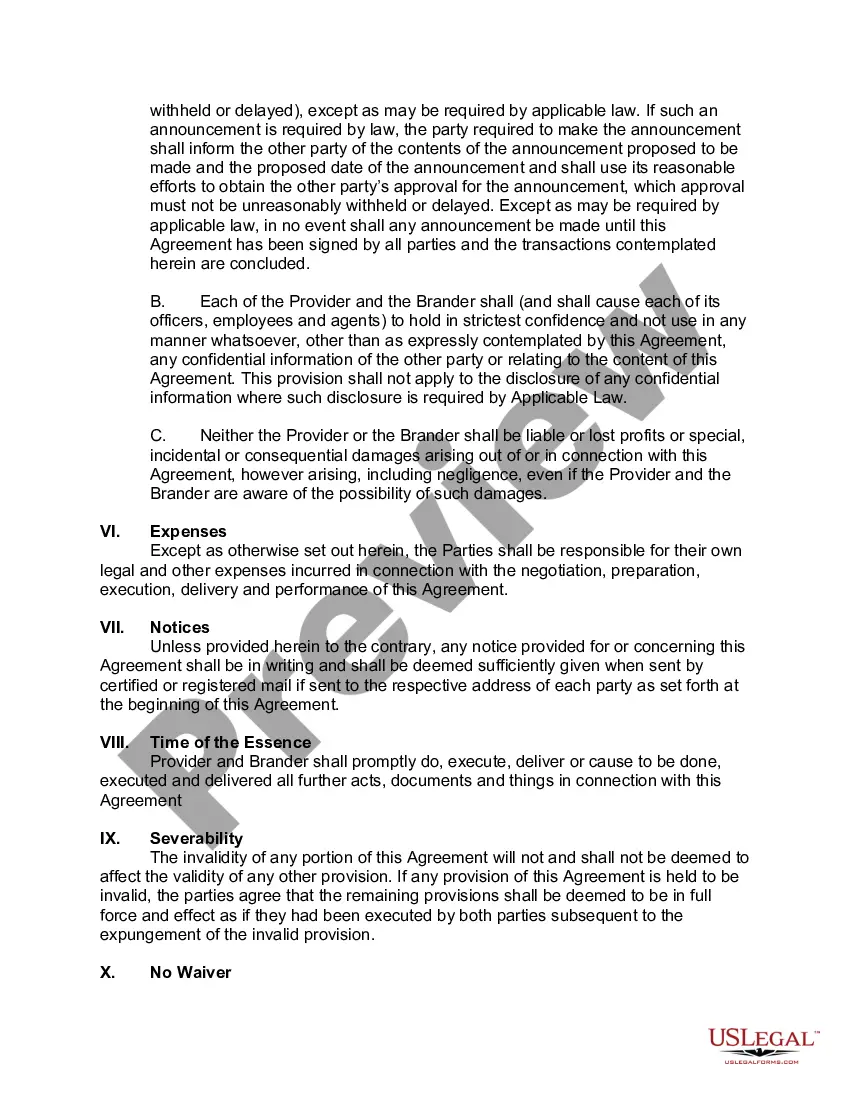
- Confidentiality requirements regarding proprietary information exchanged during the partnership.
When to use this document
This Co-Branding Agreement is essential when businesses want to leverage each other's brand equity for mutual benefit. It is suitable for scenarios such as a toy company partnering with a fast-food chain to create promotional items or a beverage company collaborating with an event organizer for co-branded merchandise. Use this form whenever two brands plan to engage in joint promotions that could enhance their market presence and share marketing costs.
Who needs this form
- Businesses or corporations looking to enter co-branding partnerships.
- Marketing teams tasked with creating joint promotional strategies.
- Legal professionals drafting agreements for clients in collaborative marketing ventures.
- Brand managers responsible for overseeing joint branding opportunities.
How to prepare this document
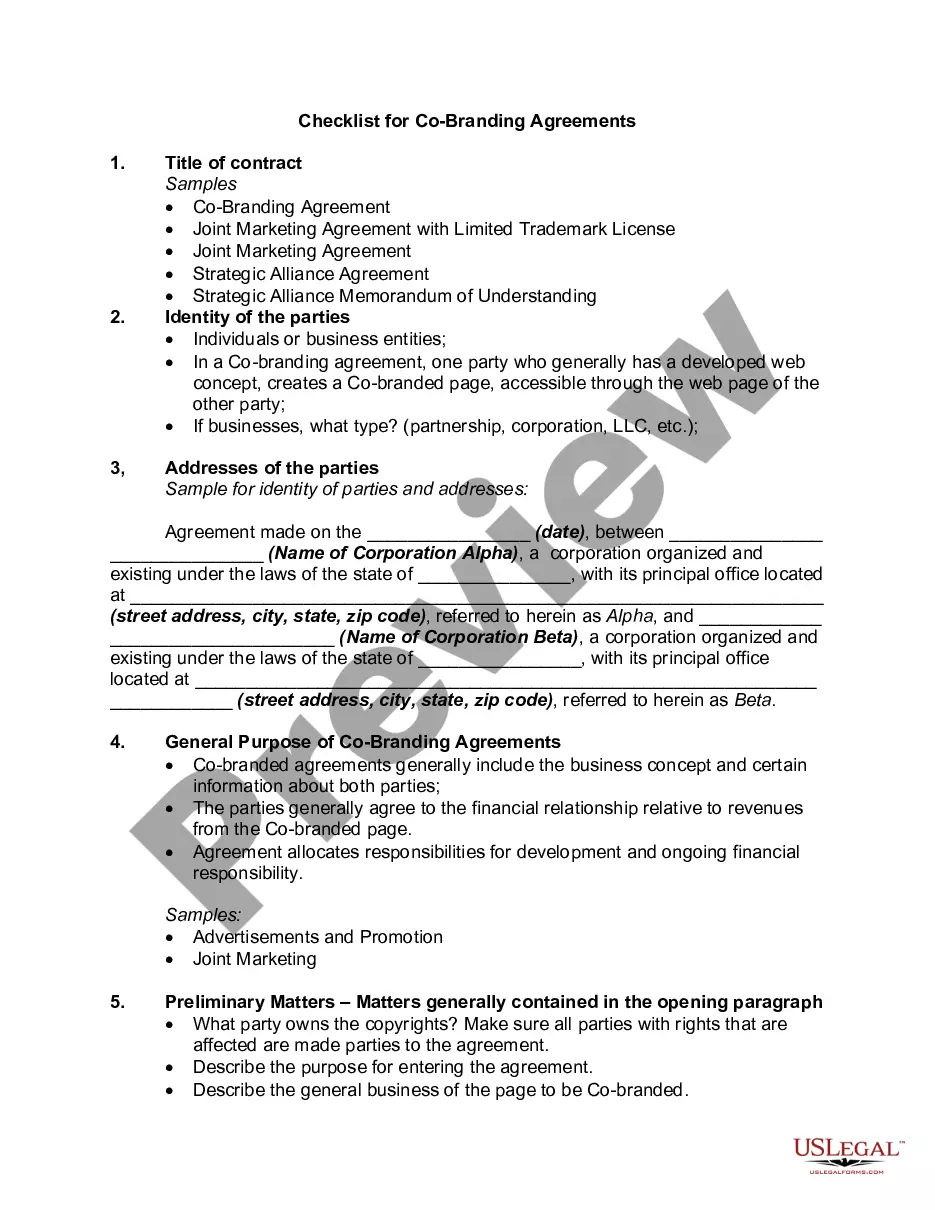
- Identify the parties involved by entering their names and principal addresses at the beginning of the document.
- Specify the Effective Date and the Launch Date for the co-branding activities.
- Describe the products and services offered by each party, providing detailed information for clarity.
- Outline the agreed-upon Promotions in Schedule A to define marketing strategies and responsibilities.
- Ensure both parties review and sign the agreement to formalize the partnership and its terms.
Notarization requirements for this form
In most cases, this form does not require notarization. However, some jurisdictions or signing circumstances might. US Legal Forms offers online notarization powered by Notarize, accessible 24/7 for a quick, remote process.
Get your form ready online
Our built-in tools help you complete, sign, share, and store your documents in one place.
Make edits, fill in missing information, and update formatting in US Legal Forms—just like you would in MS Word.
Download a copy, print it, send it by email, or mail it via USPS—whatever works best for your next step.
Sign and collect signatures with our SignNow integration. Send to multiple recipients, set reminders, and more. Go Premium to unlock E-Sign.
If this form requires notarization, complete it online through a secure video call—no need to meet a notary in person or wait for an appointment.
We protect your documents and personal data by following strict security and privacy standards.

Make edits, fill in missing information, and update formatting in US Legal Forms—just like you would in MS Word.

Download a copy, print it, send it by email, or mail it via USPS—whatever works best for your next step.

Sign and collect signatures with our SignNow integration. Send to multiple recipients, set reminders, and more. Go Premium to unlock E-Sign.

If this form requires notarization, complete it online through a secure video call—no need to meet a notary in person or wait for an appointment.

We protect your documents and personal data by following strict security and privacy standards.
Common mistakes
- Failing to clearly define the scope of collaboration and promotional activities.
- Not addressing the ownership and licensing of intellectual property in detail.
- Neglecting to include terms for termination and renewal of the agreement.
- Underestimating the importance of confidentiality clauses, particularly regarding proprietary information.
- Not reviewing the agreement for local legal compliance or necessary adaptations.
Advantages of online completion
- Convenience of downloading and filling out the agreement at your own pace.
- Editability allows users to customize the agreement to suit their specific partnership needs.
- Access to expertly drafted templates enhances reliability and legal accuracy.
- Instant access helps expedite the co-branding agreement process.
Legal use & context
- The Co-Branding Agreement creates a legally binding arrangement between the participating brands.
- Both parties must adhere to the stipulated terms to avoid potential legal disputes.
- It is crucial for involved parties to understand their rights and responsibilities under the agreement to ensure enforceability.
What to keep in mind
- A Co-Branding Agreement is essential for defining roles in joint marketing efforts.
- Clarity in intellectual property use and mutual obligations helps prevent conflicts.
- Legal compliance and a thorough understanding of terms are vital for all co-branding initiatives.
Looking for another form?


Form popularity
FAQ
Co-branding is a marketing strategy that utilizes multiple brand names on a good or service as part of a strategic alliance. Also known as a brand partnership, co-branding (or "cobranding") encompasses several different types of branding collaborations, typically involving the brands of at least two companies.
Write a short and catchy subject line. Include a direct link to your Instagram and blog, not to a press pagedon't make them have to do any extra steps! Include your qualitative stats. Quickly list the top 3 brands you've worked with, and then link to each of the promotions. Be genuine!
Make the most of events to connect with potential partners. Decide if the partnership makes sense. Define roles and expectations. Develop an appropriate co-marketing idea with your partner. Know your audience. Run local targeted events.
Identify partners with deep synergy. Collaborate with partners who reflect similar brand values. Choose brand partners that are leaders in their sector. Create programs with partners who best complement your brand. Retain full approval and refusal rights for all communications.
The Taco Bell/Doritos partnership detailed below is a perfect example of co-branding. Or, for instance, when Nike partnered with Apple for Apple Watch Nike +. A common example is when your favorite brand or retailer partners with a credit card company for a co-branded credit card like Bloomingdale's American Express.
Co-branding is a marketing strategy that utilizes multiple brand names on a good or service as part of a strategic alliance. Also known as a brand partnership, co-branding (or "cobranding") encompasses several different types of branding collaborations, typically involving the brands of at least two companies.
According to Chang, from the Journal of American Academy of Business, Cambridge, there are three levels of co-branding: market share, brand extension, and global branding.