Real Estate Brokerage Business Plan
Overview of this form
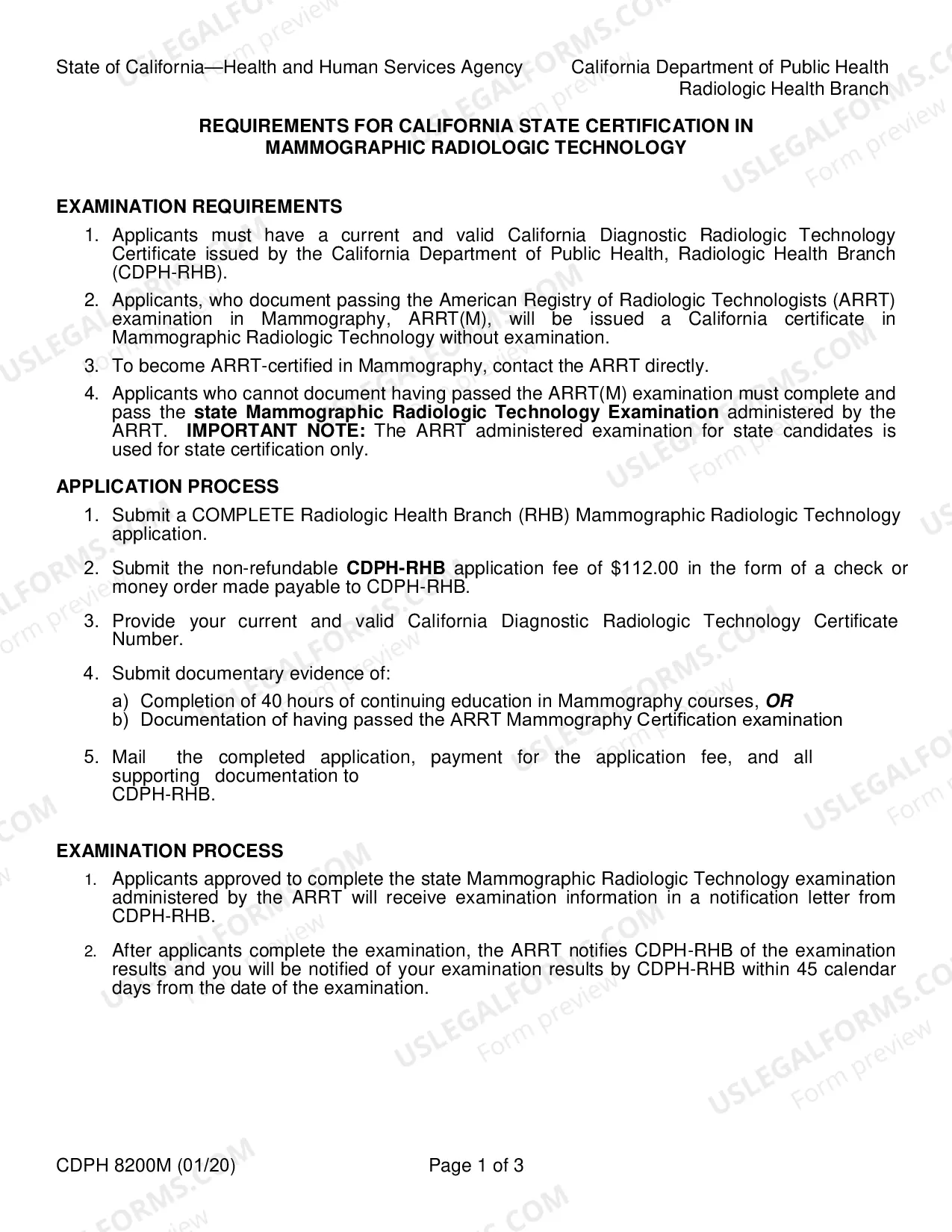
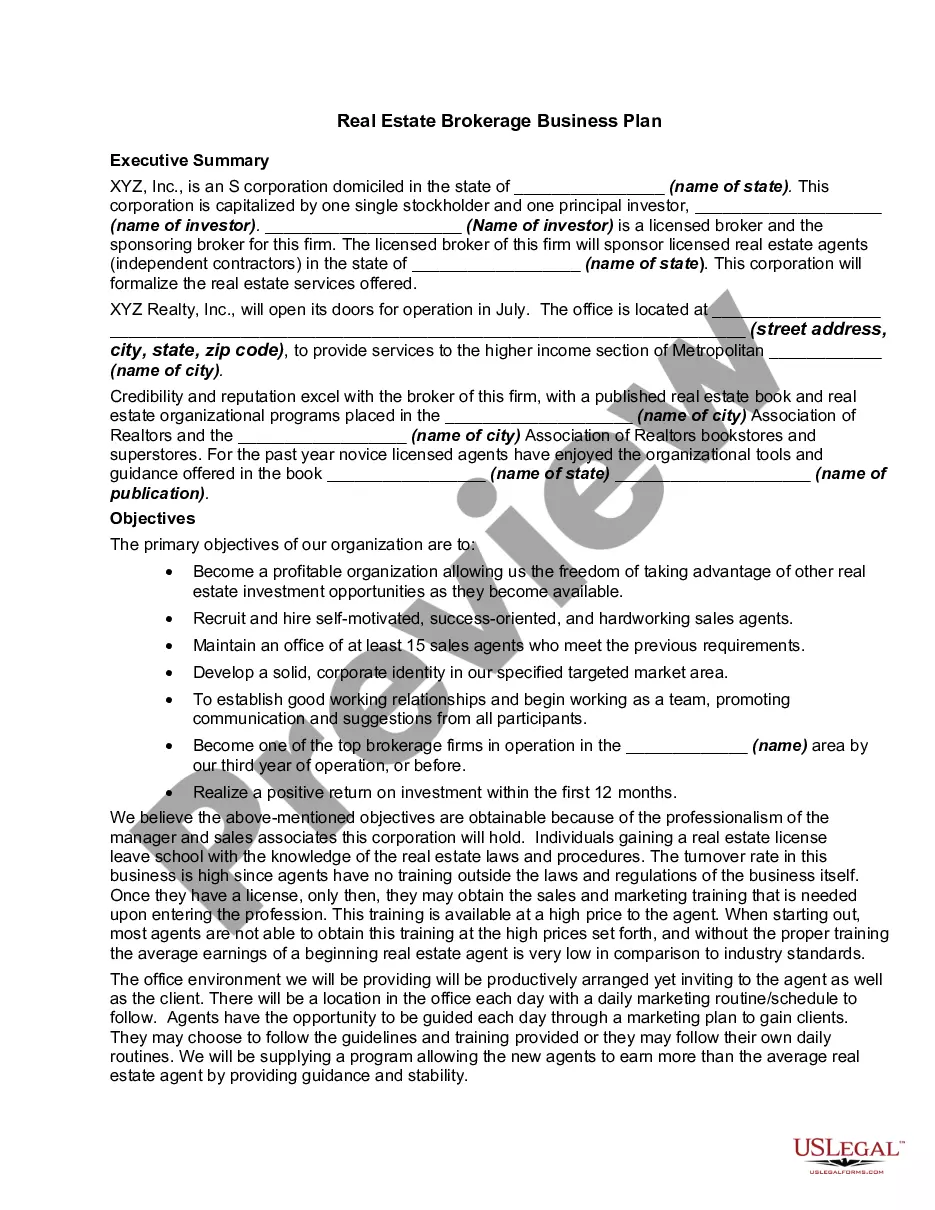
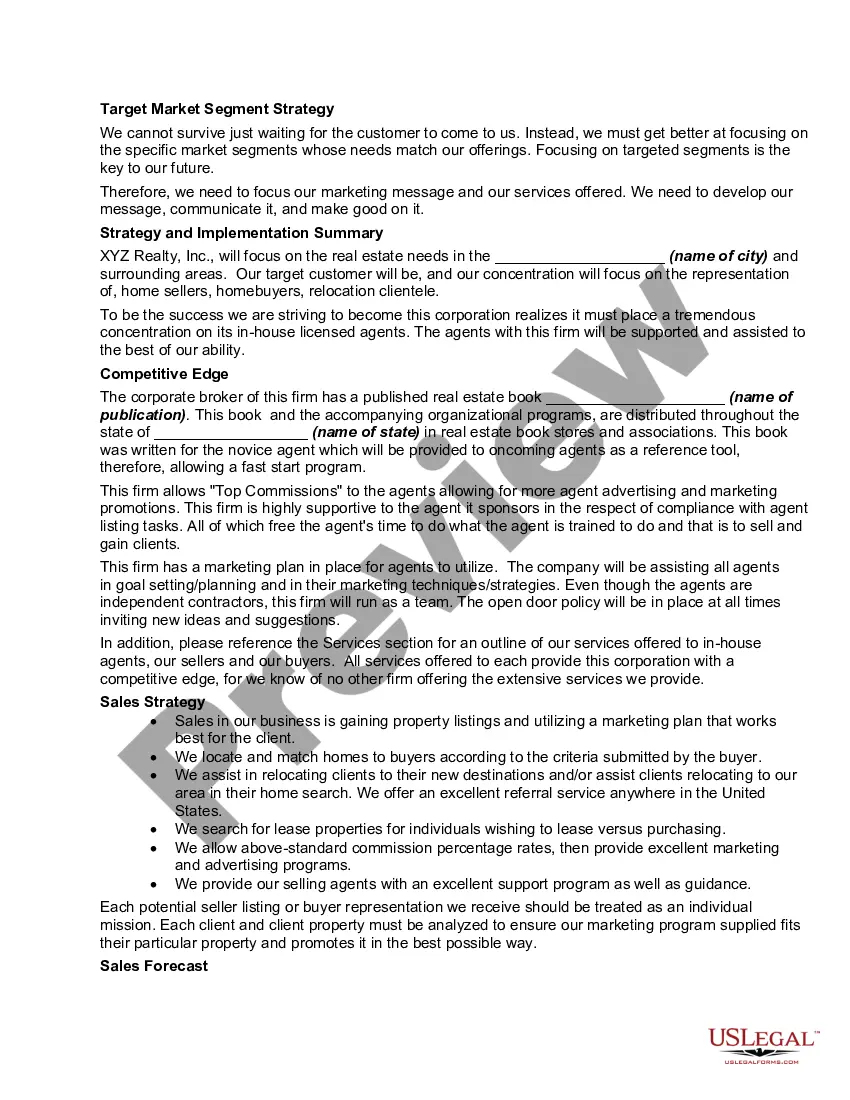
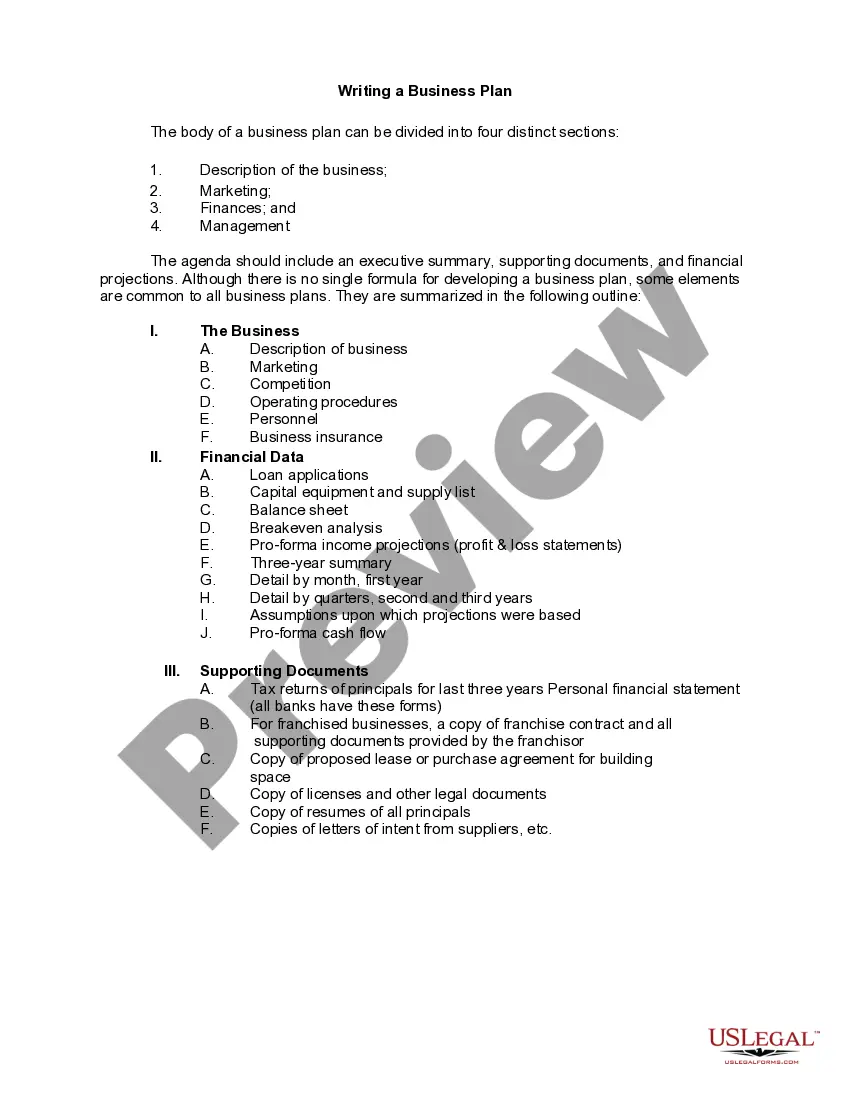
The Real Estate Brokerage Business Plan is a comprehensive document that outlines the business goals, strategies, and objectives for establishing a real estate brokerage. This form differs from other business plans by focusing specifically on the real estate industry, addressing unique market dynamics, and detailing operational aspects tailored to real estate transactions.
Form components explained
- Executive Summary: An overview of the business, including its structure and key personnel.
- Objectives: Specific goals such as profitability and agent recruitment.
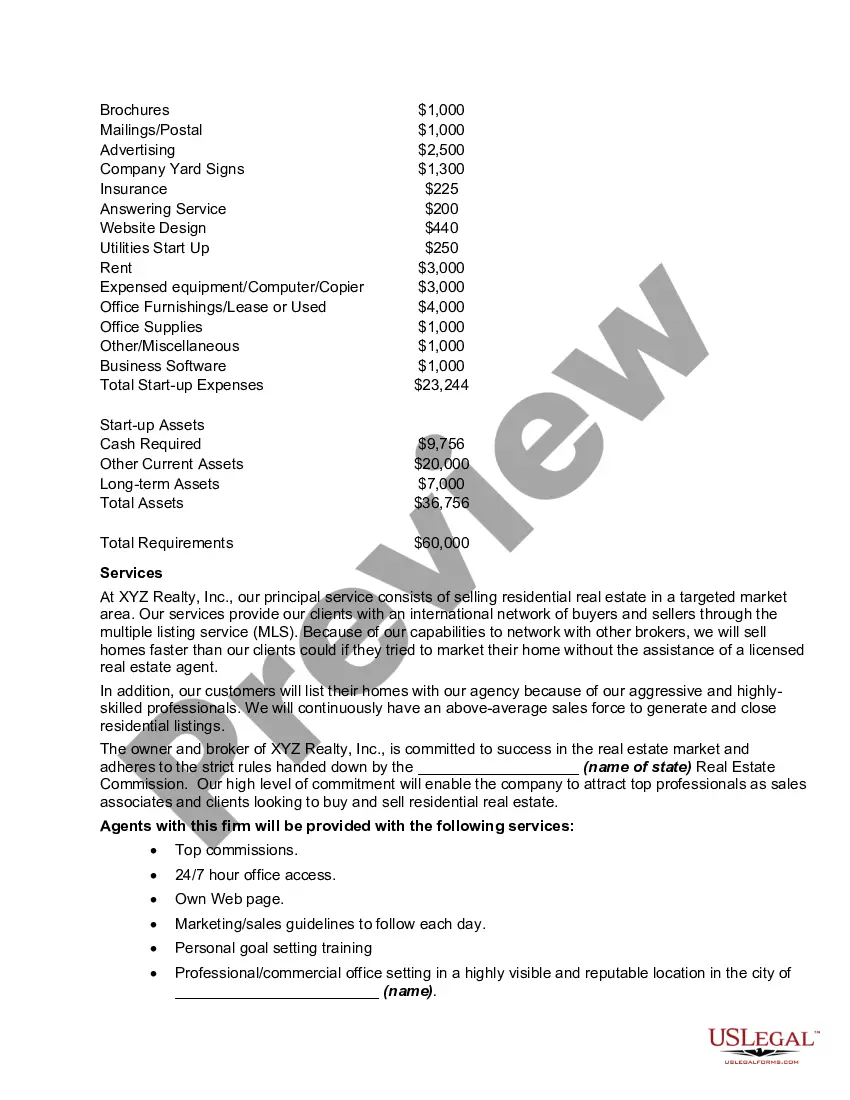
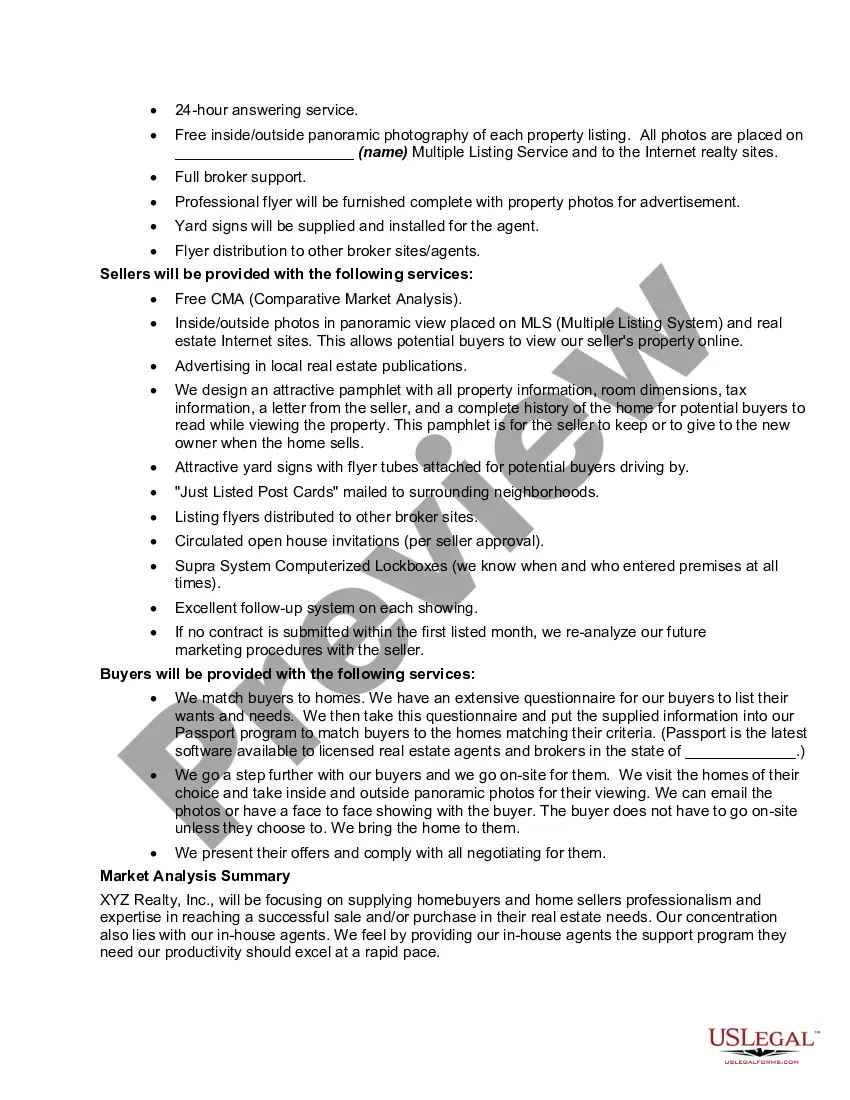
- Services: Description of real estate services offered, including support for agents and clients.
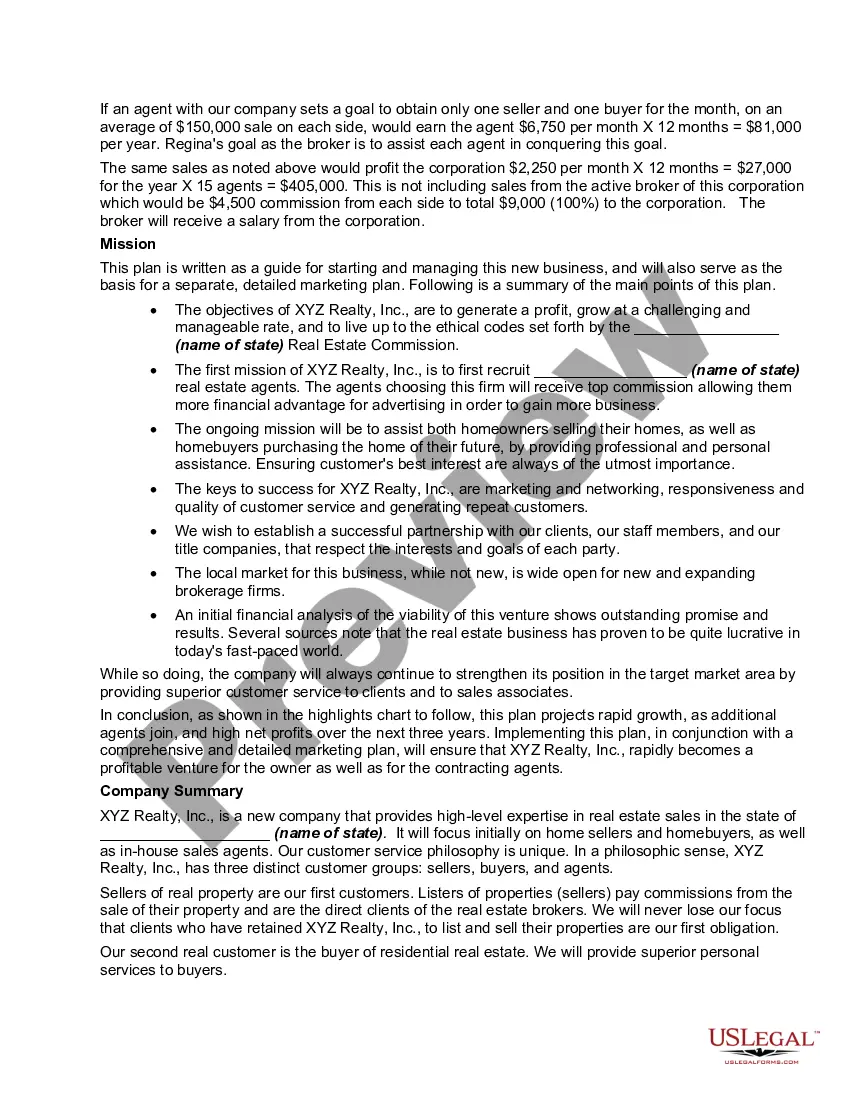
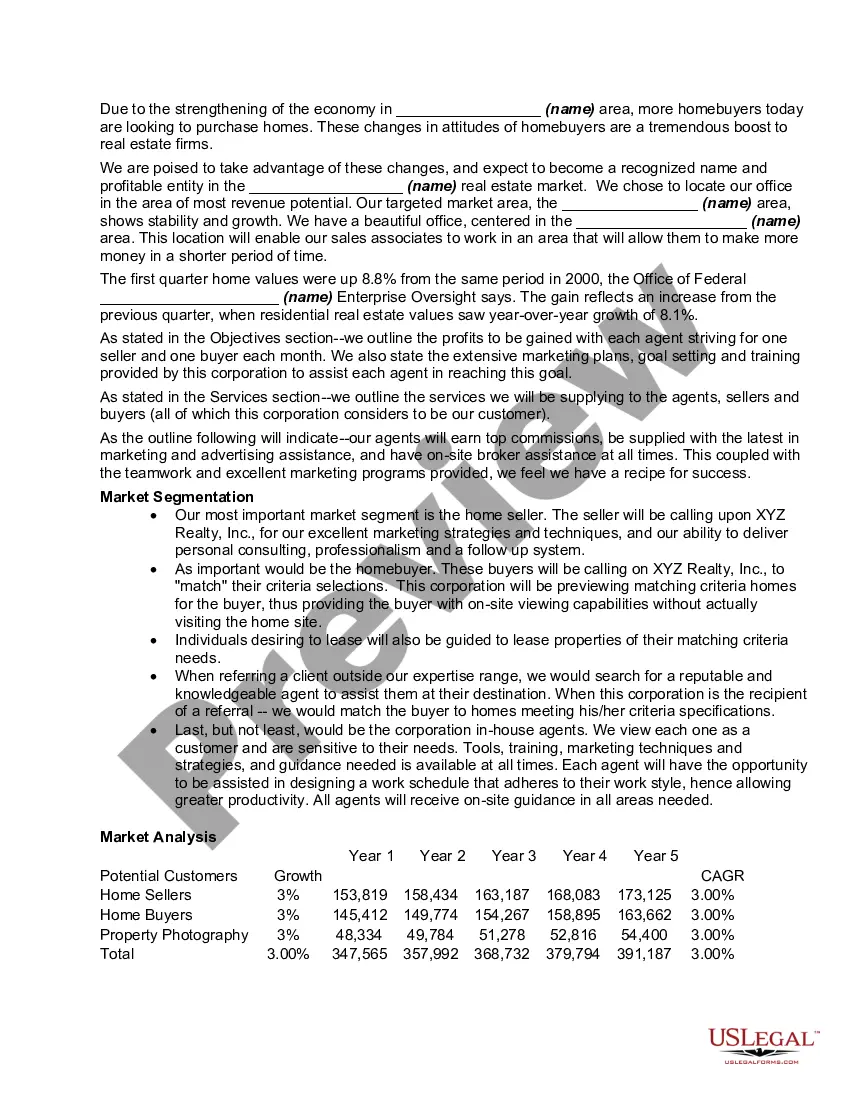
- Market Analysis: Insight into the local market, customer segments, and competitive advantages.
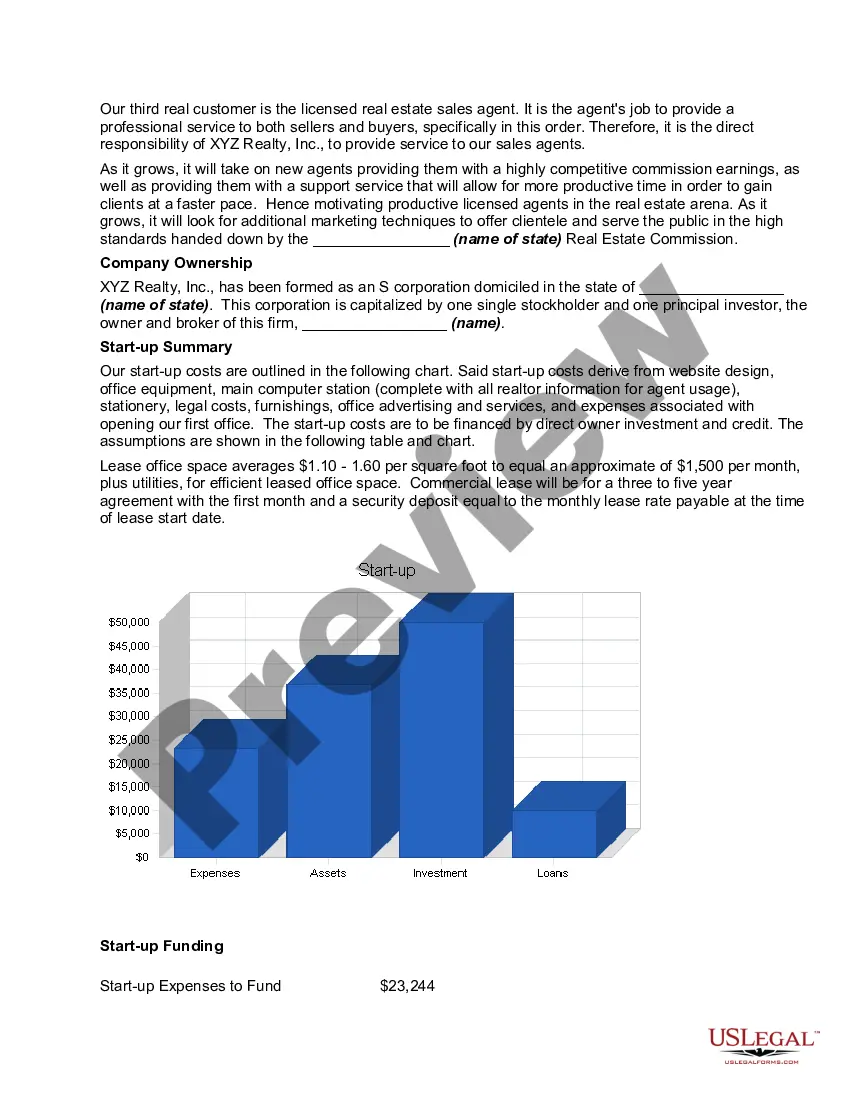
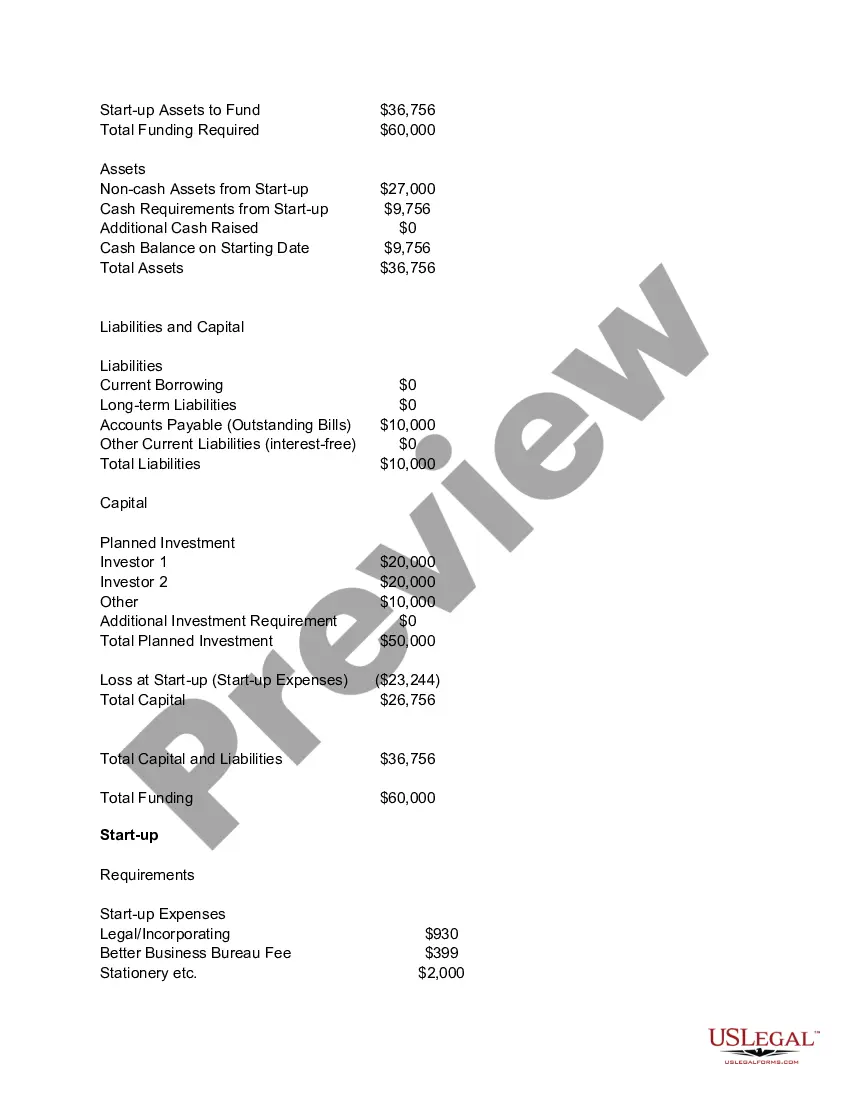
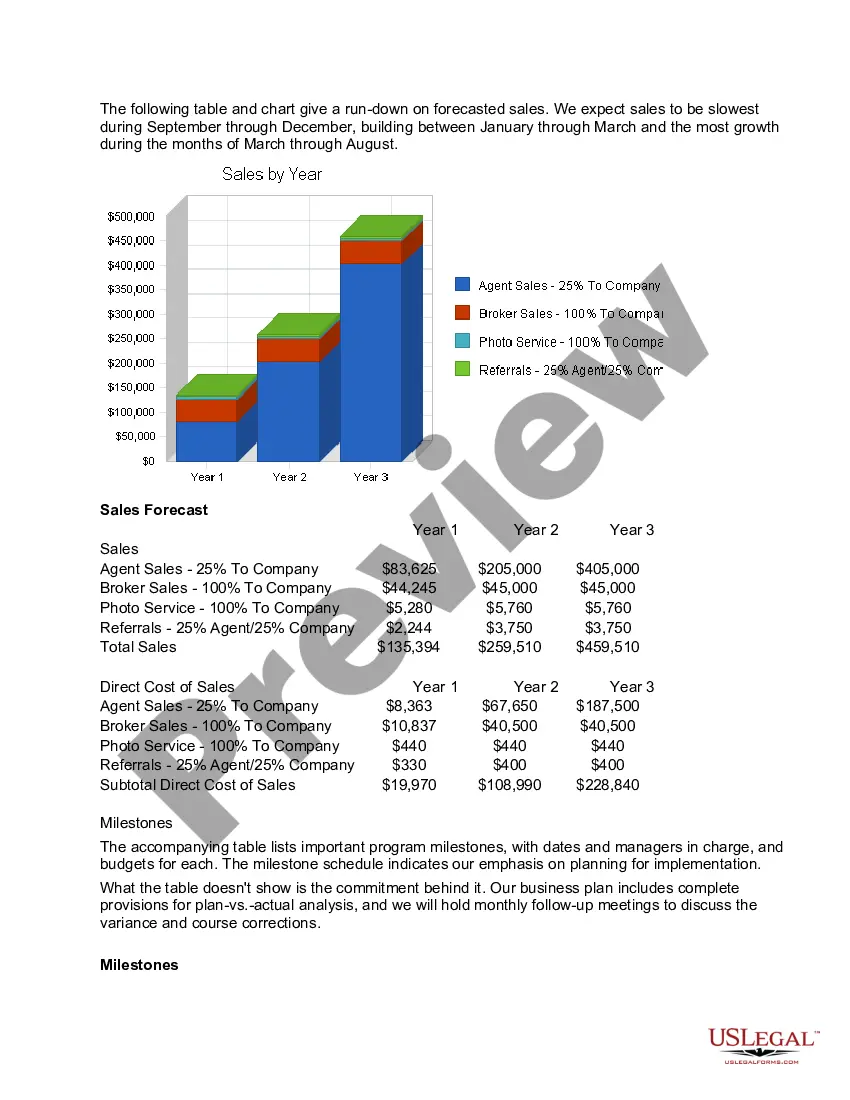
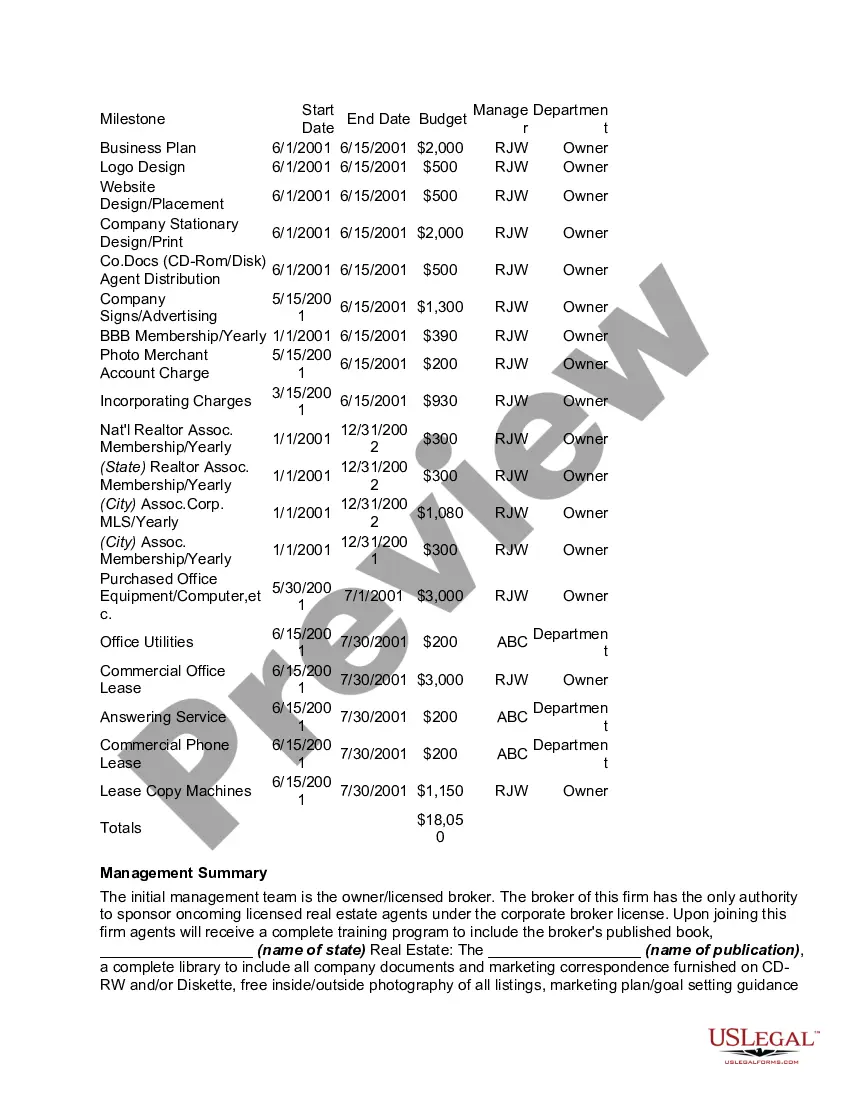
- Financial Plan: Detailed financial forecasts, including revenue, expenses, and funding requirements.

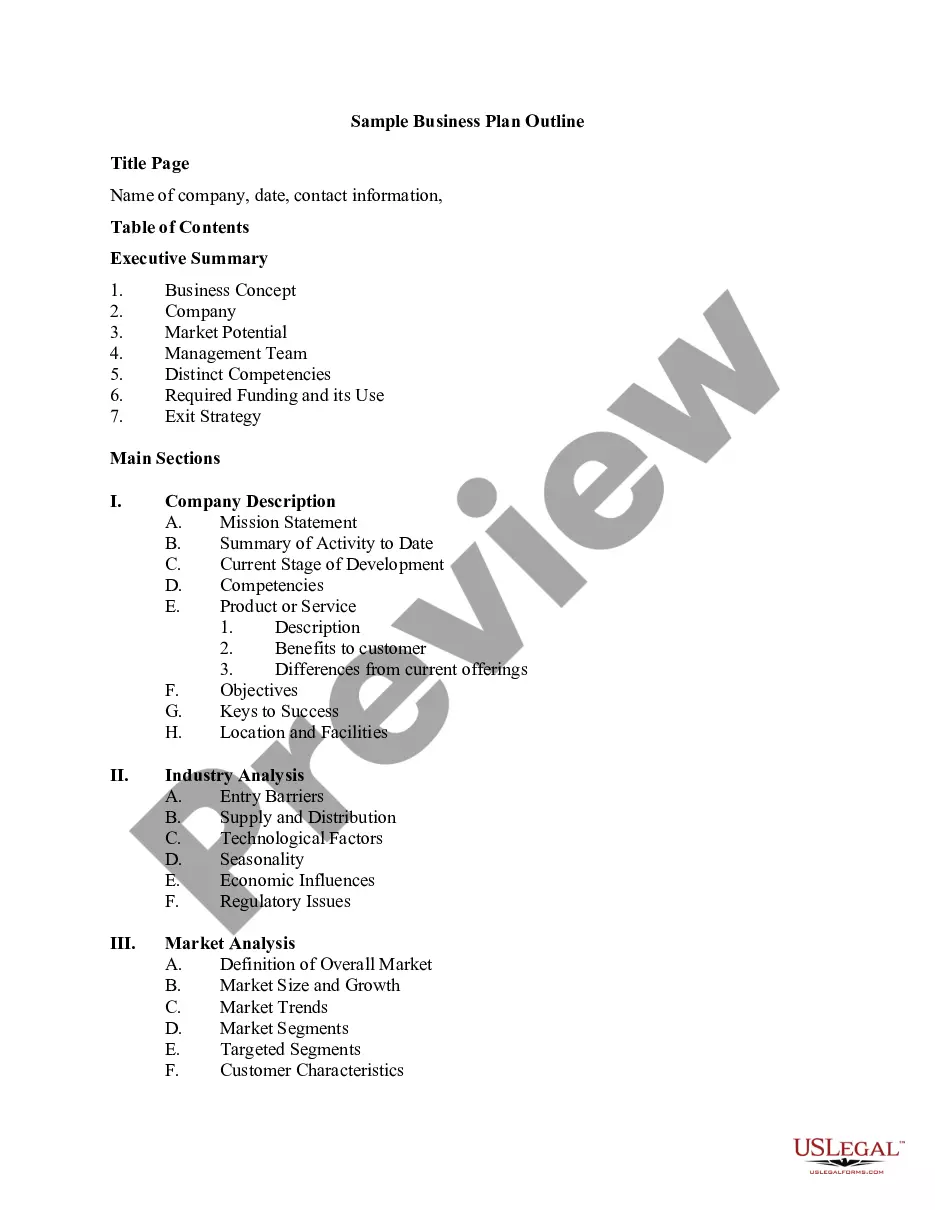
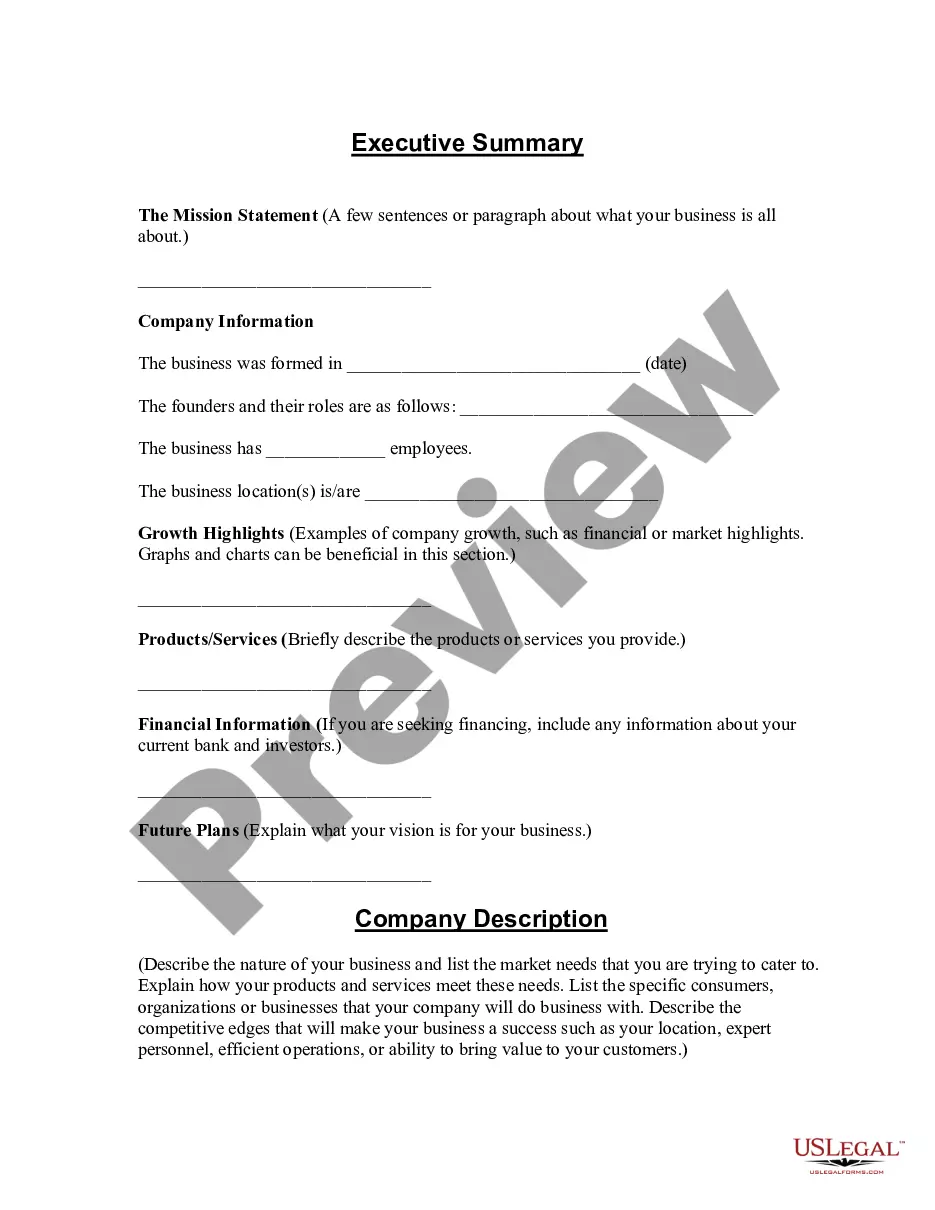
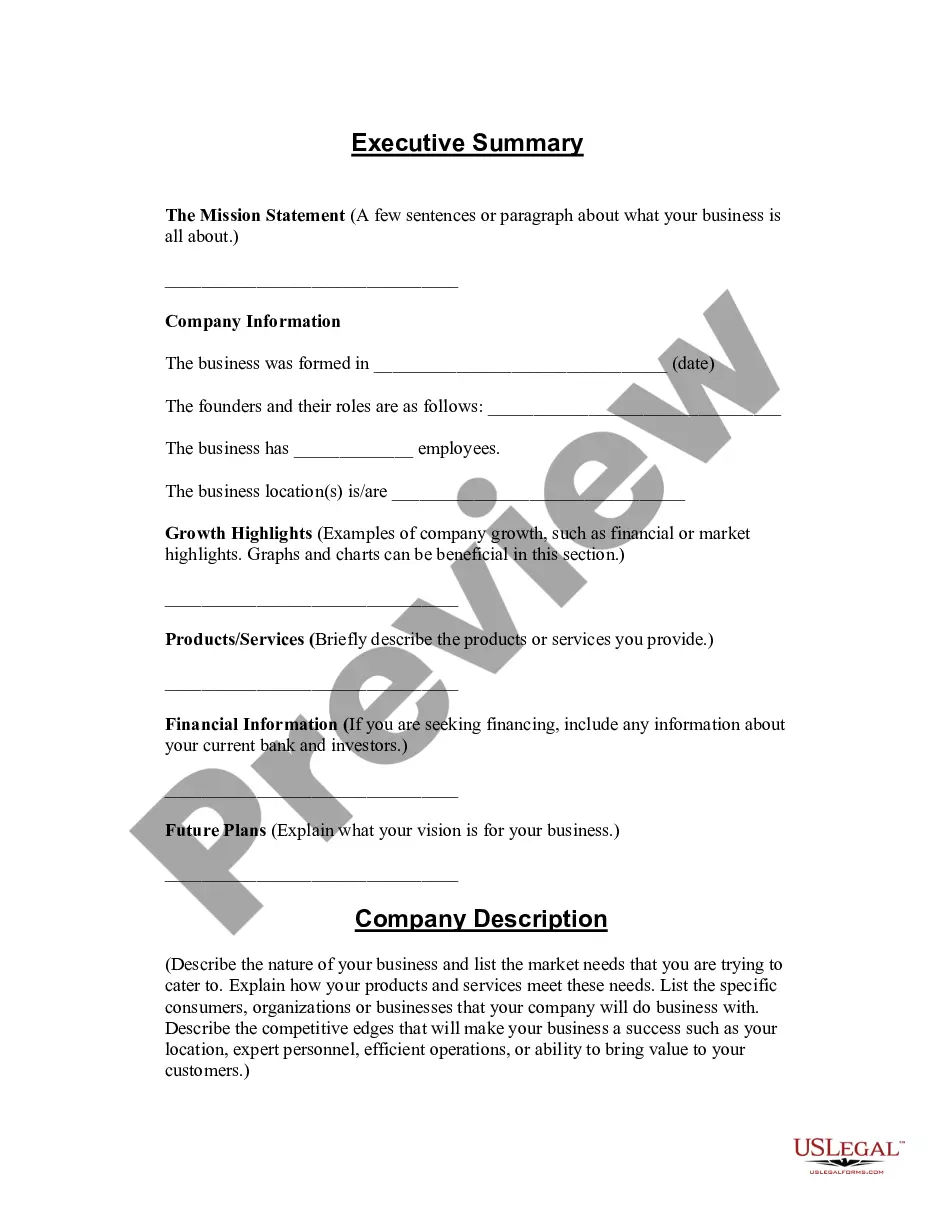
Situations where this form applies
This form should be used when starting a new real estate brokerage or when a current brokerage seeks to refine its business approach. It is useful for ensuring clarity in objectives, financial expectations, and operational procedures within a structured business planning framework.
Who this form is for
This form is intended for:
- Entrepreneurs looking to establish a real estate brokerage.
- Current brokerage owners seeking to enhance their business plans.
- Real estate professionals and investors planning to enter the brokerage business.
Completing this form step by step
To complete this form, follow these steps:
- Identify the key stakeholders and roles within the brokerage.
- Outline specific business objectives, including revenue targets and agent recruitment goals.
- Detail the services provided to clients and real estate agents.
- Conduct a market analysis to understand the competitive landscape and customer demographics.
- Prepare financial forecasts to outline expected revenues and expenses over specified timeframes.
Notarization guidance
This form does not typically require notarization unless specified by local law.
Get your form ready online
Our built-in tools help you complete, sign, share, and store your documents in one place.
Make edits, fill in missing information, and update formatting in US Legal Forms—just like you would in MS Word.
Download a copy, print it, send it by email, or mail it via USPS—whatever works best for your next step.
Sign and collect signatures with our SignNow integration. Send to multiple recipients, set reminders, and more. Go Premium to unlock E-Sign.
If this form requires notarization, complete it online through a secure video call—no need to meet a notary in person or wait for an appointment.
We protect your documents and personal data by following strict security and privacy standards.

Make edits, fill in missing information, and update formatting in US Legal Forms—just like you would in MS Word.

Download a copy, print it, send it by email, or mail it via USPS—whatever works best for your next step.

Sign and collect signatures with our SignNow integration. Send to multiple recipients, set reminders, and more. Go Premium to unlock E-Sign.

If this form requires notarization, complete it online through a secure video call—no need to meet a notary in person or wait for an appointment.

We protect your documents and personal data by following strict security and privacy standards.
Common mistakes
- Failing to define clear objectives and measurable outcomes.
- Neglecting a thorough market analysis leading to unrealistic projections.
- Omitting critical operational details necessary for daily brokerage function.
- Underestimating costs associated with starting and running the brokerage.
Benefits of completing this form online
- Simplifies the planning process by providing a structured template.
- Encourages reflection on key business goals and strategies.
- Enhances communication of vision and mission to stakeholders.
- Facilitates easier adjustment and updates as the market changes.
Legal use & context
- Serves as a foundational document for real estate brokerage operations.
- Can be used in discussions with banks or investors to secure funding.
- Guides the firm in compliance with state-specific real estate regulations.
- Acts as a benchmark to measure business performance and strategic adjustments.
Main things to remember
- The Real Estate Brokerage Business Plan is crucial for navigating the complexities of starting and operating a brokerage.
- It should be tailored to reflect specific market conditions and company goals.
- Regularly updating the plan is essential for ongoing business success.
Looking for another form?
Form popularity
FAQ
Market based on comparison to similar real estate business sales. Income factoring in the real estate agency earnings prospects and risk.
According to recent data from REAL Trends, the average retained company dollar dwindled to a mere 14.8% in 2017. This is down from 22% just 5 years prior. Brokerages are faced with pressures on commission splits, non-producing agents, and occupancy and payroll that are eating more and more into profit margins.
Real estate agents have a professional license to help people buy, sell, and rent real estate.Brokers are real estate agents who have completed additional training and licensing requirements. They can work independently and hire other real estate agents to work for them.
Explain who you are and what you do. Define your market. Outline your business model. Describe your plan. Present your need or objective.
A real estate broker, real estate agent or realtor is a person who represents sellers or buyers of real estate or real property.Brokers and agents are licensed by the state to negotiate sales agreements and manage the documentation required for closing real estate transactions.
A real estate broker works to negotiate and arrange real estate transactions. This licensed individual has daily duties that include writing contracts and overseeing transactions for sales and purchasing activities on homes, land and commercial properties.
You must be Licensed. Research your Competition. Determine Your Budget. Write a Business Model & Business Plan. Determine Your Legal Structure. Build Your Brand. Register your business. Find Funding.
Build an online presence. Grow your network. Never have a dearth of options. Market the available options. Be honest with your clients. Deal with vendors for leads and client references. Make use of technology.
Typically your startup expenses will include FINRA and state registration, the cost of consultants, salaries, and deposits made to clearing firms. The costs can vary though. For example, if the b/d plans to trade for its own accounts, the cost can go up to $100,000 to $150,000.