Joint Marketing or Co-Branding Agreement
What is this form?
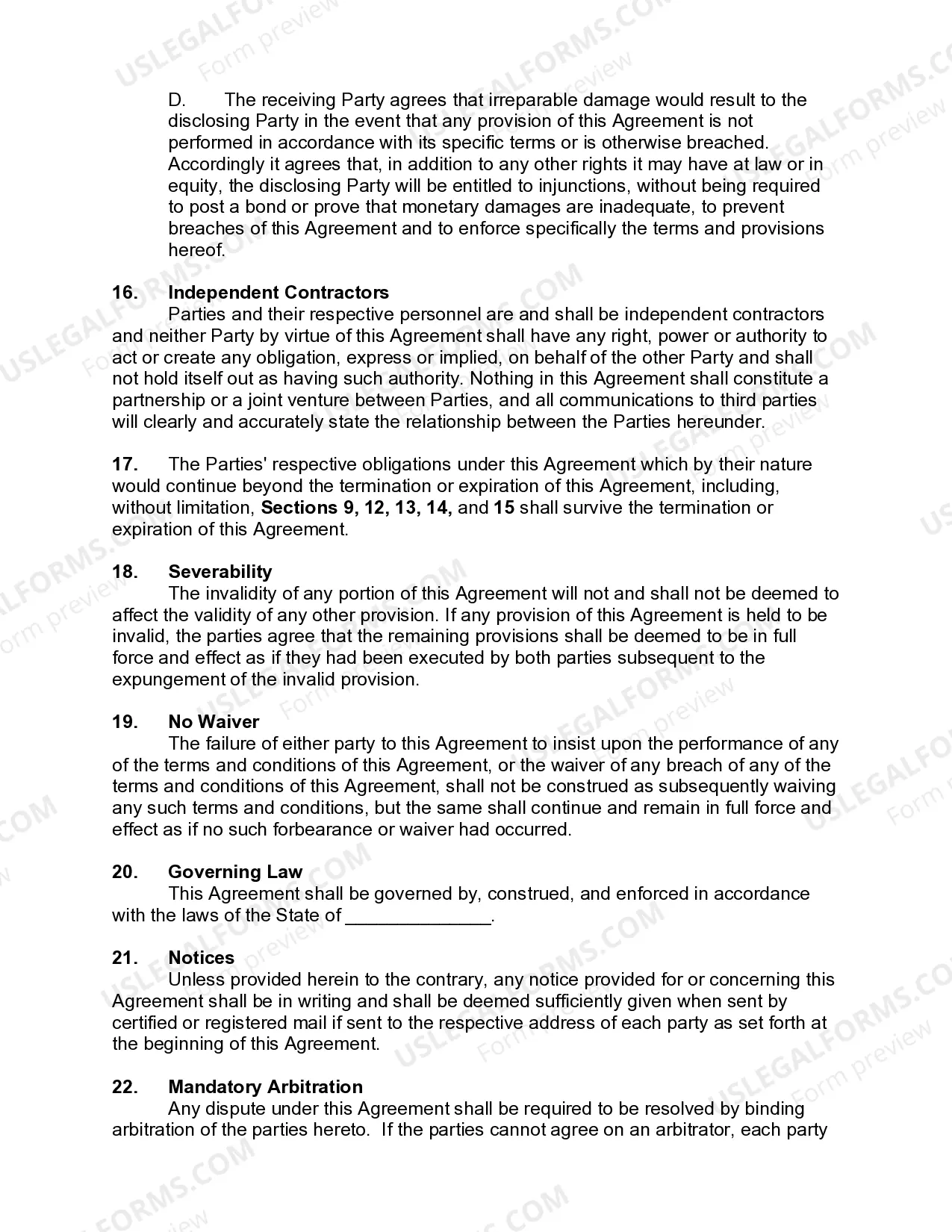
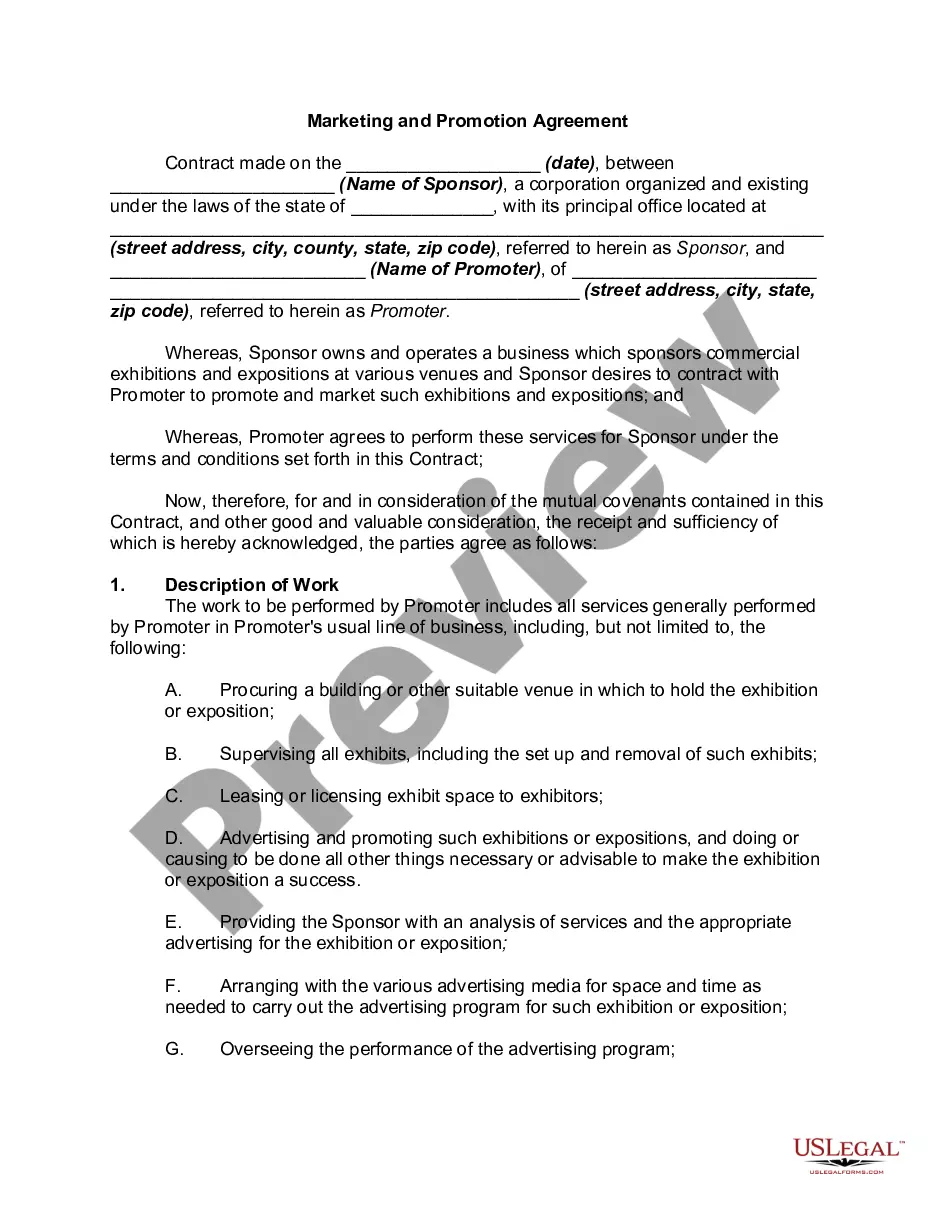
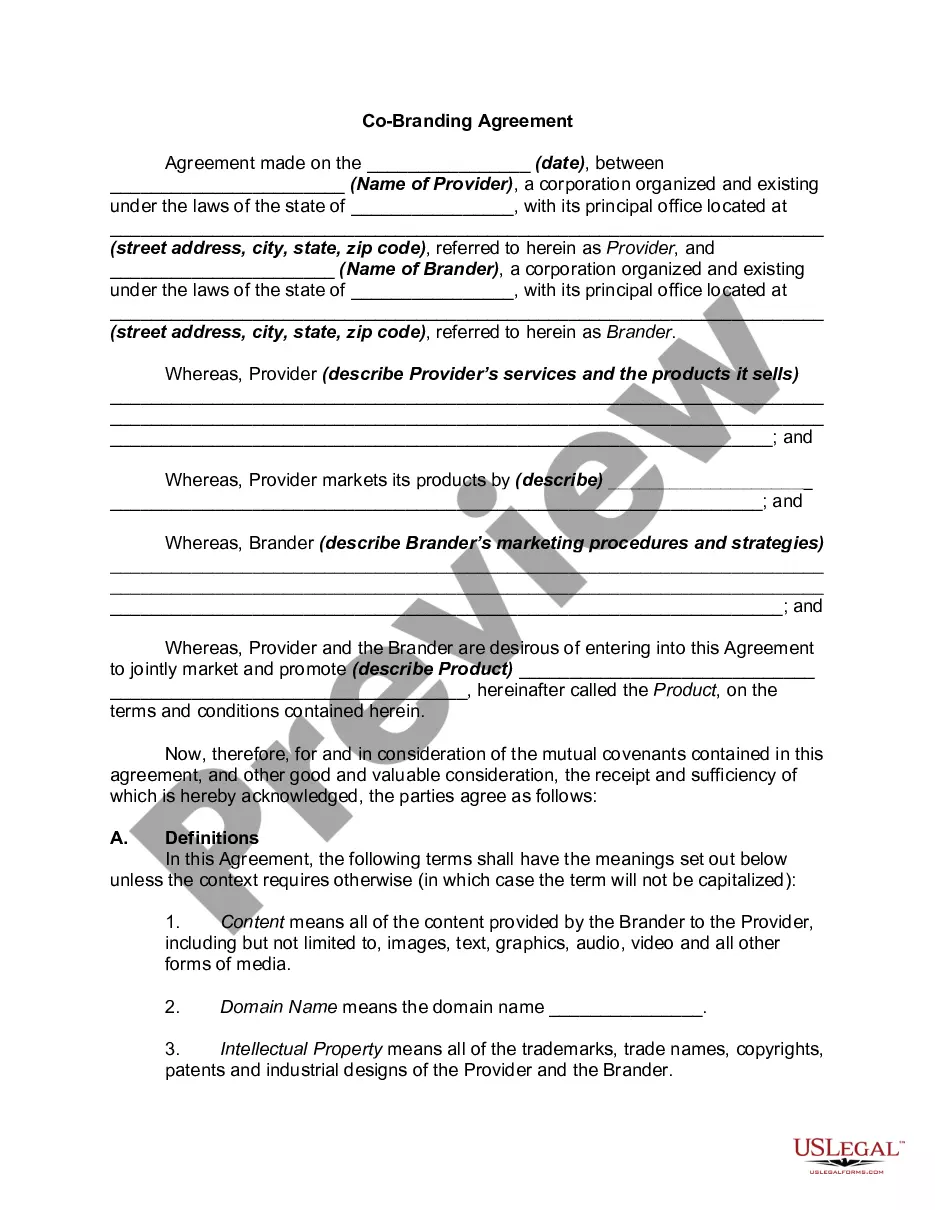
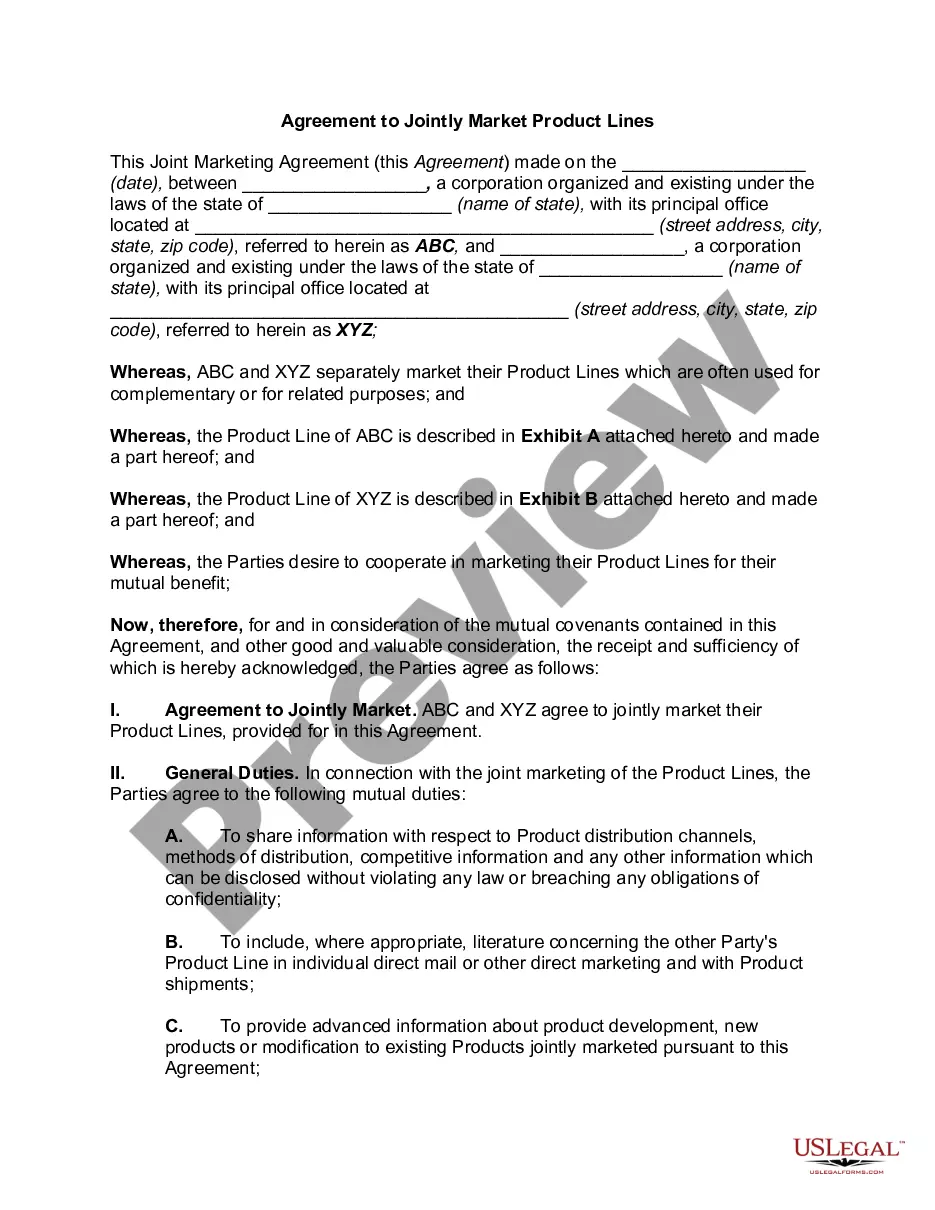
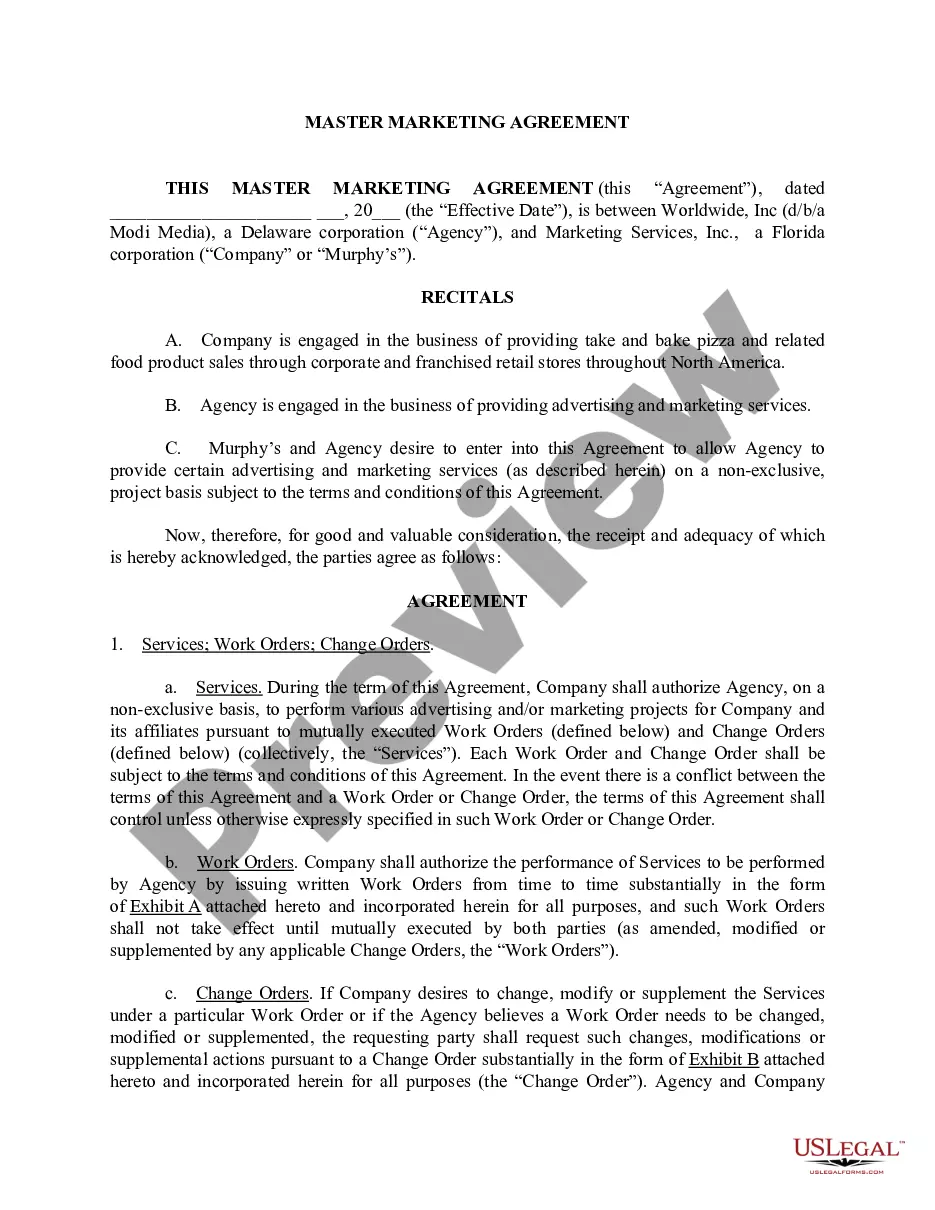
A Joint Marketing or Co-Branding Agreement is a legal document that outlines the terms and conditions under which two or more parties collaboratively market their products or services. This agreement is essential for businesses seeking to enhance their brand visibility and share marketing costs effectively. Unlike standard contracts, this form specifies the rights and responsibilities related to the use of each party's branding and marketing efforts, helping to ensure a mutually beneficial relationship.
What’s included in this form
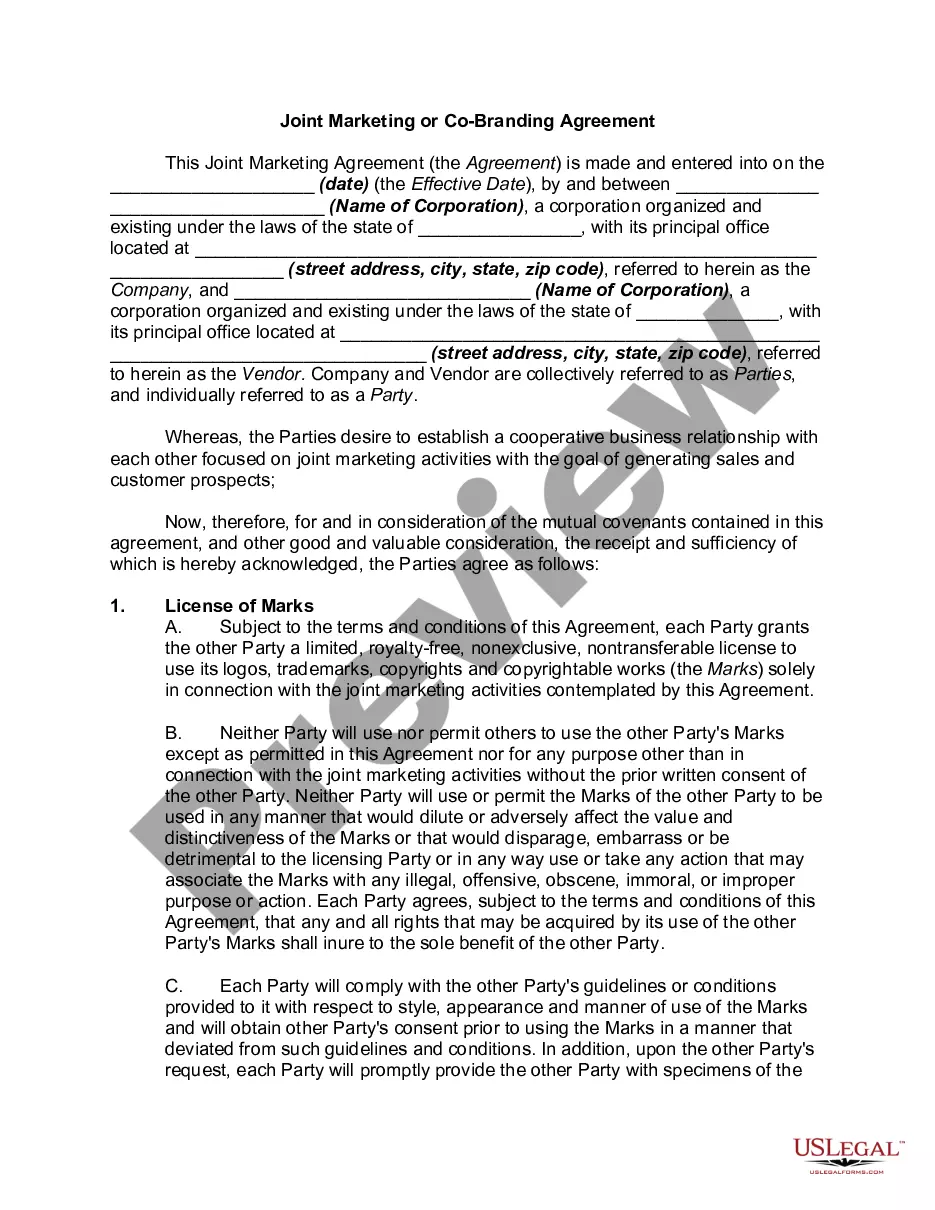
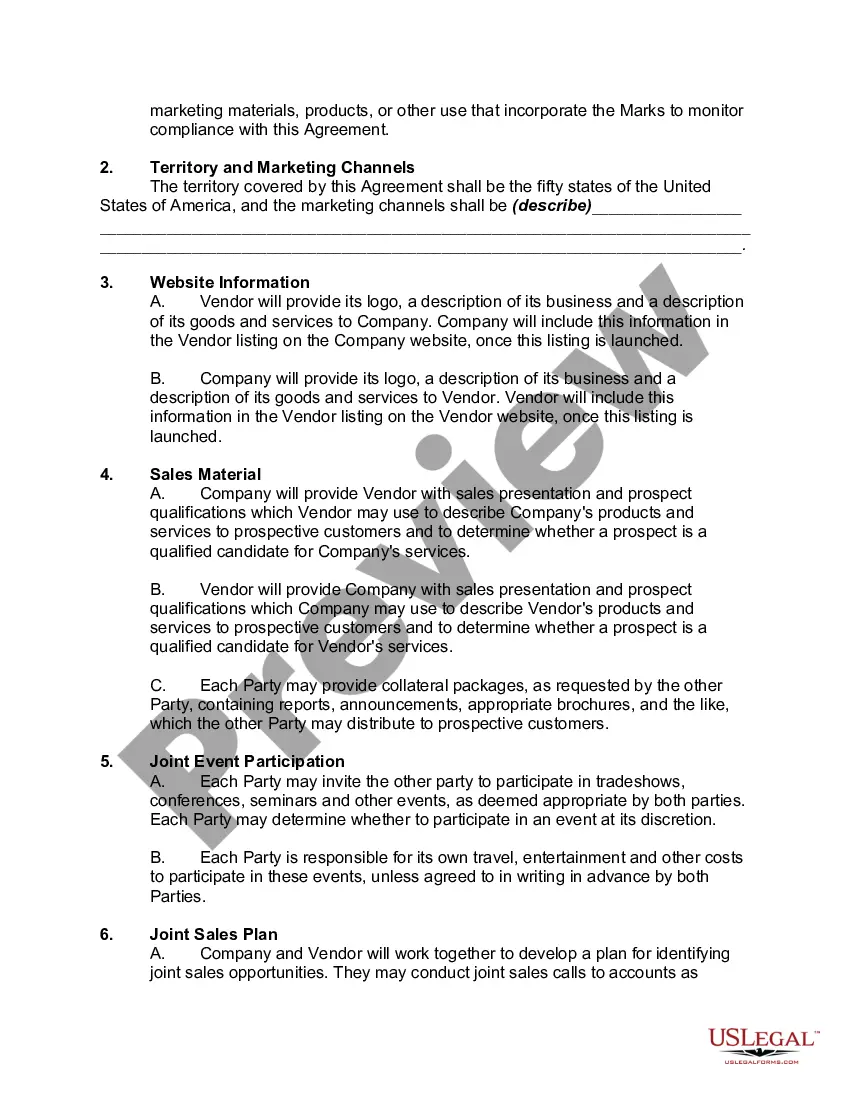
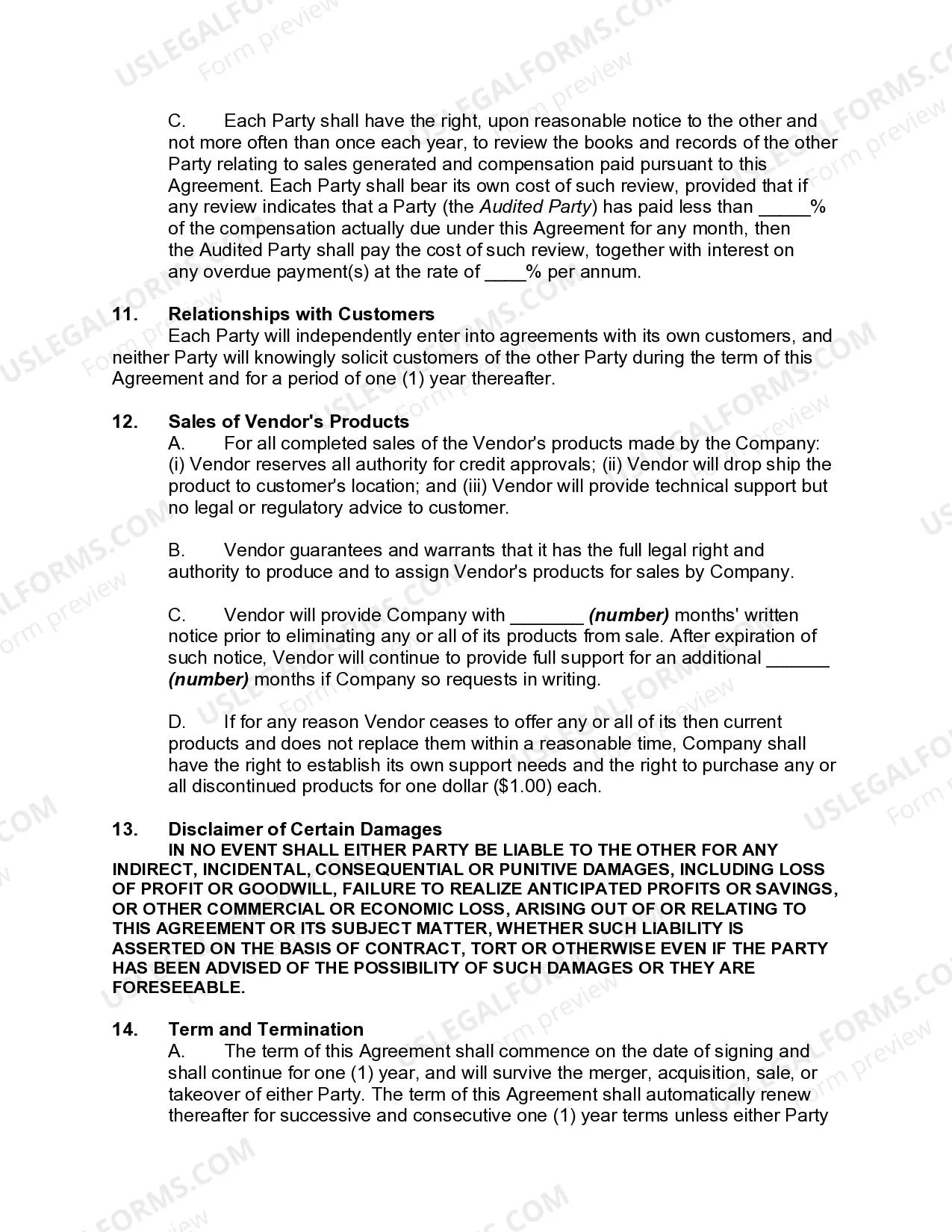
- License of Marks: Details how each party can use the other's brand elements for marketing.
- Territory and Marketing Channels: Defines the geographical areas and methods for joint marketing.
- Sales Material: Outlines the sales presentations and qualification criteria shared between parties.
- Joint Event Participation: Governs collaborations for trade shows, conferences, and other events.
- Compensation: Specifies the revenue-sharing structure for sales generated from joint efforts.
- Proprietary Information: Covers the confidentiality requirements for sensitive business information.




Common use cases
Use this Joint Marketing or Co-Branding Agreement when two or more businesses intend to work together on a marketing initiative. This can include collaborations between a food chain and a toy company for promotional items, or a tech company partnering with a software developer to offer bundled services. It is particularly useful when both parties have complementary products that can enhance each other's market presence.
Who should use this form
- Businesses seeking to enhance their brand visibility through partnerships.
- Corporations looking to share the costs of promotion and marketing activities.
- Companies that offer complementary products or services and wish to collaborate.
- Entities wanting to formally document their joint marketing efforts for legal protection.
Instructions for completing this form
- Identify the parties involved by entering their names and business details.
- Specify the effective date of the agreement.
- Detail the marketing channels and territory where the joint efforts will take place.
- Describe the sales materials and qualifications that will be shared between the parties.
- Outline the compensation structure for any sales generated through the agreement.
Does this form need to be notarized?
This form usually doesn’t need to be notarized. However, local laws or specific transactions may require it. Our online notarization service, powered by Notarize, lets you complete it remotely through a secure video session, available 24/7.
Get your form ready online
Our built-in tools help you complete, sign, share, and store your documents in one place.
Make edits, fill in missing information, and update formatting in US Legal Forms—just like you would in MS Word.
Download a copy, print it, send it by email, or mail it via USPS—whatever works best for your next step.
Sign and collect signatures with our SignNow integration. Send to multiple recipients, set reminders, and more. Go Premium to unlock E-Sign.
If this form requires notarization, complete it online through a secure video call—no need to meet a notary in person or wait for an appointment.
We protect your documents and personal data by following strict security and privacy standards.

Make edits, fill in missing information, and update formatting in US Legal Forms—just like you would in MS Word.

Download a copy, print it, send it by email, or mail it via USPS—whatever works best for your next step.

Sign and collect signatures with our SignNow integration. Send to multiple recipients, set reminders, and more. Go Premium to unlock E-Sign.

If this form requires notarization, complete it online through a secure video call—no need to meet a notary in person or wait for an appointment.

We protect your documents and personal data by following strict security and privacy standards.
Common mistakes to avoid
- Failing to define the territory and marketing channels clearly.
- Neglecting to specify the terms related to compensation and revenue sharing.
- Not including adequate confidentiality clauses for proprietary information.
- Overlooking the need for signatures from authorized representatives of both parties.
Advantages of online completion
- Convenience of editing and downloading the agreement at any time.
- Access to templates drafted by licensed attorneys to ensure legal reliability.
- Ability to customize the agreement to fit specific business needs.
- Reduction of costs associated with drafting legal documents from scratch.
Legal use & context
- This agreement is legally binding, provided it meets the essential requirements of contract law.
- A properly executed co-branding agreement can enhance the enforceability of each party's rights.
- It is crucial to ensure compliance with all applicable laws to avoid disputes.
Main things to remember
- Joint Marketing or Co-Branding Agreements facilitate cooperative marketing efforts between businesses.
- The agreement outlines licenses, territory, sales materials, and compensation structures.
- Properly completed forms help protect each party's branding and intellectual property.
- Clearly identifying roles and responsibilities is essential to avoid misunderstandings.
Looking for another form?







Form popularity
FAQ
A joint marketing agreement is a contract pursuant to which one or both of the parties will collaborate in order to promote the sale of product and service offerings of the other party.This article does not address the terms and conditions of sale of products and services to customers.
Brand partnership, or co-branding, is a popular marketing technique used to transfer the success of one brand to the partnered brands. With co-branding, one partner offers their branded product in conjunction with another company's branded product, such as a fast food restaurant offering a branded toy with a meal.
A corporation or company brand. A product brand. A personal brand.
GoPro & Red Bull. Pottery Barn & Sherwin-Williams. Casper & West Elm. Kanye and Adidas. BMW & Louis Vuitton. Starbucks & Spotify. Apple & MasterCard. Airbnb & Flipboard.
Company Name Branding. Well-known brands leverage the popularity of their own company names to improve brand recognition. Individual Branding. Attitude Branding. Brand Extension Branding. Private-Label Branding.
According to Chang, from the Journal of American Academy of Business, Cambridge, there are three levels of co-branding: market share, brand extension, and global branding.
Types of Co-brandingCo-branding is of two types: Ingredient co-branding and Composite co-branding. Ingredient co-branding implies using a renowned brand as an element in the production of another renowned brand. This deals with creation of brand equity for materials and parts that are contained within other products.
The Taco Bell/Doritos partnership detailed below is a perfect example of co-branding. Or, for instance, when Nike partnered with Apple for Apple Watch Nike +. A common example is when your favorite brand or retailer partners with a credit card company for a co-branded credit card like Bloomingdale's American Express.