Agreement to Auction Property in a Storage Unit
What is this form?
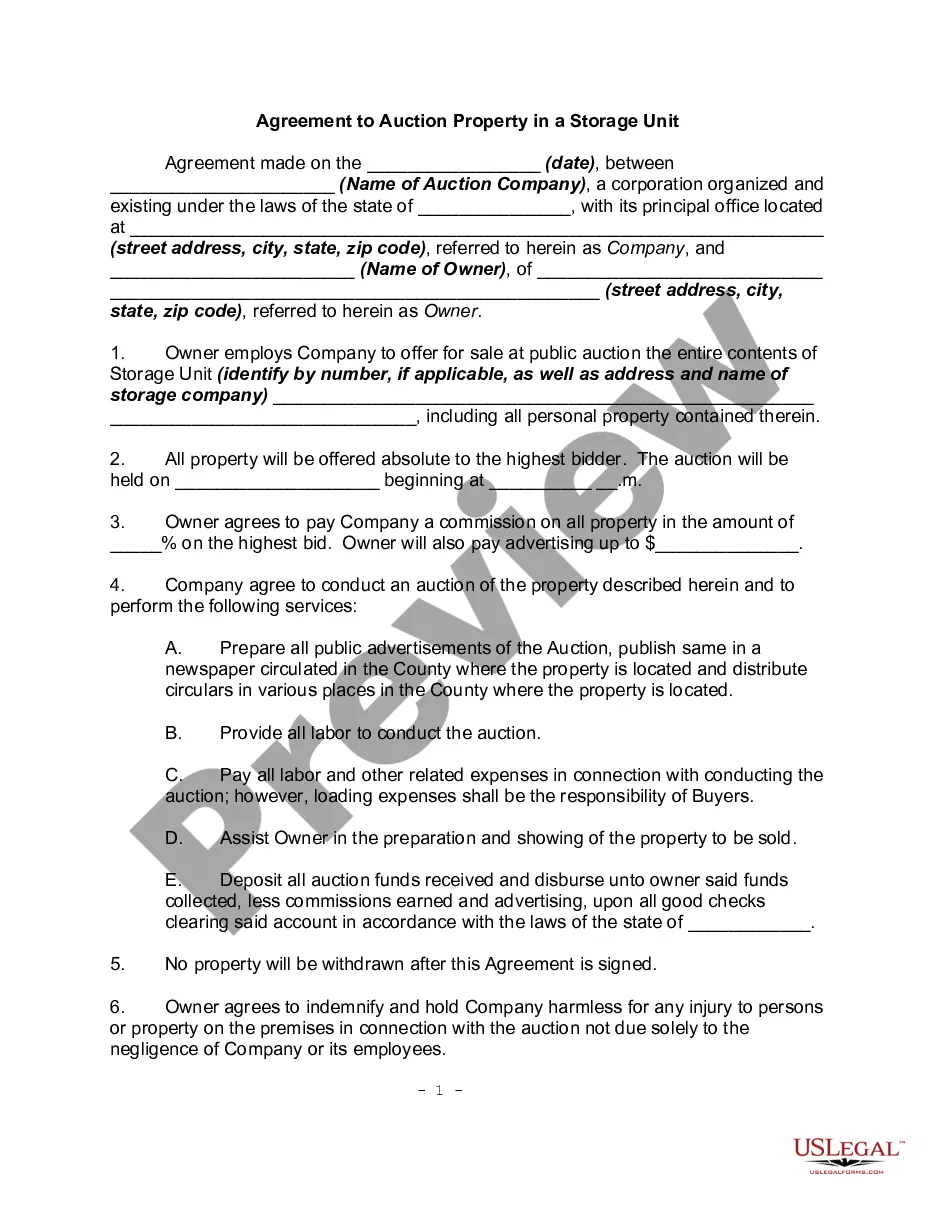
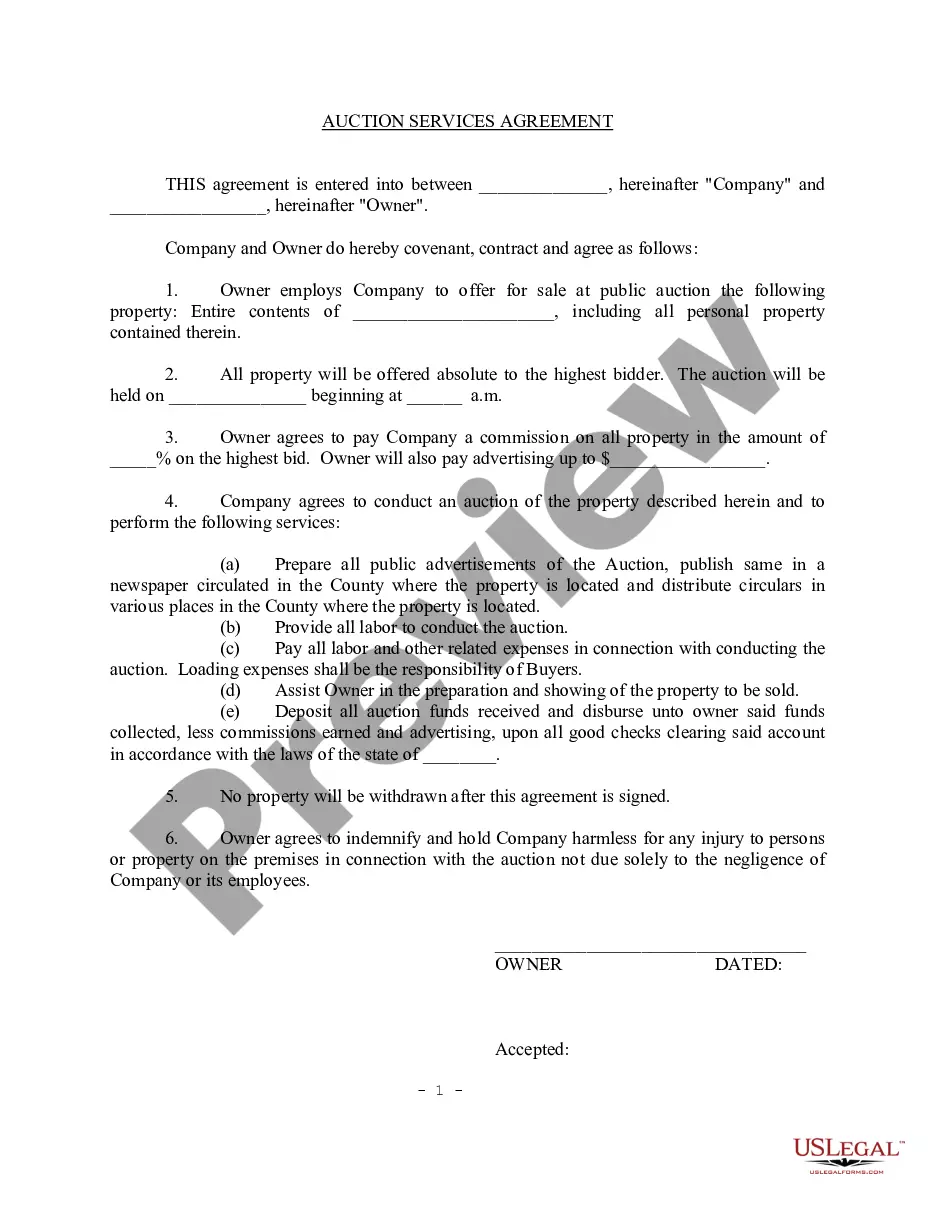
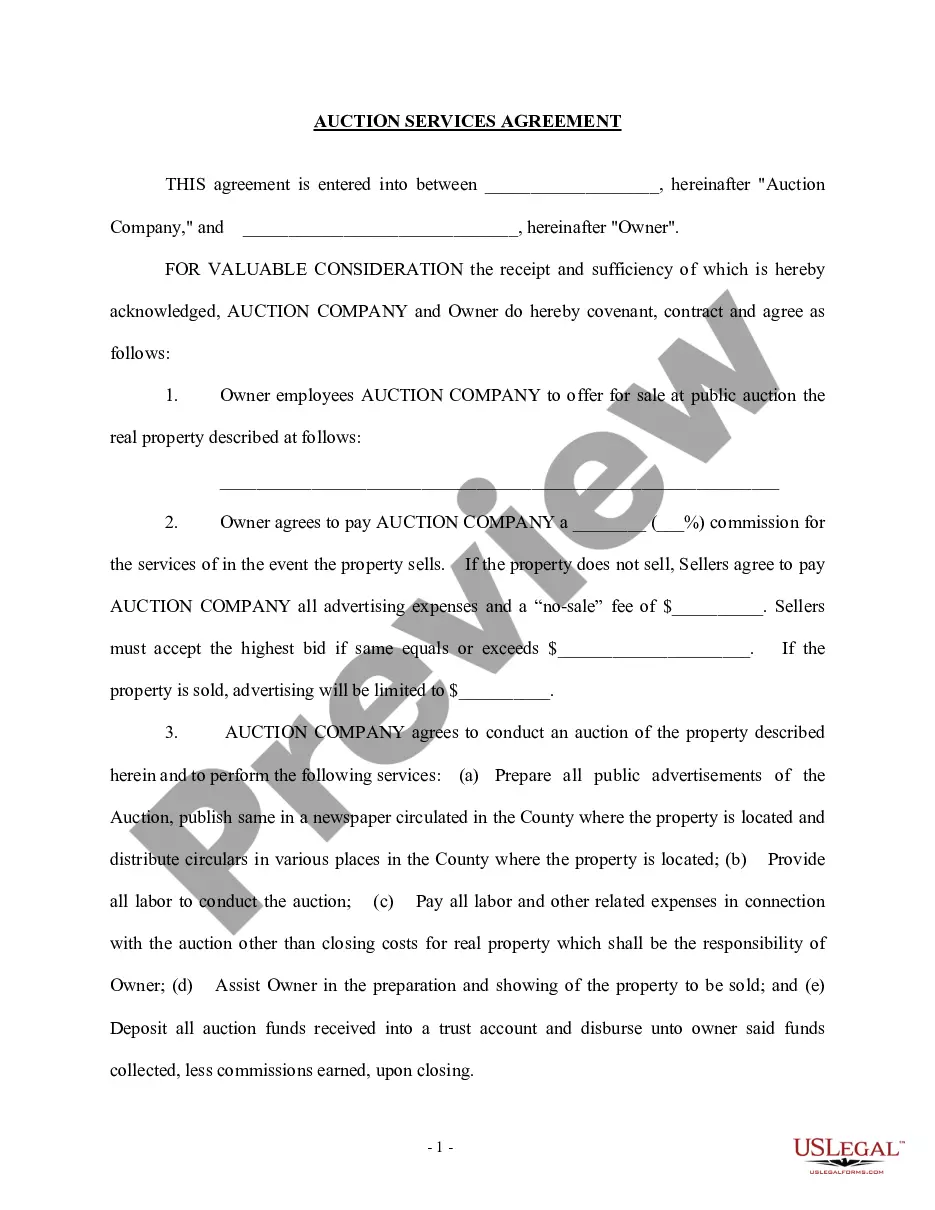
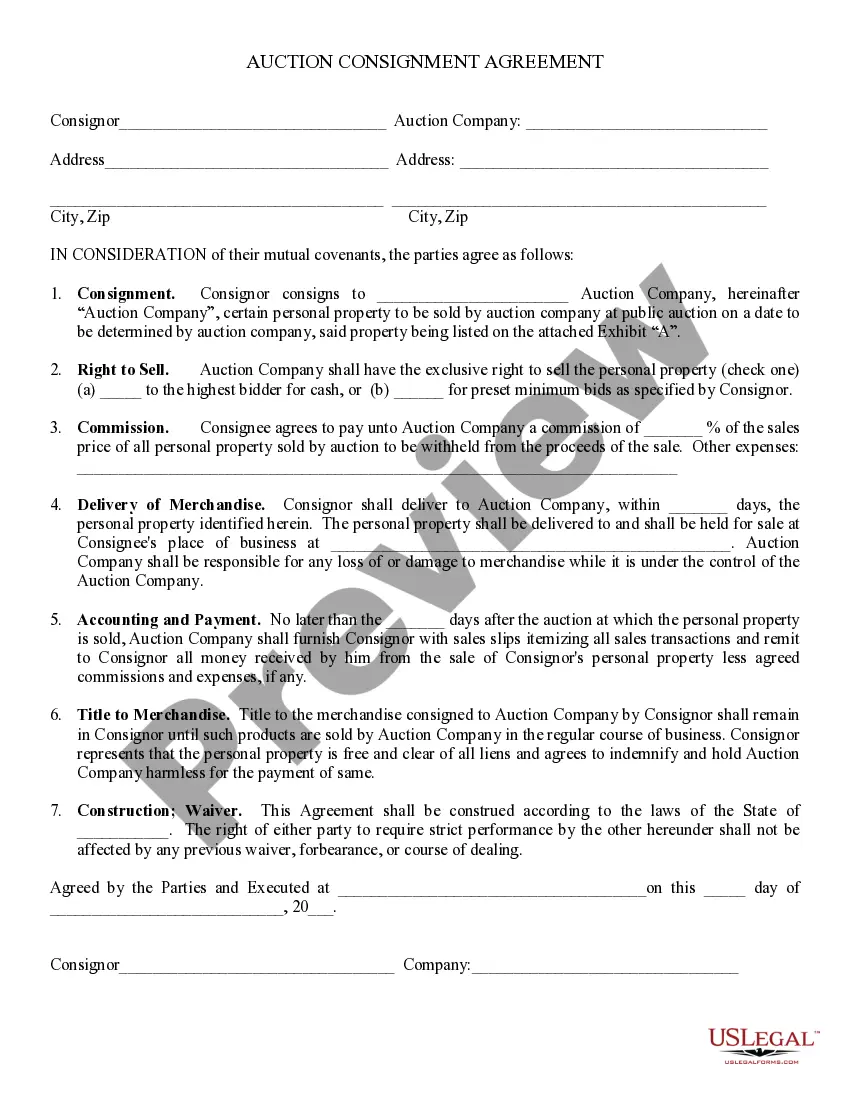
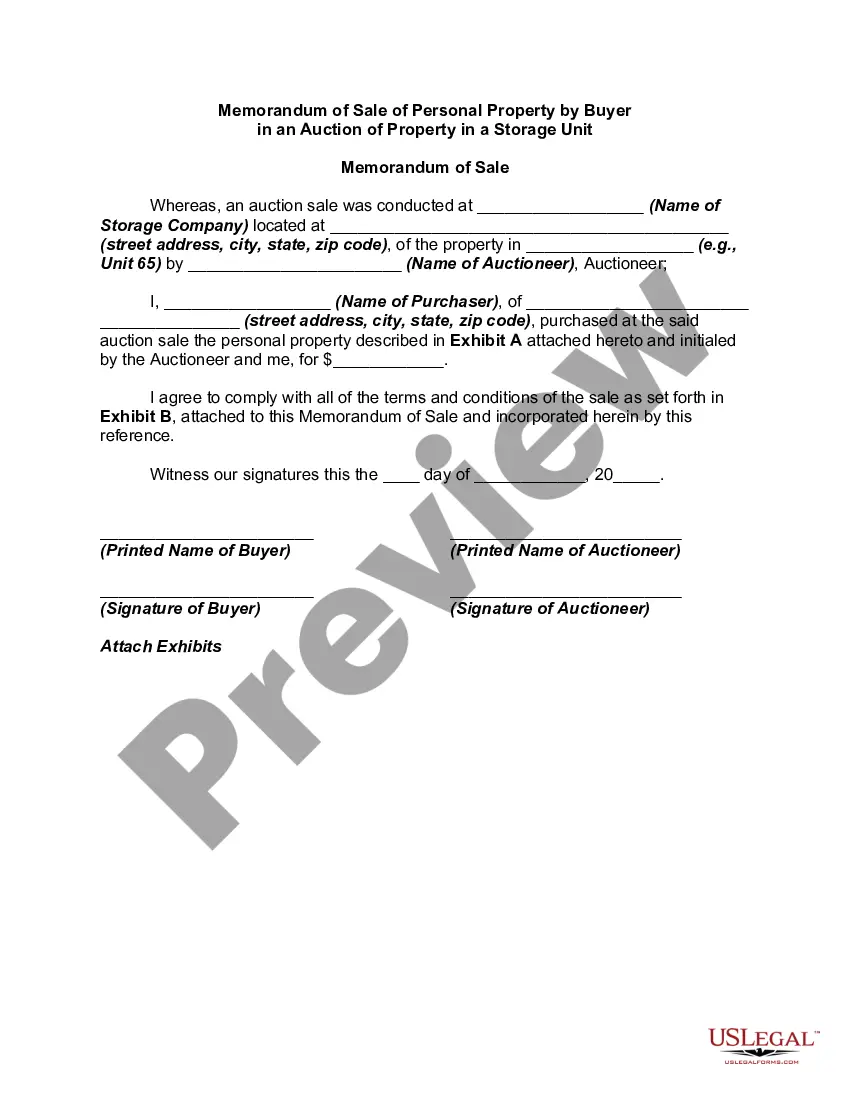
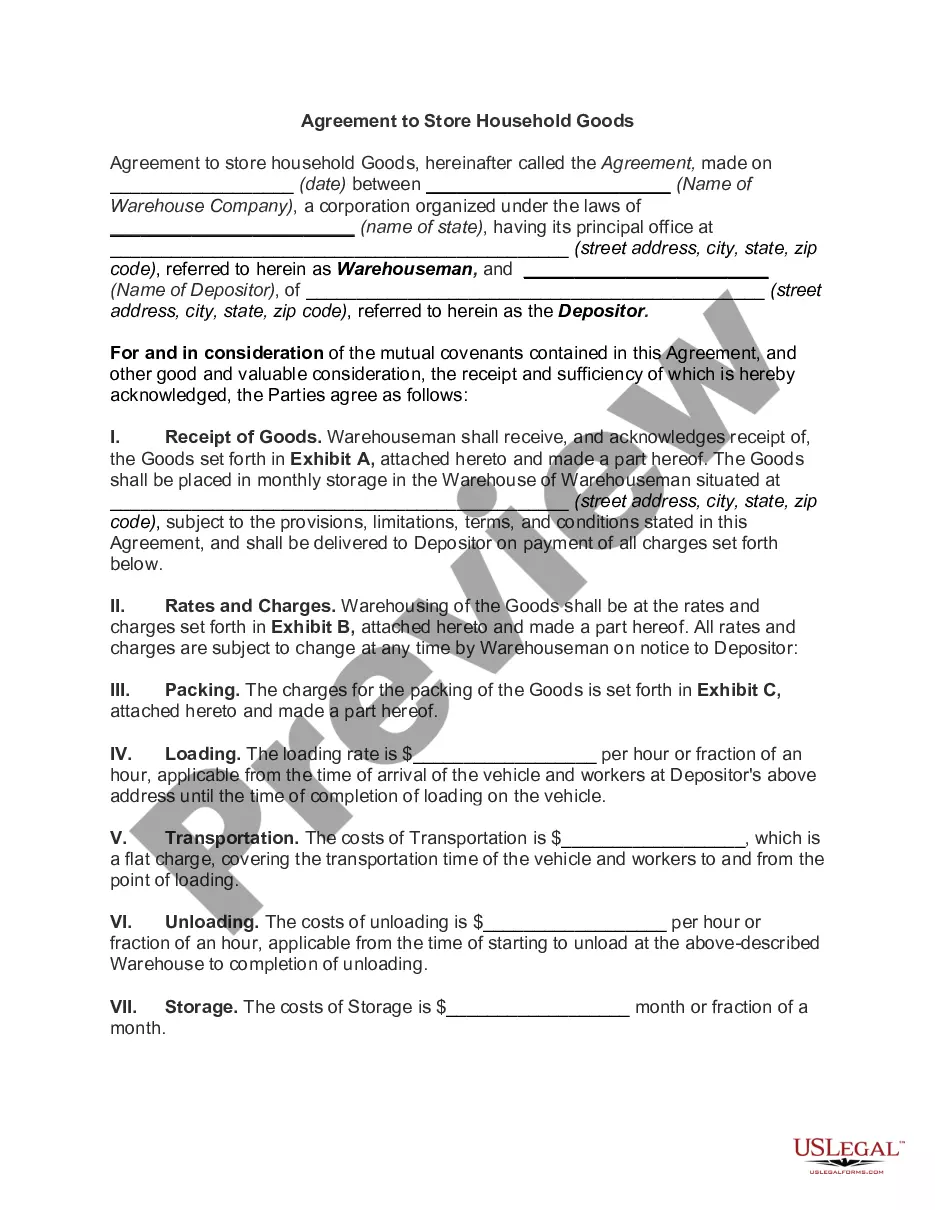
The Agreement to Auction Property in a Storage Unit is a legal document that outlines the terms under which an auction company will sell the contents of a storage unit on behalf of the owner. This form serves as a contract between the owner of the storage unit and the auction company, specifying details such as the auctioneer's responsibilities, fees, and conditions of the sale. Unlike other real estate auction agreements, this form is specifically tailored for personal property located within storage units.
What’s included in this form
- Identification of the contracting parties: Auction company and owner with relevant details.
- Description of the property being auctioned, including the storage unit information.
- Details about the auction process, including date and commission fees.
- Responsibilities of the auction company, including advertising and conducting the auction.
- Indemnification clause to protect the auction company from liability.
Common use cases
This form should be used when an owner of a storage unit wishes to sell its contents through a public auction. It is applicable in scenarios where the owner no longer needs the items in the storage unit, is downsizing, or is looking to liquidate personal property due to financial reasons. Utilizing this agreement ensures that both the auction company and the owner have a clear understanding of their rights and responsibilities throughout the auction process.
Who this form is for
This form is intended for:
- Owners of storage units ready to auction their contents.
- Auction companies looking to formalize their service agreements with storage unit owners.
- Individuals or businesses needing to liquidate personal property through a structured auction process.
Completing this form step by step
- Identify the parties involved: Fill in the names and addresses of both the auction company and the owner.
- Specify the property: Describe the contents of the storage unit and its address.
- Enter the auction details: Note the date and time of the auction in the appropriate fields.
- Detail the commission and fees: Clearly state the percentage commission and any advertising costs the owner will cover.
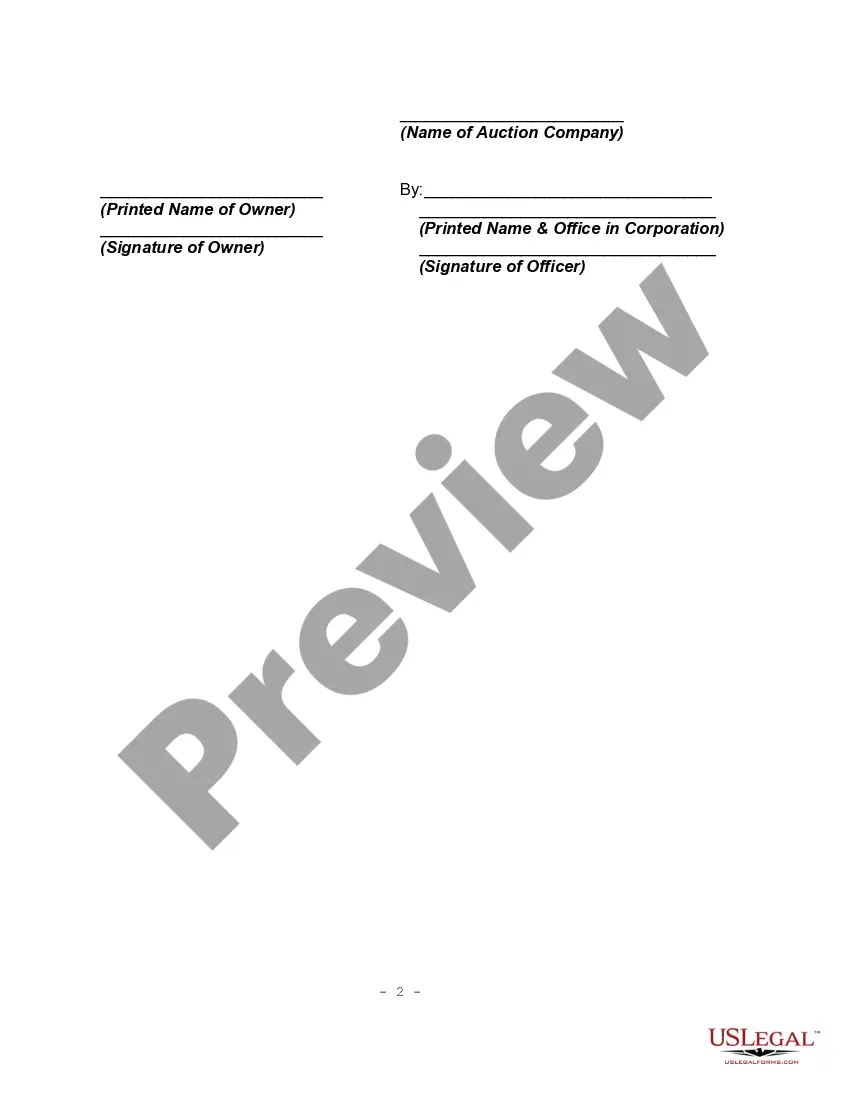
- Sign and date the agreement: Ensure all parties sign the document to make it legally binding.
Does this document require notarization?
In most cases, this form does not require notarization. However, some jurisdictions or signing circumstances might. US Legal Forms offers online notarization powered by Notarize, accessible 24/7 for a quick, remote process.
Get your form ready online
Our built-in tools help you complete, sign, share, and store your documents in one place.
Make edits, fill in missing information, and update formatting in US Legal Forms—just like you would in MS Word.
Download a copy, print it, send it by email, or mail it via USPS—whatever works best for your next step.
Sign and collect signatures with our SignNow integration. Send to multiple recipients, set reminders, and more. Go Premium to unlock E-Sign.
If this form requires notarization, complete it online through a secure video call—no need to meet a notary in person or wait for an appointment.
We protect your documents and personal data by following strict security and privacy standards.

Make edits, fill in missing information, and update formatting in US Legal Forms—just like you would in MS Word.

Download a copy, print it, send it by email, or mail it via USPS—whatever works best for your next step.

Sign and collect signatures with our SignNow integration. Send to multiple recipients, set reminders, and more. Go Premium to unlock E-Sign.

If this form requires notarization, complete it online through a secure video call—no need to meet a notary in person or wait for an appointment.

We protect your documents and personal data by following strict security and privacy standards.
Common mistakes
- Failing to specify the auction date clearly, leading to scheduling conflicts.
- Not including complete property descriptions, which can lead to disputes.
- Omitting signatures, rendering the agreement invalid.
- Ignoring state-specific regulations that govern auctions.
Why use this form online
- Convenience of downloading and filling out the form at your own pace.
- Easy access to templates drafted by licensed attorneys, ensuring legal compliance.
- Online platforms often provide guidance and tips to help complete the form correctly.
Legal use & context
- This form serves as a binding agreement between parties involved in an auction.
- It is enforceable as long as both parties fulfill their obligations outlined in the agreement.
- Clarity in terms helps to avoid disputes related to the auction process.
Key takeaways
- The Agreement to Auction Property in a Storage Unit is crucial for selling items from a storage unit through public auction.
- Both the property owner and auction company have specific responsibilities outlined in the form.
- Checking state-specific rules is important to ensure compliance with local laws.
Looking for another form?
Form popularity
FAQ
A storage unit auction takes place when a storage tenant stops paying rent. After a certain period without payment, the tenant's belongings may be auctioned to the highest bidder to pay back rent owed. It also clears out the contents of the self storage space so that the landlord may re-rent the unit.
It's possible to sell everything in your storage unit at once, though you may not get much money for the contents. Renters who don't pay their bills for storage find their possessions auctioned by the owners of the self storage facility. You can hire these auctioneers to sell your unit.
Divide and Conquer. If you're ready to sell that junk in your storage unit, the first thing you have to do is make sure that you're selling it in the right place. Go Old Fashioned. When in Doubt, Craigslist.
Probably the most profitable way to sell your storage unit belongings is by selling each item individually. You can take out an ad in your local newspaper or an online classified on craigslist, Facebook marketplace or ebay.
If you're moving for your job and don't yet have a place to live, storage is a good option. Likewise, if you need to make your home more presentable while it's on the market, but don't want to get rid of your stuff, rent a storage unit.
Self-storage facilities typically offer contracts on a month-to-month basis. This way, the customer has the option to store temporarily or long-term.Contracts offered by full-service storage facilities vary from company to company. Some insist on a 3 month minimum, while others offer month-to-month services.
Pay the balance owed. Perhaps the most obvious way to get out of a lease is to just pay out what's owed. Clear it out and then wait. Try to transfer the lease contract. Submit a request for lease release.
Self Storage operators do not typically run credit checks on their customers before renting a space and require minimum identification.If a customer does not pay their rent, the facility operator can recover the spaced in 60 to 90 days from default.
What will happen to the unit's contents? Once the unit is considered abandoned, the contents become the facility's property. Usually, an auction will be held, open to the public, to compensate for the unpaid rent.Anyone can attend the auction and bid on the items--including the items' owner.