Lease or Rental of Vacant Property or Lot with Lessee to have the right to Construct Improvements
About this form
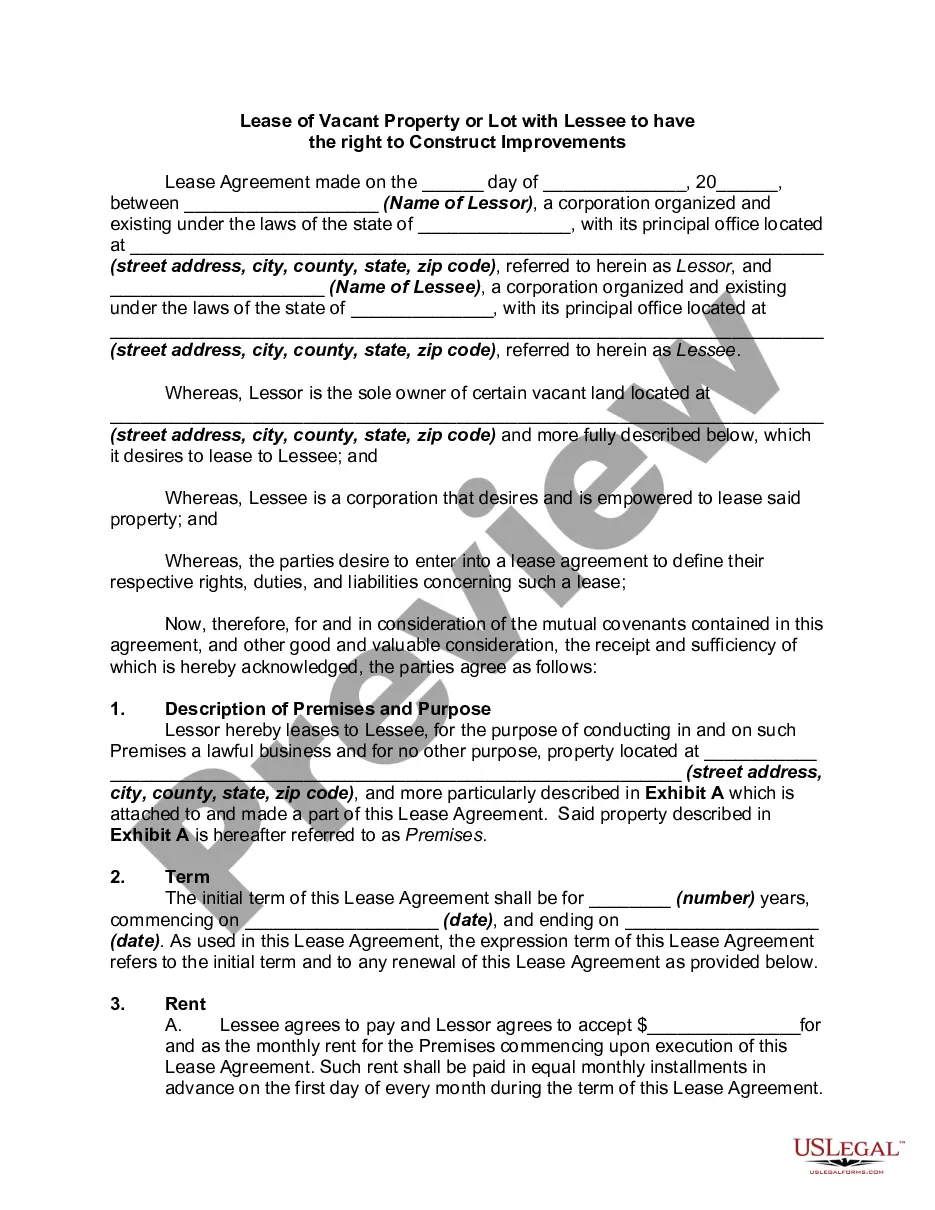
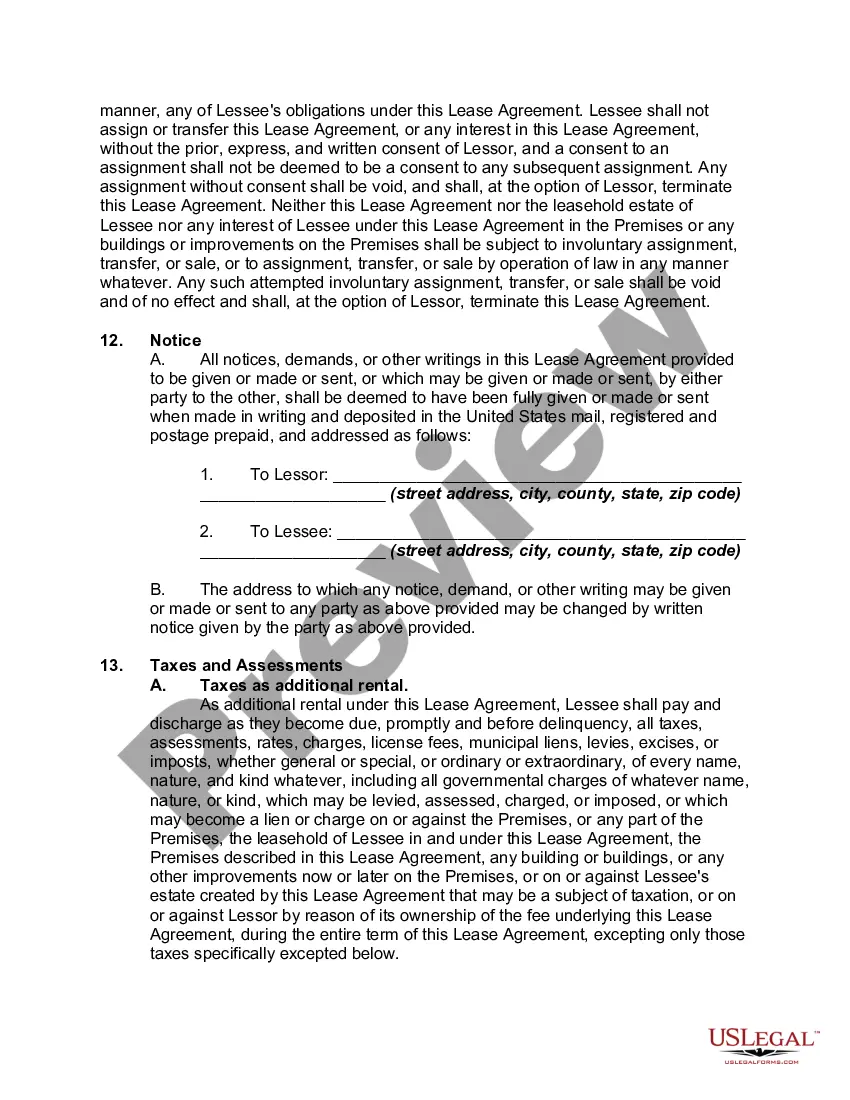
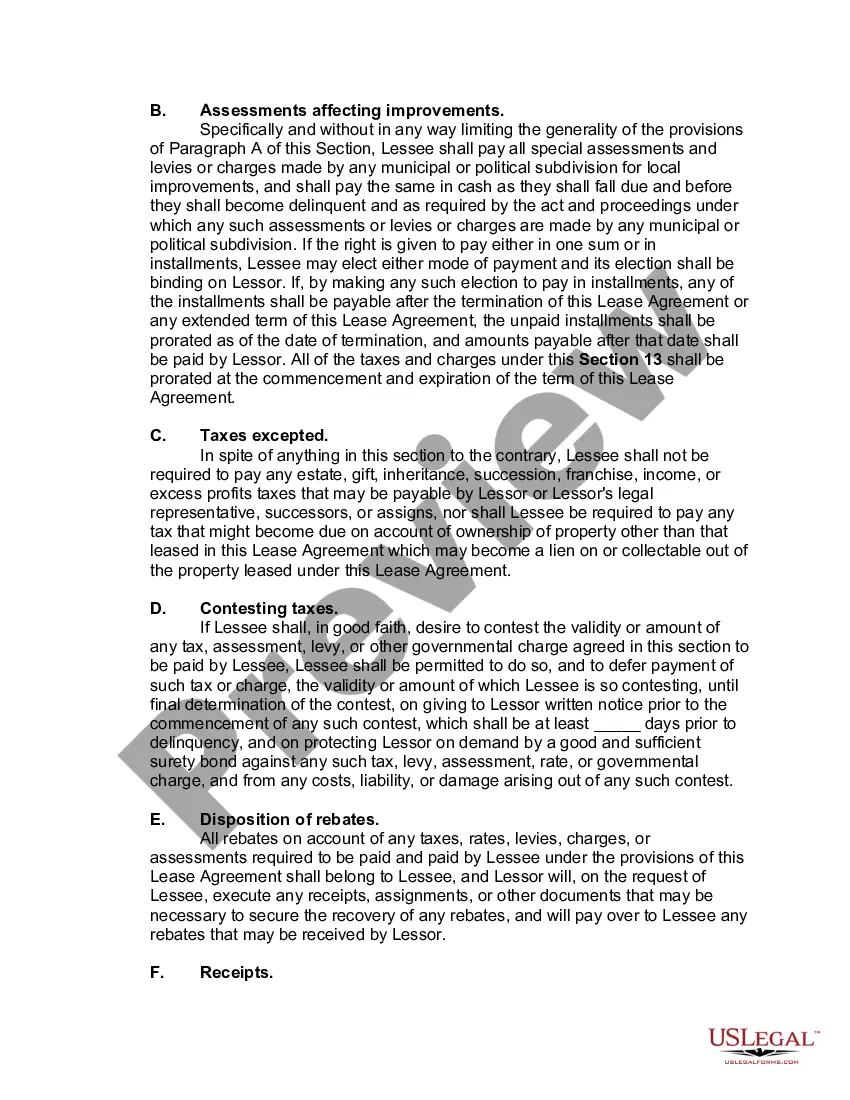
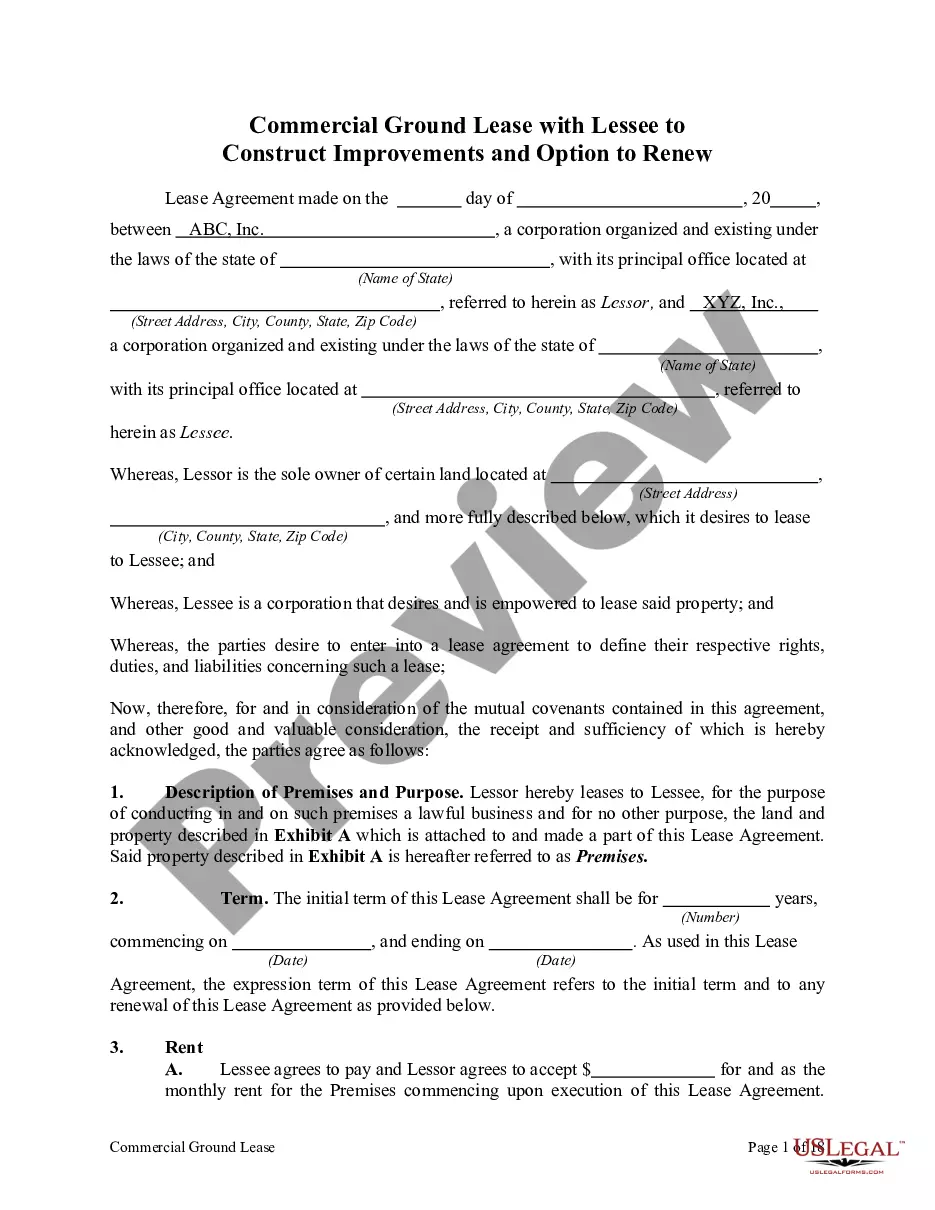
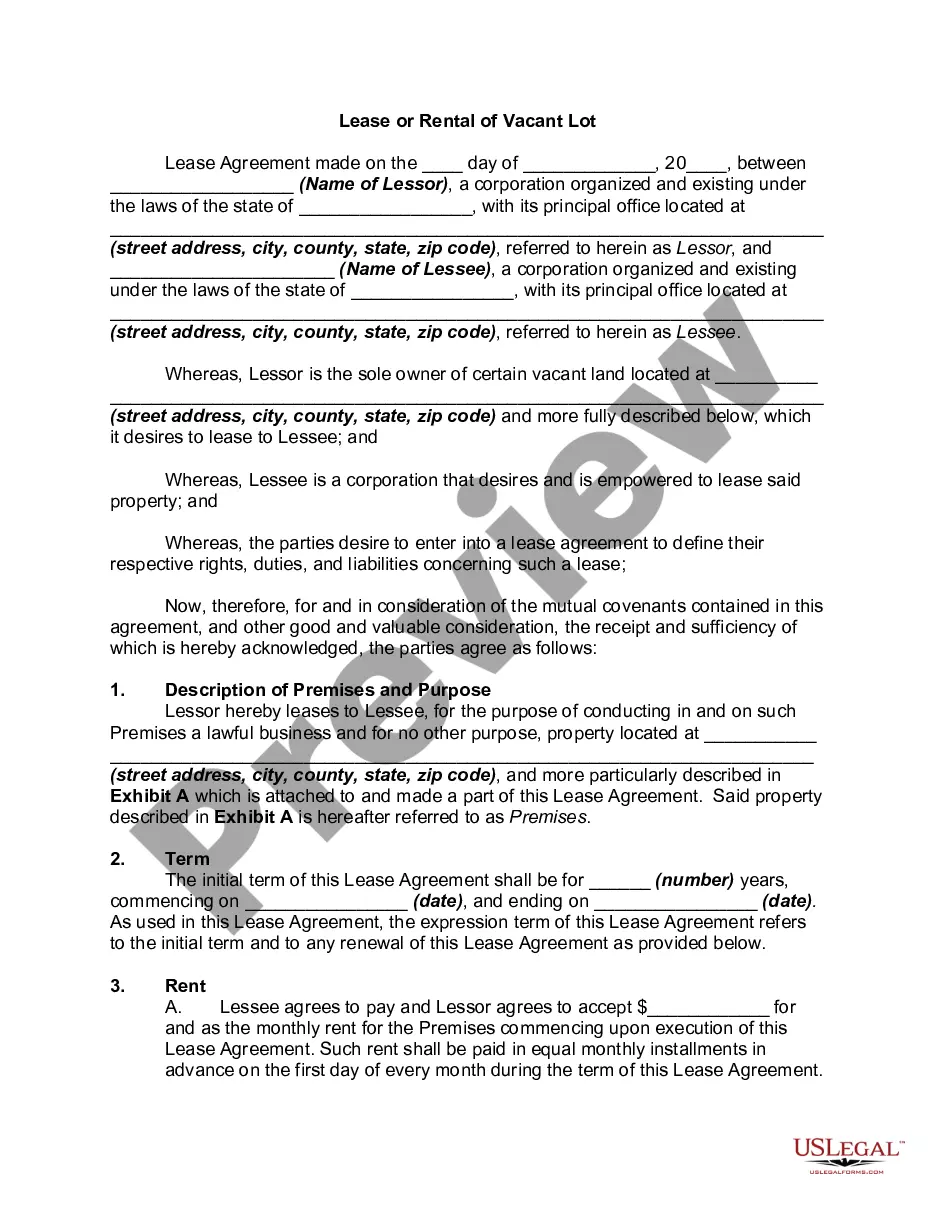
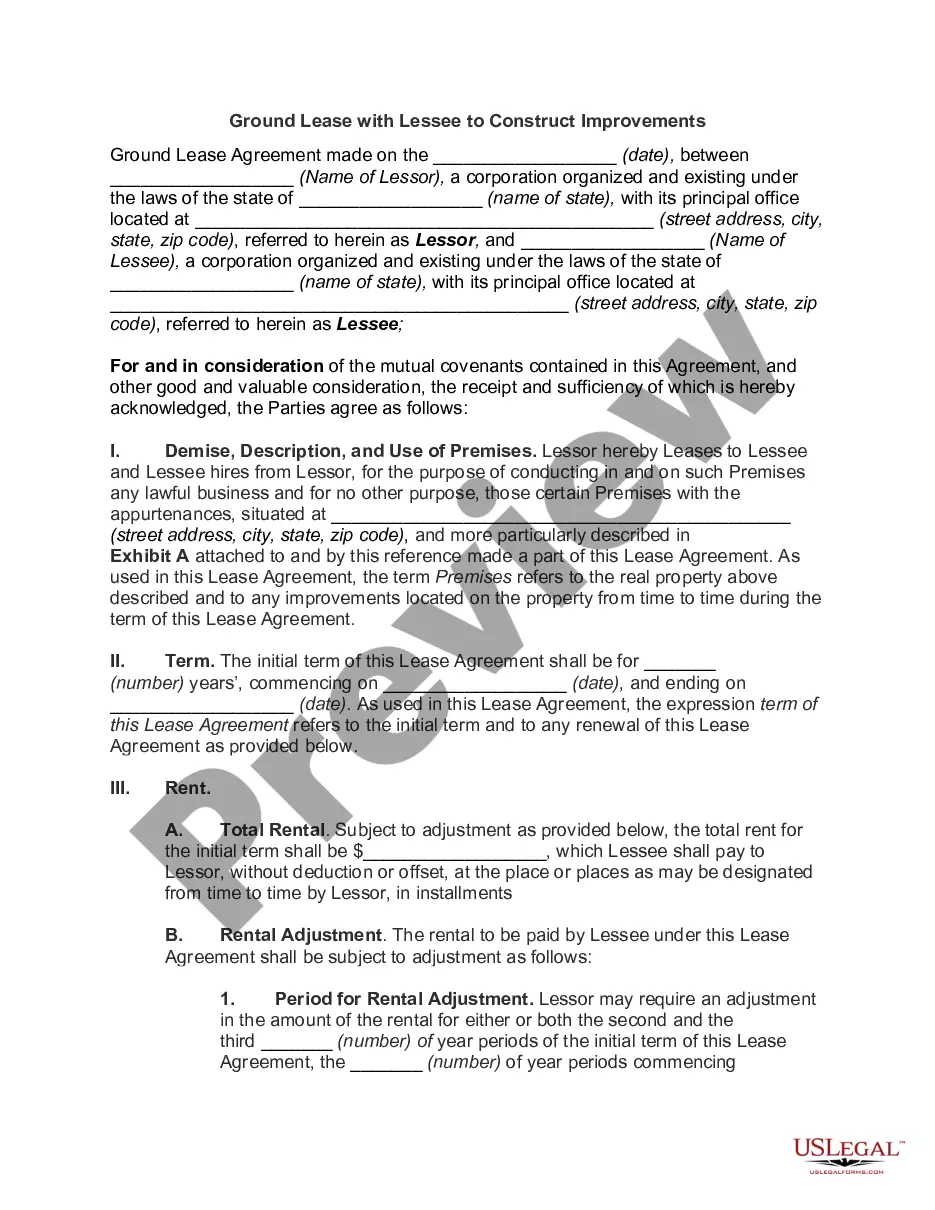
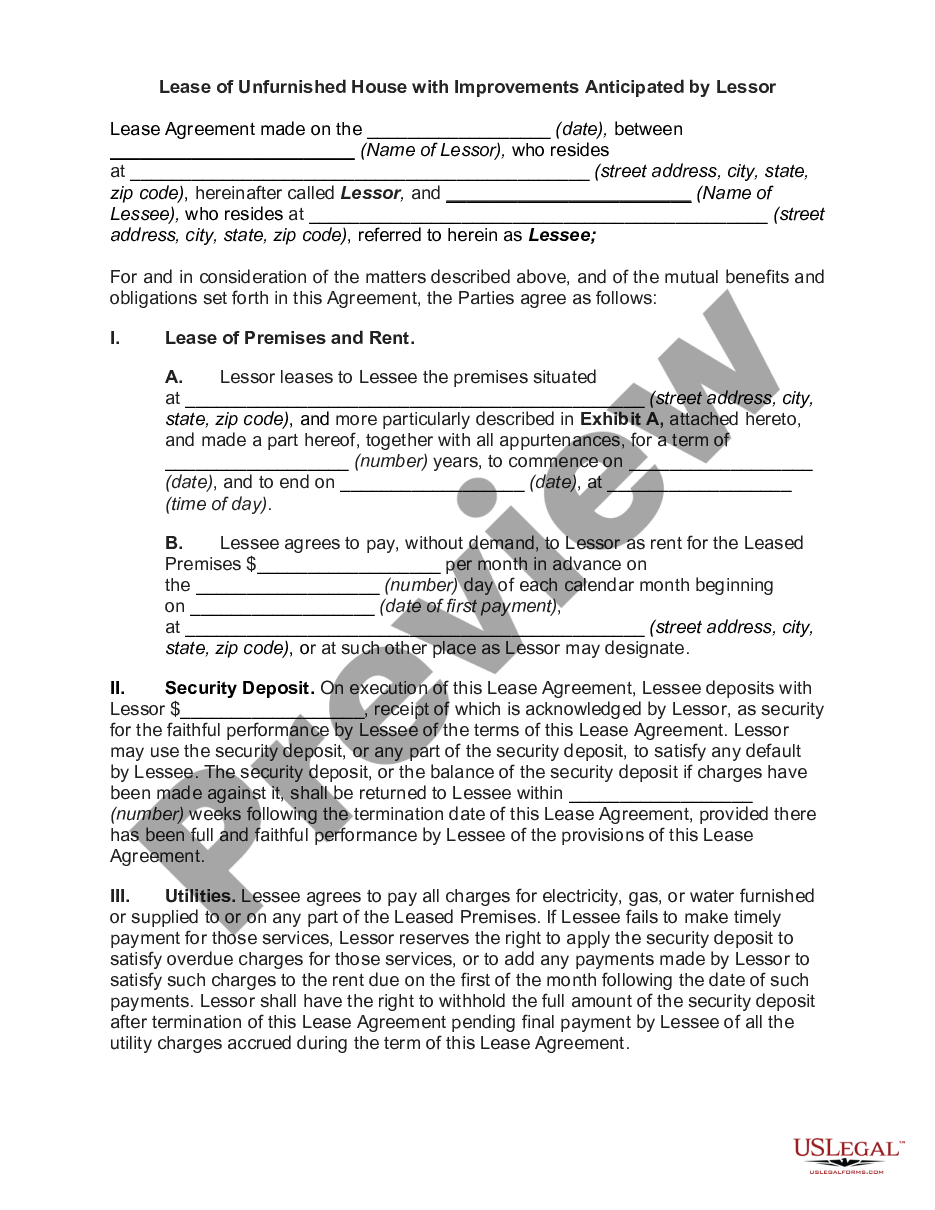
This form is a Lease or Rental Agreement specifically for the leasing of vacant property or lots, where the lessee has the right to construct improvements. It formalizes the relationship between the lessor (landlord) and the lessee (tenant), defining their respective rights and responsibilities. Unlike standard rental agreements, this form allows the tenant to build on the property, which requires careful legal consideration.
Key parts of this document
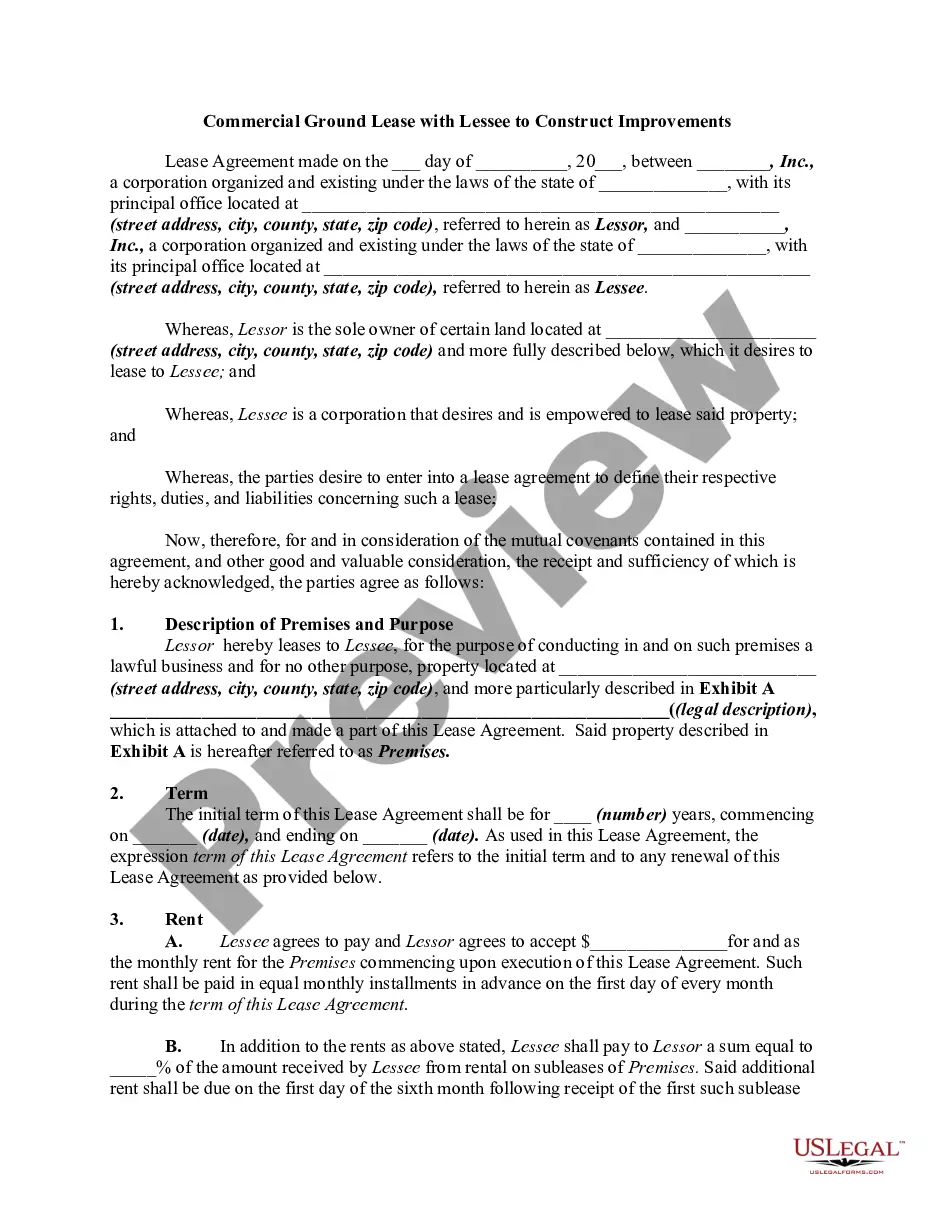
- Identification of the parties involved (lessor and lessee).
- Description of the leased property and its intended use.
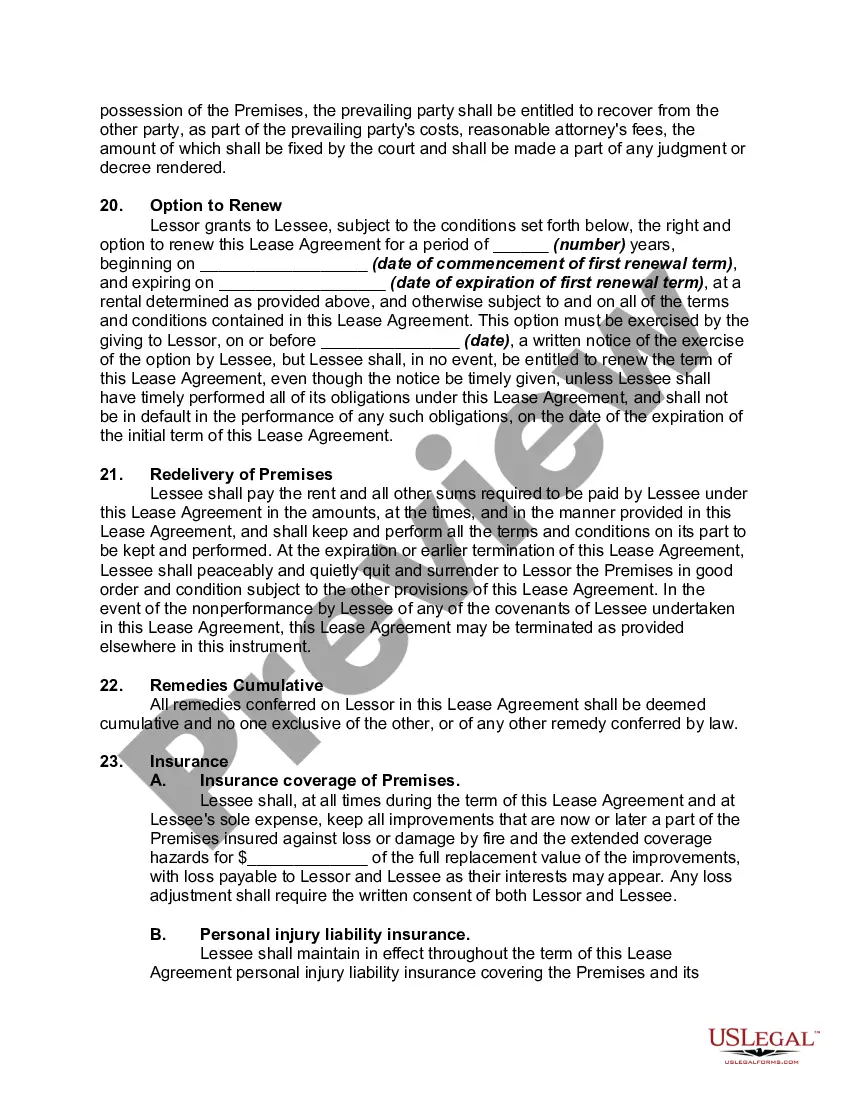
- Specified lease term and rent payment details.
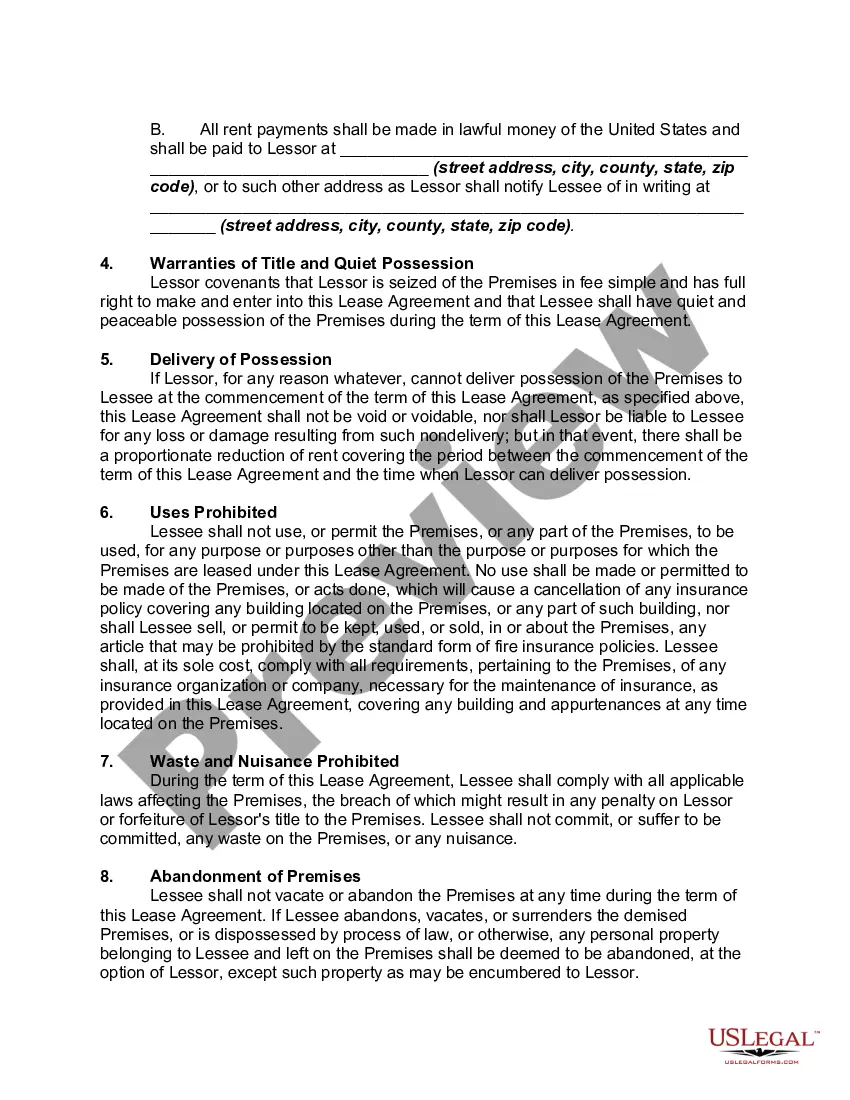
- Warranties related to title and peaceful possession.
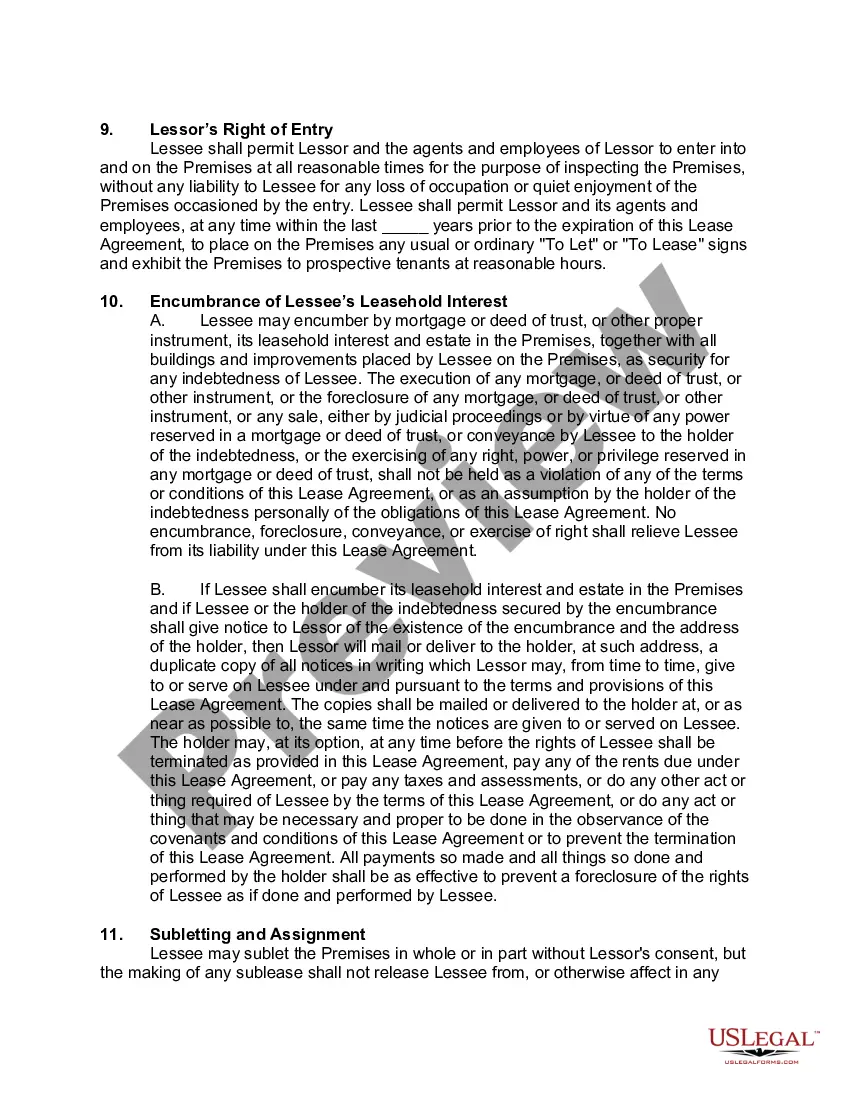
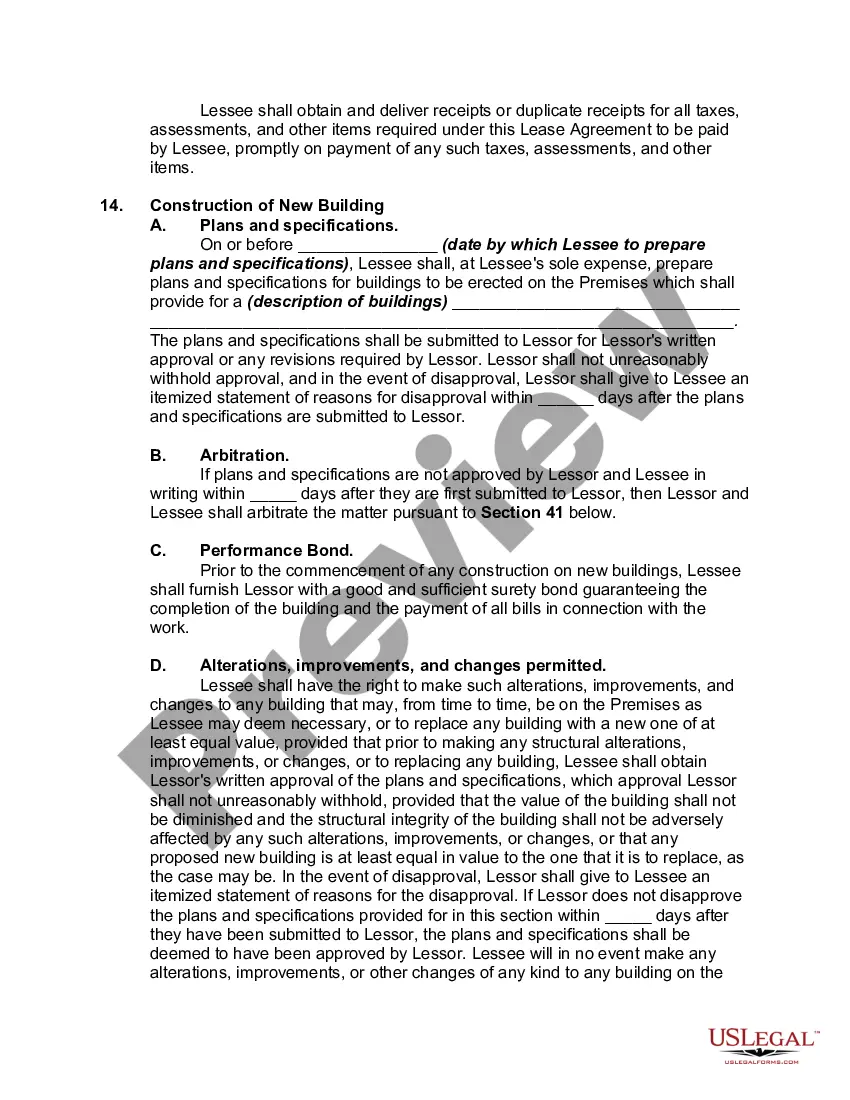
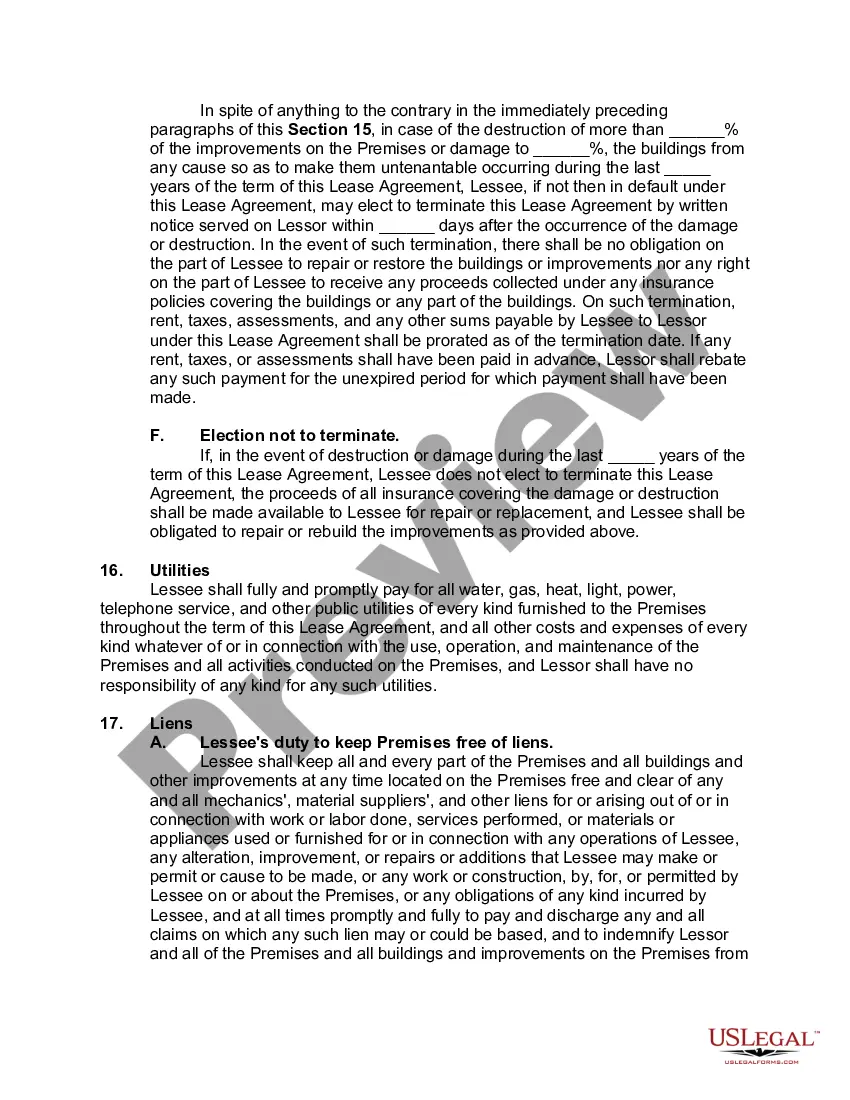
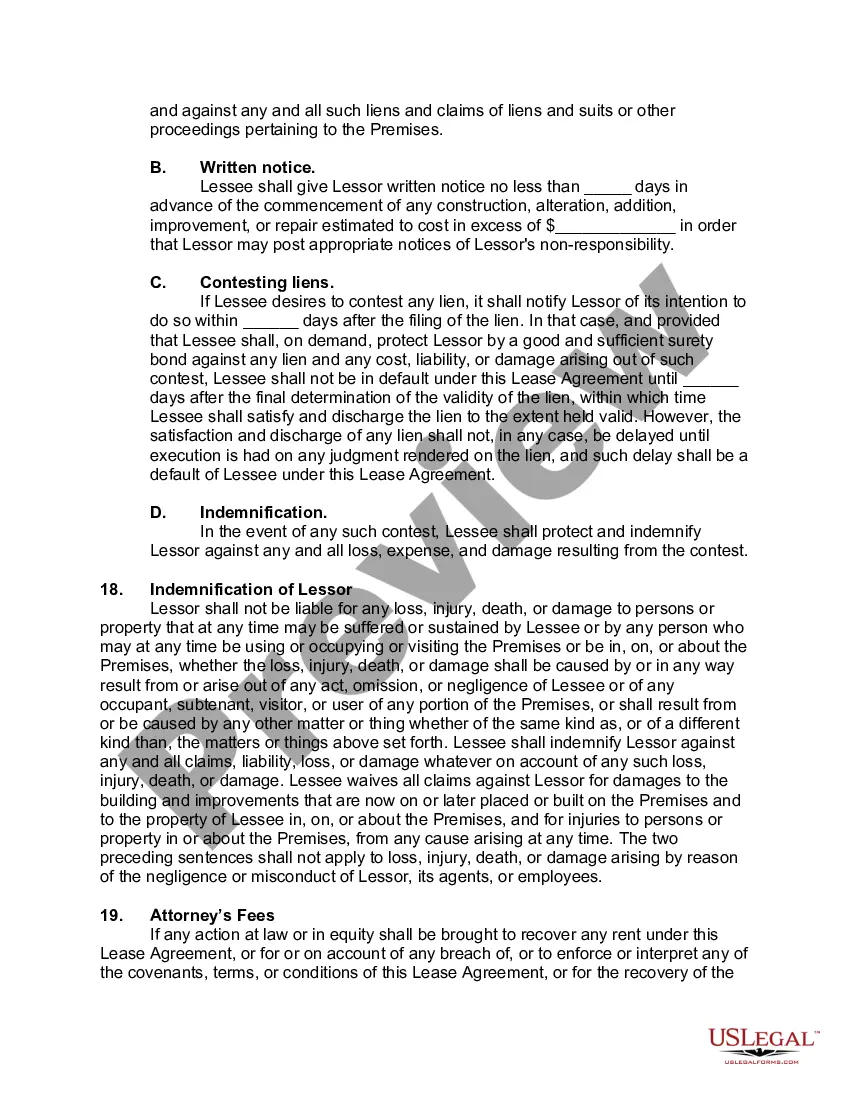
- Provisions regarding construction and improvements on the property.
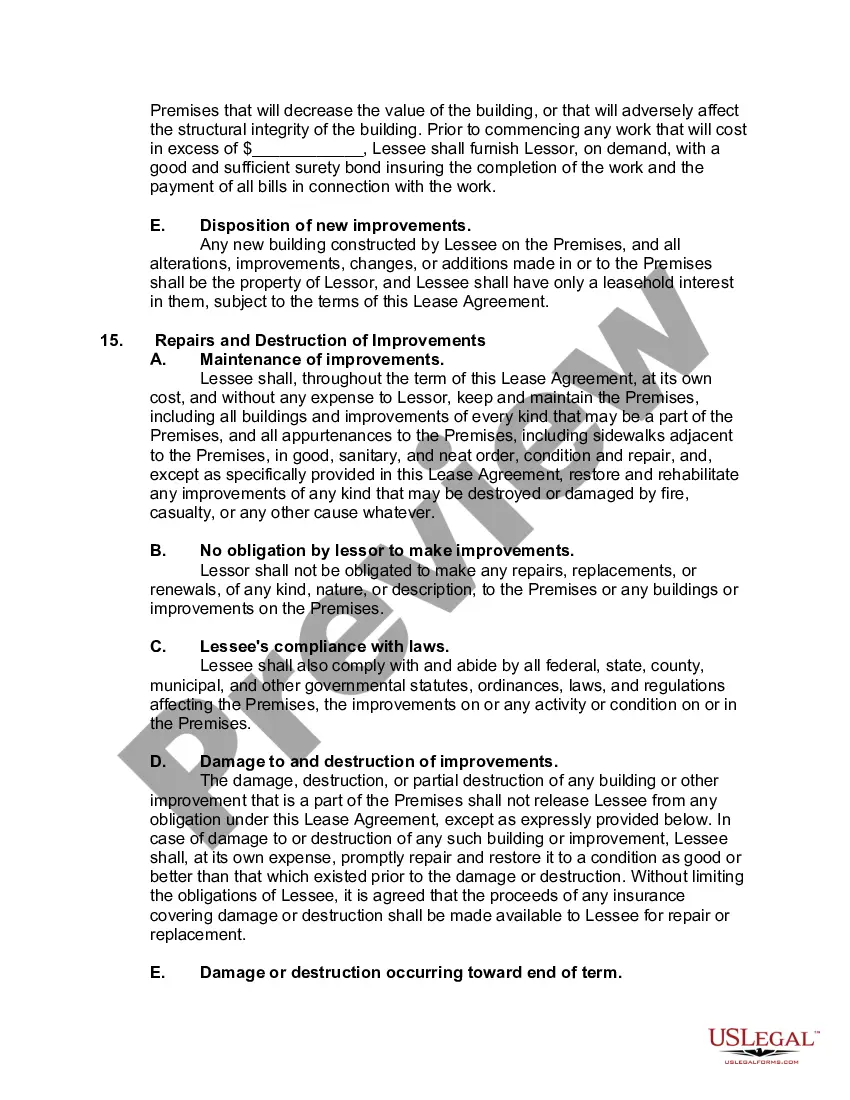
- Clauses about repairs, maintenance, and insurance responsibilities.

When to use this document
This form should be used when an individual or business wants to lease a vacant property and has plans to build or make improvements on that property. It is suitable for landlords who want to ensure that their property can be developed, while also protecting their interests through a detailed agreement.
Who can use this document
- Property owners (lessors) looking to lease their vacant land.
- Businesses or individuals (lessees) intending to enhance the leased property.
- Contractors or developers seeking to establish a formal terms of use for a property.
How to complete this form
- Identify and enter the names and addresses of the lessor and lessee.
- Provide a detailed description of the property being leased.
- Specify the lease term start and end dates.
- Indicate the rent amount and payment schedule.
- Review all clauses related to construction and maintenance responsibilities.
- Ensure both parties sign the agreement to finalize the lease.
Notarization requirements for this form
This form does not typically require notarization unless specified by local law. However, it is advisable to check local regulations to ensure compliance.
Get your form ready online
Our built-in tools help you complete, sign, share, and store your documents in one place.
Make edits, fill in missing information, and update formatting in US Legal Forms—just like you would in MS Word.
Download a copy, print it, send it by email, or mail it via USPS—whatever works best for your next step.
Sign and collect signatures with our SignNow integration. Send to multiple recipients, set reminders, and more. Go Premium to unlock E-Sign.
If this form requires notarization, complete it online through a secure video call—no need to meet a notary in person or wait for an appointment.
We protect your documents and personal data by following strict security and privacy standards.

Make edits, fill in missing information, and update formatting in US Legal Forms—just like you would in MS Word.

Download a copy, print it, send it by email, or mail it via USPS—whatever works best for your next step.

Sign and collect signatures with our SignNow integration. Send to multiple recipients, set reminders, and more. Go Premium to unlock E-Sign.

If this form requires notarization, complete it online through a secure video call—no need to meet a notary in person or wait for an appointment.

We protect your documents and personal data by following strict security and privacy standards.
Common mistakes
- Failing to specify the exact property description.
- Neglecting to include details about improvements or construction.
- Inadequate definition of lease terms and renewals.
- Not having all parties sign the document.
Benefits of using this form online
- Convenience of downloading anytime from anywhere.
- Edit and customize the agreement to meet specific needs.
- Access to forms created by licensed attorneys.
- Immediate availability to use legally binding documents.
Legal use & context
- This lease agreement establishes a binding contract between the lessor and lessee, outlining rights and obligations.
- It is essential to follow local laws regarding lease terms, particularly in relation to construction on leased property.
- Non-compliance with the agreement terms can result in legal disputes or termination of the lease.
Key takeaways
- This lease agreement is specifically designed for vacant property with allowances for tenant improvements.
- Clearly outline responsibilities and terms to avoid misunderstandings between parties.
- Understand state-specific legal requirements to guarantee enforceability.
Looking for another form?
Form popularity
FAQ
The options are: Lessee owns the improvements. If the lessee owns the improvements, then the lessee initially records the allowance as an incentive (which is a deferred credit), and amortizes it over the lesser of either the term of the lease or the useful life of the improvements, with no residual value.
As a landlord, you have many rights that allow you to manage your rental property effectively and efficiently.Collecting rent deposits and payments, as well as any deposits or payments associated with pets, parking, and/or added amenities. Entering the tenant's unit with notice or due to an emergency. Evicting tenants.
A written lease should protect both the landlord and the tenant. Most leases are either of six month or one year duration. A standard lease form can be obtained from a book or stationery store. You can usually add special provisions to these forms to fit your special lease problems or needs.
How does a fixed-term lease protect tenants and owners or managers? When a tenant signs a lease, s/he is signing a legally enforceable contract. All the terms and conditions stated in the lease remain valid throughout the period specified. These constraints also apply to the owner or manager.
If the tenant pays for leasehold improvements, the capital expenditure is recorded as an asset on the tenant's balance sheet. Then the expense is recorded on income statements as amortization over either the life of the lease or the useful life of the asset, whichever is shorter.
The names and addresses of both parties; The description of the property; The rental amount and reasonable escalation; The frequency of rental payments, i.e. monthly; The amount of the deposit; The lease period; The notice period for termination of contract;
A lessee is a person who rents land or property, such as a vehicle. The person or entity the lessee rents from is the lessor.
If you are a landlord who is looking to write up a rental agreement, then you don't need to spend $250 an hour at your local lawyers office to get a contract written up. You can write up a rental agreement from your own home.
Terms. The lease should state the length of the agreement. Rent. The amount of rent and when it is due. Deposits and fees. The names of all tenants. Occupancy limits. Restrictions on disruptive activity. Pets. Maintenance and repairs.