Requests for Production of Documents in Federal Court to Judgment Debtor in General and Regarding Property Available to Satisfy Judgment
What this document covers
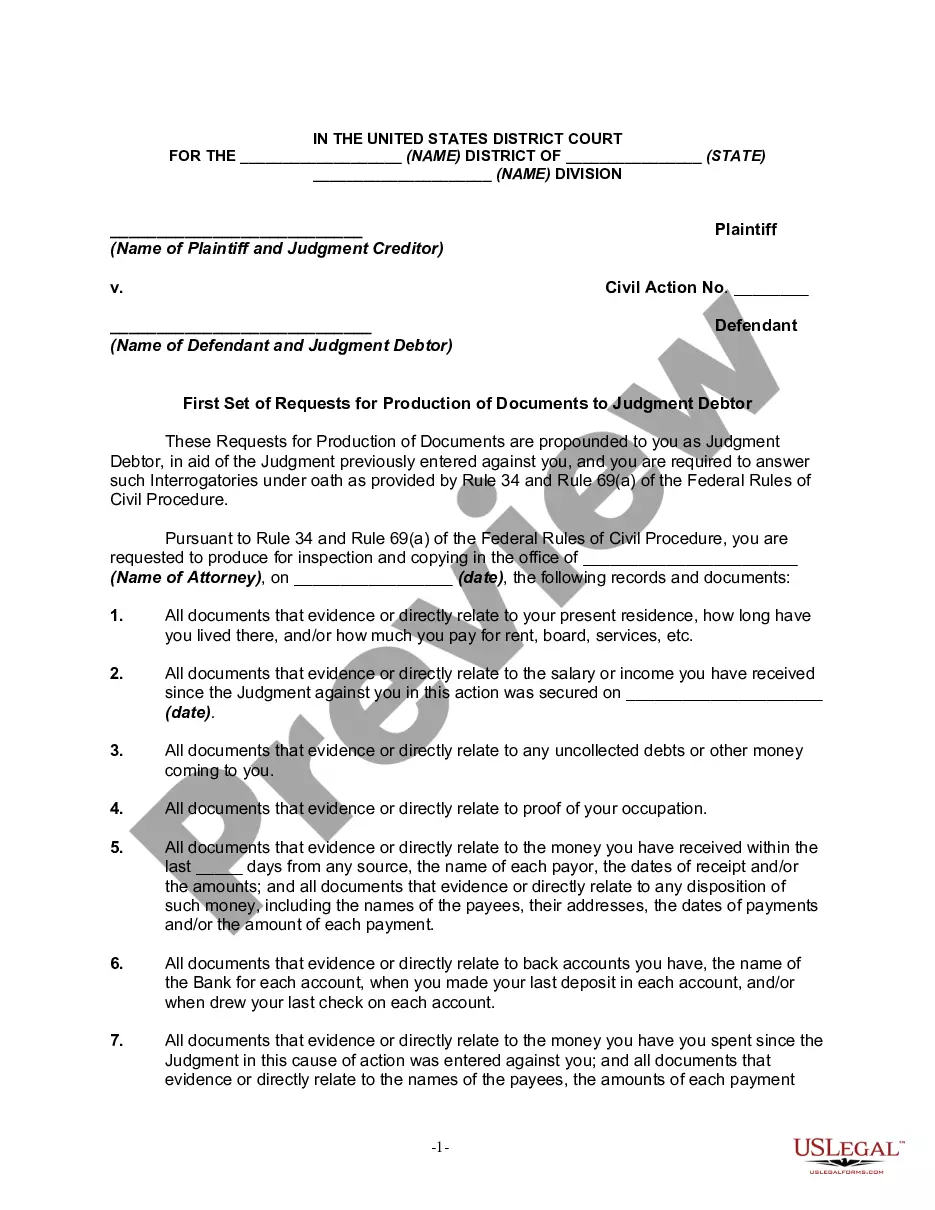
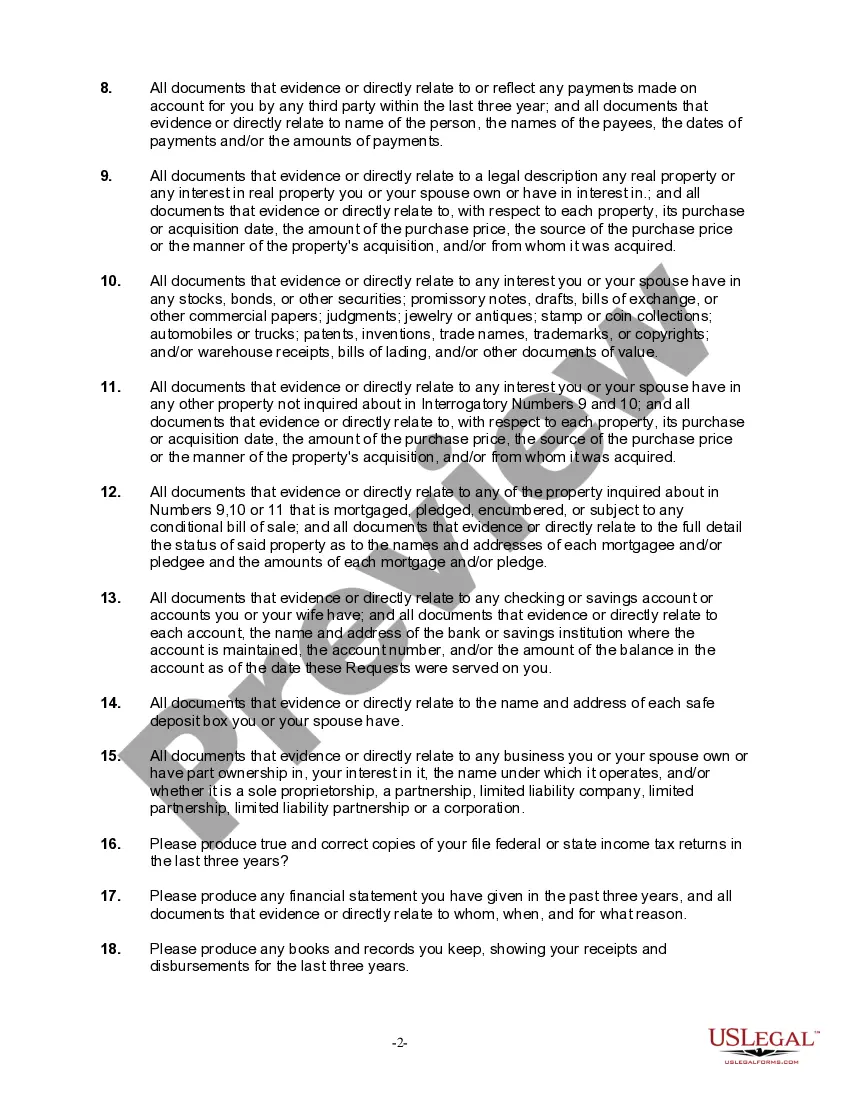
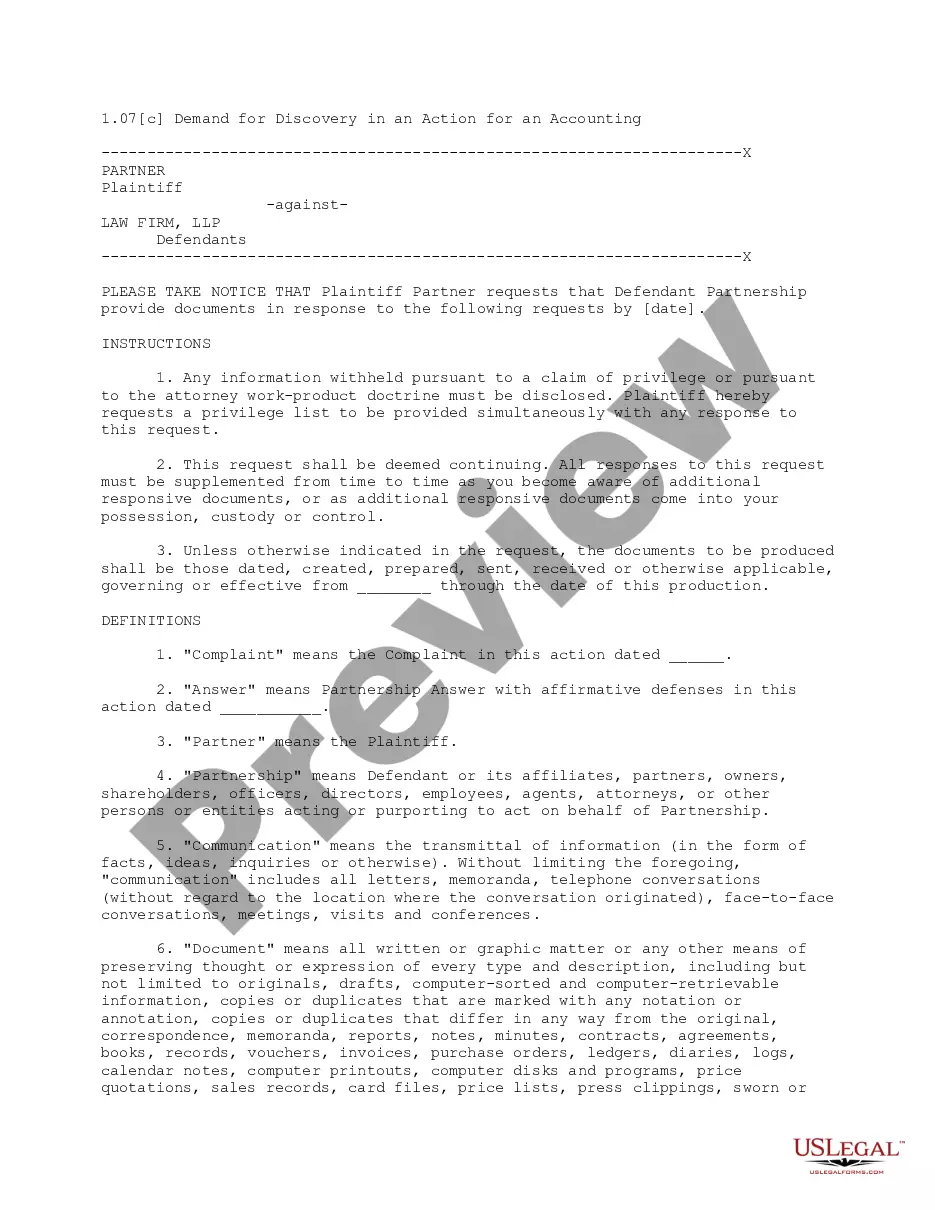
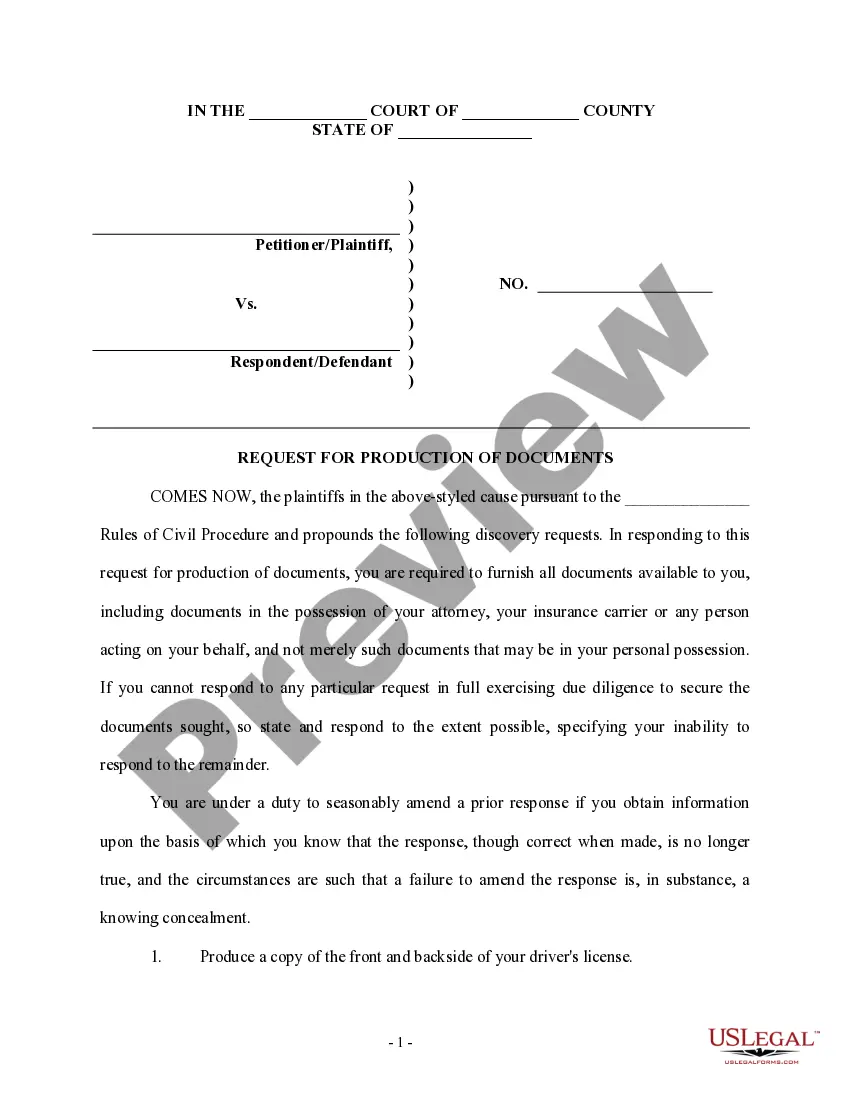
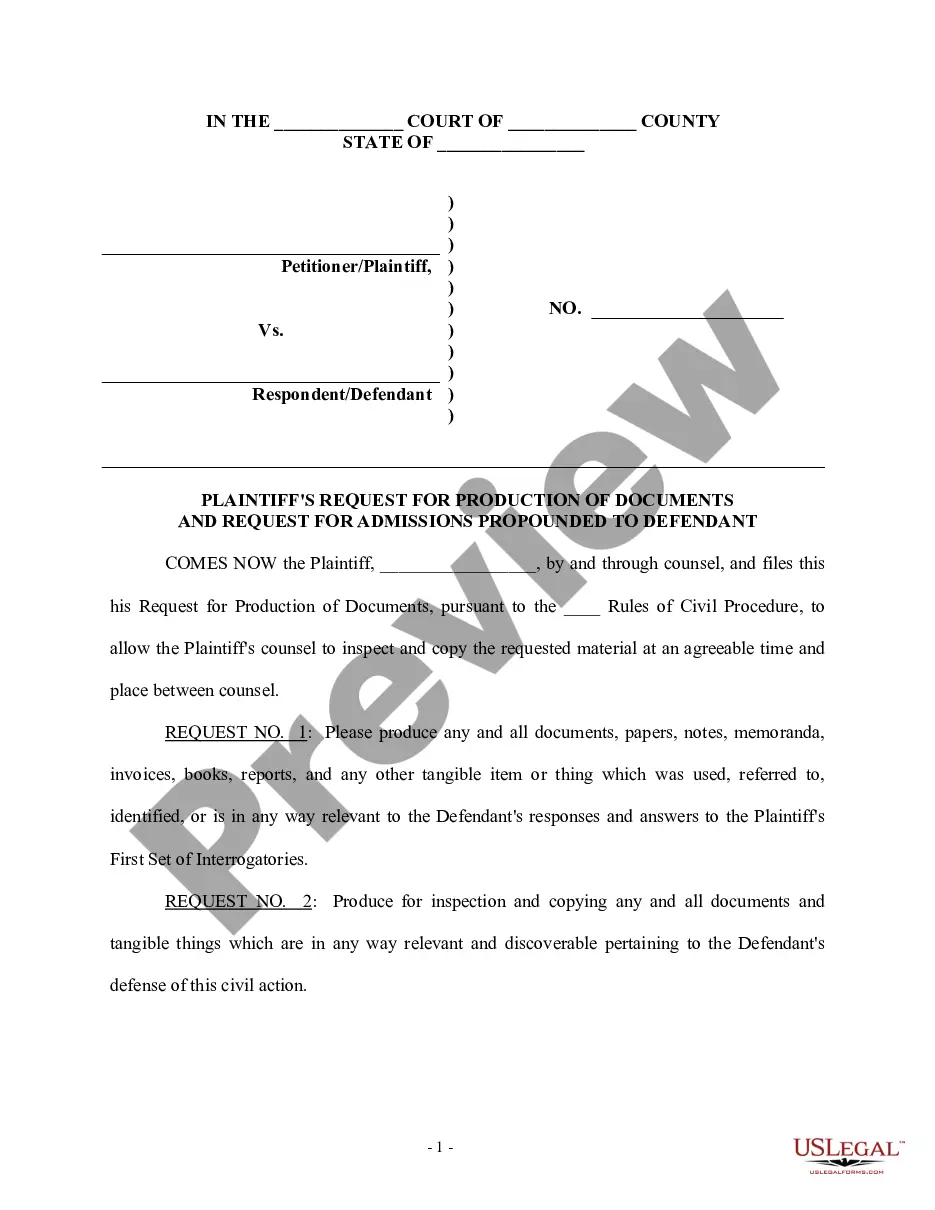
This form, known as Requests for Production of Documents in Federal Court to Judgment Debtor, is used to obtain specific documents from a judgment debtor in federal court. It serves as a vital tool for judgment creditors to gather information about a debtor's assets, income, and expenses, aiding in the collection of a judgment. Unlike other discovery tools, this form is specifically tailored to seek documents that can help satisfy a judgment, ensuring creditors have the necessary information to proceed with enforcement actions.
Key components of this form
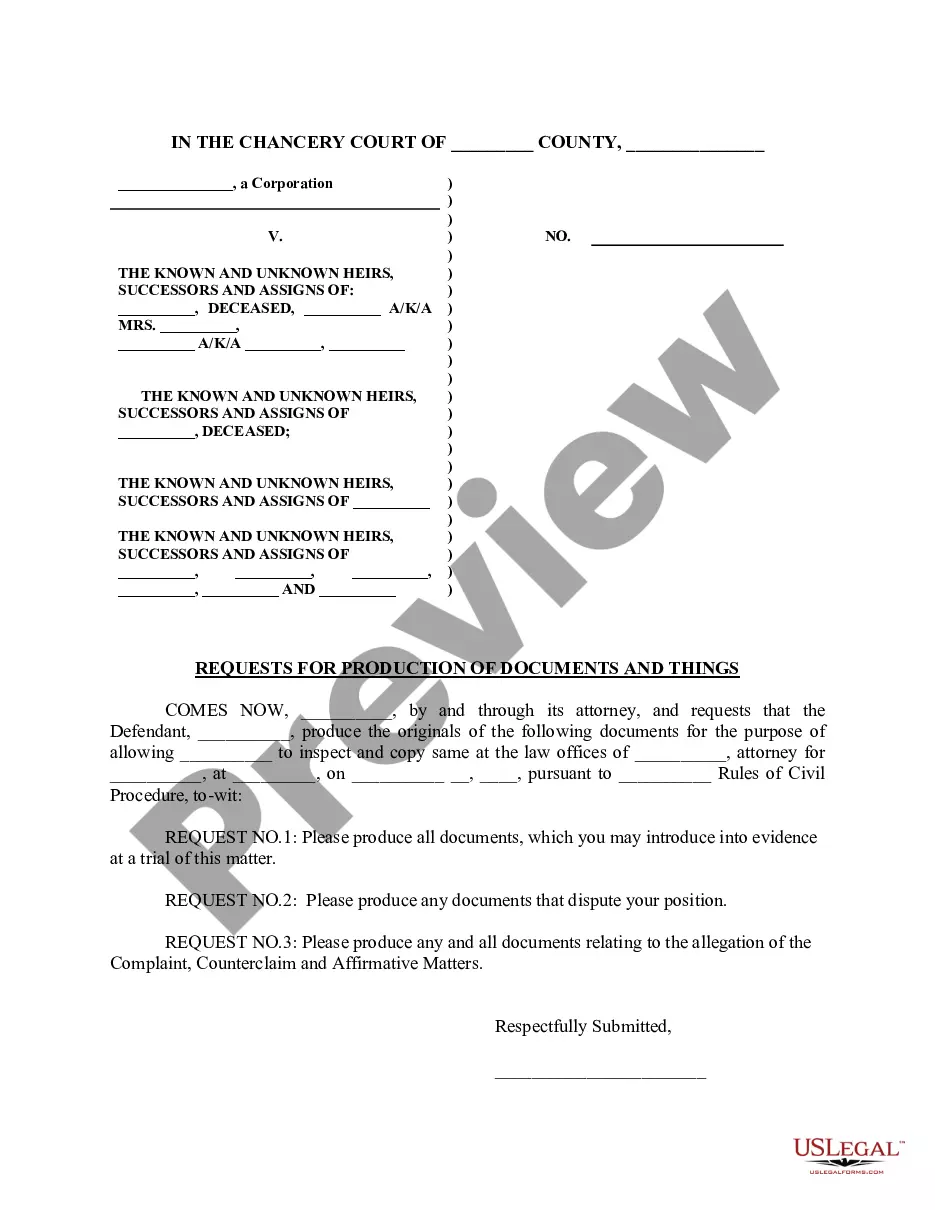
- The title and court information, including the name of the plaintiff, defendant, and civil action number.
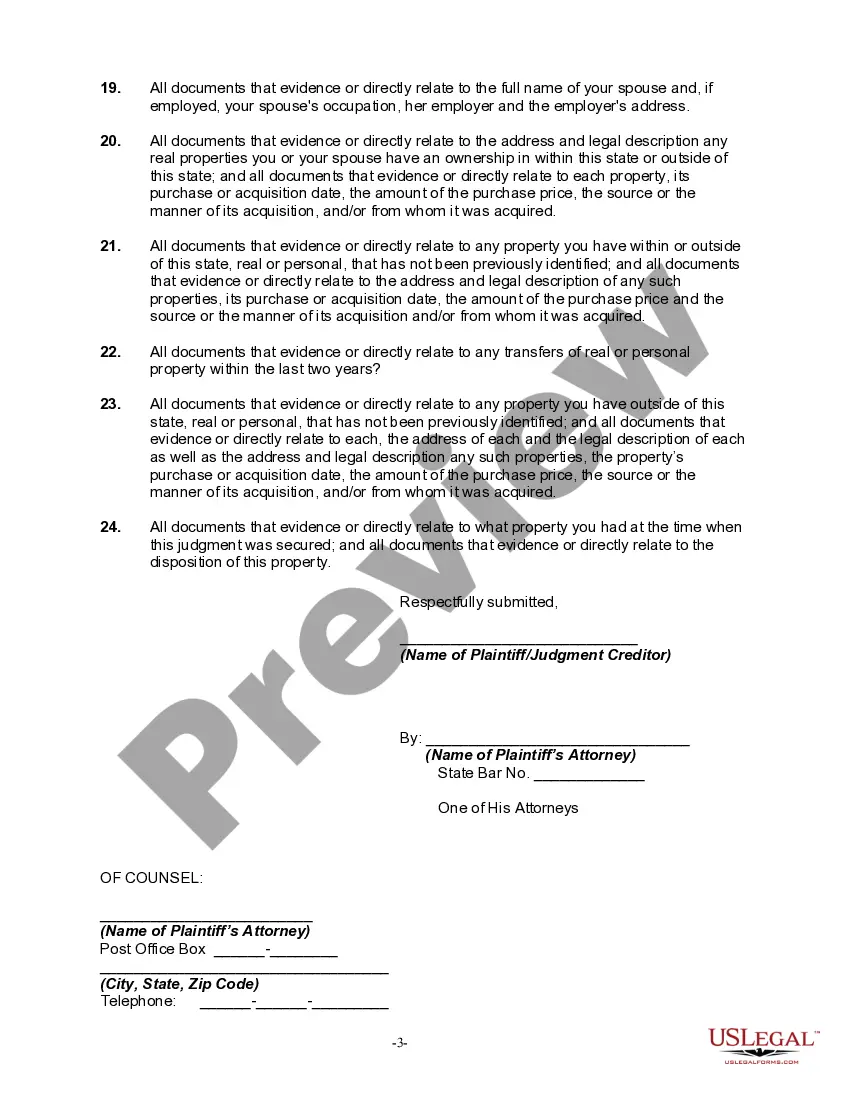
- A list of specific requests for documents related to the debtor's residence, income, and assets.
- Detailed requests covering bank accounts, properties, and financial transactions.
- A section for the debtor to respond under oath, indicating compliance with the requests.
- Certification of service to confirm that the requests have been delivered to the judgment debtor.
When this form is needed
Who needs this form
- Creditors who have obtained a judgment in federal court.
- Attorneys representing creditors in civil cases.
- Individuals seeking to enforce a judgment without legal representation.
How to complete this form
- Fill in the title and court information, including the plaintiff's and defendant's names.
- Specify the date and name of the attorney's office where documents must be produced.
- Indicate the types of documents you are requesting from the debtor clearly.
- Ensure the request is signed by the creditor or their attorney, with relevant contact information provided.
- Send the completed form to the debtor and retain proof of service for your records.
Notarization requirements for this form
In most cases, this form does not require notarization. However, some jurisdictions or signing circumstances might. US Legal Forms offers online notarization powered by Notarize, accessible 24/7 for a quick, remote process.
Get your form ready online
Our built-in tools help you complete, sign, share, and store your documents in one place.
Make edits, fill in missing information, and update formatting in US Legal Forms—just like you would in MS Word.
Download a copy, print it, send it by email, or mail it via USPS—whatever works best for your next step.
Sign and collect signatures with our SignNow integration. Send to multiple recipients, set reminders, and more. Go Premium to unlock E-Sign.
If this form requires notarization, complete it online through a secure video call—no need to meet a notary in person or wait for an appointment.
We protect your documents and personal data by following strict security and privacy standards.

Make edits, fill in missing information, and update formatting in US Legal Forms—just like you would in MS Word.

Download a copy, print it, send it by email, or mail it via USPS—whatever works best for your next step.

Sign and collect signatures with our SignNow integration. Send to multiple recipients, set reminders, and more. Go Premium to unlock E-Sign.

If this form requires notarization, complete it online through a secure video call—no need to meet a notary in person or wait for an appointment.

We protect your documents and personal data by following strict security and privacy standards.
Common mistakes
- Failing to clearly identify all requested documents, which can lead to incomplete responses.
- Not signing or dating the form, rendering it invalid.
- Missing critical information such as the case number or court details.
- Providing insufficient instructions for the debtor on where and how to submit the documents.
Benefits of completing this form online
- Convenience of downloading and filling out the form at your own pace.
- Editability allows for customization of requests to suit specific case needs.
- Access to expert-drafted templates ensures legal compliance and accuracy.
- Secure storage of completed forms for easy access and tracking.
Looking for another form?
Form popularity
FAQ
To attach a lien to real estate, the creditor can take or mail the Abstract of Judgment to the county recorder's office in any California county where the debtor owns real estate now, or may own it in the future.
In many situations, one of the best ways to collect a judgment after winning a case is to put a lien on the debtor's property. This gives you a claim to the property and, in some cases, the property will be sold at public auction in order to satisfy the debt that is owed.
A person seeking to enforce and collect upon a foreign judgment must follow a specific procedure to domesticate that judgment in Tennessee including filing an authenticated copy of the judgment and filing an affidavit containing the defendant's last known contact information.
Locate the debtor's assets (as many as possible) Attach the judgment to the assets by placing a lien on the assets (called a judgment lien) Obtain the assets to satisfy the judgment (the process of liquidation or foreclosure).
Take the certified copy of your Final Judgment to the Recording Division of the Clerk's office at 501 E. Kennedy Blvd. in Tampa. Ask the clerk to record the judgment.
California allows the judgment to last ten years and it can be renewed for an additional ten years if the creditor files the required forms in a timely fashion. Failure to renew the judgment prior to the ten-year time limit voids the judgment forever.
A simple way to collect a judgment is by deducting money out of the debtor's paycheck using a wage garnishment. The debtor must have a decent income because both the federal government and states cap the amount you can take, and certain types of income, like Social Security, are off-limits.
Complete an Abstract of Judgment (EJ-001). Have it issued by the clerk and pay the issuance fee by submitting the document to the court location where your case was filed or you may also submit the document by eFile. Give the original issued Abstract to the County Recorder and pay their recording fee.
Do not use illegal ways to collect your money. The debtor may be protected from abusive or unfair ways to collect the debt. Encourage the debtor to pay you voluntarily. Be organized. Ask a lawyer or collection agency for help. Make sure you renew your judgment. Ask the court for help.