Horse Rental Agreement, Waiver, Release and Indemnification Agreement for a Rental Agreement with a Minor at a Camp or under Wilderness Circumstances
What is this form?
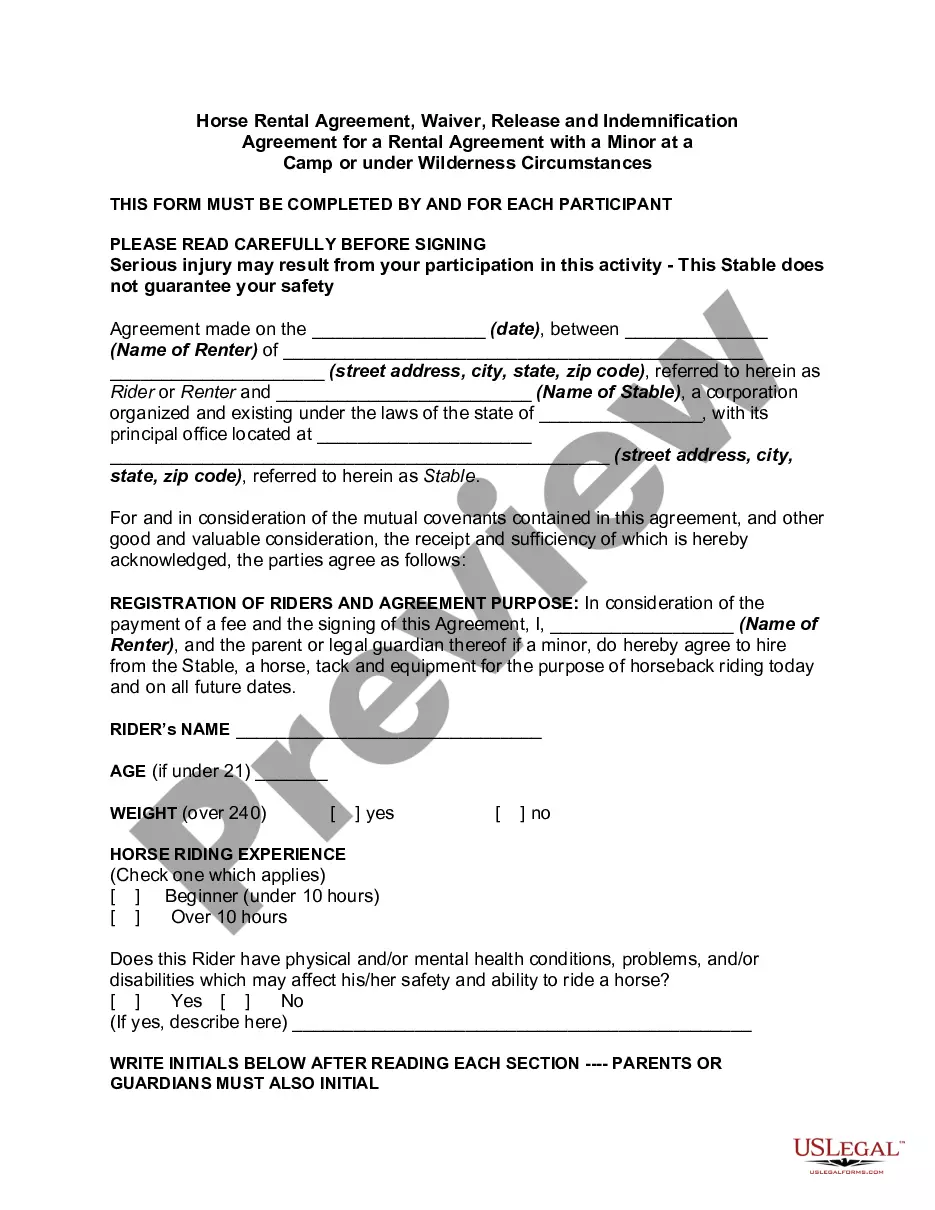
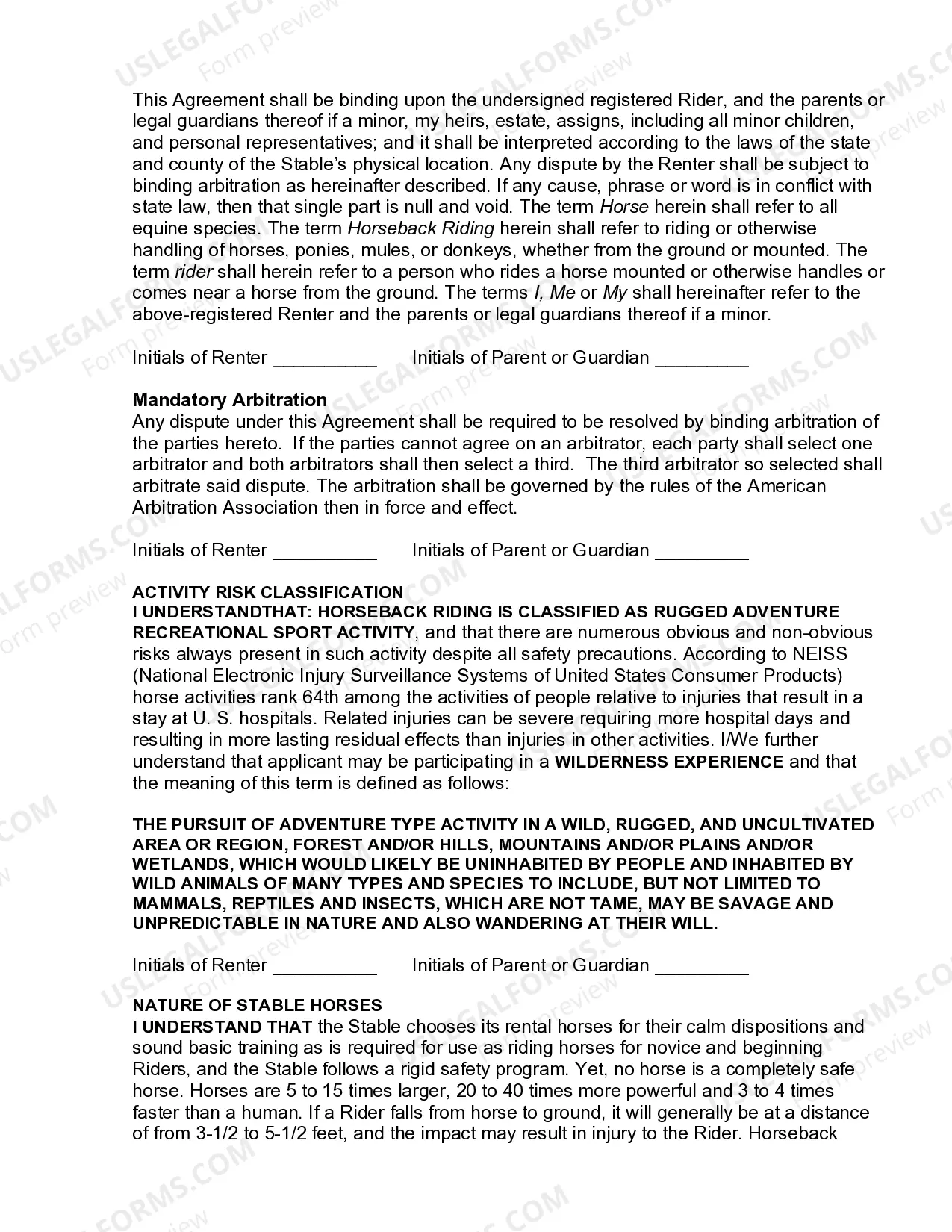
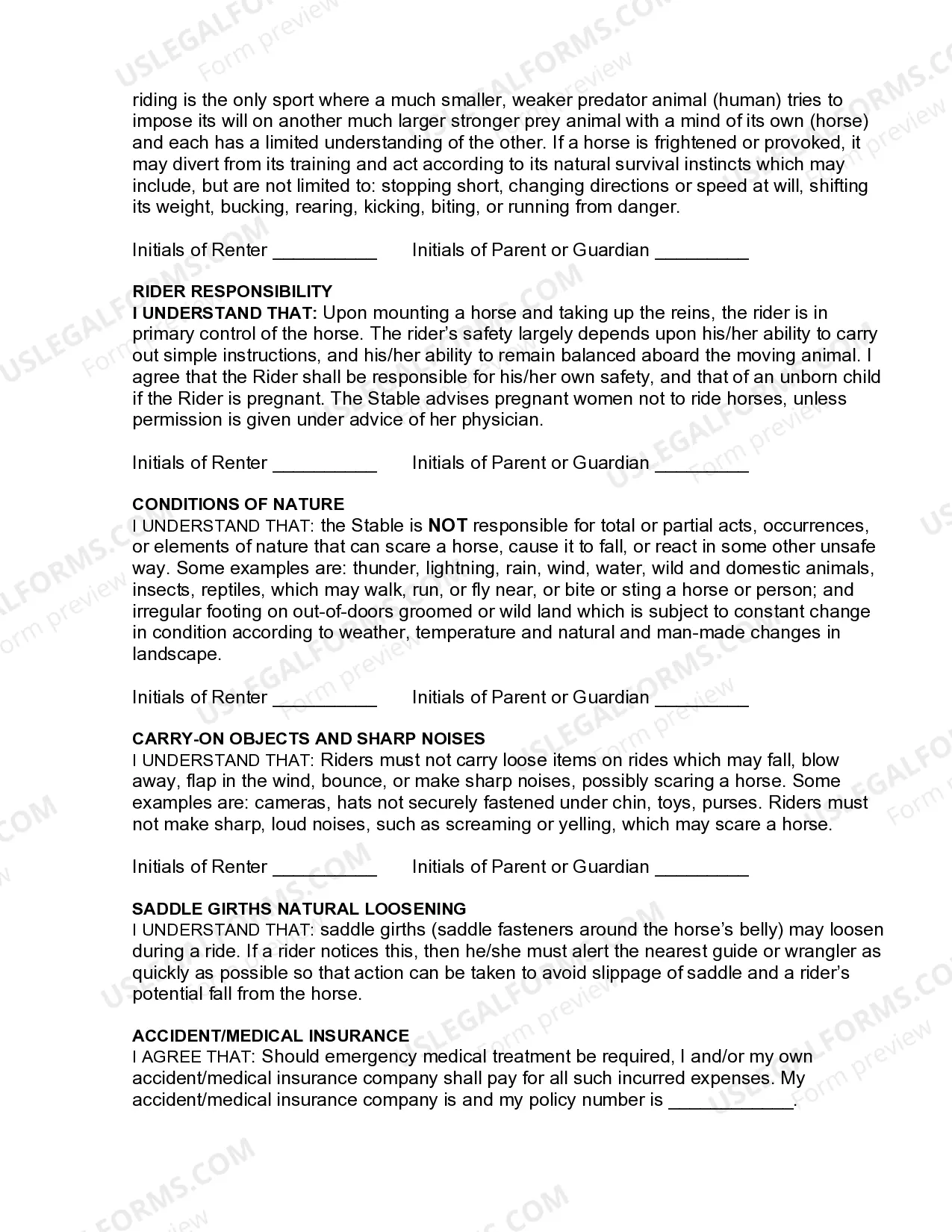
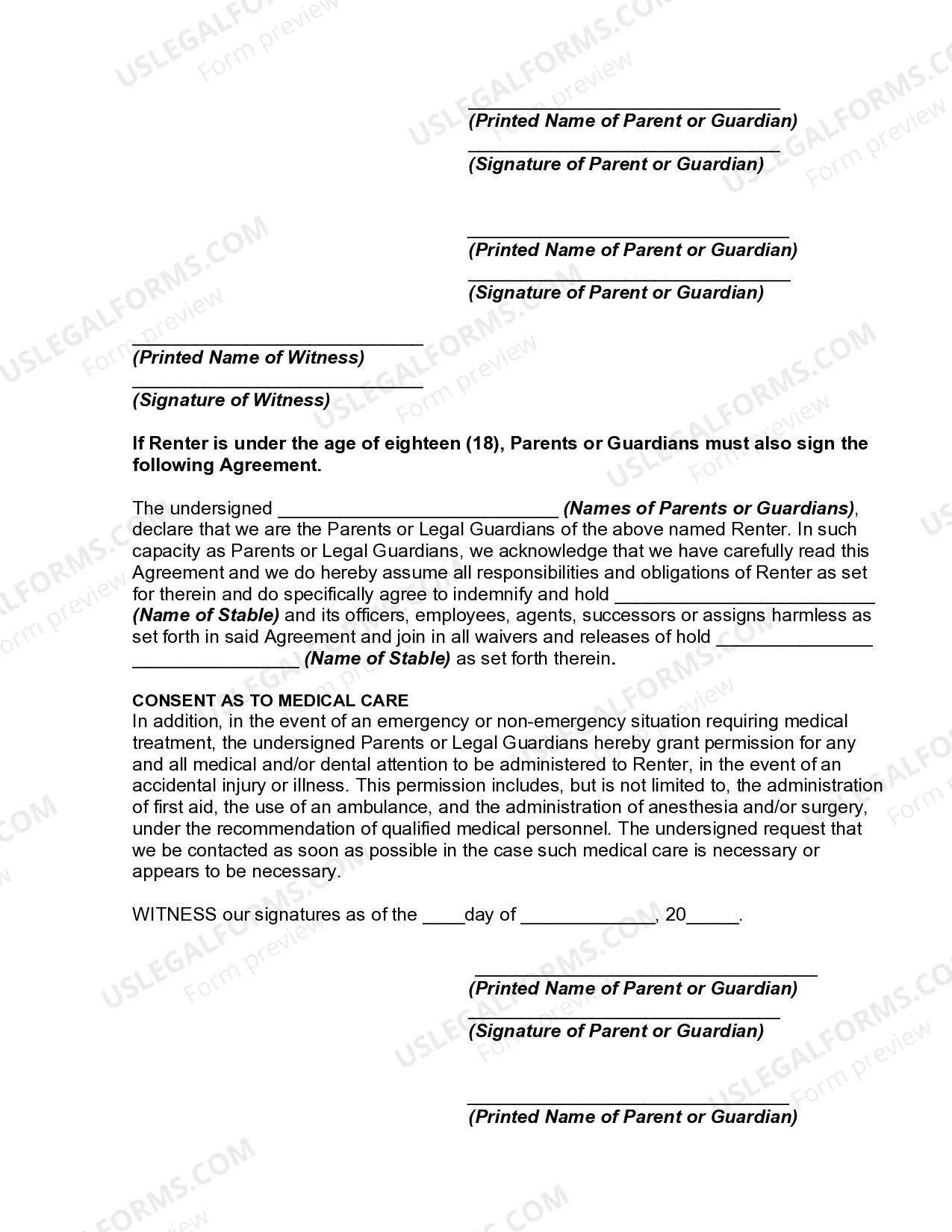
The Horse Rental Agreement, Waiver, Release and Indemnification Agreement for a Rental Agreement with a Minor at a Camp or under Wilderness Circumstances is a legal document that establishes the terms and conditions under which a horse is rented. It is specifically tailored to include waivers and releases designed to protect the stable from liability, particularly when minors are involved. This form distinguishes itself by covering both rental terms and legal protections for both the stable and the renter, making it essential for those engaged in horseback riding activities.
Key components of this form
- Identification of the renter and the stable
- Details about the rider, including age and experience level
- Agreement to participate in horseback riding activities
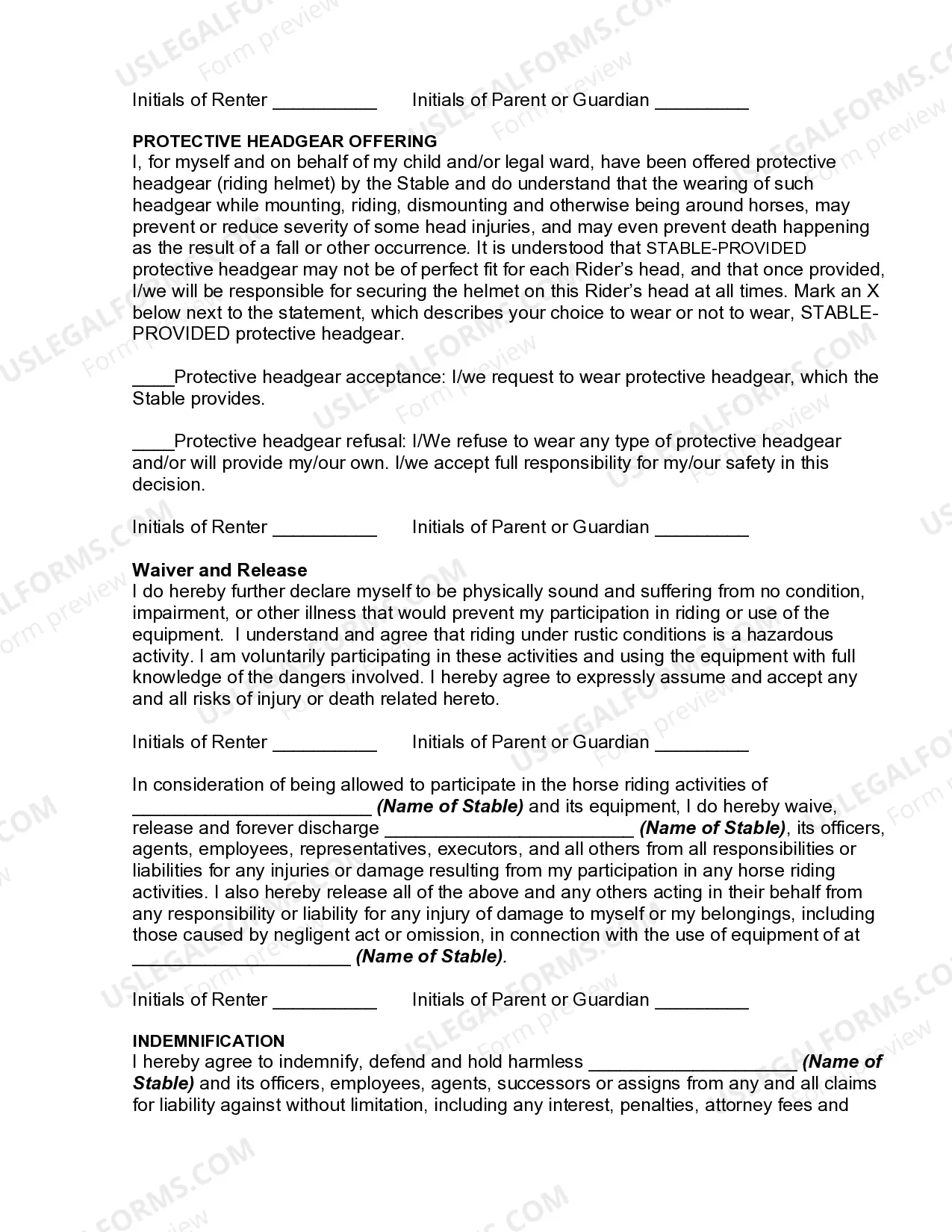
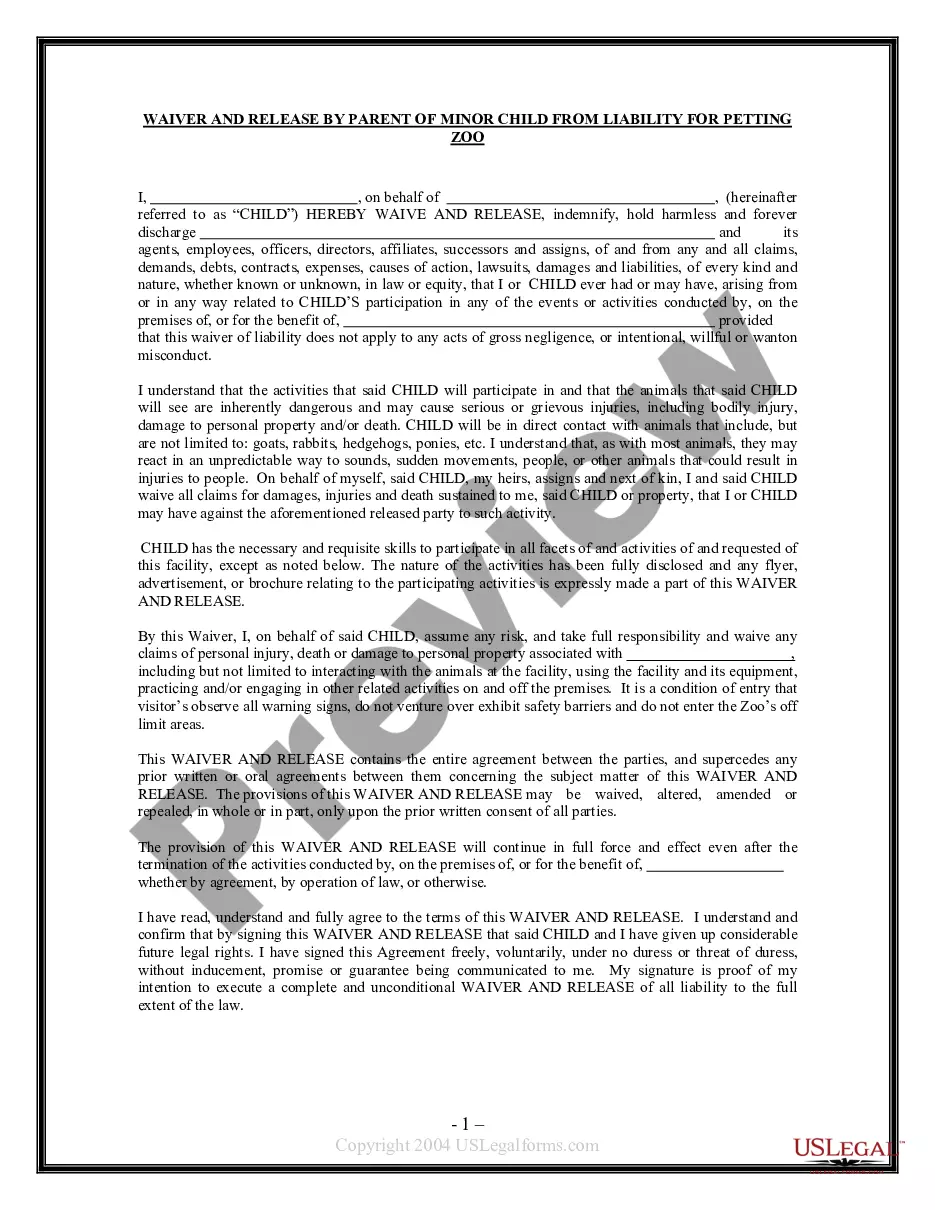
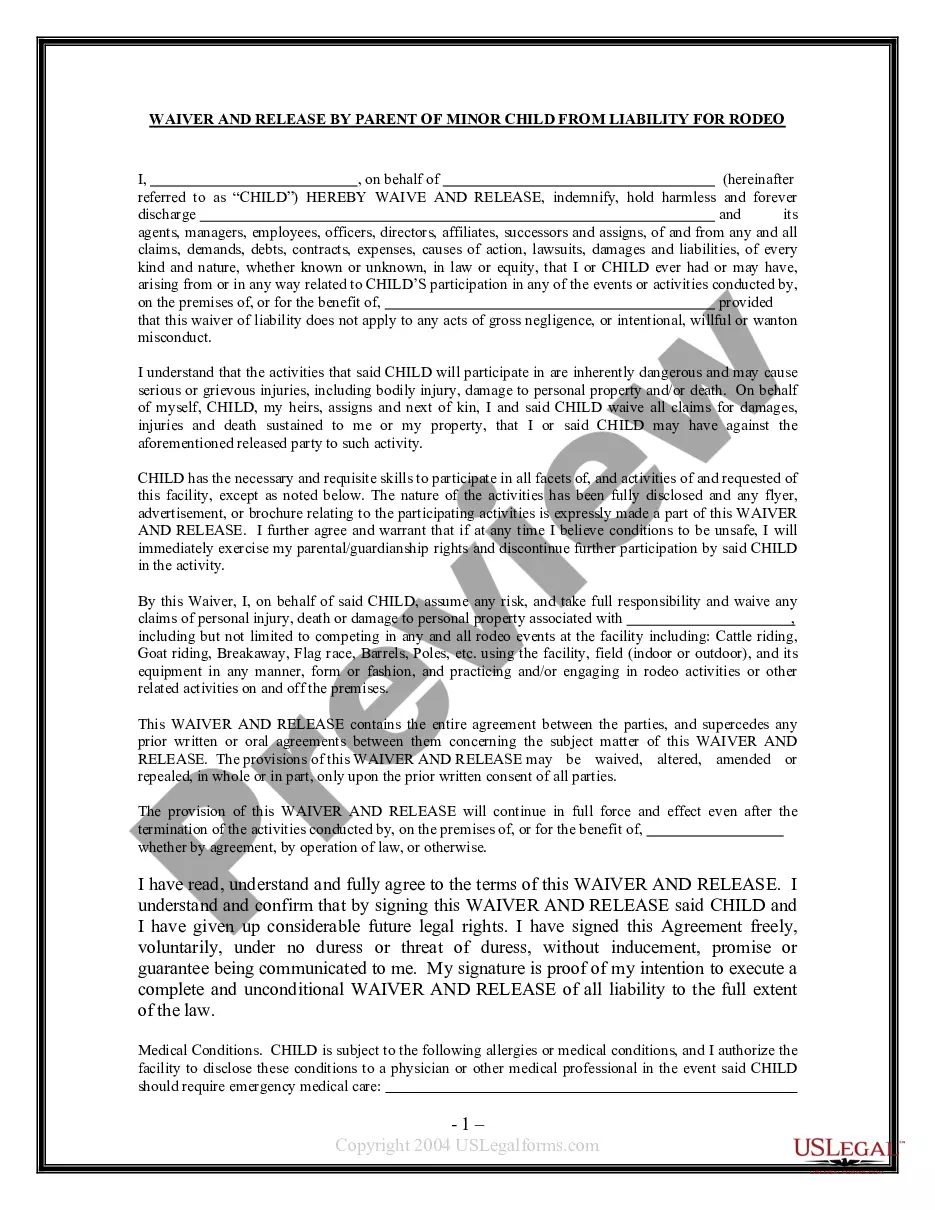
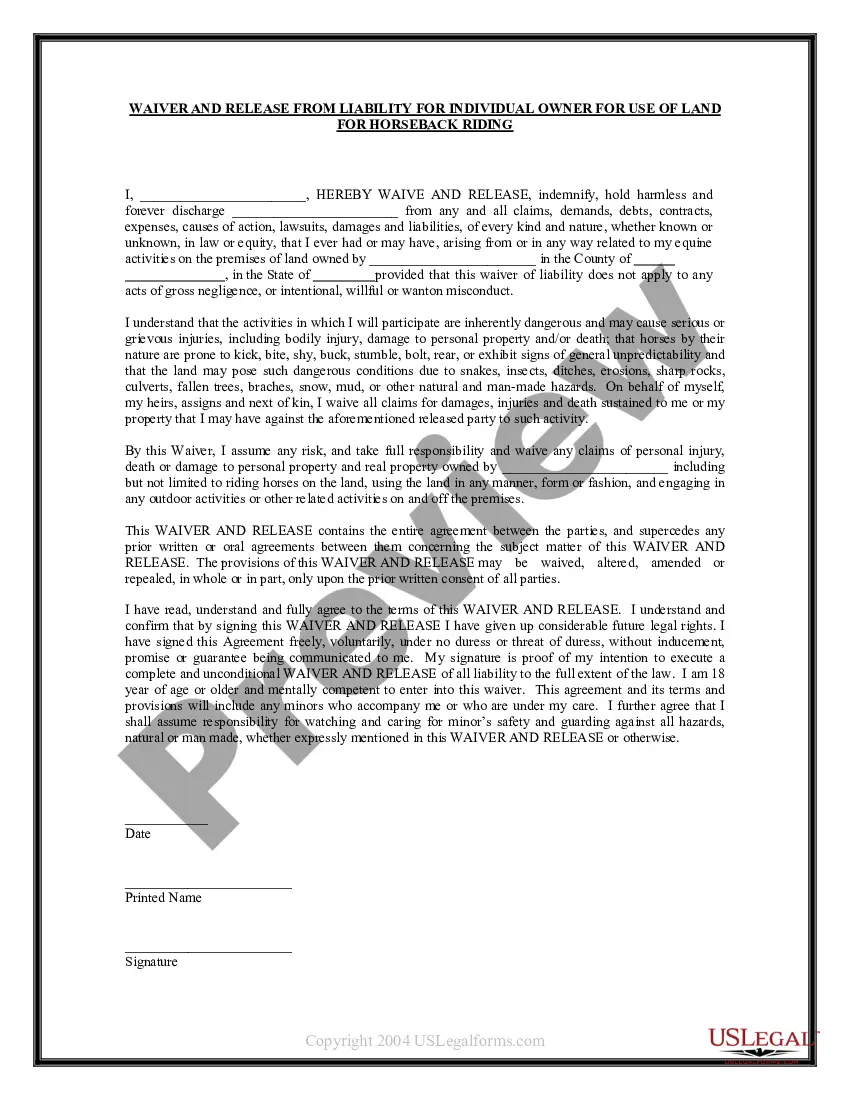
- Waiver of liability for injuries
- Indemnification agreement to protect the stable from claims
- Consent form for medical care in case of emergency
When to use this document
This form should be used when renting a horse for recreational purposes, especially when the renter is a minor. It is applicable in camp settings or wilderness environments where horseback riding is expected. The form outlines the risks involved in horseback riding and grants necessary waivers and permissions, making it crucial for both the renter and the stable to complete it to ensure safety and legal protection.
Intended users of this form
- Parents or legal guardians renting a horse for minors
- Individuals or organizations running riding camps or stables
- Riders of all ages who wish to participate in horseback riding
- Those responsible for ensuring medical care availability in case of emergencies
How to complete this form
- Identify the renter by filling in their name, address, and the date of the agreement.
- Provide details about the rider, including their age, weight, and experience level.
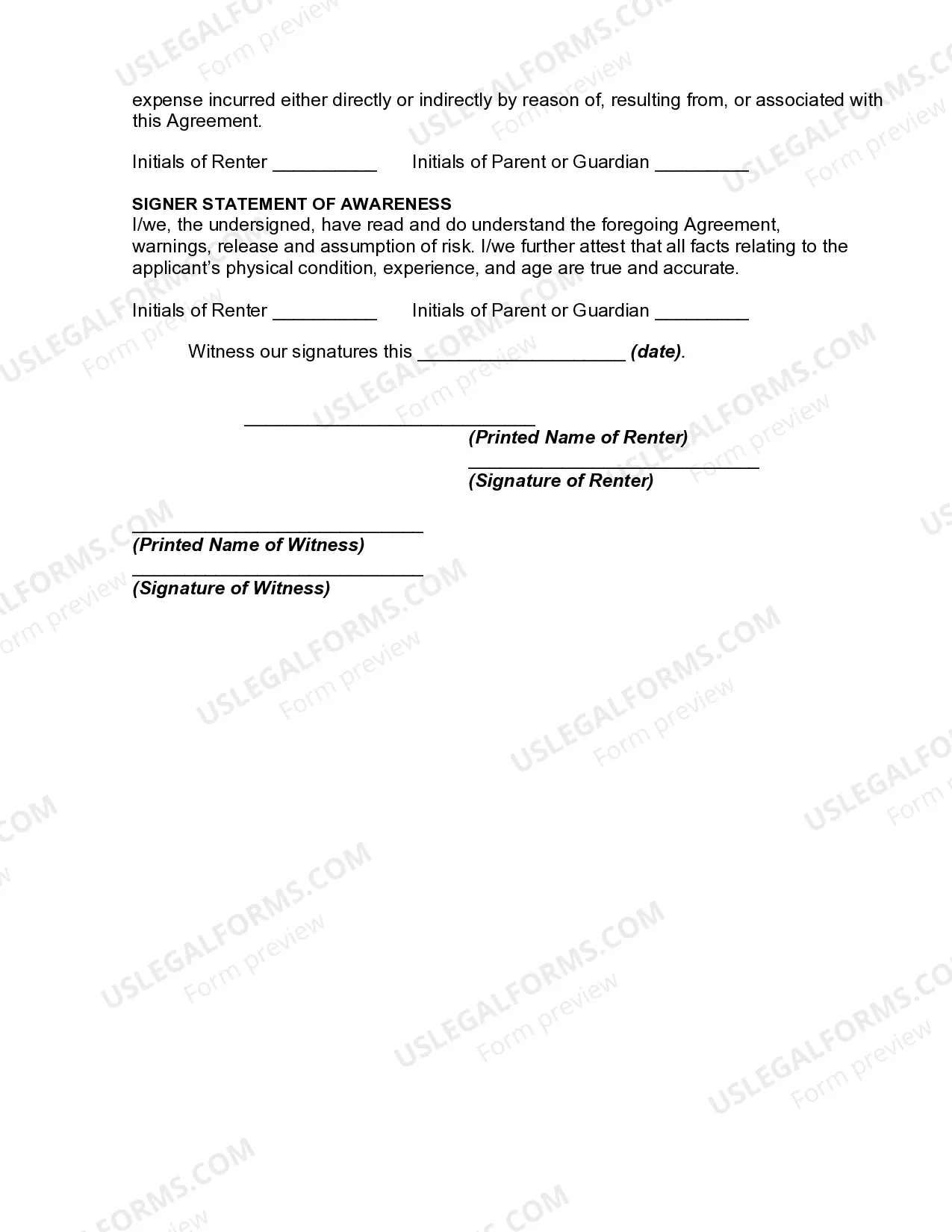
- Read and initial each section, including the waiver of liability and duty of indemnification.
- Parents or guardians must sign on behalf of any minor riders.
- Ensure to fill in the medical consent section to allow for emergency medical care if necessary.
Is notarization required?
This form does not typically require notarization unless specified by local law. Ensure that the signatures are complete and that all parties understand their responsibilities before finalizing the agreement.
Get your form ready online
Our built-in tools help you complete, sign, share, and store your documents in one place.
Make edits, fill in missing information, and update formatting in US Legal Forms—just like you would in MS Word.
Download a copy, print it, send it by email, or mail it via USPS—whatever works best for your next step.
Sign and collect signatures with our SignNow integration. Send to multiple recipients, set reminders, and more. Go Premium to unlock E-Sign.
If this form requires notarization, complete it online through a secure video call—no need to meet a notary in person or wait for an appointment.
We protect your documents and personal data by following strict security and privacy standards.

Make edits, fill in missing information, and update formatting in US Legal Forms—just like you would in MS Word.

Download a copy, print it, send it by email, or mail it via USPS—whatever works best for your next step.

Sign and collect signatures with our SignNow integration. Send to multiple recipients, set reminders, and more. Go Premium to unlock E-Sign.

If this form requires notarization, complete it online through a secure video call—no need to meet a notary in person or wait for an appointment.

We protect your documents and personal data by following strict security and privacy standards.
Common mistakes to avoid
- Failing to provide accurate information about the rider's age or experience.
- Not having the legal guardian sign the form if the renter is a minor.
- Overlooking any sections requiring initials or specific acknowledgments.
- Neglecting to read the liability waiver carefully before signing.
Benefits of completing this form online
- Convenient access to a comprehensive legal document tailored for horseback riding activities.
- Easy to edit and personalize according to specific circumstances or requirements.
- Time-saving as it eliminates the need for in-person consultations with attorneys for basic contracts.
- Resource for understanding legal obligations and rights related to horseback riding safety.
Looking for another form?







Form popularity
FAQ
When you full lease a horse you pay an agreed upon fee for exclusive access to the horse. This means you are the only one riding the horse.Oftentimes a full-lease also comes with the additional costs of board, veterinary expenses and shoeing expenses. It is pretty much exactly like owning the horse yourself.
Name and address of the seller. Name and address of the buyer. Date& time of the purchase. The agreed price for the furniture. The location where the purchase is taking place. Form of payment (is it cash, check, credit card or debit card)
Step 1 Date and Parties. Enter the date in which the document is being created. Step 2 Horse Description. Horse's Name (if named) Step 3 Purchase Price Information. Step 4 Security Deposit. Step 5 Signatures. Step 6 Acknowledgement of Notary Public.
A bill of sale is the most basic of documents.A bill of sale may also be necessary to prove title to the horse in order to obtain a passport for competition. An agreement of purchase and sale with a form of warranty is found in Appendix (C).
The date of the sale. A description of the car, including its: Year, make and model. The selling price of the car. If the car is a gift or partial gift, you should still create a bill of sale. Warranty information. The full names, addresses and signatures of the buyer and seller.
FULL LEASE: For $400 per month, you will have full, exclusive use of the horse. Full-leases require that you also pay to the costs of routine farrier and health care, which will vary according to the horse's needs.
A full lease means there are no restrictions on when the lessee can ride or otherwise use the horse. In a full lease, the owner typically does not use the horse. A partial lease, sometimes called a half lease, means the lessee can use the horse only part of the time.
Date of the Sale. Seller's Name & Address. Buyer's Name & Address. Description of Livestock. Number. Color. Kind. Brand. Weight. Health. Vaccinations. Condition. Any other relevant information.
A free lease means that the horse is leased to someone without any payment to the owner. When you have a free lease you retain ownership and control of your horse but your horse, in best case scenarios, is still cared for and loved. Everyone wins. The owner has good care for the horse they love.