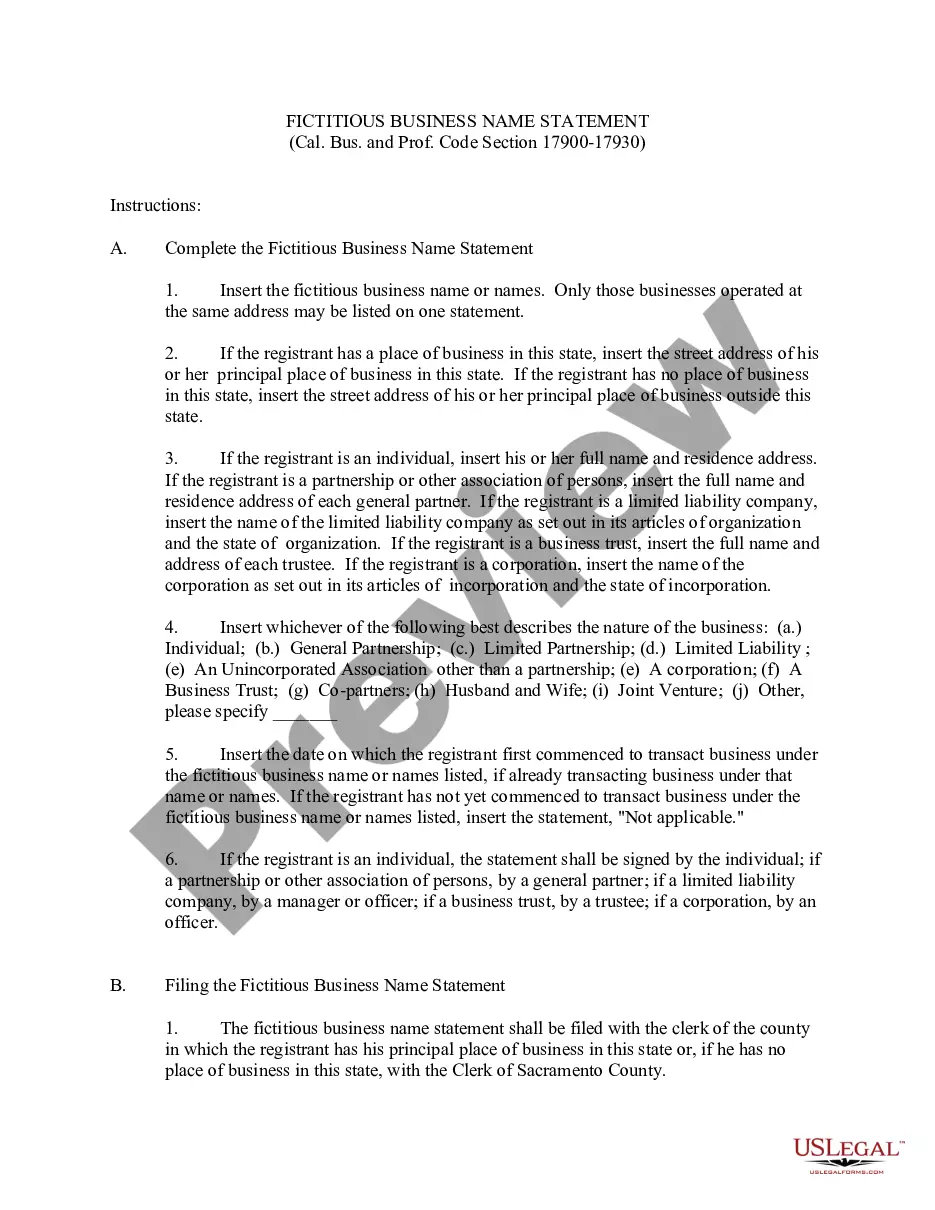
Motion to Dismiss Counts of Indictment
About this form
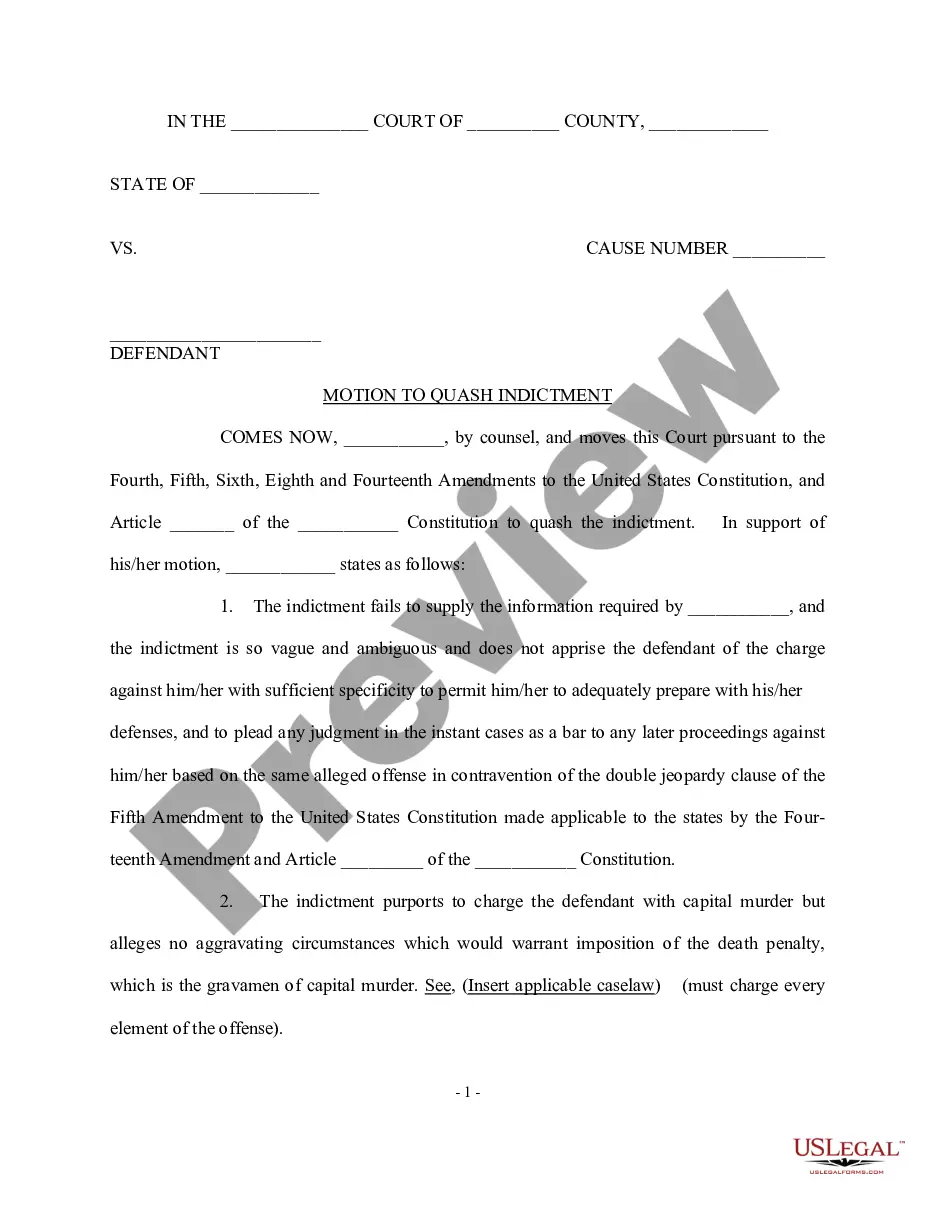
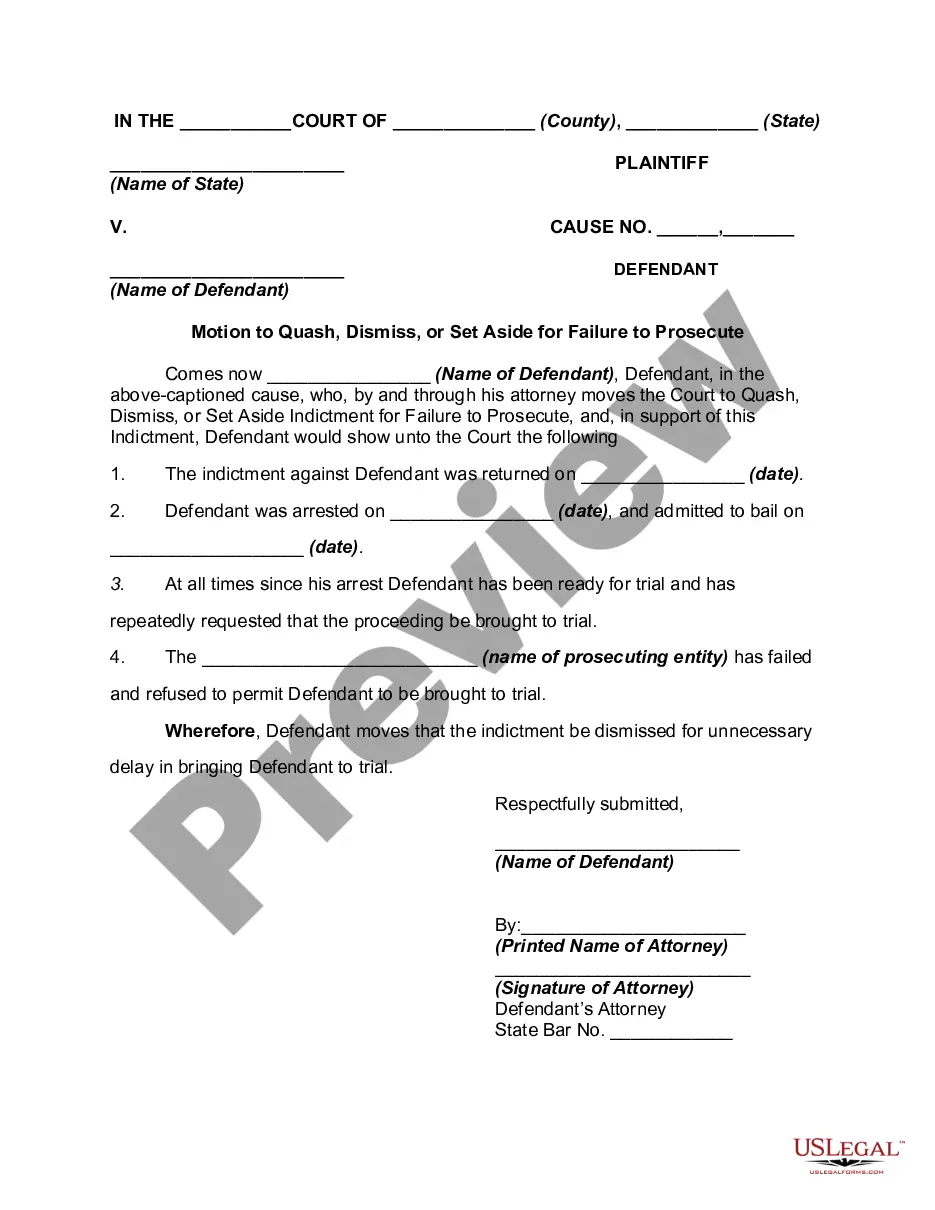
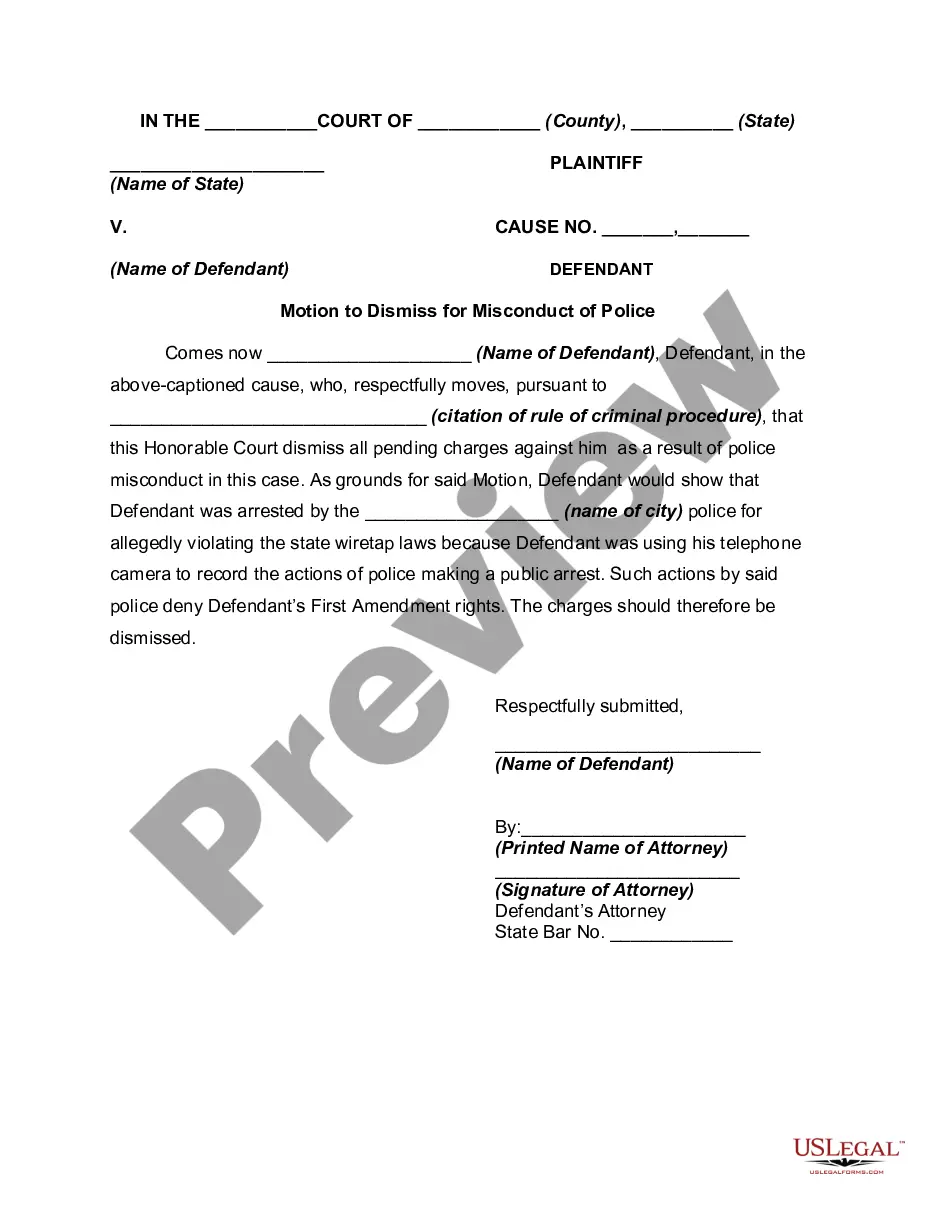
The Motion to Dismiss Counts of Indictment is a legal document that allows a defendant to request the court to dismiss specific charges in an indictment. This motion can be filed under various circumstances that question the legality or clarity of the indictment. Unlike other motions or legal forms, this document specifically addresses procedural issues related to how the charges were brought against a defendant, making it a critical tool in criminal defense cases.
Key parts of this document
- Name of the Defendant and Plaintiff (State)
- Cause number related to the case
- Specific counts of the indictment being challenged
- Grounds for dismissal, detailing the legal basis
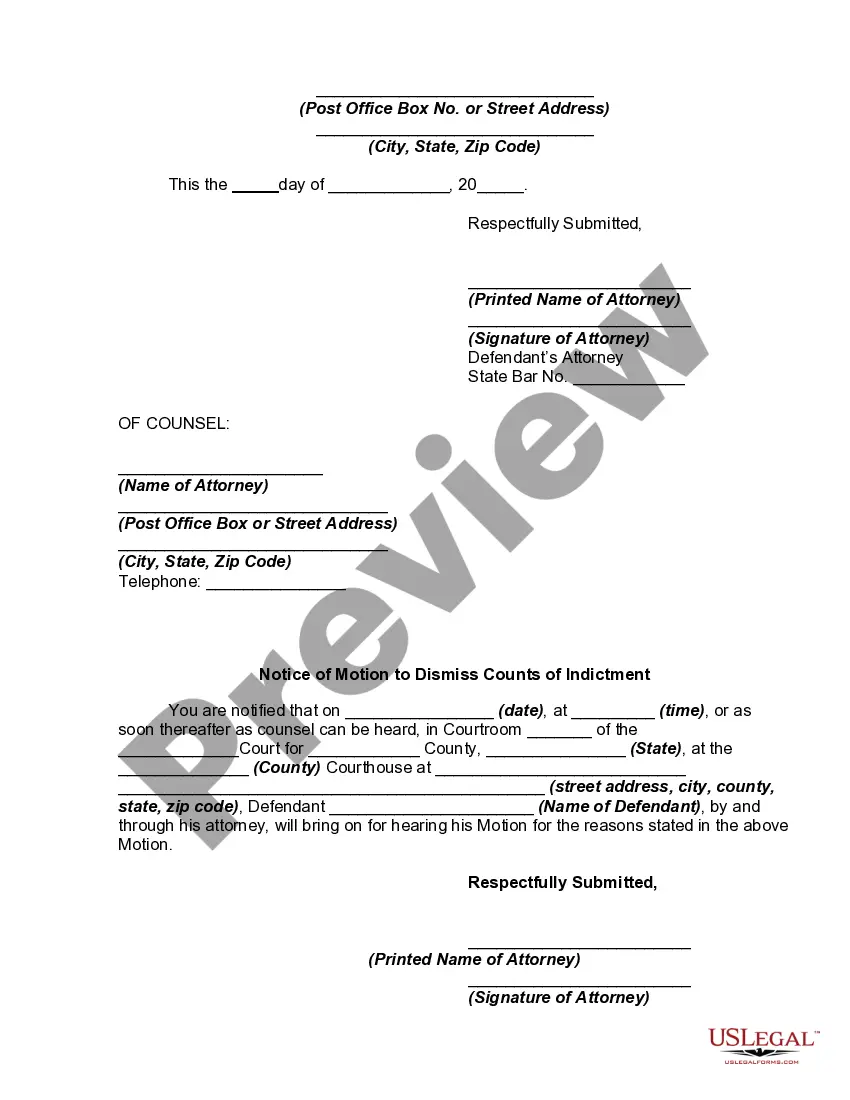
- Signature and printed name of the Defendant's attorney
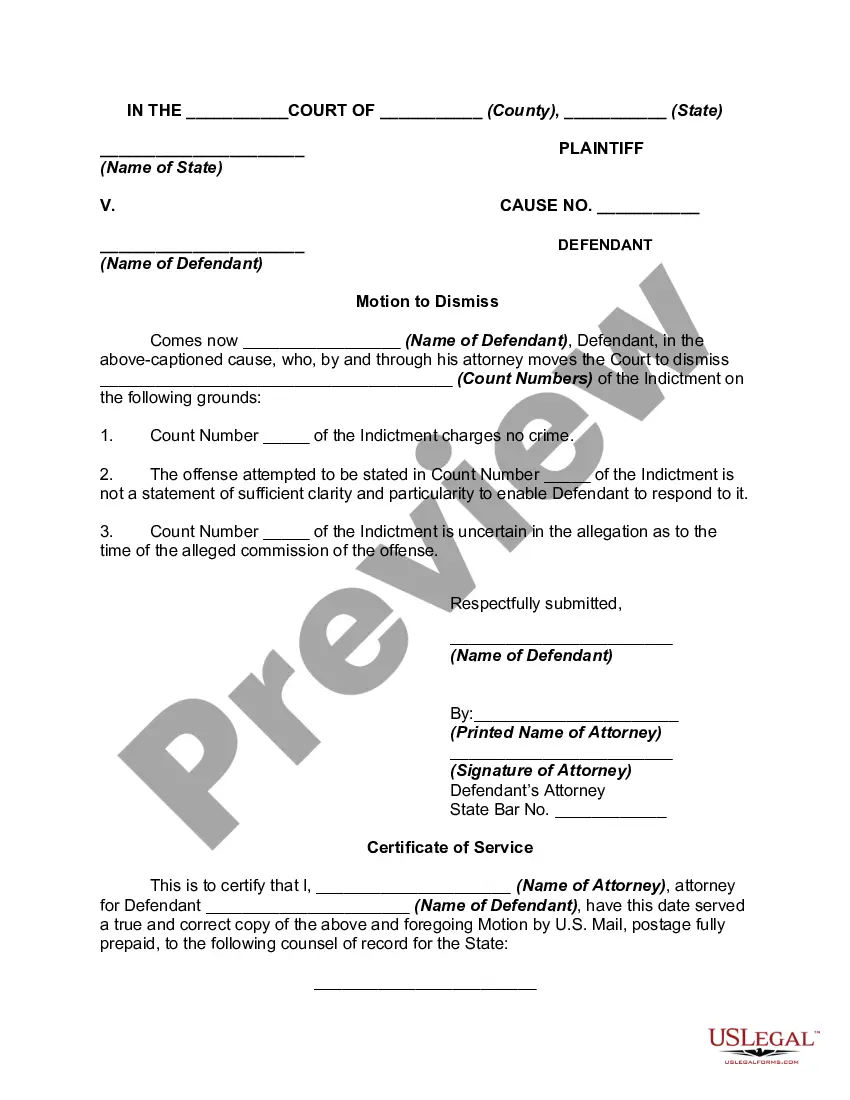
- Notice of Motion, including date and time for the hearing
Situations where this form applies
This form is used when a defendant believes that the prosecution's case is fundamentally flawed due to issues such as lack of clarity in the charges, jurisdictional problems, or the absence of necessary witness information. If any of these issues exist, it may be appropriate to file a Motion to Dismiss to ensure that only valid charges proceed in court.
Who can use this document
- Defendants in a criminal case facing indictment
- Criminal defense attorneys representing clients in criminal matters
- Individuals seeking to challenge the legitimacy of specific charges in their indictment
Instructions for completing this form
- Identify the parties involved: the Defendant and the State (Plaintiff).
- Fill in the cause number associated with the case.
- Specify the counts of the indictment you wish to dismiss along with the reasons for dismissal.
- Sign and have your attorney print their name and license number in the appropriate sections.
- Fill out the Notice of Motion section with date, time, and courtroom details for the hearing.
Notarization guidance
Notarization is not commonly needed for this form. However, certain documents or local rules may make it necessary. Our notarization service, powered by Notarize, allows you to finalize it securely online anytime, day or night.
Get your form ready online
Our built-in tools help you complete, sign, share, and store your documents in one place.
Make edits, fill in missing information, and update formatting in US Legal Forms—just like you would in MS Word.
Download a copy, print it, send it by email, or mail it via USPS—whatever works best for your next step.
Sign and collect signatures with our SignNow integration. Send to multiple recipients, set reminders, and more. Go Premium to unlock E-Sign.
If this form requires notarization, complete it online through a secure video call—no need to meet a notary in person or wait for an appointment.
We protect your documents and personal data by following strict security and privacy standards.

Make edits, fill in missing information, and update formatting in US Legal Forms—just like you would in MS Word.

Download a copy, print it, send it by email, or mail it via USPS—whatever works best for your next step.

Sign and collect signatures with our SignNow integration. Send to multiple recipients, set reminders, and more. Go Premium to unlock E-Sign.

If this form requires notarization, complete it online through a secure video call—no need to meet a notary in person or wait for an appointment.

We protect your documents and personal data by following strict security and privacy standards.
Common mistakes to avoid
- Failing to include specific grounds for dismissal, which can result in the motion being denied.
- Neglecting to properly serve the motion to opposing counsel as required by law.
- Omitting signatures or improperly filling in attorney information.
Benefits of completing this form online
- Convenient access to legally drafted templates, ensuring accuracy and compliance.
- Edit and customize the form easily to fit your specific situation.
- Instant download allows for quicker filing and response time.
Looking for another form?



Form popularity
FAQ
The Federal Rules of Criminal Procedure allow the government or the court to dismiss any indictment, information, or complaint.The government may, with leave of court, dismiss an indictment, information, or complaint.
To overthrow; to annul; to make void or declare invalid; e.g., "quash a subpoena."In criminal cases, if an indictment is defective to such a degree that no judgment could be made if the defendant were to be convicted, the court typically will quash the indictment.
Typically, the losing party may appeal after the court has delivered its final judgment. In addition to appealing the final decision, the appellant can also appeal earlier rulings that were not definitive when they were issued.
A motion to dismiss (aka demurrer in some states) is a powerful litigation tool that can stop a lawsuit cold in its tracks. When granting a motion to dismiss, the judge essentially decides the case in the defendant's favor most often denying the plaintiff the opportunity to go to trial.
N. application by a defendant in a lawsuit or criminal prosecution asking the judge to rule that the plaintiff (the party who filed the lawsuit) or the prosecution has not and cannot prove its case.
Generally, however, a defendant must file a motion to dismiss before filing an "answer" to the complaint. If the motion to dismiss is denied, the defendant must still file their answer, usually within a shortened amount of time.The motion to dismiss must be filed with the court and served on the other party.
If a defendant has pleaded a counterclaim before being served with the plaintiff's motion to dismiss, the action may be dismissed over the defendant's objection only if the counterclaim can remain pending for independent adjudication.
Try to directly persuade a prosecutor that a charge should be dropped, cast doubt on an accuser, highlight conflicting evidence, and. provide a reality check on the potential success of brining a charge.
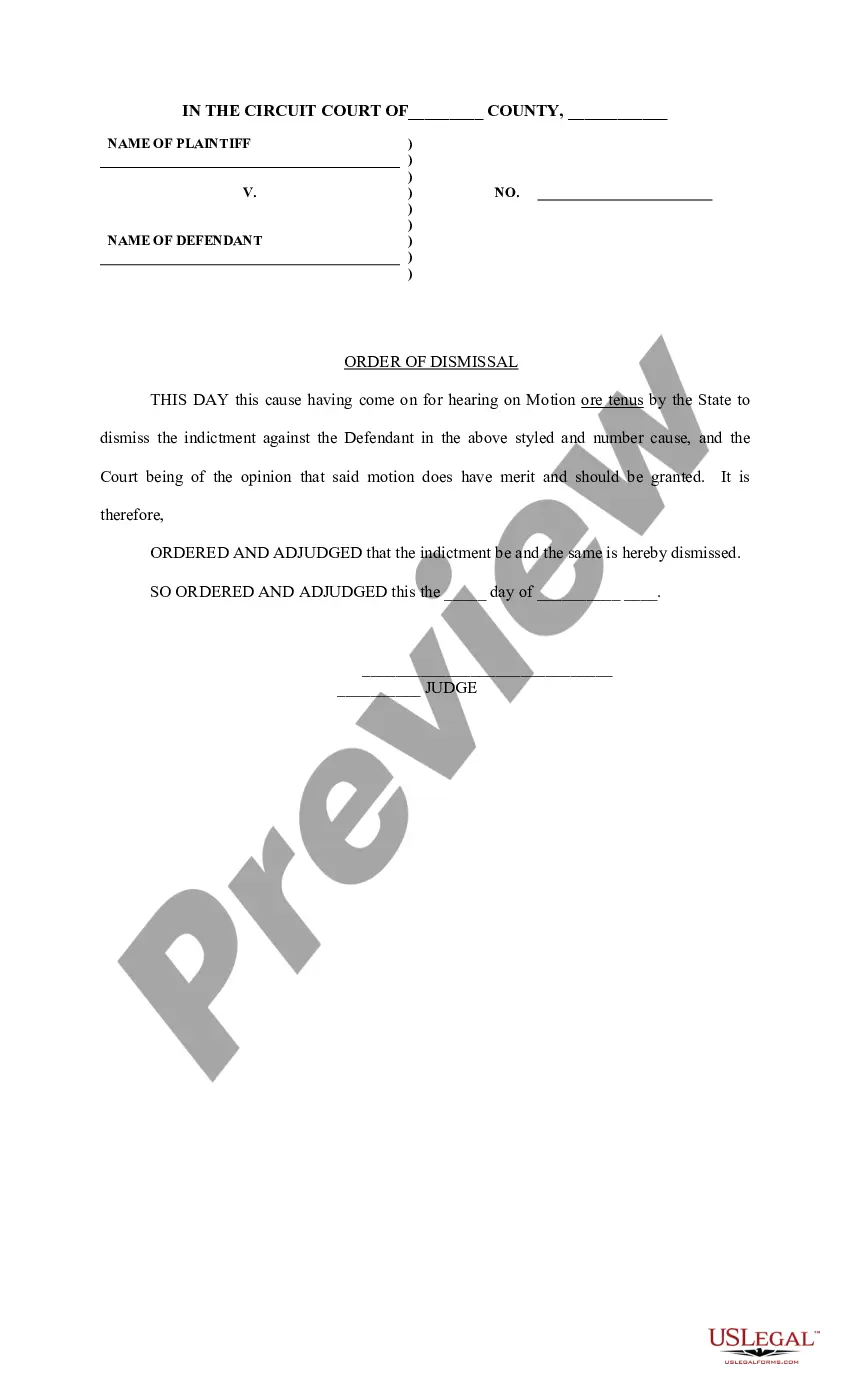
An order to dismiss a case can occur when the appellate court, having reversed the conviction on the grounds of a bad search or arrest, examines what's left of the case and determines that there is not enough evidence to warrant another trial.