Motion to Dismiss, Quash, or Set Aside due to Abuse of Grand Jury and Prosecutorial Misconduct
Understanding this form
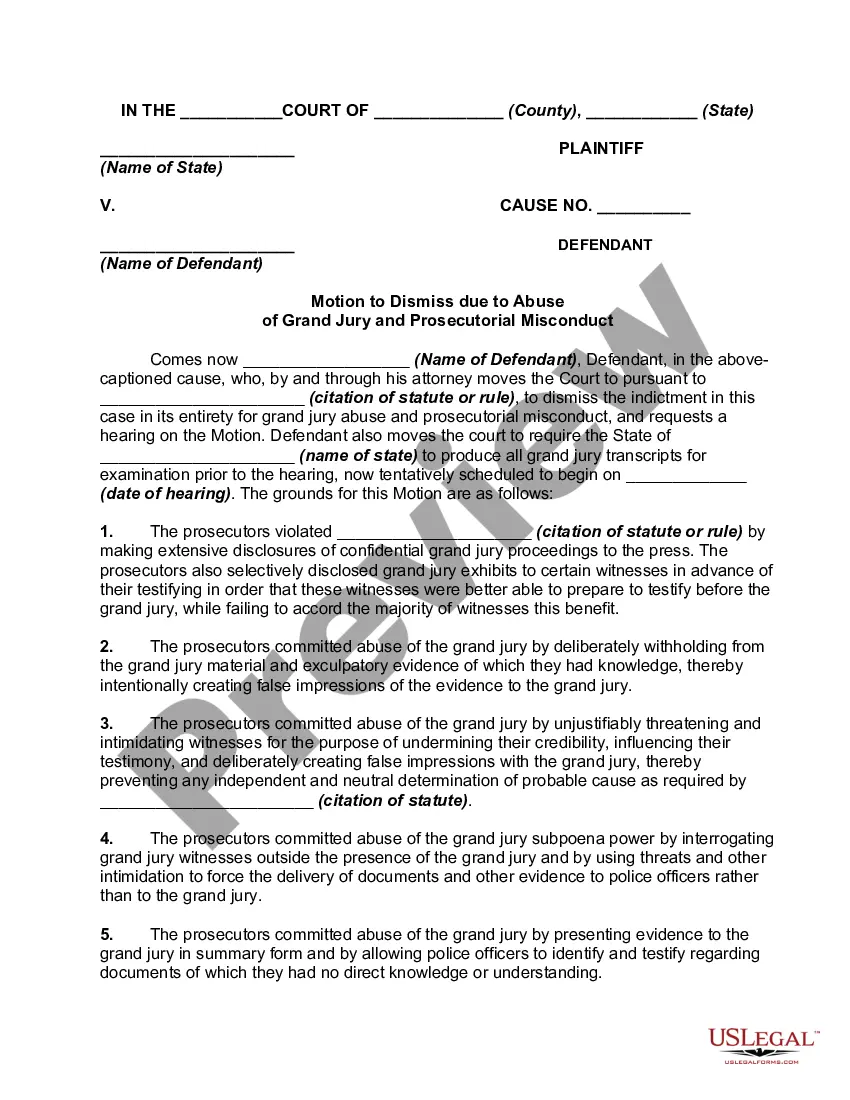
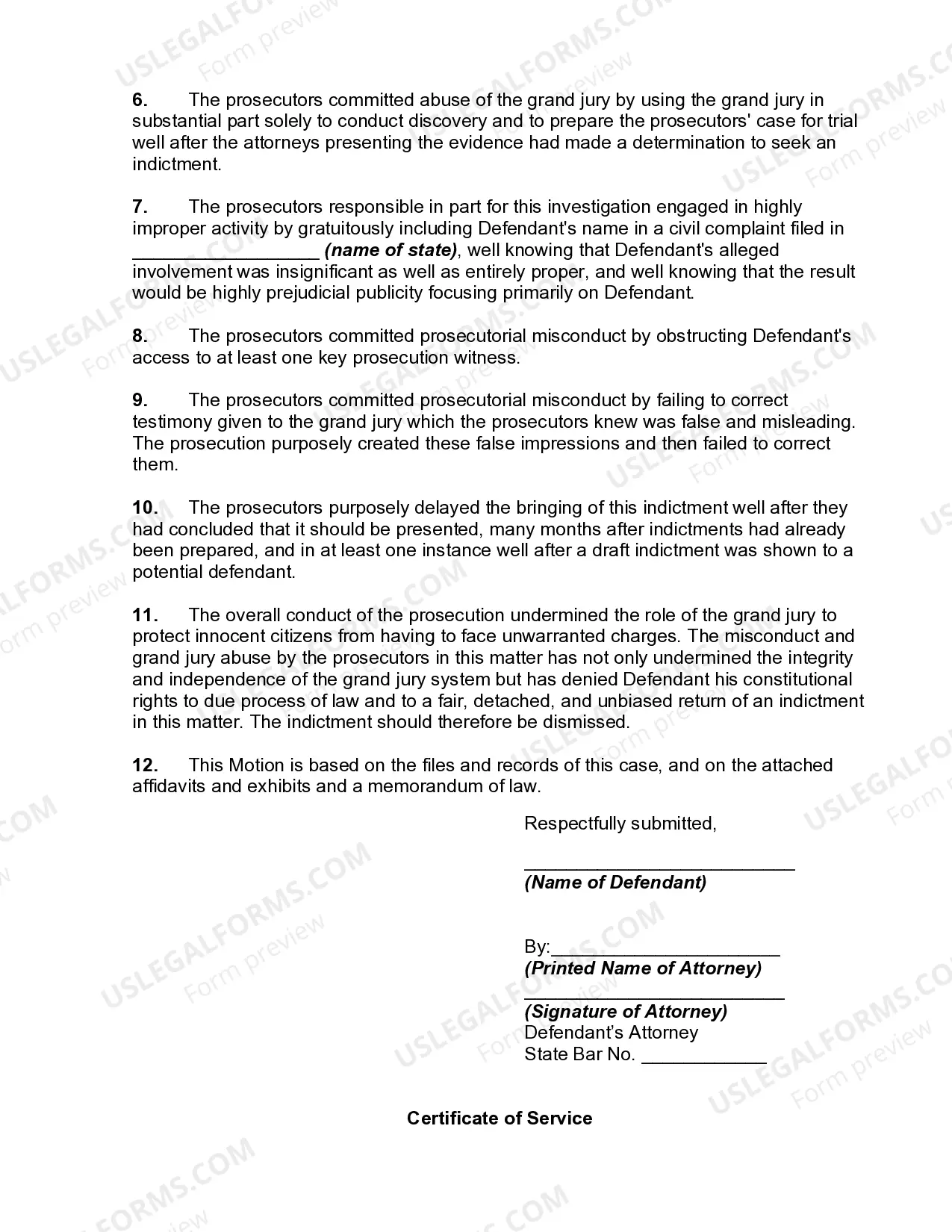
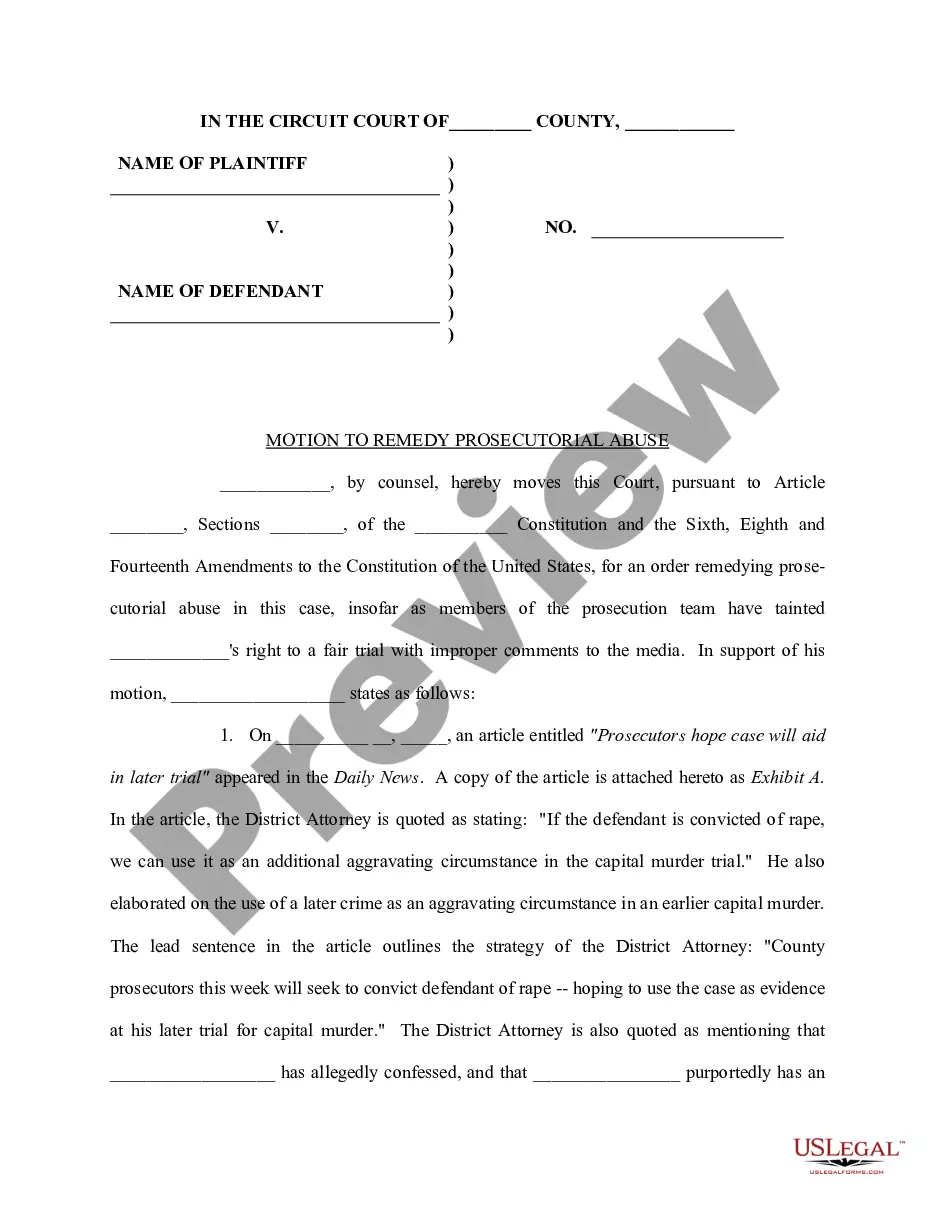
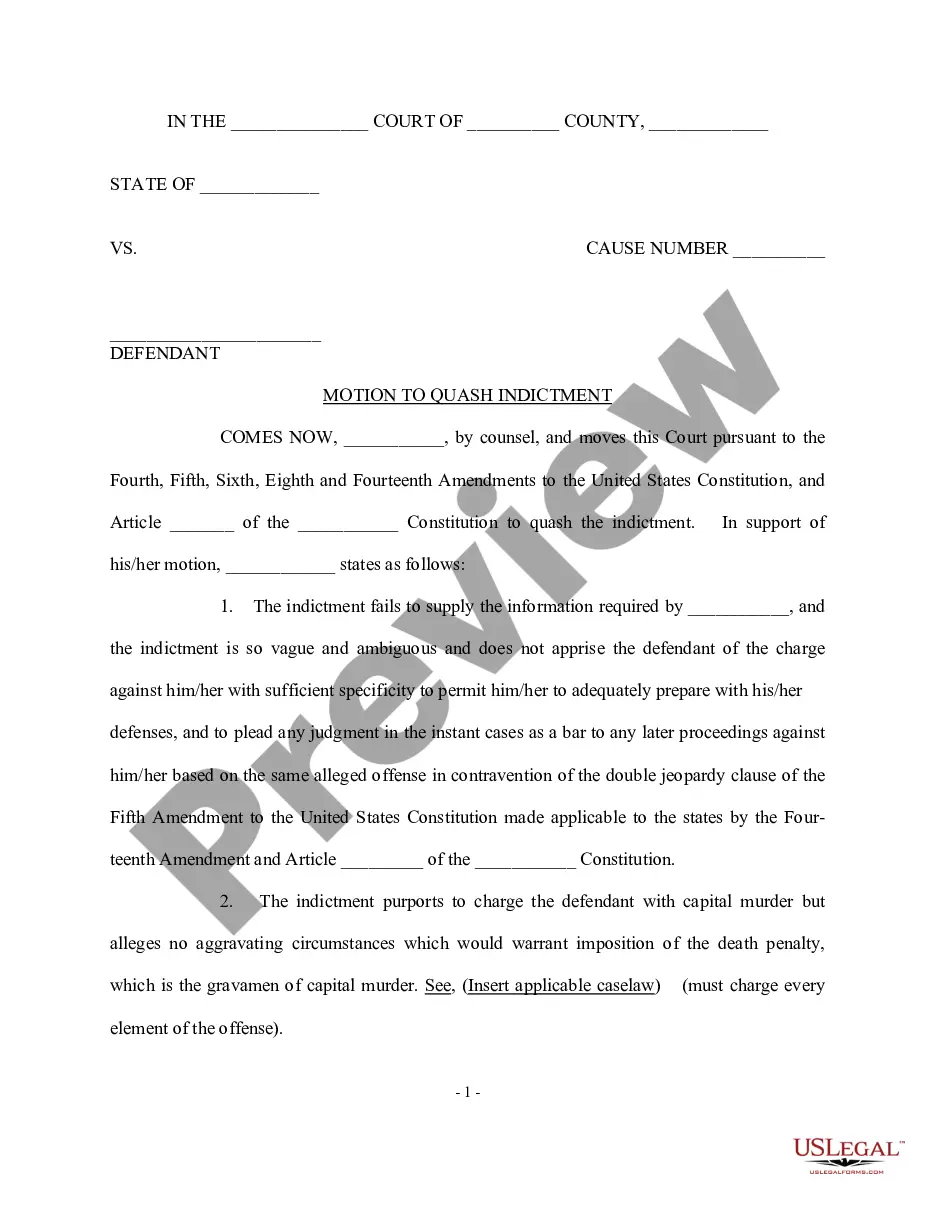
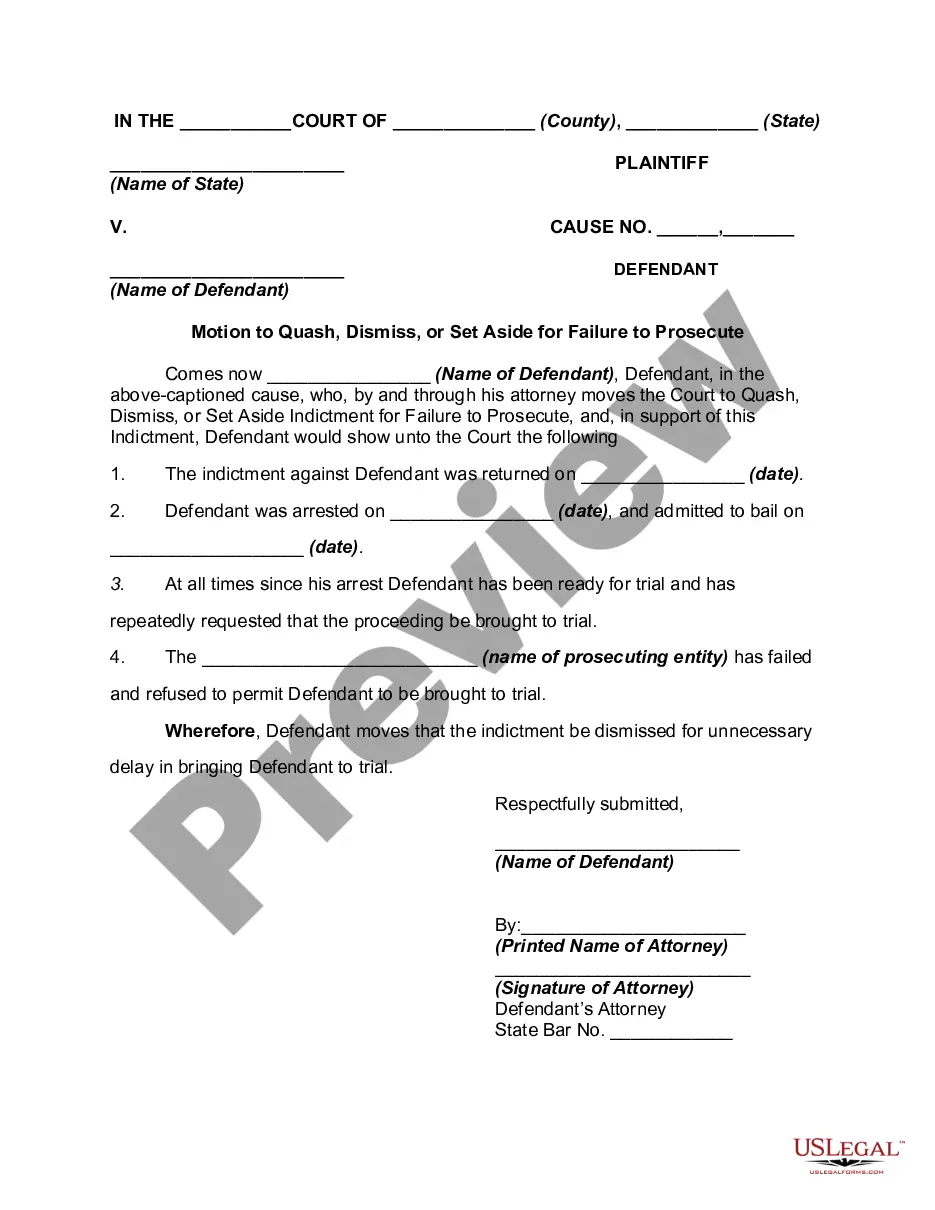
The Motion to Dismiss, Quash, or Set Aside due to Abuse of Grand Jury and Prosecutorial Misconduct is a legal document used by defendants to challenge the legitimacy of an indictment based on alleged misconduct by the prosecution during the grand jury process. This form enables a defendant to argue that they should not be held criminally liable due to unfair or inappropriate actions taken by the prosecution, including withholding evidence or manipulating witness testimonies. It is a procedural defense distinct from similar motions that may not specifically address grand jury abuse or prosecutorial misconduct.
Key components of this form
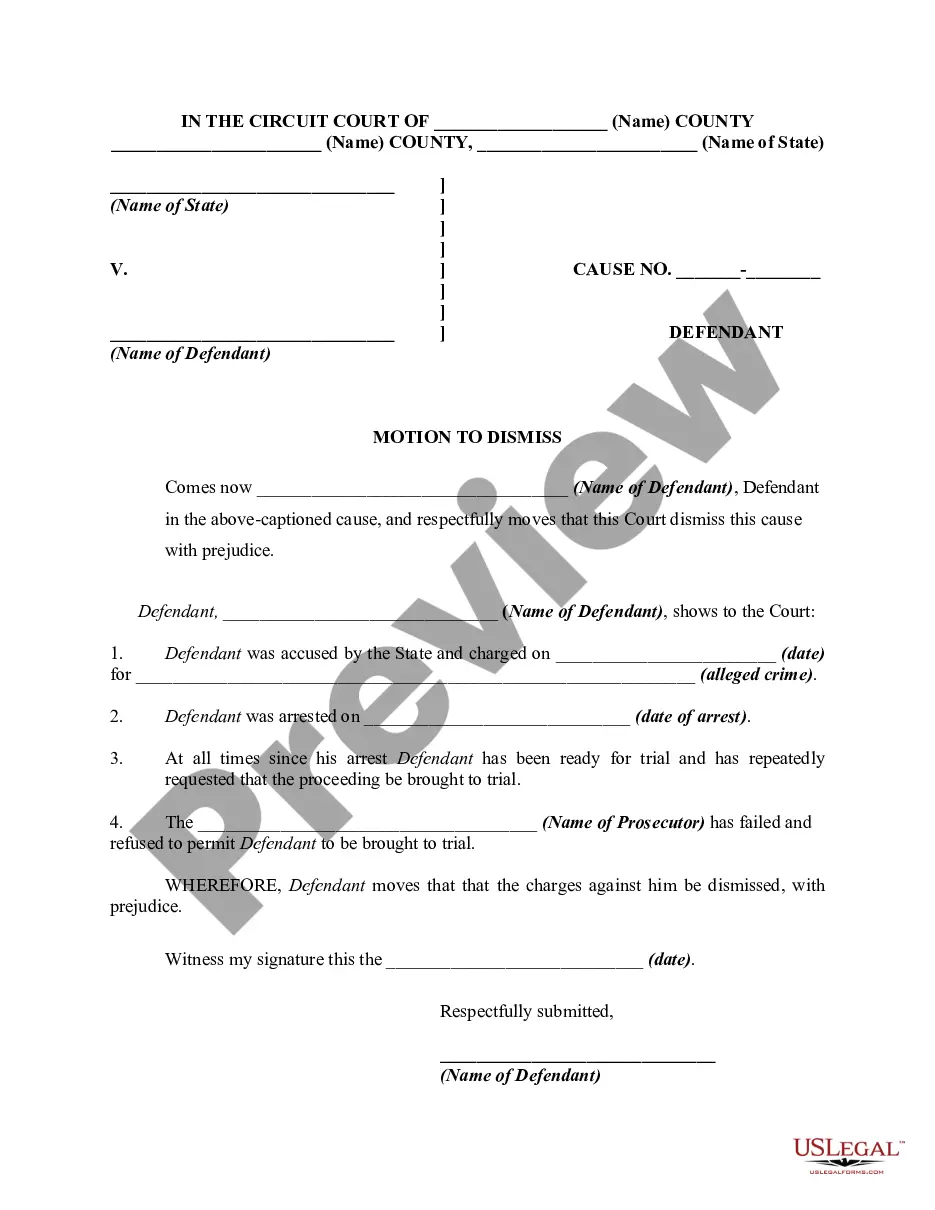
- Caption with the case title and cause number.
- Introduction stating the motion to dismiss and the basis for it.
- Specific allegations of prosecutorial misconduct and grand jury abuse.
- Request for production of grand jury transcripts.
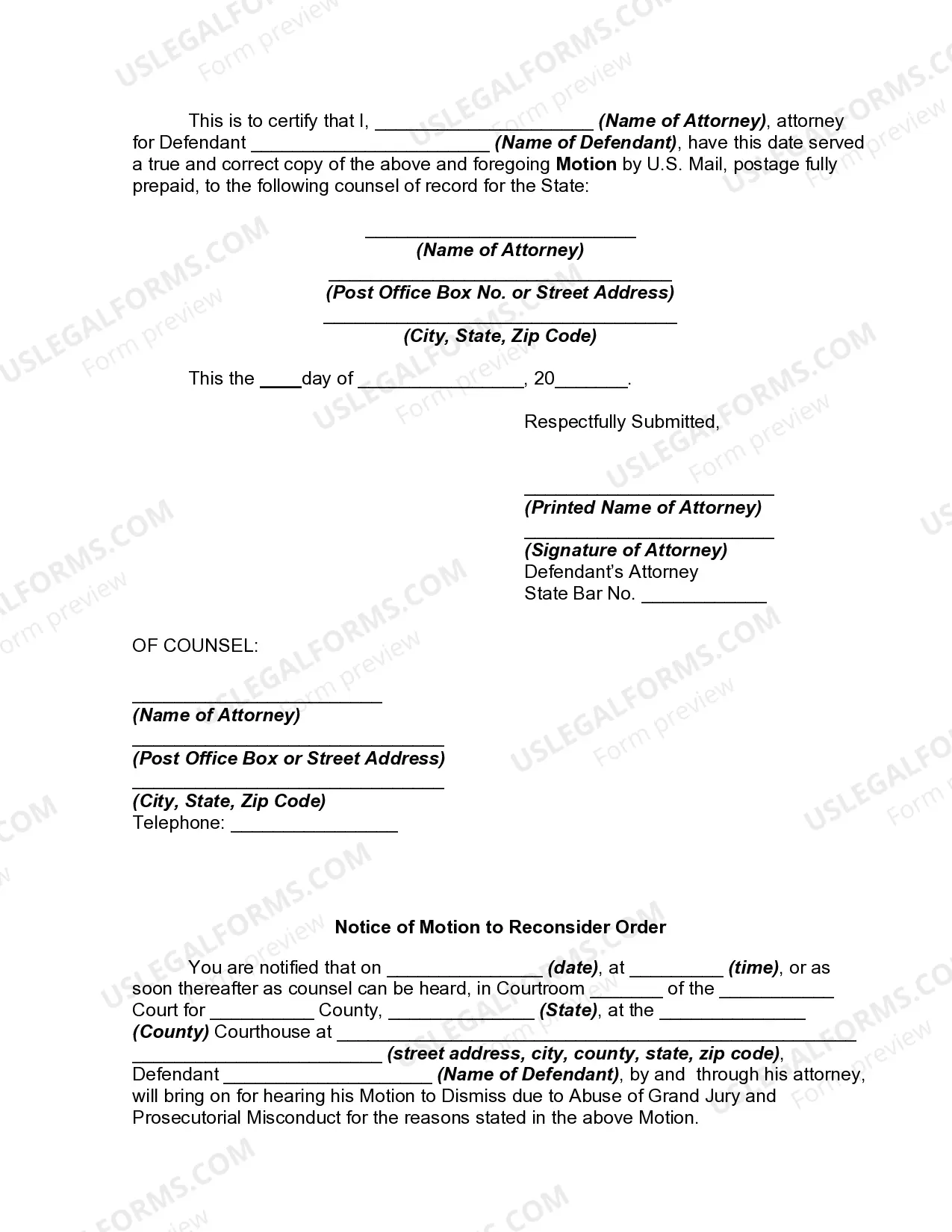
- Certification of service to notify the prosecution.
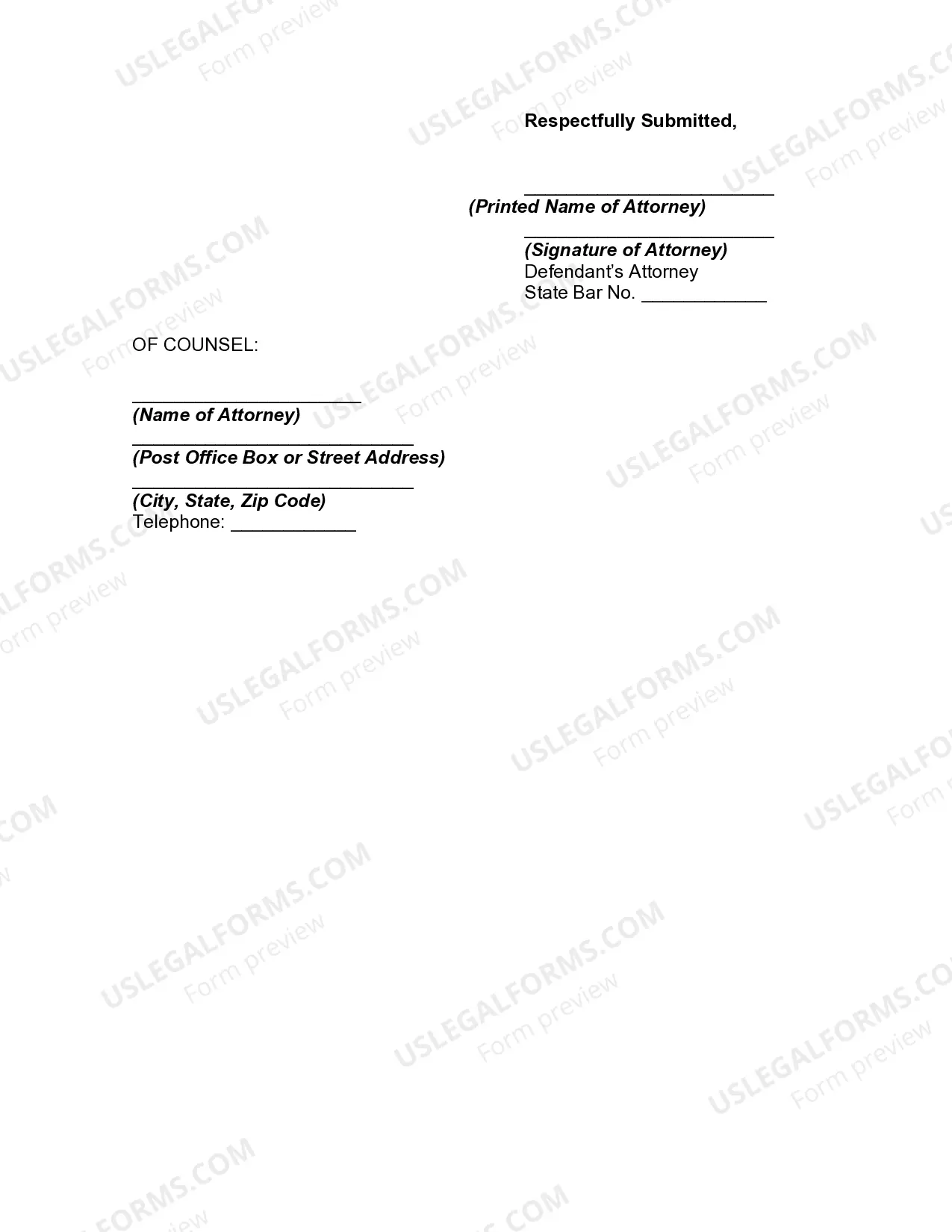
- Signature section for the defendant's attorney along with their bar number.
When to use this form
This form should be used when a defendant believes that an indictment was obtained through prosecutorial misconduct, including unfair practices that may have influenced the grand jury's decision. Common scenarios for using this form include cases where evidence was mishandled, where witnesses were coerced, or where there was selective disclosure of information to the grand jury that unfairly prejudiced the defendant's position. It is crucial when a defendant seeks to protect their rights and ensure fairness within the legal process.
Who this form is for
- Defendants facing criminal charges who believe there has been prosecutorial misconduct.
- Defense attorneys representing clients who wish to challenge an indictment.
- Individuals who want to assert their rights against unfair legal practices in criminal proceedings.
Instructions for completing this form
- Identify the caption with the case title and cause number.
- Fill in the name of the defendant and attorney throughout the document.
- Clearly state the specific legal statutes or rules that support the motion.
- Detail the specific allegations of misconduct by the prosecution in the appropriate section.
- Include a request for the state to produce all relevant grand jury transcripts.
- Sign and date the document, ensuring all necessary parties are notified of the motion.
Notarization requirements for this form
In most cases, this form does not require notarization. However, some jurisdictions or signing circumstances might. US Legal Forms offers online notarization powered by Notarize, accessible 24/7 for a quick, remote process.
Get your form ready online
Our built-in tools help you complete, sign, share, and store your documents in one place.
Make edits, fill in missing information, and update formatting in US Legal Forms—just like you would in MS Word.
Download a copy, print it, send it by email, or mail it via USPS—whatever works best for your next step.
Sign and collect signatures with our SignNow integration. Send to multiple recipients, set reminders, and more. Go Premium to unlock E-Sign.
If this form requires notarization, complete it online through a secure video call—no need to meet a notary in person or wait for an appointment.
We protect your documents and personal data by following strict security and privacy standards.

Make edits, fill in missing information, and update formatting in US Legal Forms—just like you would in MS Word.

Download a copy, print it, send it by email, or mail it via USPS—whatever works best for your next step.

Sign and collect signatures with our SignNow integration. Send to multiple recipients, set reminders, and more. Go Premium to unlock E-Sign.

If this form requires notarization, complete it online through a secure video call—no need to meet a notary in person or wait for an appointment.

We protect your documents and personal data by following strict security and privacy standards.
Mistakes to watch out for
- Failing to cite specific statutes or rules supporting the motion.
- Not providing enough detail in the allegations of misconduct.
- Forgetting to serve a copy of the motion to the prosecution.
- Submitting the motion after the deadline for motions to dismiss.
Advantages of online completion
- Convenient access to legal documents from anywhere.
- Editable templates that allow for easy customization.
- Documents prepared by licensed attorneys ensure reliability and compliance.
Legal use & context
- This motion serves as a means to protect defendants' rights against prosecutorial overreach.
- It ensures that the grand jury remains a fair and impartial entity in the criminal justice system.
- Successful execution of this motion can lead to the dismissal of unjust charges, promoting fair legal practices.
Main things to remember
- The form is crucial for defendants facing potential prosecutorial misconduct.
- Clearly outline specific allegations and legal support when completing the form.
- Understanding state-specific requirements is essential for successful submission.
Looking for another form?


Form popularity
FAQ
A grand jury's decision to indict a person or corporation cannot be appealed upon the issuance of the indictment. However, the indictment returned by the grand jury can be challenged in the federal district court on any number of grounds, depending on the specific facts of the case.
A grand jury's decision to indict a person or corporation cannot be appealed upon the issuance of the indictment. However, the indictment returned by the grand jury can be challenged in the federal district court on any number of grounds, depending on the specific facts of the case.
Secrecy. Grand jury proceedings are secret. No judge is present; the proceedings are led by a prosecutor; and the defendant has no right to present his case or (in many instances) to be informed of the proceedings at all.The case for such secrecy was unanimously upheld by the Burger Court in Douglas Oil Co.
A grand jury's decision to indict a person or corporation cannot be appealed upon the issuance of the indictment. However, the indictment returned by the grand jury can be challenged in the federal district court on any number of grounds, depending on the specific facts of the case.
The Grand Jury's Decision and a Prosecutor's DiscretionGrand juries do not need a unanimous decision from all members to indict, but it does need a supermajority of 2/3 or 3/4 agreement for an indictment (depending on the jurisdiction).
A grand jury's decision to indict a person or corporation cannot be appealed upon the issuance of the indictment. However, the indictment returned by the grand jury can be challenged in the federal district court on any number of grounds, depending on the specific facts of the case.
Whenever an indictment or information charging a felony is dismissed for any reason after the period prescribed by the applicable statute of limitations has expired, a new indictment may be returned in the appropriate jurisdiction within six calendar months of the date of the dismissal of the indictment or information,
To overturn a guilty verdict, the judge must look at all evidence presented most favorable to the prosecution. The judge can only grant judgment to overturn the verdict if the evidence clearly fails to establish guilt.A judge will never interfere with a jury's decision and process unless there is a legitimate reason.
Depending upon the circumstances at hand, it may be possible to challenge a federal grand jury subpoena on grounds of: Procedural miscues or deficiencies. Request for information that is irrelevant to the government's investigation. Request for information not within the subpoena recipient's custody or control.