Affidavit in Support of Motion to Dismiss Criminal Charges for Failure to Grant Show Cause Hearing
Overview of this form
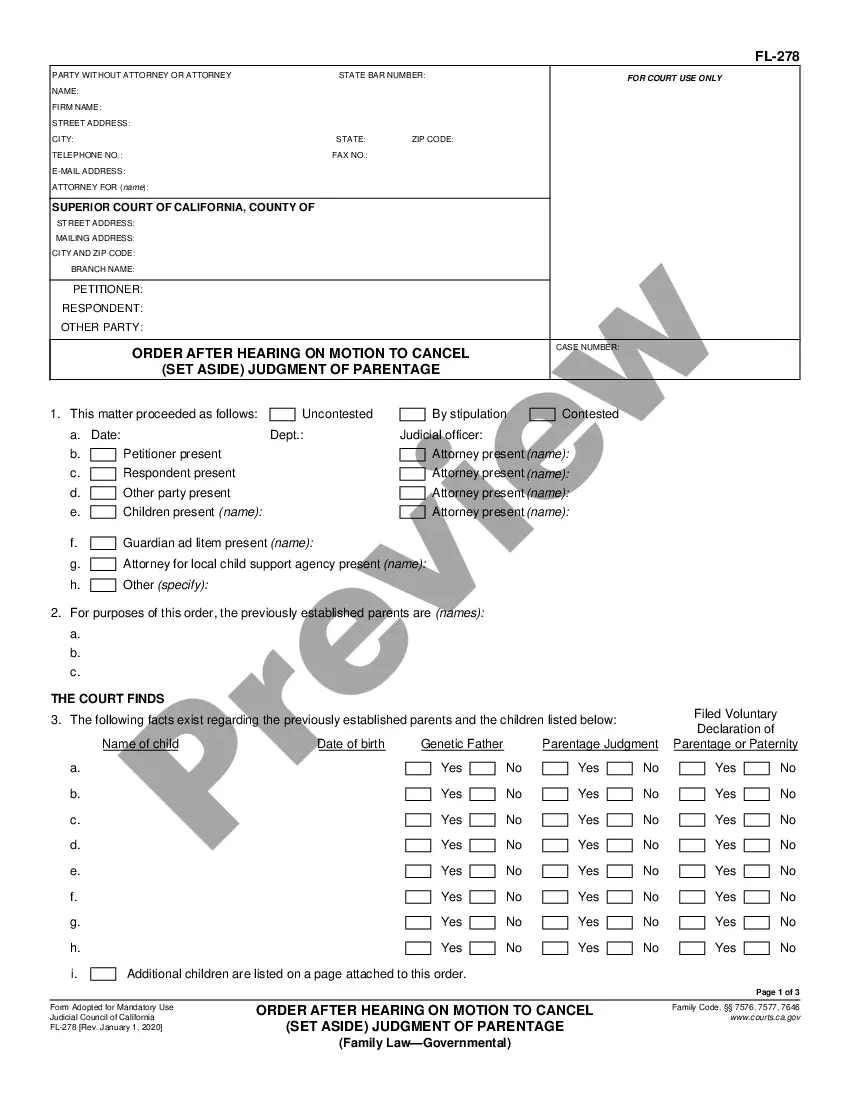
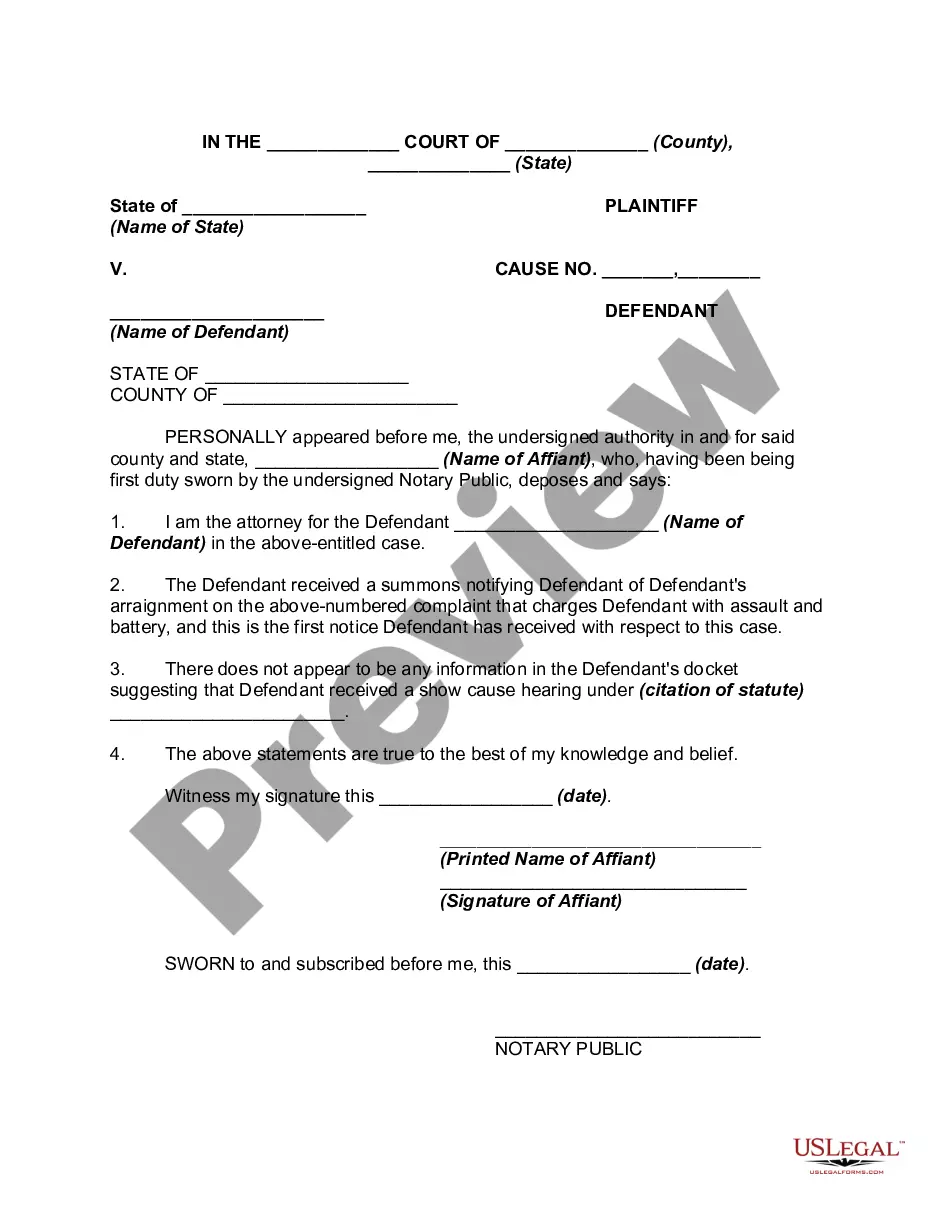
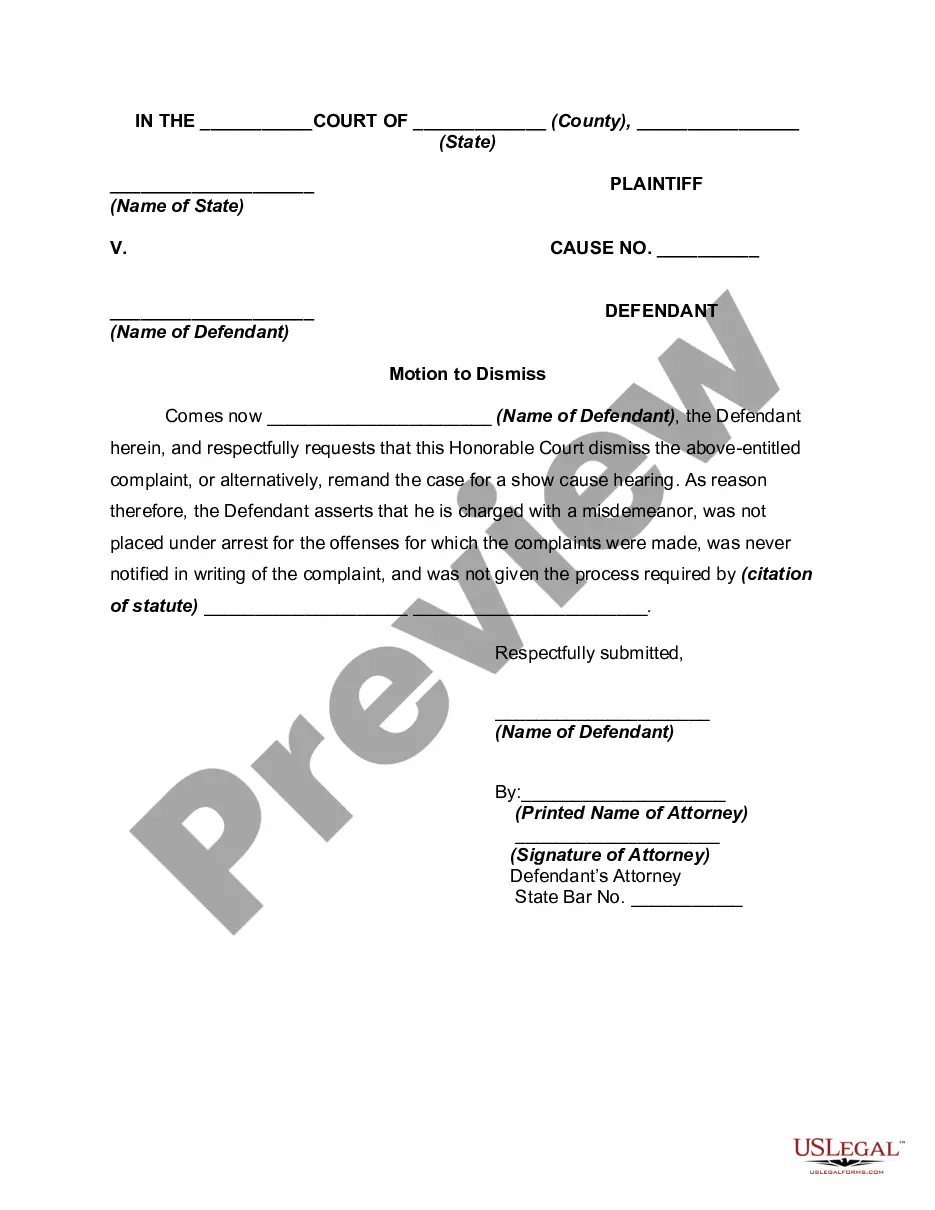
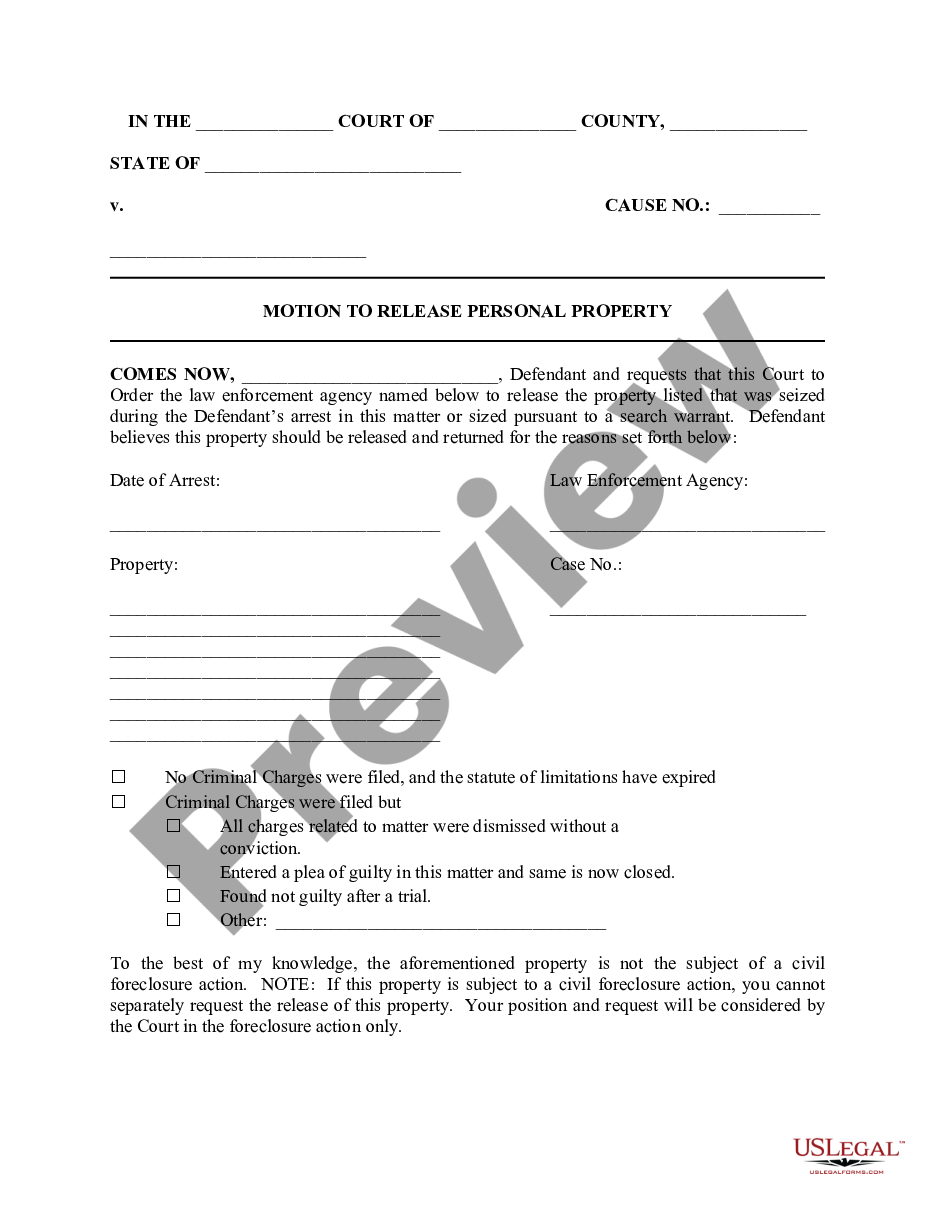
The Affidavit in Support of Motion to Dismiss Criminal Charges for Failure to Grant Show Cause Hearing is a legal document used by defendants in criminal cases. Its primary purpose is to assert that a show-cause hearing, crucial for determining the presence of probable cause in a criminal complaint, did not take place. This form is distinct from other affidavits because it specifically tailors to situations where a defendant seeks dismissal of charges due to the alleged lack of a proper hearing.
Form components explained
- Information on the court and parties involved, including names and case numbers.
- Affiant's affirmation of their role as the attorney for the defendant.
- Statement confirming that the defendant received only limited notification regarding their arraignment.
- Declaration of the absence of any documentation showing that a show cause hearing was held.
- Signature and notarization section to verify the affidavit's authenticity.

Common use cases
This form is appropriate for defendants who believe they were not granted a show-cause hearing as required. If a complaint has been filed against you, and you didn't receive the necessary hearing to establish probable cause, using this affidavit can help formally request the court to dismiss the charges based on this procedural oversight.
Who needs this form
- Defendants facing criminal charges who did not receive a show-cause hearing.
- Attorneys representing defendants in criminal cases.
- Individuals seeking to understand their legal position regarding the charge against them.
Completing this form step by step
- Identify the correct court and fill in the necessary court and case information.
- State your relationship to the defendant and your role as their attorney.
- Indicate the details regarding the notice of arraignment and the absence of prior hearings.
- Complete the affidavit statements truthfully, ensuring accuracy in your claims.
- Sign and date the affidavit, and have it notarized by a qualified notary public.
Is notarization required?
Yes, this form must be notarized to be legally valid. Having a notarization ensures that the affidavit is recognized as an official document, verifiable by the court. US Legal Forms offers integrated online notarization, making it easy to complete this requirement securely and efficiently.
Get your form ready online
Our built-in tools help you complete, sign, share, and store your documents in one place.
Make edits, fill in missing information, and update formatting in US Legal Forms—just like you would in MS Word.
Download a copy, print it, send it by email, or mail it via USPS—whatever works best for your next step.
Sign and collect signatures with our SignNow integration. Send to multiple recipients, set reminders, and more. Go Premium to unlock E-Sign.
If this form requires notarization, complete it online through a secure video call—no need to meet a notary in person or wait for an appointment.
We protect your documents and personal data by following strict security and privacy standards.

Make edits, fill in missing information, and update formatting in US Legal Forms—just like you would in MS Word.

Download a copy, print it, send it by email, or mail it via USPS—whatever works best for your next step.

Sign and collect signatures with our SignNow integration. Send to multiple recipients, set reminders, and more. Go Premium to unlock E-Sign.

If this form requires notarization, complete it online through a secure video call—no need to meet a notary in person or wait for an appointment.

We protect your documents and personal data by following strict security and privacy standards.
Common mistakes
- Failing to provide accurate court or case details.
- Omitting crucial information about the defendant's arraignment notice.
- Not including a notarization, which may invalidate the affidavit.
Advantages of online completion
- Convenient access to downloadable templates, allowing for immediate use and customization.
- Time-saving options to fill in required fields without needing extensive legal knowledge.
- Reliability of materials drafted by licensed attorneys, enhancing legal compliance.
Legal use & context
This affidavit is a crucial legal tool in criminal defense. It is intended to provide the court with information regarding the procedural status of the case, particularly whether the defendant was afforded their right to a show-cause hearing. If the court finds merit in the affidavit, it may lead to the dismissal of the complaint, highlighting its importance in criminal proceedings.
Summary of main points
- The affidavit is crucial for challenging criminal charges when procedural rights were not observed.
- Proper completion and notarization of the form are essential for its validity.
- Using a reliable online source for the form can streamline the process and ensure compliance with legal standards.
Looking for another form?
Form popularity
FAQ
This is a legal affidavit used by defendants or their attorneys to seek dismissal of criminal charges when a show-cause hearing did not occur. It asserts that no show-cause hearing was held and requests dismissal on that basis. It includes court/party information, the attorney’s affirmation, limited arraignment notice, lack of show cause documentation, and a signature/notarization block.
If a show cause notice has been issued but no show cause hearing took place, this form can be filed to formally request dismissal of charges based on that procedural oversight. It provides space to include court and party details, the attorney’s affirmation, and a sworn statement that no hearing was held, along with notarization.
Judges consider affidavits filed with motions as part of the record. This Affidavit in Support of Motion to Dismiss Criminal Charges for Failure to Grant Show Cause Hearing is intended to establish that the required show-cause hearing did not occur and to support dismissal. It includes sworn statements and is reviewed with the case file.
An affidavit in support of a motion is a sworn, written statement providing facts that back a request. In this form, it asserts that the show-cause hearing was not held and supports a motion to dismiss the charges on that procedural basis.
If a show cause order exists but the hearing was not conducted, this affidavit helps move to dismiss the charges due to the procedural omission. The document is filed with the court and served as part of the motion to dismiss, reflecting the lack of a proper hearing.
This form is specifically tailored to a failure to grant a show-cause hearing. It includes concrete declarations about limited arraignment notice and the absence of any documentation showing a show cause hearing, which a generic motion-to-dismiss affidavit may not address.