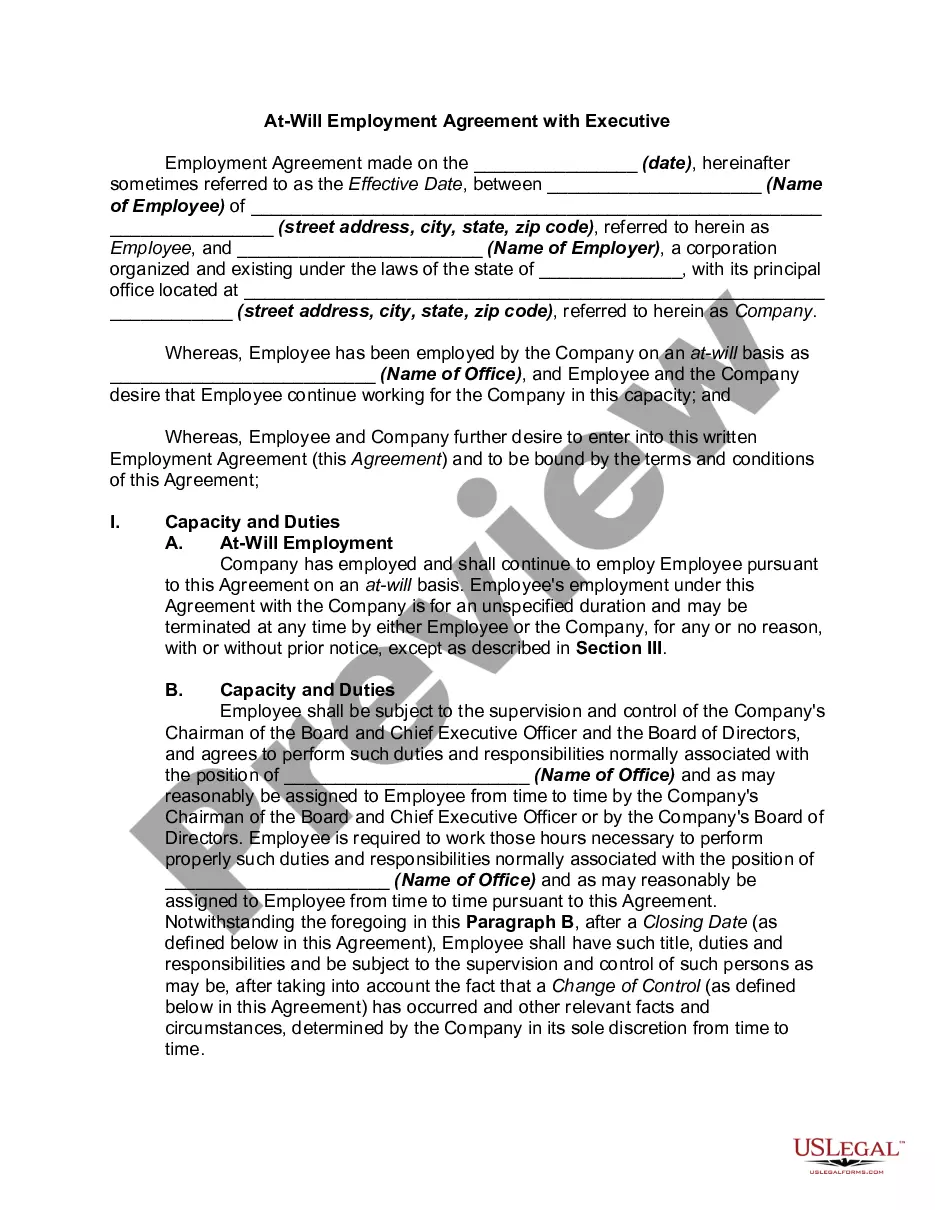
At-Will Employment Agreement with Executive
Overview of this form
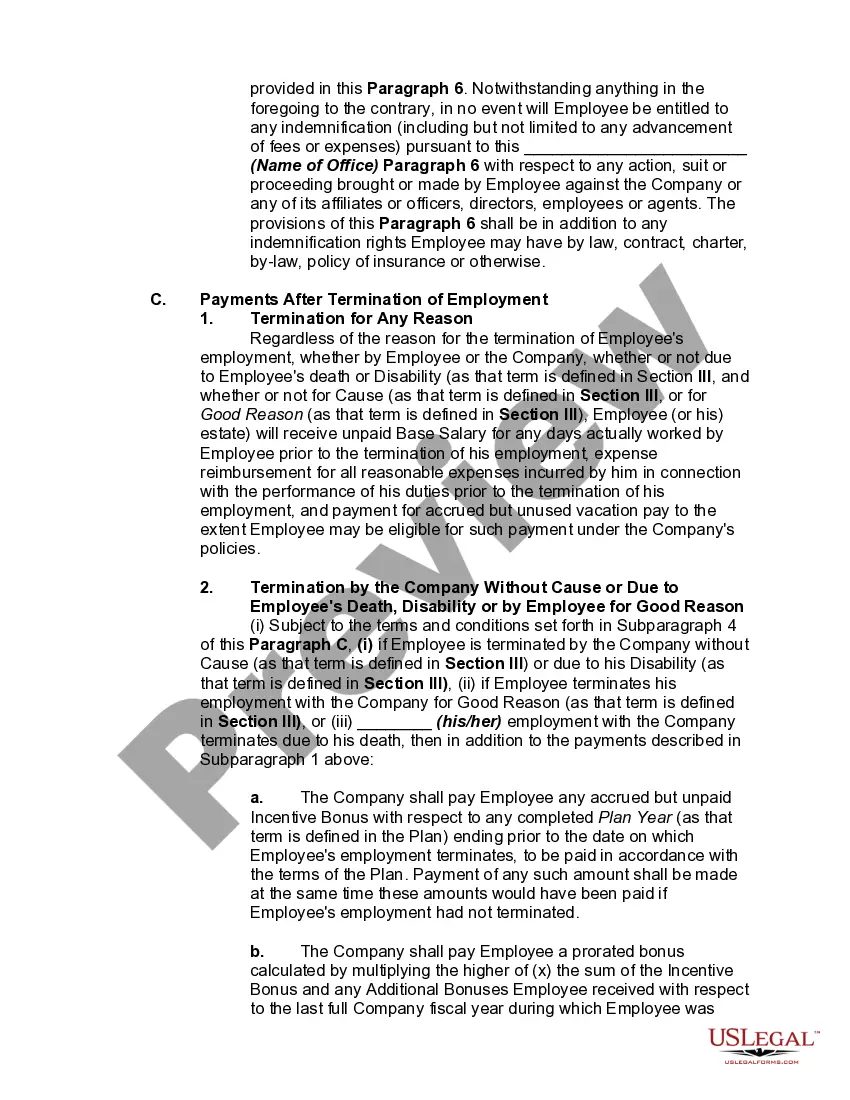
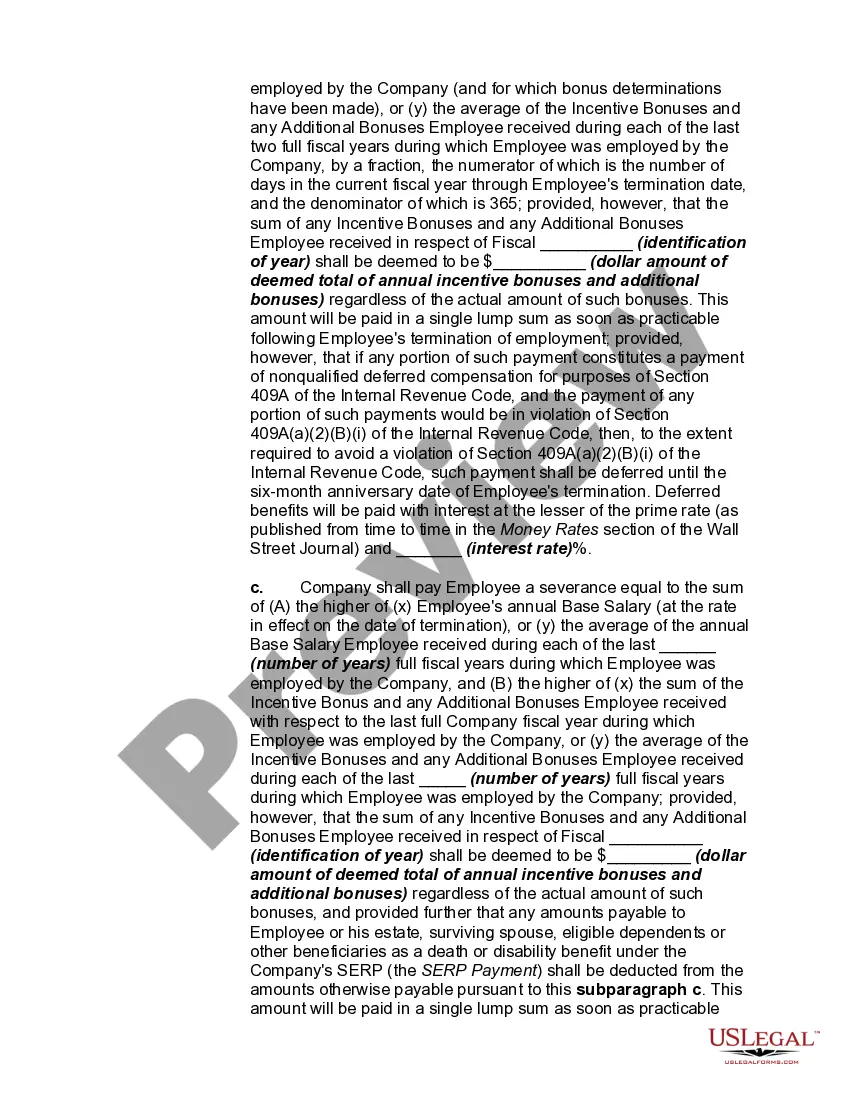
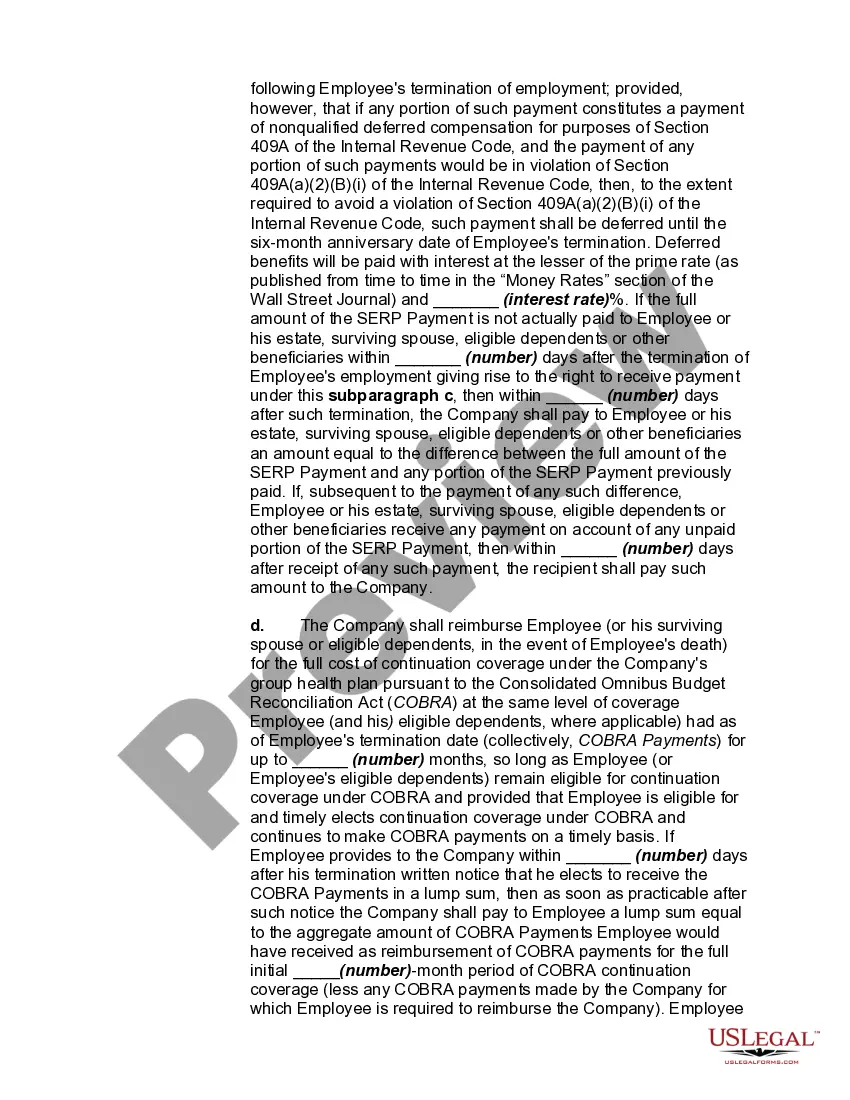
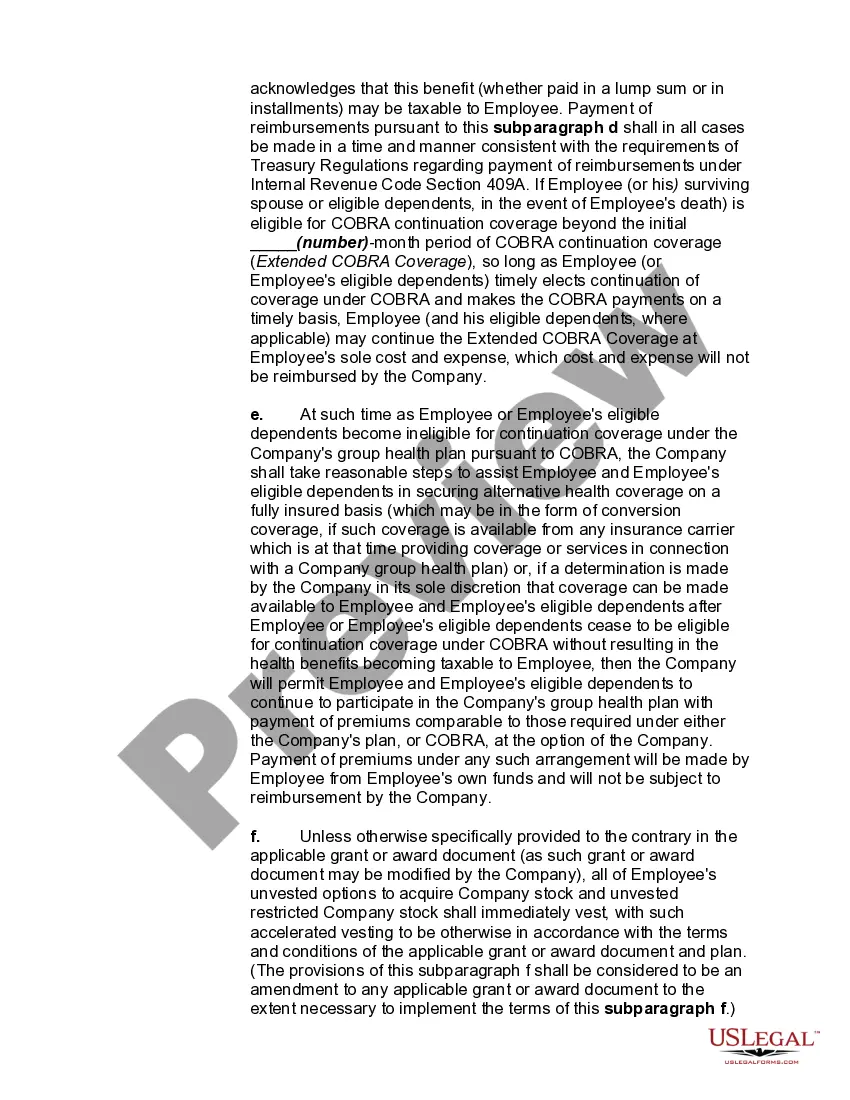
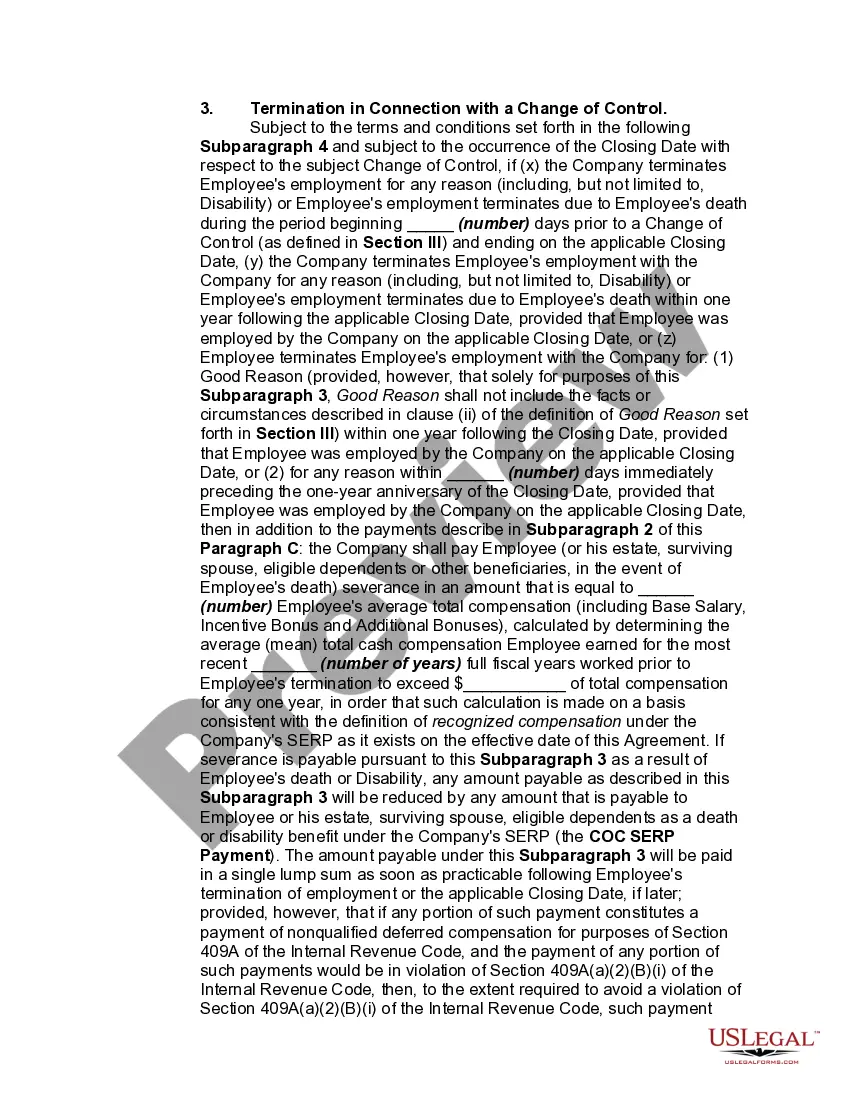
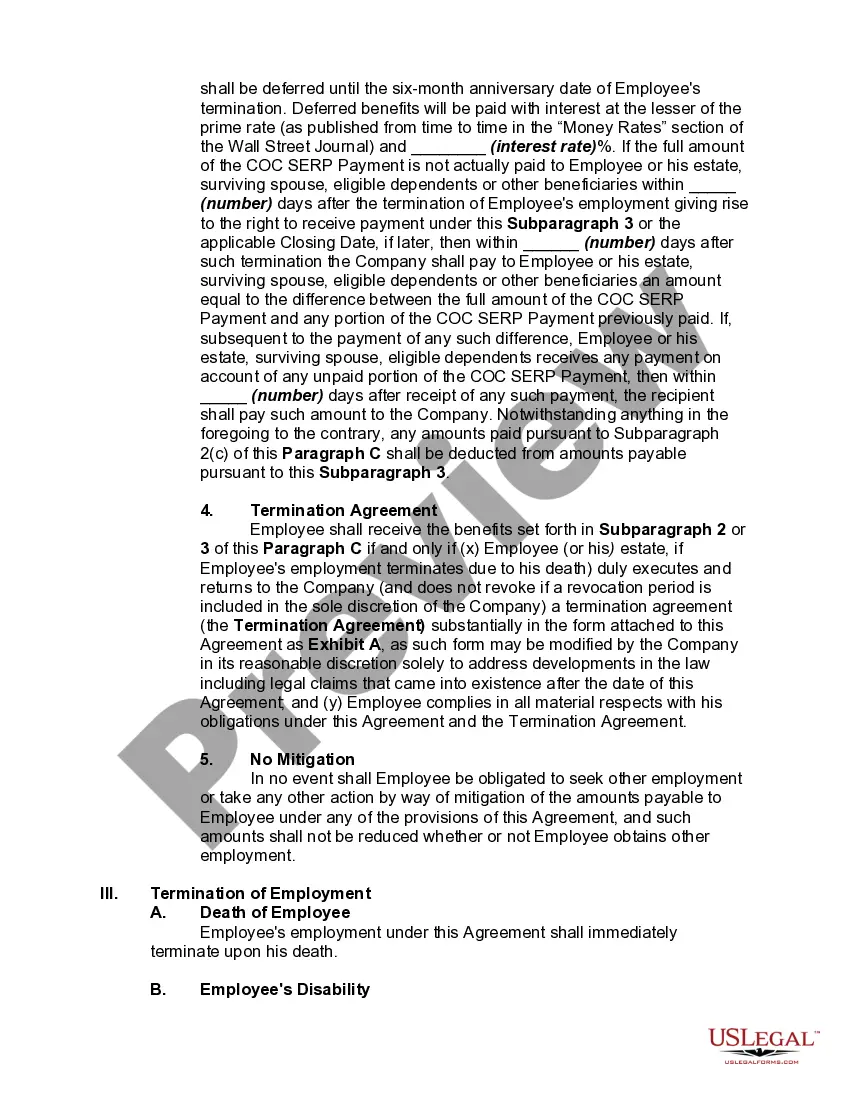
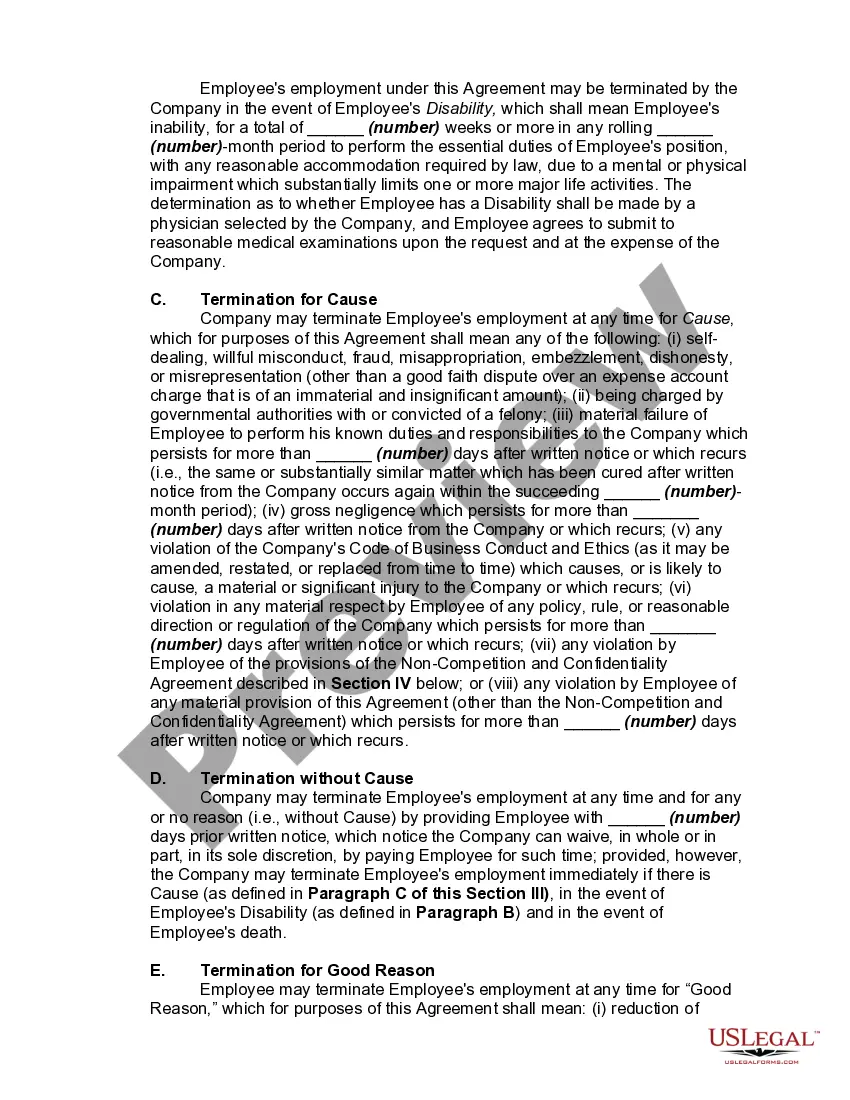
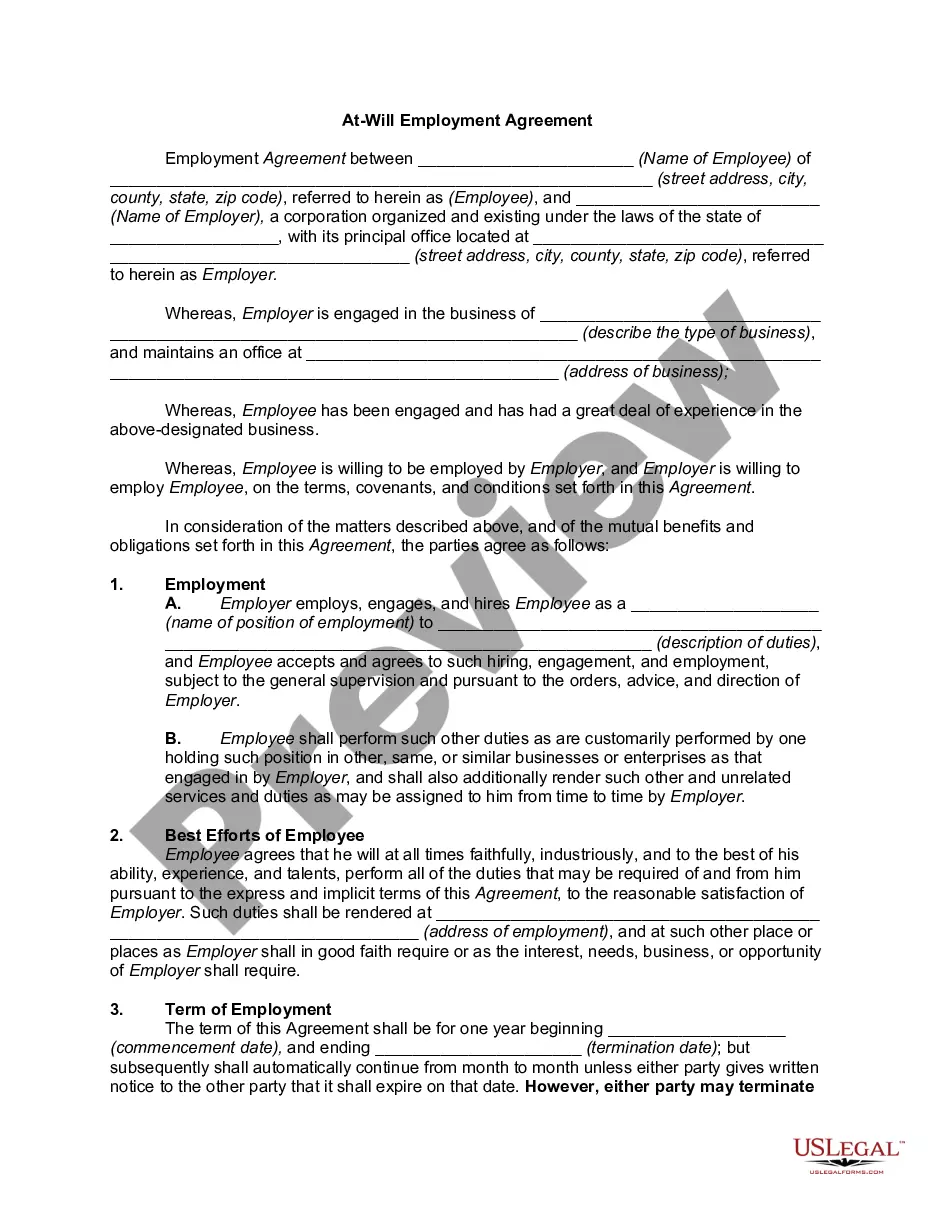
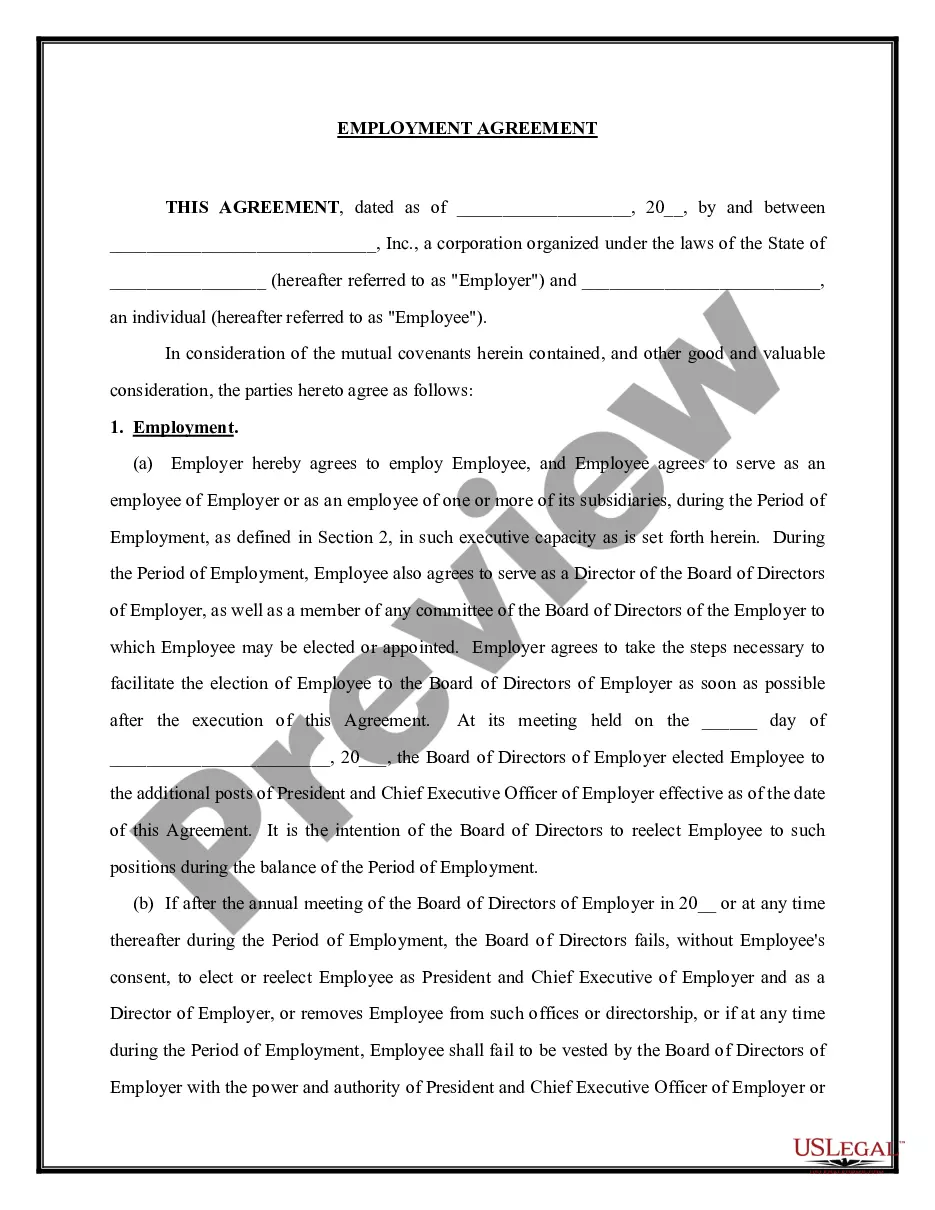
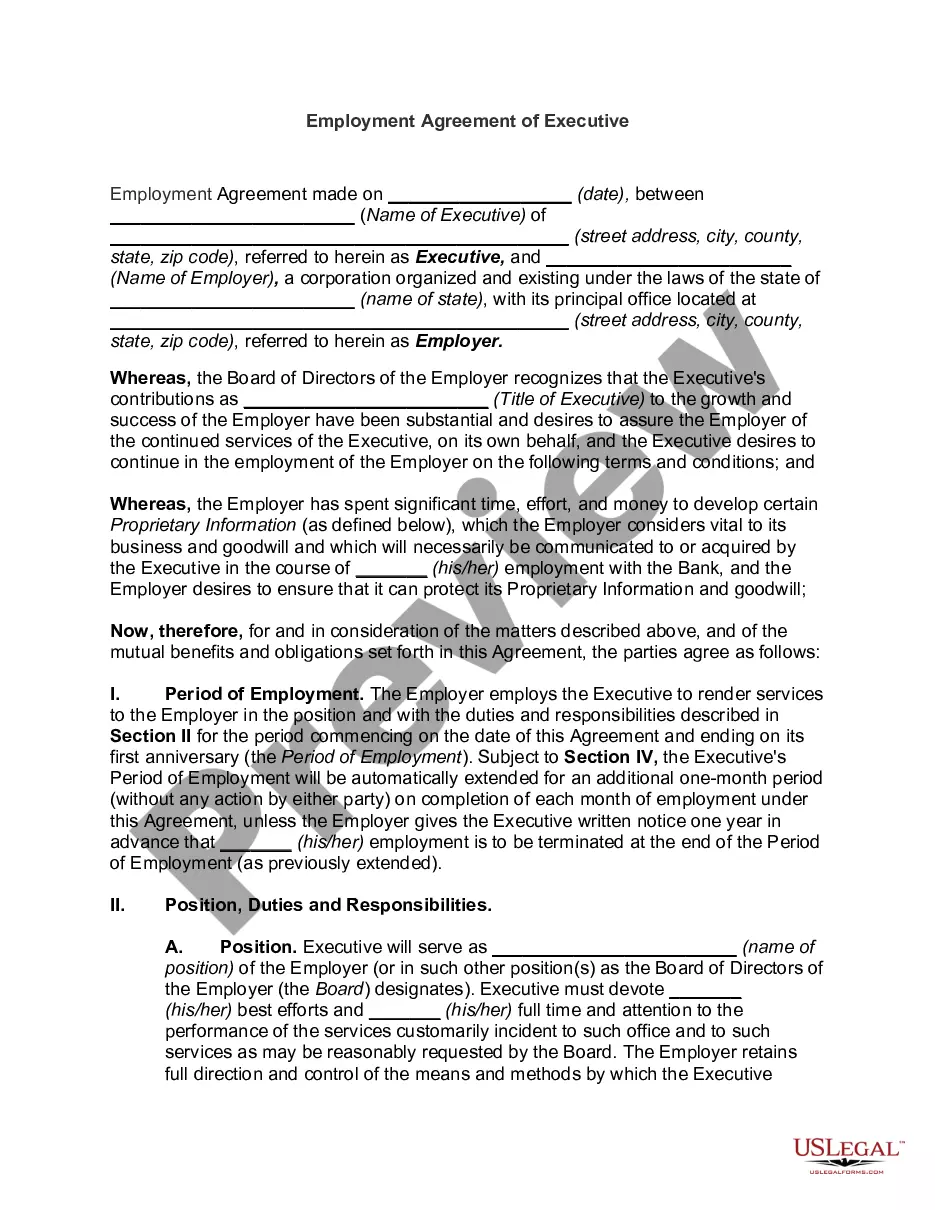
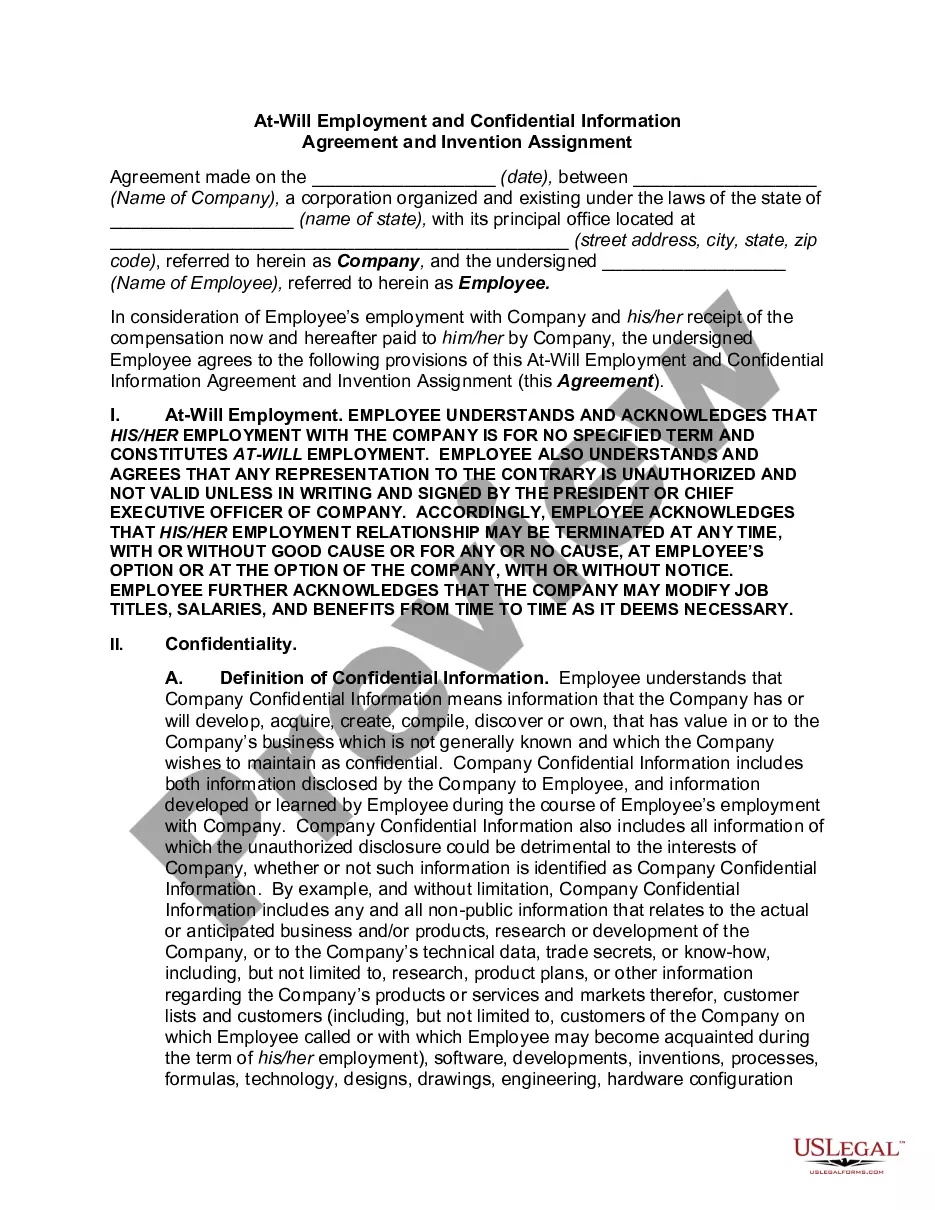
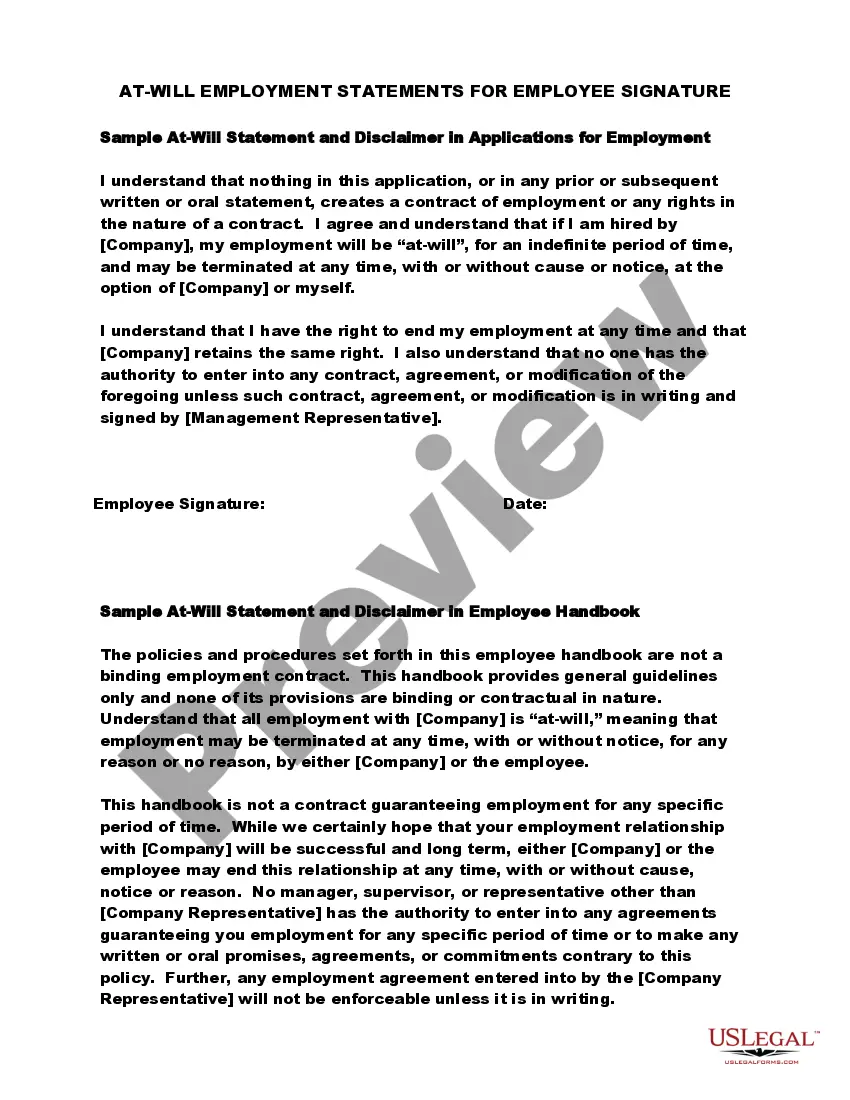
The At-Will Employment Agreement with Executive is a legal document used to outline the terms of employment for executives on an at-will basis. This form specifies that either the employer or the employee can terminate the employment at any time, for any reason, or for no reason at all. It is unique in its complexity, covering various clauses related to compensation, duties, termination, and benefits. Unlike standard employment agreements that may have a set duration, this document explicitly establishes the relationship and the terms under which it can be ended.
Key parts of this document
- Effective Date: The date when the agreement becomes active.
- Employee Information: Details of the employee, including name and address.
- Company Information: Information about the organization, including name and address.
- Employment Terms: Provisions outlining at-will employment and duties expected from the executive.
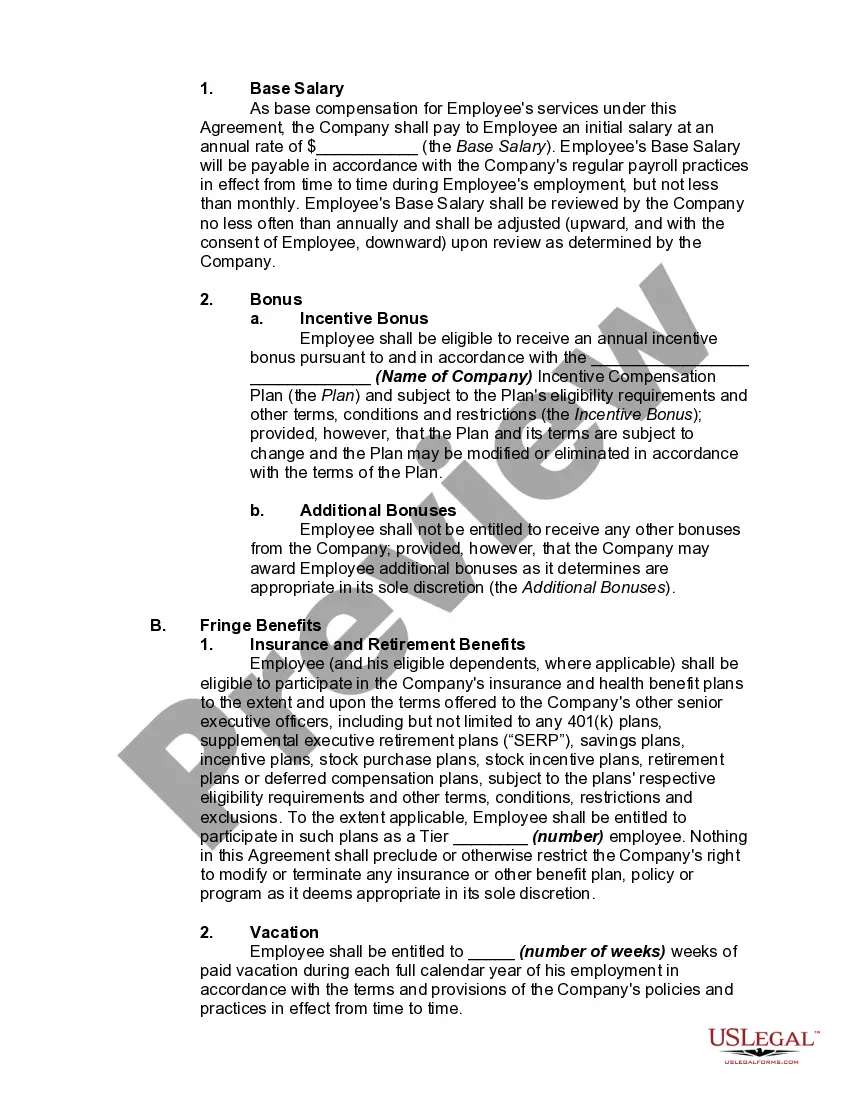
- Compensation: Details about base salary, bonuses, and fringe benefits.
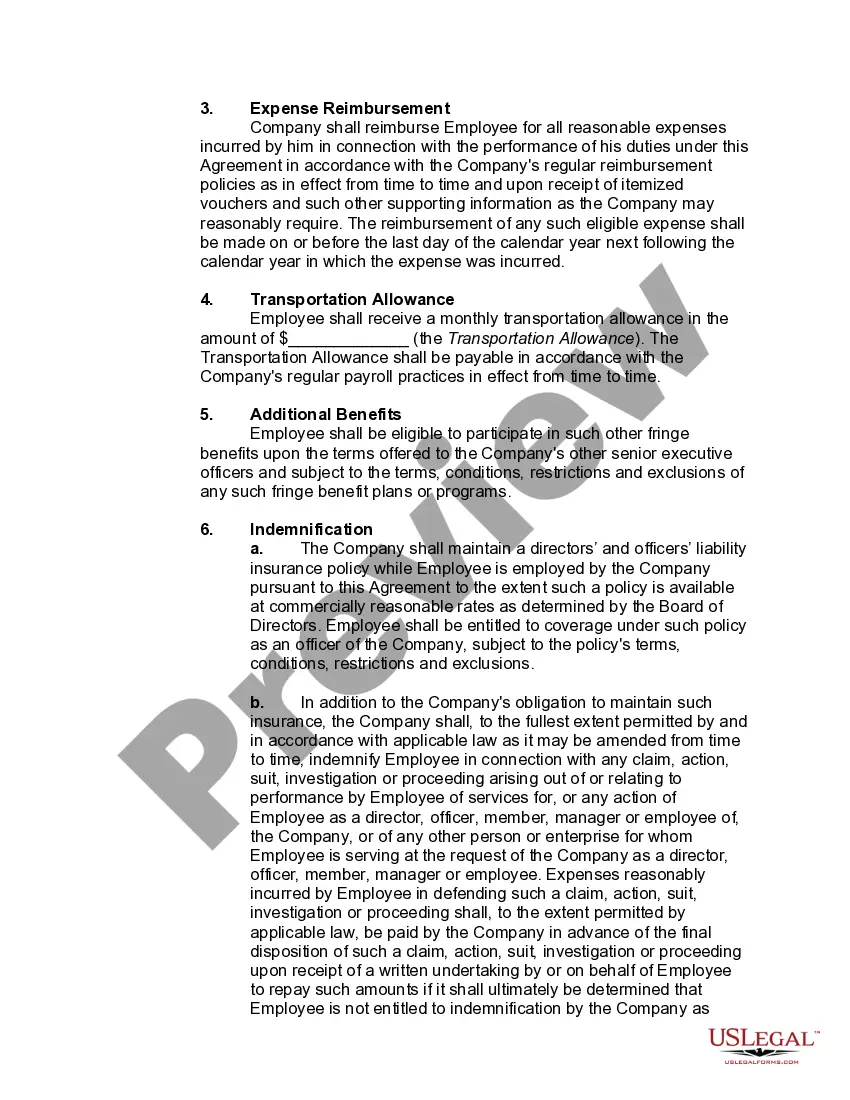
- Termination Conditions: Scenarios under which the agreement may be terminated, including for cause or without cause.

When this form is needed
This form is needed when a company hires an executive on an at-will basis. It is particularly useful for establishing clear expectations regarding the employment relationship and the rights of both parties, as well as outlining compensation and termination procedures. Organizations may use this document when they require flexibility in employment arrangements while ensuring that executives understand the terms of their employment.
Who should use this form
Intended Audience:
- Executives entering into employment with a company on an at-will basis.
- Companies seeking to formalize the employment relationship with high-level employees.
- Human resources departments needing a standardized form for executive employment agreements.
- Legal professionals drafting employment contracts for clients.
Steps to complete this form
Steps to Complete the Form:
- Identify the parties involved, including the name of the employee and the company.
- Enter the effective date of the agreement to establish when the terms apply.
- Specify the employee's job title and corresponding duties as outlined in the agreement.
- Fill in the base salary and bonus structure, including eligibility for fringe benefits.
- Review and ensure all termination clauses are clearly articulated for understanding.
- Have both parties sign the agreement to validate their acceptance of the terms.
Notarization guidance
This form does not typically require notarization unless specified by local law. However, it is advisable to consult with a legal professional to ensure compliance with any jurisdiction-specific requirements.
Get your form ready online
Our built-in tools help you complete, sign, share, and store your documents in one place.
Make edits, fill in missing information, and update formatting in US Legal Forms—just like you would in MS Word.
Download a copy, print it, send it by email, or mail it via USPS—whatever works best for your next step.
Sign and collect signatures with our SignNow integration. Send to multiple recipients, set reminders, and more. Go Premium to unlock E-Sign.
If this form requires notarization, complete it online through a secure video call—no need to meet a notary in person or wait for an appointment.
We protect your documents and personal data by following strict security and privacy standards.

Make edits, fill in missing information, and update formatting in US Legal Forms—just like you would in MS Word.

Download a copy, print it, send it by email, or mail it via USPS—whatever works best for your next step.

Sign and collect signatures with our SignNow integration. Send to multiple recipients, set reminders, and more. Go Premium to unlock E-Sign.

If this form requires notarization, complete it online through a secure video call—no need to meet a notary in person or wait for an appointment.

We protect your documents and personal data by following strict security and privacy standards.
Typical mistakes to avoid
Common Mistakes to Avoid:
- Leaving out the effective date, which is crucial for enforcement.
- Failing to clearly define the employeeâs duties, leading to potential misunderstandings.
- Not specifying the grounds for termination, which can result in legal disputes.
- Neglecting to review state laws that may impact at-will termination practices.
Why use this form online
Benefits of Using This Form Online:
- Quick and easy access to a legally vetted employment agreement template.
- Editability allows customization to suit specific company needs and state laws.
- Reliability, as the form is drafted by licensed attorneys ensuring legal compliance.
- No need for in-person meetings, allowing for greater flexibility and speed in finalizing agreements.
Legal use & context
- This contract is legally binding and enforceable as long as it adheres to state employment laws.
- Terms must be clear and specific to avoid disputes regarding employment conditions.
- Careful drafting can protect both the employer and the employee in future legal situations.
Main things to remember
- Understand the nature of at-will employment before utilizing this agreement.
- Ensure all compensation and benefits are outlined in detail.
- Consider state-specific laws that may influence the contract's legality.
Looking for another form?

Form popularity
FAQ
A written employment contract is a document that you and your employee sign setting forth the terms of your relationship. You don't have to enter into a written contract with every employee you hire. In fact, written employment contracts are generally the exception, rather than the rule.
Write the Title. When you proceed to type out your employment agreement, you should title your draft. State the Parties. Every employment agreement needs to clearly identify and state the parties. List Terms and Conditions. Outline Position Duties. Be Clear on Compensation. Add Other Clauses. Use These Contract Terms.
It should include the annual salary or hourly rate, information about raises, bonuses, or incentives and how these may be obtained. Explain what the benefits plan includes medical, dental, eye care, etc. what percent the employer pays, and what percent the employee pays.
Theoretically, you don't have to sign an at-will agreementbut most courts have held that your employer can fire (or refuse to hire) you for failing to do so. And, even if you don't sign the agreement, the default rule is that employees work at will.
The nature and description of the job. As an employee you will be required to provide your services to the employer. Remuneration and benefits. Duration. Leave. Termination.
Names of the Parties. The employer's organisation details and the employee's full name and address. Start Date. Job Title and Description. Place of Work. Hours of Work. Probationary Period. Salary. Assessments.
An executive employment contract is a written employment agreement, usually made between a highly compensated executive and an employer, that contains more expansive terms and conditions than an ordinary employment agreement.
Title the employment contract. Identify the parties. List the term and conditions. Outline the job responsibilities. Include compensation details. Use specific contract terms. Consult with an employment lawyer. Employment.