Distribution Agreement
About this form
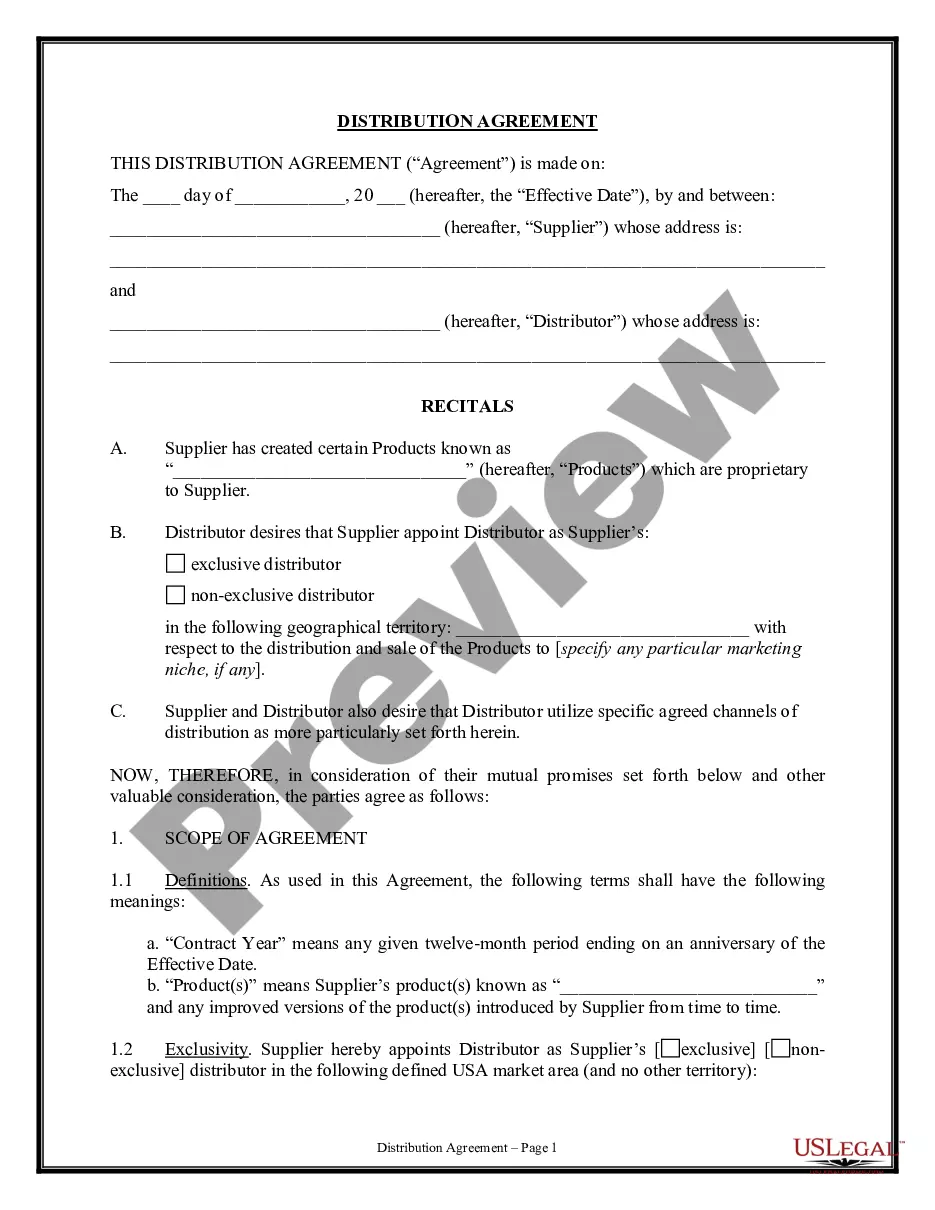
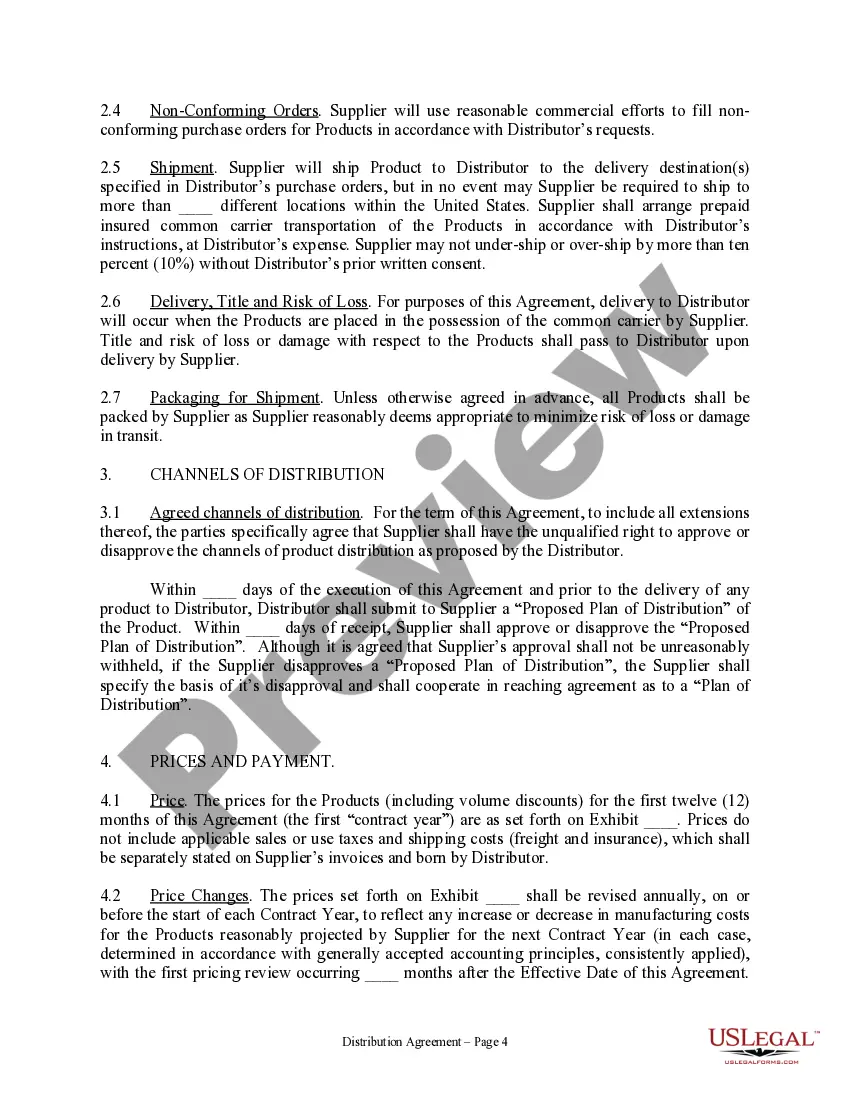
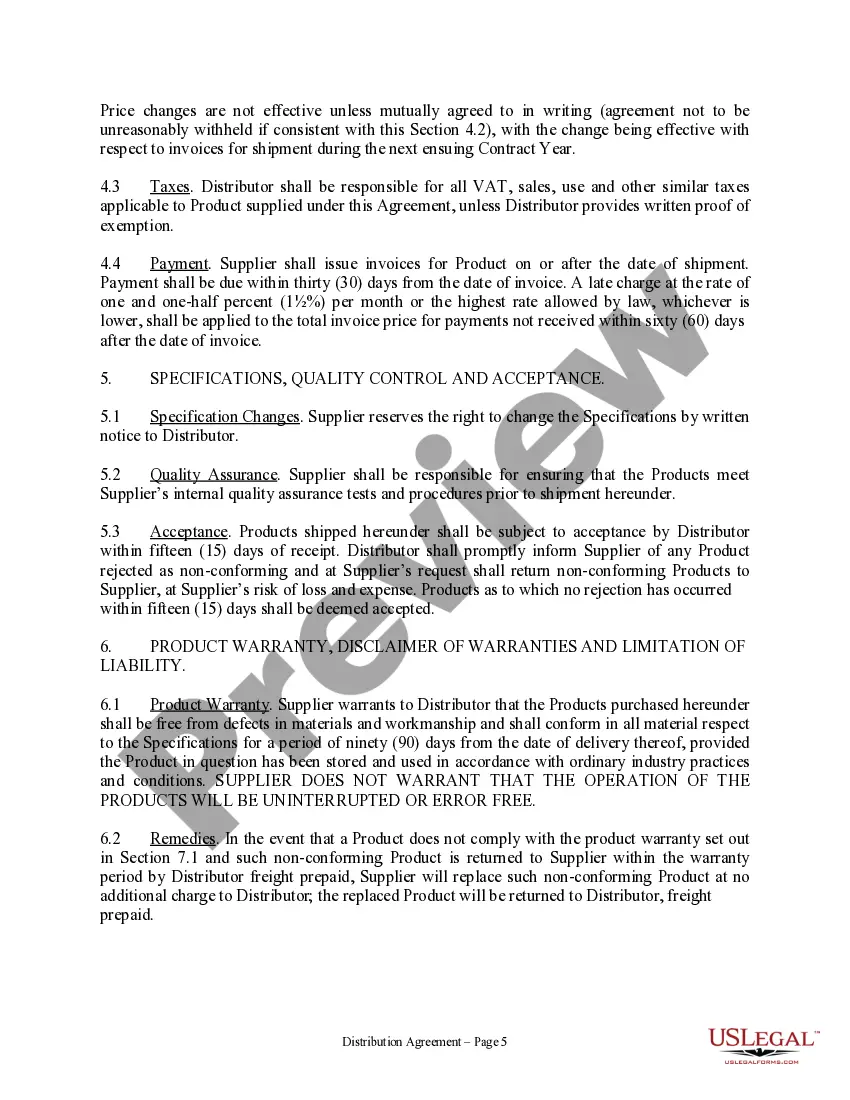
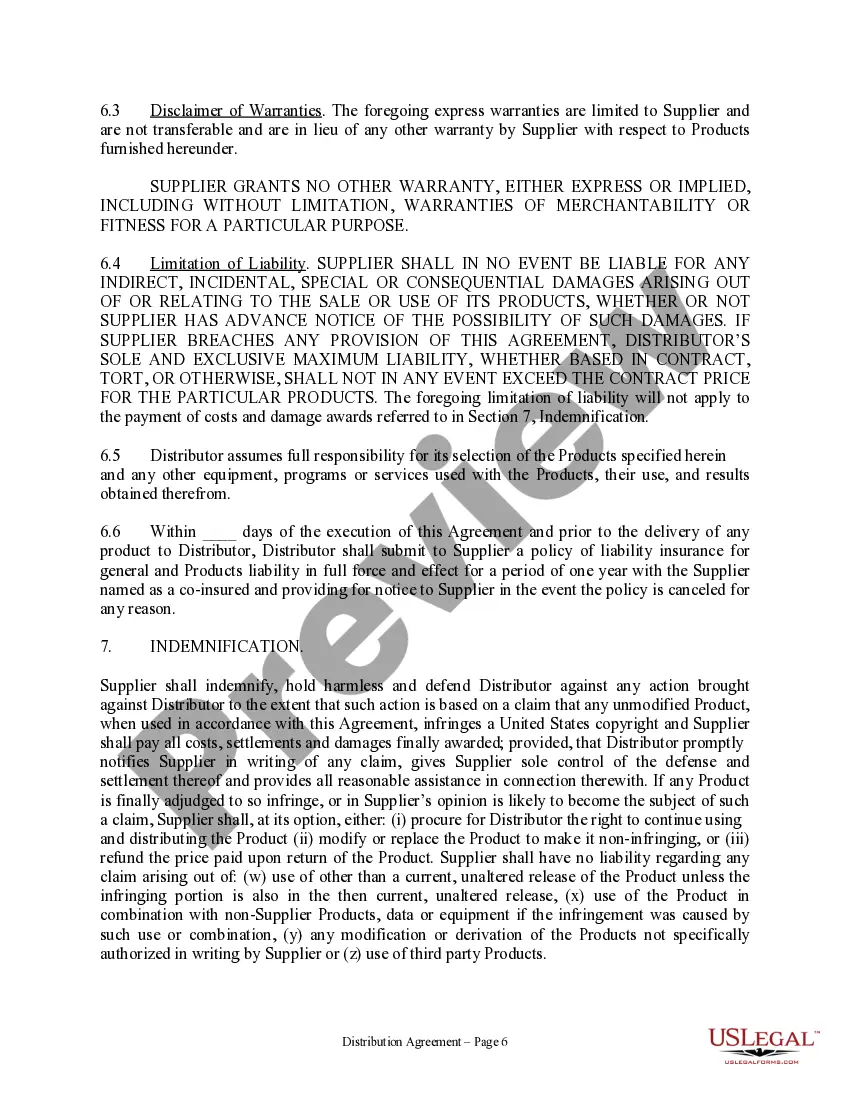
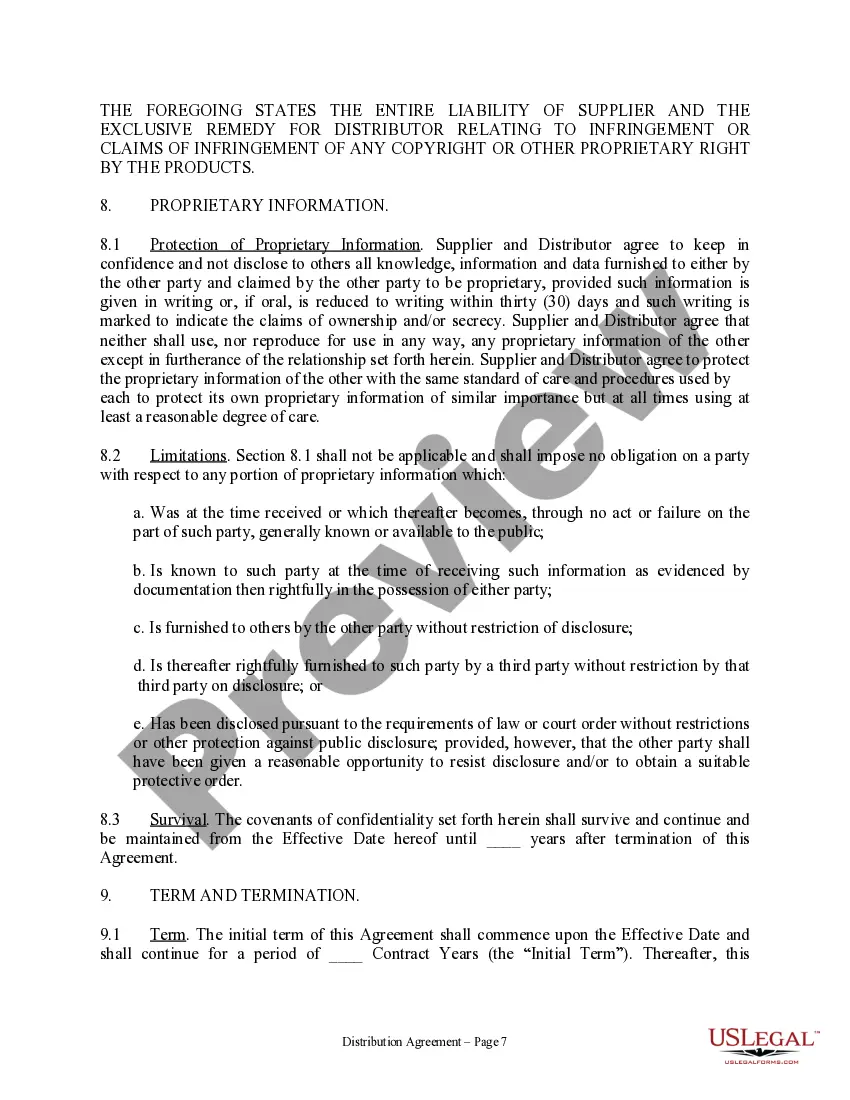
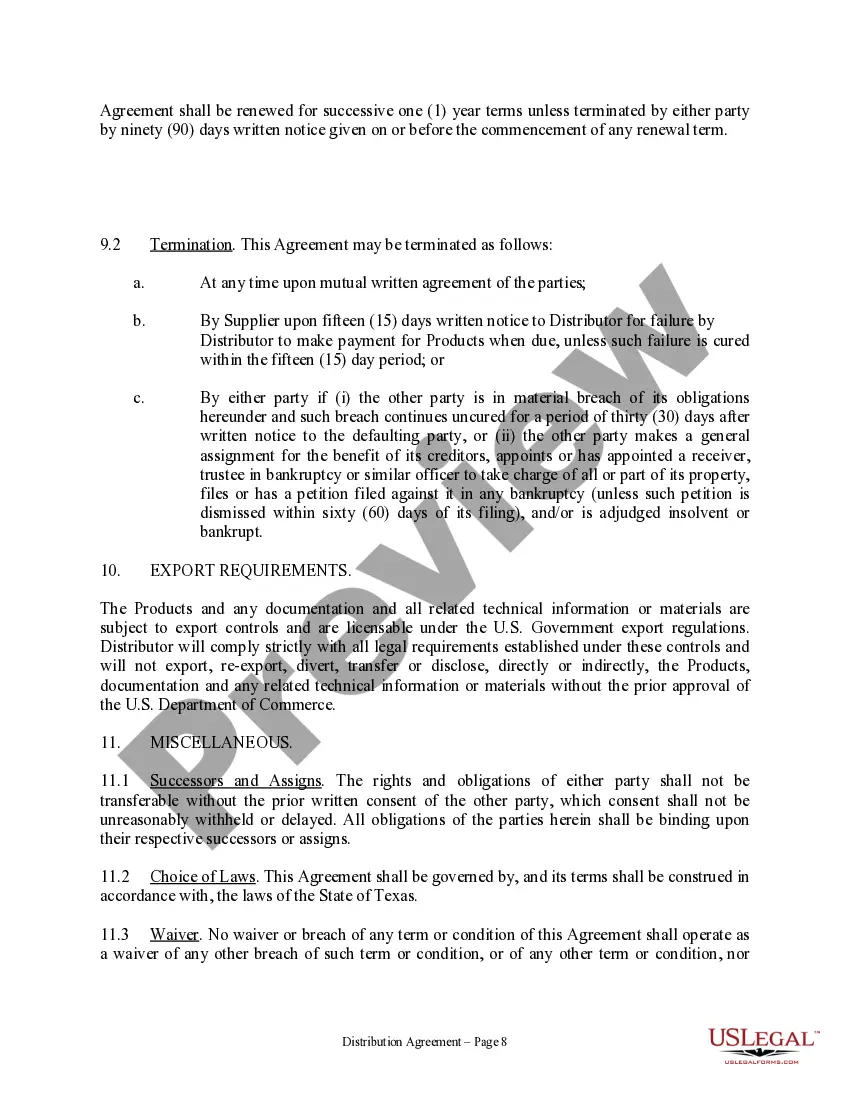
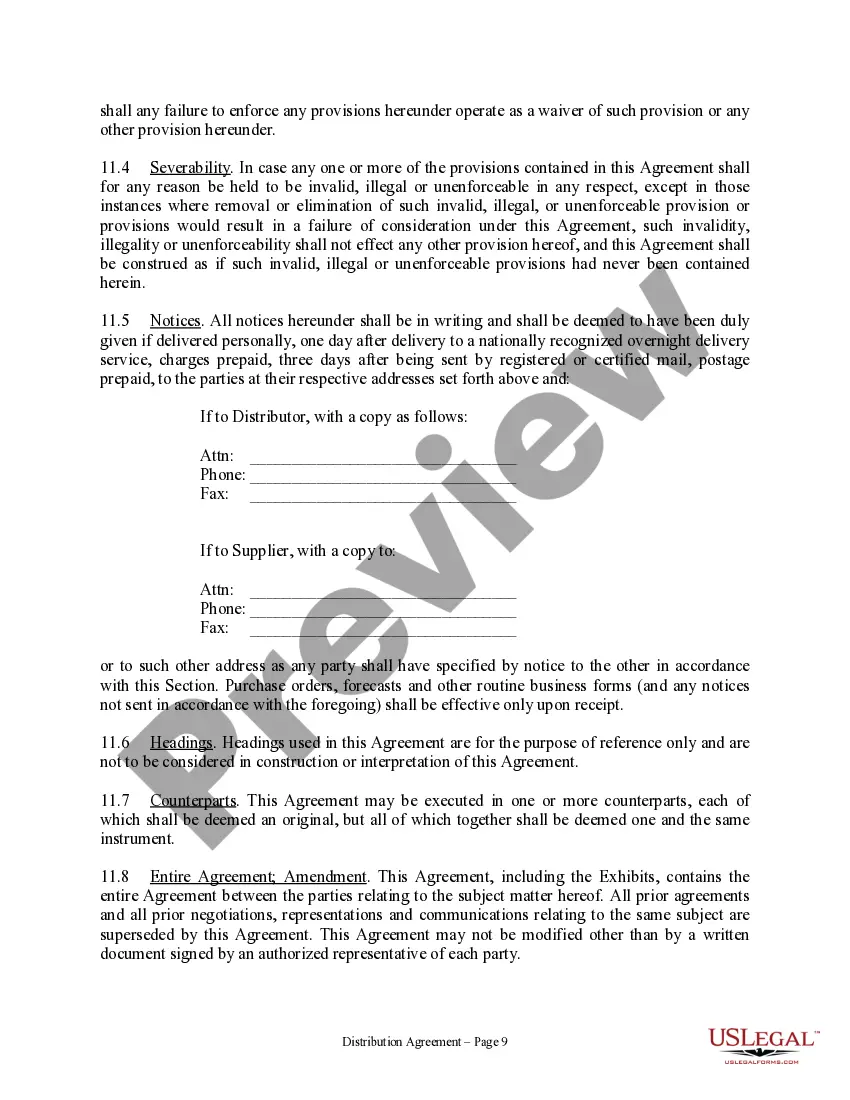
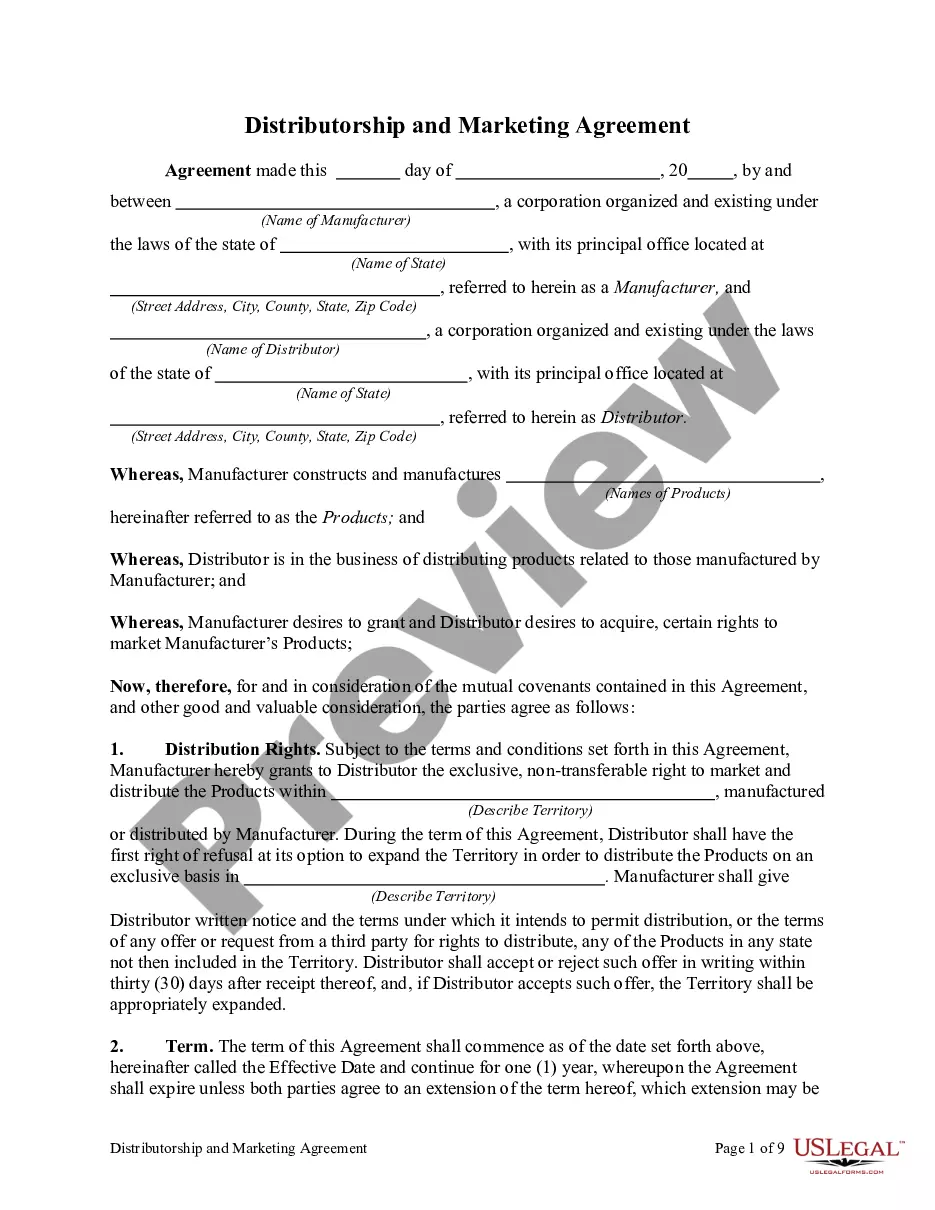
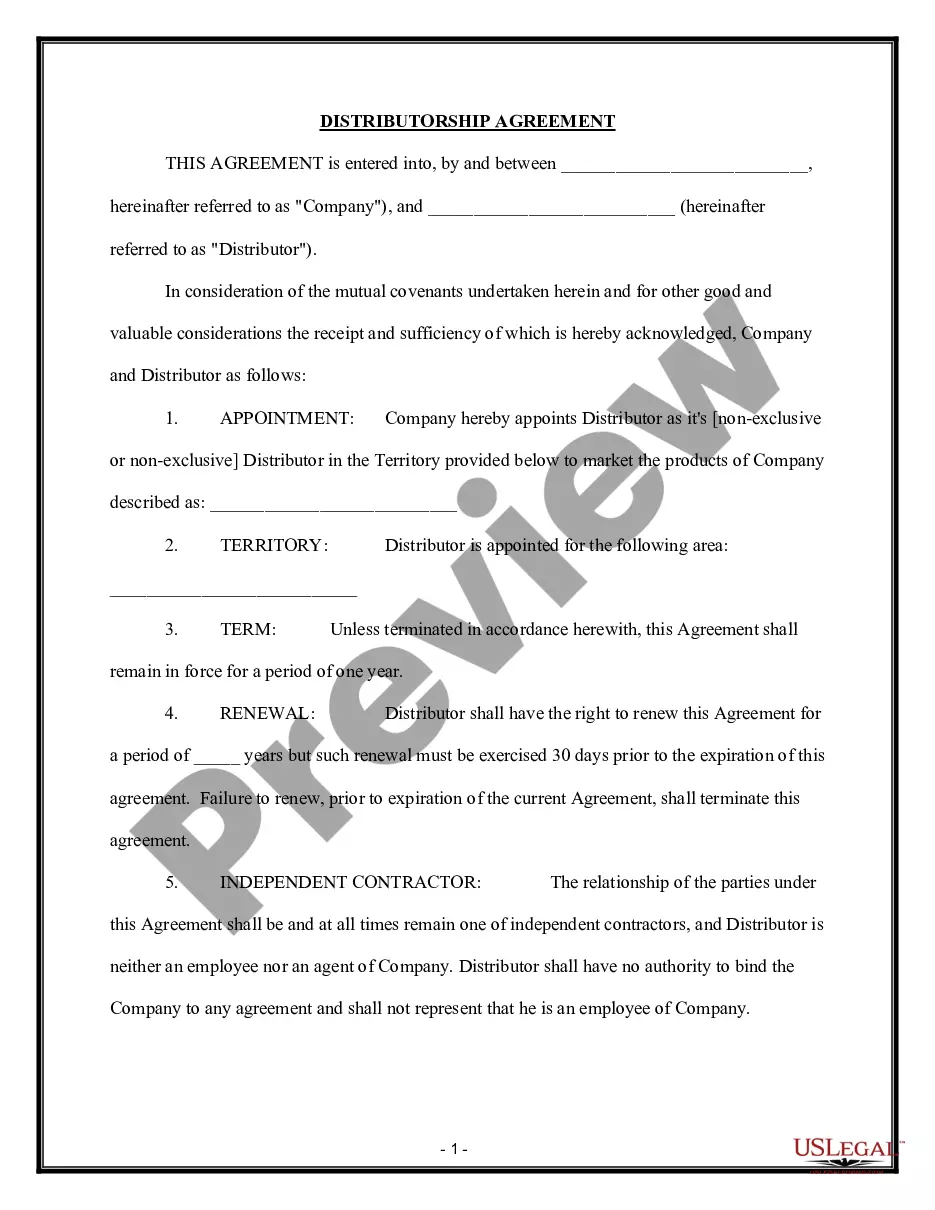
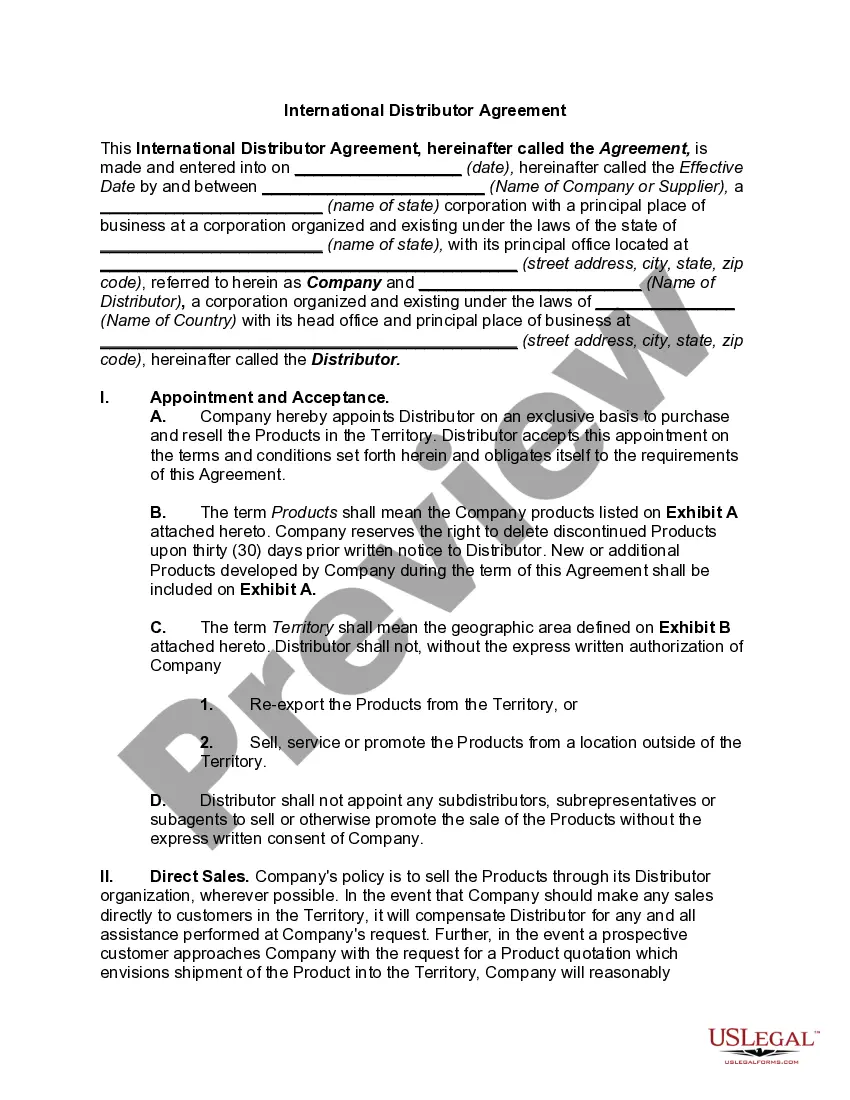
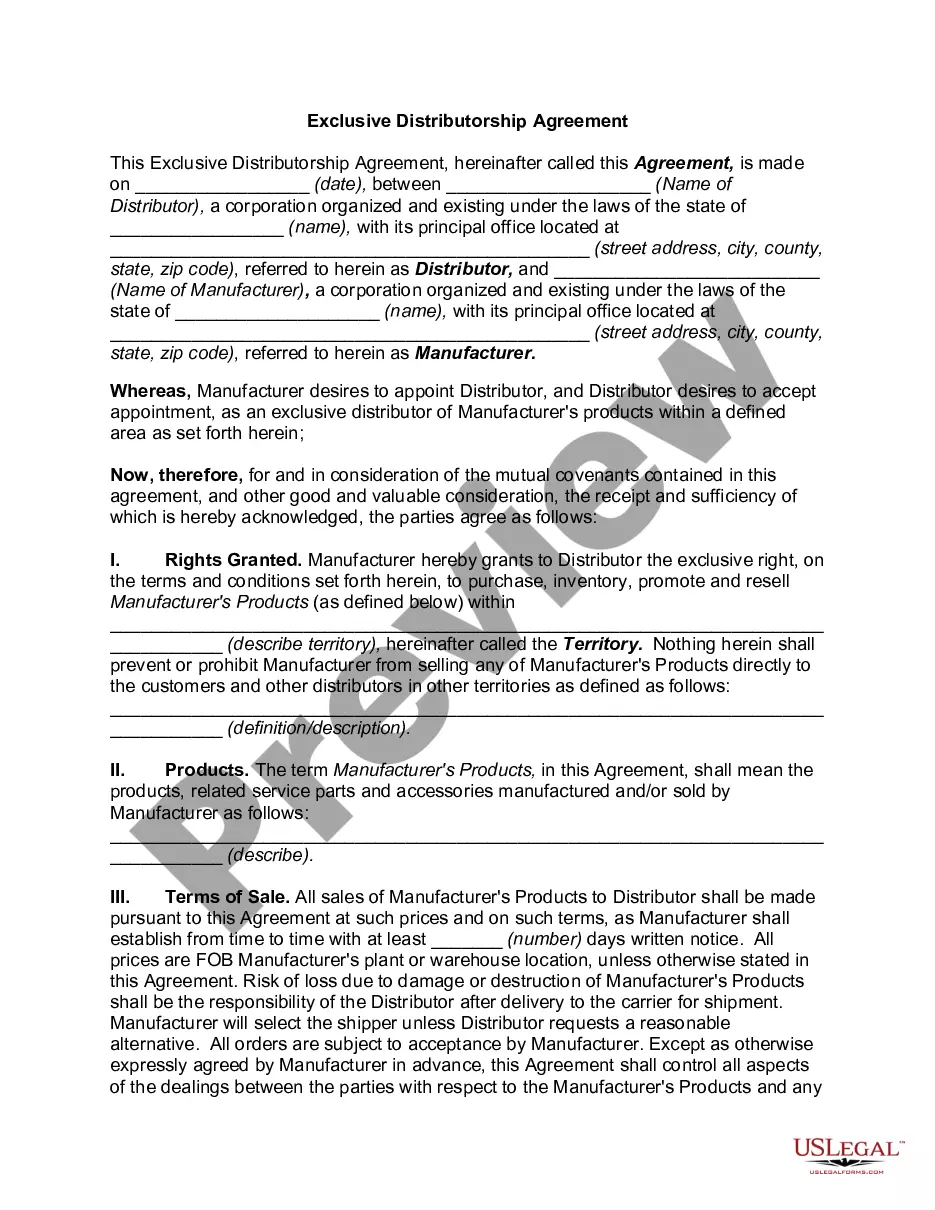
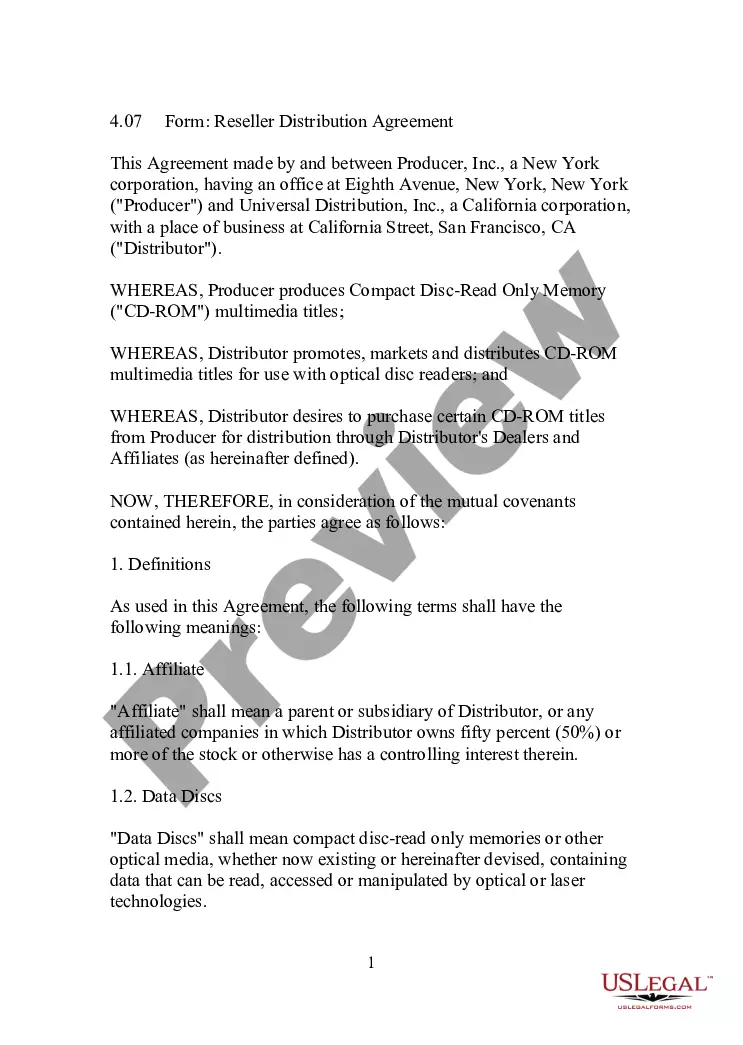
The Distribution Agreement is a legal document that outlines the relationship between a supplier and a distributor regarding the sale and distribution of products. This agreement specifies the terms under which the supplier agrees to sell products and the distributor agrees to purchase and distribute them, establishing clear expectations for both parties. Unlike informal agreements, a Distribution Agreement provides a structured framework to manage the business relationship and protect the interests of both the supplier and the distributor.
Key parts of this document
- Definitions of key terms, including "Contract Year" and "Products."
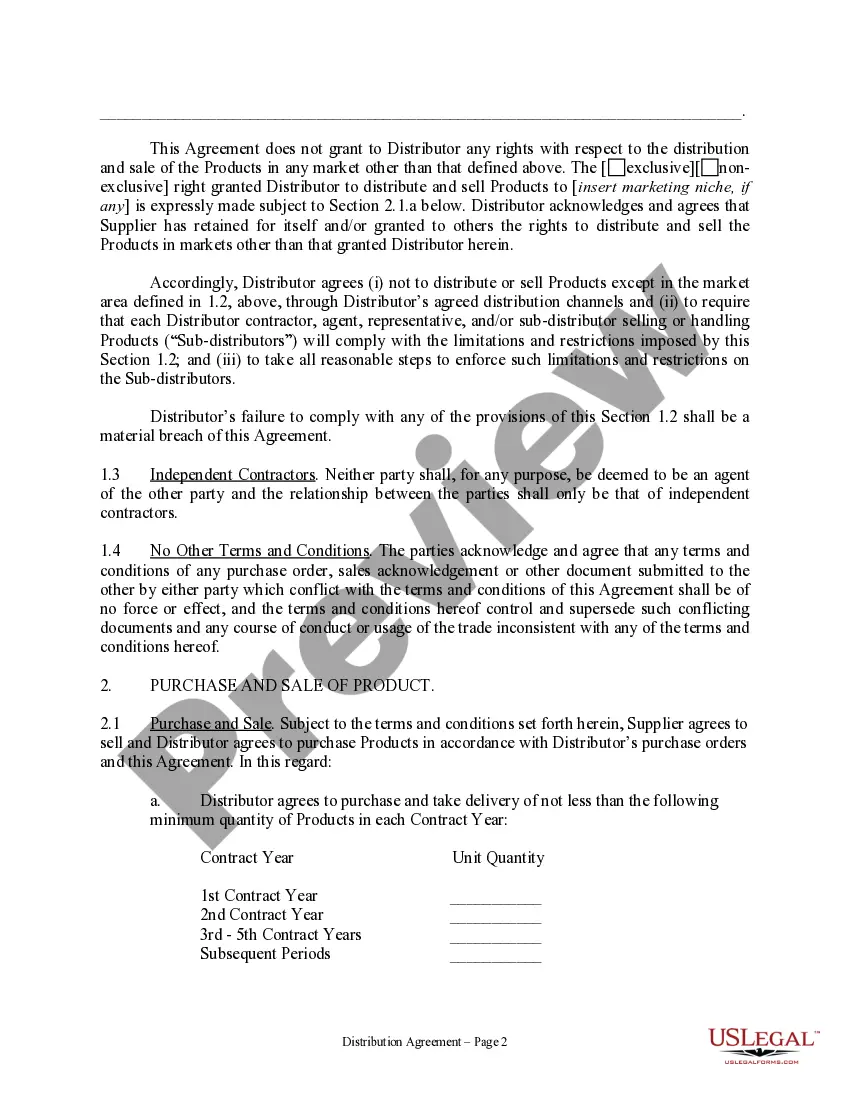
- Rights and responsibilities regarding exclusivity and distribution channels.
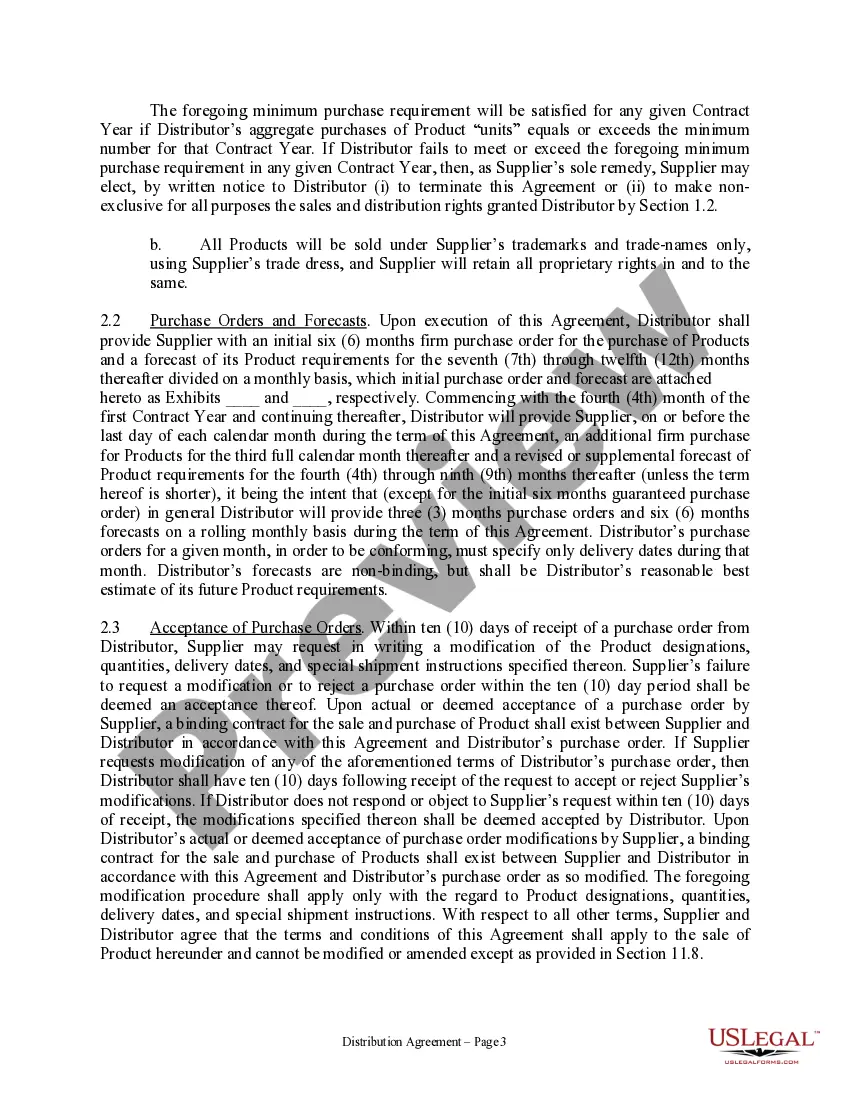
- Purchase and sale conditions, including minimum purchase requirements.
- Specifications for product acceptance and quality assurance procedures.
- Terms for pricing, payment, and tax obligations.
- Provisions for termination and renewal of the agreement.
When to use this document
This Distribution Agreement should be used when a supplier wants to define the terms of distributing their products through a distributor. It is particularly useful in situations where products are unique, proprietary, or intended for specific markets. Businesses entering partnerships to enhance product reach or sales would benefit from specifying their rights and obligations in a formal agreement to avoid future disputes. It is also suitable for both new startups establishing distribution channels and established businesses looking to formalize existing arrangements.
Intended users of this form
- Suppliers who are looking to distribute their products through third parties.
- Distributors who want to formalize their purchase and distribution agreements with suppliers.
- Businesses involved in the sale of unique or proprietary products.
- Companies seeking to clarify their roles and responsibilities in product distribution.
How to prepare this document
- Identify and enter the full names and addresses of both the supplier and the distributor.
- Specify the effective date of the agreement and the product details.
- Define the distribution territory and any exclusivity agreements.
- Outline purchase order requirements, including minimum quantity commitments for each contract year.
- Detail payment terms and conditions, including pricing and tax responsibilities.
- Ensure all parties sign the agreement, indicating their acceptance of the terms.
Notarization guidance
This form does not typically require notarization to be legally valid. However, some jurisdictions or document types may still require it. US Legal Forms provides secure online notarization powered by Notarize, available 24/7 for added convenience.
Get your form ready online
Our built-in tools help you complete, sign, share, and store your documents in one place.
Make edits, fill in missing information, and update formatting in US Legal Forms—just like you would in MS Word.
Download a copy, print it, send it by email, or mail it via USPS—whatever works best for your next step.
Sign and collect signatures with our SignNow integration. Send to multiple recipients, set reminders, and more. Go Premium to unlock E-Sign.
If this form requires notarization, complete it online through a secure video call—no need to meet a notary in person or wait for an appointment.
We protect your documents and personal data by following strict security and privacy standards.

Make edits, fill in missing information, and update formatting in US Legal Forms—just like you would in MS Word.

Download a copy, print it, send it by email, or mail it via USPS—whatever works best for your next step.

Sign and collect signatures with our SignNow integration. Send to multiple recipients, set reminders, and more. Go Premium to unlock E-Sign.

If this form requires notarization, complete it online through a secure video call—no need to meet a notary in person or wait for an appointment.

We protect your documents and personal data by following strict security and privacy standards.
Mistakes to watch out for
- Failing to define key terms clearly, leading to misunderstandings.
- Not specifying minimum purchase quantities or terms, which can result in disputes.
- Omitting to update or modify the agreement in writing when necessary, which can invalidate changes.
Advantages of online completion
- Convenience of completing and downloading the form instantly.
- Editability of the agreement to cater to specific business needs.
- Reliability of legally vetted content drafted by licensed attorneys.
Legal use & context
- A Distribution Agreement governs the sale and distribution of products and is enforceable under contract law.
- The agreement should comply with applicable state and federal laws regarding sales and distribution practices.
- Failure to adhere to the terms can result in legal disputes or termination of the agreement.
What to keep in mind
- A Distribution Agreement establishes the legal relationship between a supplier and a distributor.
- It is essential for outlining roles, responsibilities, and expectations in product distribution.
- Completing the form correctly minimizes legal risks and potential disputes.
Looking for another form?
Form popularity
FAQ
A distribution agreement is a legal agreement between a supplier of goods and a distributor of goods. The supplier may be a manufacturer, or may itself be a distributor reselling another's goods.
While brand-related intellectual property is typically held by the supplier, a thorough distribution agreement will always include an intellectual property clause that will give the distributor the legal right to use the supplier's intellectual property, including brand names and trademarks, for purposes of its sales
Terms and conditions of sale; term for which the contract is in effect; marketing rights; trademark licensing; geographical territory covered by the agreement; performance; reporting; and. circumstances under which the contract may be terminated.
An exclusive distribution contract means only one distributor is appointed in a specific marketplace by a supplier. As part of the agreement, the supplier promises not to allow the distribution of the products by any other party in the given market area.
Exclusive Distributor. Terms And Conditions Of Sale. Pricing. Term Of The Agreement. Marketing rights. Trademark licensing. The geographical territory covered by the agreement. Performance.
A distribution agreement, also known as a distributor agreement, is a contract between a supplying company with products to sell and another company that markets and sells the products. The distributor agrees to buy products from the supplier company and sell them to clients within certain geographical areas.
Exclusive dealing or requirements contracts between manufacturers and retailers are common and are generally lawful.