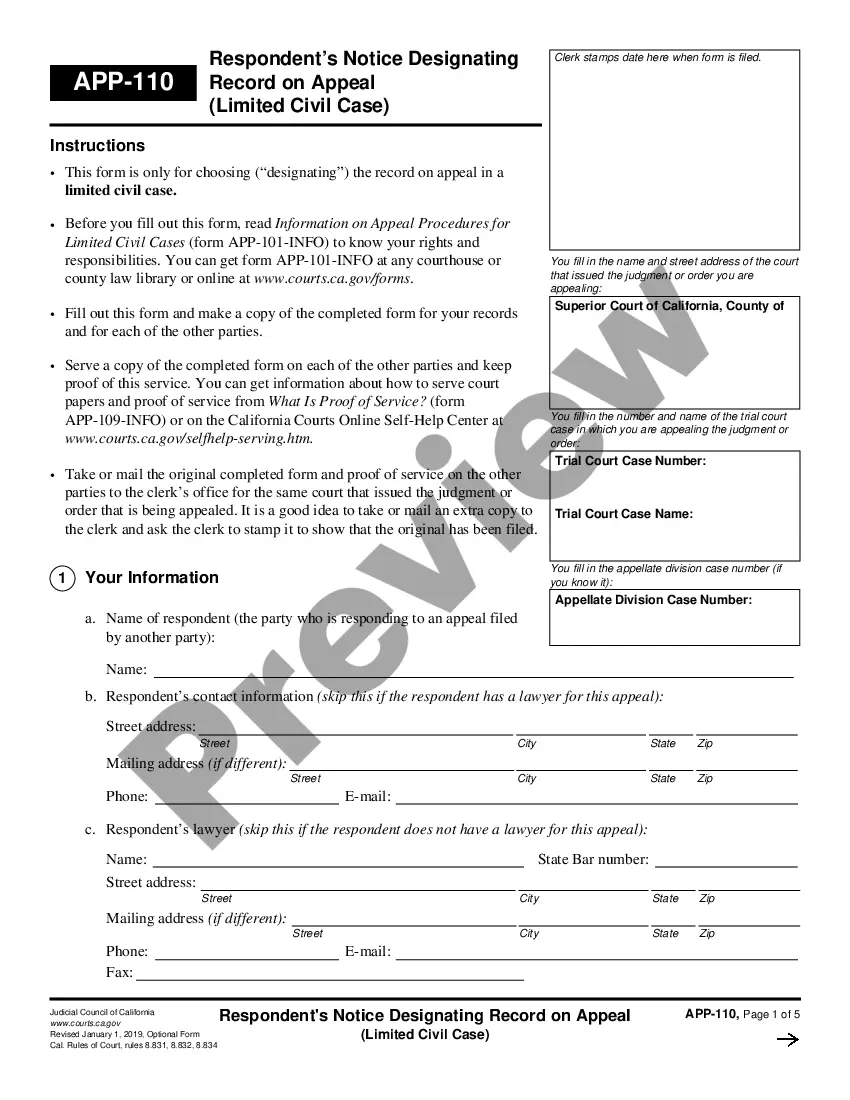
Motion for Leave to Amend Complaint to Conform to the Evidence
About this form
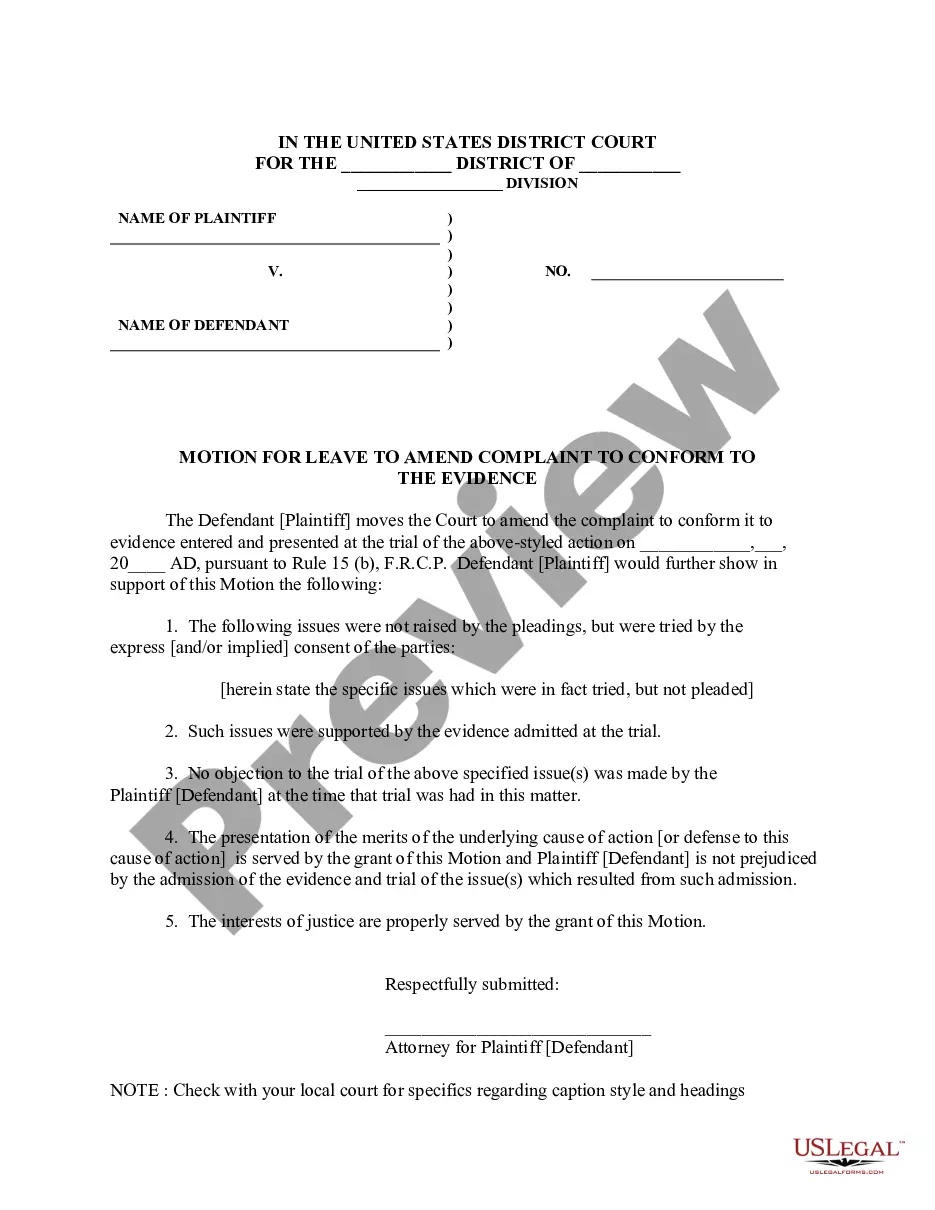
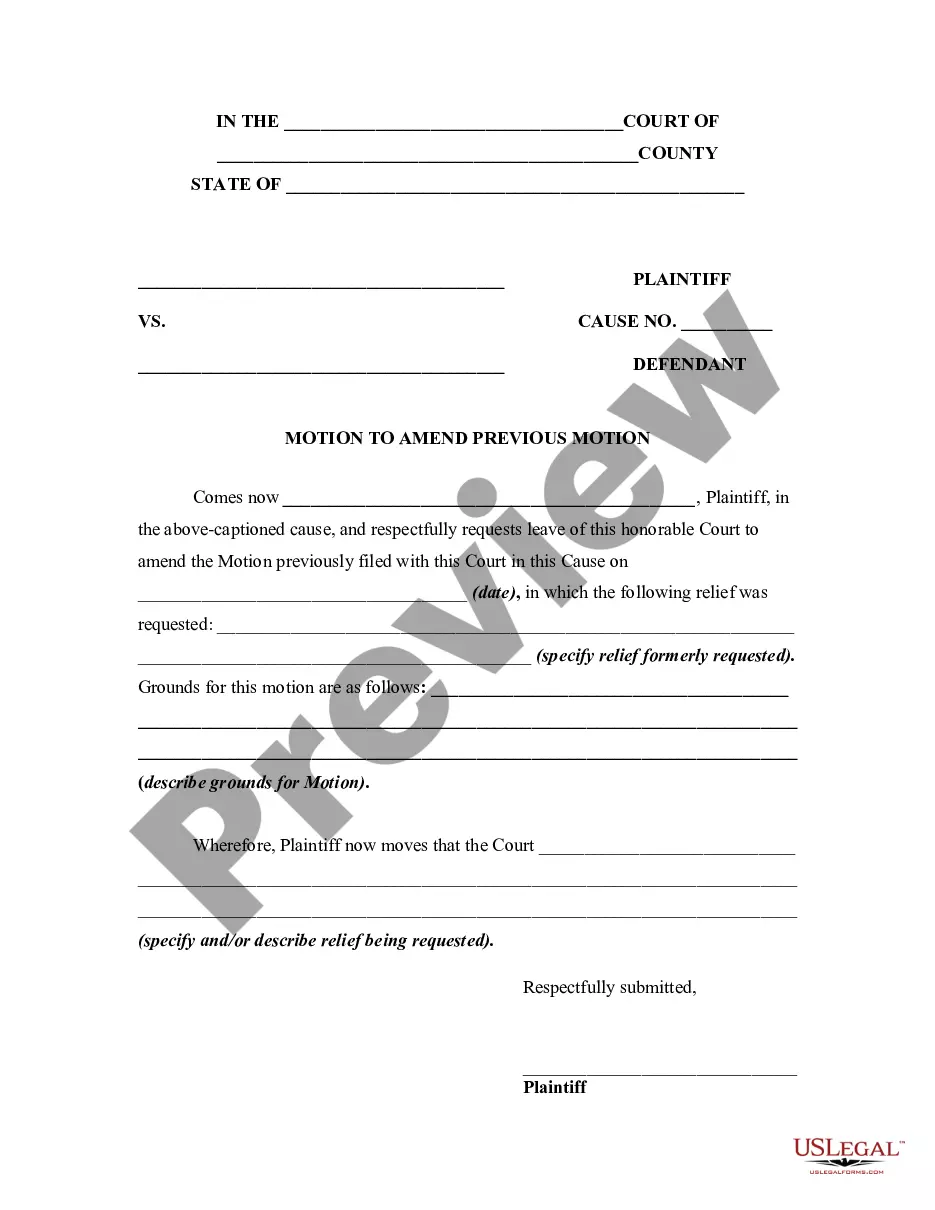
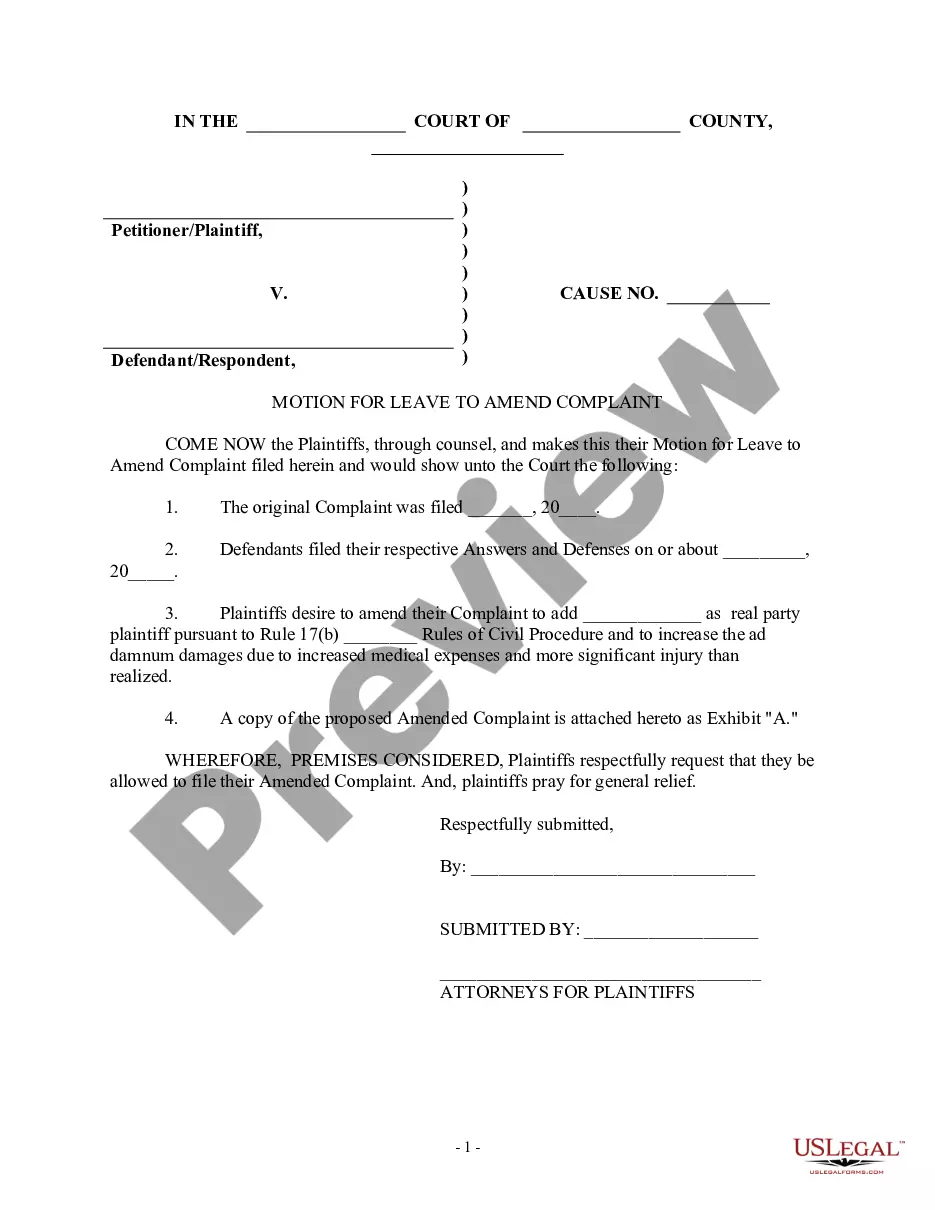
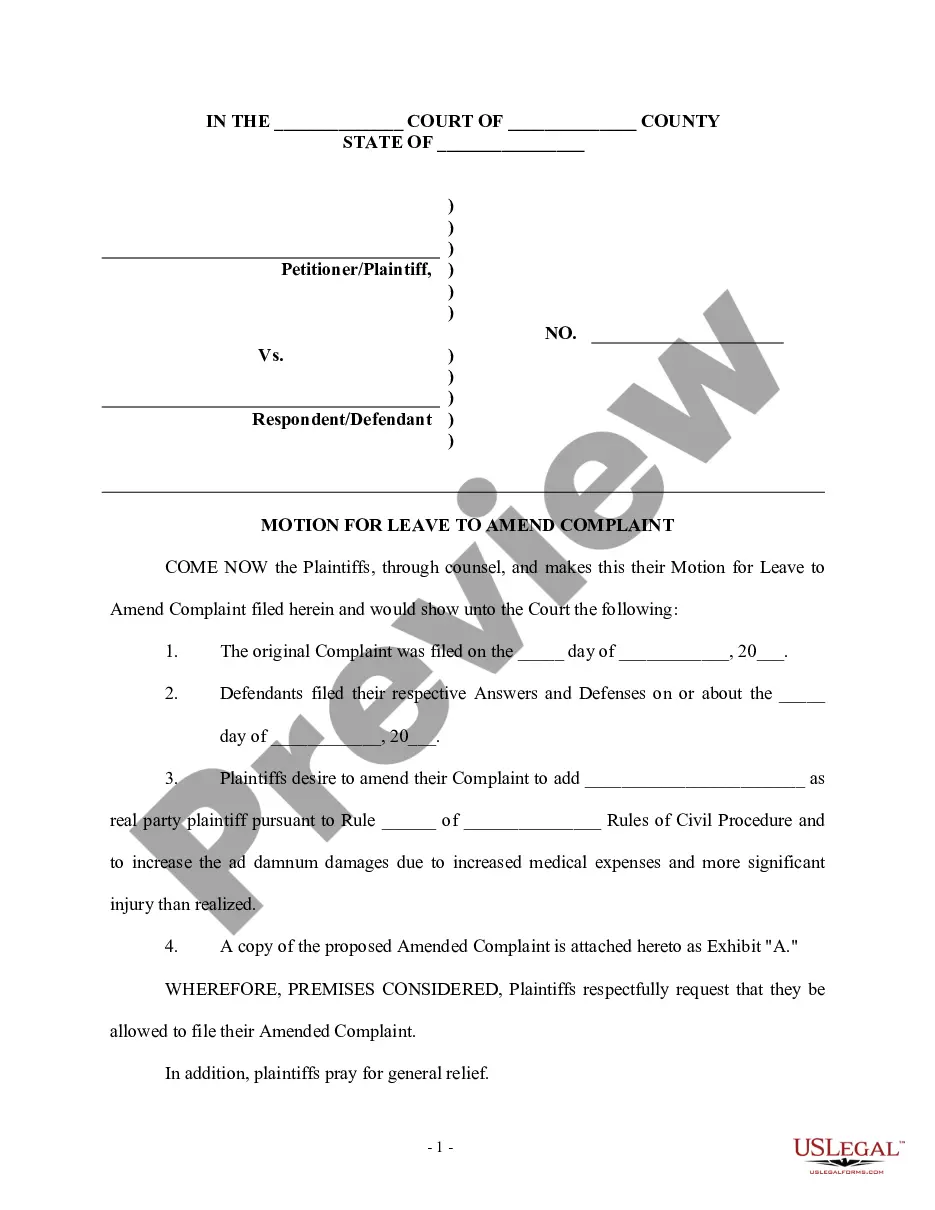
The Motion for Leave to Amend Complaint to Conform to the Evidence is a legal document that allows a party to request the court's permission to amend their complaint based on the evidence that was presented during the trial. This form is essential for ensuring that the allegations in the complaint accurately reflect the evidence introduced in court, which may not always align with the original wording of the complaint. It provides a structured way to seek amendments to avoid any potential unfairness in legal proceedings.
Key parts of this document
- Identification of the parties involved (Plaintiff and Defendant).
- Details of the specific issues that were tried but not raised in the original pleadings.
- Evidence supporting the need for the amendment.
- Proof that no objections were raised at the time of trial regarding the admission of the new issues.
- Justification for how the amendment serves the interests of justice.
Common use cases
This form should be used when the trial has revealed evidence that necessitates changes to the original complaint. For example, if new issues arise during trial that were not included in the initial pleading but were implicitly agreed upon by the parties, this motion allows for those issues to be formally added. It's particularly useful when the evidence presented significantly alters the understanding of the case or when it's crucial to ensure that the complaint accurately reflects all pertinent information.
Who should use this form
- Parties involved in a lawsuit who discover new evidence during the trial phase.
- Plaintiffs or defendants who need to clarify their claims or defenses based on trial evidence.
- Individuals representing themselves or attorneys looking to amend their pleadings effectively.
Instructions for completing this form
- Identify and list the parties involved in the case.
- Enter the date of the trial when the evidence was presented.
- Specify the issues that were tried but not originally included in the complaint.
- Provide details of the evidence that supports these new issues.
- Confirm that no objections were raised during the trial regarding these issues.
- Sign the motion and ensure it is filed with the appropriate court.
Notarization requirements for this form
This form does not typically require notarization to be legally valid. However, some jurisdictions or document types may still require it. US Legal Forms provides secure online notarization powered by Notarize, available 24/7 for added convenience.
Get your form ready online
Our built-in tools help you complete, sign, share, and store your documents in one place.
Make edits, fill in missing information, and update formatting in US Legal Forms—just like you would in MS Word.
Download a copy, print it, send it by email, or mail it via USPS—whatever works best for your next step.
Sign and collect signatures with our SignNow integration. Send to multiple recipients, set reminders, and more. Go Premium to unlock E-Sign.
If this form requires notarization, complete it online through a secure video call—no need to meet a notary in person or wait for an appointment.
We protect your documents and personal data by following strict security and privacy standards.

Make edits, fill in missing information, and update formatting in US Legal Forms—just like you would in MS Word.

Download a copy, print it, send it by email, or mail it via USPS—whatever works best for your next step.

Sign and collect signatures with our SignNow integration. Send to multiple recipients, set reminders, and more. Go Premium to unlock E-Sign.

If this form requires notarization, complete it online through a secure video call—no need to meet a notary in person or wait for an appointment.

We protect your documents and personal data by following strict security and privacy standards.
Common mistakes to avoid
- Failing to adequately describe the new issues to be amended.
- Neglecting to provide supporting evidence for the amendments.
- Submitting the motion without confirming that no objections were raised during trial.
- Forgetting to check specific local court rules pertaining to amendments.
Benefits of using this form online
- Convenience of downloading and filling out the form at any time.
- Editable fields to customize the motion to meet specific case needs.
- Access to attorney-drafted templates ensuring legal accuracy and relevance.
Legal use & context
- This motion is a standard procedural tool in civil litigation to ensure pleadings align with evidence presented.
- It enhances the accuracy and relevance of court records, benefiting all parties involved in the case.
- Courts generally favor amendments to pleadings that serve the interests of justice, making this form an important aspect of litigation strategy.
What to keep in mind
- The Motion for Leave to Amend Complaint is essential for aligning legal claims with trial evidence.
- Using this form ensures that critical issues are formally recognized in court records.
- Be mindful of local rules and ensure no objections have been raised to avoid complications.
Looking for another form?
Form popularity
FAQ
A Motion for Leave to Amend Complaint to Conform to the Evidence is a request to the court for permission to amend the complaint so it matches the evidence presented at trial. It helps ensure the pleadings reflect what was actually shown in court and outlines the parties, issues tried, supporting evidence, and why the amendment serves justice.
Leave to amend is typically granted when the court finds the amendment is justified by trial evidence or to prevent unfairness, and the proposed changes comply with court rules. This form specifically addresses issues actually tried, the evidence supporting the amendment, and proof that no objections were raised at trial.
Yes. In the context of this form, amendments are sought to align the complaint with evidence actually admitted or presented at trial. The motion requires showing the evidence supporting the change and that the amendment is fair and just, addressing the issues tried and the need to update the pleadings accordingly.
If the court grants leave, the complaint is amended to conform to the trial evidence and the new issues become part of the pleadings. The amendment is guided by the form's requirements—identifying the parties, tried issues, supporting evidence, and justification for justice.
This motion means a party asks the court for permission to change the pleadings to reflect trial evidence. It is used when the evidence presented reveals new issues or clarifications that should be reflected in the complaint and requires showing how the amendment serves the interests of justice.
This form specifically targets amendments that conform the complaint to evidence presented during trial. It requires detailing the parties, issues actually tried, the supporting evidence, and proof that no objections were raised at trial, ensuring the amendment reflects the trial record rather than pretrial pleadings.