Bylaws of Unincorporated Association of Subdivision Residents
Understanding this form
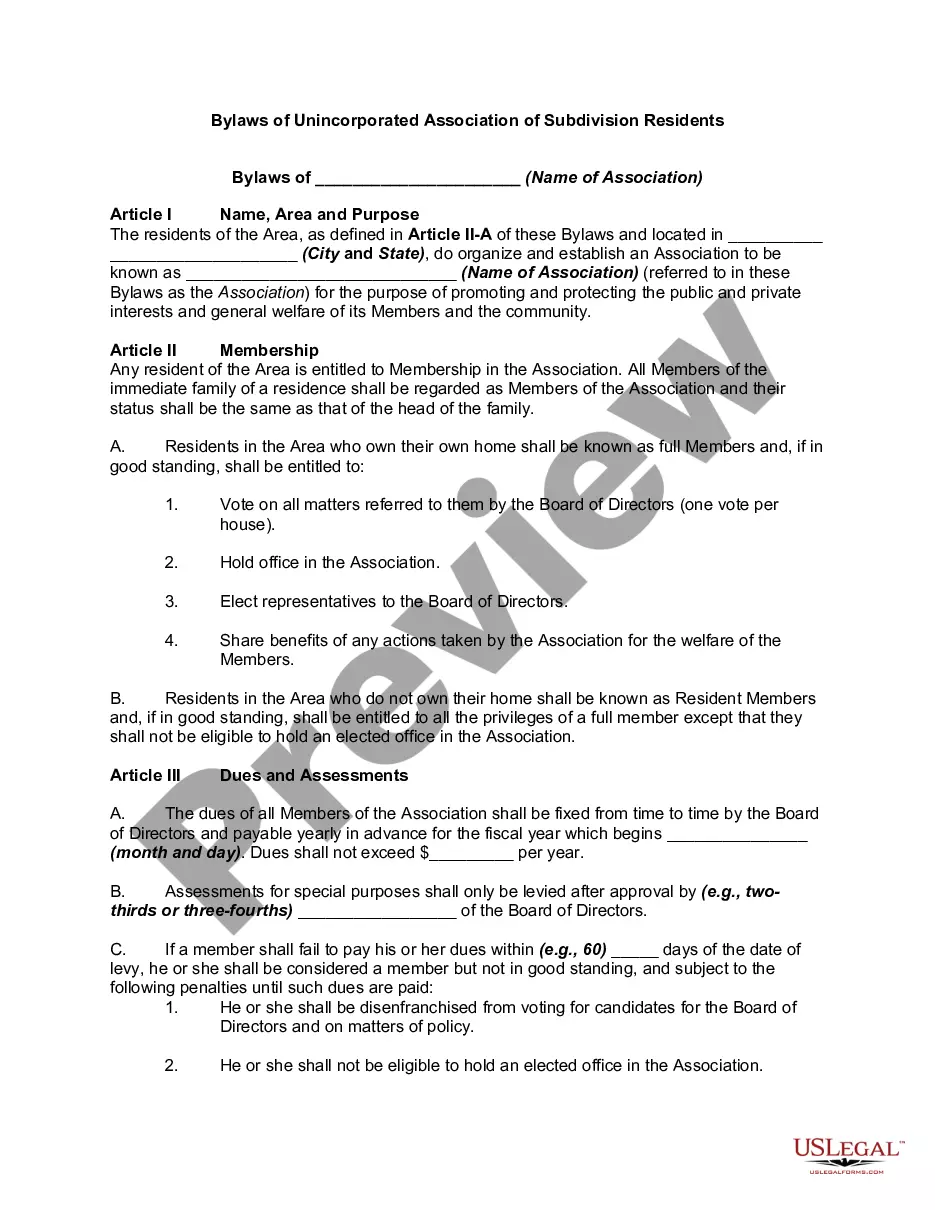
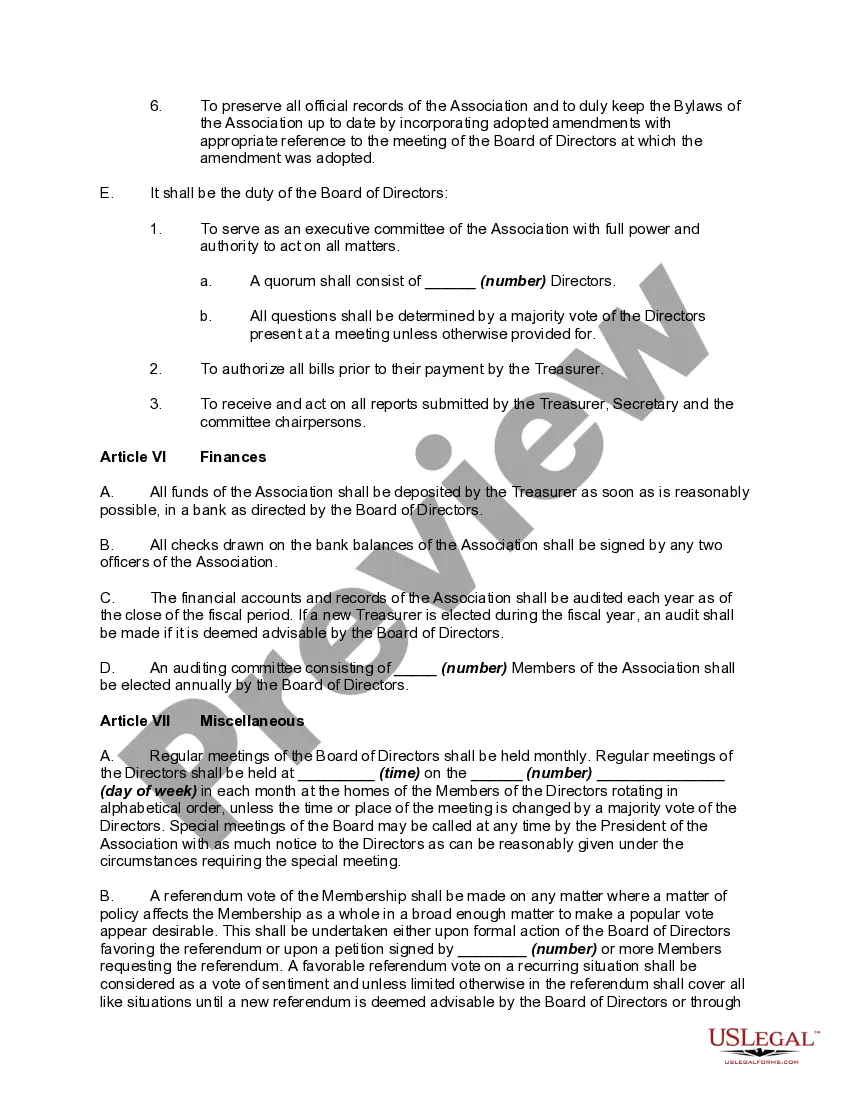
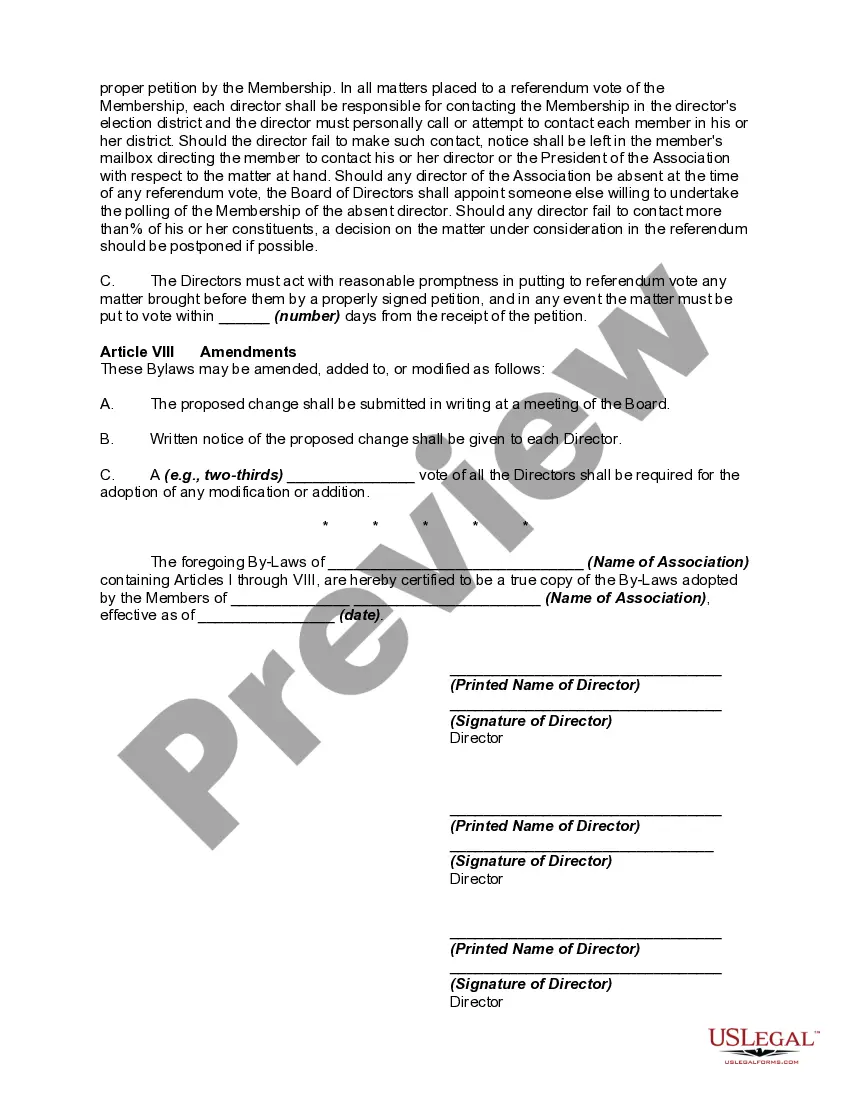
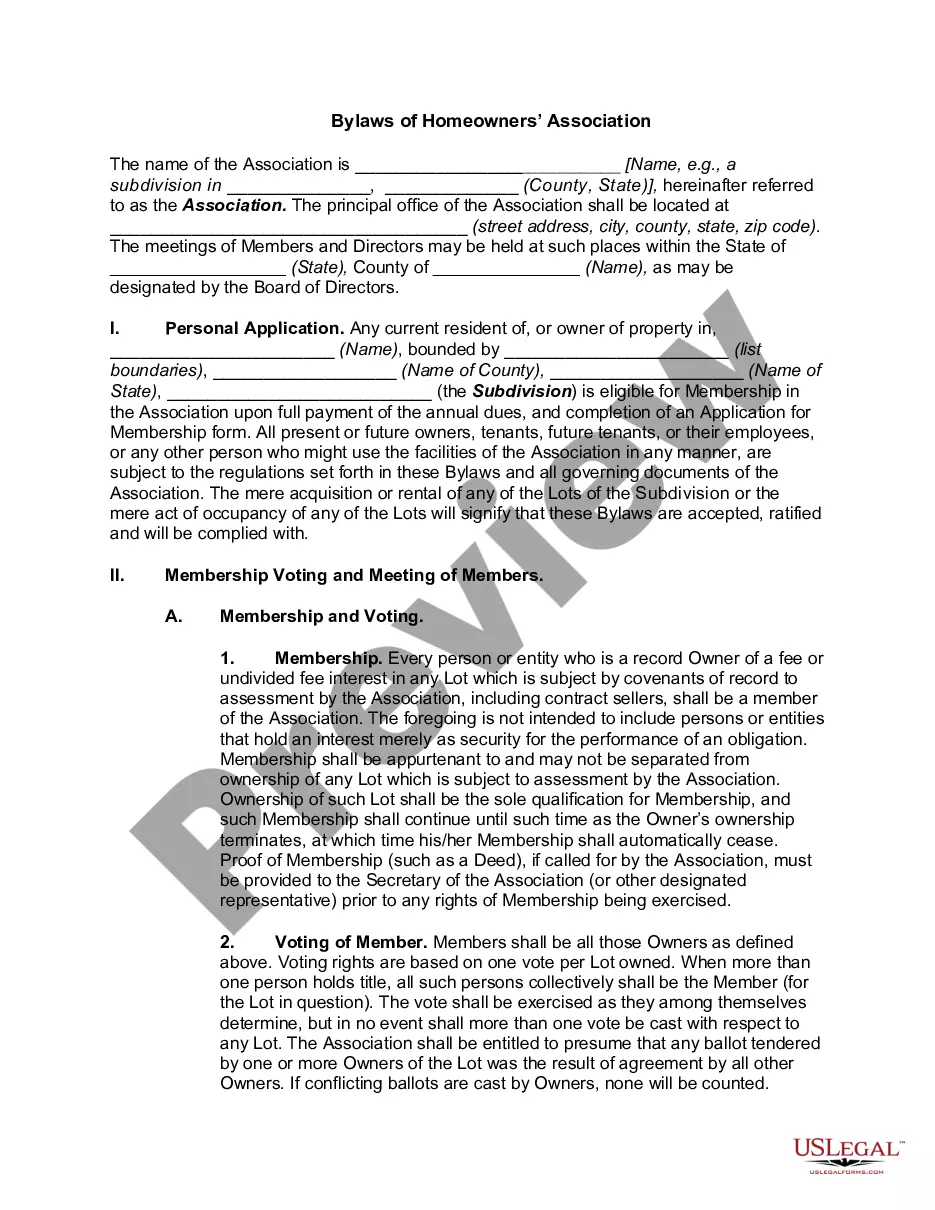
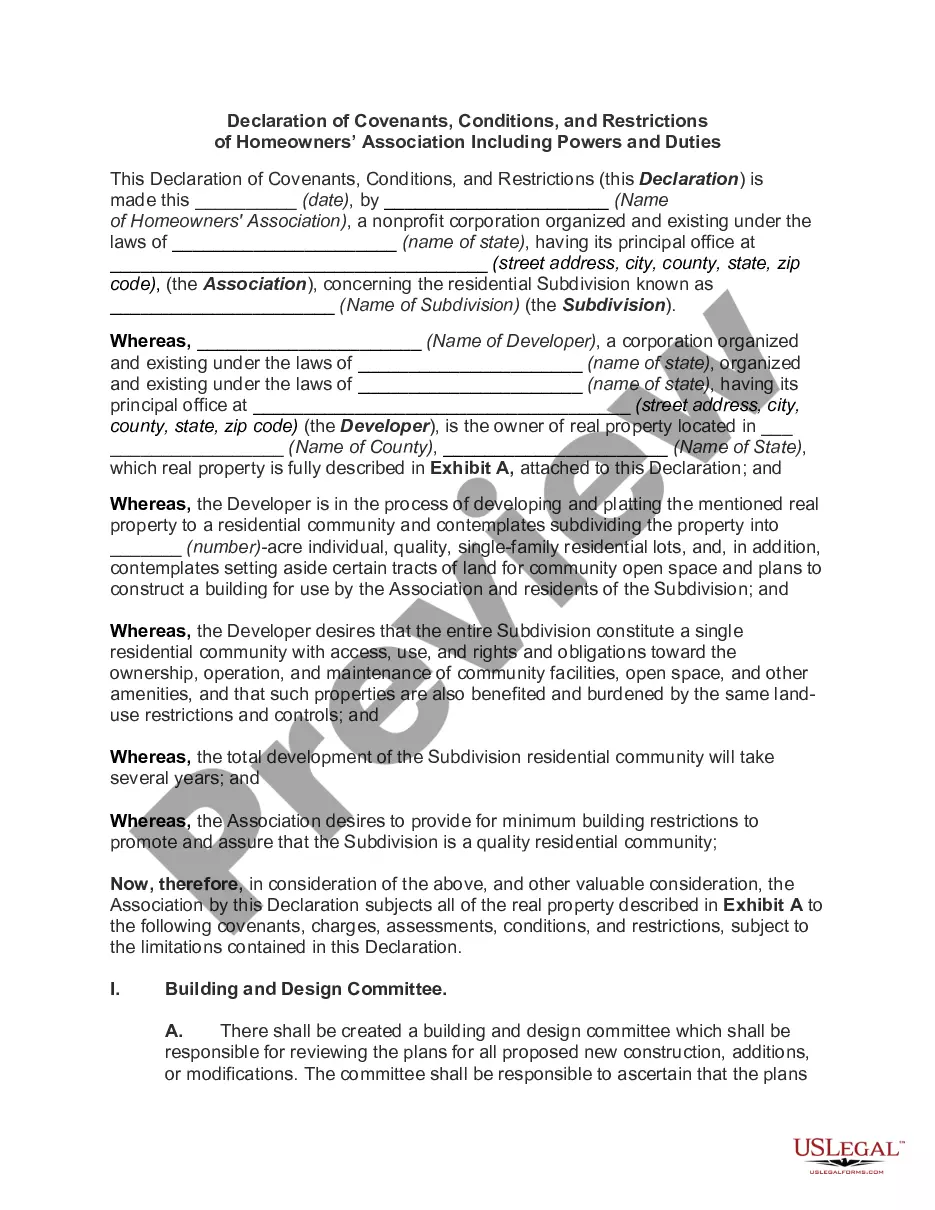
The Bylaws of an Unincorporated Association of Subdivision Residents is a document that outlines the rules and regulations governing the operations of an unincorporated association, which is a group formed for a common purpose in a neighborhood or subdivision. This form provides a legal foundation for the association, detailing membership rights, duties of officers, and governance structures, thereby distinguishing it from similar forms that might apply to formally incorporated entities.
Key components of this form
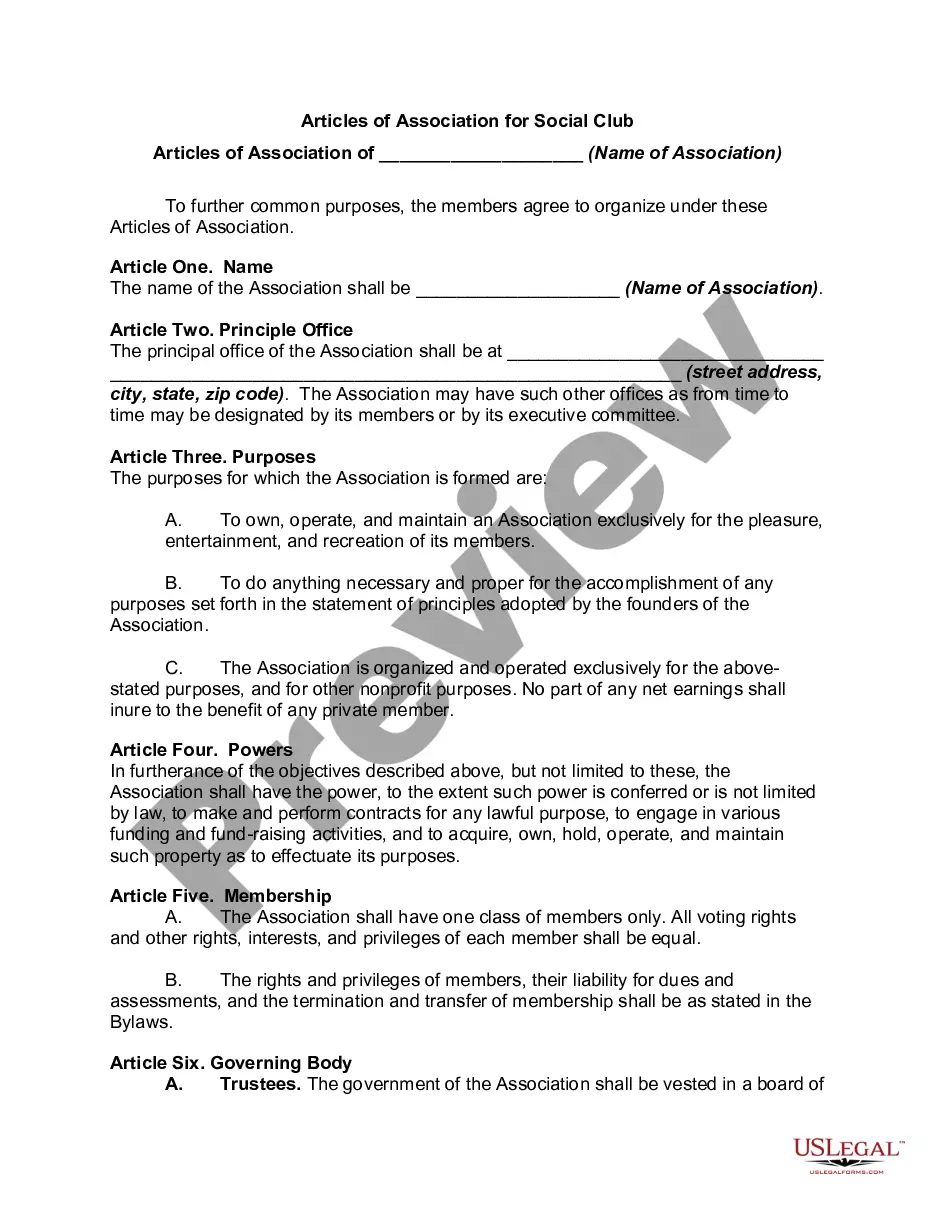
- Name and purpose of the association
- Membership criteria and rights
- Dues and assessments policy
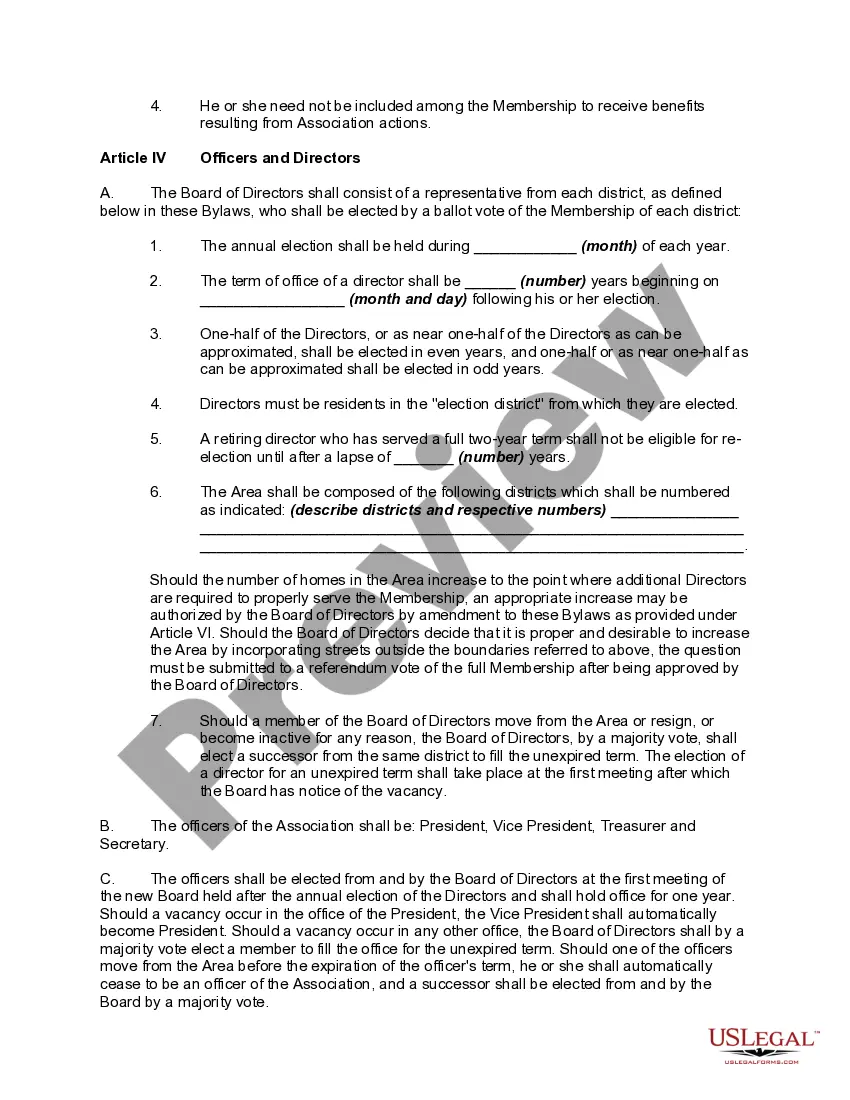
- Structure of the Board of Directors
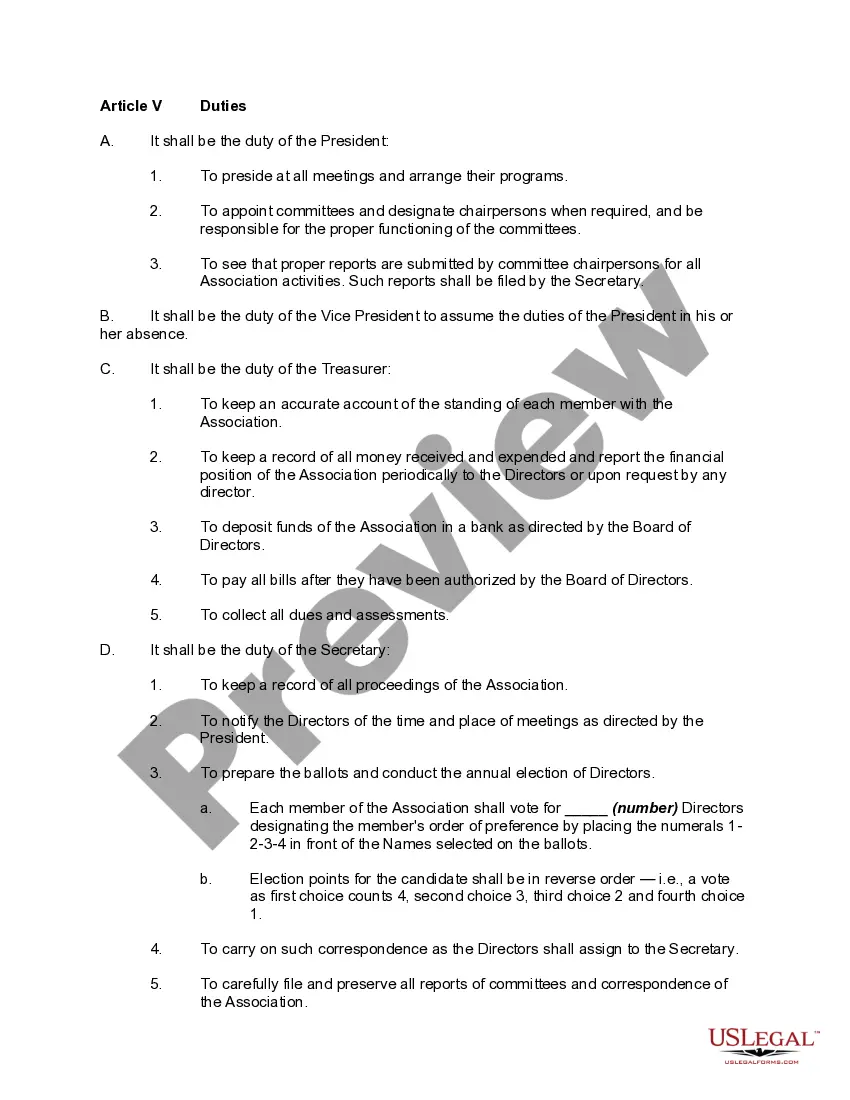
- Duties of officers and directors
- Procedures for amendments


When to use this document
This form should be used when residents of a subdivision wish to establish an unincorporated association to promote shared interests, address communal issues, or enhance the welfare of the neighborhood. It is particularly useful when organizing collective activities, setting rules for membership, and determining the governance structure of the association.
Intended users of this form
This form is intended for:
- Residents of a subdivision looking to formalize their community organization
- Homeowners and tenants within the area who want to collaborate on community issues
- Individuals interested in serving on the Board of Directors of the association
How to prepare this document
- Enter the name of the association and the location.
- Specify membership criteria and define members' rights.
- Detail the dues structure and payment procedures.
- Outline the election process for Board members, including terms and duties.
- Provide details on how amendments may be made to the bylaws.
Notarization guidance
This form does not typically require notarization unless specified by local law. It is advisable to check with local regulations to ensure compliance.
Get your form ready online
Our built-in tools help you complete, sign, share, and store your documents in one place.
Make edits, fill in missing information, and update formatting in US Legal Forms—just like you would in MS Word.
Download a copy, print it, send it by email, or mail it via USPS—whatever works best for your next step.
Sign and collect signatures with our SignNow integration. Send to multiple recipients, set reminders, and more. Go Premium to unlock E-Sign.
If this form requires notarization, complete it online through a secure video call—no need to meet a notary in person or wait for an appointment.
We protect your documents and personal data by following strict security and privacy standards.

Make edits, fill in missing information, and update formatting in US Legal Forms—just like you would in MS Word.

Download a copy, print it, send it by email, or mail it via USPS—whatever works best for your next step.

Sign and collect signatures with our SignNow integration. Send to multiple recipients, set reminders, and more. Go Premium to unlock E-Sign.

If this form requires notarization, complete it online through a secure video call—no need to meet a notary in person or wait for an appointment.

We protect your documents and personal data by following strict security and privacy standards.
Mistakes to watch out for
- Failing to define membership criteria clearly, which can lead to disputes.
- Not specifying the dues amount or payment schedule properly.
- Overlooking the procedures for amending the bylaws, making it difficult to adapt to future needs.
Why complete this form online
- Convenient access to editable templates that can be customized for your association.
- Ability to download, print, and share the document easily with stakeholders.
- Guidance provided through clear headings and structured sections to simplify completion.
The bylaws establish a framework for managing community governance and may be used in legal contexts to resolve disputes among members or with external parties. By being formally adopted, these bylaws provide legitimacy and clarity to the association's operations and decisions.
Key takeaways
- Bylaws provide essential structure for a neighborhood association.
- Clear definitions of membership and duties help prevent conflicts.
- Properly completed bylaws can enhance community governance and engagement.
Looking for another form?






Form popularity
FAQ
Federal and State Laws and Statutes The laws of the land take precedence over all other HOA documents. State laws come before local laws, while federal laws outweigh everything else. Whether you're drafting your governing documents or deciding which one to follow, it's important to always check the law first.
Rules And Regulations-- What's What. Documents, Documents, Documents.It is the document that, among other things, establishes the association, contains the use restrictions, the maintenance requirements, and defines the common elements. The Bylaws set up the corporation and how it is to be run.
Generally speaking, yes. Both HOA covenants and rules are legally binding and enforceable. There are some exceptions to this statement, though. Some rules can be unenforceable.
Condo bylaws contain general guidelines for living in the association, and define what happens when association members violate the bylaws.Since bylaws are legally-binding, the Association can take action against you for violating the them.
Commonly, CC&Rs have a declared term of existence, after which they expire naturally. The positive side of having covenants with fixed terms of life is that subsequent property owners are not burdened with restrictions that have become arcane, dated, or no longer desirable.
Bylaws generally define things like the group's official name, purpose, requirements for membership, officers' titles and responsibilities, how offices are to be assigned, how meetings should be conducted, and how often meetings will be held.
ARTICLE I. NAME OF ORGANIZATION. The name of the corporation is YOUR NONPROFIT NAME HERE. ARTICLE II. CORPORATE PURPOSE. Section 1. ARTICLE III. MEMBERSHIP. ARTICLE IV. MEETINGS OF MEMBERS. ARTICLE V. BOARD OF DIRECTORS. ARTICLE VI. OFFICERS. ARTICLE VII. COMMITTEES. ARTICLE VIII. CORPORATE STAFF.
While bylaws are generally mutually agreed upon governing rules for an organization or business, covenants are usually long-term promises to do something or refrain from action that may last for several generations.
Simply put, bylaws are the fundamental rules by which an organization governs itself. Bylaws can be considered the organization's contract with its members. They state, interpret or implement the general governance policies of the organization.