Financial Policy for Physician's Office
Understanding this form
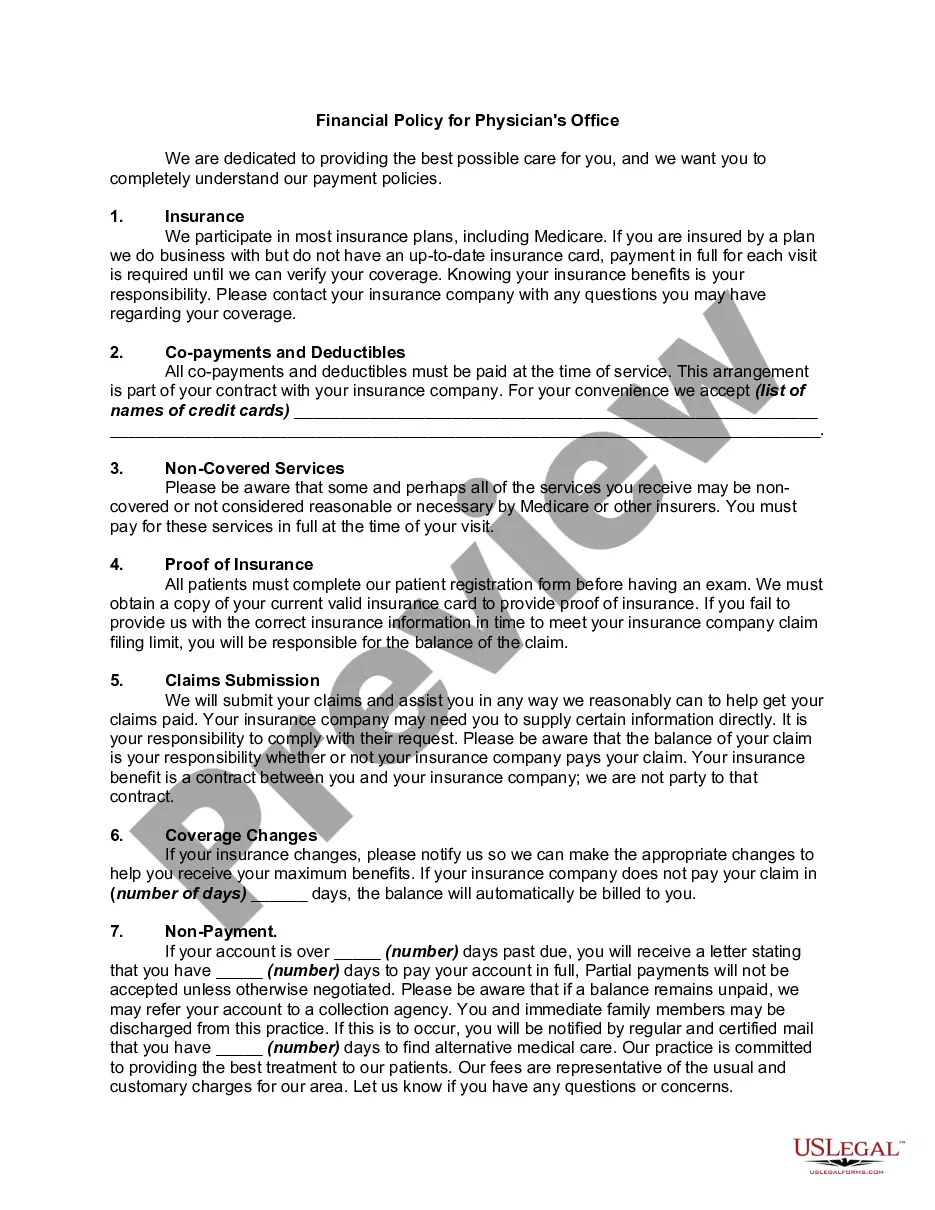
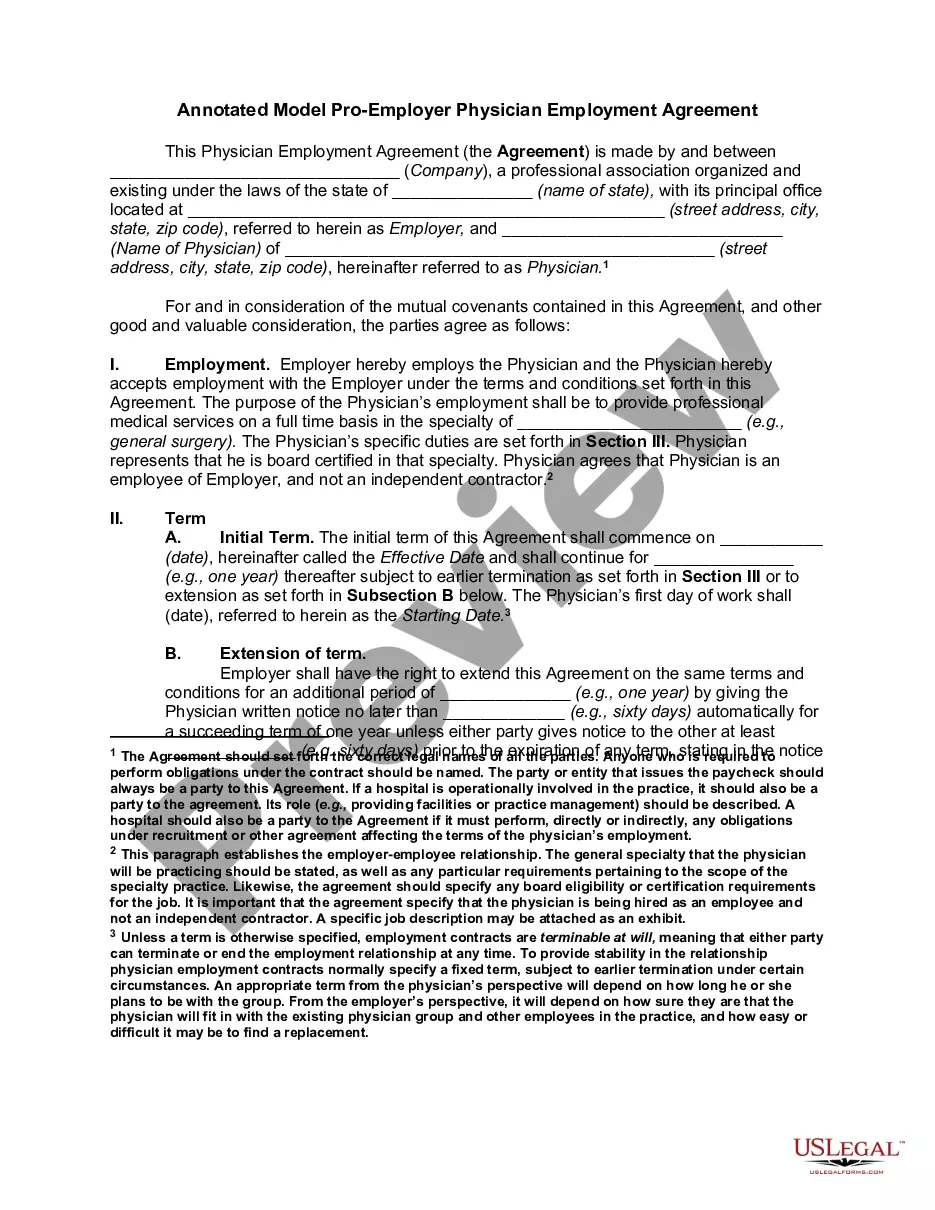
The Financial Policy for Physician's Office is a legal document that outlines the payment policies and procedures of a medical practice. This form is essential for ensuring that patients understand their financial responsibilities regarding services rendered, particularly concerning insurance, co-payments, and uncovered services. It serves to protect both the physician's office and the patient by clearly stating payment expectations, thereby reducing confusion and potential disputes over charges. Unlike other medical forms, this document specifically focuses on financial obligations rather than medical consent or treatment details.
Form components explained
- Insurance participation details, including requirements for proof of coverage.
- Co-payment and deductible payment obligations at the time of service.
- Information on non-covered services and patient responsibilities for payment.
- Claims submission process and patient obligations regarding their own insurance information.
- Protocol for handling changes in insurance coverage and billing processes.
- Consequences of non-payment, including potential discharge from the practice.




When this form is needed
This form should be used by medical professionals when establishing or updating their financial policies in their practice. It is particularly useful when a physician wants to ensure patients are fully aware of their payment responsibilities, especially for practices that accept various insurance plans. This document is also relevant during the initial patient registration process or when changes occur in financial arrangements within a medical office.
Who can use this document
This form is intended for:
- Medical professionals, including physicians and practice managers, who need to communicate financial policies to patients.
- Administrative staff responsible for patient registrations and billing.
- Patients seeking to understand their financial obligations before receiving medical services.
Completing this form step by step
- Fill out the name of the practice and contact information at the top of the document.
- Specify the insurance plans accepted by the practice in the designated section.
- Detail the payment policies, including information on co-payments, deductibles, and non-covered services.
- Provide a section for patient acknowledgment and signature, including the date of agreement.
- Ensure all patients complete the patient registration form along with this financial policy.
Does this document require notarization?
This form usually doesn’t need to be notarized. However, local laws or specific transactions may require it. Our online notarization service, powered by Notarize, lets you complete it remotely through a secure video session, available 24/7.
Get your form ready online
Our built-in tools help you complete, sign, share, and store your documents in one place.
Make edits, fill in missing information, and update formatting in US Legal Forms—just like you would in MS Word.
Download a copy, print it, send it by email, or mail it via USPS—whatever works best for your next step.
Sign and collect signatures with our SignNow integration. Send to multiple recipients, set reminders, and more. Go Premium to unlock E-Sign.
If this form requires notarization, complete it online through a secure video call—no need to meet a notary in person or wait for an appointment.
We protect your documents and personal data by following strict security and privacy standards.

Make edits, fill in missing information, and update formatting in US Legal Forms—just like you would in MS Word.

Download a copy, print it, send it by email, or mail it via USPS—whatever works best for your next step.

Sign and collect signatures with our SignNow integration. Send to multiple recipients, set reminders, and more. Go Premium to unlock E-Sign.

If this form requires notarization, complete it online through a secure video call—no need to meet a notary in person or wait for an appointment.

We protect your documents and personal data by following strict security and privacy standards.
Common mistakes
- Failing to update the form when there are changes in insurance plans accepted.
- Not informing patients about non-covered services in advance, leading to unexpected charges.
- Neglecting to have patients sign and acknowledge the financial policy before treatment.
- Overlooking the importance of maintaining accurate records of patient insurance information.
Benefits of using this form online
- Convenient access for both medical practices and patients, allowing for easy distribution and acknowledgment.
- Editability allows practices to customize the content to meet their specific policies and local regulations.
- Reliability of having a professionally drafted document to ensure legal compliance and clarity.
Looking for another form?






Form popularity
FAQ
Thoroughly revised and updated, Medical Office Procedures is a text-workbook that introduces and describes the tasks of a medical office assistant's career; teaches records management, medical communications, and scheduling skills; and describes procedures for preparing patients' charts and bills.
The payment policy is the set of rules or directions that guides a customer to make the bill payment. It is the guideline that is set so that there is no issue between the customer and the seller. The payment policy is framed so that there is complete clarity in the minds of the customer.
A buyer has two days to pay for an item on eBay from the time of their purchase. After two days, a seller can open an Unpaid Item Case, prompting the buyer to pay or resulting in a loss of buyer privileges if the seller is never able to collect the money.
Healthcare organizations lack price transparency. Unclear billing processes. Organizations need automated billing. Patients can't afford to pay medical bills.
The basic elements of an effective medical office financial policy includes the medical office addressing all possible scenarios, including financial arrangements and payment plans, payments not covered by insurance, and other special circumstances.
What are up-front collections ? Why are they important to the practice ? These can be copayment so or coinsurance portions or deductibles . Important because it's a large scale of the practices revenue.
Section 650(a) of the California Business and Professions Code prohibits physicians from offering any rebate, refund, commission, preference, patronage dividend, discount or other consideration, whether in the form of money or otherwise, as compensation or inducement for referring patients, clients, or customers to
Clear medical office procedures that are consistently followed by staff members help support the office's financial policy. When administrative staff members collect appropriate copayments and other fees as stated in the financial policy, they are helping to support the policy.
Doctors and hospitals may refer to their POS collections as time-of-service, upfront, or front-end collections.POS collections ask everyone to pay, from patients who pay solely out-of-pocket to those who are insured and need to pay either a deductible, copay, or coinsurance amount.