License Agreement with regard to use of Trademark in Connection with a Manufactured Product
Understanding this form
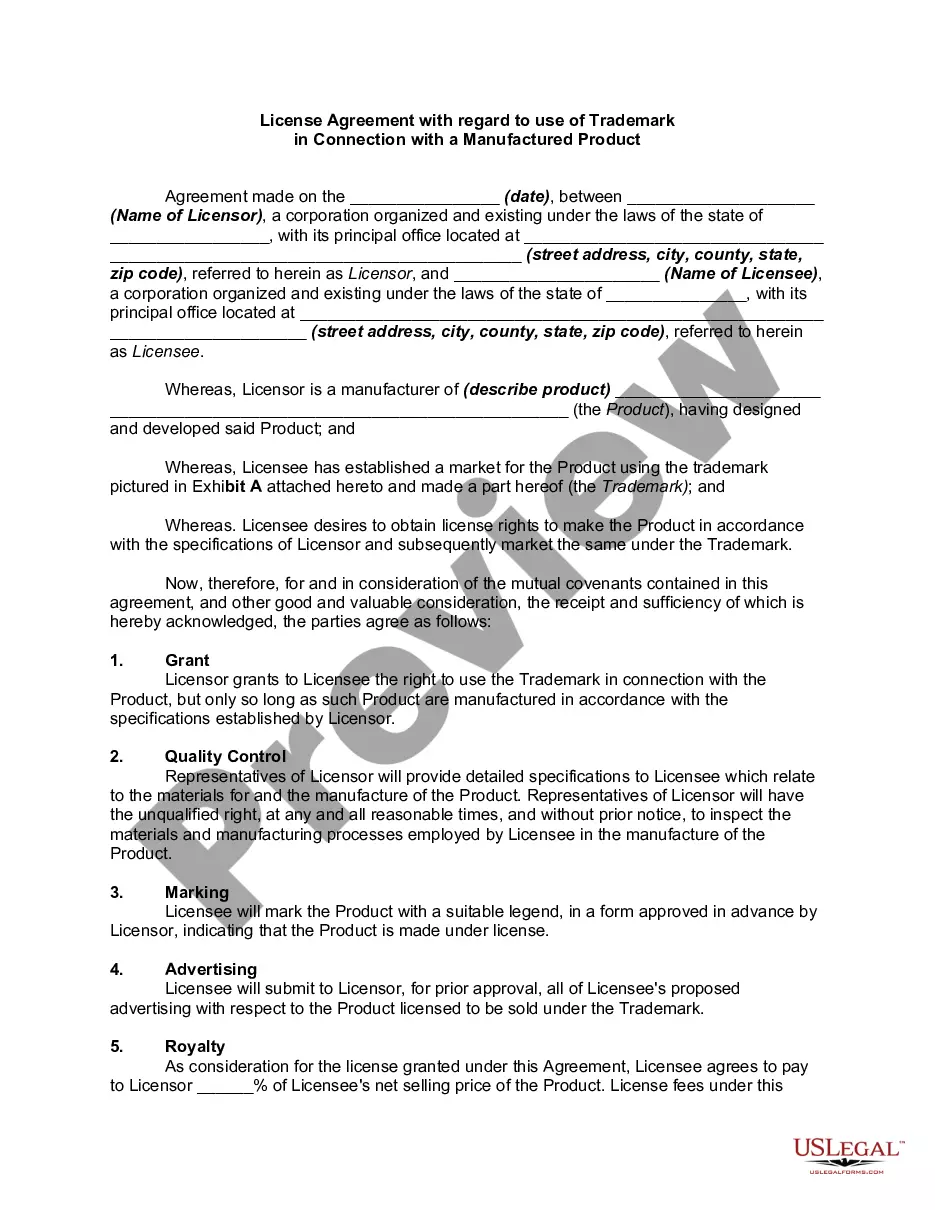
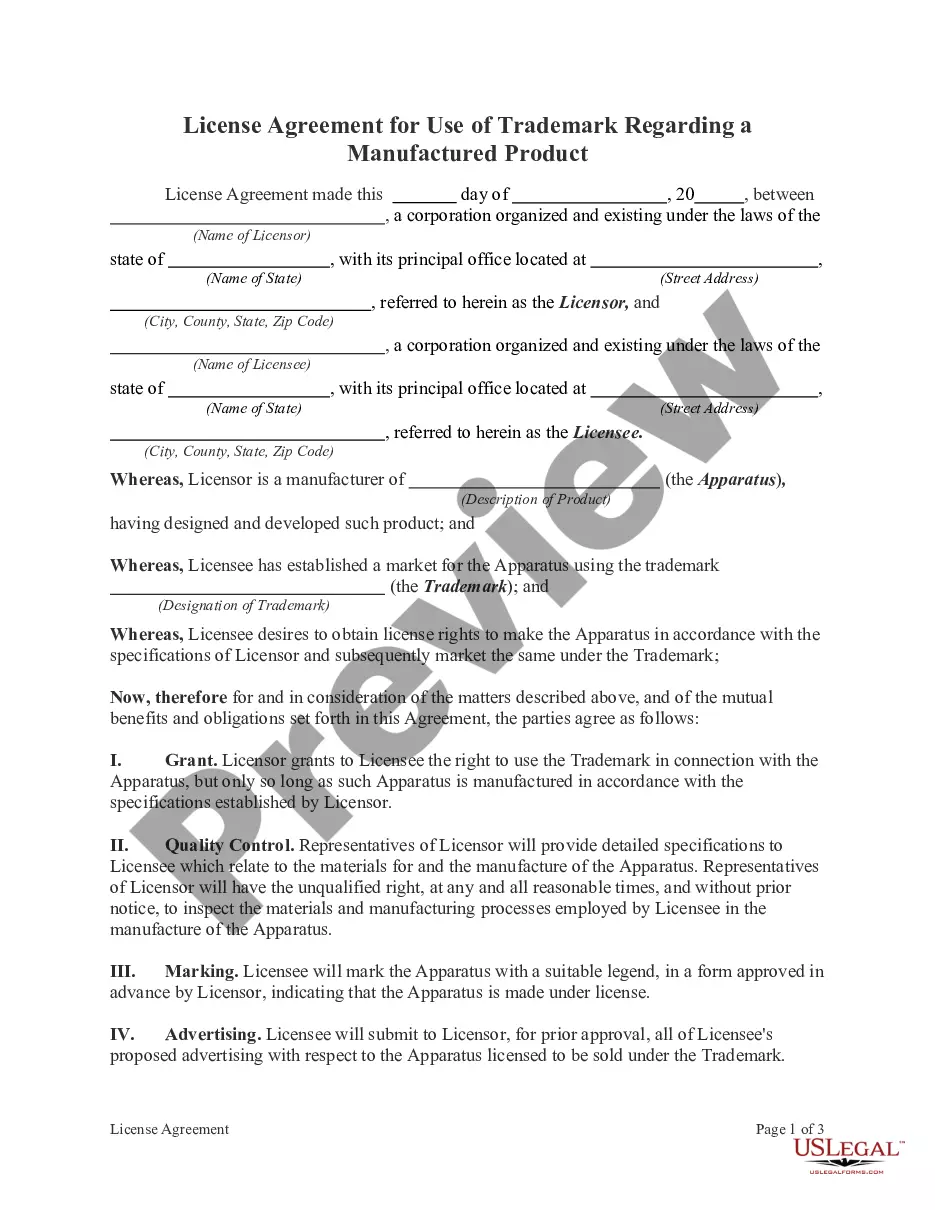
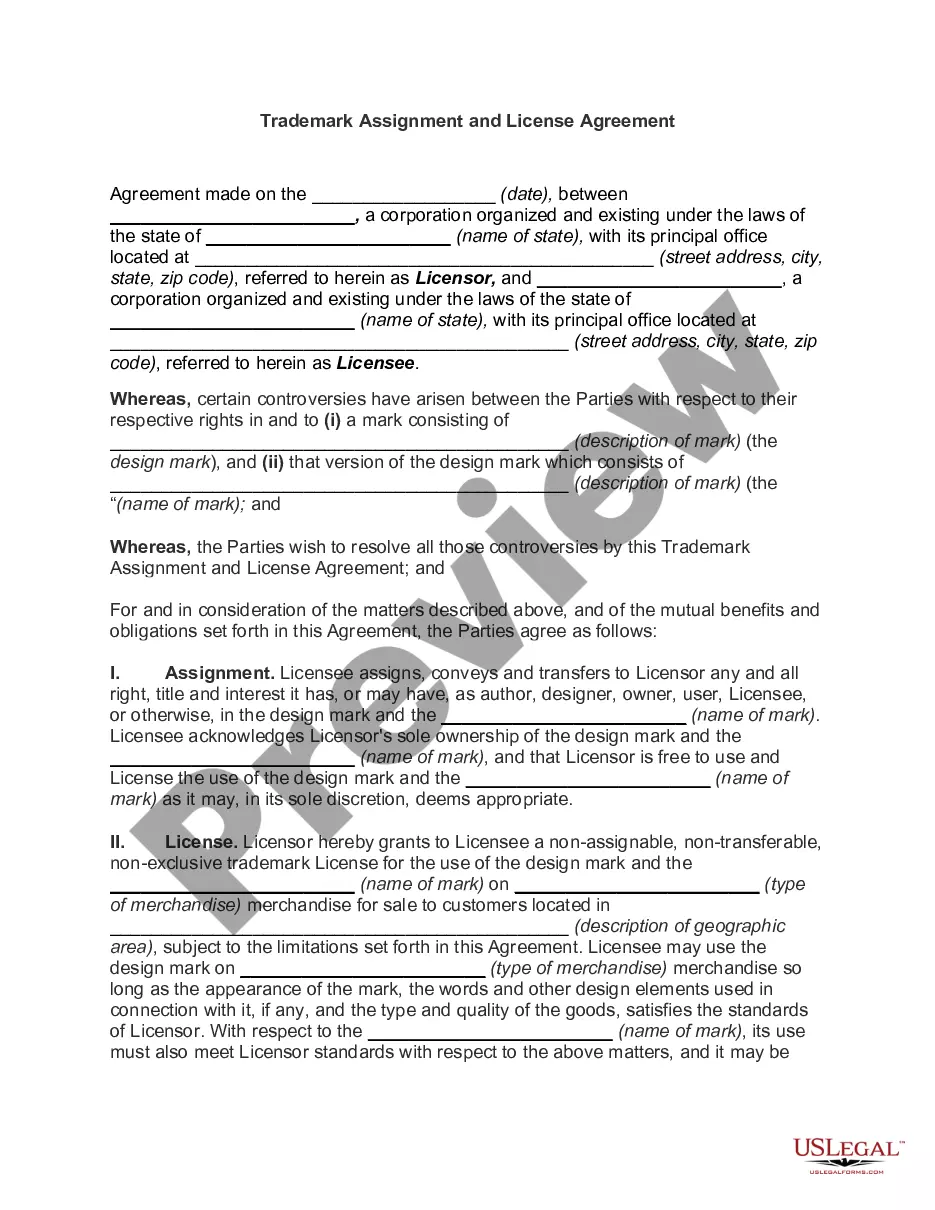
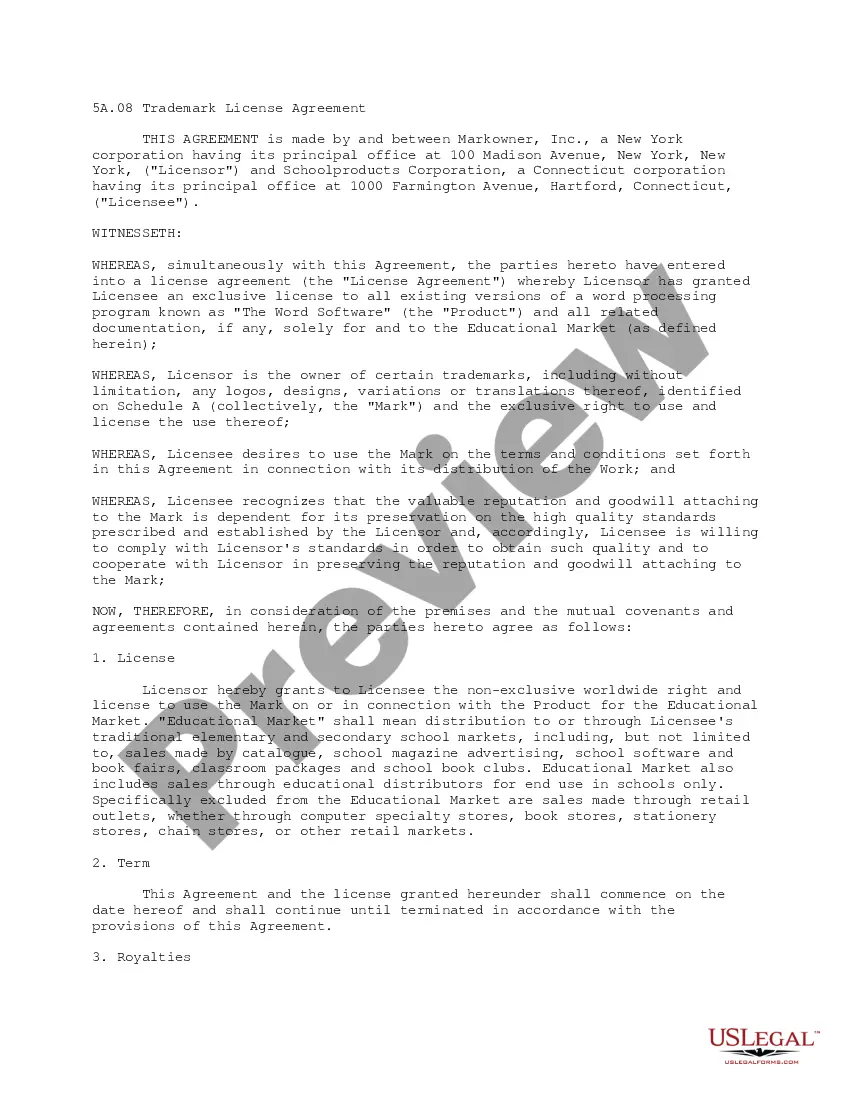
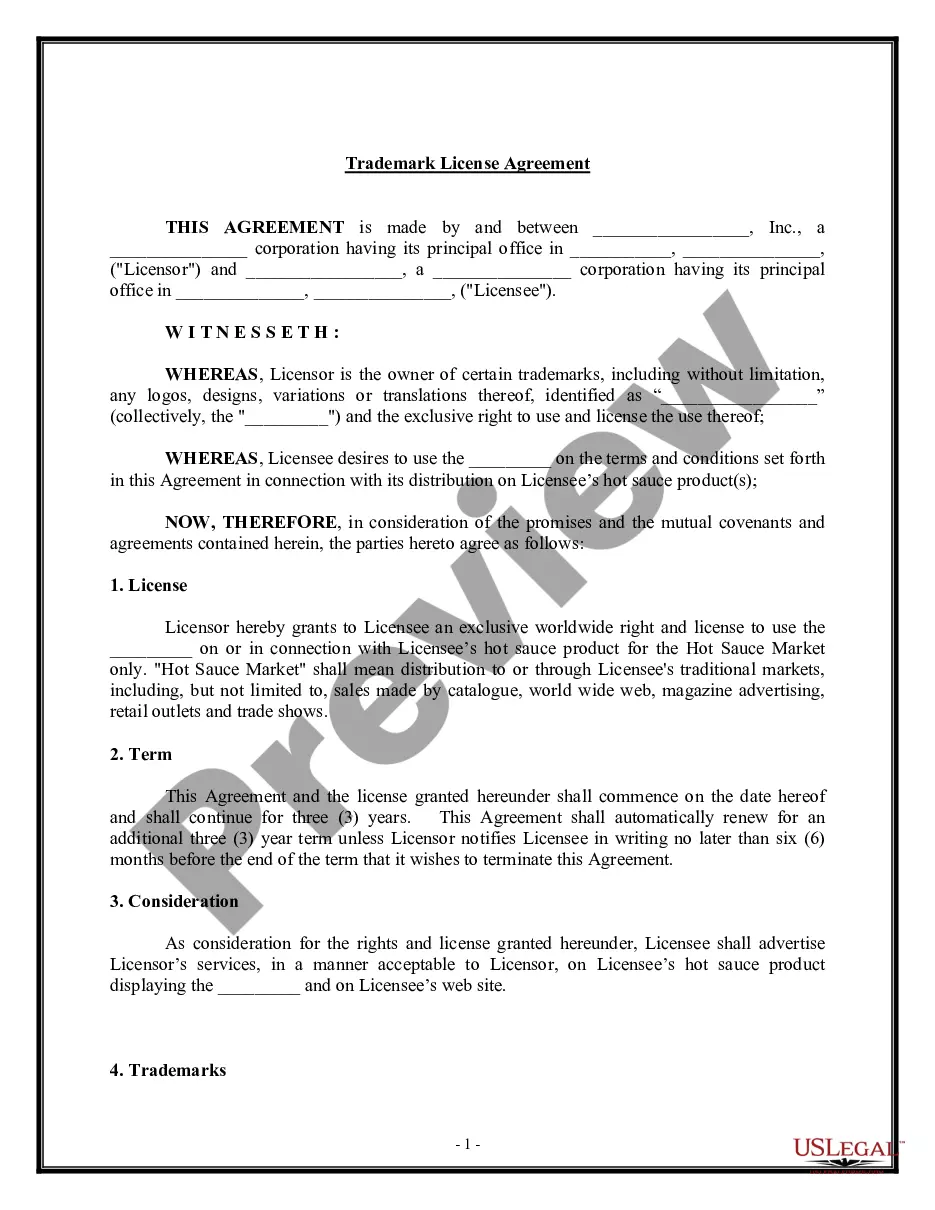
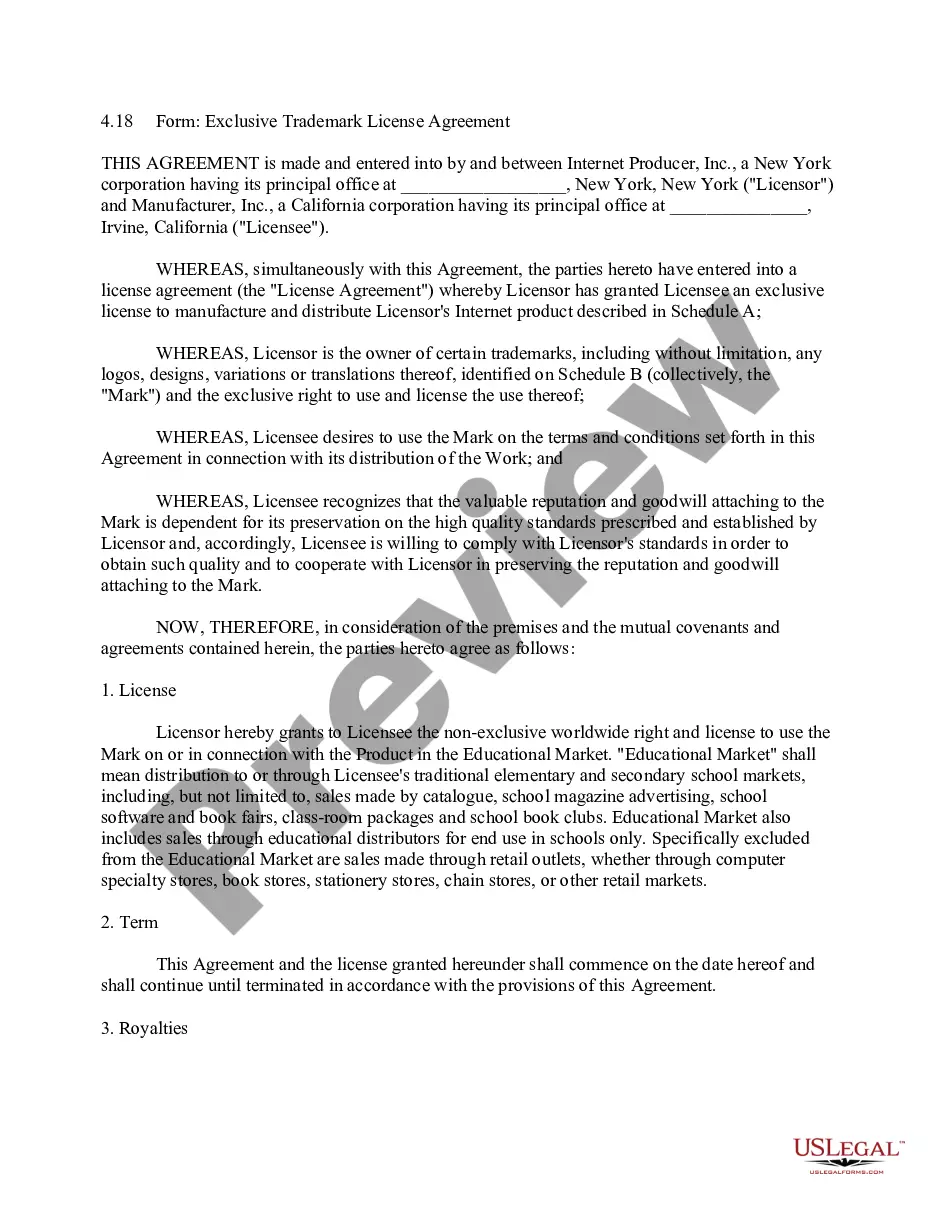
This License Agreement regarding the use of Trademark in connection with a manufactured product is a legal document that grants a Licensee permission to use a Licensor's trademark while manufacturing and marketing a specific product. This agreement outlines the rights, responsibilities, and conditions under which the trademark can be utilized, ensuring that the trademark's integrity is maintained and that both parties understand their obligations. This form is essential for protecting the interests of both the trademark owner and the manufacturer in commercial agreements.
Form components explained
- Grant of license to use the trademark for a specified product.
- Quality control terms ensuring compliance with Licensor's specifications.
- Requirements for marking the product with the trademark.
- Terms regarding advertising approvals by the Licensor.
- Royalty payment structure based on net selling price.
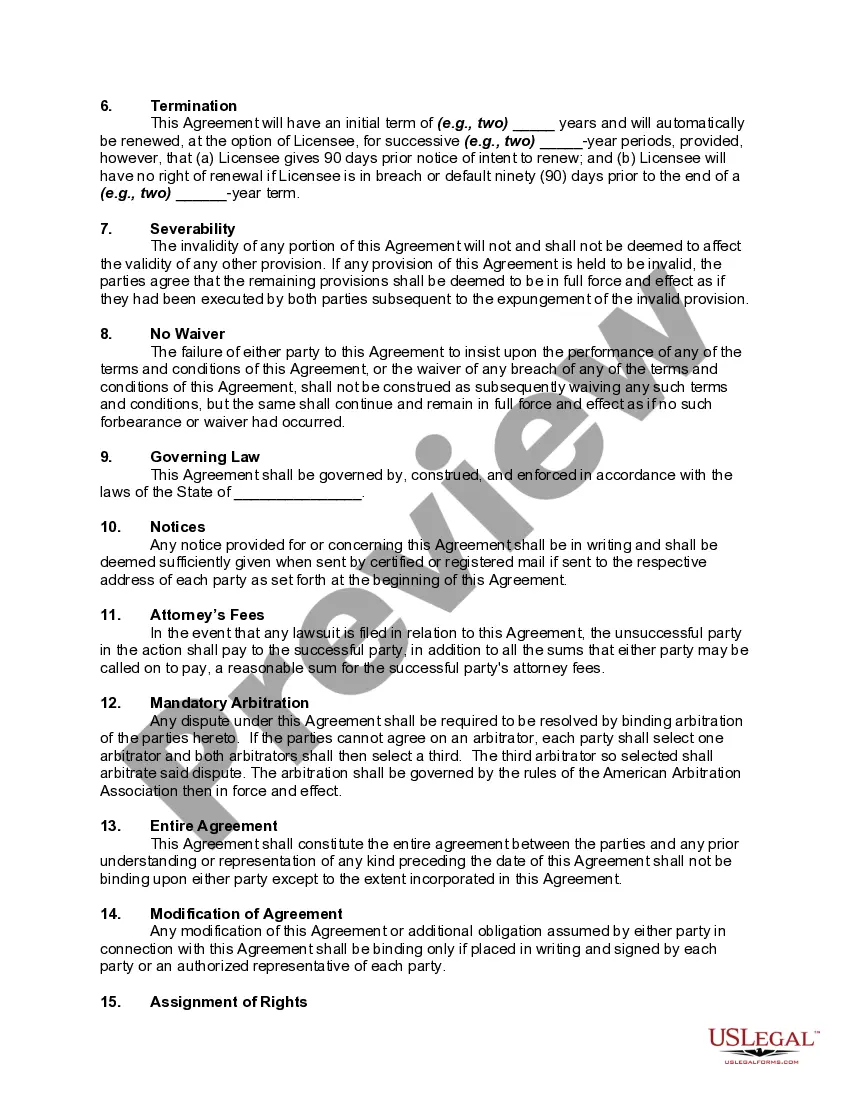
- Termination clauses detailing duration and renewal options.
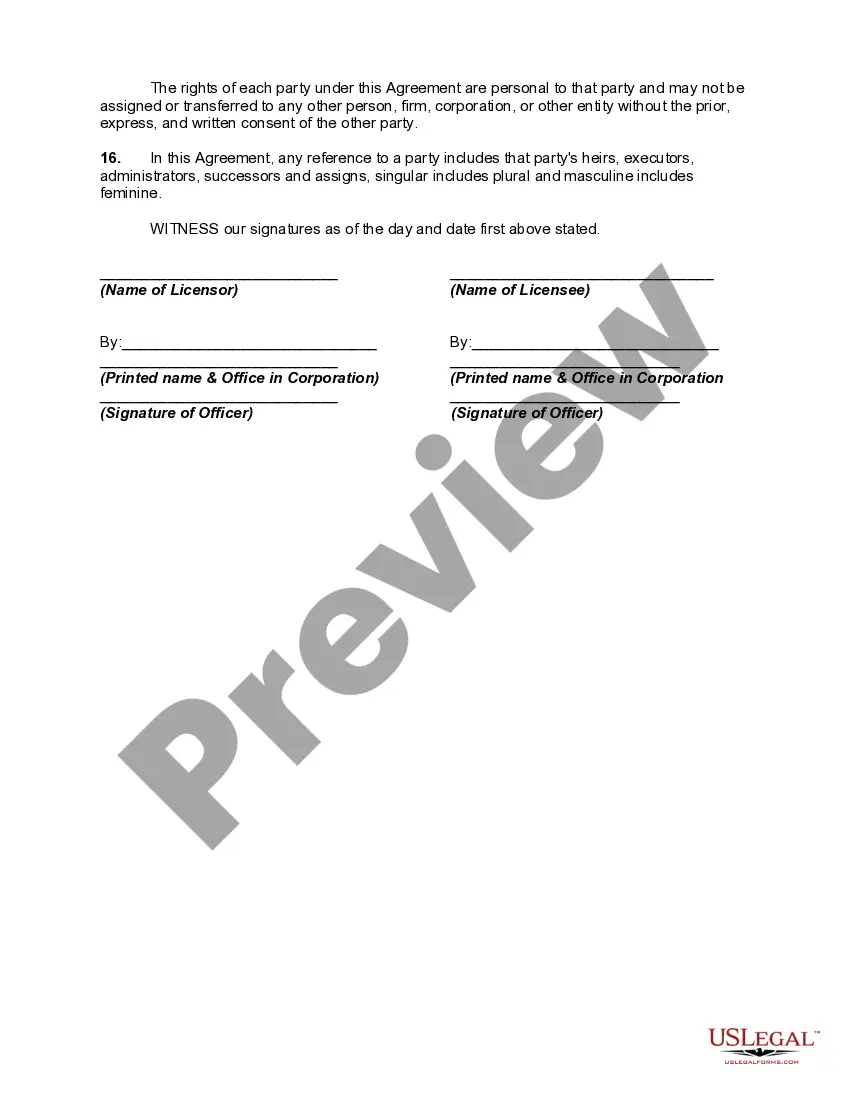
- Dispute resolution through mandatory arbitration.
Common use cases
This form is used when a business (Licensee) wants to manufacture and market a product under a trademark owned by another entity (Licensor). It is essential when entering into agreements that require the use of someone else's trademark to ensure legal protection and compliance with established standards. Common scenarios include product licensing in consumer goods, technology, fashion, and any scenario where branding is crucial for market success.
Intended users of this form
- Businesses seeking to manufacture and sell products under an established trademark.
- Trademark owners looking to license their trademark to other manufacturers.
- Companies involved in joint ventures or partnerships involving trademarked products.
- Individuals and corporations wishing to formalize the use of trademarks in commercial transactions.
How to prepare this document
- Identify and enter the date of the agreement.
- Fill in the names and addresses of both the Licensor and the Licensee.
- Describe the product being manufactured under the trademark.
- Specify the royalty percentage based on the Licensee's net selling price.
- Review and sign the agreement in the presence of all parties involved.
Notarization requirements for this form
This form usually doesn’t need to be notarized. However, local laws or specific transactions may require it. Our online notarization service, powered by Notarize, lets you complete it remotely through a secure video session, available 24/7.
Get your form ready online
Our built-in tools help you complete, sign, share, and store your documents in one place.
Make edits, fill in missing information, and update formatting in US Legal Forms—just like you would in MS Word.
Download a copy, print it, send it by email, or mail it via USPS—whatever works best for your next step.
Sign and collect signatures with our SignNow integration. Send to multiple recipients, set reminders, and more. Go Premium to unlock E-Sign.
If this form requires notarization, complete it online through a secure video call—no need to meet a notary in person or wait for an appointment.
We protect your documents and personal data by following strict security and privacy standards.

Make edits, fill in missing information, and update formatting in US Legal Forms—just like you would in MS Word.

Download a copy, print it, send it by email, or mail it via USPS—whatever works best for your next step.

Sign and collect signatures with our SignNow integration. Send to multiple recipients, set reminders, and more. Go Premium to unlock E-Sign.

If this form requires notarization, complete it online through a secure video call—no need to meet a notary in person or wait for an appointment.

We protect your documents and personal data by following strict security and privacy standards.
Common mistakes to avoid
- Failing to specify the product associated with the trademark.
- Not including the correct royalty payment structure.
- Neglecting quality control specifications required by the Licensor.
- Overlooking the renewal conditions for the license agreement.
Why use this form online
- Convenience of downloading and completing the form at your own pace.
- Editability allows for easy adjustments to suit specific agreements.
- Access to forms drafted by licensed attorneys, ensuring legal compliance.
- Availability of online support for any questions during the process.
Looking for another form?








Form popularity
FAQ
Trademark licensing is the process by which a registered trademark owner, called a licensor or proprietor, allows another party, called a licensee, to make and distribute specific products or services under the licensor's trademark agreement. Trademark licensing is a type of merchandise agreement.
An example of a licensing agreement is a contract between the copyright holders of software and another company, allowing the latter to use the computer software for their daily business operations.
A trademark license agreement allows the licensee to use (but not own) the licensor's trademark in connection with agreed-on products or services. Licensing can help a company expand into new markets effectively and easily while lending the licensee an established name and reputation.
An example of a licensing agreement is a contract between the copyright holders of software and another company, allowing the latter to use the computer software for their daily business operations.
What is a Licensing Agreement? A licensing agreement is a contract between two parties (the licensor and licensee) in which the licensor grants the licensee the right to use the brand name, trademark, patented technology, or ability to produce and sell goods owned by the licensor.
The 3 P's of collegiate licensing are protection, promotion, and profit.
Exclusive or non-exclusive. In an exclusive license, the intellectual property holder is licensing the work only to one person, for that particular use/territory. Territory. Use. Attribution. Derivative works. Confidentiality. Time frame. Termination.
A license agreement is a business contract between two parties. The licensor (the seller of the license) owns the asset being licensed and the licensee (the buyer) pays for the right to use the license. The licensee pays royalties to the owner in exchange for the right to sell the product or use the technology.
Download a template for a licensing agreement. Choose your role as the licensor or licensee. Define the license(s) in the agreement. Decide whether the license is exclusive or not. Settle the matter of fees and payment schedule. Add a renewal date and rules.