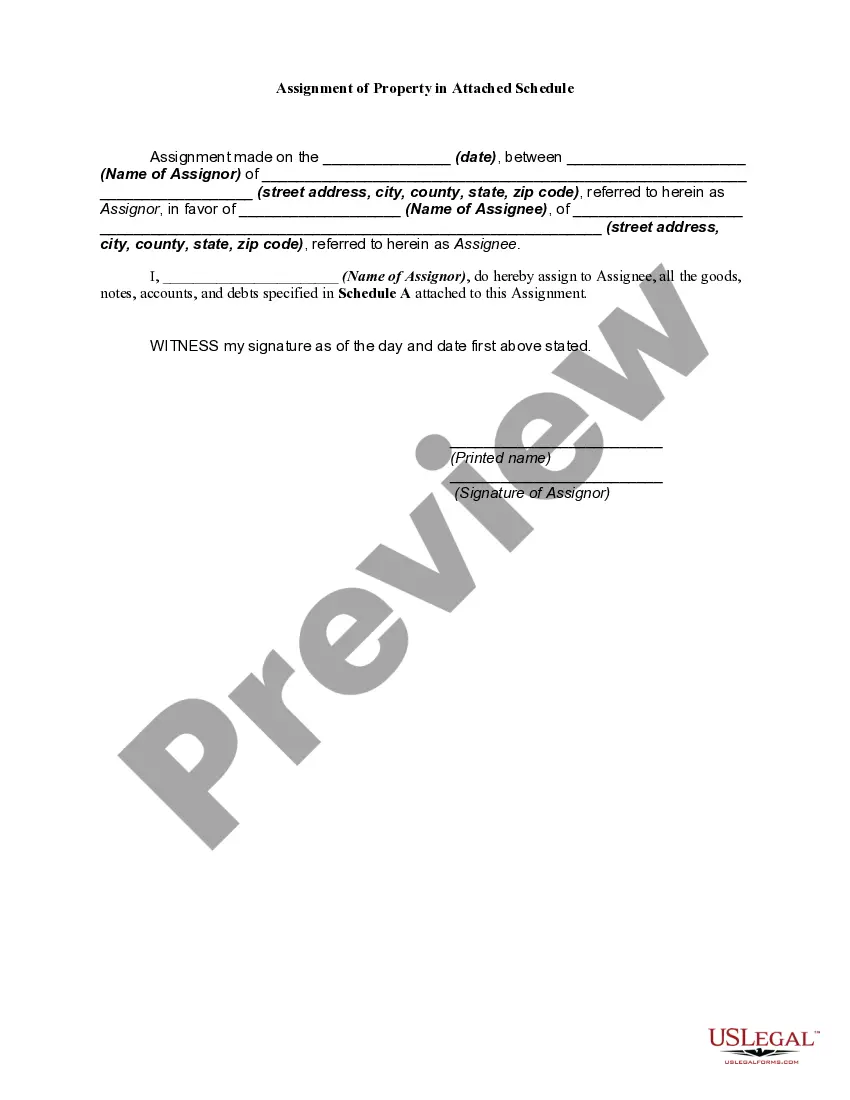
Assignment of Property in Attached Schedule
What is this form?
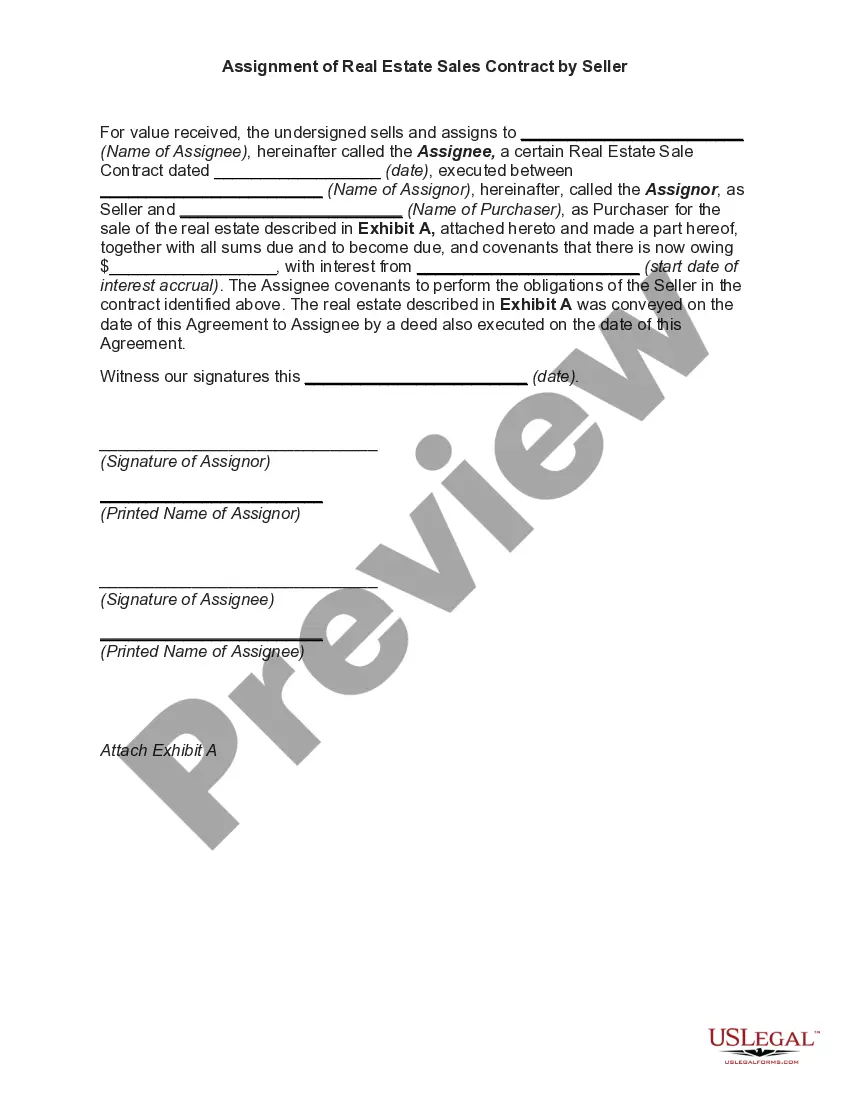
The Assignment of Property in Attached Schedule is a legal document used to transfer ownership of specific goods, notes, accounts, or debts from one party (the Assignor) to another (the Assignee). This assignment is documented in an attached schedule, which lists the items being transferred. This form provides a clear record of the transaction, distinguishing it from other agreements that may not outline specific property. It can be useful in various contexts, such as business transactions or personal property transfers.
Key components of this form
- Date of assignment
- Name and contact details of the Assignor
- Name and contact details of the Assignee
- Description of goods, notes, accounts, and debts in the attached Schedule A
Common use cases
This form is needed when an individual or entity wishes to assign their rights to specific property or financial interests to another party. Common scenarios include transferring ownership of business assets during a sale, assigning accounts receivable, or formalizing a personal property gift. It serves as a legal record to protect the interests of all parties involved.
Who needs this form
- Individuals transferring personal property
- Business owners assigning business assets
- Anyone involved in financial transactions requiring formal documentation
- Legal professionals preparing assignments for clients
Steps to complete this form
- Identify the date of the assignment.
- Enter the full name and contact information of the Assignor.
- Enter the full name and contact information of the Assignee.
- Specify all items being assigned in Schedule A.
- Have the Assignor sign and print their name to finalize the document.
Is notarization required?
Notarization is generally not required for this form. However, certain states or situations might demand it. You can complete notarization online through US Legal Forms, powered by Notarize, using a verified video call available anytime.
Get your form ready online
Our built-in tools help you complete, sign, share, and store your documents in one place.
Make edits, fill in missing information, and update formatting in US Legal Forms—just like you would in MS Word.
Download a copy, print it, send it by email, or mail it via USPS—whatever works best for your next step.
Sign and collect signatures with our SignNow integration. Send to multiple recipients, set reminders, and more. Go Premium to unlock E-Sign.
If this form requires notarization, complete it online through a secure video call—no need to meet a notary in person or wait for an appointment.
We protect your documents and personal data by following strict security and privacy standards.

Make edits, fill in missing information, and update formatting in US Legal Forms—just like you would in MS Word.

Download a copy, print it, send it by email, or mail it via USPS—whatever works best for your next step.

Sign and collect signatures with our SignNow integration. Send to multiple recipients, set reminders, and more. Go Premium to unlock E-Sign.

If this form requires notarization, complete it online through a secure video call—no need to meet a notary in person or wait for an appointment.

We protect your documents and personal data by following strict security and privacy standards.
Common mistakes to avoid
- Failing to list all property being assigned in Schedule A.
- Not including complete contact information for both parties.
- Neglecting to sign the document before submission.
- Using outdated versions of the form that may not comply with current laws.
Why complete this form online
- Convenience of instant access and downloading from anywhere.
- Editability that allows for customization to suit specific needs.
- Reliability with forms drafted by licensed attorneys to ensure compliance.
Legal use & context
- Enforceable in a court of law if properly executed.
- Specific to the jurisdiction in which the assignment is made.
- Provides legal protection in case of disputes regarding ownership.
Main things to remember
- The Assignment of Property in Attached Schedule transfers ownership from one party to another.
- It is important to list all assigned items clearly in Schedule A.
- This form is useful in various personal and business contexts, providing legal documentation for property transfer.
Looking for another form?








Form popularity
FAQ
First, you find a property whose seller is willing to accept significantly less than market value in exchange for a quick and easy sale. Then, you find another buyer who is willing to pay slightly more than the contract price, and you assign the contract to them and profit from the difference.
Find an investment property to put under contract. Real estate wholesaling begins with finding motivated sellers. Get in touch with the property owner. Establish the property value. Estimate repairs. Negotiate the price. Find a buyer. Close on the investment property.
A real estate deal can take a turn for the worst if the contract is not carefully written to include all the legal stipulations for both the buyer and seller.You can write your own real estate purchase agreement without paying any money as long as you include certain specifics about your home.
Assignment is a legal term whereby an individual, the assignor, transfers rights, property, or other benefits to another known as the assignee. This concept is used in both contract and property law. The term can refer to either the act of transfer or the rights/property/benefits being transferred.
Find a motivated seller. First, let's understand what a motivated seller is. Get the contract. Submit contract to title. Assign the contract to the buyer. Get paid!
Find a motivated seller. First, let's understand what a motivated seller is. Get the contract. Submit contract to title. Assign the contract to the buyer. Get paid!
In your Assignment Agreement, you should include information like: the name of the person handing over contractual duties (called "the assignor"); the recipient of the contractual rights and obligations (called "the assignee"); the other party to the original contract (called "the obligor"); the name of the contract
Yes, assignment of contract in real estate is legal. However, contract assignment will not be enforced in the following circumstances: There is no written consent Before a real estate assignment contract is enforced, all the parties involved must give written consent.