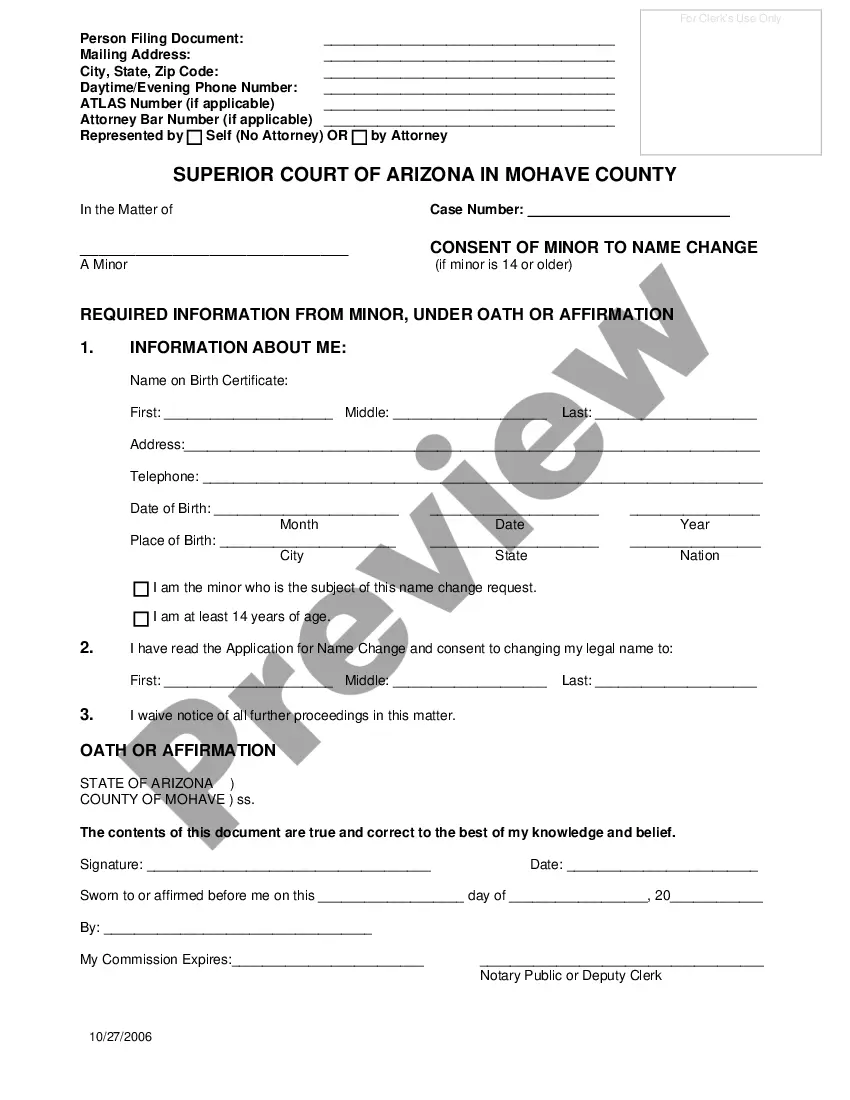
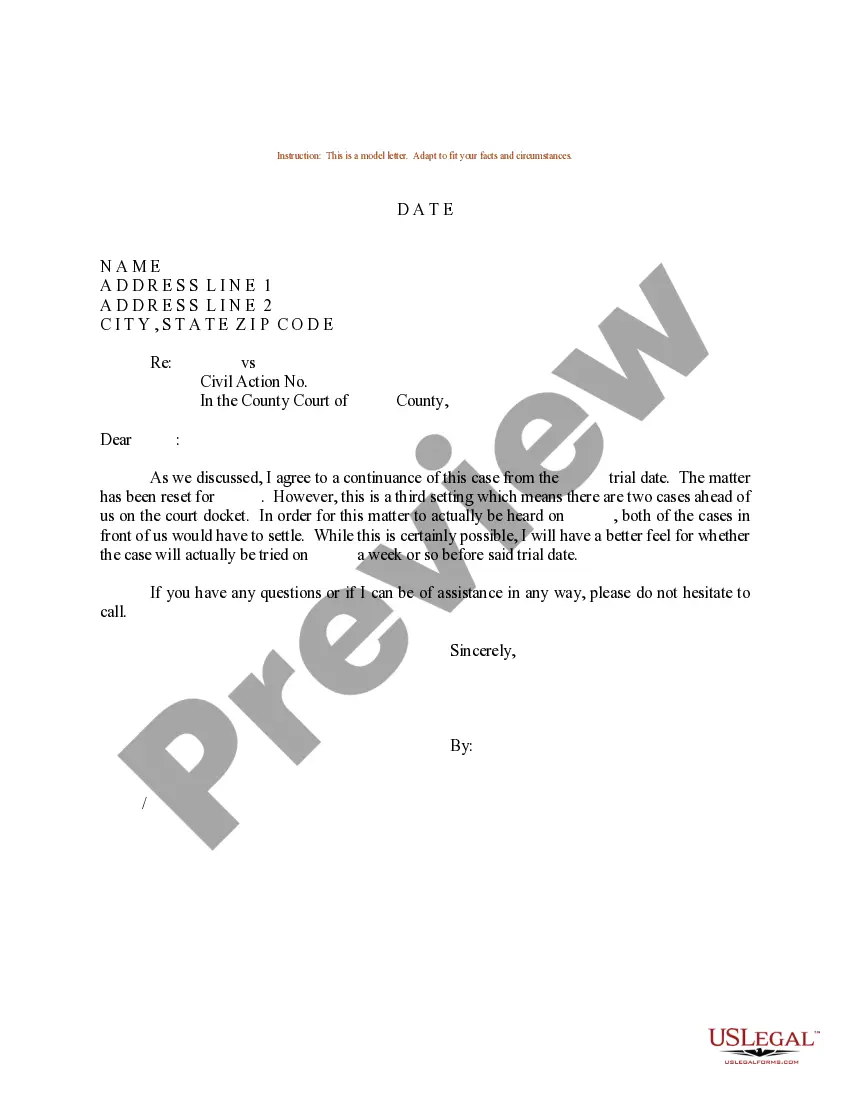
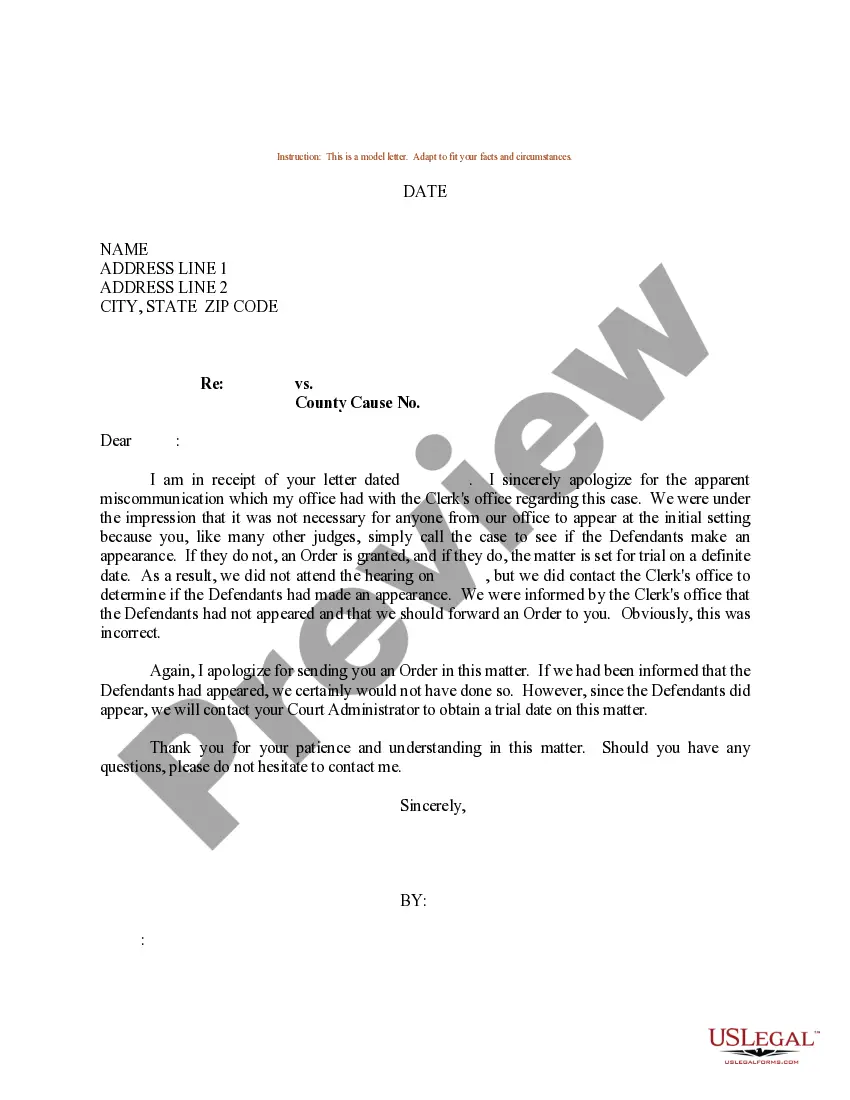
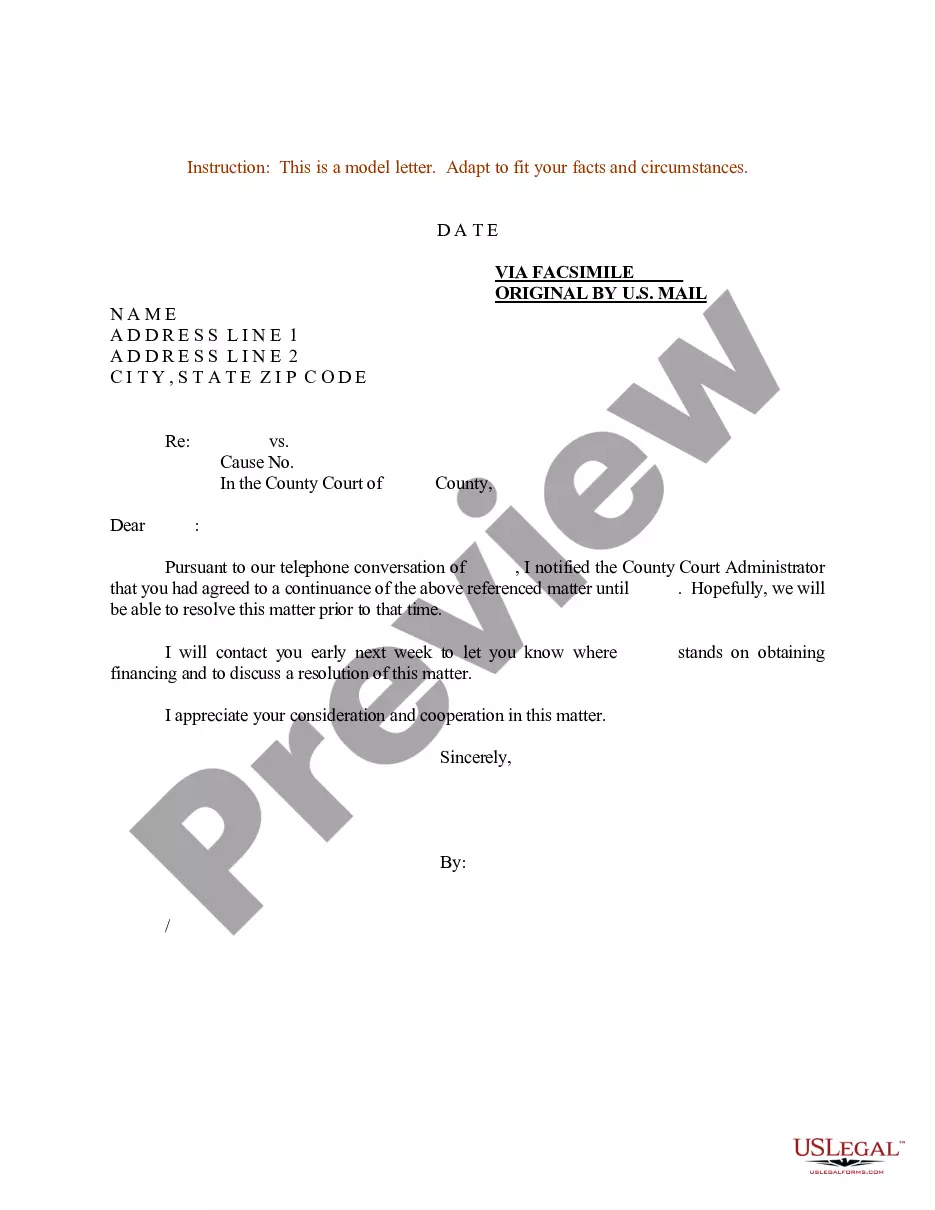
Sample Letter concerning Continuance of Trial Date - Agreement to Continue Trial
Understanding this form
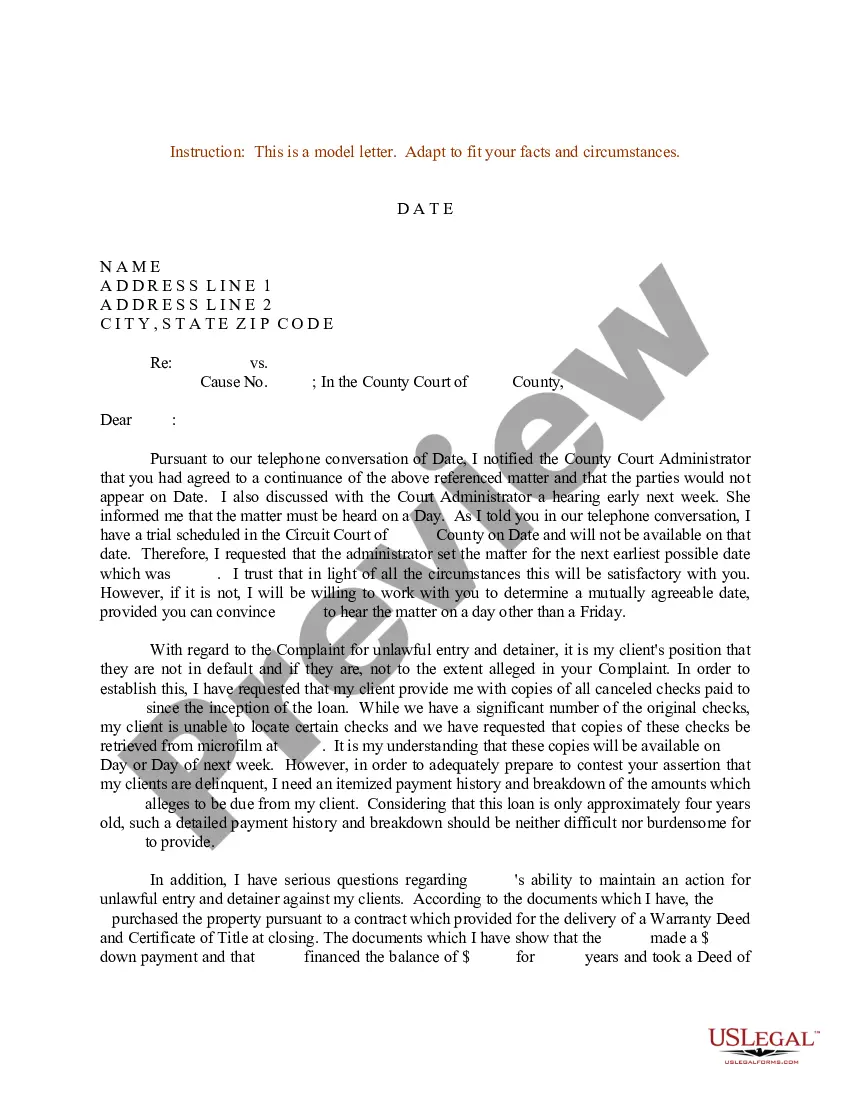
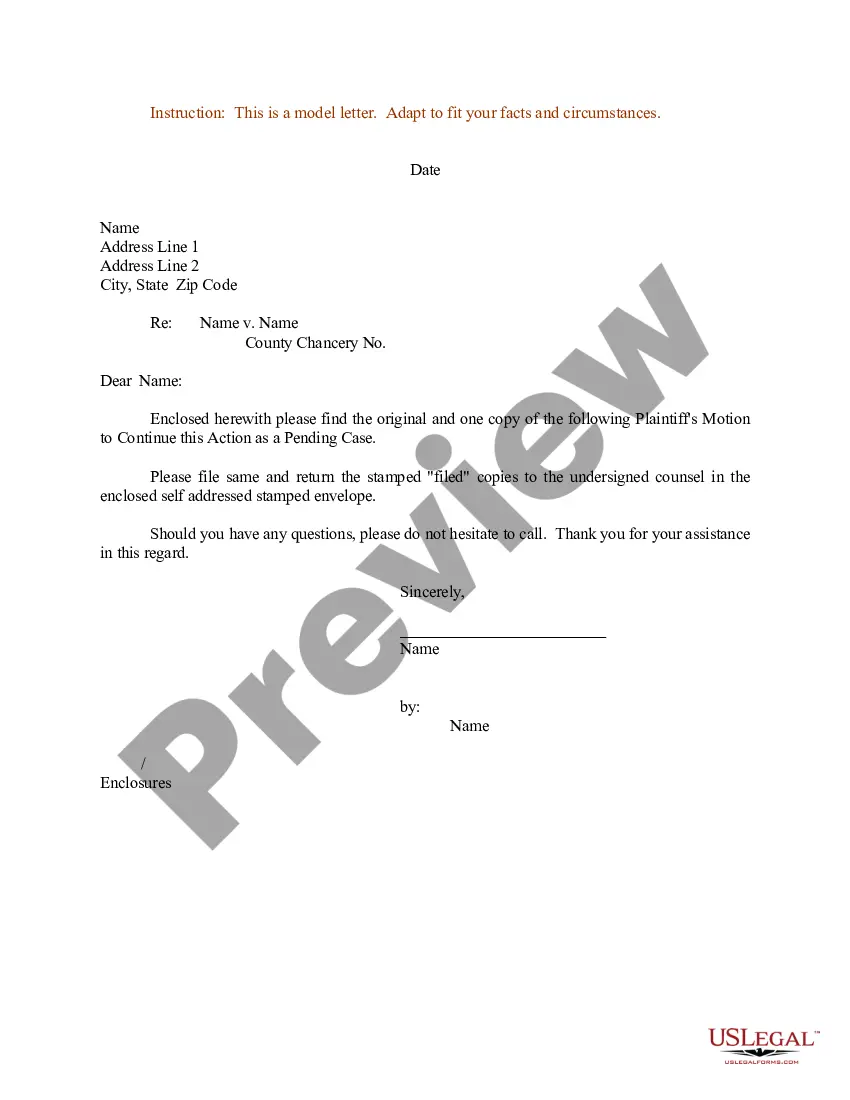
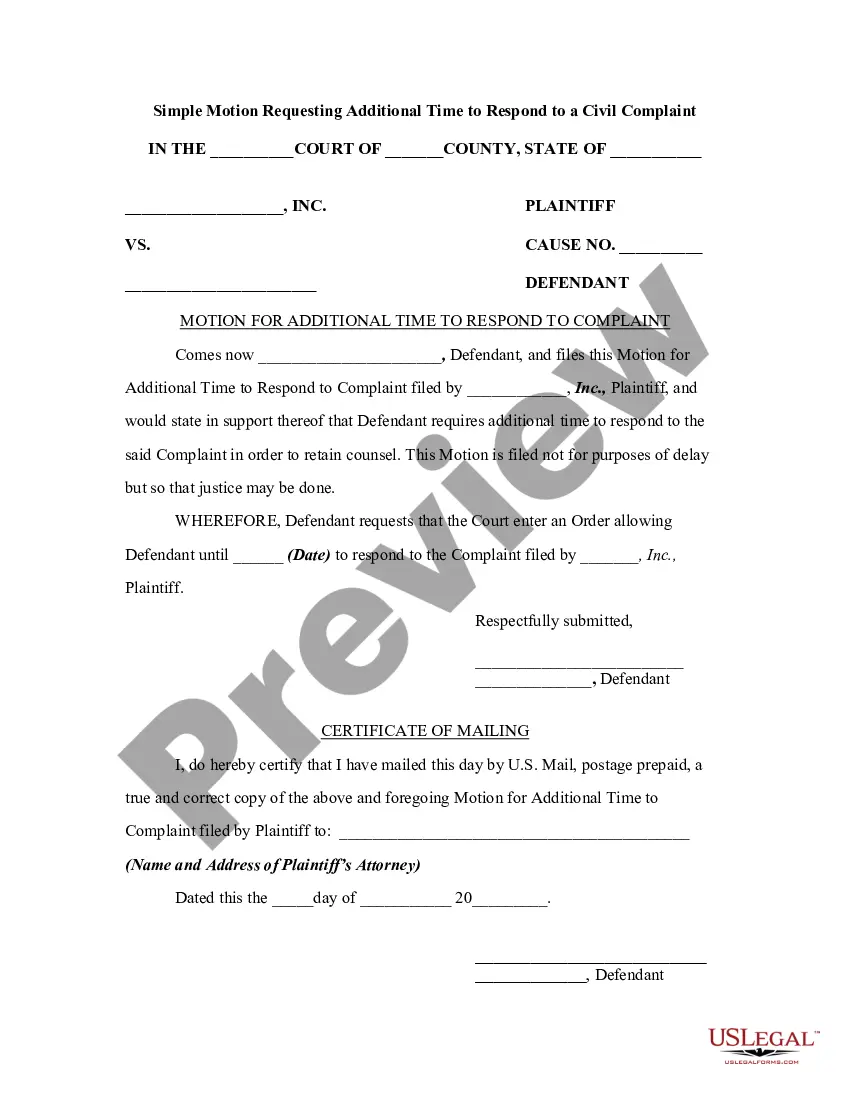
The Sample Letter concerning Continuance of Trial Date is a legal document designed to formally request a postponement of a scheduled trial. This letter serves as an agreement between parties requesting that the court allows additional time before the trial proceeds. Unlike other legal forms that might seek a complete cancellation or rescheduling without mutual consent, this letter specifically reflects an agreement to continue the trial, ensuring both parties are on the same page regarding the new timeline.
Main sections of this form
- Date of the letter
- Names and addresses of both parties
- Current trial date
- Proposed new trial date
- Signature lines for both parties
- Any relevant case number

When to use this document
This form is typically used in situations where a party needs more time to prepare for trial, either due to ongoing discovery, scheduling conflicts, or other valid reasons. It is crucial when both parties agree on postponement and wish to submit their request to the court formally. Using this form can help avoid complications and ensure a smoother legal process.
Who can use this document
- Parties involved in a legal dispute who have a trial date scheduled
- Attorneys representing clients in civil or criminal cases
- Individuals unfamiliar with legal terminology seeking a straightforward way to request a continuance
How to prepare this document
- Identify the parties: Enter the names and addresses of both parties involved in the trial.
- Specify the current trial date: Include the scheduled trial date that you wish to postpone.
- Propose a new trial date: Suggest a convenient new date for the trial proceedings.
- Include case information: If applicable, add the case number to ensure proper identification of your case.
- Sign the document: Ensure both parties sign the letter to confirm agreement to the postponement.
Does this form need to be notarized?
This form does not typically require notarization unless specified by local law. It is advisable to check local regulations to ensure compliance with any additional requirements for court submissions.
Get your form ready online
Our built-in tools help you complete, sign, share, and store your documents in one place.
Make edits, fill in missing information, and update formatting in US Legal Forms—just like you would in MS Word.
Download a copy, print it, send it by email, or mail it via USPS—whatever works best for your next step.
Sign and collect signatures with our SignNow integration. Send to multiple recipients, set reminders, and more. Go Premium to unlock E-Sign.
If this form requires notarization, complete it online through a secure video call—no need to meet a notary in person or wait for an appointment.
We protect your documents and personal data by following strict security and privacy standards.

Make edits, fill in missing information, and update formatting in US Legal Forms—just like you would in MS Word.

Download a copy, print it, send it by email, or mail it via USPS—whatever works best for your next step.

Sign and collect signatures with our SignNow integration. Send to multiple recipients, set reminders, and more. Go Premium to unlock E-Sign.

If this form requires notarization, complete it online through a secure video call—no need to meet a notary in person or wait for an appointment.

We protect your documents and personal data by following strict security and privacy standards.
Avoid these common issues
- Failure to obtain signatures from all parties before submitting the form.
- Not providing a valid reason for the continuance, which may be required by the court.
- Missing the appropriate deadlines for requesting a continuance.
- Neglecting to check jurisdiction-specific rules that may impact the content or submission process.
Why complete this form online
- Convenience of downloading from anywhere at any time.
- Editability allows for easy customization to fit specific needs.
- Reliable templates drafted by licensed attorneys, ensuring legal correctness.
- Saves time and effort compared to drafting a letter from scratch.
Looking for another form?
Form popularity
FAQ
A valid emergency can serve as an excuse for missing a court date. Some examples of legitimate emergencies include: An emergency room visit for a sudden, debilitating medical condition. A sick child.
Include a memo line with your case number and the caption of the case (i.e., John Smith vs. Jane Doe). Then, address the letter to the judge who is overseeing your case by writing "Dear Judge <Last Name>:" Don't forget to include your request for continuance in the opening paragraph.
When writing a request for a continuance, include your name, the case name and number, what you are requesting and why. State the date of the currently scheduled court hearing and clearly request a new date. Give the reasons for your request.
A continuance in a criminal trial is a formal delay of the trial that can be requested by either side, before or during the trial.Requesting a continuance and receiving one are two very different things; it is important to have a good reason behind the request because it is a good reason the judge will expect.
Dear Other Party or Their Attorney: As I explained today, I need a continuance of the hearing on DATE. I am asking for a continuance because GIVE REASON. Please let me know by DATE if you will agree to a continuance.
If you want to change your court date, you must ask for a postponement (also called a "continuance"). In your Form SC-150 or letter, give the judge a good reason why you are filing your request late.
Continuances Based on Inadequate Time. Perhaps the most common reason for a continuance is when one side did not have enough time to investigate the case and analyze the evidence. Continuances Based on Changing the Indictment or Attorney. Continuances Based on Surprises.
Greet the judge with a formal salutation such as "Dear Judge So-and-So" or "Your Honorable Judge So-and-So." Identify yourself and your reason for writing to the judge in the first line of the letter's body. For example, "My name is Jim Jimerson and I am writing to reschedule our evidentiary hearing."