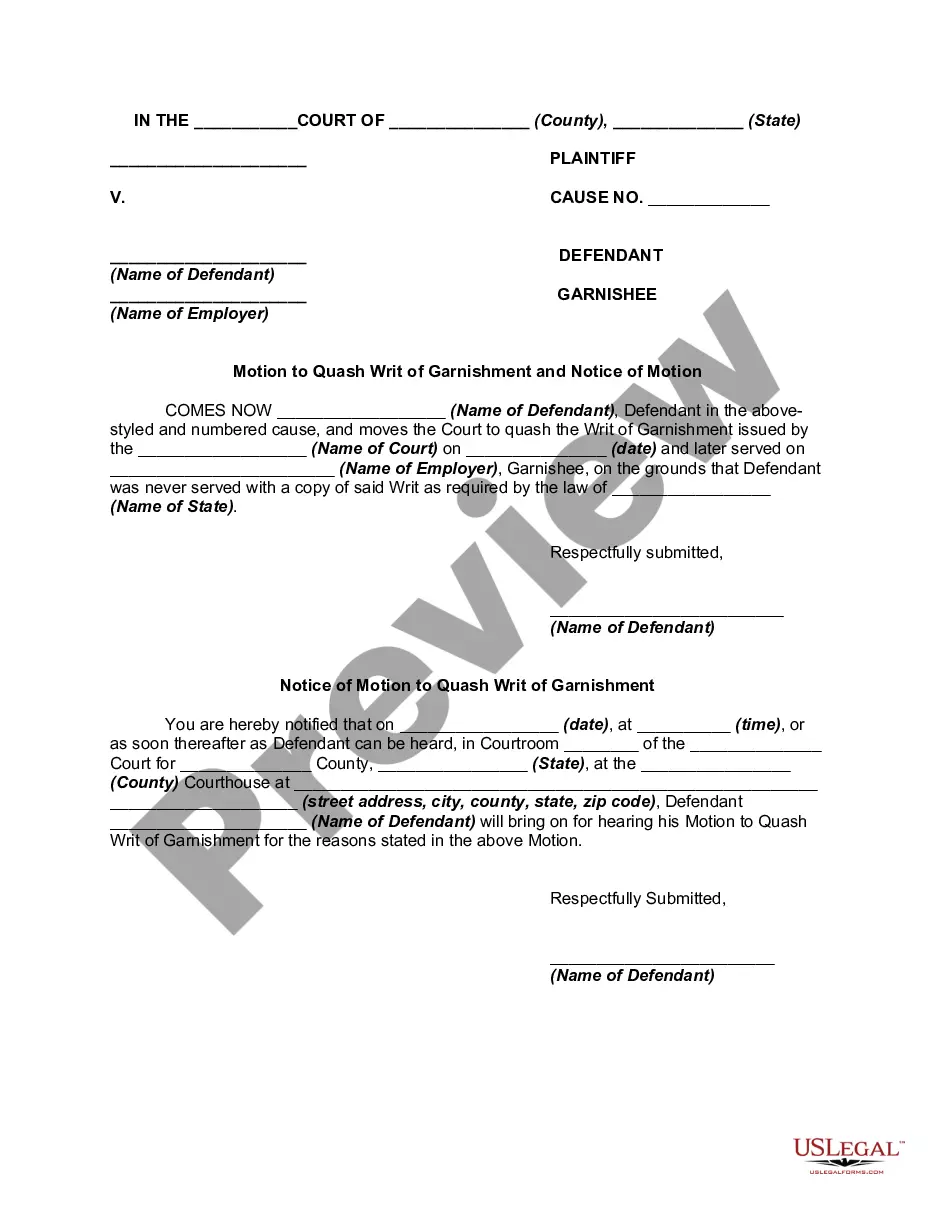
Motion of Defendant to Discharge or Quash Writ of Garnishment for Failure to Serve Copy of Writ on Defendant and Notice of Motion
Overview of this form
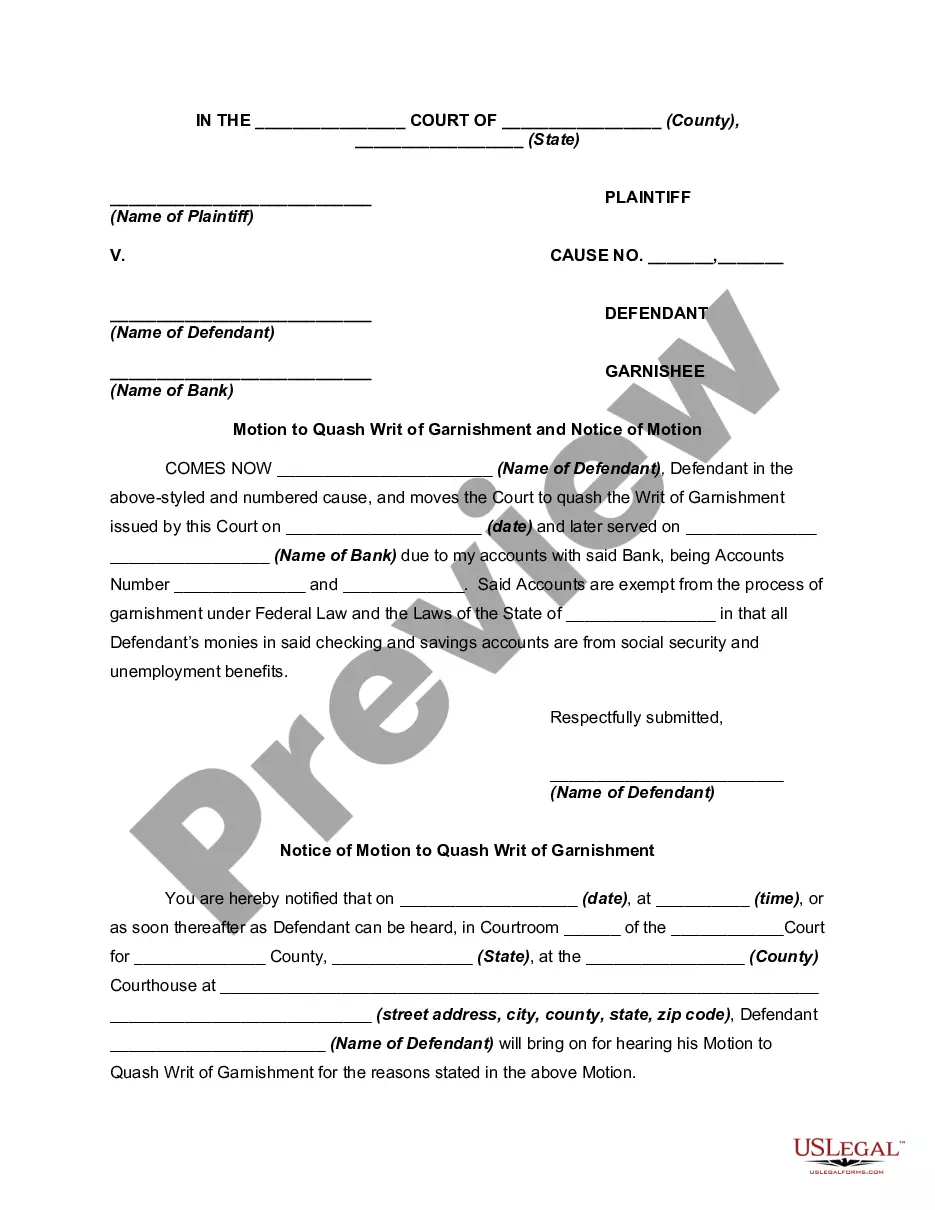
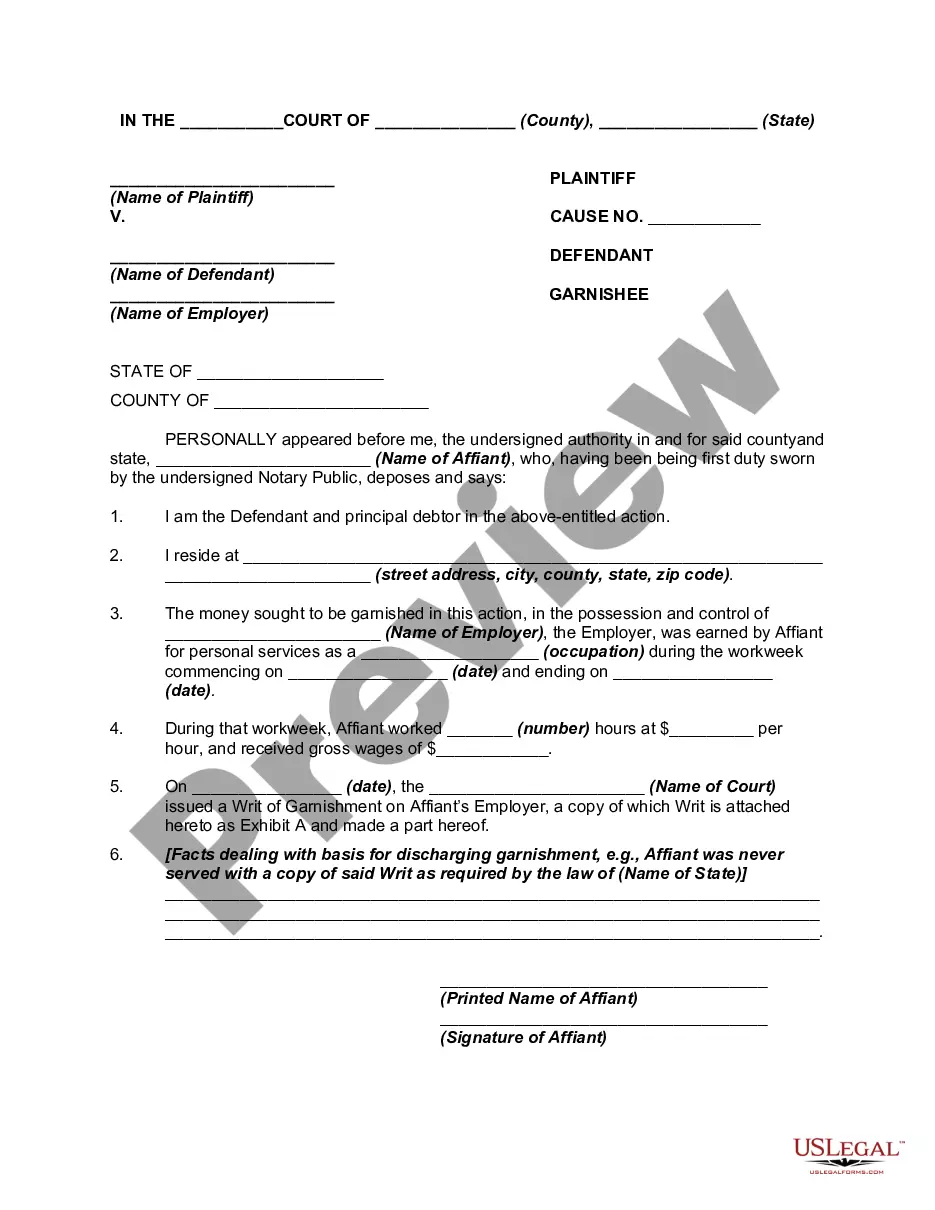
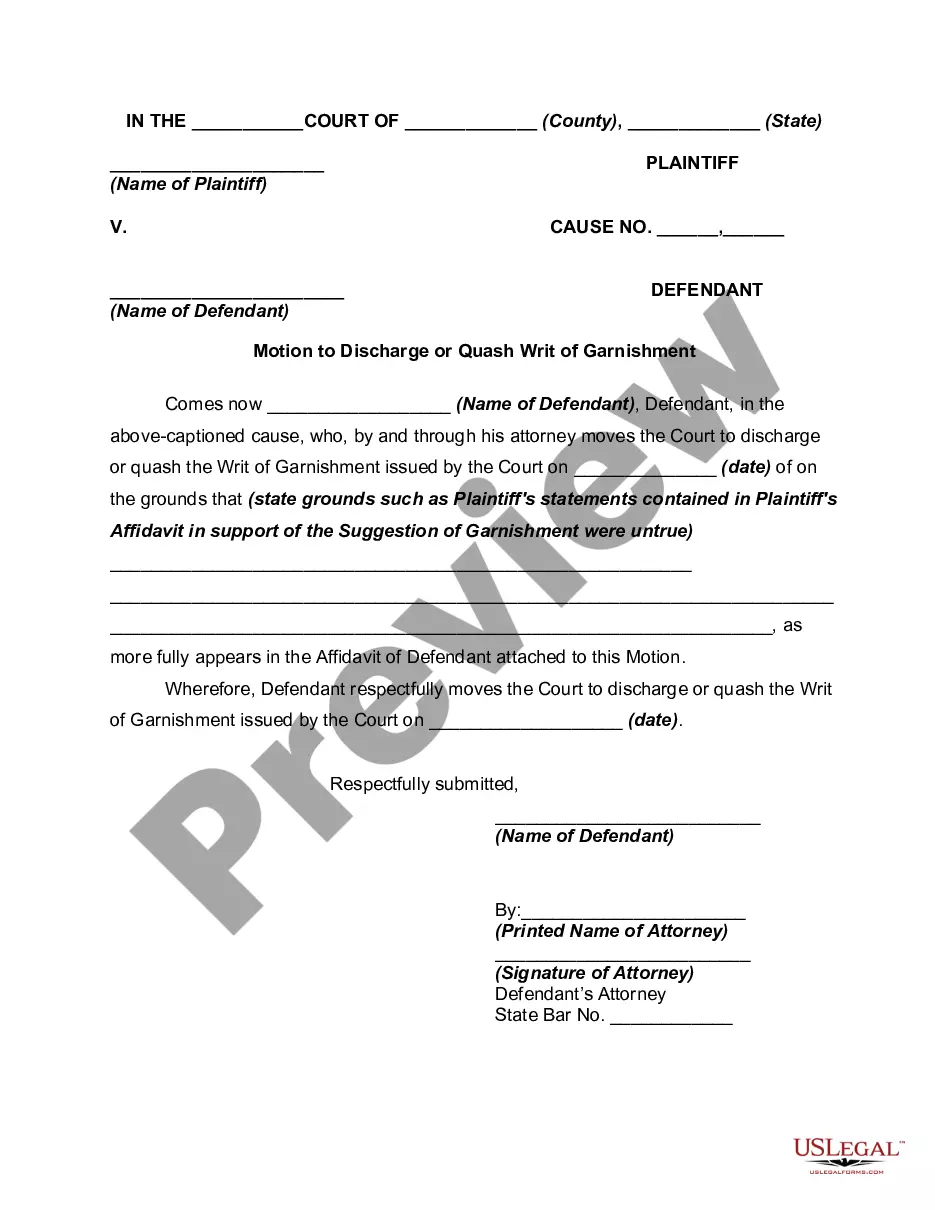
The Motion of Defendant to Discharge or Quash Writ of Garnishment for Failure to Serve Copy of Writ on Defendant and Notice of Motion is a legal document used to challenge a wage garnishment. Specifically, this form allows a defendant to request that the court nullify or quash the garnishment due to procedural errors, such as not being properly served a copy of the writ as required by law. This form differs from other legal motions as it specifically addresses issues related to garnishments and the service of process.
Form components explained
- Heading: Identifies the parties involved, including the plaintiff, defendant, and garnishee.
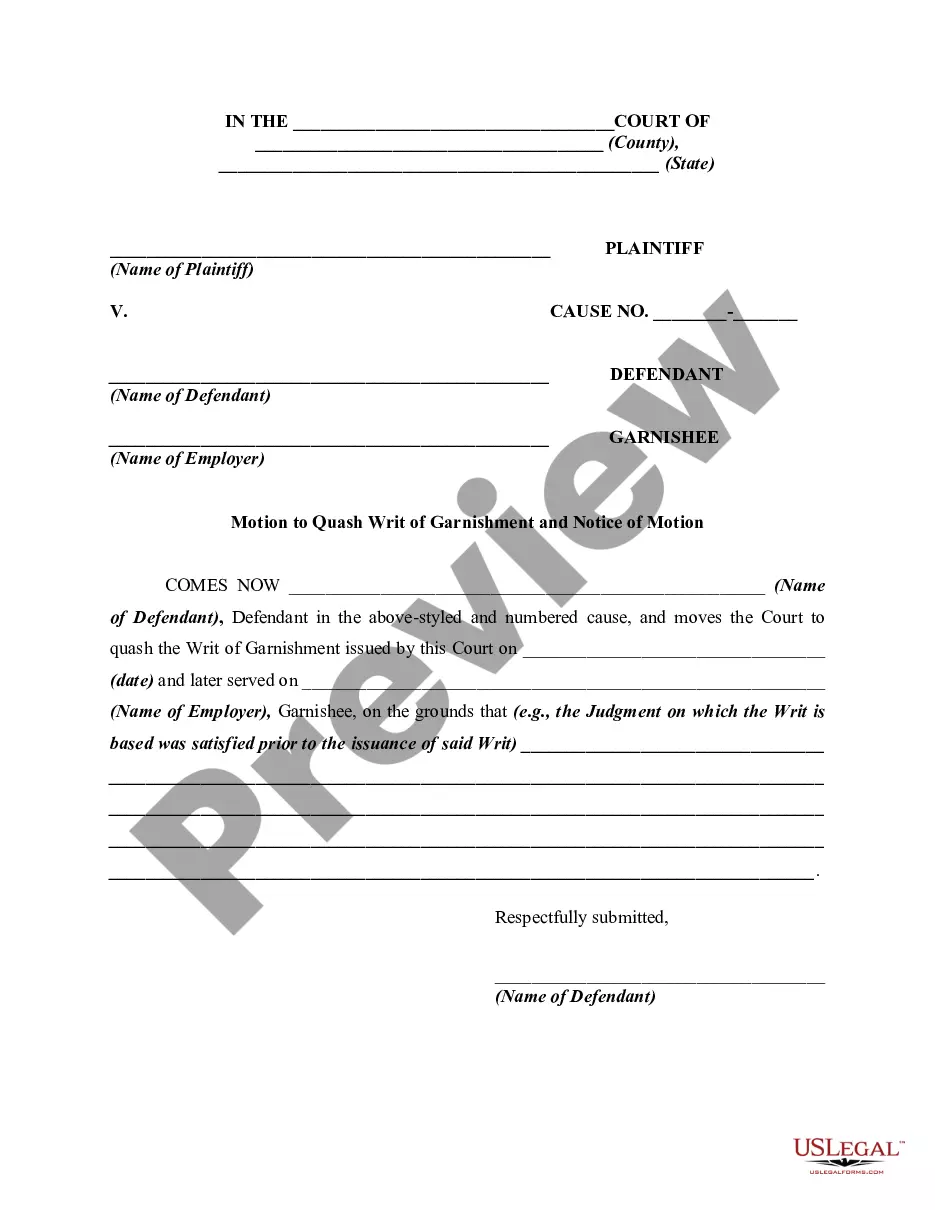
- Motion to Quash: A statement requesting the court to invalidate the writ of garnishment.
- Grounds for Motion: Specified reasons for the request, including failure to receive the required notice.
- Notice of Motion: Information regarding when and where the motion will be heard.
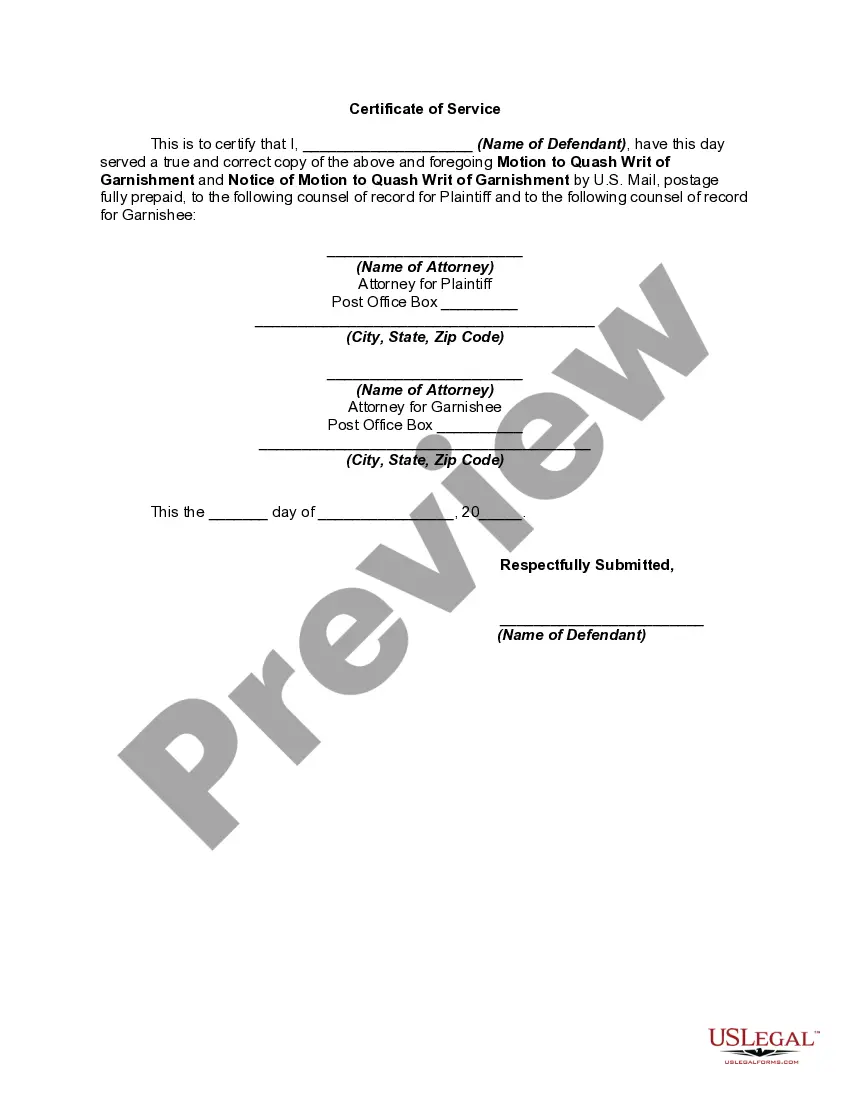
- Certificate of Service: Confirms that the other parties have been notified about the motion.
When to use this document
This form should be used when a defendant believes that a writ of garnishment has been improperly issued or served. Common reasons include not receiving a copy of the writ or notice of the motion, which is required by law. It is important to act promptly to avoid further garnishment of wages and to ensure that your rights are protected in the legal process.
Who can use this document
This form is intended for:
- Individuals who have been subjected to wage garnishment.
- Defendants in civil or criminal cases where a writ of garnishment has been issued.
- Anyone who has not been properly served with a copy of the writ of garnishment.
Instructions for completing this form
- Identify the parties involved: Fill in the names of the plaintiff, defendant, and garnishee.
- Specify the court: Include the name and details of the court where the writ was issued.
- State the grounds for the motion: Clearly express the reason for challenging the garnishment.
- Provide the hearing details: Indicate the date, time, and location for the motion hearing.
- Complete the certificate of service: Ensure that all relevant parties are notified of your motion.
Notarization requirements for this form
This form usually doesn’t need to be notarized. However, local laws or specific transactions may require it. Our online notarization service, powered by Notarize, lets you complete it remotely through a secure video session, available 24/7.
Get your form ready online
Our built-in tools help you complete, sign, share, and store your documents in one place.
Make edits, fill in missing information, and update formatting in US Legal Forms—just like you would in MS Word.
Download a copy, print it, send it by email, or mail it via USPS—whatever works best for your next step.
Sign and collect signatures with our SignNow integration. Send to multiple recipients, set reminders, and more. Go Premium to unlock E-Sign.
If this form requires notarization, complete it online through a secure video call—no need to meet a notary in person or wait for an appointment.
We protect your documents and personal data by following strict security and privacy standards.

Make edits, fill in missing information, and update formatting in US Legal Forms—just like you would in MS Word.

Download a copy, print it, send it by email, or mail it via USPS—whatever works best for your next step.

Sign and collect signatures with our SignNow integration. Send to multiple recipients, set reminders, and more. Go Premium to unlock E-Sign.

If this form requires notarization, complete it online through a secure video call—no need to meet a notary in person or wait for an appointment.

We protect your documents and personal data by following strict security and privacy standards.
Typical mistakes to avoid
- Failing to serve notice to all parties involved in the garnishment.
- Not indicating the correct court where the motion will be heard.
- Omitting the specific grounds for quashing the writ.
Benefits of using this form online
- Convenience: Access and download the form at any time from anywhere.
- Editability: Customize the form as needed to fit your specific situation.
- Reliability: Use a form drafted by licensed attorneys to ensure compliance with legal standards.
Legal use & context
- Wage garnishments are enforced by court orders, but they must adhere to proper legal procedures.
- The motion to quash is a legal remedy to contest improper garnishments.
- Understanding the grounds for challenging a garnishment can help protect your income and rights.
Quick recap
- This form is essential for contesting improper wage garnishments.
- Proper service and notification are critical to ensure legal compliance.
- Consult local laws and regulations to fully understand your rights and responsibilities.
Looking for another form?


Form popularity
FAQ
It releases your garnishment! When a creditor sues you, they eventually get a judgment in court. With this judgment, they can send a letter to your employer so that they can garnish your wages.A release of garnishment would stop any future garnishments.
The Order dissolves the existing writ of garnishment. It means that whatever was being garnished, wages or bank accounts, are no longer subject to the writ of garnishment.
The writ gives the Sheriff the authority to seize property of the judgment debtor and is valid for 180 days after its issuance. You must give the Sheriff signed, written instructions to levy on (seize) and sell, if necessary, specific property belonging to the debtor to satisfy your judgment.
A writ of garnishment is an order granted to a third party (garnishee), to hold or attach the property of a defendant or judgment creditor.A motion to quash the writ of garnishment asks the judge to nullify its order, to a garnishee, of seizure or attachment of property of a defendant or judgment creditor.
A motion to quash is a request to a court or other tribunal to render a previous decision or proceeding null or invalid.In some cases, motions to quash are requests to nullify a decision made by the same or a lower court. It can arise out of mistakes made by any lawyer or court officer.
In most states, employers answer a writ of garnishment by filling out the paperwork attached to the judgment and returning it to the creditor or the creditor's attorney.
Respond to the Creditor's Demand Letter. Seek State-Specific Remedies. Get Debt Counseling. Object to the Garnishment. Attend the Objection Hearing (and Negotiate if Necessary) Challenge the Underlying Judgment. Continue Negotiating.