Affidavit by Tenant Disclaiming Title to Remove Threat of Adverse Possession - Squatters Rights
Understanding this form
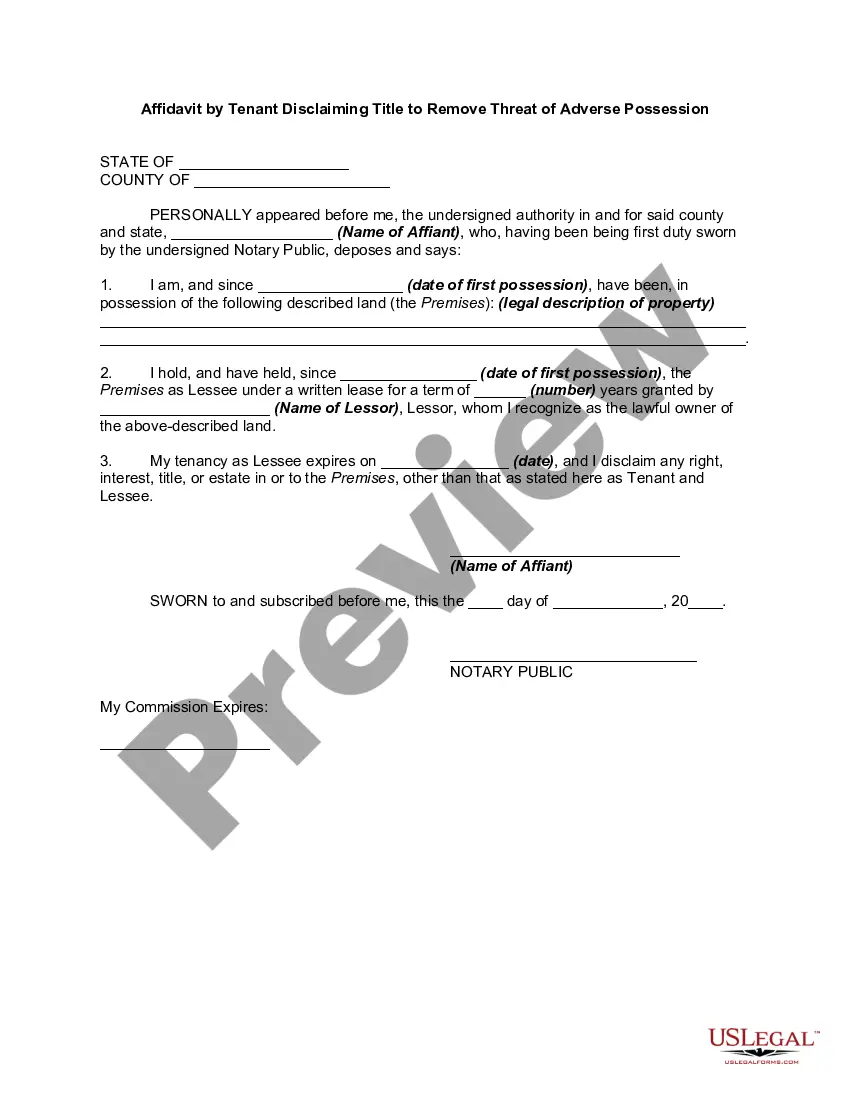
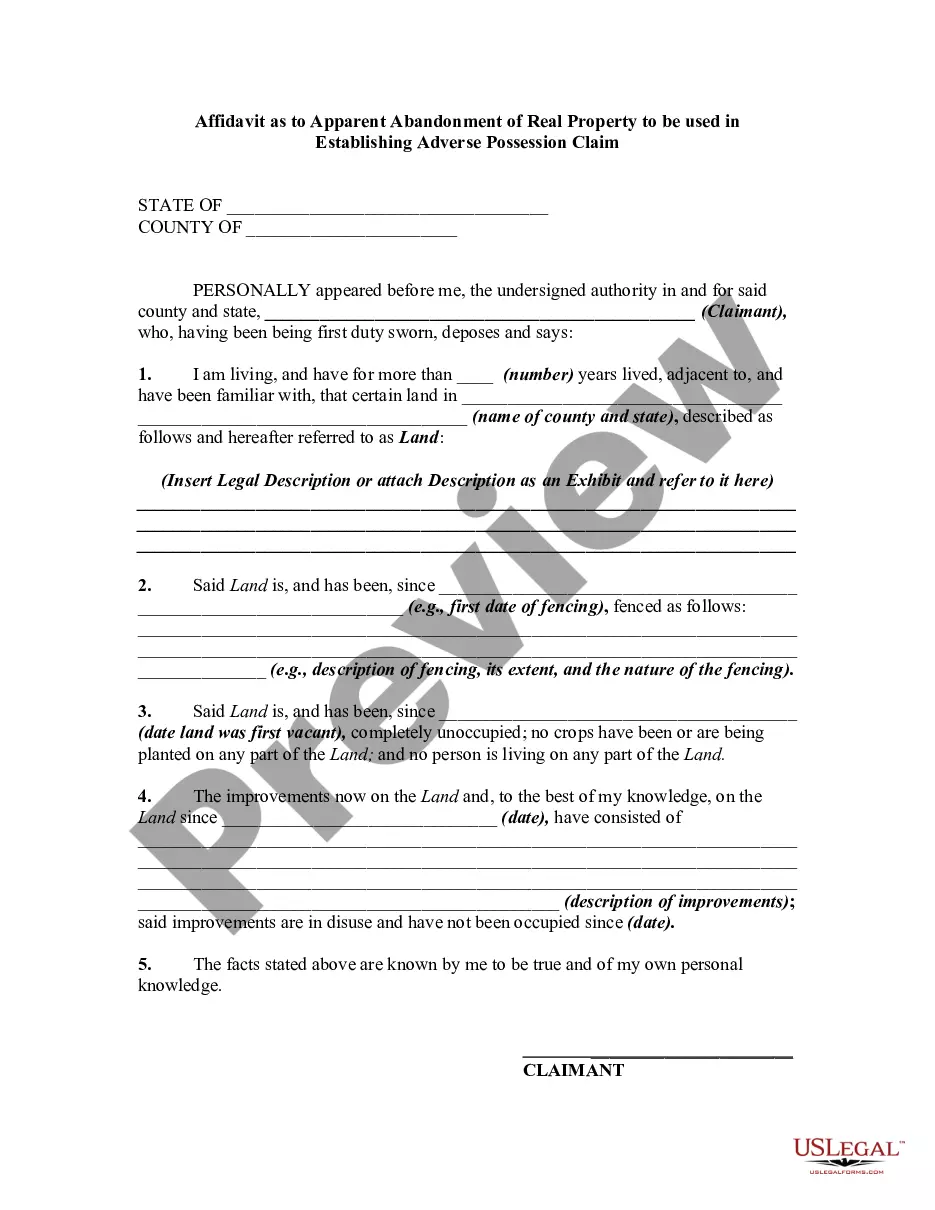
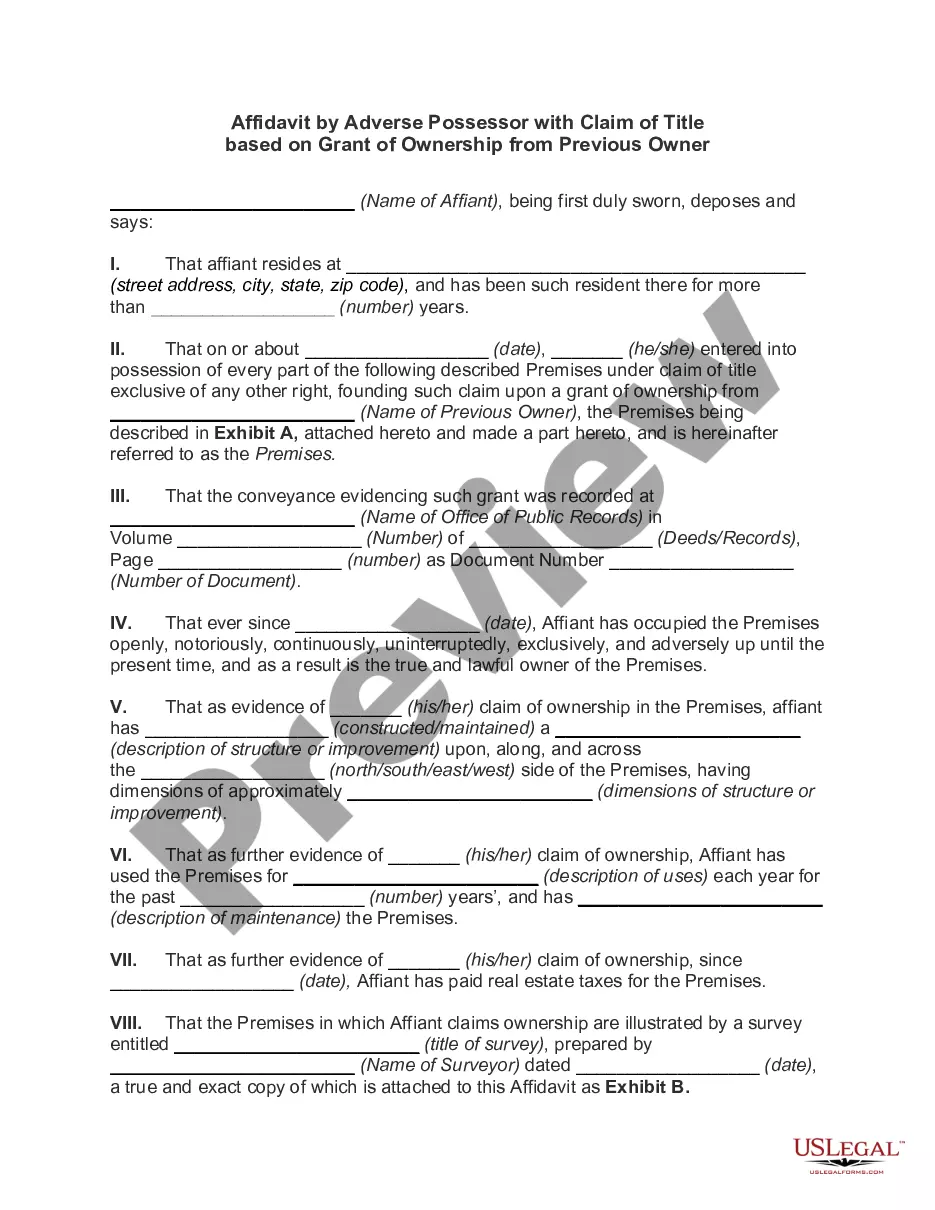
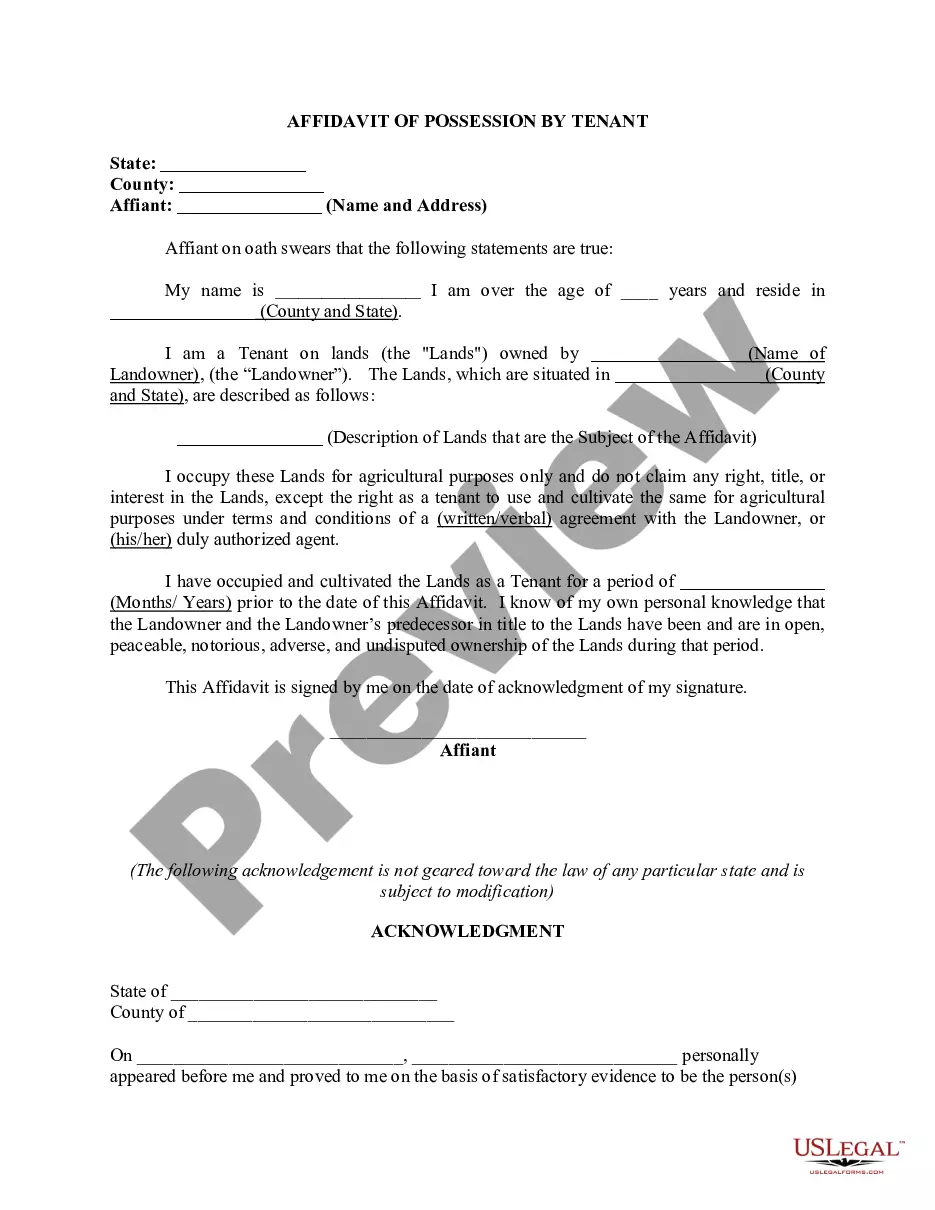
The Affidavit by Tenant Disclaiming Title to Remove Threat of Adverse Possession is a legal document used by tenants to clarify their status concerning a property. This affidavit asserts that the tenant is not claiming ownership or rights to the property beyond their lease agreement. It is important for protecting property owners from unauthorized claims by individuals who may attempt to assert adverse possession, commonly known as squatters' rights.
Key parts of this document
- Identification of the affiant (tenant) and property involved.
- Statement of possession dates and acknowledgment of the lease terms.
- Declaration that the tenant disclaims any ownership rights to the property.
- Signature and date, along with notarization by a public notary.
Common use cases
This form should be used when a tenant wishes to formally declare that they do not hold any claim to ownership of the property they are leasing. It can help prevent any legal complications regarding adverse possession, particularly in situations where the tenant has occupied the premises for a significant time, contributing to potential claims of squatters' rights. Utilizing this affidavit can provide clarity for both the tenant and the property owner, helping to maintain a clear legal understanding of tenancy and property rights.
Who should use this form
- Tenants who want to disclaim any ownership interests in the property they are leasing.
- Landlords seeking to protect their rights against claims of adverse possession by tenants.
- Legal representatives who assist clients in affirming their property or tenancy rights.
How to complete this form
- Identify the parties involved by entering the names of the tenant and property owner.
- Specify the precise dates of possession and the lease start date.
- Provide a legal description of the property being claimed or leased.
- Clearly state the termination date of the tenancy.
- Sign the document in the presence of a notary public for validation.
Does this form need to be notarized?
Yes, this form must be notarized to be legally valid. Notarization ensures that the affiantâs identity is verified, and the declaration is made voluntarily. US Legal Forms provides integrated online notarization services, allowing you to complete this process securely via video call without the need to travel.
Get your form ready online
Our built-in tools help you complete, sign, share, and store your documents in one place.
Make edits, fill in missing information, and update formatting in US Legal Forms—just like you would in MS Word.
Download a copy, print it, send it by email, or mail it via USPS—whatever works best for your next step.
Sign and collect signatures with our SignNow integration. Send to multiple recipients, set reminders, and more. Go Premium to unlock E-Sign.
If this form requires notarization, complete it online through a secure video call—no need to meet a notary in person or wait for an appointment.
We protect your documents and personal data by following strict security and privacy standards.

Make edits, fill in missing information, and update formatting in US Legal Forms—just like you would in MS Word.

Download a copy, print it, send it by email, or mail it via USPS—whatever works best for your next step.

Sign and collect signatures with our SignNow integration. Send to multiple recipients, set reminders, and more. Go Premium to unlock E-Sign.

If this form requires notarization, complete it online through a secure video call—no need to meet a notary in person or wait for an appointment.

We protect your documents and personal data by following strict security and privacy standards.
Typical mistakes to avoid
- Failing to include the legal description of the property.
- Not stating the correct dates of possession and lease terms.
- Forgetting to notarize the document, making it invalid.
Advantages of online completion
- Convenient access to templates that can be downloaded and completed at your own pace.
- Edit and customize the form to fit specific legal needs.
- Reliability and assurance that the forms are prepared by licensed attorneys.
Summary of main points
- The affidavit protects the true owner's title by clarifying the tenant's non-ownership status.
- Completing the affidavit involves detailing the tenantâs lease and possession dates.
- Notarization is a crucial step in executing this affidavit.
Looking for another form?
Form popularity
FAQ
Post "no trespassing" signs and block entrances with gates. Give written permission to someone to use your land, and get their written acknowledgement.
The correct legal term is Adverse Possession. There are a number of conditions which must arise before anybody can claim Squatters Rights or Adverse Possession. The very first thing that must be done is that the occupier, or squatter, must have used the property as their own for more than 12 years.
Have been in factual possession of the land for the requisite limitation period (see below); have the necessary intention to possess and; been in possession without the paper title owner's consent (and been so for the requisite limitation period)
Section 116 of the Indian Evidence Act is perfectly clear that a tenant who had been let into possession cannot deny his landlord's title however defective it may be, so long as he has not openly restored possession by surrender to his landlord, Where a lessee enters into possession under a lease, he cannot acquire any
Adverse possession, sometimes colloquially described as "squatter's rights", is a legal principle under which a person who does not have legal title to a piece of property usually land (real property) may acquire legal ownership based on continuous possession or occupation of the property without the permission (
In order to claim adverse possession, there are basic tests you have to meet. You have to prove that your use was open, notorious, hostile, actual, exclusive and continuous.Proving adverse possession is not easy, and you have to go to court to get a judge to rule.
Open and Notorious. The person seeking adverse possession must occupy a parcel of land in a manner that is open and obvious. Exclusive. Hostile. Statutory Period. Continuous and Uninterrupted.
Possession under lease or license agreement is generally not considered as adverse possession, and tenant cannot claim an ownership right over the property.Thus, it does not fulfill the elements of adverse possession. As long as the owner has consented the stay of the tenant, it cannot claim adverse possession.