Affidavit by Attorney and Request for Order in Support of Motion to Punish Defendant for Contempt due to Failure to Pay Alimony or Spousal Support
About this form
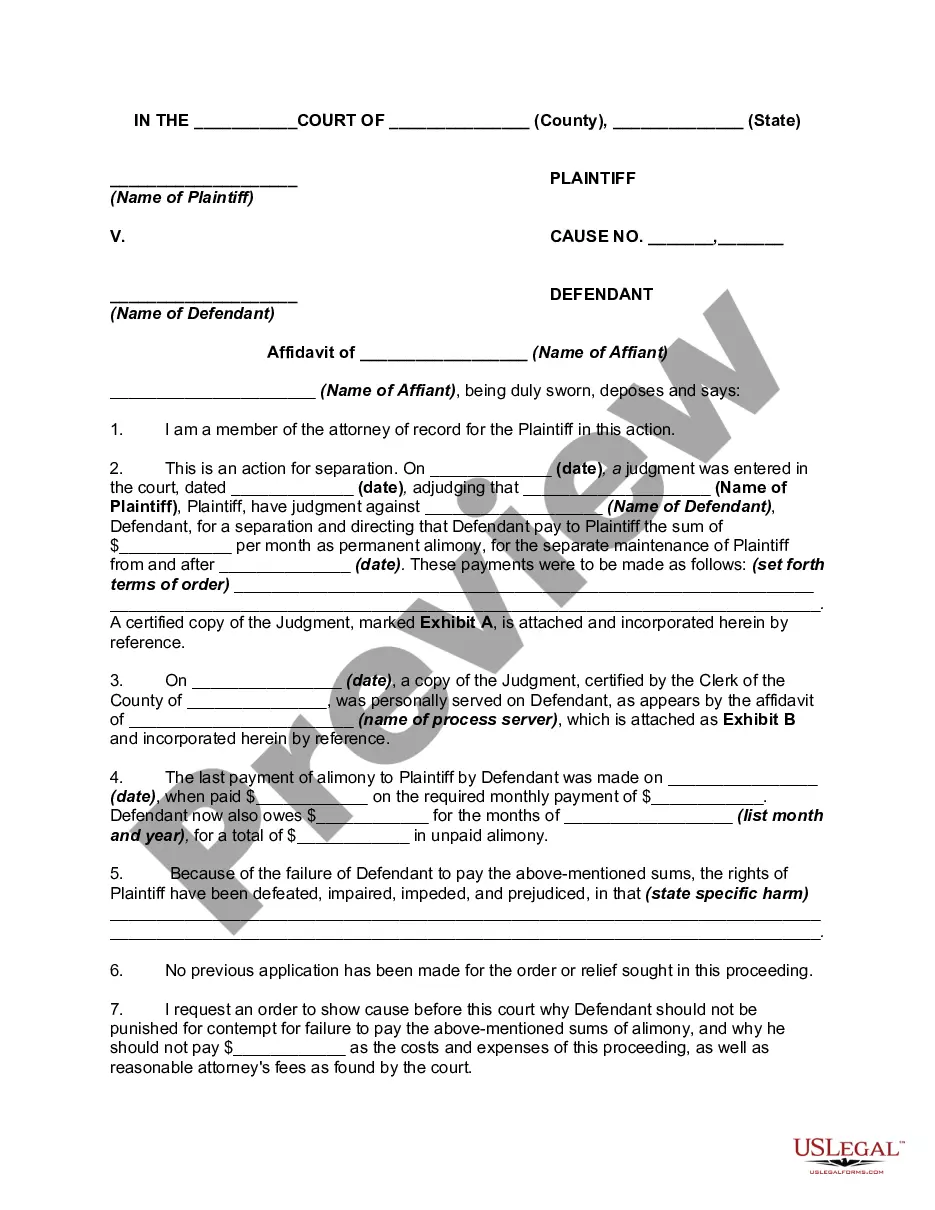
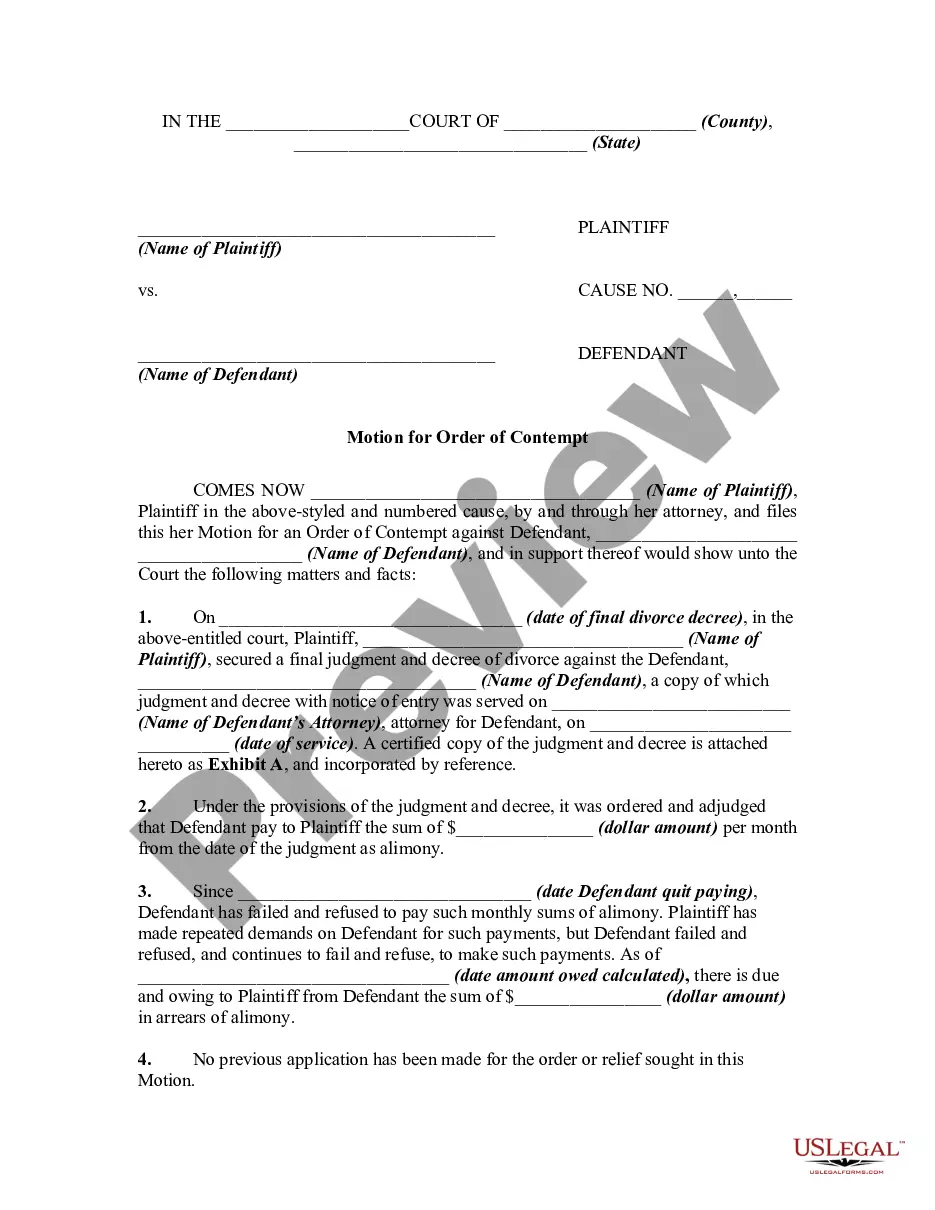
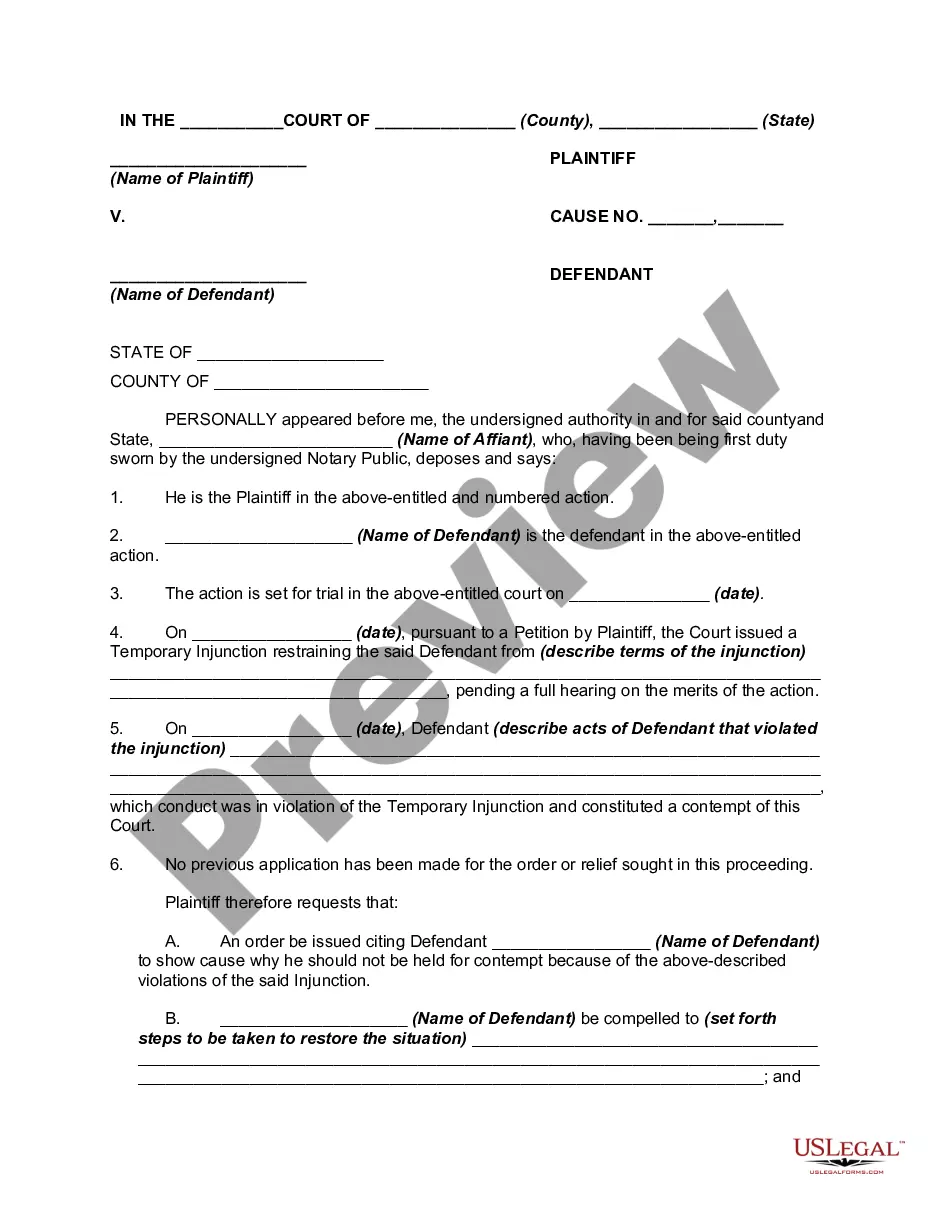
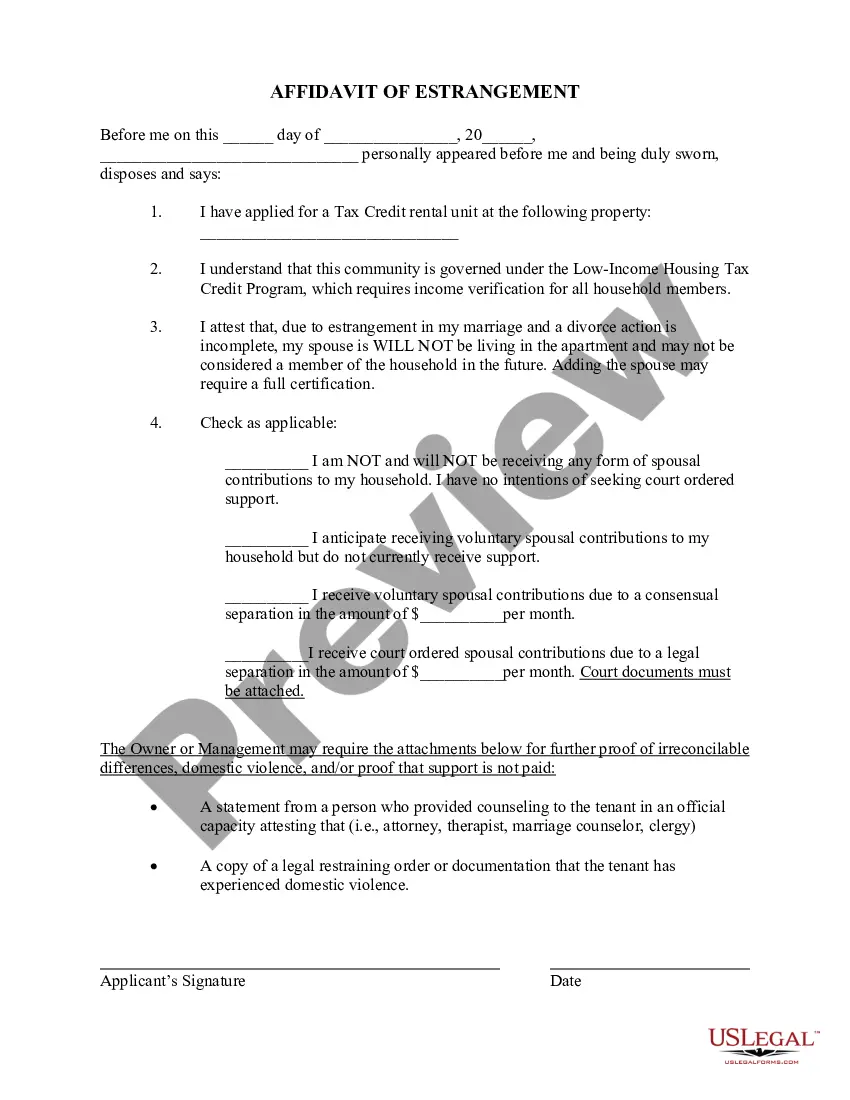
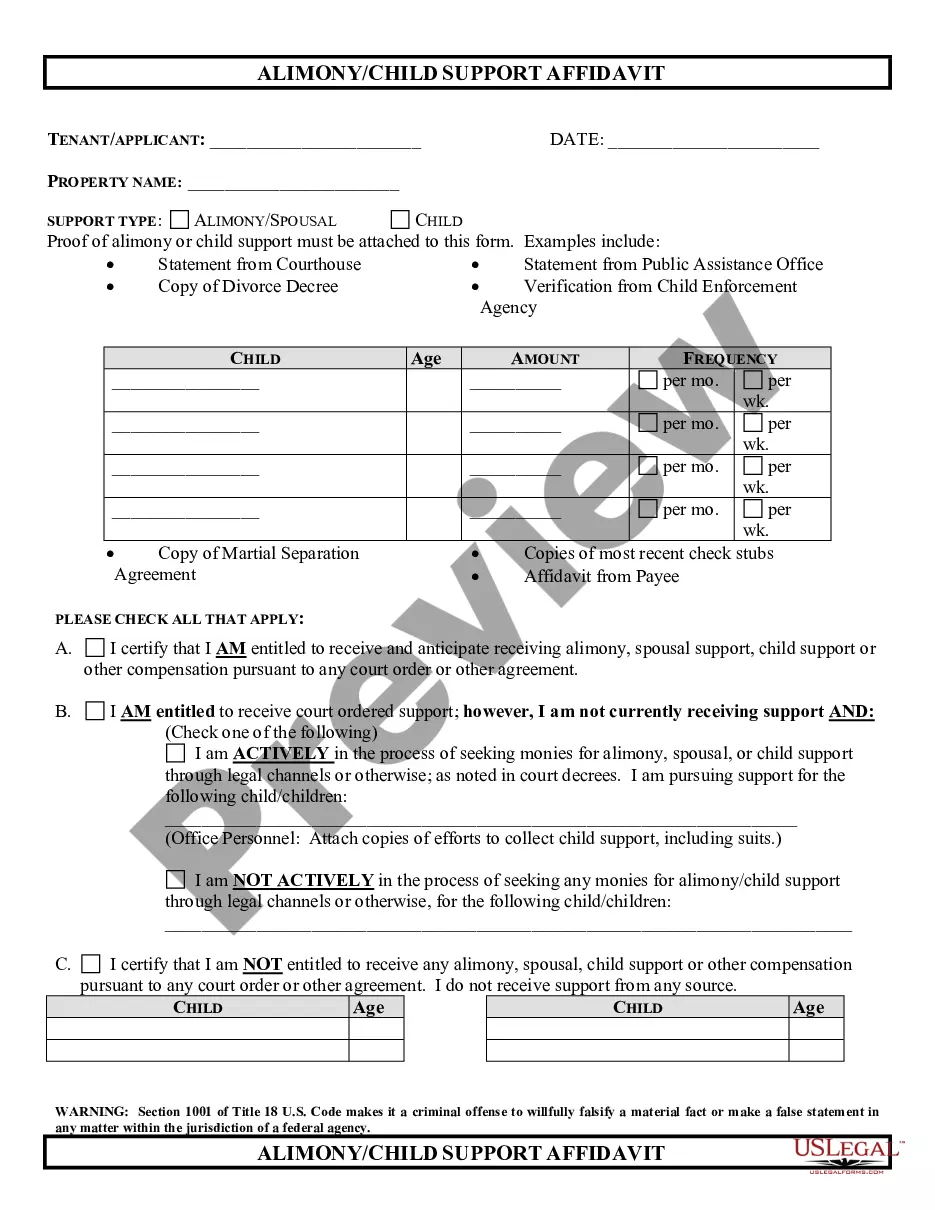
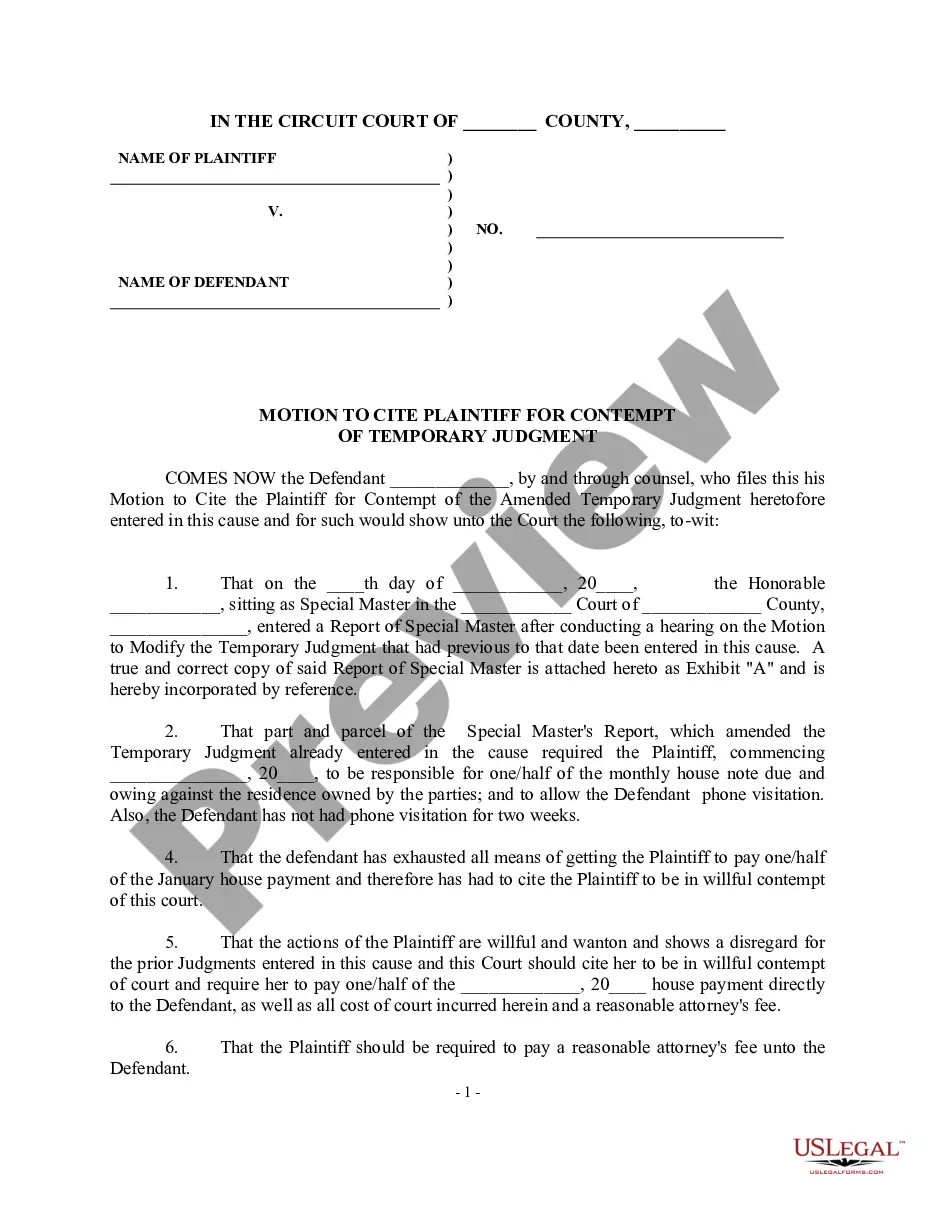
The Affidavit by Attorney and Request for Order in Support of Motion to Punish Defendant for Contempt due to Failure to Pay Alimony or Spousal Support is a legal document that allows an attorney to formally request the court to hold a defendant in contempt for not complying with a court order regarding alimony payments. This form is specifically utilized in cases of willful failure to follow a court's alimony judgment, distinguishing it from other legal processes by focusing on financial obligations between separated or divorced individuals.
Main sections of this form
- Identification of the plaintiff and defendant along with relevant case number.
- Details of the court judgment regarding alimony payments.
- Evidence of the defendant's failure to pay the ordered alimony.
- A statement on the harm suffered by the plaintiff due to non-payment.
- A request for an order to show cause why the defendant should be punished for contempt.
When to use this form
This form should be used when a defendant has failed to make required alimony payments as ordered by the court, and the plaintiff seeks to enforce that order. It is particularly relevant when the plaintiff wishes to pursue legal action against the defendant for contempt in order to recover owed payments and seek further penalties or costs associated with this legal process.
Who should use this form
This form is intended for:
- Separated or divorced individuals who are entitled to receive alimony or spousal support.
- Attorneys representing plaintiffs in contempt actions related to alimony payments.
- Individuals seeking to enforce a court order for alimony against a non-compliant spouse.
Completing this form step by step
- Identify the parties by entering the names of the plaintiff and defendant at the top of the form.
- Document the judgment details, including the amount of alimony ordered and payment schedule.
- Provide evidence of the defendant's failure to make payments, including dates and amounts owed.
- Explain the specific harm or impact suffered due to the defendant's non-payment.
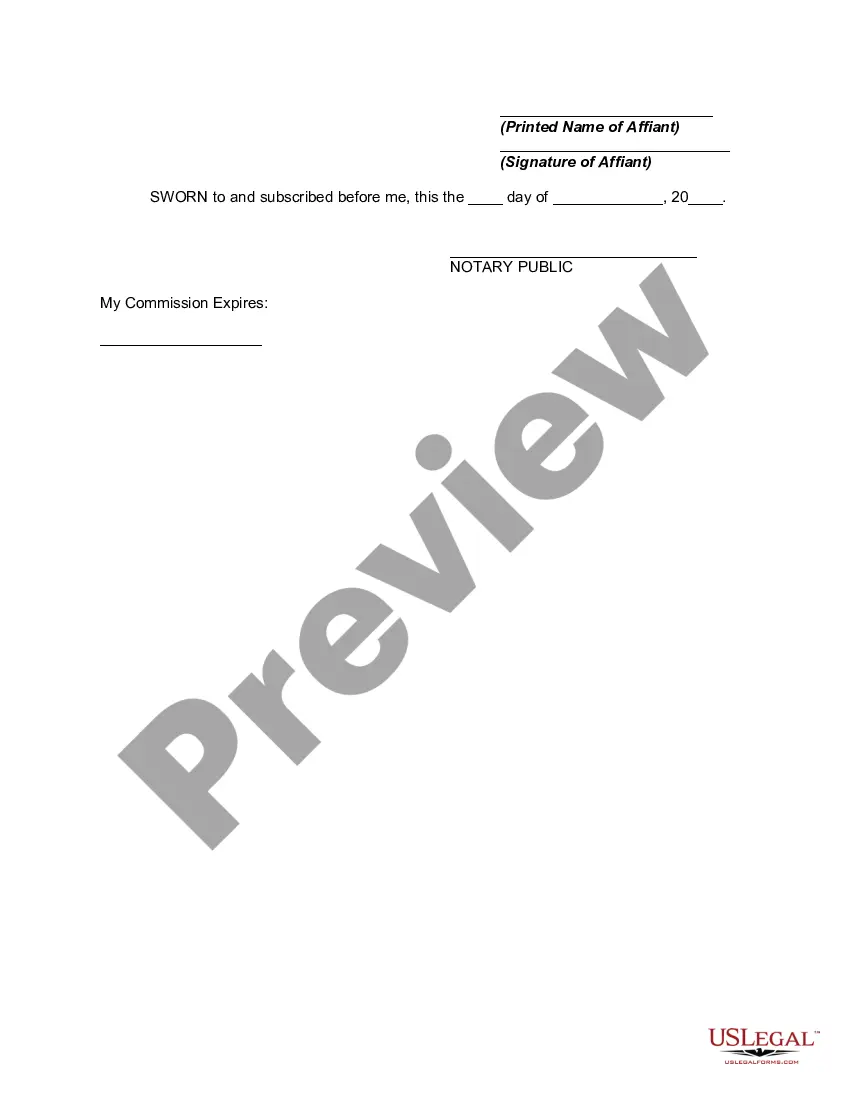
- Sign the form in front of a notary to ensure it is legally binding.
Is notarization required?
This form needs to be notarized to ensure legal validity. US Legal Forms provides secure online notarization powered by Notarize, allowing you to complete the process through a verified video call, available anytime.
Get your form ready online
Our built-in tools help you complete, sign, share, and store your documents in one place.
Make edits, fill in missing information, and update formatting in US Legal Forms—just like you would in MS Word.
Download a copy, print it, send it by email, or mail it via USPS—whatever works best for your next step.
Sign and collect signatures with our SignNow integration. Send to multiple recipients, set reminders, and more. Go Premium to unlock E-Sign.
If this form requires notarization, complete it online through a secure video call—no need to meet a notary in person or wait for an appointment.
We protect your documents and personal data by following strict security and privacy standards.

Make edits, fill in missing information, and update formatting in US Legal Forms—just like you would in MS Word.

Download a copy, print it, send it by email, or mail it via USPS—whatever works best for your next step.

Sign and collect signatures with our SignNow integration. Send to multiple recipients, set reminders, and more. Go Premium to unlock E-Sign.

If this form requires notarization, complete it online through a secure video call—no need to meet a notary in person or wait for an appointment.

We protect your documents and personal data by following strict security and privacy standards.
Typical mistakes to avoid
- Failing to accurately fill in the names of the parties involved.
- Not attaching necessary exhibits, such as the judgment and proof of service.
- Neglecting to clarify the total amount owed in alimony.
- Forgetting to sign the affidavit in front of a notary public.
Why use this form online
- Convenient access to legal forms that can be downloaded anytime.
- Ability to edit and customize the form to fit individual needs.
- Reliable templates drafted by licensed attorneys.
- Quick and easy filing process, saving time and effort.
Looking for another form?
Form popularity
FAQ
The only way to legally reduce your child support payment under New Jersey law is to file a motion with the family court and to request a reduction/modification of the child support order.
Typically, a person must file a motion for contempt of court. This does not create a new case. The motion is filed in the same county and court where the original order was entered. The moving party may also be required to file a declaration or affidavit with the court.
Decrease in Income. If one parent loses their job, he or she may be unable to meet child support obligations. Increase in Income. New Expenses for the Child or Change in the Child's Residence. New Family Responsibilities for the Parent. Cost of Living Adjustment Clauses.
You will need to file a motion asking the court to grant your request for a modification. To that you'll need to attach a copy of the court order you want to change, a copy of a prior and current case information statement or statements, supporting affidavits (sworn statements) and briefs (legal arguments).
Go to the clerk's office at the court that made the orders. Give the clerk your completed Motion for Contempt and Appearance forms. The clerk will write a hearing date and time on the motion, sign it, and give it back to you. The hearing date is when you and the other person must go to court.
In California, a contempt proceeding in family law cases is initiated by the filing of an Order to Show Cause and Affidavit for Contempt with the Court. The person alleged of being contempt, the citee, is then served with a copy of the papers.
Read the summons and make sure you know the date you must answer by. Read the complaint carefully. Write your answer. Sign and date the answer. Make copies for the plaintiff and yourself. Mail a copy to the plaintiff. File your answer with the court by the date on the summons.
If a person is found to be in contempt, the court is able to impose sanctions, which may include the following: jail time (usually 1-30 days) ordering the party held in contempt to pay the money owed. ordering the party held in contempt to pay the other party's attorney's fees.