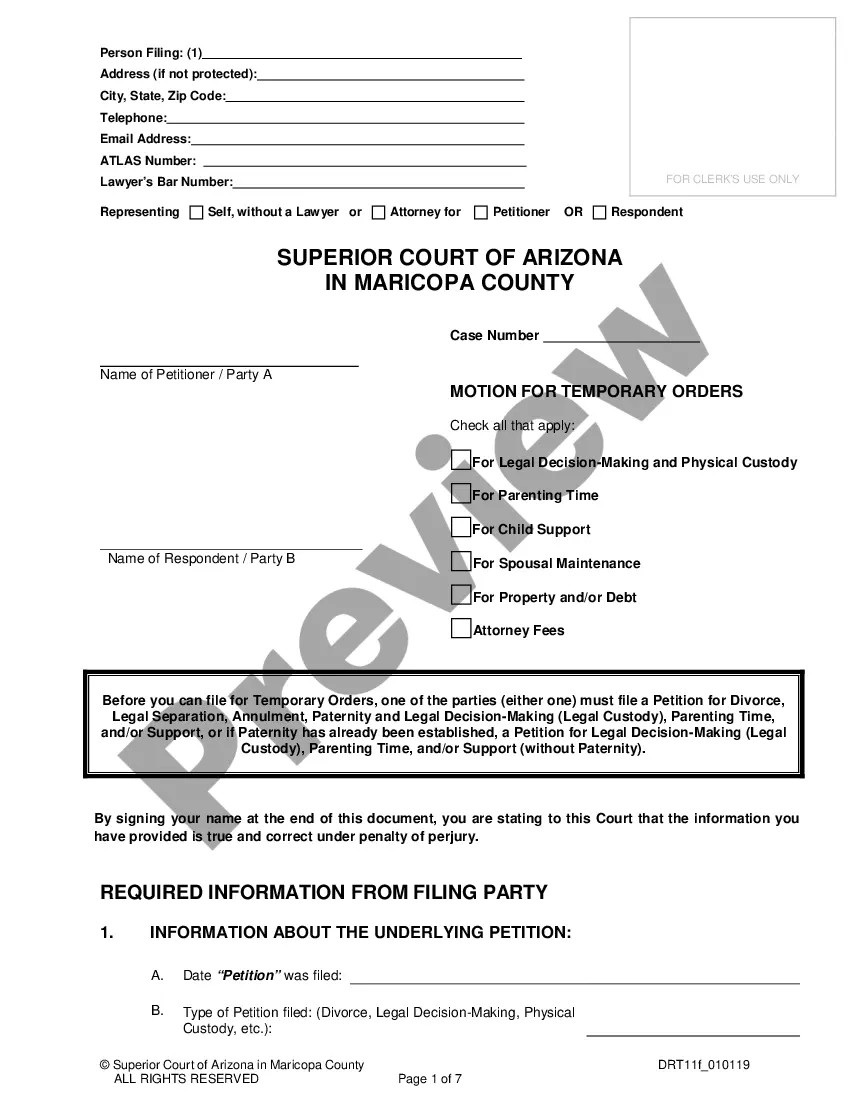
Motion for an Order of Contempt for Violation of Injunction
What this document covers
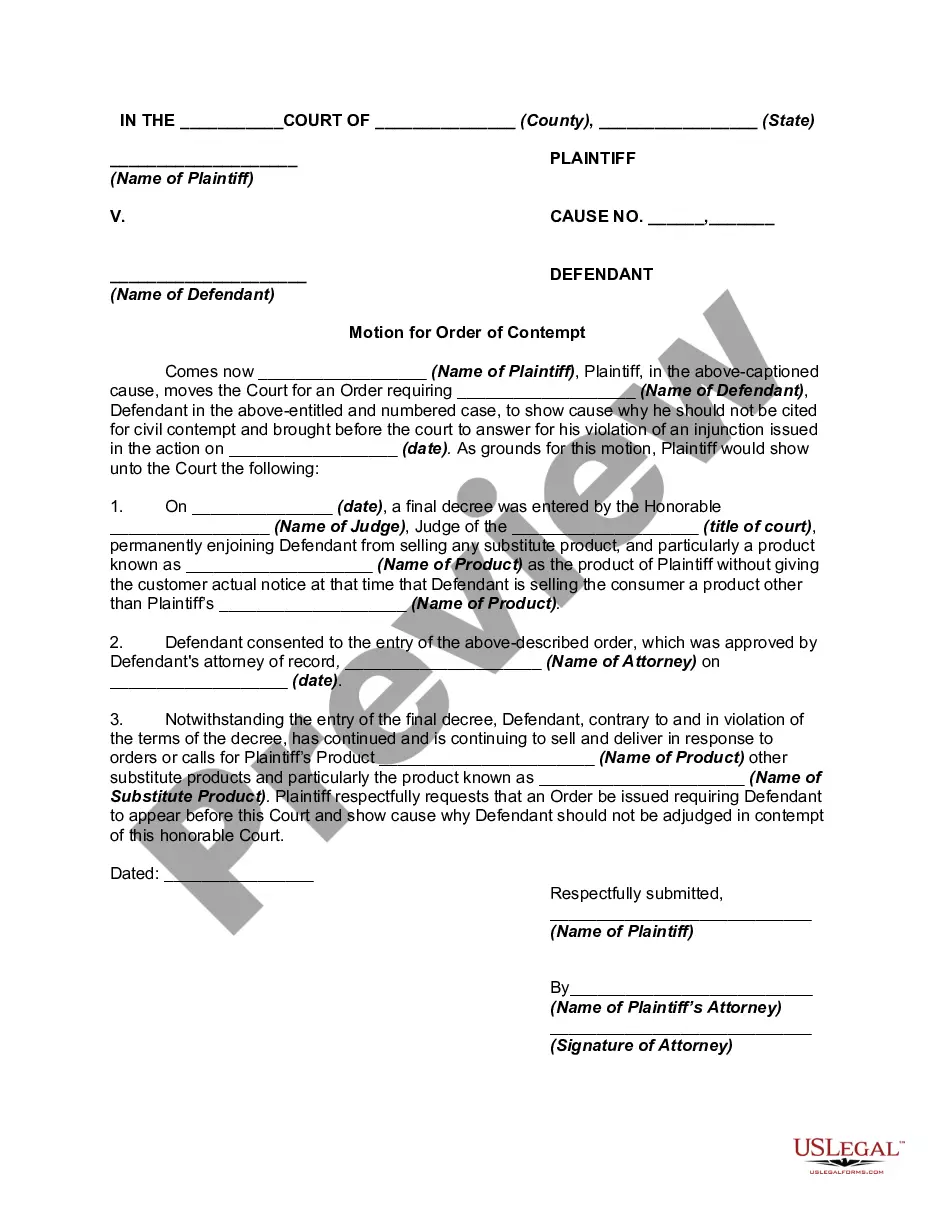
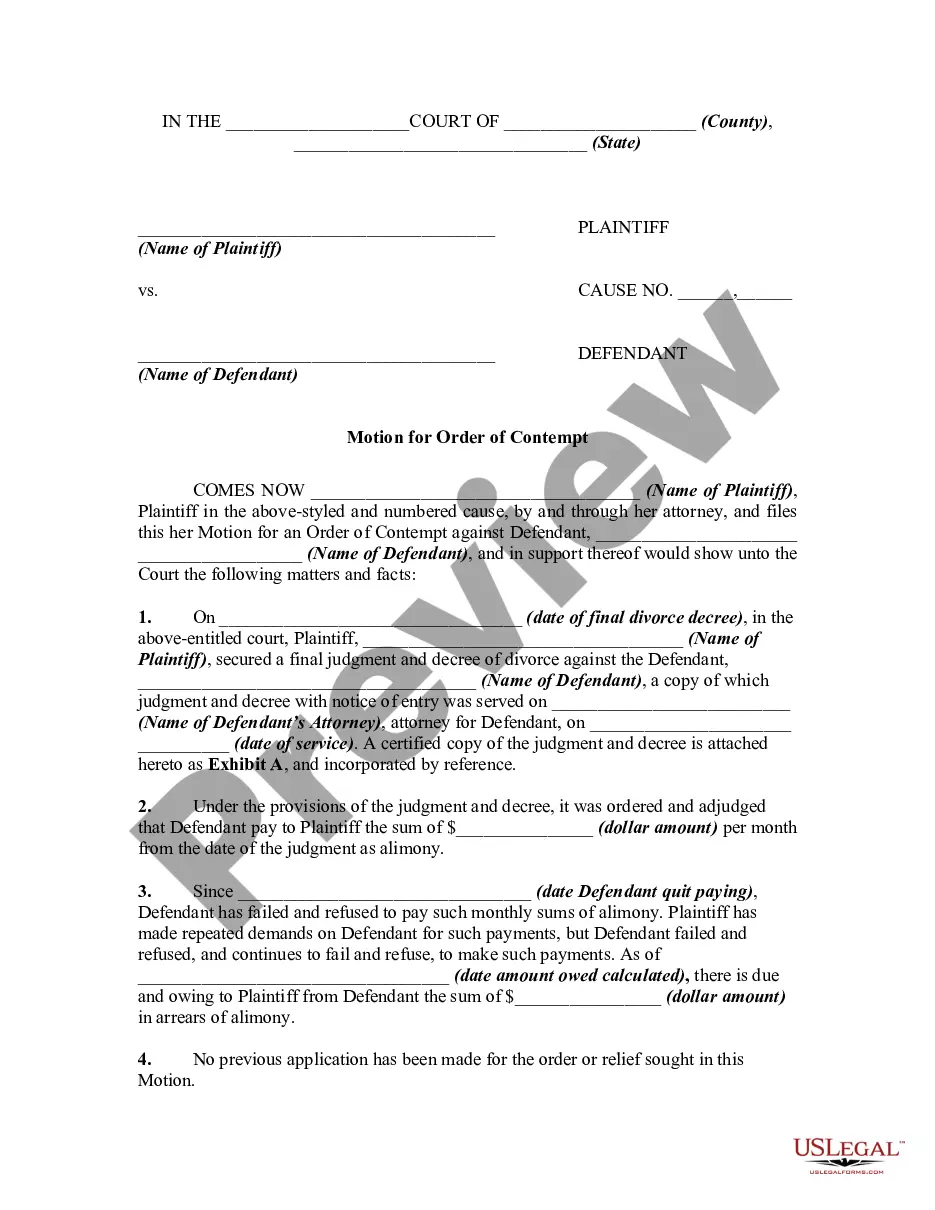
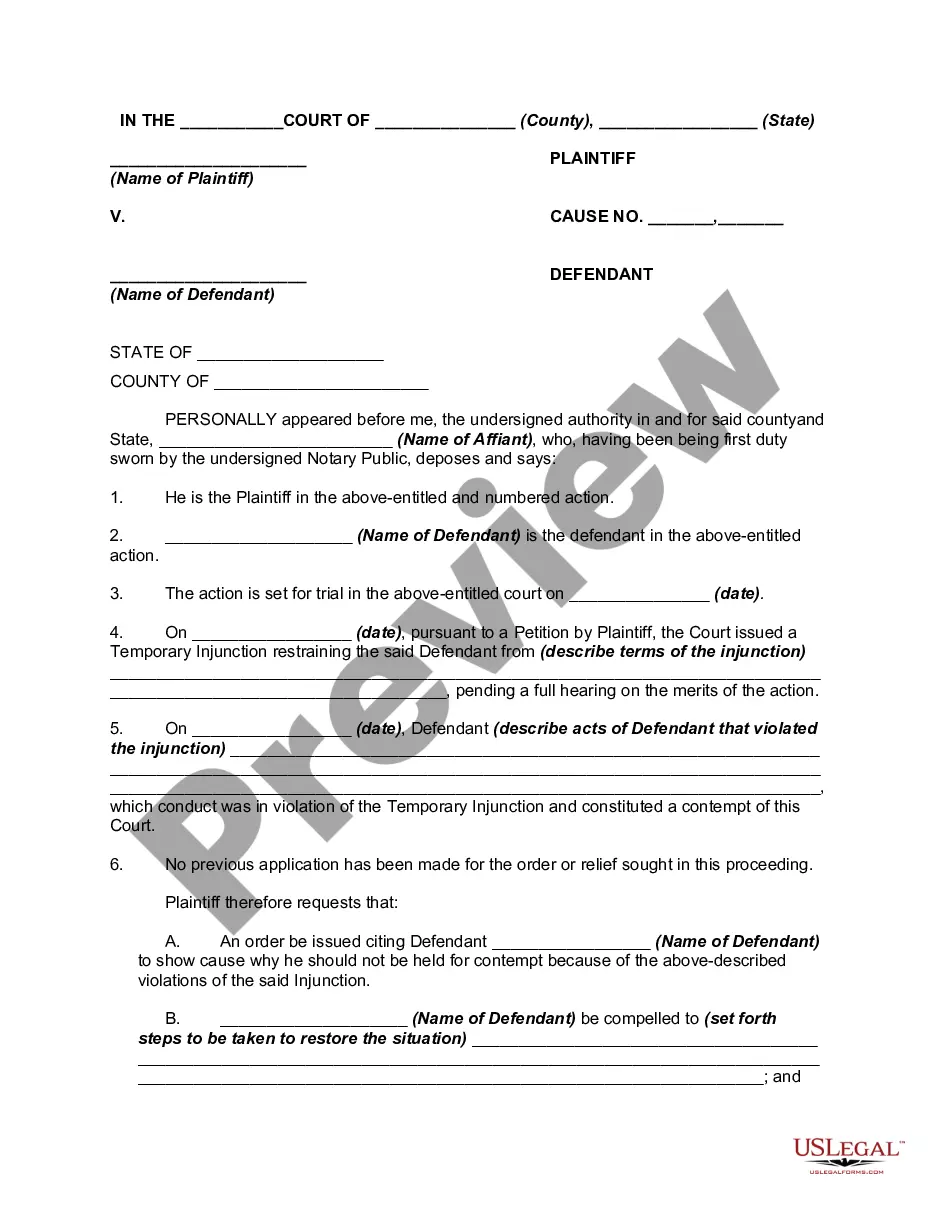
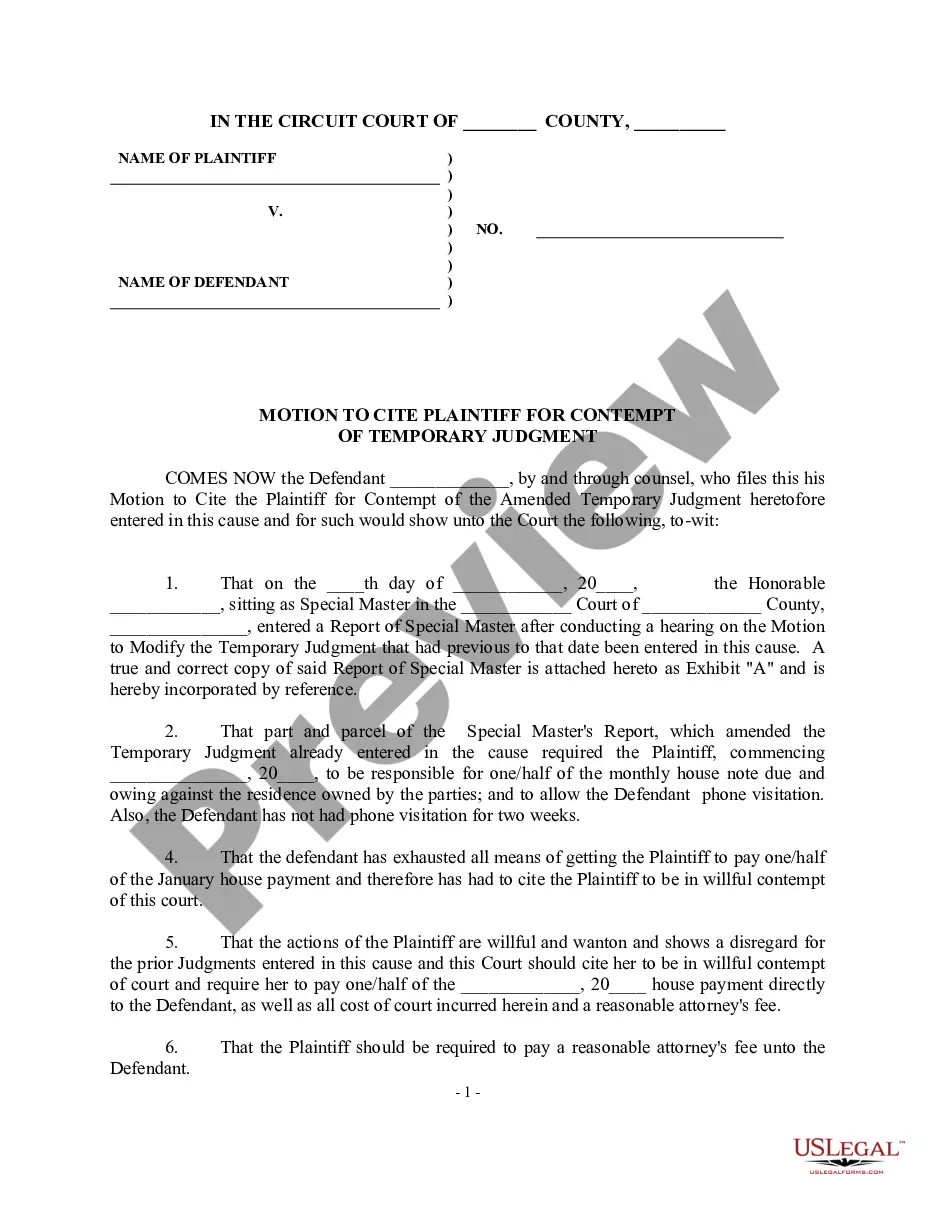
The Motion for an Order of Contempt for Violation of Injunction is a legal document that allows a party, typically the plaintiff, to request the court to enforce its earlier order by holding the opposing party (the defendant) in contempt. This motion asserts that the defendant has willfully failed to comply with a court-issued injunction. This form differs from other motions in that it specifically addresses the violation of an injunction rather than other types of contempt or disobedience to court orders.
Form components explained
- Title of the case, including the names of the plaintiff and defendant.
- Date of the original injunction and details regarding its provisions.
- Specific allegations of how the defendant has violated the injunction.
- Request for an order compelling the defendant to appear in court.
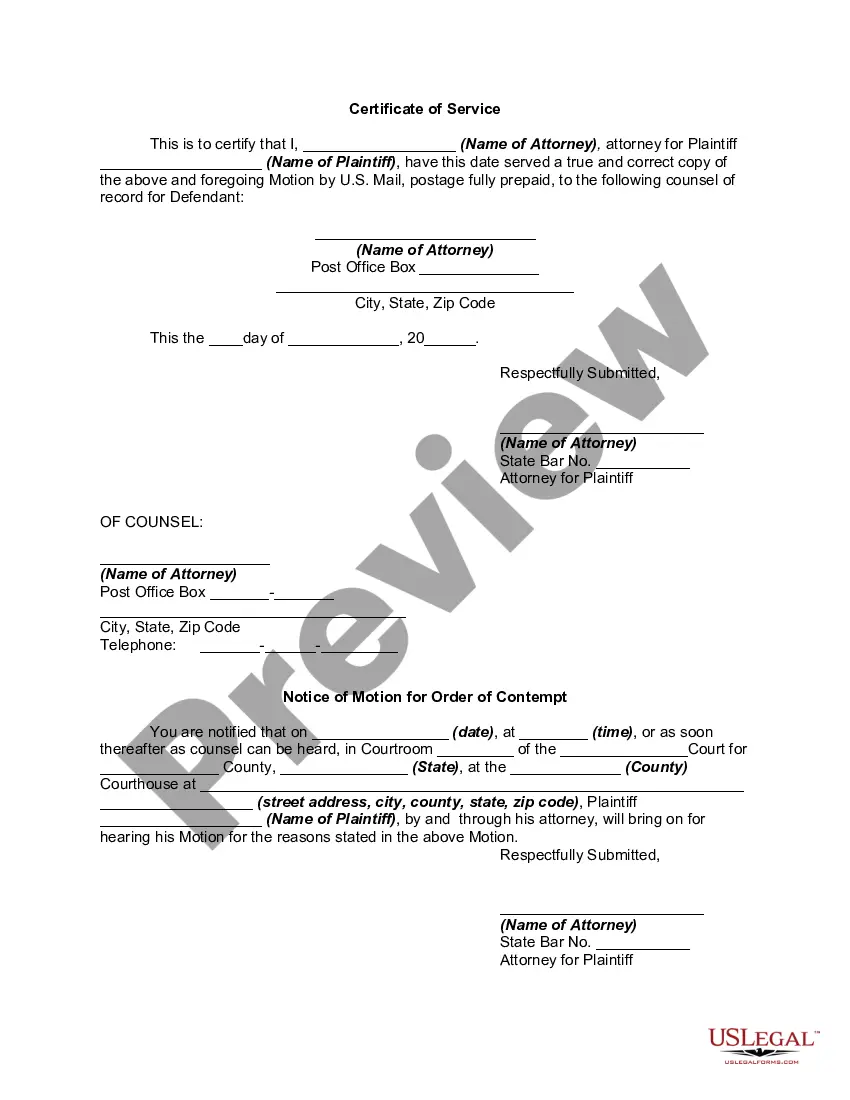
- Certificate of service confirming that all parties have been notified.

When this form is needed
This form should be used when a plaintiff believes that the defendant has not adhered to a court's injunction. For instance, if a court ordered a business to stop selling a specific product and the defendant continues to do so, the plaintiff can file this motion to seek enforcement and accountability from the defendant. This form is essential to protect rights and ensure compliance with the court's directives.
Who this form is for
This form is intended for:
- Plaintiffs who have received an injunction that they believe has been violated.
- Attorneys representing clients in cases involving contempt of court related to injunctions.
- Individuals who are knowledgeable about their rights and the legal process.
Steps to complete this form
- Identify the parties involved by filling in the names of the plaintiff and defendant at the top of the form.
- Enter the date when the original injunction was issued and the name of the judge who presided over the case.
- Specify the details of the injunction and how the defendant has violated its terms.
- Complete the sections for certification of service, ensuring all parties have been notified.
- Sign and date the motion, then file it with the appropriate court.
Is notarization required?
This form does not typically require notarization unless specified by local law. It is advisable to check your state's requirements to ensure compliance.
Get your form ready online
Our built-in tools help you complete, sign, share, and store your documents in one place.
Make edits, fill in missing information, and update formatting in US Legal Forms—just like you would in MS Word.
Download a copy, print it, send it by email, or mail it via USPS—whatever works best for your next step.
Sign and collect signatures with our SignNow integration. Send to multiple recipients, set reminders, and more. Go Premium to unlock E-Sign.
If this form requires notarization, complete it online through a secure video call—no need to meet a notary in person or wait for an appointment.
We protect your documents and personal data by following strict security and privacy standards.

Make edits, fill in missing information, and update formatting in US Legal Forms—just like you would in MS Word.

Download a copy, print it, send it by email, or mail it via USPS—whatever works best for your next step.

Sign and collect signatures with our SignNow integration. Send to multiple recipients, set reminders, and more. Go Premium to unlock E-Sign.

If this form requires notarization, complete it online through a secure video call—no need to meet a notary in person or wait for an appointment.

We protect your documents and personal data by following strict security and privacy standards.
Mistakes to watch out for
- Failing to provide adequate details of the injunction or how it was violated.
- Not properly notifying the defendant about the motion for contempt.
- Missing signatures or dates on the form before submission.
Benefits of completing this form online
- Easy access to a legally vetted template drafted by licensed attorneys.
- Immediate download and editing capabilities tailored to your specific case.
- Cost-effective solution compared to hiring an attorney for drafting.
Legal use & context
This form is crucial for ensuring that court orders are respected and enforced. It can be a key tool in legal disputes where one party fails to follow court directives, exhibiting the seriousness of court orders and the consequences of non-compliance.
What to keep in mind
- The Motion for an Order of Contempt is used to enforce compliance with a court injunction.
- It is essential to provide clear details about the violation and notify all parties involved.
- Consult state-specific rules to tailor the form appropriately.
Looking for another form?
Form popularity
FAQ
There is a valid court order in effect. The other person knows about the court order. The facts show a plain violation of the order. You have given the person notice of the contempt hearing and a chance to be heard. Contempt is an appropriate remedy for the violation.
Read the summons and make sure you know the date you must answer by. Read the complaint carefully. Write your answer. Sign and date the answer. Make copies for the plaintiff and yourself. Mail a copy to the plaintiff. File your answer with the court by the date on the summons.
If a person is found to be in contempt, the court is able to impose sanctions, which may include the following: jail time (usually 1-30 days) ordering the party held in contempt to pay the money owed. ordering the party held in contempt to pay the other party's attorney's fees.
File an action for contempt with the court. In contempt actions, you ask the court to enforce the order and make a finding that the other parent willfully disobeyed the court order. This is very complicated and can have serious consequences. Talk to a lawyer to get help with it.
Depending on the infraction, contempt of court consequences can include fines, compensatory visitation, a modification to the custody arrangement, and in some instances even jail time. In most cases, if someone is held in contempt, the court will first give them the opportunity to make amends for the violation.
Depending on the infraction, contempt of court consequences can include fines, compensatory visitation, a modification to the custody arrangement, and in some instances even jail time. In most cases, if someone is held in contempt, the court will first give them the opportunity to make amends for the violation.
Depending on the infraction, contempt of court consequences can include fines, compensatory visitation, a modification to the custody arrangement, and in some instances even jail time. In most cases, if someone is held in contempt, the court will first give them the opportunity to make amends for the violation.
At the hearing, you will have to swear to tell the truth before you present your case. As the party alleging contempt, you will probably speak first. Keep your explanation of how your ex disobeyed a court order brief and only talk about the reasons you asked for the contempt action.
Proof of contempt Being found in contempt of a court order is extremely serious, and the sanctions imposed can be severe. The court will require clear and concrete evidence of willful disobedience of the court order.