Ex-Parte Motion to Enjoin Removal of Child from Jurisdiction of Court due to Abusive and Dangerous Conduct by Spouse
What this document covers
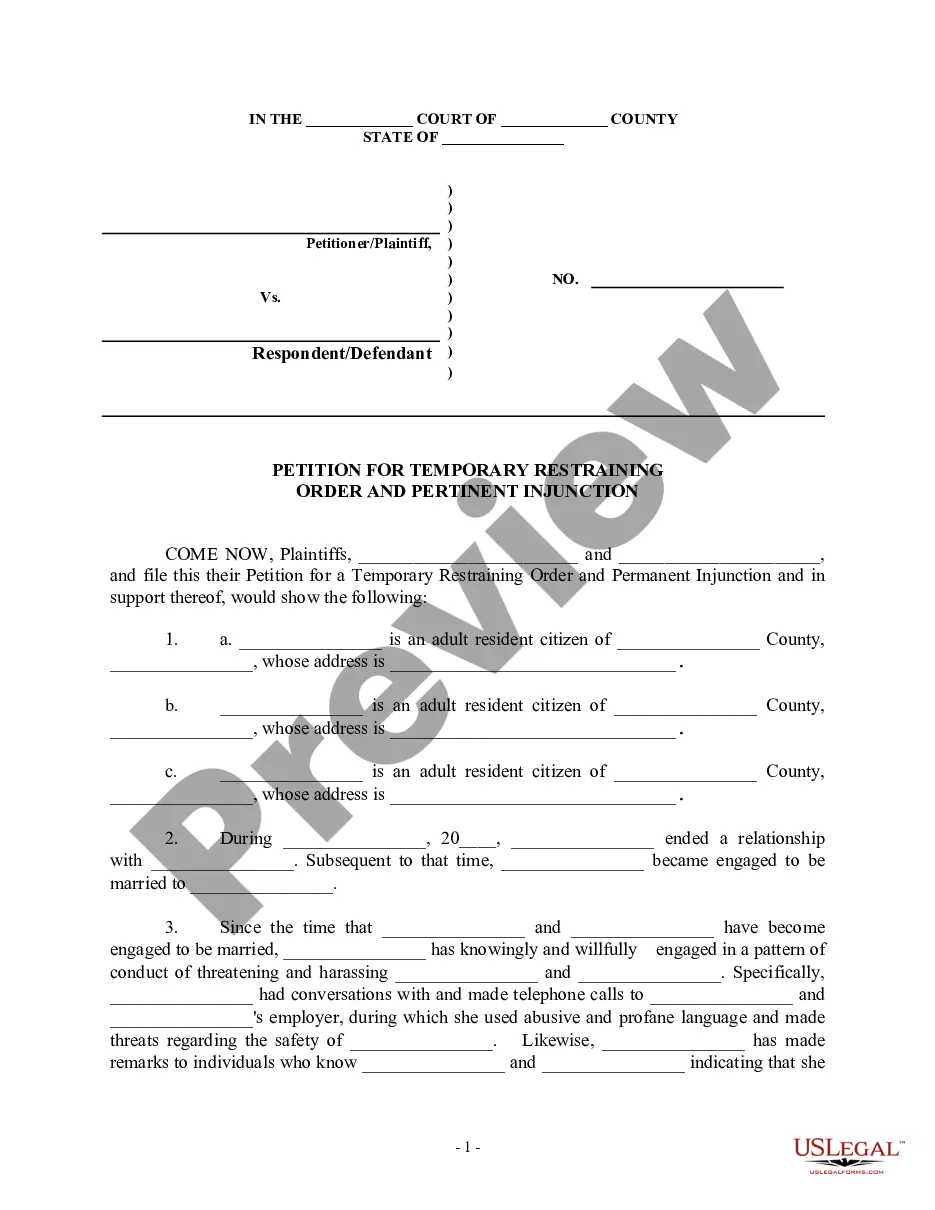
The Ex-Parte Motion to Enjoin Removal of Child from Jurisdiction of Court due to Abusive and Dangerous Conduct by Spouse is a legal document used in family law cases. It allows a parent to seek immediate and temporary protection for their child from a spouse exhibiting abusive behavior. This form differs from other custody or protective orders as it enables the petitioner to have a hearing without notifying the other parent, which is crucial in urgent situations where the child's safety is at risk.
Key components of this form
- Petitioner and Respondent information: Names of the parties involved.
- Cause Number: A unique identifier for the case.
- Motion request: Specific actions sought from the court, such as designating primary custody.
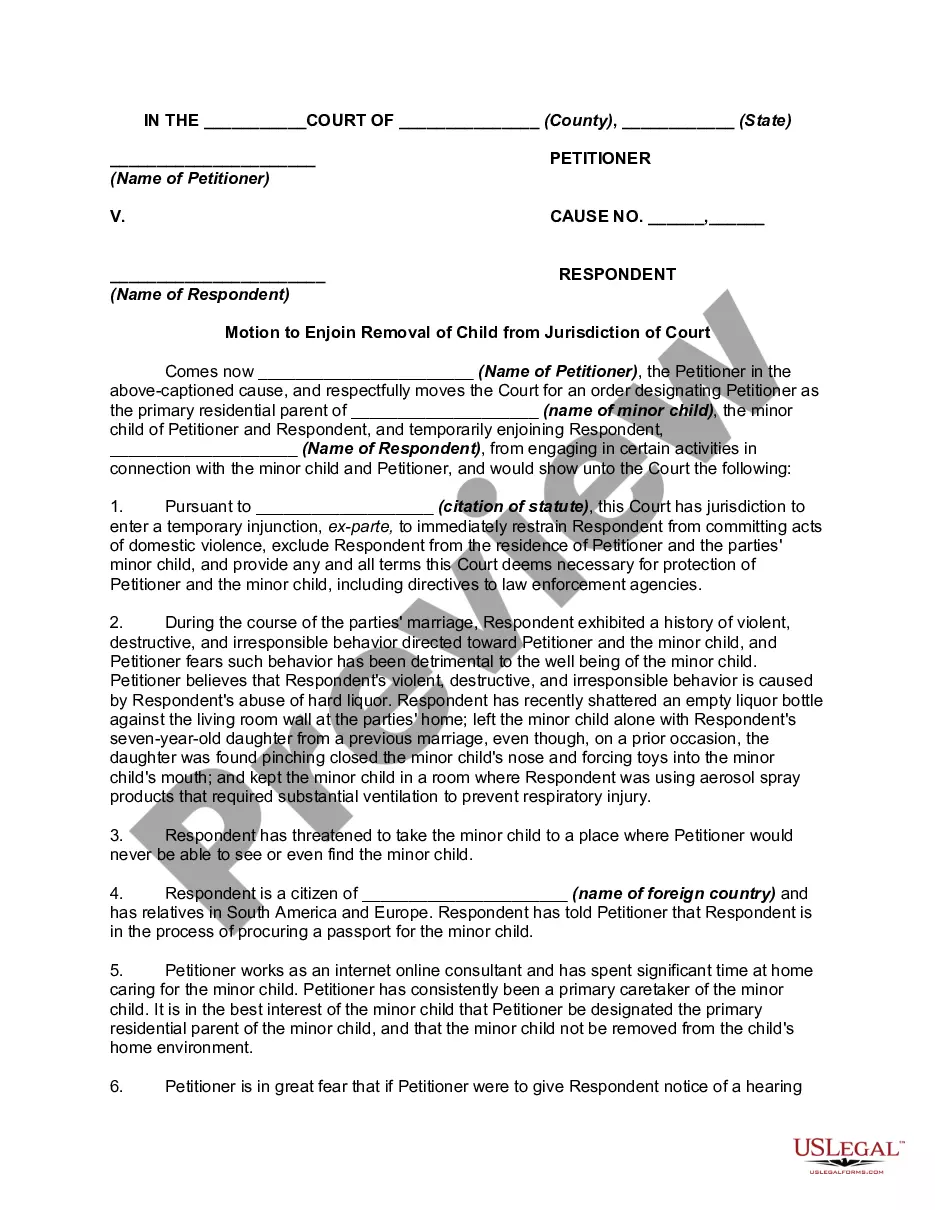
- Allegations of abusive conduct: Detailed descriptions of the respondent's behavior that necessitate protection.
- Jurisdiction statement: Legal basis for the court's authority to grant the motion.
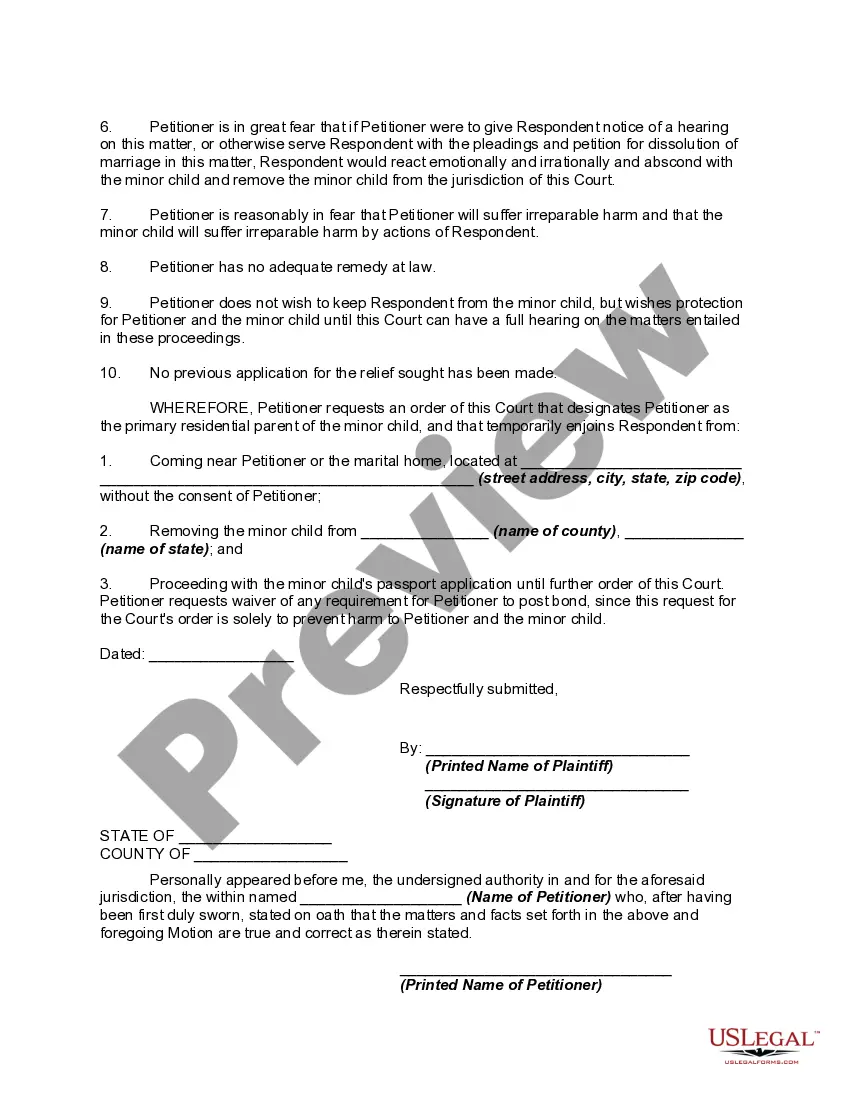
- Order requests: Specific temporary measures to protect the child and the petitioner.

Situations where this form applies
This form is used in situations where a parent feels that their child is in immediate danger due to the behavior of the other parent. Examples include cases of domestic violence, substance abuse, or threats to abduct the child. It is a necessary step to ensure the safety of the child before a formal hearing can be arranged.
Who this form is for
- Parents or guardians who are seeking immediate protection for their children from abusive conduct by a spouse.
- Individuals in a custody dispute where there are concerns regarding the other parent's behavior.
- Those who believe that notifying the other parent could result in harm to themselves or their child.
Completing this form step by step
- Identify the parties: Fill in the names of the petitioner and respondent.
- State the cause number: Provide the unique identifier for your case.
- Detail the allegations: Clearly describe the abusive conduct and any relevant incidents.
- Specify the temporary orders requested: Outline the specific protections you are seeking from the court.
- Sign and date the form: Ensure all required signatures are included, including notarization if applicable.
Notarization requirements for this form
Yes, this form must be notarized to be legally valid. Notarization adds a layer of authenticity to your motion, ensuring that the signatures are verified and the nature of the claims is upheld in court. US Legal Forms offers integrated online notarization, allowing you to complete this process securely via video call without the need to travel.
Get your form ready online
Our built-in tools help you complete, sign, share, and store your documents in one place.
Make edits, fill in missing information, and update formatting in US Legal Forms—just like you would in MS Word.
Download a copy, print it, send it by email, or mail it via USPS—whatever works best for your next step.
Sign and collect signatures with our SignNow integration. Send to multiple recipients, set reminders, and more. Go Premium to unlock E-Sign.
If this form requires notarization, complete it online through a secure video call—no need to meet a notary in person or wait for an appointment.
We protect your documents and personal data by following strict security and privacy standards.

Make edits, fill in missing information, and update formatting in US Legal Forms—just like you would in MS Word.

Download a copy, print it, send it by email, or mail it via USPS—whatever works best for your next step.

Sign and collect signatures with our SignNow integration. Send to multiple recipients, set reminders, and more. Go Premium to unlock E-Sign.

If this form requires notarization, complete it online through a secure video call—no need to meet a notary in person or wait for an appointment.

We protect your documents and personal data by following strict security and privacy standards.
Avoid these common issues
- Failing to provide sufficient detail about the abusive conduct.
- Leaving sections blank or failing to sign the document.
- Not ensuring compliance with local court rules before submission.
Benefits of using this form online
- Immediate access to legal templates drafted by licensed attorneys.
- Ability to customize the form to fit your specific situation conveniently.
- Reliable source of legal documentation that adheres to current laws.
Legal use & context
- This form is a temporary measure and does not establish permanent custody or parenting arrangements.
- It is crucial to follow up with a formal hearing to address the long-term implications for child custody.
- The ex parte nature of this motion allows for urgent consideration by the court without prior notification to the other party.
What to keep in mind
- The Ex-Parte Motion to Enjoin Removal of Child is crucial for parents facing immediate risks from an abusive spouse.
- Provide clear, detailed information and specific requests to strengthen your motion.
- Ensure notarization for validity and compliance with court requirements.
Looking for another form?


Form popularity
FAQ
Ex parte (/025bks 02c8p025102d0rte026a, -i02d0/) is a Latin legal term meaning literally "from/out of the party/faction of" (name of party/faction, often omitted), thus signifying "on behalf of (name)". An ex parte decision is one decided by a judge without requiring all of the parties to the dispute to be present.
Also known as an ex parte order, an emergency custody order is a type of temporary order issued when a parent is able to show the family court their child is in immediate danger.The court will want to know why you waited and may not consider the issue an emergency any longer.
Ex parte hails from the latin language which means 'by or for one party' or 'by one side'. An ex parte decree is a decree which is passed in the non-appearance of the opposition.
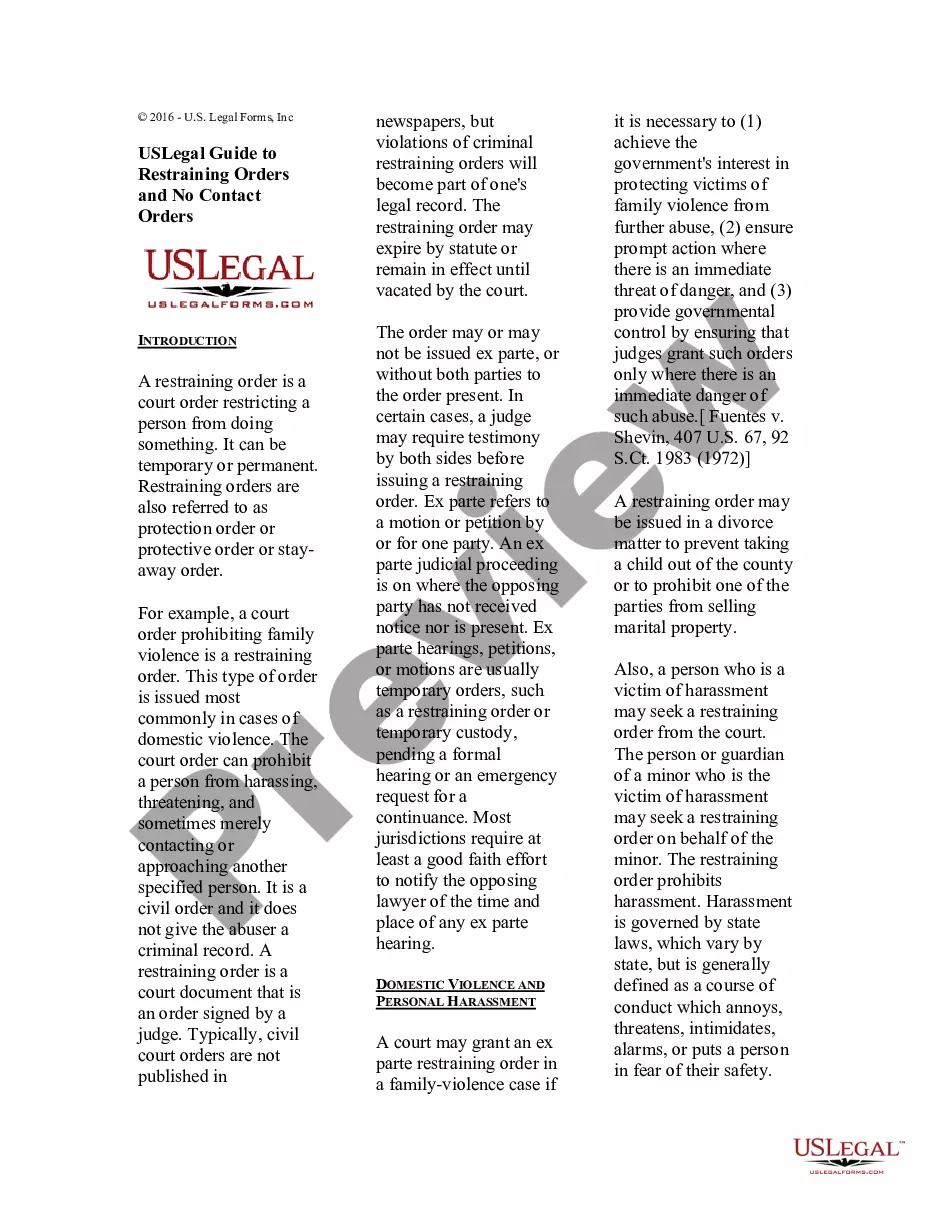
In civil procedure, ex parte is used to refer to motions for orders that can be granted without waiting for a response from the other side. Generally, these are orders that are only in place until further hearings can be held, such as a temporary restraining order.
In civil procedure, ex parte is used to refer to motions for orders that can be granted without waiting for a response from the other side. Generally, these are orders that are only in place until further hearings can be held, such as a temporary restraining order.
After the ex parte decree is set aside, the suit is again restored to file and parties are demoted to the position they held before the non-presence of the opposite party, and the court will take action with the suit de novo and determine on merits.
An ex parte application is an urgent request to the Court. Ex parte means by one party. An ex parte application differs from a motion because it does not require you to set a hearing date.
In civil procedure, ex parte is used to refer to motions for orders that can be granted without waiting for a response from the other side. Generally, these are orders that are only in place until further hearings can be held, such as a temporary restraining order.
The Court reiterated the position that an ex parte (to seek an order in the absence of notice to the respondent party) is a serious departure from the ordinary principles applicable to civil proceedings.
An ex parte order is one that is made without the other party being made aware of it. They often provide instant relief, albeit on a temporary basis. They are issued when immediate relief is needed and when scheduling a regular hearing and providing notice to the other party is not feasible.