Affidavit of Residency
Understanding this form
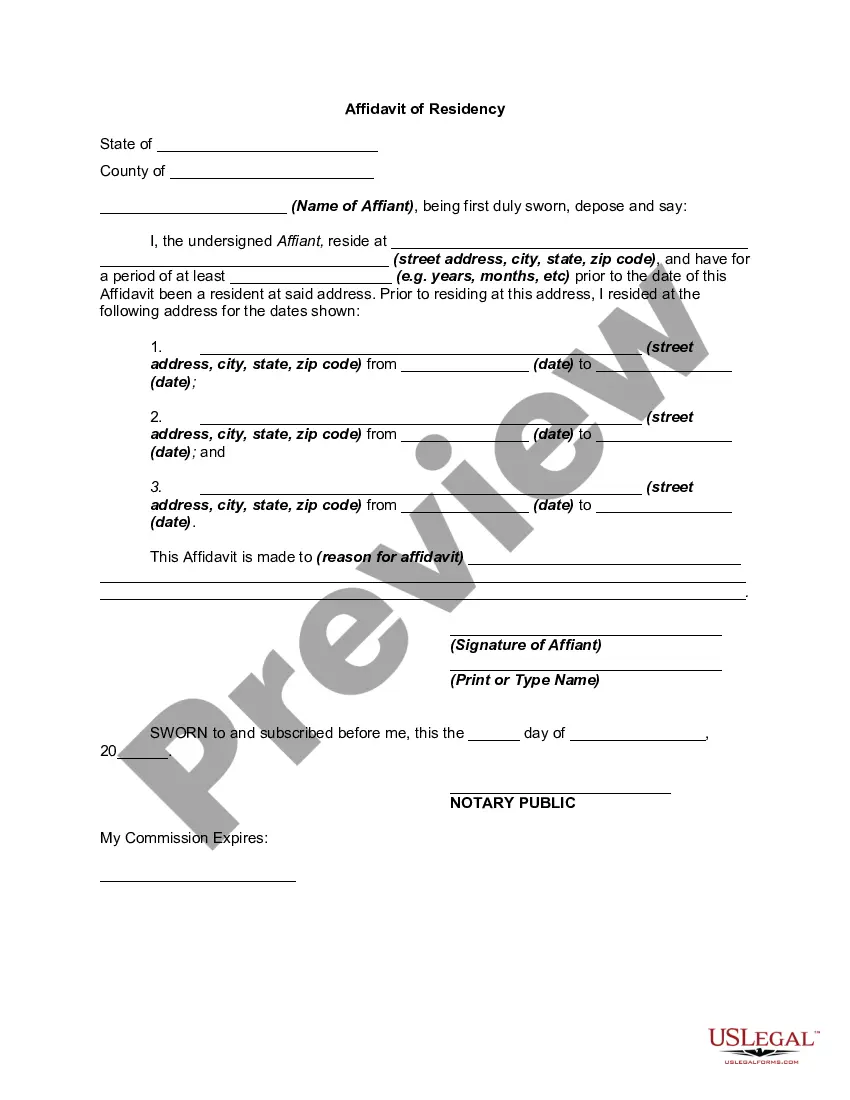
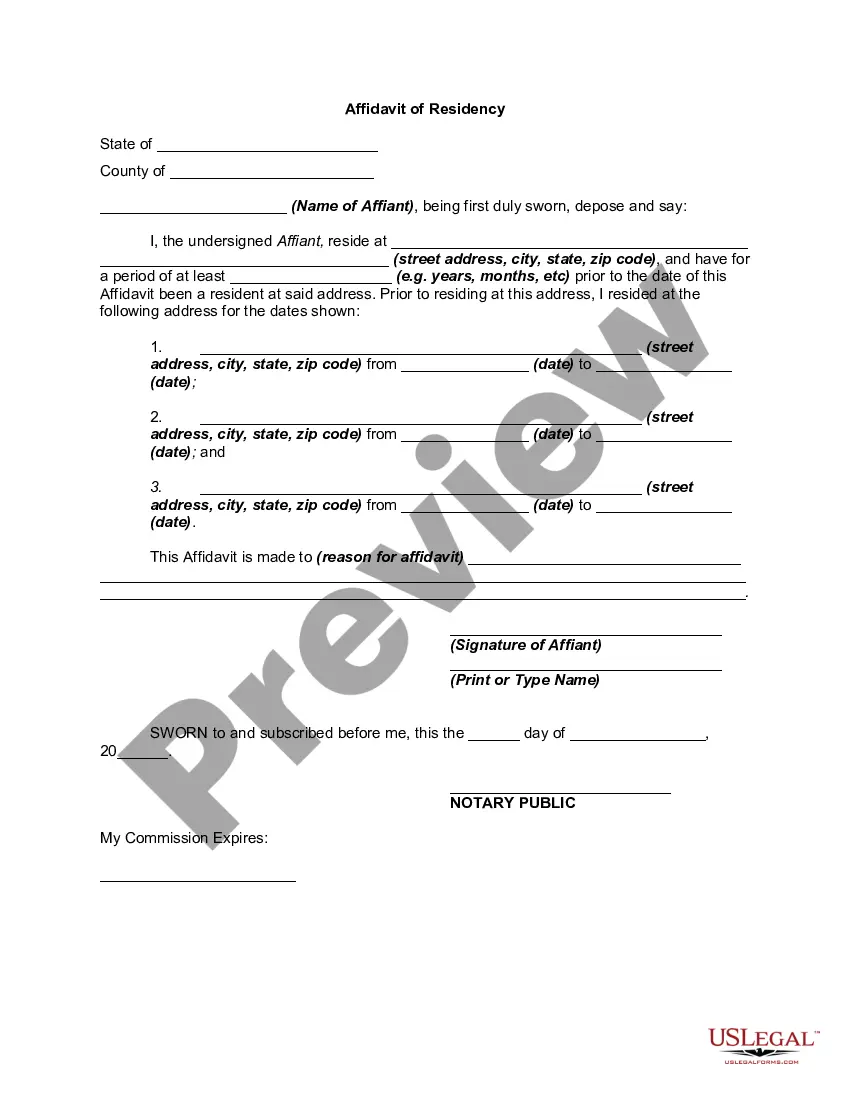
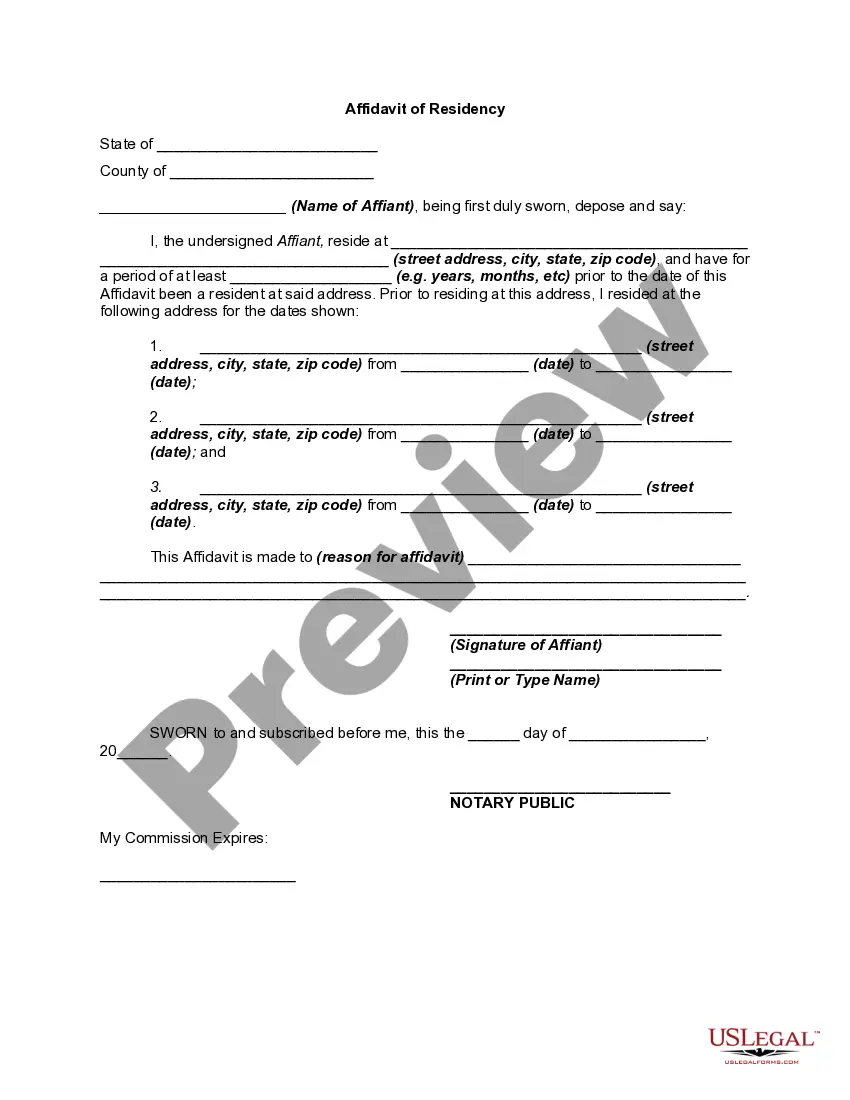
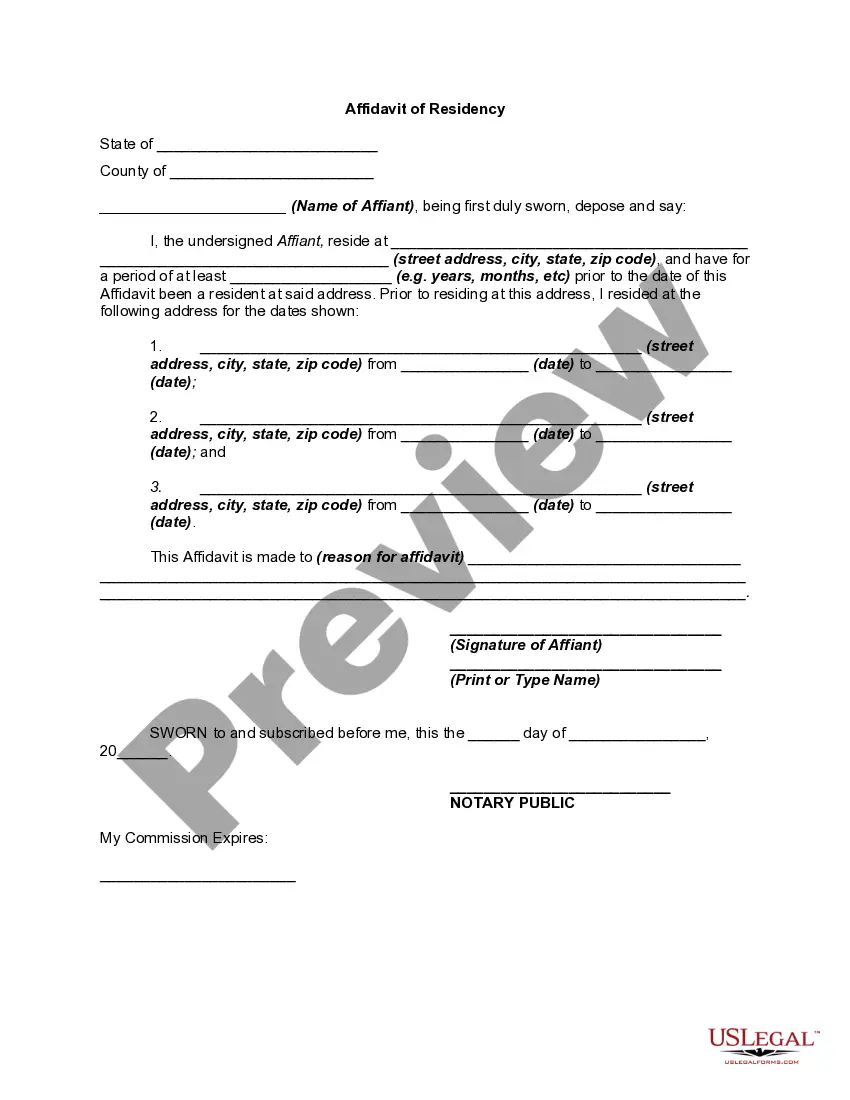
The Affidavit of Residency is a sworn statement confirming an individual's place of residence. It is a legal document affirming that the affiant (the person making the statement) resides at a specified address and has done so for a certain period. This form is distinct from other affidavits as it focuses specifically on residency rather than other legal matters, providing a clear record for purposes such as government benefits, school enrollments, or other situations requiring proof of residence.
Key components of this form
- Affiant Information: Captures the name and address of the person making the affidavit.
- Duration of Residence: States how long the affiant has lived at the specified address.
- Previous Addresses: Lists prior residences with corresponding dates for verification purposes.
- Purpose of Affidavit: Specifies why the affidavit is being made, providing context for its use.
- Notary Section: Includes a section for a notary public to verify the identity of the affiant and their sworn statement.
When to use this document
This form is needed when you need to formally verify your residency for various legal or administrative purposes. Common situations include applying for government assistance, enrolling a child in school, or meeting a landlord's requirements for rental agreements. It may also be utilized in legal matters requiring evidence of where you live.
Who should use this form
- Individuals needing to provide proof of residency for legal or administrative purposes.
- People applying for government assistance programs.
- Parents enrolling their children in schools that require residency verification.
- Tenants fulfilling rent agreement stipulations regarding residency proof.
Steps to complete this form
- Identify the affiant's full name and current address.
- Specify the length of time you have resided at the current address.
- List any previous addresses along with the dates of residence for each.
- State the purpose of the affidavit clearly in the provided section.
- Sign the form in the presence of a notary public.
Notarization requirements for this form
Notarization is required for this form to take effect. Our online notarization service, powered by Notarize, lets you verify and sign documents remotely through an encrypted video session, available 24/7.
Get your form ready online
Our built-in tools help you complete, sign, share, and store your documents in one place.
Make edits, fill in missing information, and update formatting in US Legal Forms—just like you would in MS Word.
Download a copy, print it, send it by email, or mail it via USPS—whatever works best for your next step.
Sign and collect signatures with our SignNow integration. Send to multiple recipients, set reminders, and more. Go Premium to unlock E-Sign.
If this form requires notarization, complete it online through a secure video call—no need to meet a notary in person or wait for an appointment.
We protect your documents and personal data by following strict security and privacy standards.

Make edits, fill in missing information, and update formatting in US Legal Forms—just like you would in MS Word.

Download a copy, print it, send it by email, or mail it via USPS—whatever works best for your next step.

Sign and collect signatures with our SignNow integration. Send to multiple recipients, set reminders, and more. Go Premium to unlock E-Sign.

If this form requires notarization, complete it online through a secure video call—no need to meet a notary in person or wait for an appointment.

We protect your documents and personal data by following strict security and privacy standards.
Common mistakes to avoid
- Failing to fill out the previous addresses completely.
- Not providing accurate dates for the length of residency.
- Neglecting to sign the form in front of a notary public.
- Leaving out the purpose for which the affidavit is being made.
Advantages of online completion
- Convenience of accessing and completing the form from your home.
- Editability allows for quick adjustments before finalizing the document.
- Reliability, knowing the form complies with legal standards as drafted by licensed attorneys.
Looking for another form?


Form popularity
FAQ
An Affidavit of Residency is a sworn statement confirming where a person lives. It records the affiant’s name and address, how long they have lived there, prior addresses, the purpose of the affidavit, and includes a notary section to verify the declaration. It serves as proof of residency for benefits, school enrollment, or other residency verification needs.
An Affidavit of Residency is a sworn statement that confirms where a person lives. This form is designed specifically to prove residency, not other legal issues. It gathers affiant information, the duration of residence, prior addresses, the purpose of the affidavit, and includes a notary section to verify the sworn statement.
To obtain this form, download the Affidavit of Residency and complete all required fields. Provide affiant information, the duration of residence, prior addresses, and the stated purpose. Then sign the form in the presence of a notary, who will complete the notary section to verify the sworn statement.
An affidavit of proof of residence is a sworn statement documenting where a person lives and for how long. The form includes affiant information, duration of residence, prior addresses, and the purpose, plus a notary section to verify the sworn statement. It provides formal residency proof for administrative or legal needs.
Using the Affidavit of Residency is often the easiest way to obtain proof of residency. The form focuses on residency, requiring basic information: affiant details, length of residence, prior addresses, and the purpose, plus notary verification. This creates a straightforward record for government benefits, school enrollment, or landlord verification.
It focuses specifically on establishing where a person lives, for how long, and where they previously lived, with a dedicated notary section. Other affidavits in the category may cover different legal matters, whereas this form restricts content to residency verification and includes the notary verification.