Business Management Consulting or Consultant Services Agreement - Self-Employed
About this form
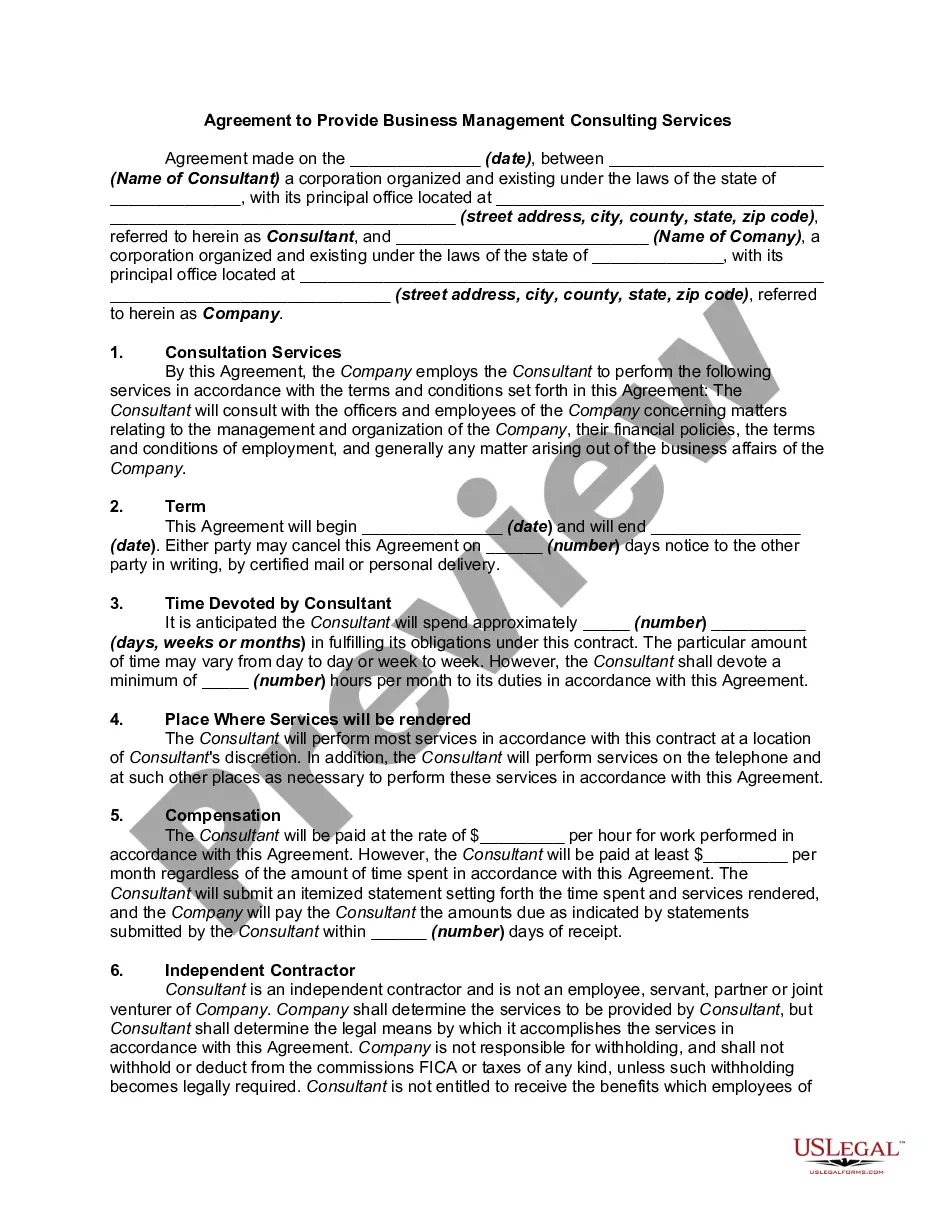
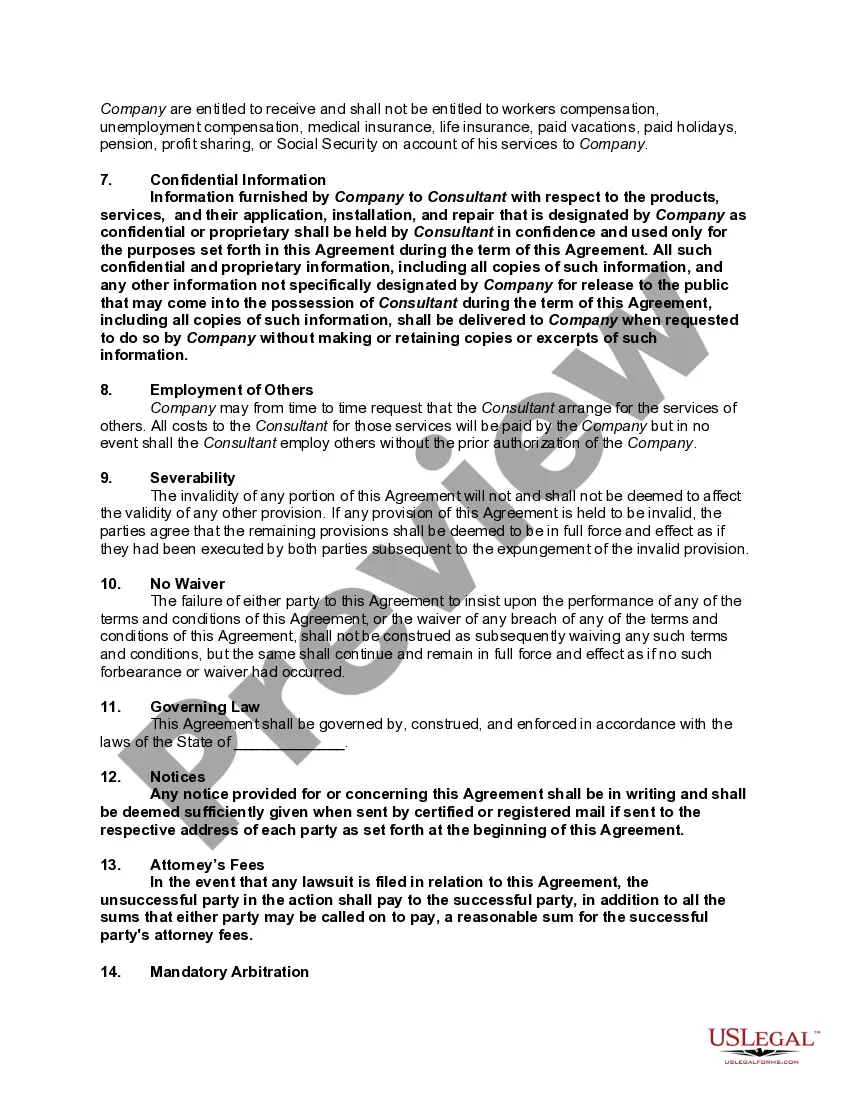
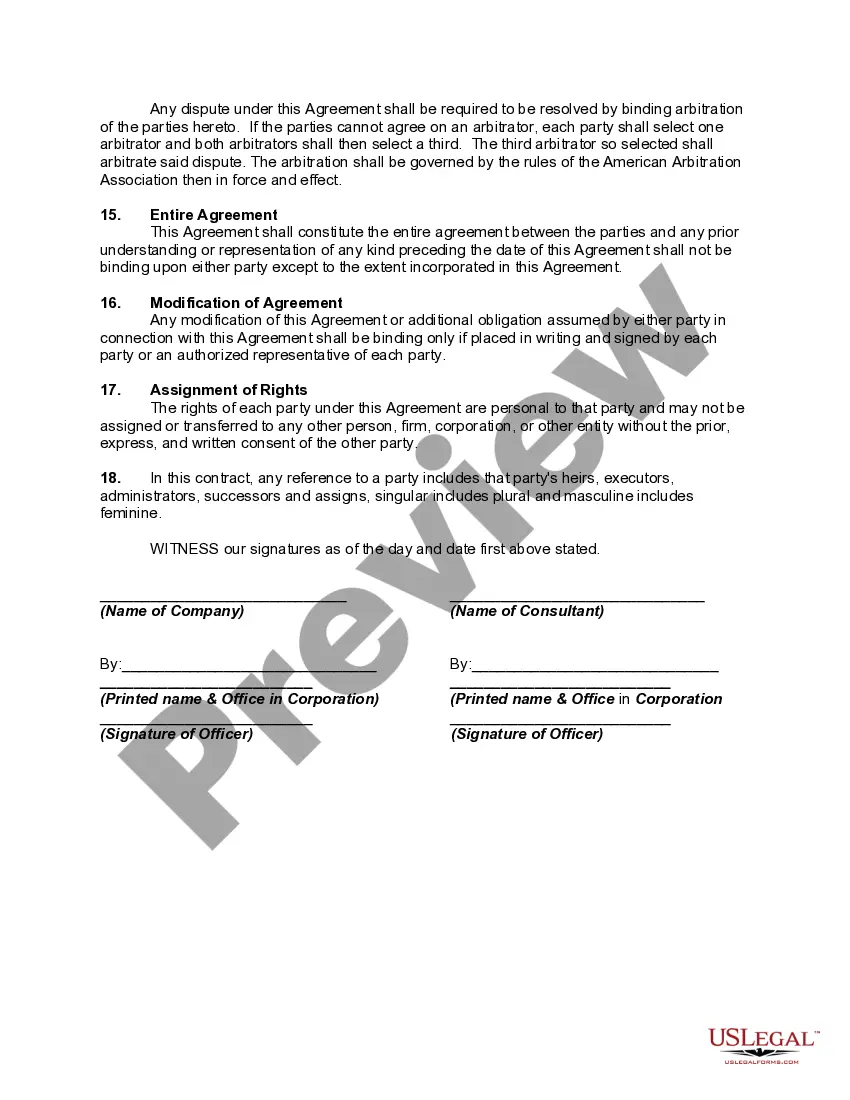
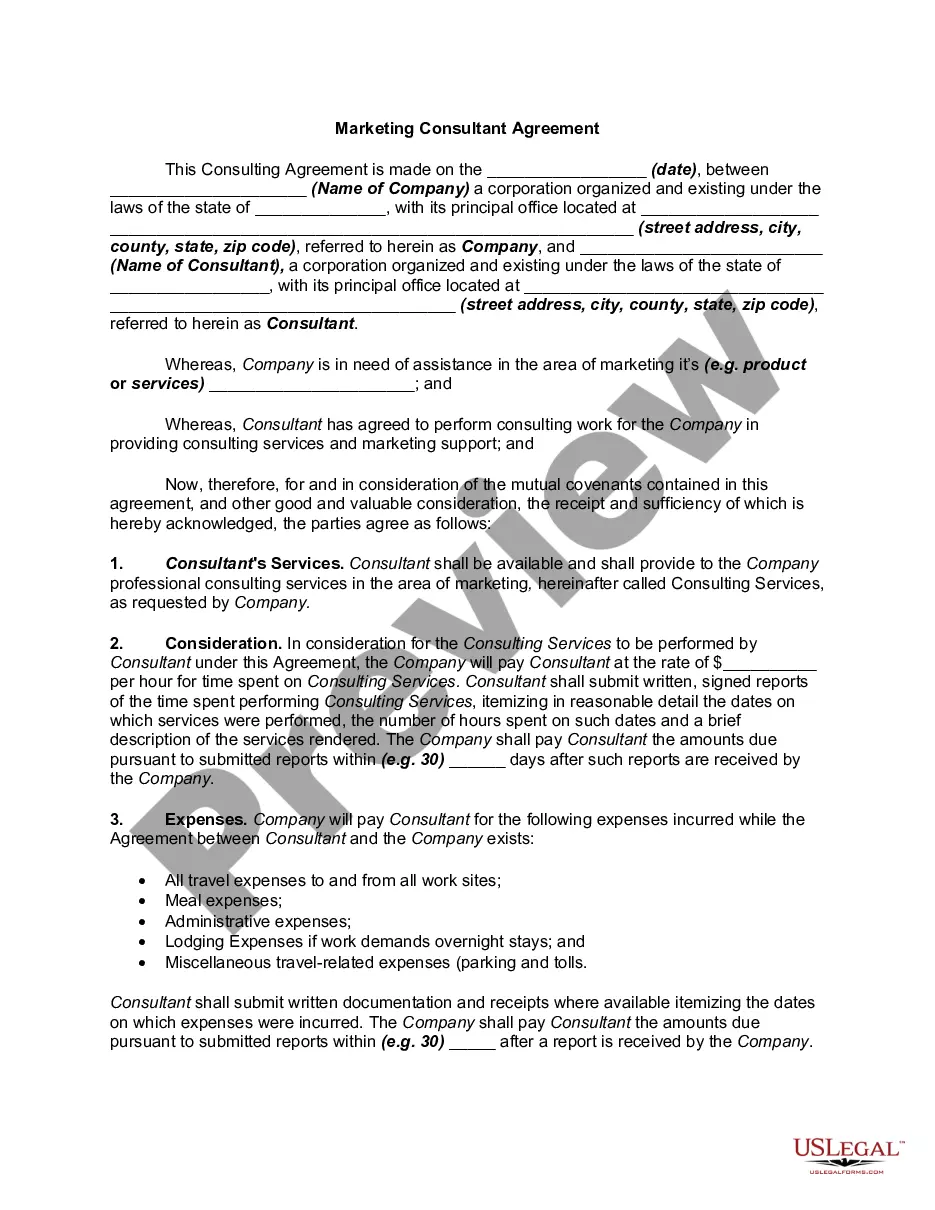
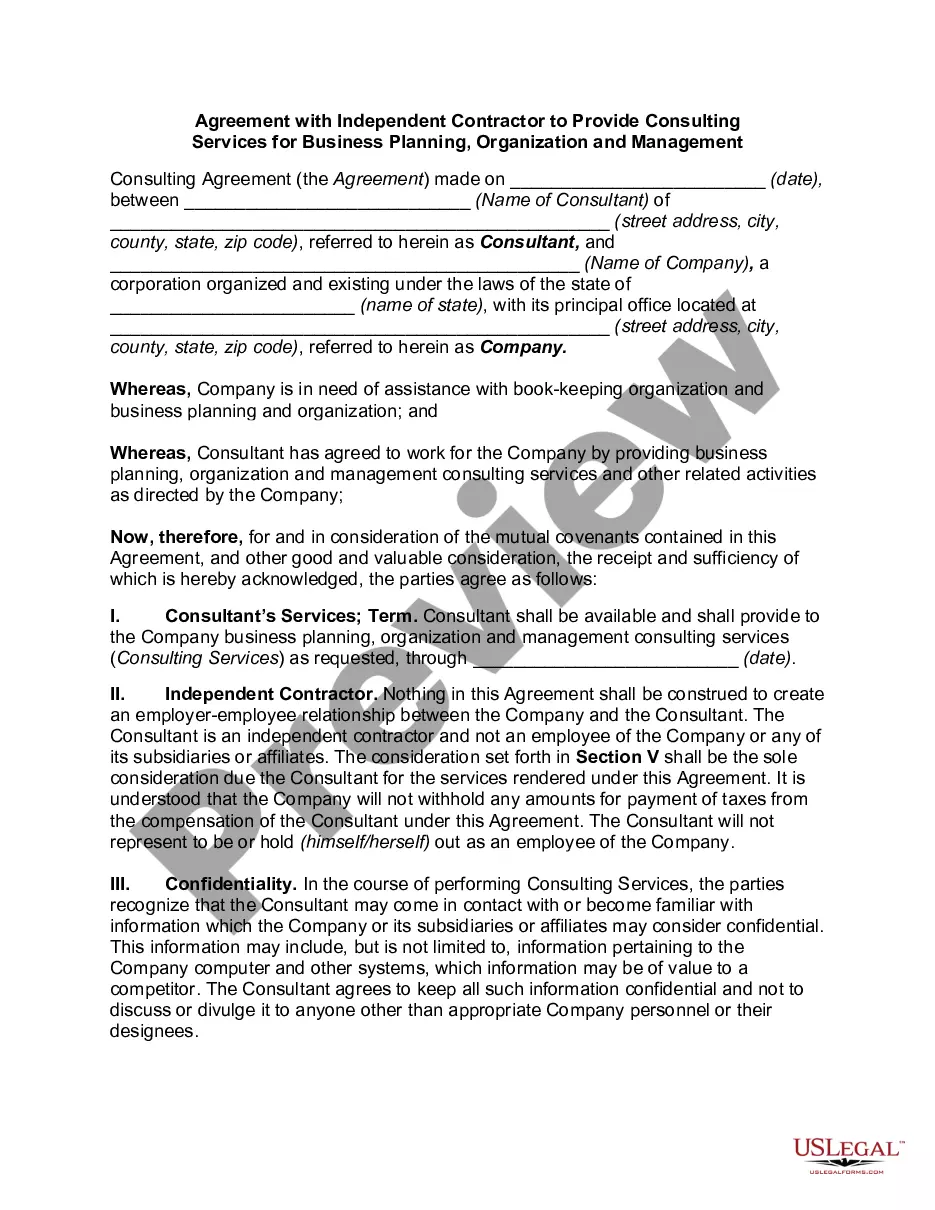
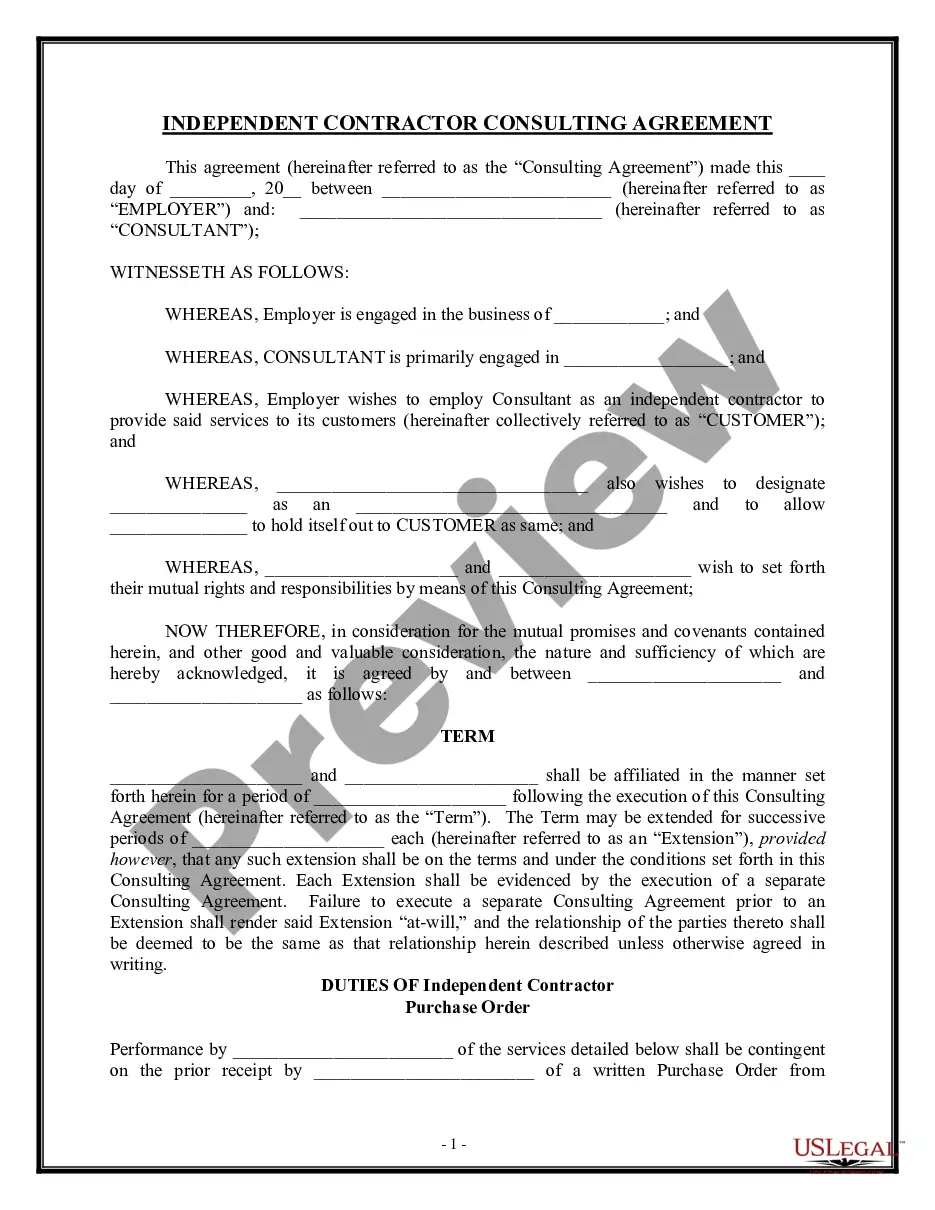
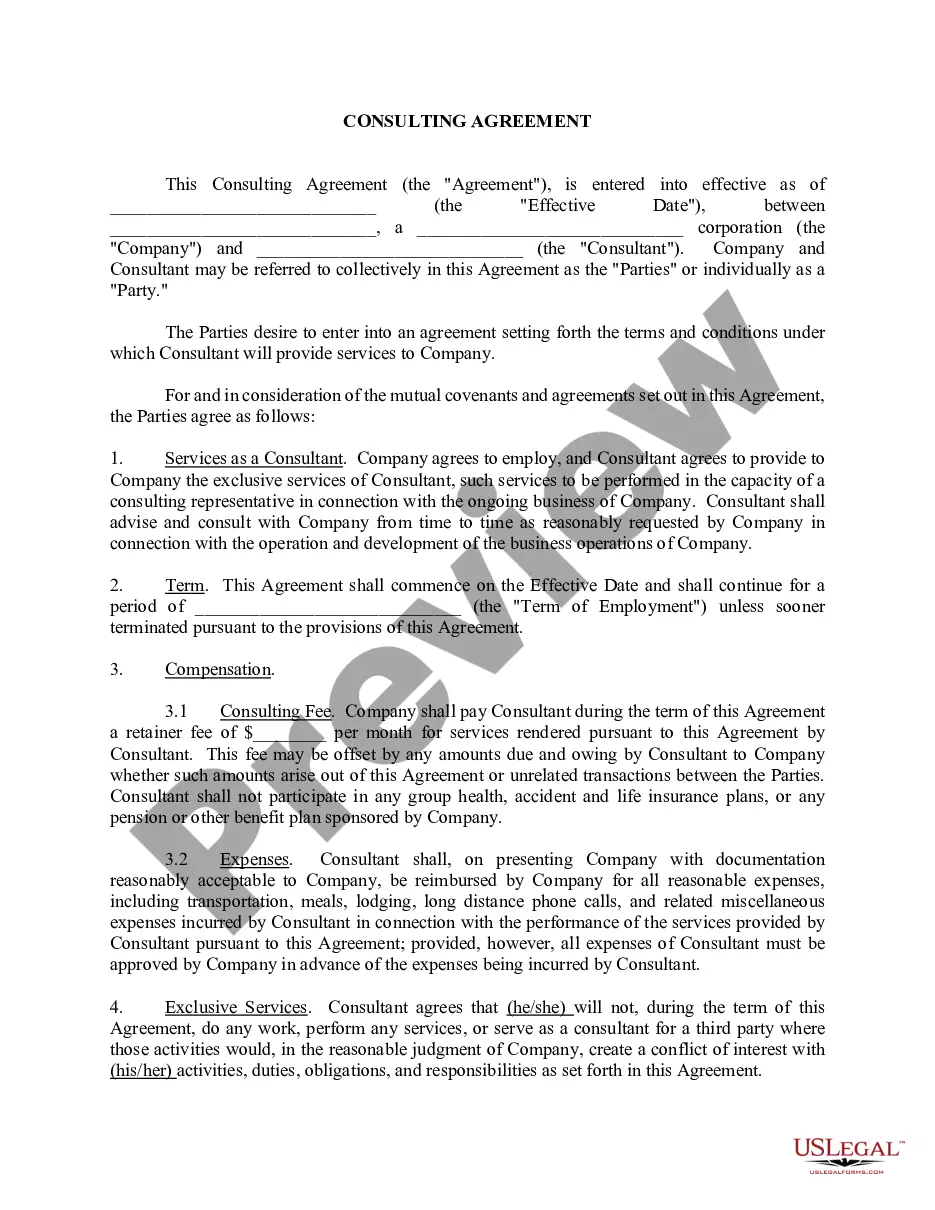
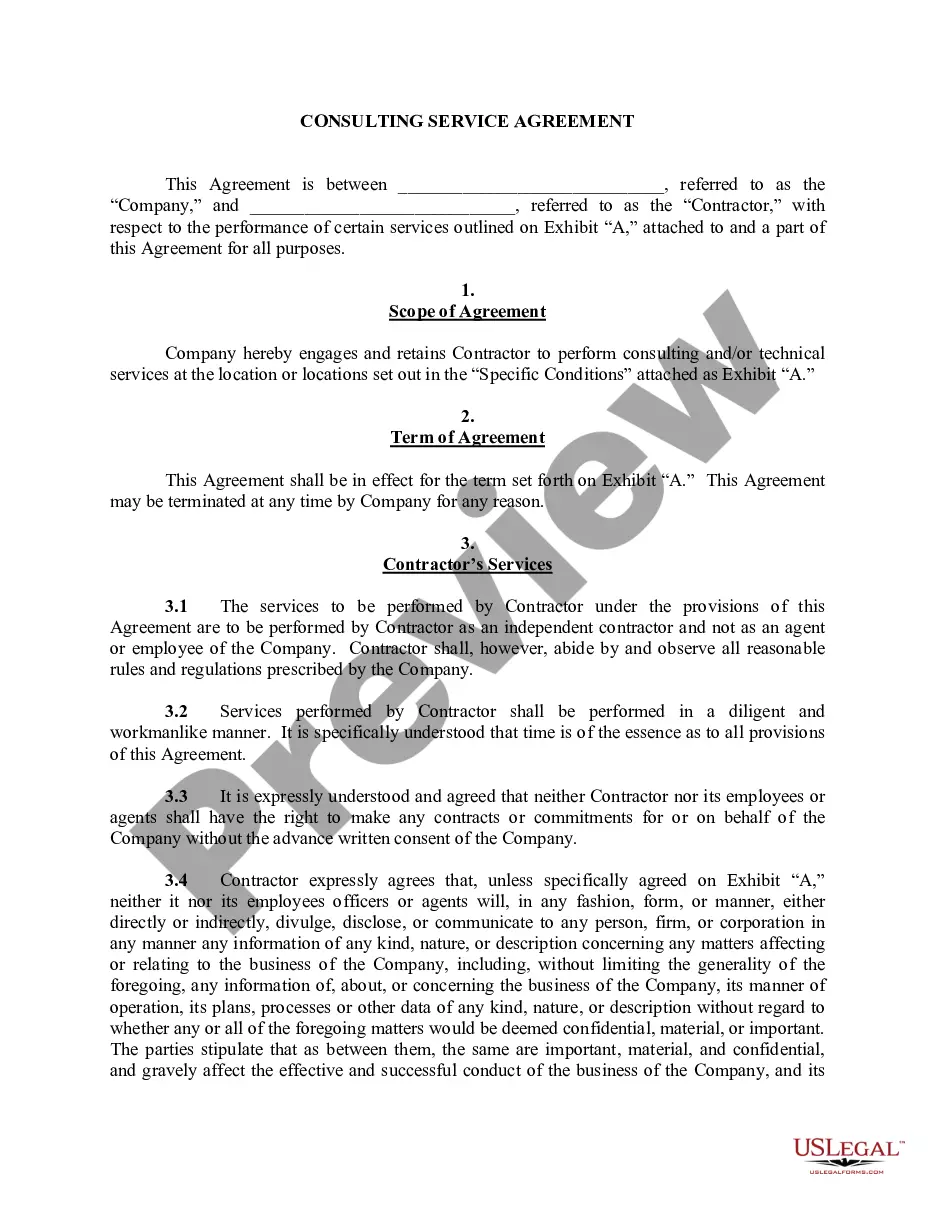
The Business Management Consulting or Consultant Services Agreement - Self-Employed is a legal document that outlines the terms between a consultant and a company seeking management consulting services. This agreement specifies the nature of the services provided, compensation, and the relationship between the parties, distinguishing it from other types of consulting agreements by its focus on self-employed consultants. It is essential for establishing clear expectations and responsibilities for both the consultant and the client company.
Form components explained
- Identification of the parties involved: Names and addresses of the consultant and the company.
- Consultation services definition: Description of the specific services the consultant will provide.
- Term of the agreement: Start and end dates of the consulting relationship.
- Compensation details: Payment rate and terms of remuneration.
- Independent contractor status: Clarification that the consultant is not an employee of the company.
- Confidential information clause: Obligations regarding the handling of sensitive information.
Situations where this form applies
This agreement is useful when a self-employed consultant is engaged by a company to provide specialized expertise in management or organizational challenges. It is applicable in various situations, such as when a business needs assistance with strategy development, operational efficiency, or compliance issues. Whether you are starting a new business or seeking to improve existing operations, this form can help formalize the consulting relationship and protect both parties' interests.
Who this form is for
This agreement is ideal for:
- Self-employed consultants offering specialized knowledge in business management or related fields.
- Companies seeking to hire independent contractors rather than full-time employees.
- Businesses establishing clear terms with consultants to ensure mutual understanding of services and compensation.
Completing this form step by step
- Identify the parties: Fill in the names and addresses of both the consultant and the company.
- Specify the consultation services: Clearly outline the services the consultant will provide.
- Enter the term: Include the start and end dates of the consulting agreement.
- Detail the compensation: Indicate the payment rate and terms, including minimum monthly payment.
- Include confidentiality clauses: Ensure that any proprietary information is addressed properly.
Does this document require notarization?
Notarization is generally not required for this form. However, certain states or situations might demand it. You can complete notarization online through US Legal Forms, powered by Notarize, using a verified video call available anytime.
Get your form ready online
Our built-in tools help you complete, sign, share, and store your documents in one place.
Make edits, fill in missing information, and update formatting in US Legal Forms—just like you would in MS Word.
Download a copy, print it, send it by email, or mail it via USPS—whatever works best for your next step.
Sign and collect signatures with our SignNow integration. Send to multiple recipients, set reminders, and more. Go Premium to unlock E-Sign.
If this form requires notarization, complete it online through a secure video call—no need to meet a notary in person or wait for an appointment.
We protect your documents and personal data by following strict security and privacy standards.

Make edits, fill in missing information, and update formatting in US Legal Forms—just like you would in MS Word.

Download a copy, print it, send it by email, or mail it via USPS—whatever works best for your next step.

Sign and collect signatures with our SignNow integration. Send to multiple recipients, set reminders, and more. Go Premium to unlock E-Sign.

If this form requires notarization, complete it online through a secure video call—no need to meet a notary in person or wait for an appointment.

We protect your documents and personal data by following strict security and privacy standards.
Avoid these common issues
- Failing to clearly define the services to be provided, leading to misunderstandings.
- Not specifying the term of the agreement, which can result in uncertainty regarding the duration of the engagement.
- Overlooking compensation details or payment terms, which can lead to disputes later.
- Neglecting to include a confidentiality clause for sensitive information.
Why use this form online
- Convenience: Easily download and complete the form from anywhere, saving time and effort.
- Editability: Modify the template to suit specific consulting arrangements without starting from scratch.
- Reliability: Access to forms drafted by licensed attorneys ensures you have a solid legal foundation.
Quick recap
- The agreement defines the consultant's services and establishes a legal relationship.
- Clear terms regarding compensation and confidentiality protect both parties.
- Understanding when and how to use this form is essential for successful consulting engagements.
Looking for another form?







Form popularity
FAQ
Full names and titles of the people with whom you're doing business. Be sure they're all spelled correctly. Project objectives. Detailed description of the project. List of responsibilities. Fees. Timeline. Page numbers.
The market rate is the average price and range of pricing a typical customer will pay for your type of consulting service. If the average business consultant charges and receives $100 per hour, than the market rate is likely between $50 to $150 per hour.
Track Your Hours. It's common in the consulting industry for businesses to charge clients by the hour. Include A Header. Add Your Client's Contact Details. Include The Invoice Date. Number Your Invoices. Clearly List Your Services. State Your Payment Terms. List the Payment Due Date.
The consulting agreement is an agreement between a consultant and a client who wishes to retain certain specified services of the consultant for a specified time at a specified rate of compensation.
Consultant agreements are important because they outline what work will be done, as well as the terms of the agreement between the client and the consultant. A consultant agreement should be detailed and include compensation terms, contract termination, intellectual property ownership and confidentiality agreements.
Full names and titles of the people with whom you're doing business. Be sure they're all spelled correctly. Project objectives. Detailed description of the project. List of responsibilities. Fees. Timeline. Page numbers.
Protect yourself: Put your guidelines in writing -- and stick by them. Have a very clear discussion laying out your professional boundaries and ask your client to do the same. Come to an understanding about working hours and response times and agree on how you will schedule calls, meetings, and Skype sessions.