Daycare or Child Care Agreement with Medical Treatment Authorization
Overview of this form
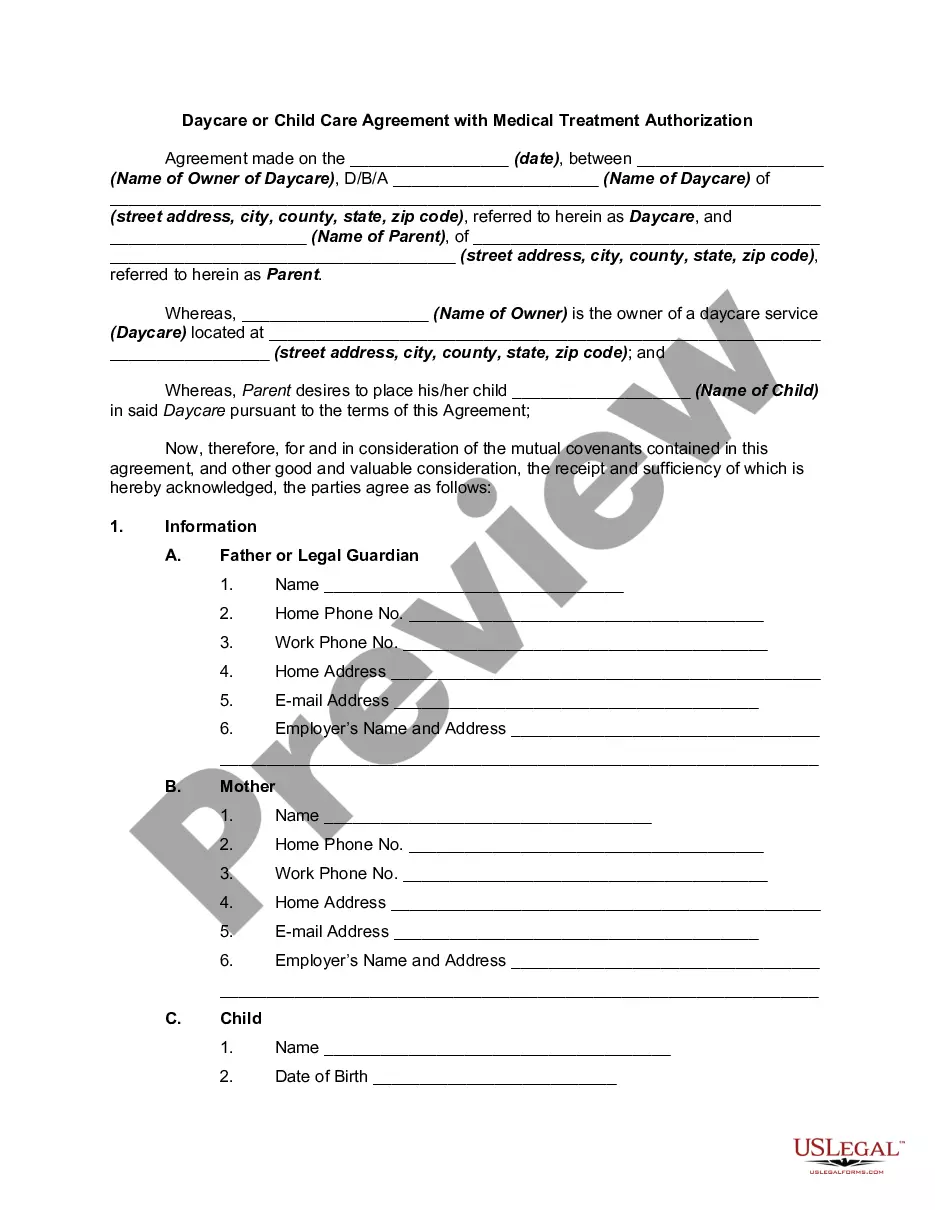
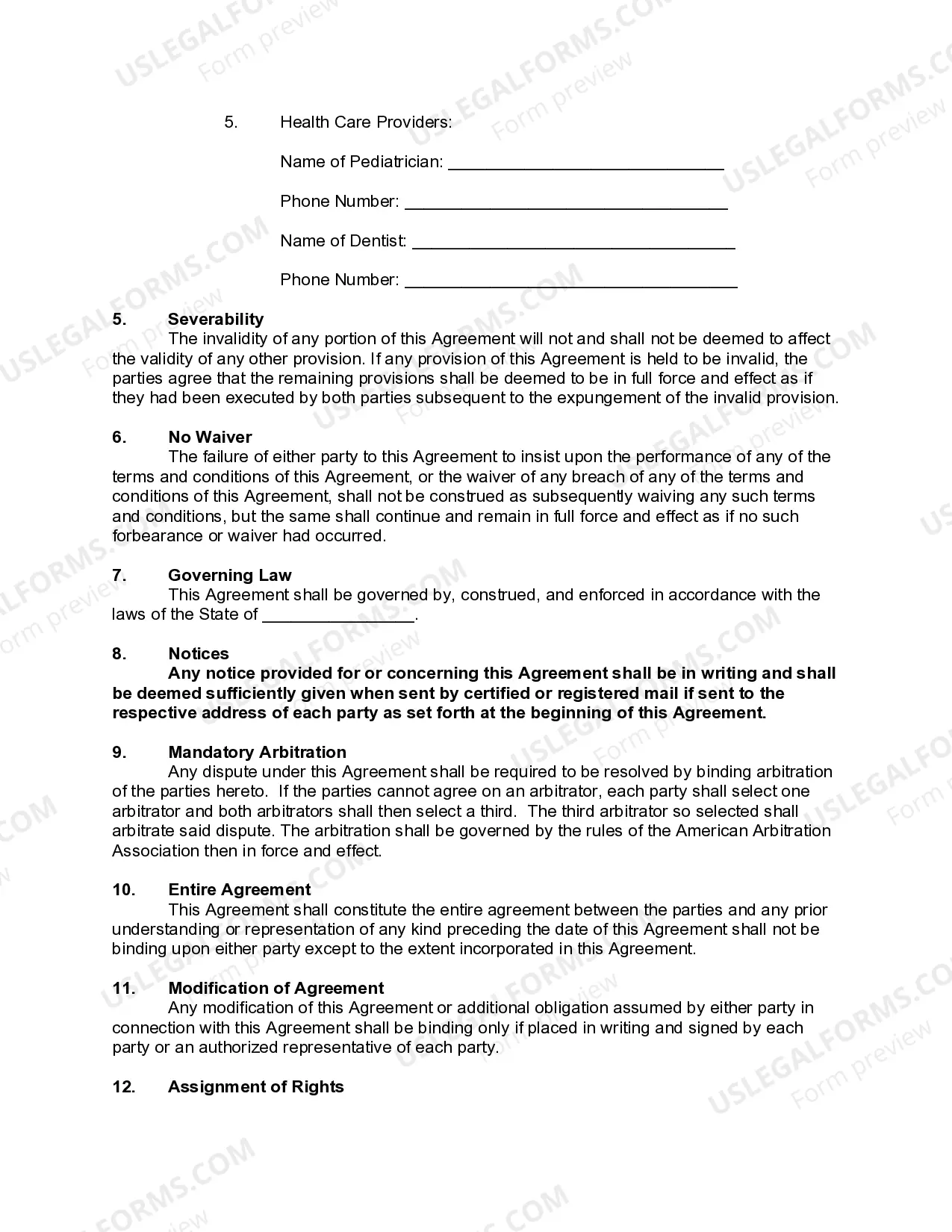
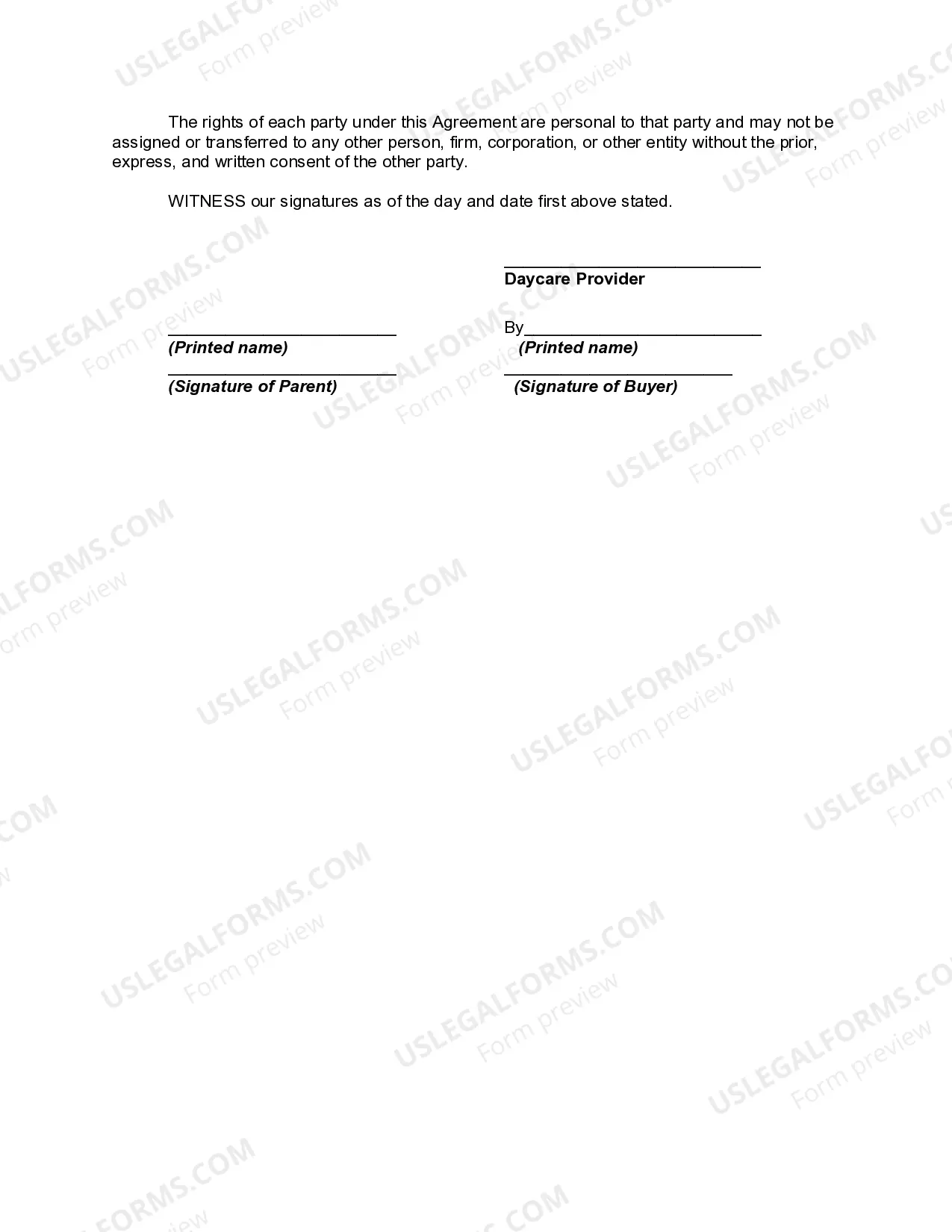
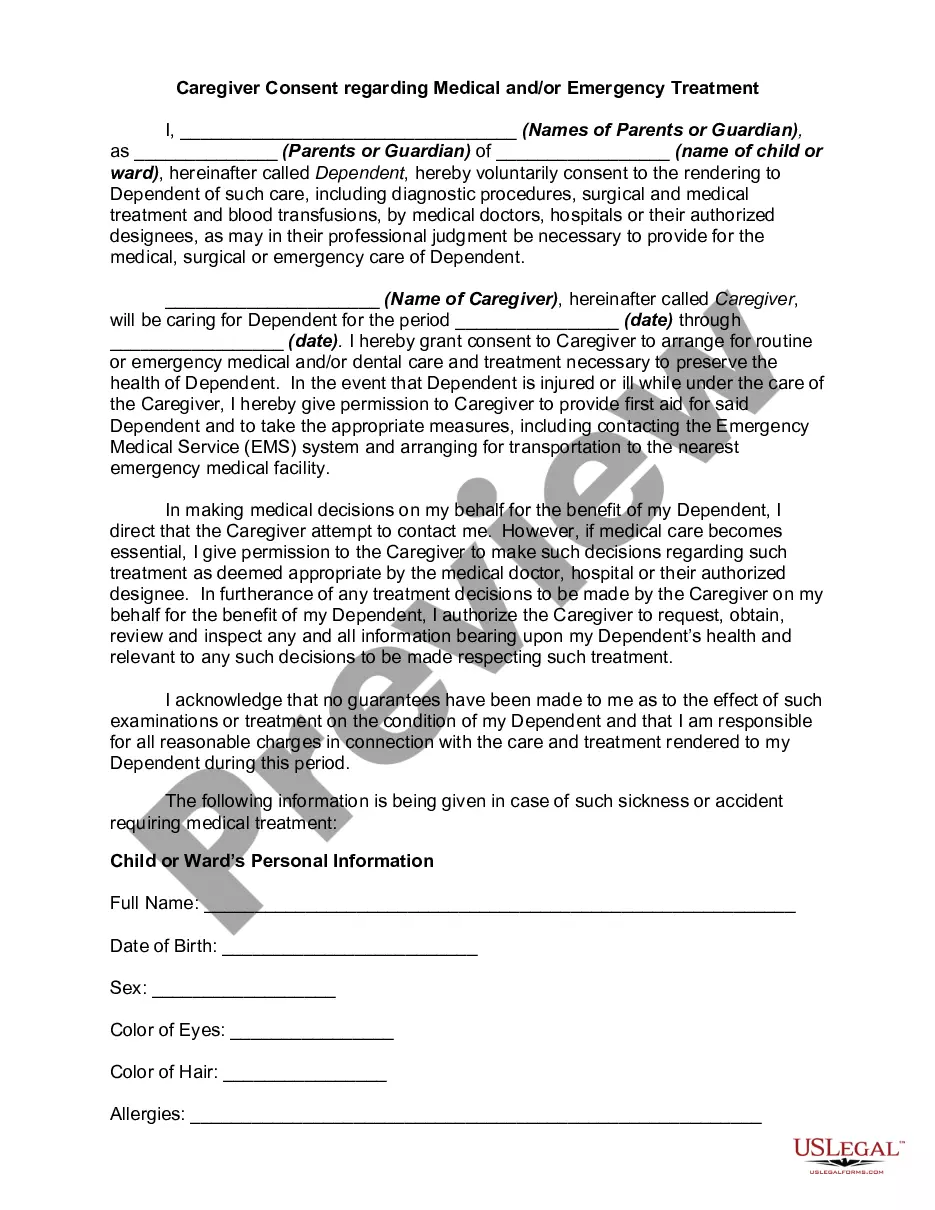
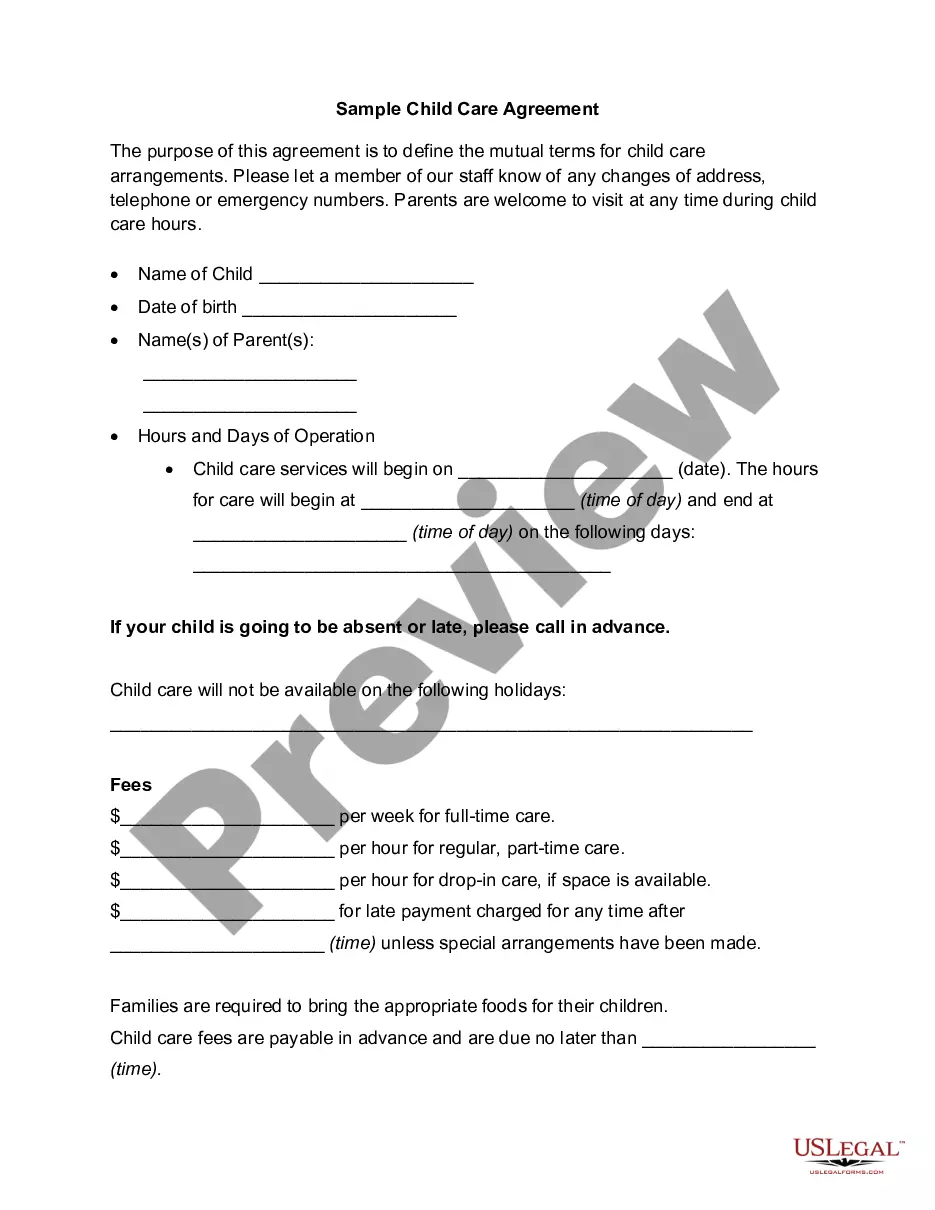
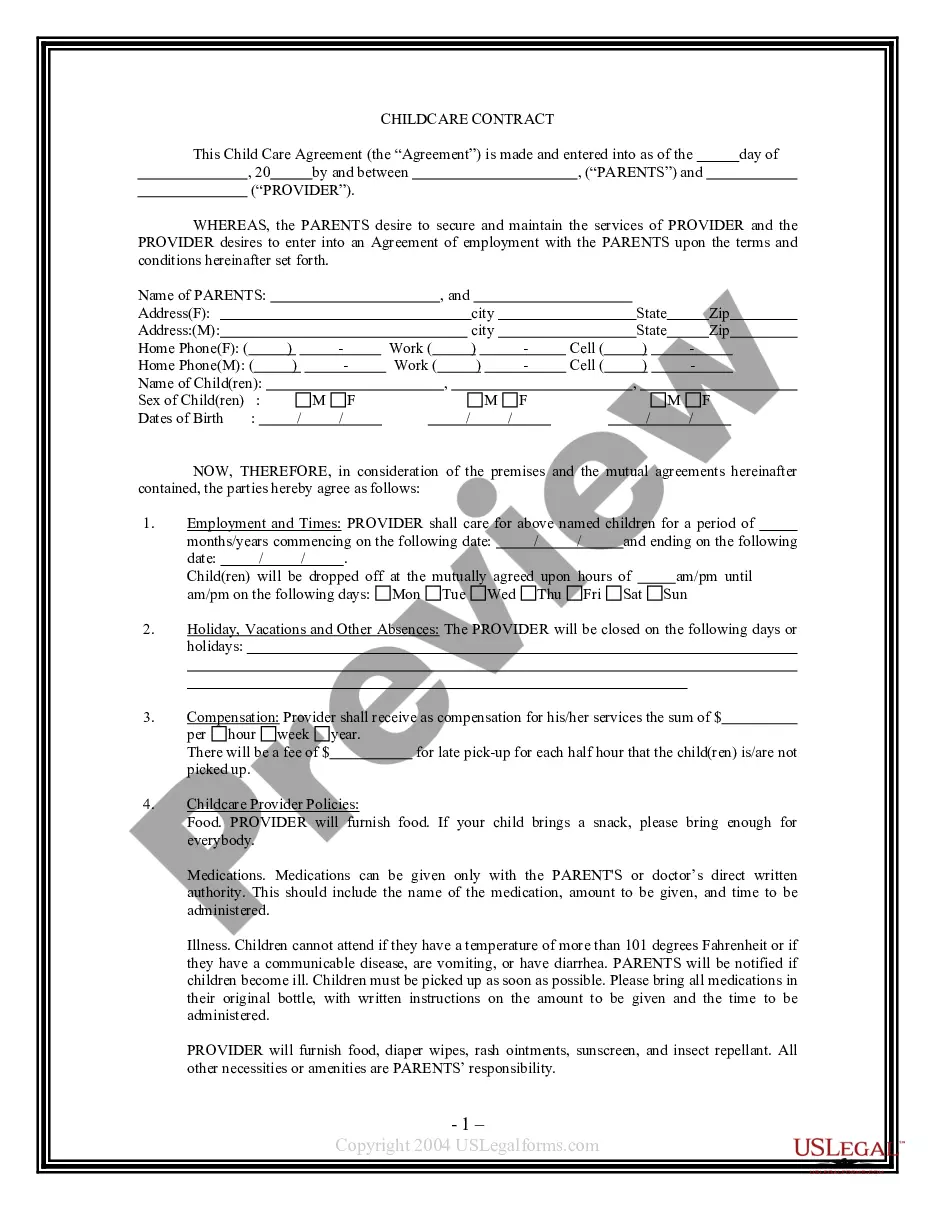
The Daycare or Child Care Agreement with Medical Treatment Authorization is a legal document that outlines the relationship between a daycare provider and a parent. This form not only establishes the terms of care for a child but also includes authorization for medical treatment in case of emergencies. Unlike other childcare agreements, this document specifically grants the daycare provider the right to make healthcare decisions on behalf of the child, ensuring their well-being while in their care.
Main sections of this form
- Parties involved: Identifies the daycare provider and the parent.
- Child's information: Includes details about the child, such as name and date of birth.
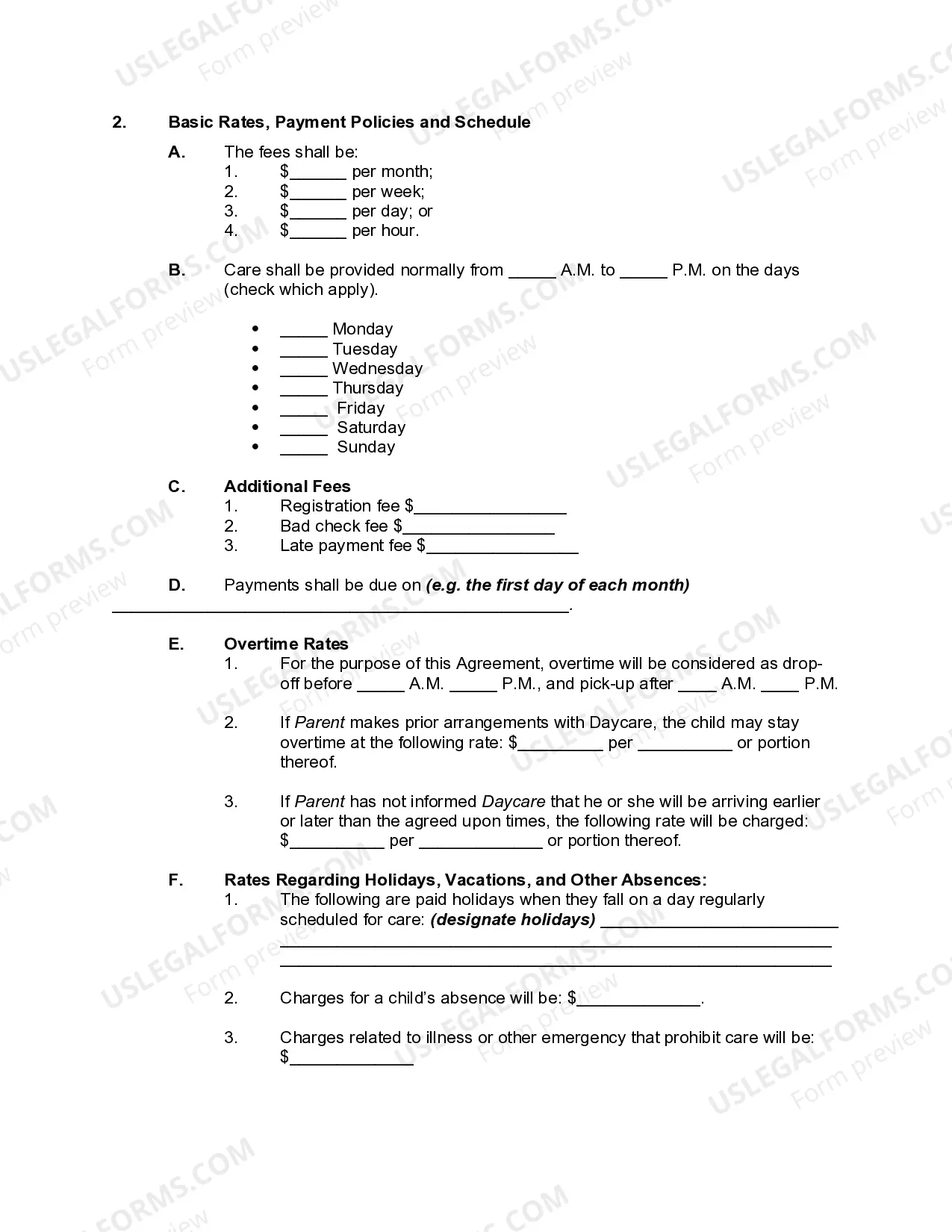
- Payment terms: Outlines basic rates, payment schedules, and additional fees.
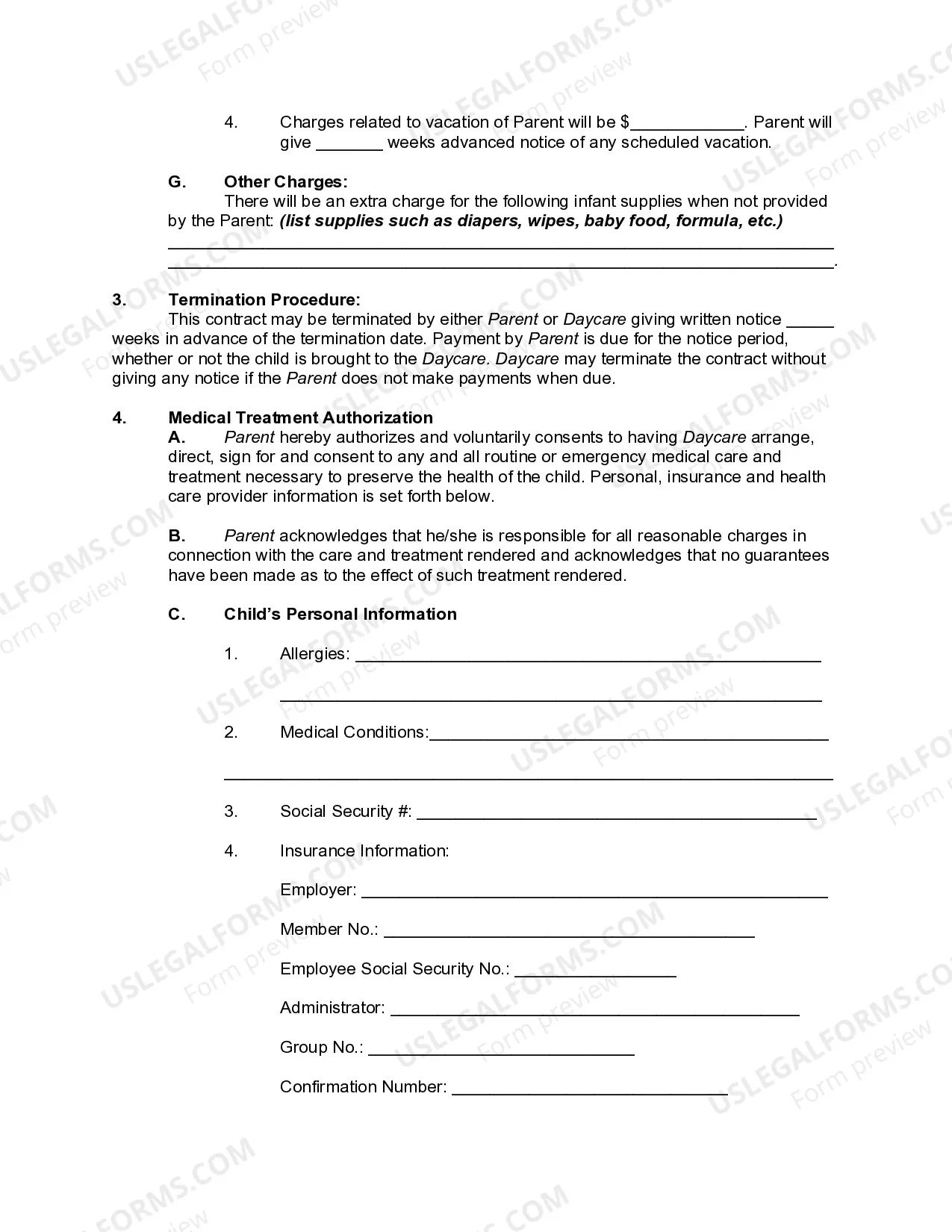
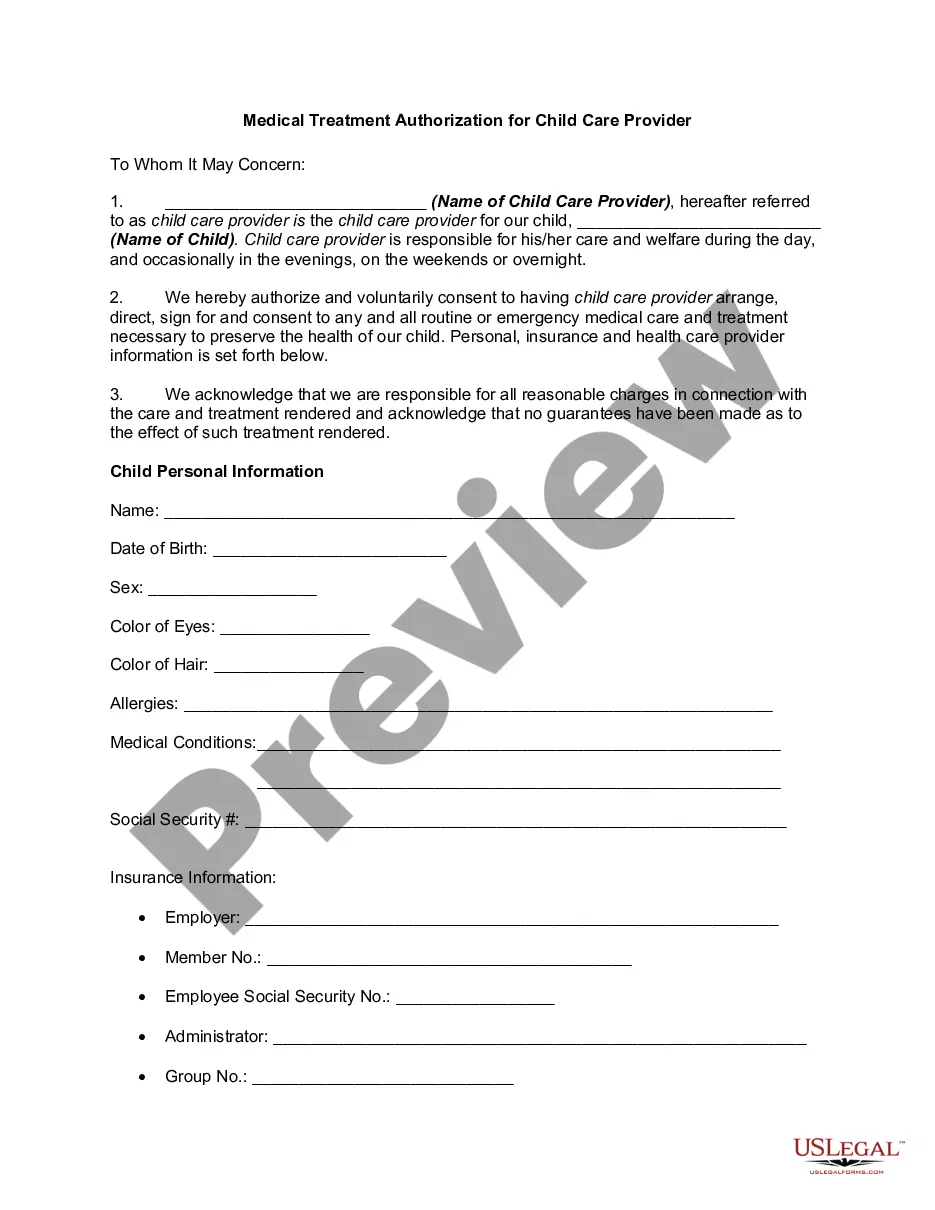
- Medical treatment authorization: Grants permission for the daycare to arrange medical care for the child.
- Termination procedure: Specifies how either party can terminate the agreement.
- Governing law: States which jurisdiction's laws govern the agreement.
When to use this document
This agreement should be used when a parent is enrolling their child in a daycare or child care facility. It is essential for establishing expectations regarding care, payment, and medical authorizations. This form is particularly important for parents who want to ensure their child can receive immediate medical attention if necessary while in the care of others.
Who needs this form
- Parents or legal guardians seeking daycare services for their children.
- Daycare providers who need a standardized agreement for their services.
- Individuals operating a childcare facility wanting to formalize their care arrangement.
How to prepare this document
- Identify the parties: Fill in the names and addresses of the daycare provider and the parent.
- Enter child information: Include the child's name and date of birth.
- Specify payment details: Clearly outline the rates, payment schedule, and any additional fees.
- Include medical information: Provide the childâs allergy, medical conditions, and healthcare provider details.
- Obtain signatures: Ensure both parties sign the agreement to make it legally binding.
Is notarization required?
This form does not typically require notarization unless specified by local law. It's important to check your stateâs legal requirements to ensure compliance.
Get your form ready online
Our built-in tools help you complete, sign, share, and store your documents in one place.
Make edits, fill in missing information, and update formatting in US Legal Forms—just like you would in MS Word.
Download a copy, print it, send it by email, or mail it via USPS—whatever works best for your next step.
Sign and collect signatures with our SignNow integration. Send to multiple recipients, set reminders, and more. Go Premium to unlock E-Sign.
If this form requires notarization, complete it online through a secure video call—no need to meet a notary in person or wait for an appointment.
We protect your documents and personal data by following strict security and privacy standards.

Make edits, fill in missing information, and update formatting in US Legal Forms—just like you would in MS Word.

Download a copy, print it, send it by email, or mail it via USPS—whatever works best for your next step.

Sign and collect signatures with our SignNow integration. Send to multiple recipients, set reminders, and more. Go Premium to unlock E-Sign.

If this form requires notarization, complete it online through a secure video call—no need to meet a notary in person or wait for an appointment.

We protect your documents and personal data by following strict security and privacy standards.
Mistakes to watch out for
- Not providing complete medical information, which can hinder emergency care.
- Failing to specify payment schedules clearly, leading to confusion.
- Omitting signatures from both parties, making the agreement unenforceable.
Why use this form online
- Convenient access and editable format to suit individual needs.
- Guidance from licensed attorneys ensures the agreement is comprehensive and up to date.
- Immediate download allows parents to complete the form quickly.
Legal use & context
- This form is legally binding once signed by both parties.
- It may be subject to state-specific regulations, so local laws should be reviewed.
- The medical authorization included protects the child's health by allowing prompt medical response.
Key takeaways
- The Daycare Agreement secures care expectations and medical decisions.
- Consult state laws to ensure compliance and validity.
- Provide detailed child, payment, and medical information for comprehensive coverage.
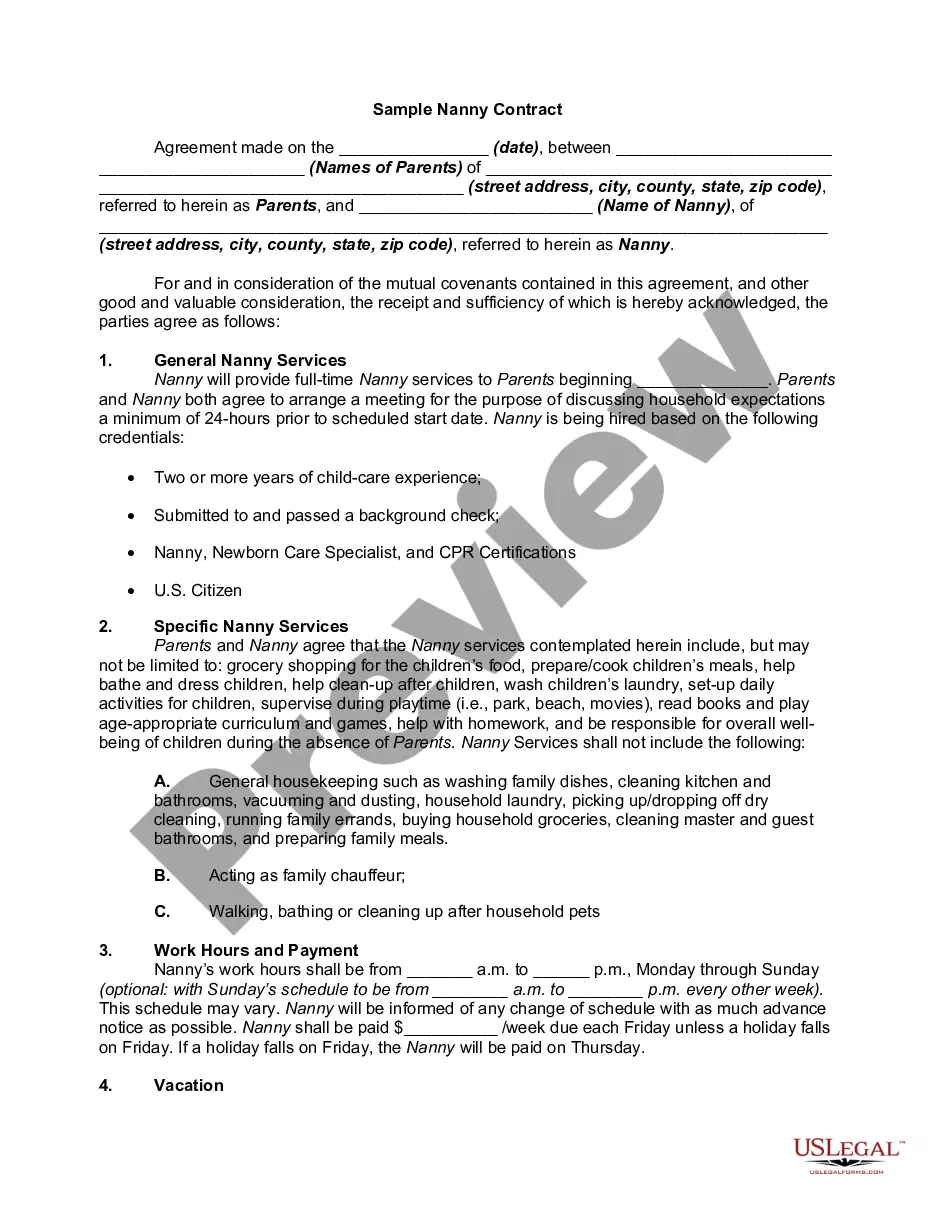
Looking for another form?

Form popularity
FAQ
Obtaining informed consent in medicine is process that should include: (1) describing the proposed intervention, (2) emphasizing the patient's role in decision-making, (3) discussing alternatives to the proposed intervention, (4) discussing the risks of the proposed intervention and (5) eliciting the patient's
HIPAA authorization is consent obtained from a patient or health plan member that permits a covered entity or business associate to use or disclose PHI to an individual/entity for a purpose that would otherwise not be permitted by the HIPAA Privacy Rule.
This should include names, titles, addresses, and contact information so you are precisely clear. Some patients aren't private with their medical information and may want to give you permission to share their records with anyone.
The core elements of a valid authorization include: A meaningful description of the information to be disclosed. The name of the individual or the name of the person authorized to make the requested disclosure. The name or other identification of the recipient of the information.
The grandparents' medical consent form allows a parent or legal guardian to hand over all responsibility regarding their child's health care decisions to one of the child's grandparents.
You should never sign a Medical Records Release form that authorizes the insurance adjuster, your employer, or the attorney for your employer and its insurance carrier to speak with your health care providers directly. There are no exceptions to this rule.
No, a HIPAA Authorization does not need to be notarized. In fact, you don't even need a witness to see you sign the form.
Step 1 Find a Competent Guardian. Step 2 Inform the Guardian of Child's Medical Issues (if any) Step 3 Inform the Guardian of the Child's Medications. Step 4 Determine an End Date. Step 5 Sign the Document.
Q: Do I need to notarize the signed form? A: No. The HIPAA Privacy Rule does not require you to notarize authorization forms or have a witness. Though taking the time to fill out an authorization form and get a patient's signature is an extra step, it's an important one that you can't afford to overlook.