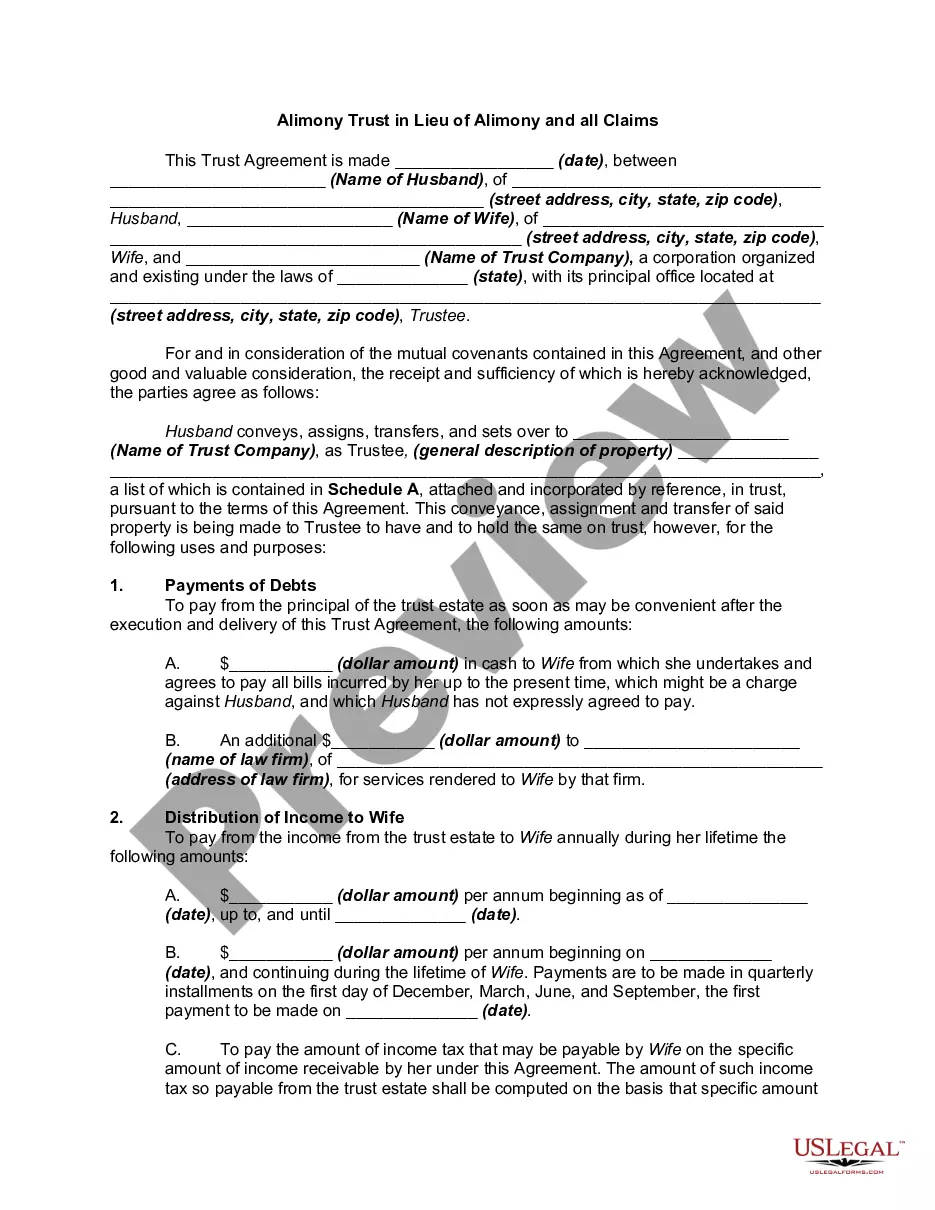
Alimony Trust in Lieu of Alimony and all Claims
Understanding this form
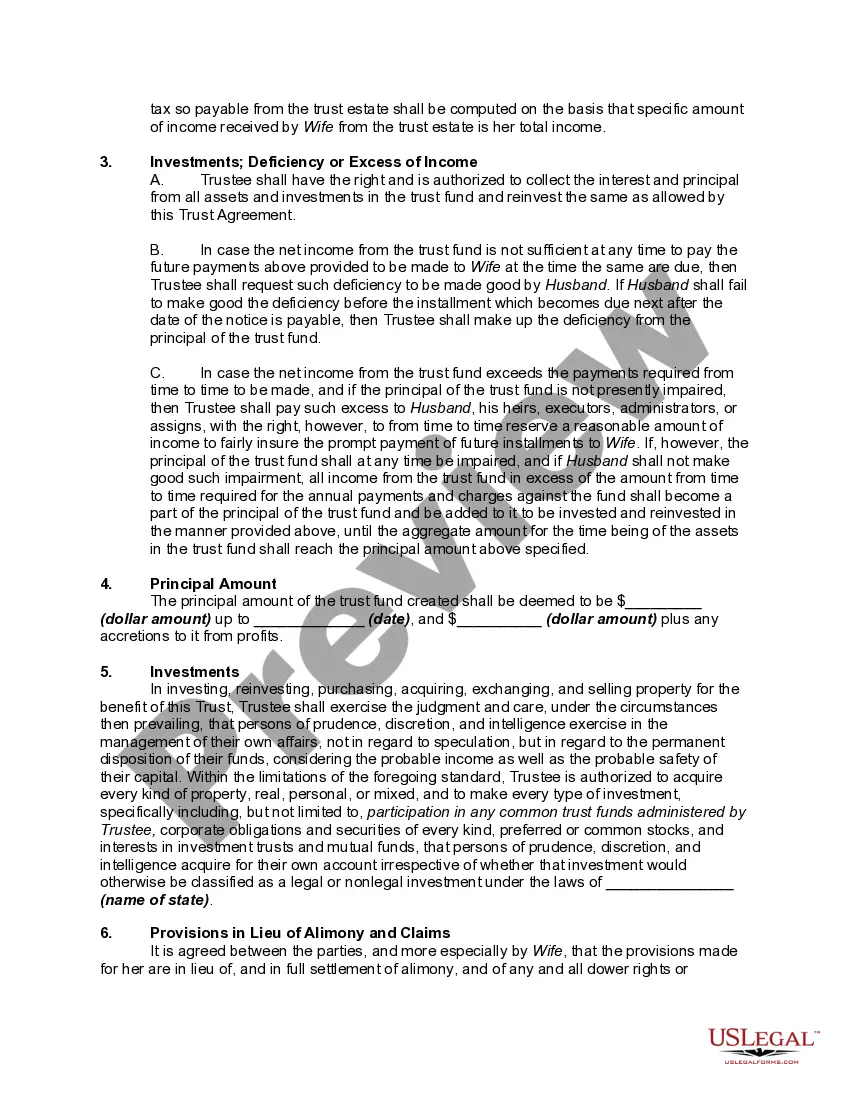
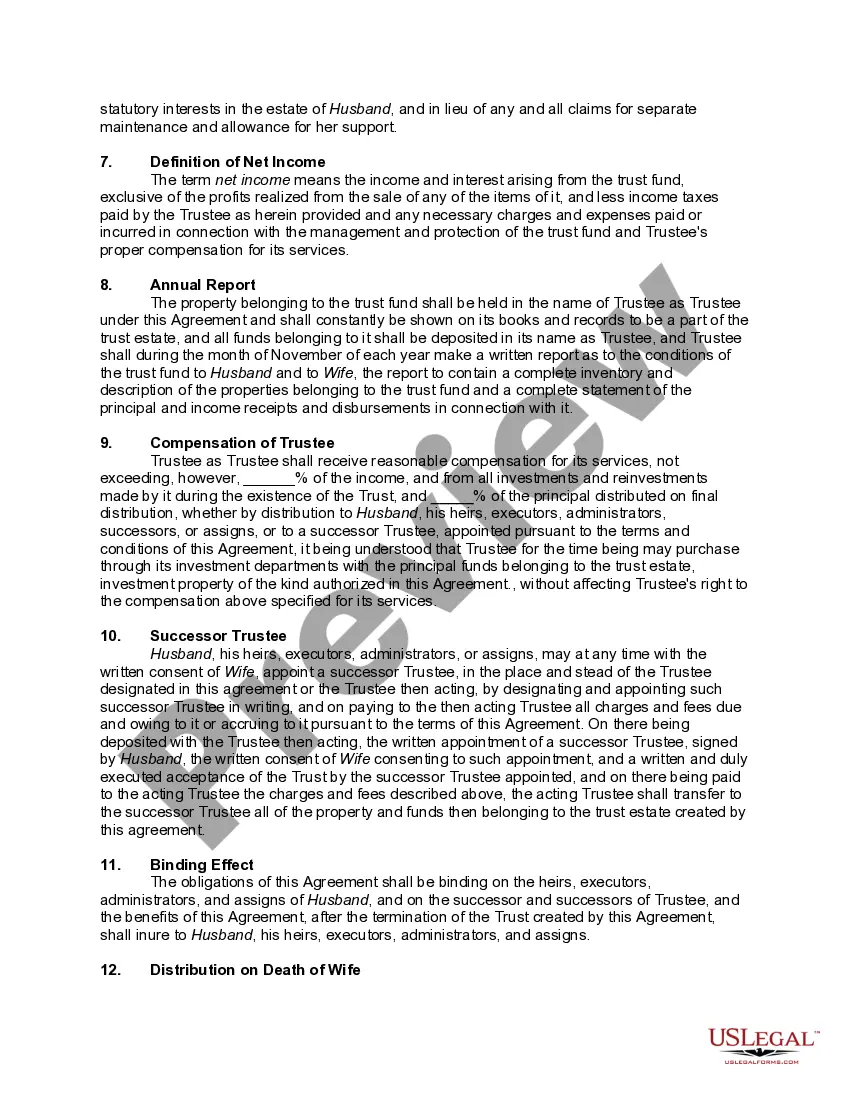
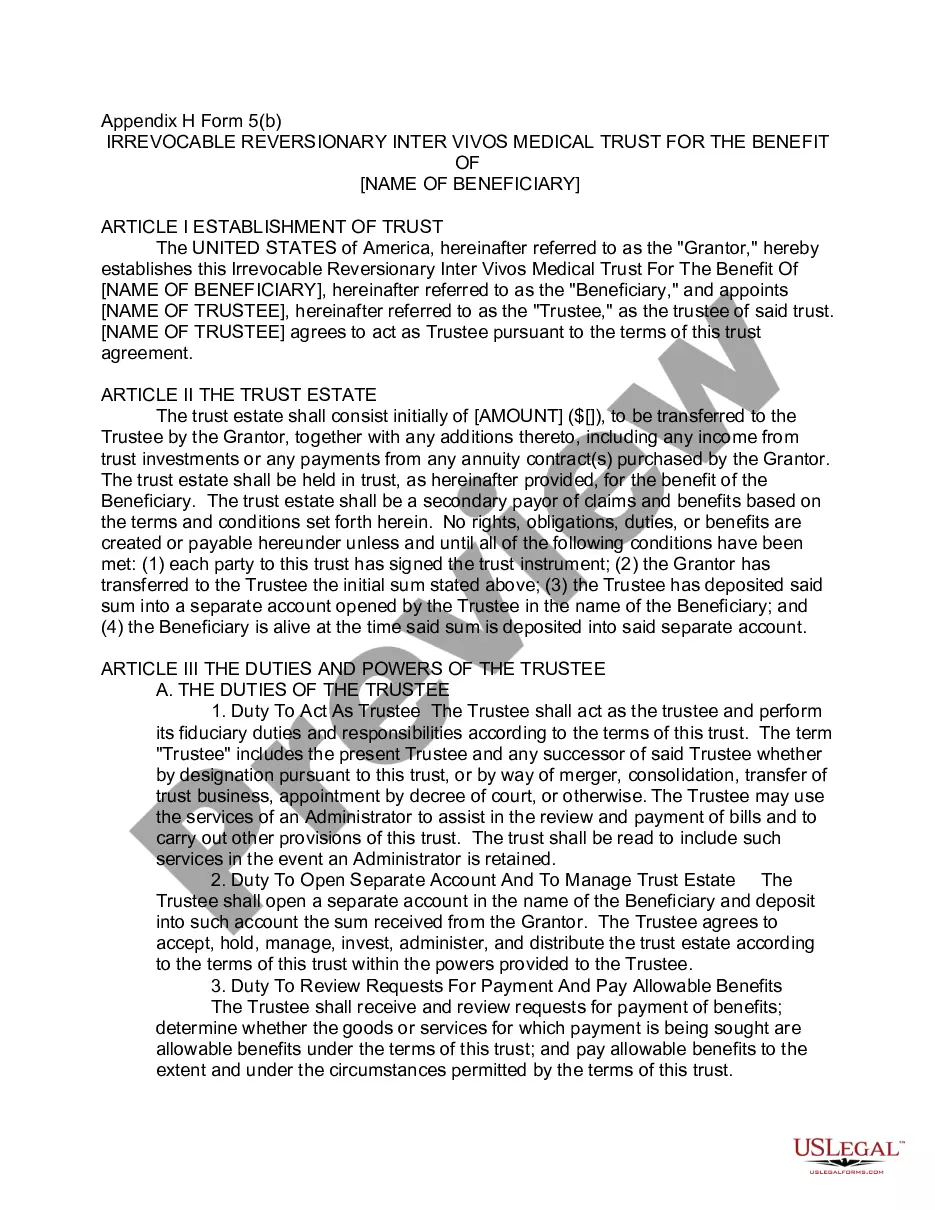
The Alimony Trust in Lieu of Alimony and all Claims is a legal agreement that establishes a trust to make alimony and child support payments to one spouse through a trustee. This arrangement differs from traditional alimony as payments are derived from trust assets, ensuring financial stability and clarifying the spousesâ obligations. It serves as an alternative to direct alimony payments, addressing financial claims that may arise post-divorce.
Key components of this form
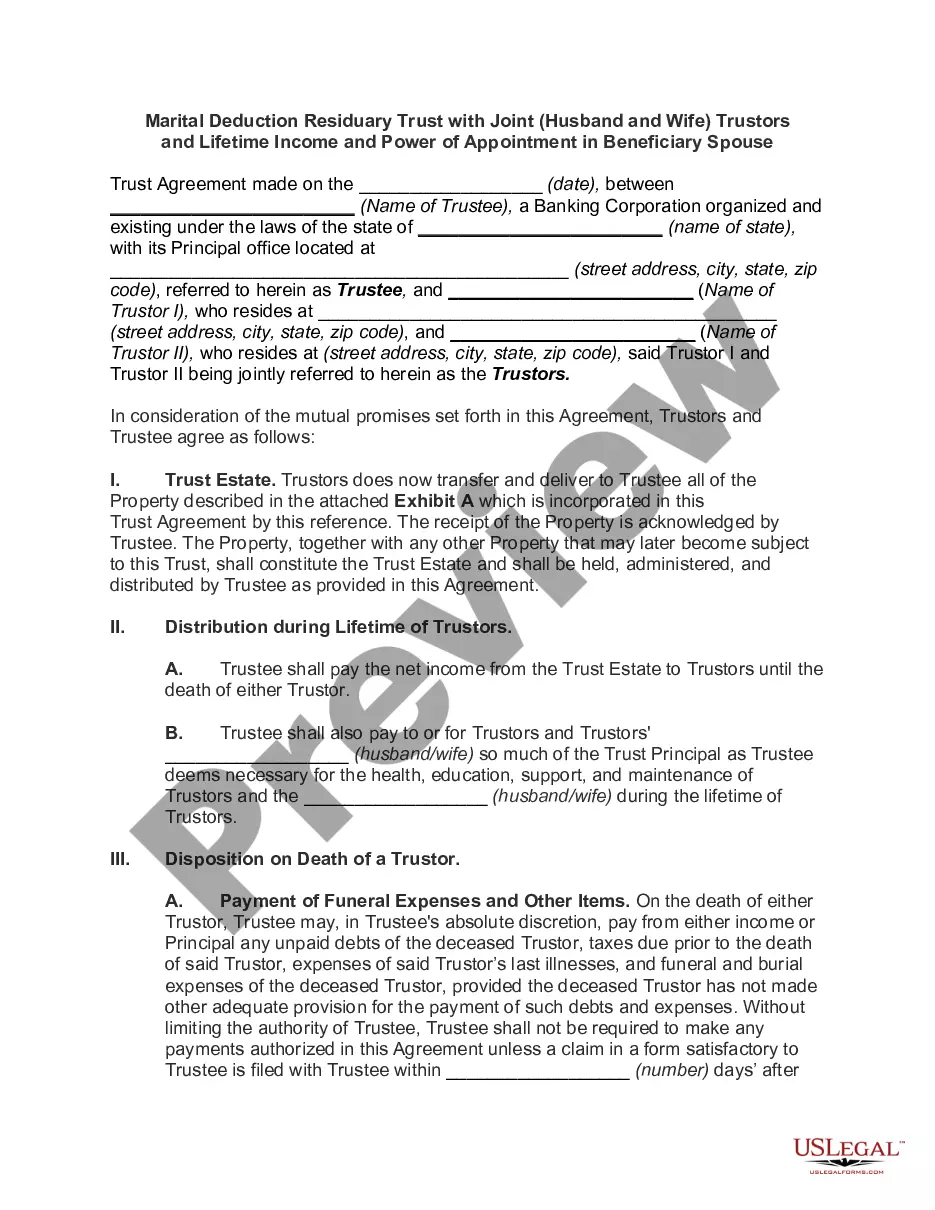
- The date and names of the parties involved, including their addresses.
- A detailed description of the property being transferred into the trust.
- Specific provisions for payments to the receiving spouse and any conditions for additional payments.
- Guidelines for managing the trustâs investments and handling deficiencies in income.
- Binding effects of the agreement on heirs and successors of both parties.
- Instructions for assigning trustee duties and potential successor trustees.



Situations where this form applies
This form is useful when a court has mandated alimony payments, and the paying spouse wishes to place adequate assets in a trust to cover these obligations. It clarifies payment arrangements and protects both partiesâ interests in circumstances such as divorce settlements, especially where ongoing financial support is needed over time.
Who needs this form
- Spouses undergoing divorce proceedings where alimony is a factor.
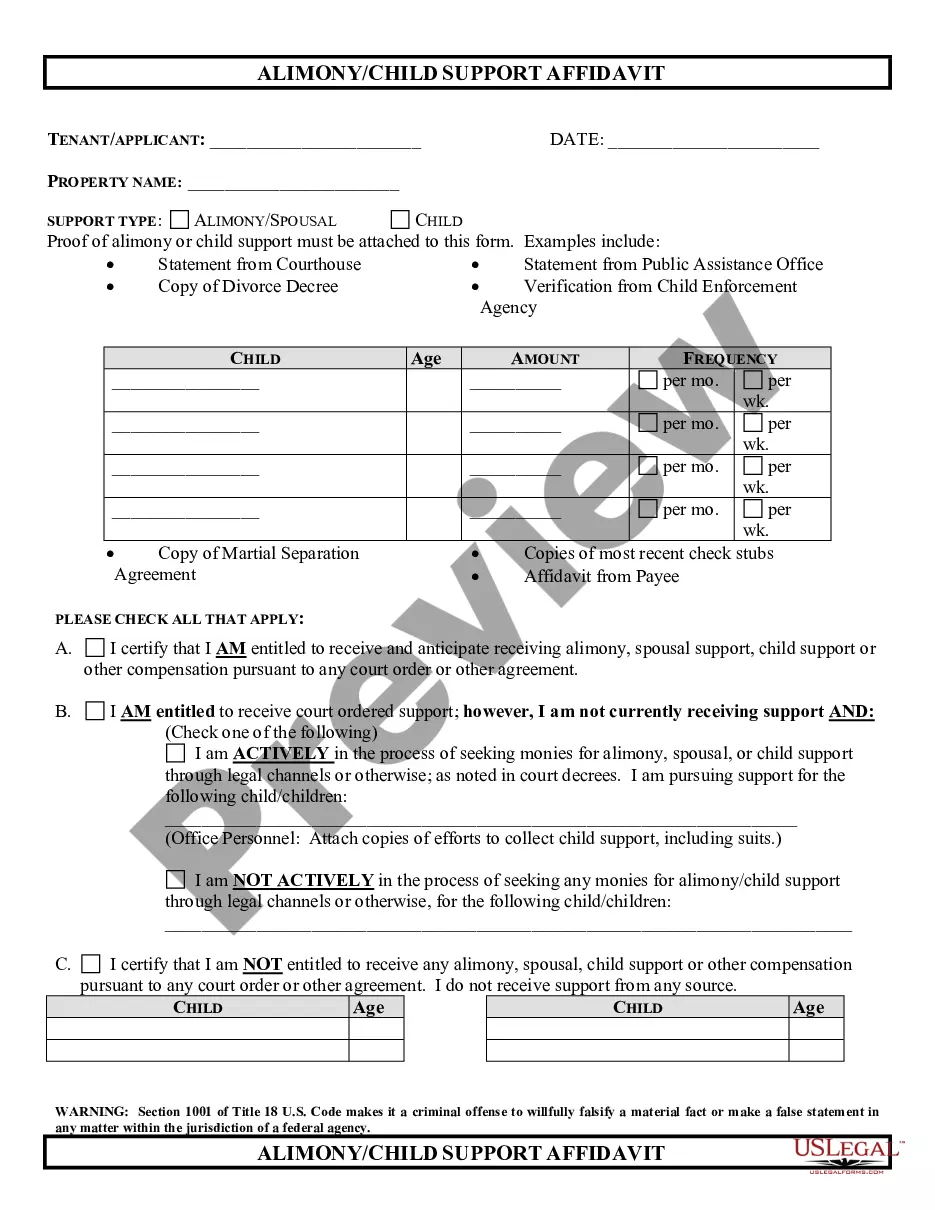
- Individuals seeking to establish a structured financial arrangement for child support.
- Trustees appointed to manage the disbursement of funds to the receiving spouse.
Steps to complete this form
- Identify and enter the parties involved, including their complete names and addresses.
- Specify the assets or properties that will be transferred into the trust.
- Determine and fill in the payment amounts and dates for the receiving spouse.
- Outline the procedures for managing the trustâs income and investments.
- Ensure all parties sign the agreement and attach any necessary schedules.
Notarization requirements for this form
This form does not typically require notarization unless specified by local law. It is recommended to check with legal counsel to ensure compliance with specific state requirements.
Get your form ready online
Our built-in tools help you complete, sign, share, and store your documents in one place.
Make edits, fill in missing information, and update formatting in US Legal Forms—just like you would in MS Word.
Download a copy, print it, send it by email, or mail it via USPS—whatever works best for your next step.
Sign and collect signatures with our SignNow integration. Send to multiple recipients, set reminders, and more. Go Premium to unlock E-Sign.
If this form requires notarization, complete it online through a secure video call—no need to meet a notary in person or wait for an appointment.
We protect your documents and personal data by following strict security and privacy standards.

Make edits, fill in missing information, and update formatting in US Legal Forms—just like you would in MS Word.

Download a copy, print it, send it by email, or mail it via USPS—whatever works best for your next step.

Sign and collect signatures with our SignNow integration. Send to multiple recipients, set reminders, and more. Go Premium to unlock E-Sign.

If this form requires notarization, complete it online through a secure video call—no need to meet a notary in person or wait for an appointment.

We protect your documents and personal data by following strict security and privacy standards.
Avoid these common issues
- Failing to clearly define the trust assets, leading to disputes later.
- Omitting to specify payment amounts and schedules accurately.
- Not ensuring all parties' signatures are collected, which may invalidate the agreement.
- Neglecting to consult state laws, which could result in non-compliance.
Benefits of completing this form online
- Convenient access to legal documentation without the need for physical visits.
- Editable templates allow for customization to meet individual needs.
- Real-time updates ensure you are using the most current legal forms.
Main things to remember
- The Alimony Trust in Lieu of Alimony provides a structured approach to support payments.
- Consult local laws for specific requirements related to trusts and alimony.
- Thoroughly complete and accurately draft all sections of the form to ensure enforceability.
Looking for another form?
Form popularity
FAQ
A judge may order you to pay spousal support for a set period of time, to give your spouse time to get back to work.If your spouse is capable of work but refuses to get a job, that is no longer your problem once you have fulfilled your court obligations for paying support.
Lump sum payments of property made in a divorce are typically taxable.
Generally, money that is transferred between (ex)spouses as part of a divorce settlementsuch as to equalize assetsis not taxable to the recipient and not deductible by the payer.Such plans are always taxable on withdrawal because the money was not taxed when it was contributed.
Is An Alimony Buyout Tax Deductible? Maintenance payments are generally tax deductible to the payer and taxable to the payee. If your divorce decree called for alimony buyout, however, the payment is likely not tax deductible to you or taxable to your ex-wife.
For recently divorced Americans, alimony payments are no longer tax-deductible for the payer, and they aren't considered taxable income for the person receiving them, ending a decades-long practice. The changes affect divorce agreements signed after Dec. 31, 2018.
The recapture rule forces the alimony payer, almost always the ex-husband, to report as income the alimony payments he previously deducted, which means the ex-wife is entitled to reduce from income the alimony payments she previously received.
Is an alimony buyout tax deductible? No, an alimony buyout is not tax-deductible.
To calculate the 2nd year recapture amount, first subtract the 2nd year maintenance payments from the 3rd year maintenance payments. Next, subtract $15,000 from that amount. If the result is a positive number, then that is the 2nd year recapture amount. Otherwise, the 2nd year recapture amount is zero.