Employment Agreement with Cook who has a Learning Disability
Understanding this form
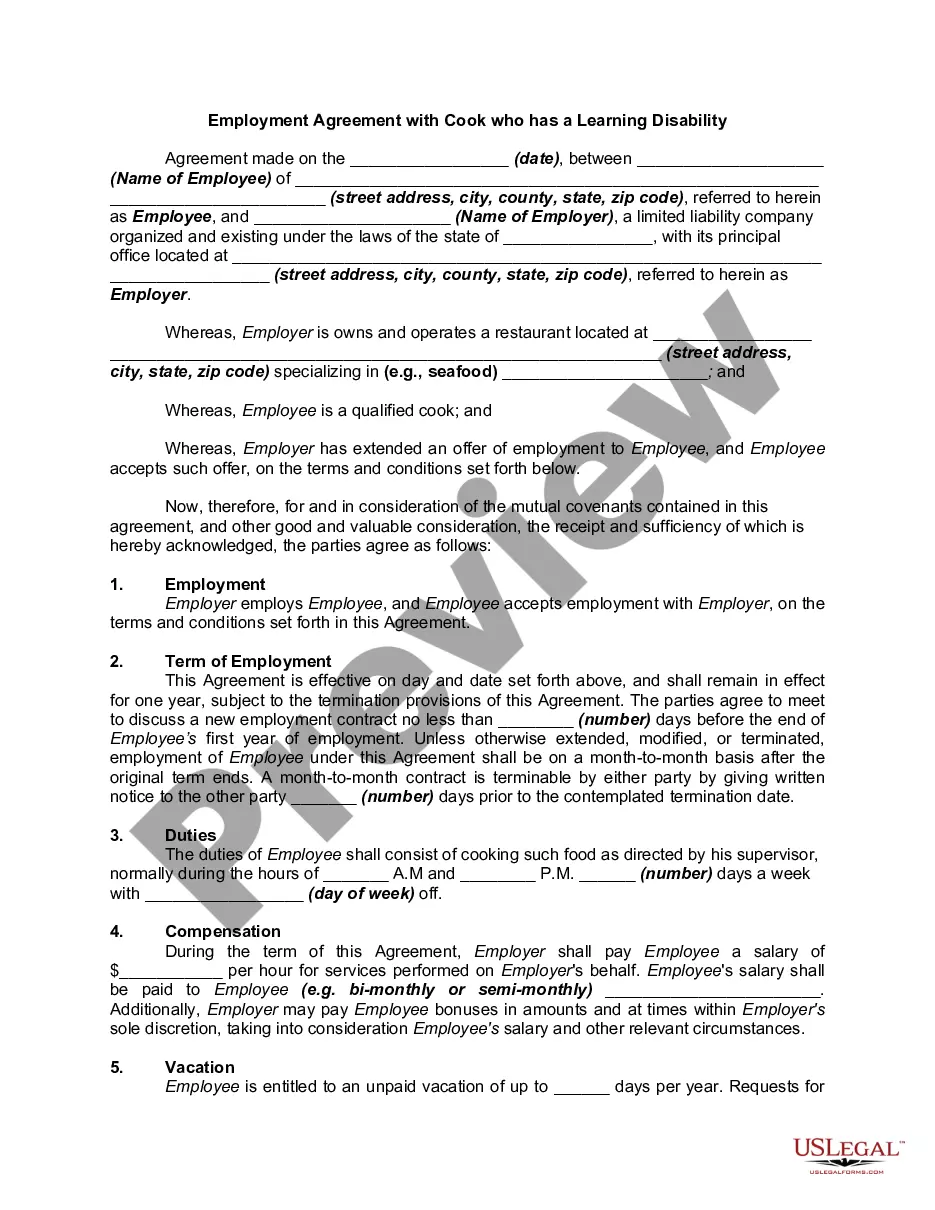
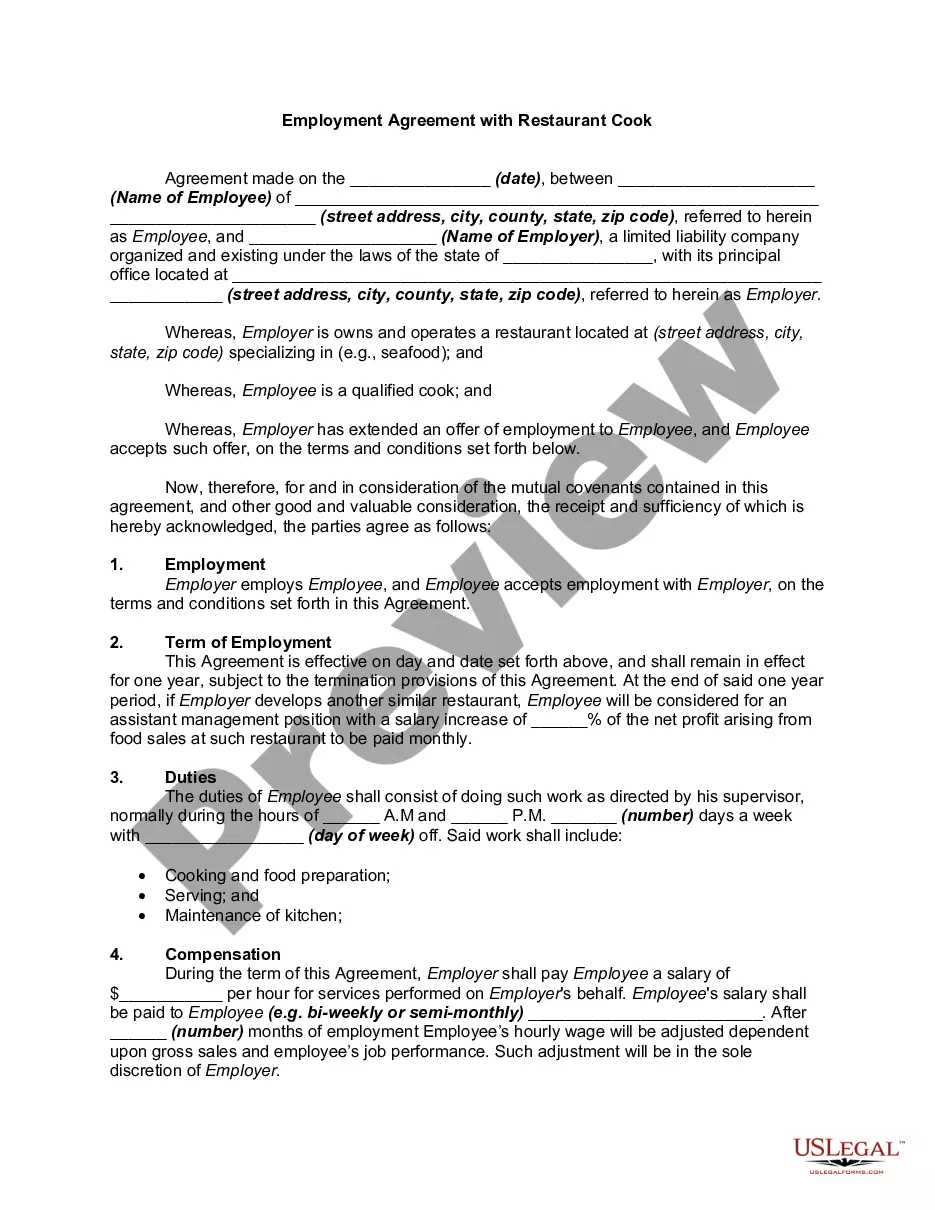
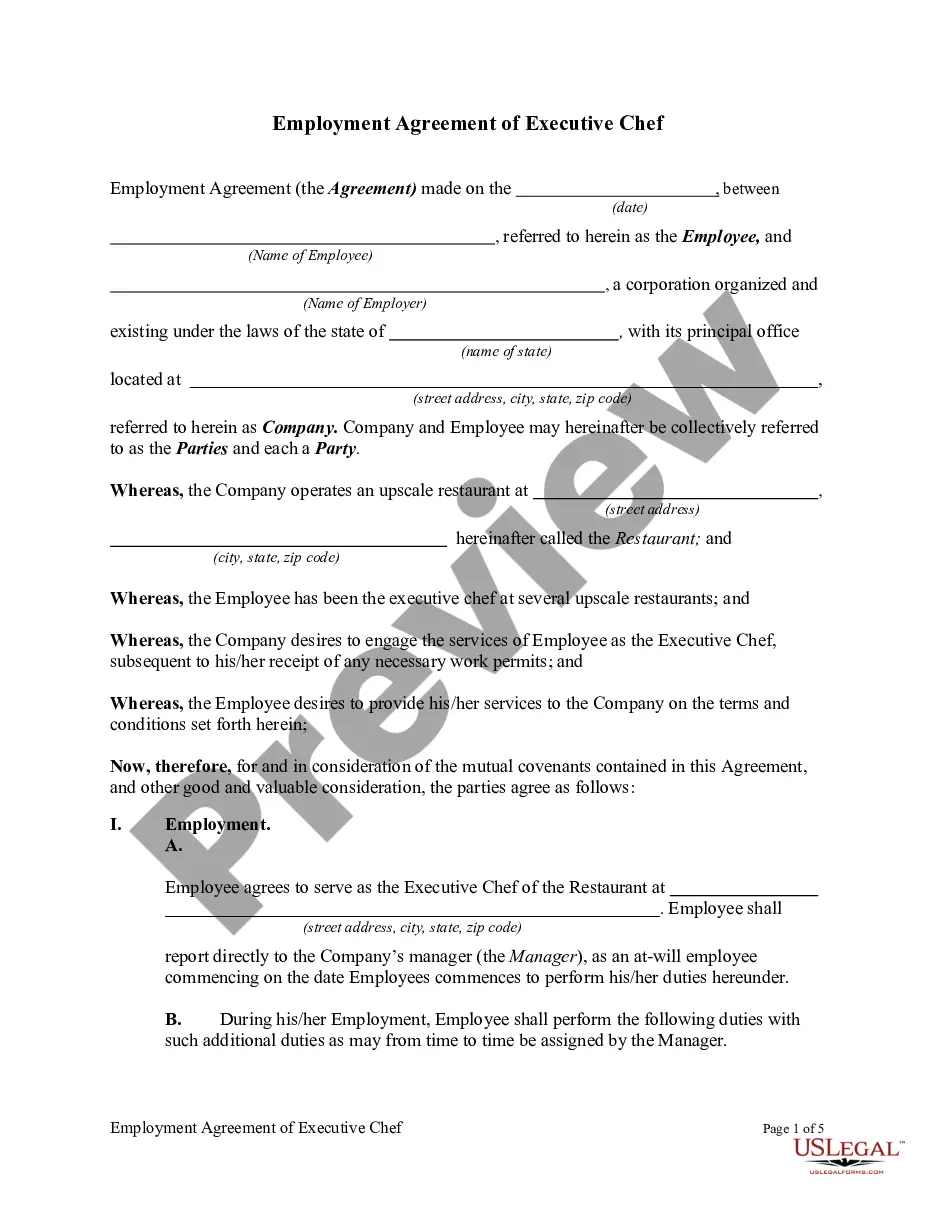
The Employment Agreement with Cook who has a Learning Disability is a legal document establishing the terms of employment between a cook with a learning disability and an employer, specifically in a restaurant setting. This agreement outlines the responsibilities, compensation, and necessary accommodations to support the employeeâs needs. Unlike general employment agreements, this form includes specific provisions for reasonable accommodations to assist an employee with a learning disability to perform their job duties effectively.
Main sections of this form
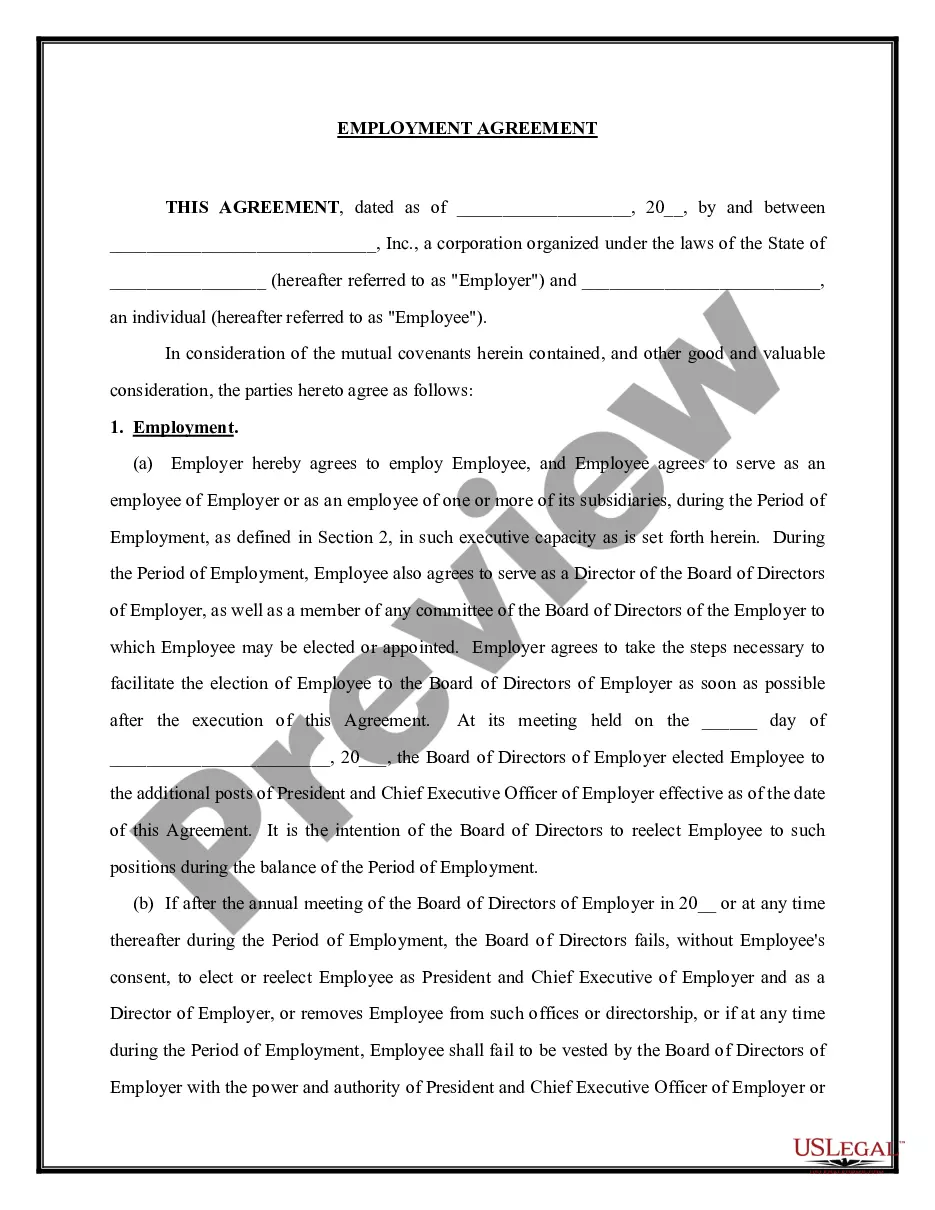
- Identification of the parties involved (employee and employer).
- Details of the employment terms, including job responsibilities and duration.
- Compensation structure including salary and bonuses.
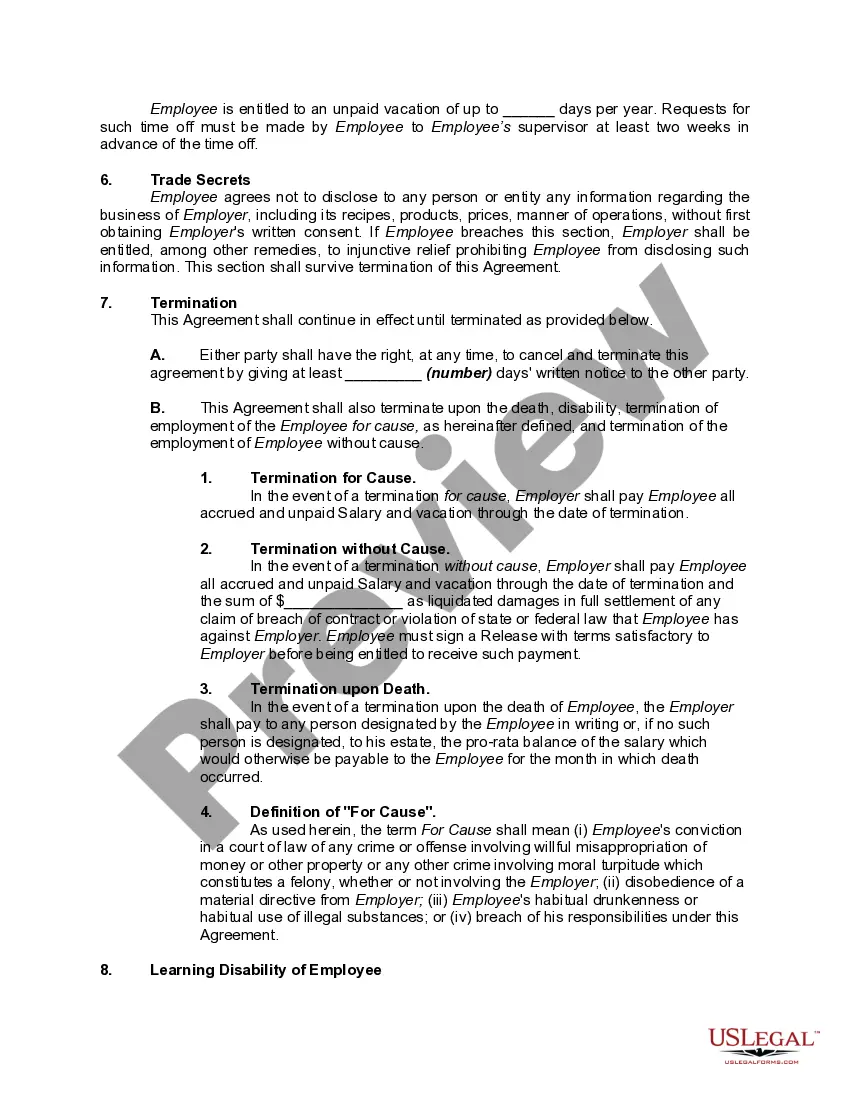
- Provisions regarding vacation days and termination procedures.
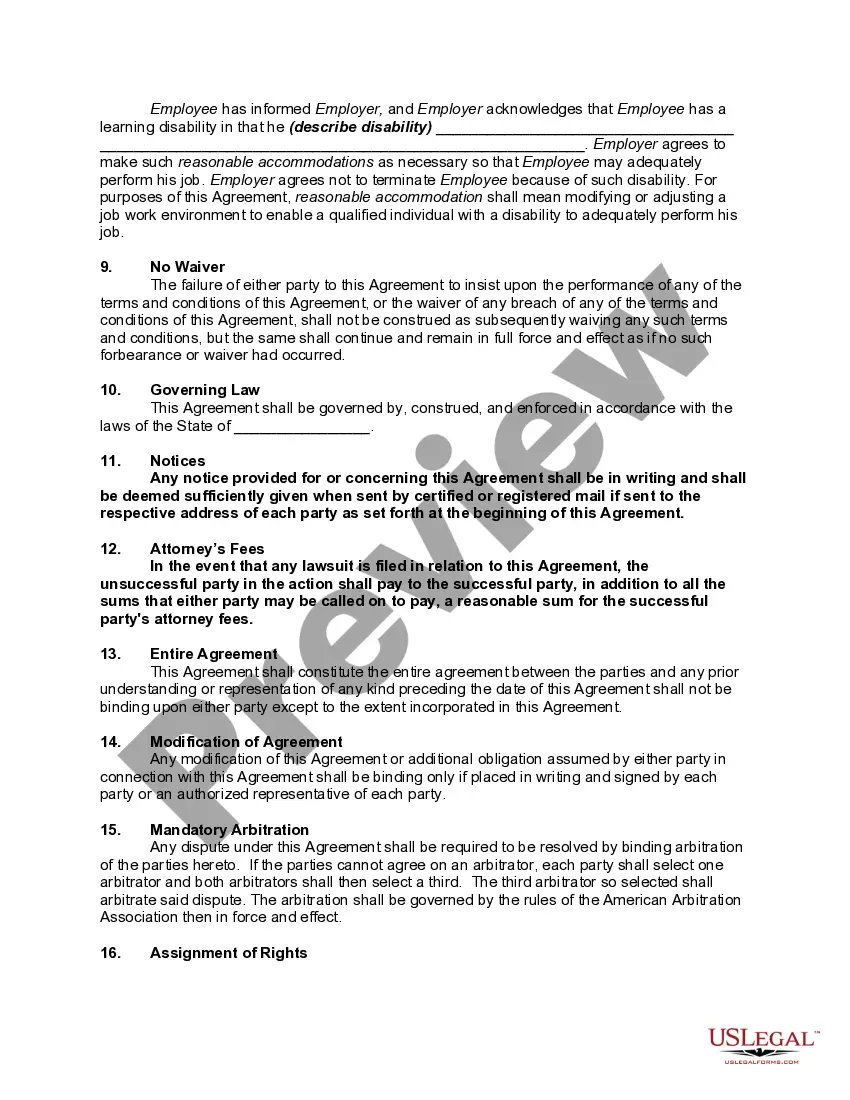
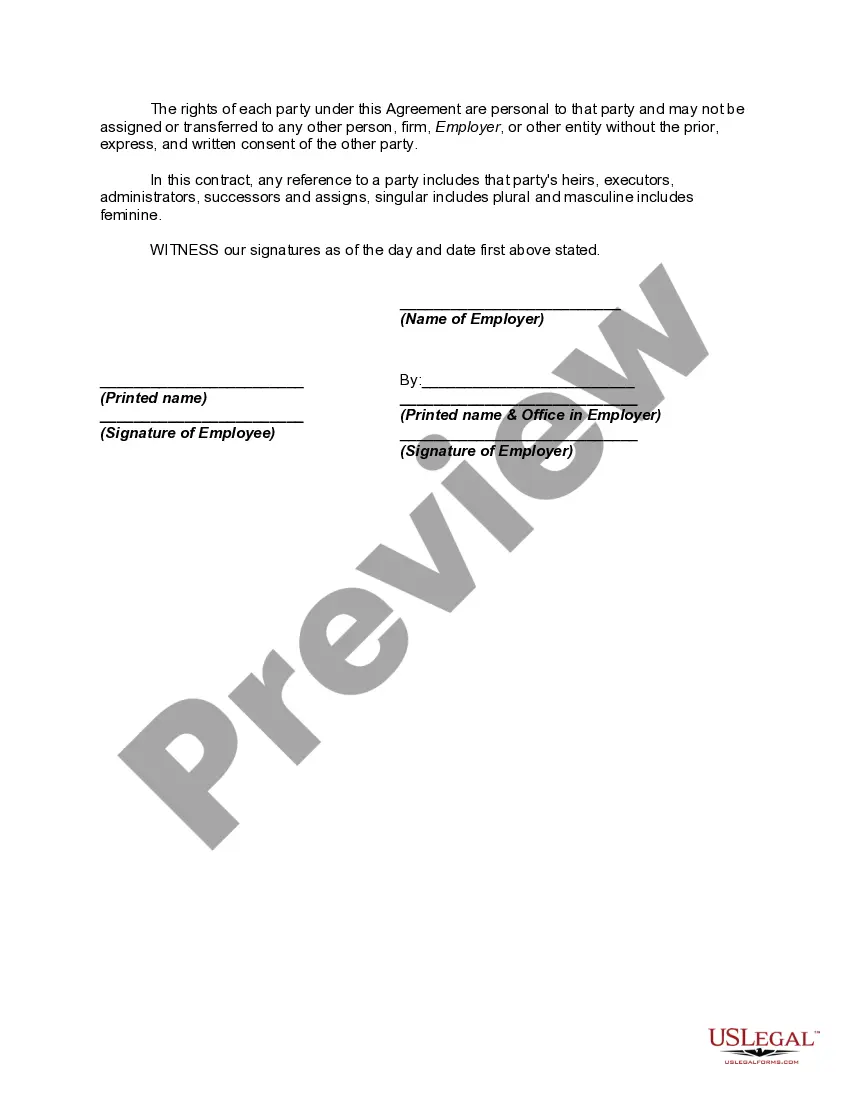
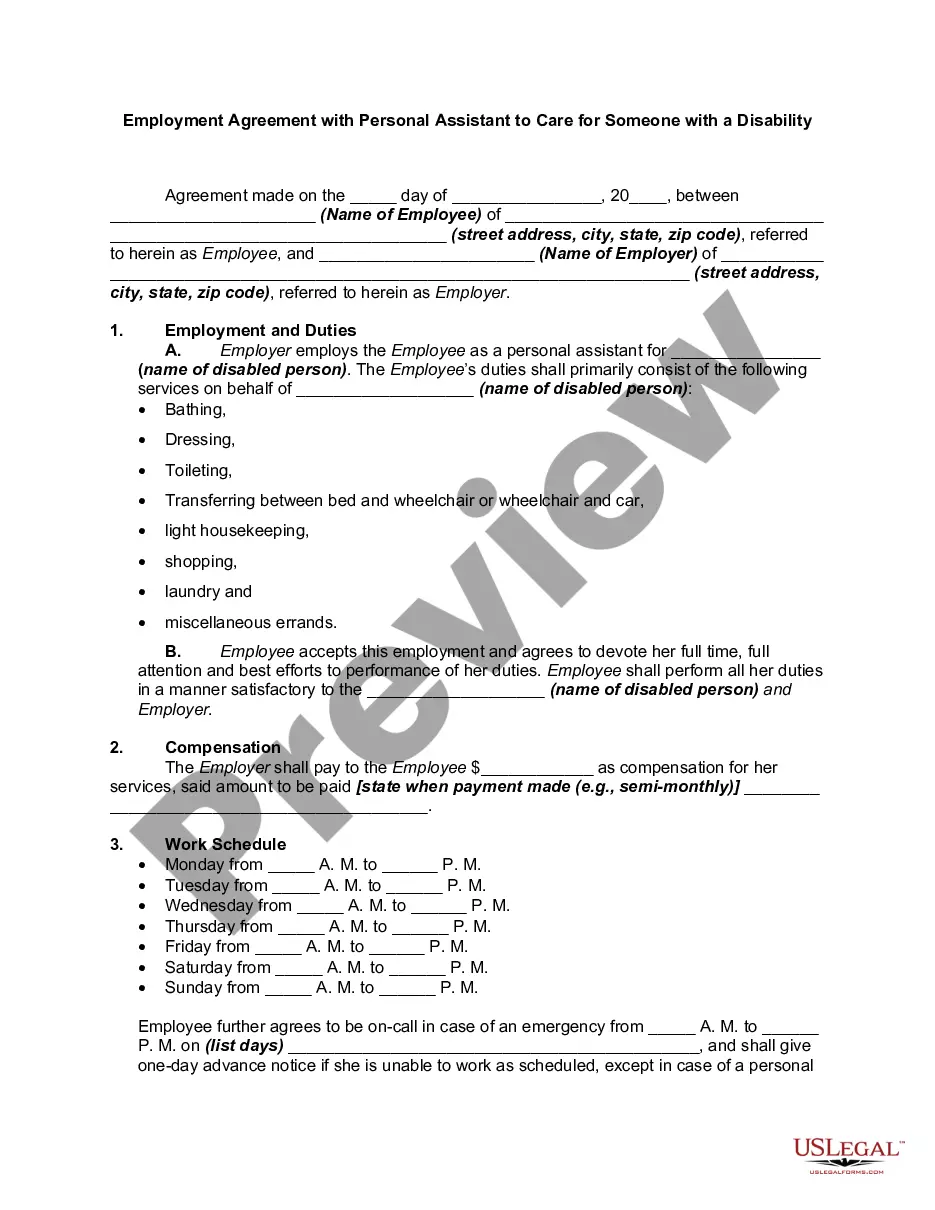
- Clause addressing the employee's learning disability and necessary accommodations.
- Governing law and dispute resolution through arbitration.
When to use this document
This Employment Agreement should be used when hiring a cook who has a learning disability, ensuring both parties understand their rights and obligations. Utilize this form to create a clear, structured employment relationship that accommodates the employee's unique needs, enhancing their ability to perform effectively in the role.
Who can use this document
- Employers looking to hire cooks who have disclosed learning disabilities.
- Restaurants seeking to comply with legal requirements regarding disabilities in the workplace.
- Human resources personnel responsible for drafting employment agreements that support inclusive hiring practices.
Completing this form step by step
- Identify and fill in the names and addresses of both the employer and employee.
- Specify the job title, duties, and work schedule for the employee.
- Detail the compensation, including salary and payment frequency.
- Include provisions for vacation days and conditions for termination.
- Document the employee's learning disability and outline any reasonable accommodations agreed upon.
Notarization requirements for this form
This form does not typically require notarization unless specified by local law. However, it is advisable to have it signed in the presence of witnesses to ensure its enforceability.
Get your form ready online
Our built-in tools help you complete, sign, share, and store your documents in one place.
Make edits, fill in missing information, and update formatting in US Legal Forms—just like you would in MS Word.
Download a copy, print it, send it by email, or mail it via USPS—whatever works best for your next step.
Sign and collect signatures with our SignNow integration. Send to multiple recipients, set reminders, and more. Go Premium to unlock E-Sign.
If this form requires notarization, complete it online through a secure video call—no need to meet a notary in person or wait for an appointment.
We protect your documents and personal data by following strict security and privacy standards.

Make edits, fill in missing information, and update formatting in US Legal Forms—just like you would in MS Word.

Download a copy, print it, send it by email, or mail it via USPS—whatever works best for your next step.

Sign and collect signatures with our SignNow integration. Send to multiple recipients, set reminders, and more. Go Premium to unlock E-Sign.

If this form requires notarization, complete it online through a secure video call—no need to meet a notary in person or wait for an appointment.

We protect your documents and personal data by following strict security and privacy standards.
Common mistakes to avoid
- Failing to specify the reasonable accommodations needed for the employee.
- Neglecting to outline the termination procedures clearly.
- Leaving out the governing law applicable to the employment agreement.
Why complete this form online
- Easy access to a legally vetted template drafted by licensed attorneys.
- Convenient download for immediate use and customization.
- Time-saving by not having to draft an agreement from scratch.
Legal use & context
- This agreement is legally binding once signed by both parties.
- It ensures that the employer provides reasonable accommodations as required under the law.
- Failure to adhere to the agreement could lead to legal disputes regarding employment rights.
Main things to remember
- This Employment Agreement is essential for creating a supportive work environment for cooks with learning disabilities.
- It includes critical provisions for accommodation and clear expectations for both parties.
- Using this form ensures compliance with applicable laws and promotes inclusive hiring practices.
Looking for another form?
Form popularity
FAQ
Subjects and verbs must AGREE with one another in number (singular or plural). Thus, if a subject is singular, its verb must also be singular; if a subject is plural, its verb must also be plural.
While the verb to have has many different meanings, its primary meaning is to possess, own, hold for use, or contain. Have and has indicate possession in the present tense (describing events that are currently happening). Have is used with the pronouns I, you, we, and they, while has is used with he, she, and it.
Use has when the subject is a singular noun or singular pronoun. Use have when the subject is a plural noun or plural pronoun. The first person singular pronoun 'I' also take have.
Use has when the subject is a singular noun or singular pronoun. Use have when the subject is a plural noun or plural pronoun. The first person singular pronoun 'I' also take have.
Have is the root VERB and is generally used alongside the PRONOUNS I / You / We / Ye and They and PLURAL NOUNS. Generally, have is a PRESENT TENSE word. Has is used alongside the PRONOUNS He / She / It and Who and SINGULAR NOUNS.Plural refers to more than one person / animal / thing, etc.
In the present tense, have is the first person singular and plural, second-person singular and plural, and third-person plural conjugation of this verb.
Have is the root VERB and is generally used alongside the PRONOUNS I / You / We / Ye and They and PLURAL NOUNS. Generally, have is a PRESENT TENSE word. Has is used alongside the PRONOUNS He / She / It and Who and SINGULAR NOUNS.
I have to get to school on time. (First person) You have to tell me what you know. (Second person) She has to do well at the tryout if she wants to make the team. (Singular third person) We have to work together on this project. My sister has to stay out of my room. Your friends have to go home now.
While the verb to have has many different meanings, its primary meaning is to possess, own, hold for use, or contain. Have and has indicate possession in the present tense (describing events that are currently happening). Have is used with the pronouns I, you, we, and they, while has is used with he, she, and it.