Endorsement Agreement Between Apparel Company and Licensor of Professional Athlete - Replacing Agreement with former Licensor
Overview of this form
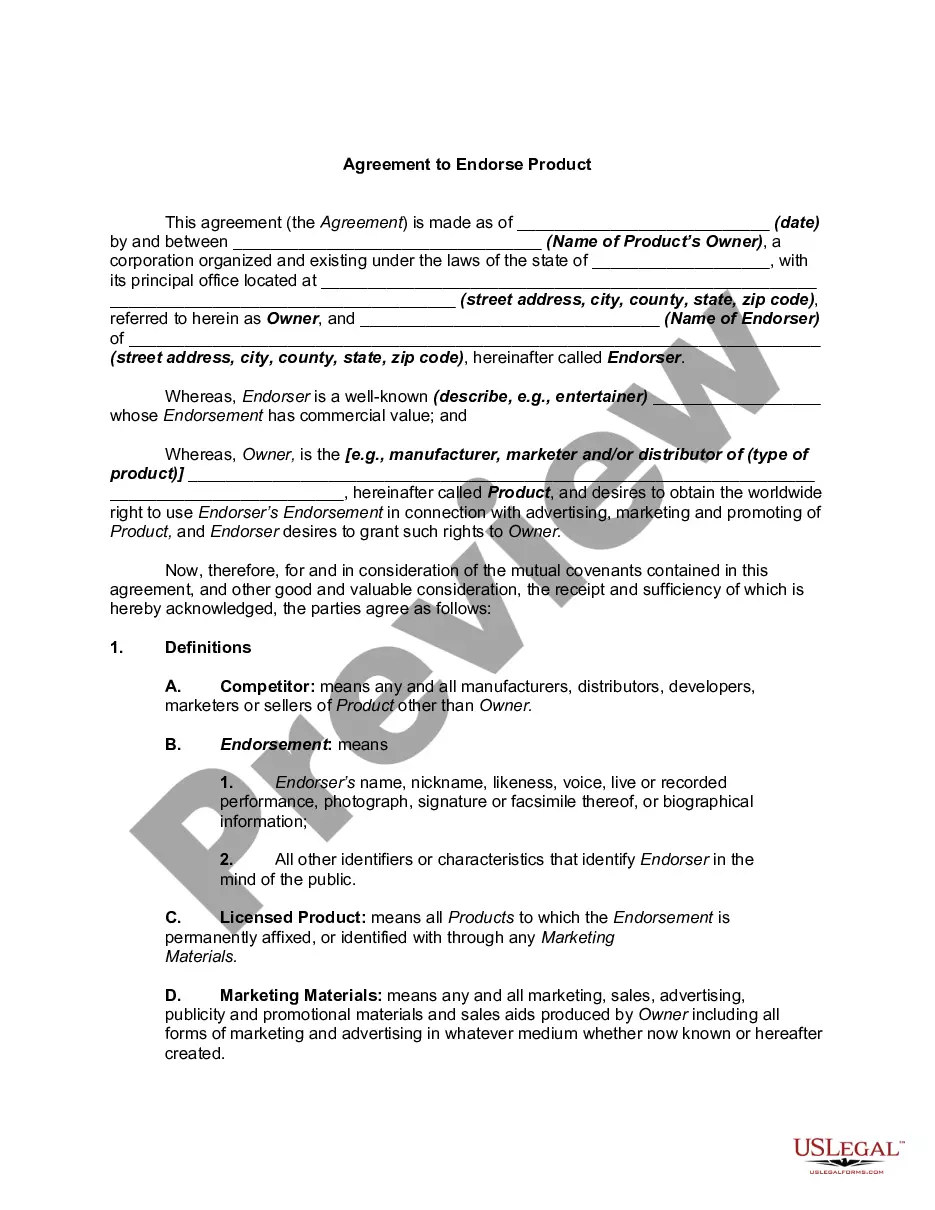
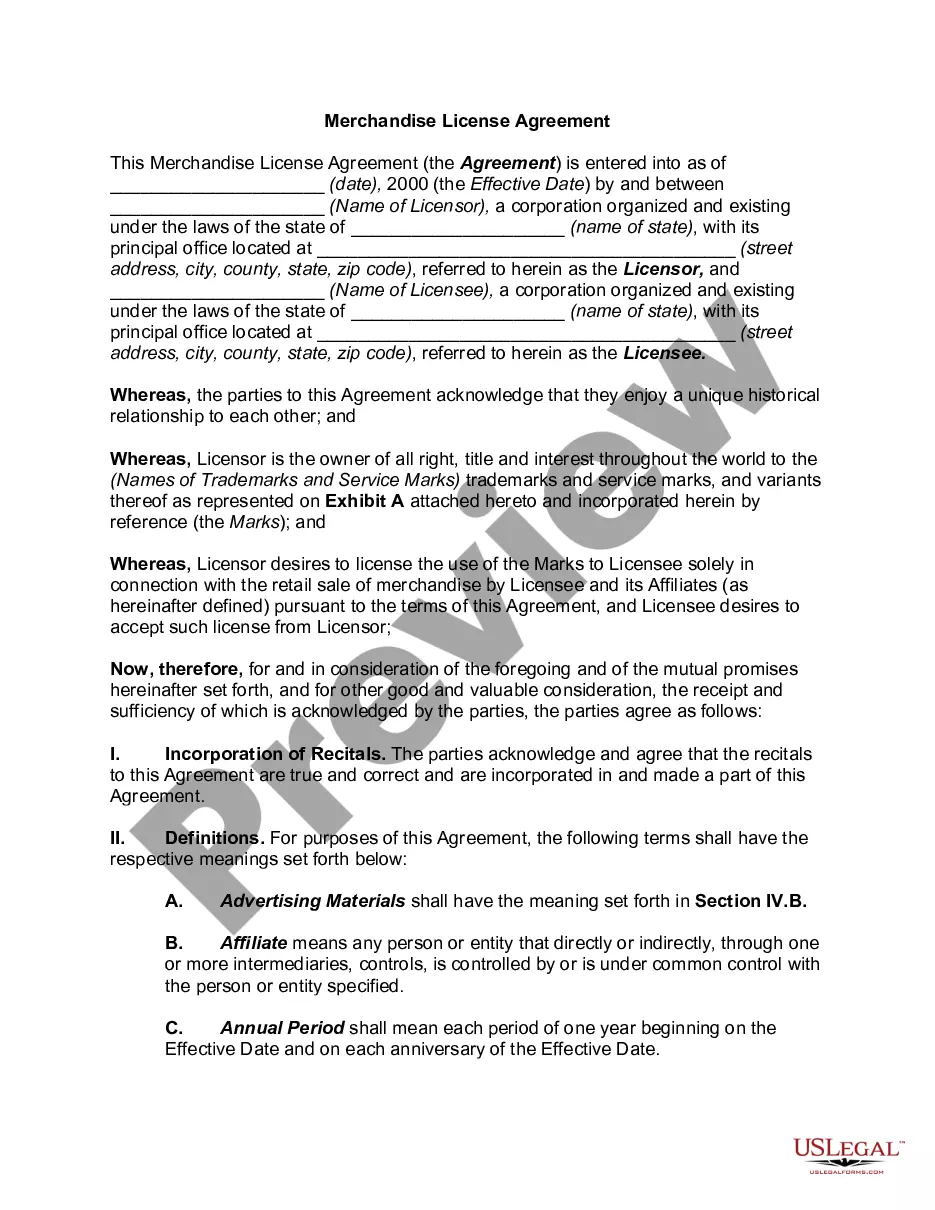
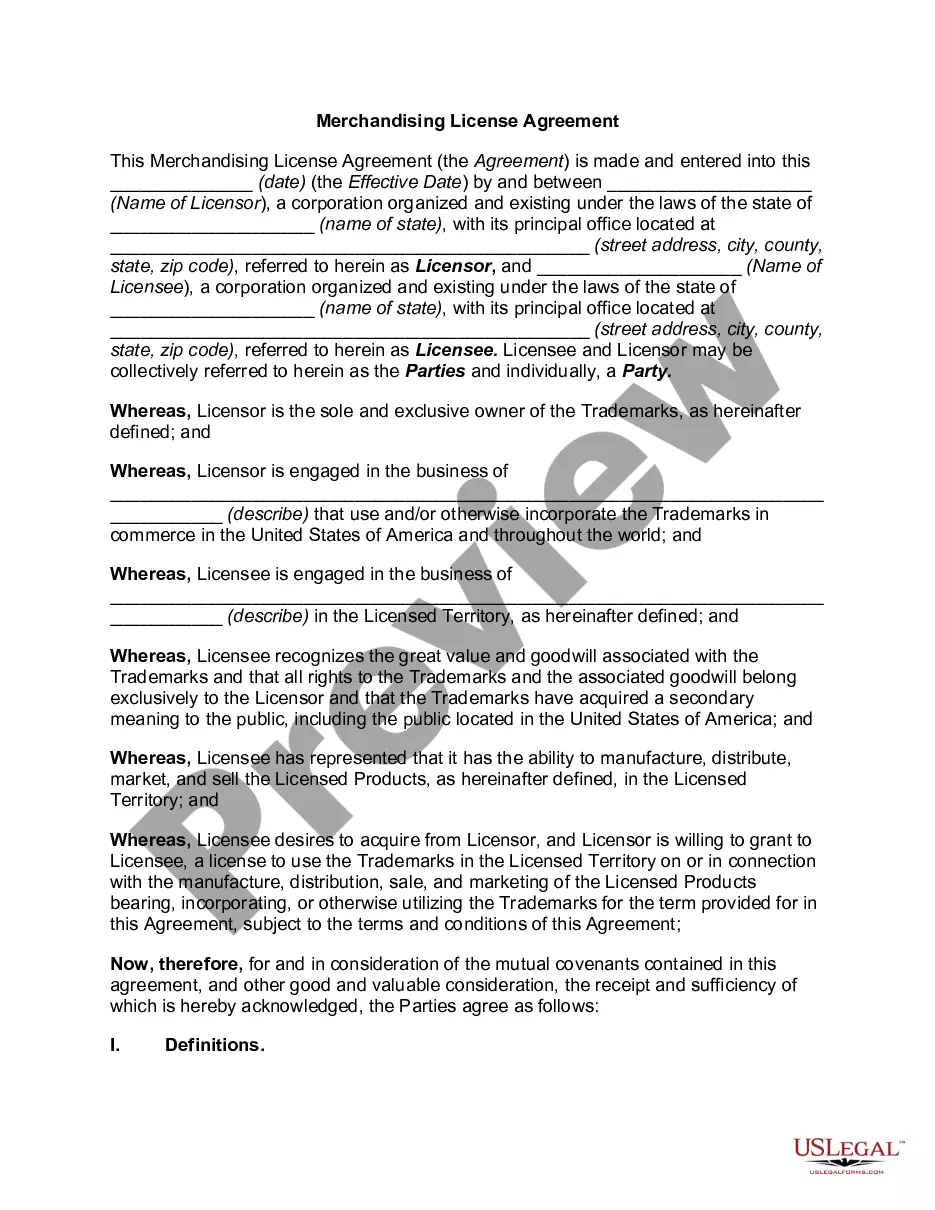
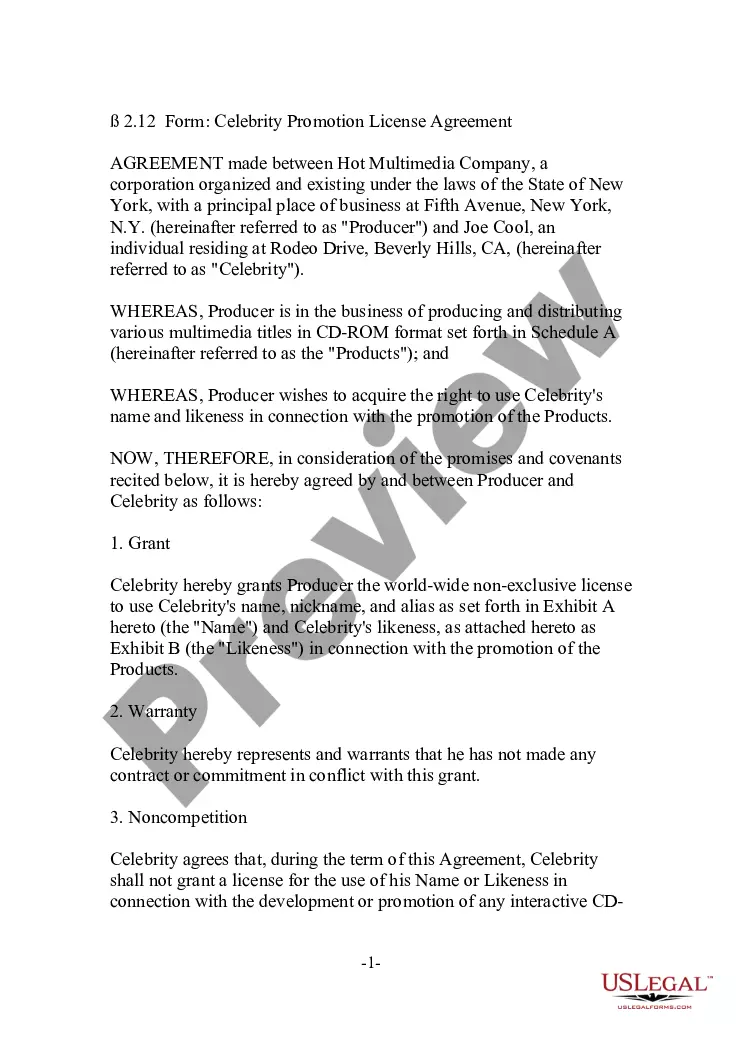
The Endorsement Agreement Between an Apparel Company and a Licensor of a Professional Athlete is a legal document that outlines the terms under which a company can use an athlete's name, image, and likeness in advertising its products. This form is specifically used to replace an existing endorsement agreement with a previous licensor, ensuring the apparel company secures exclusive rights to utilize the athlete's endorsement, enhancing brand value and marketability.
Key parts of this document
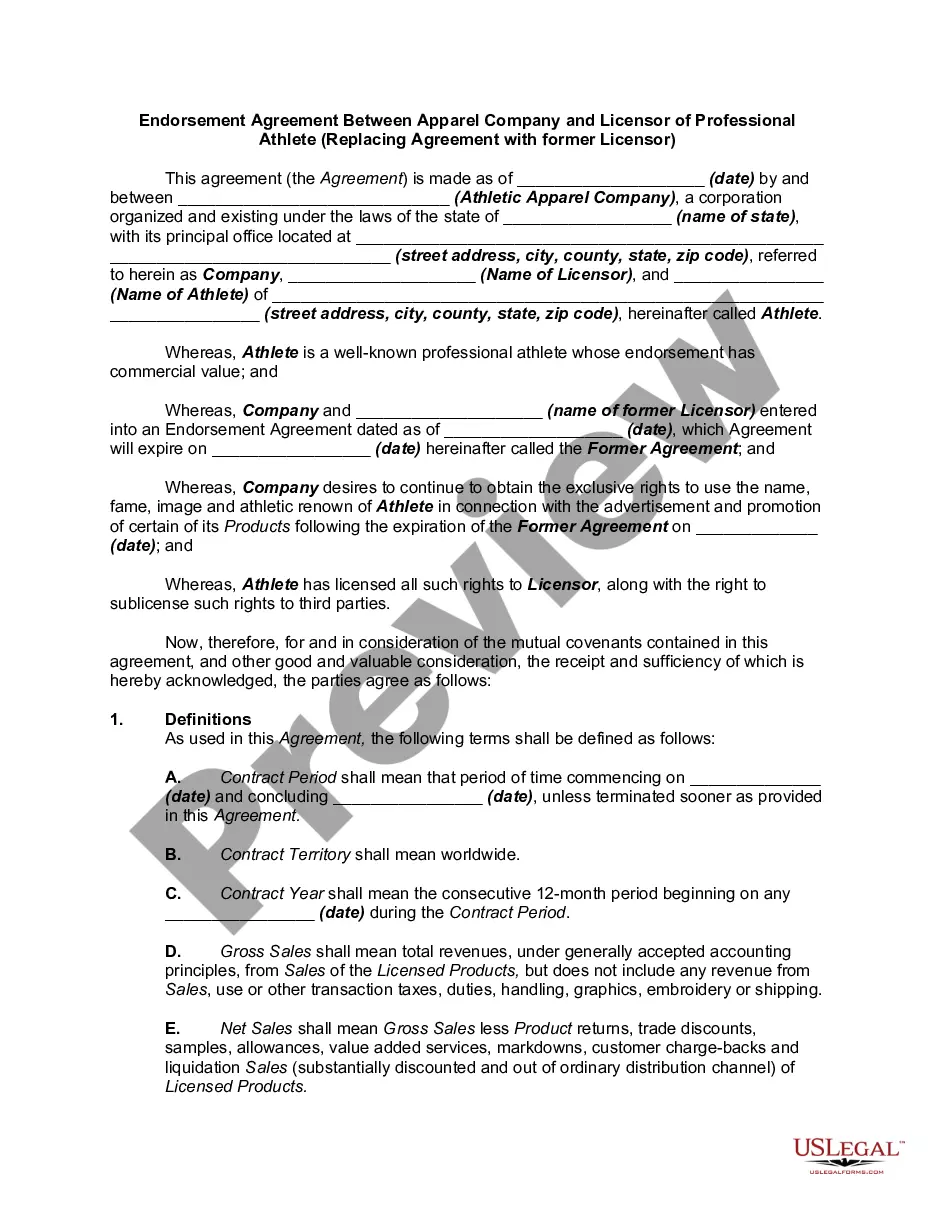
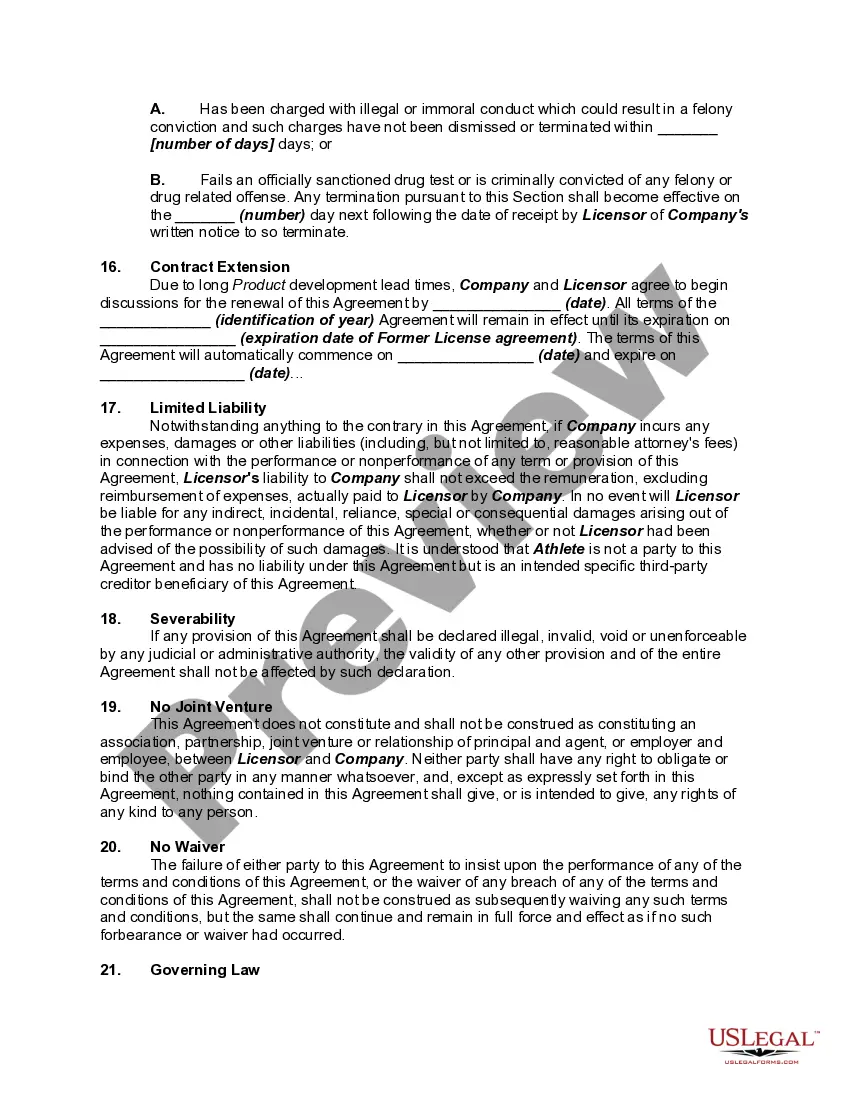
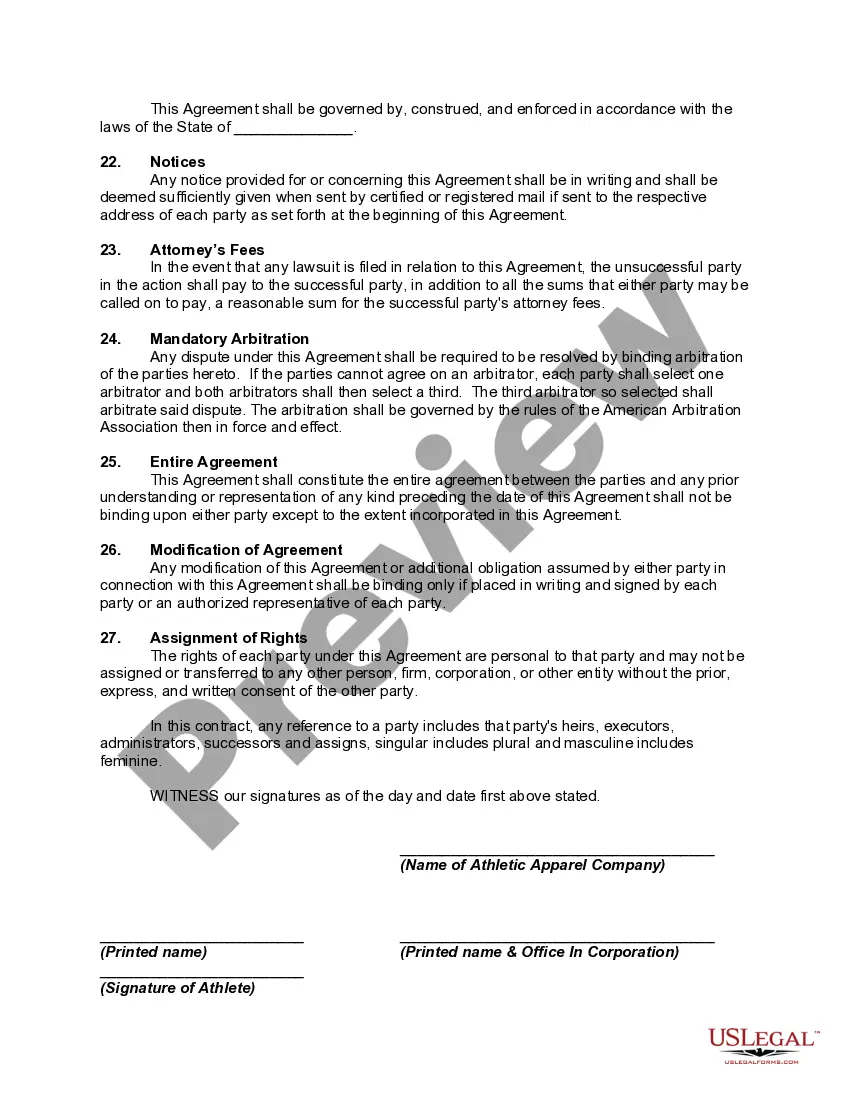
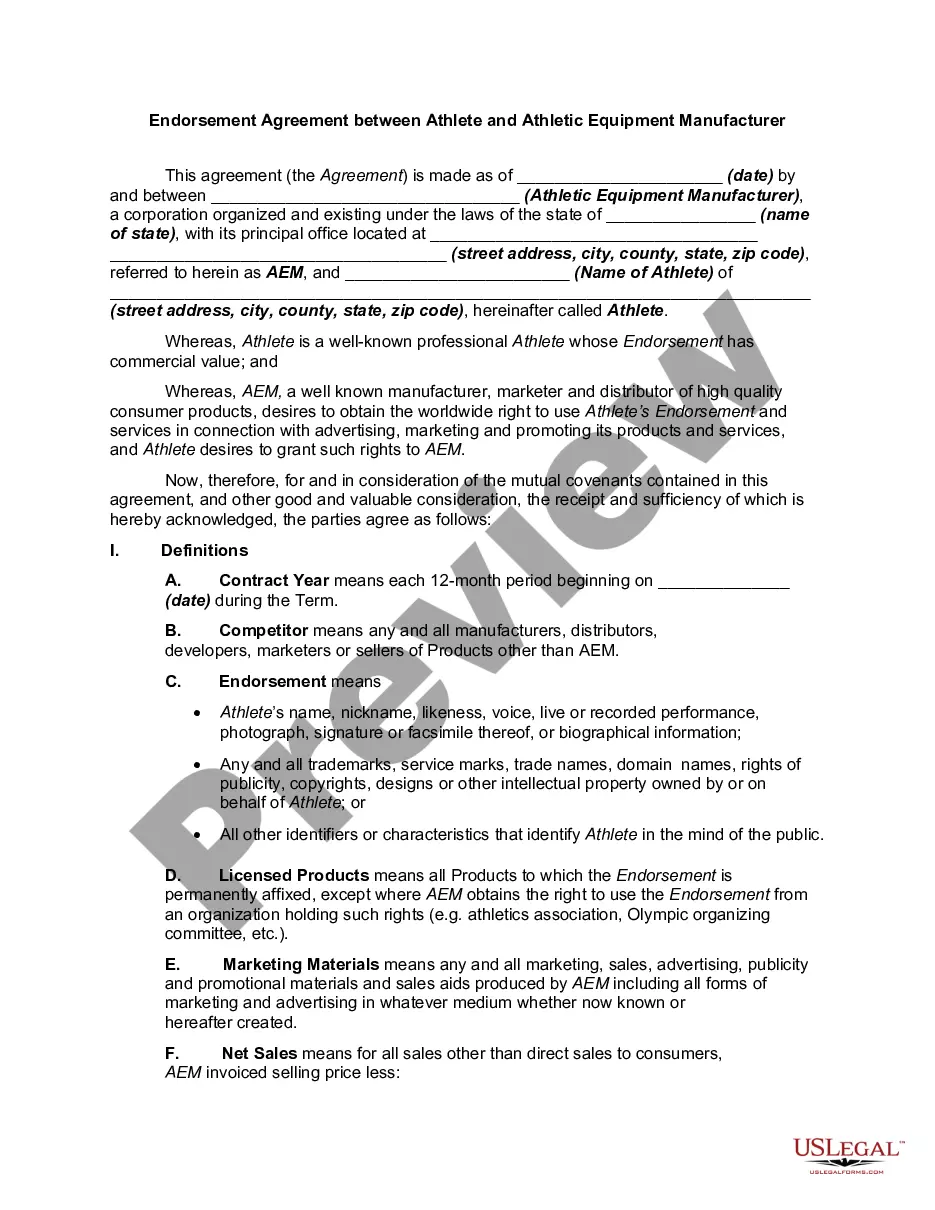
- Definitions of key terms, including contract period, contract territory, and gross/net sales.
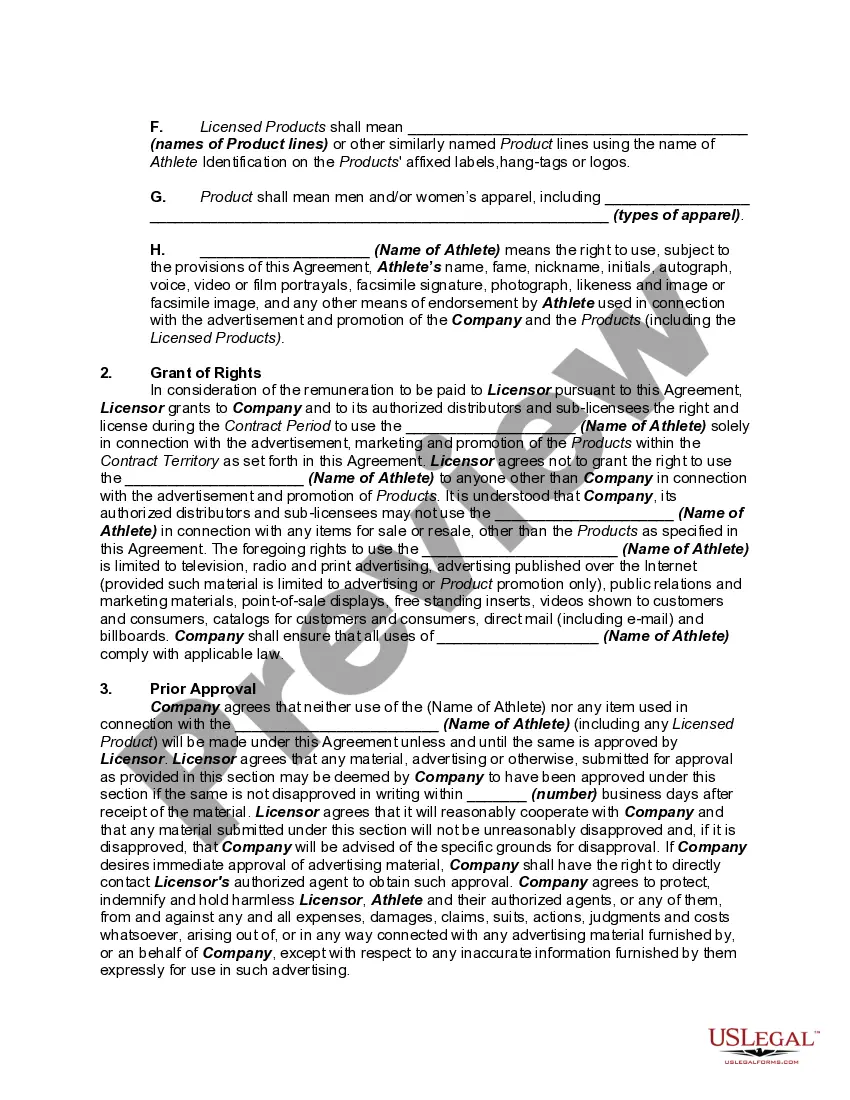
- Grant of rights to the apparel company for using the athlete's likeness and endorsements.
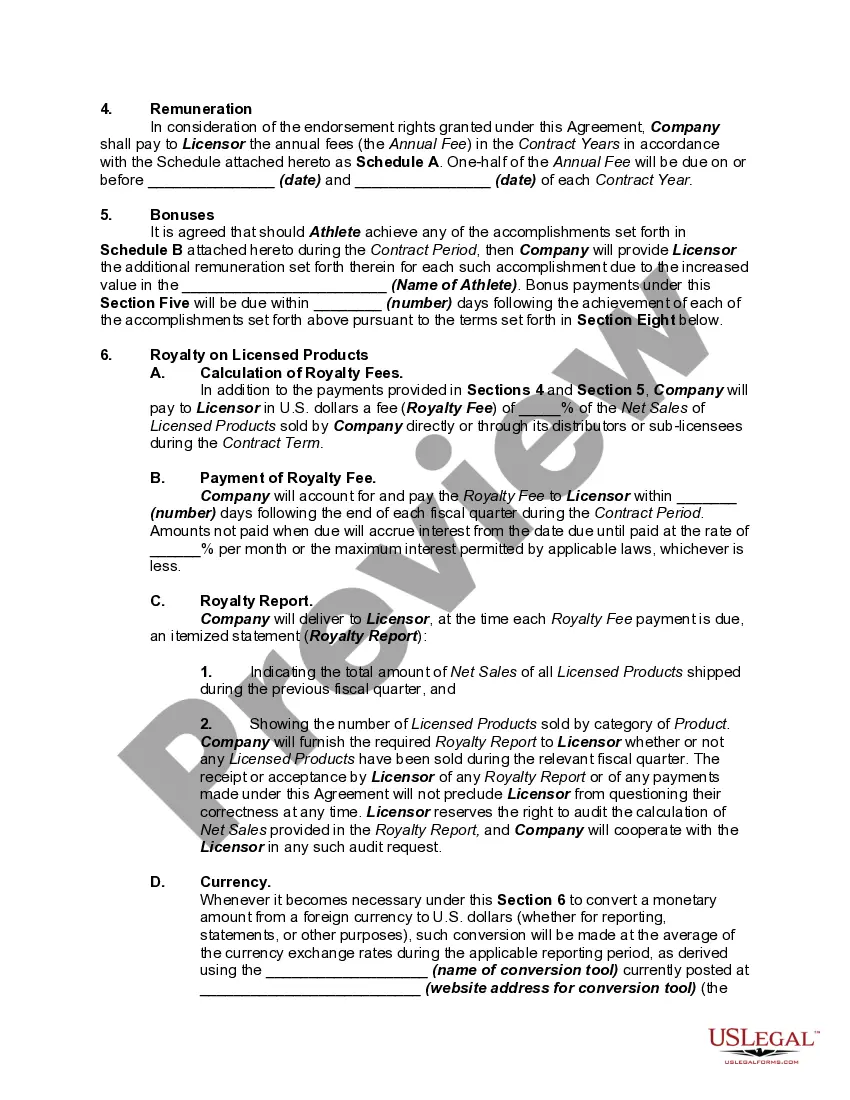
- Remuneration and bonus structure based on athlete performance and sales metrics.
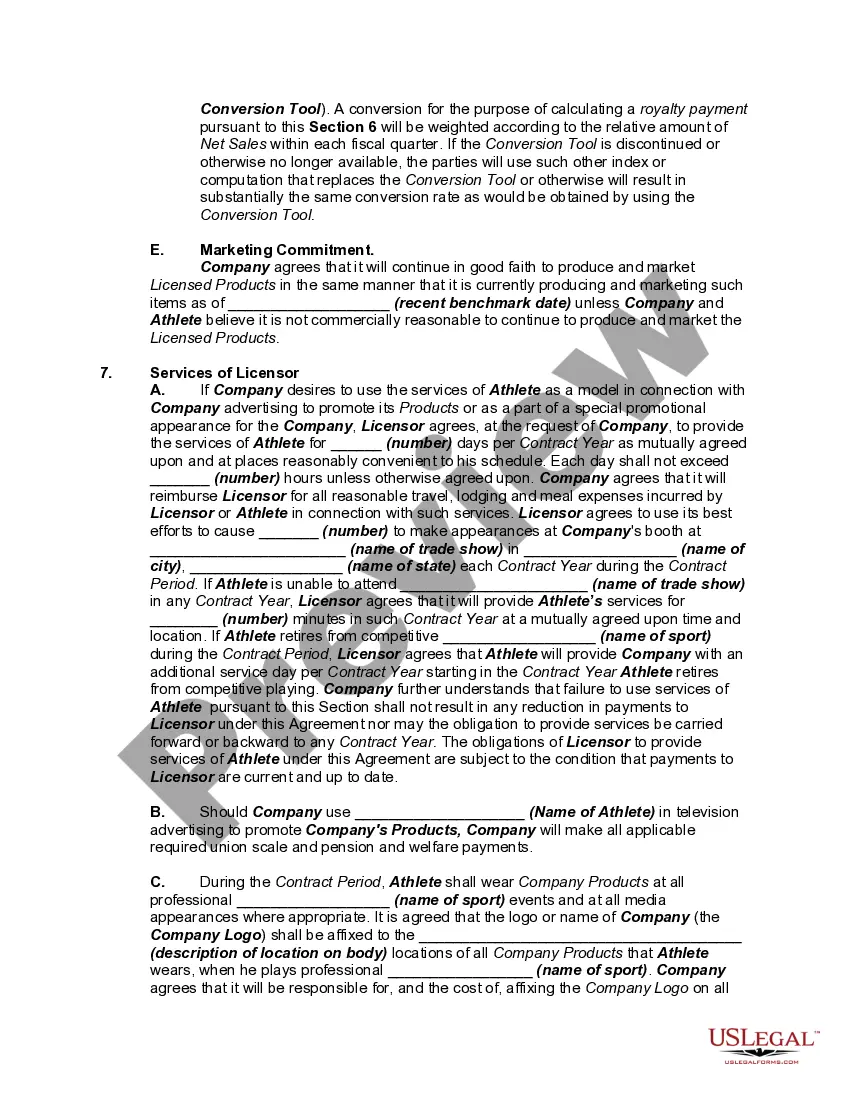
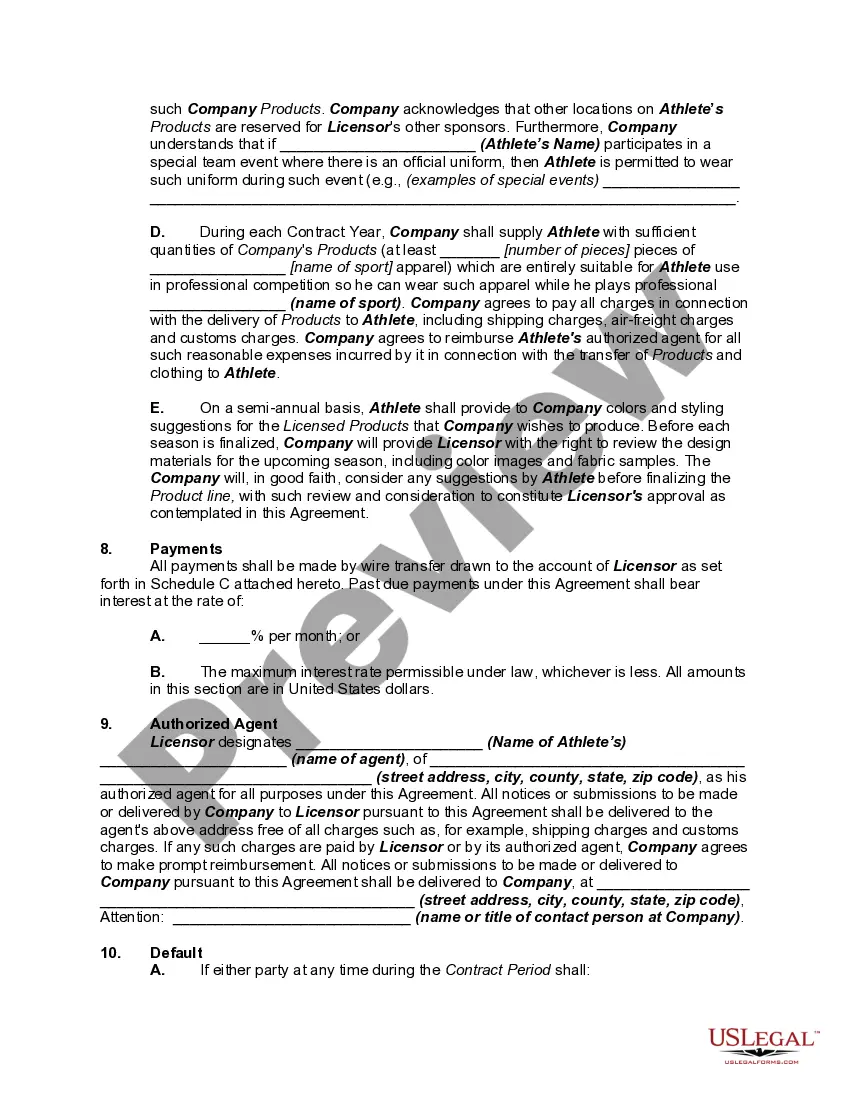
- Details of marketing commitments and services from the athlete, including appearances and promotional events.
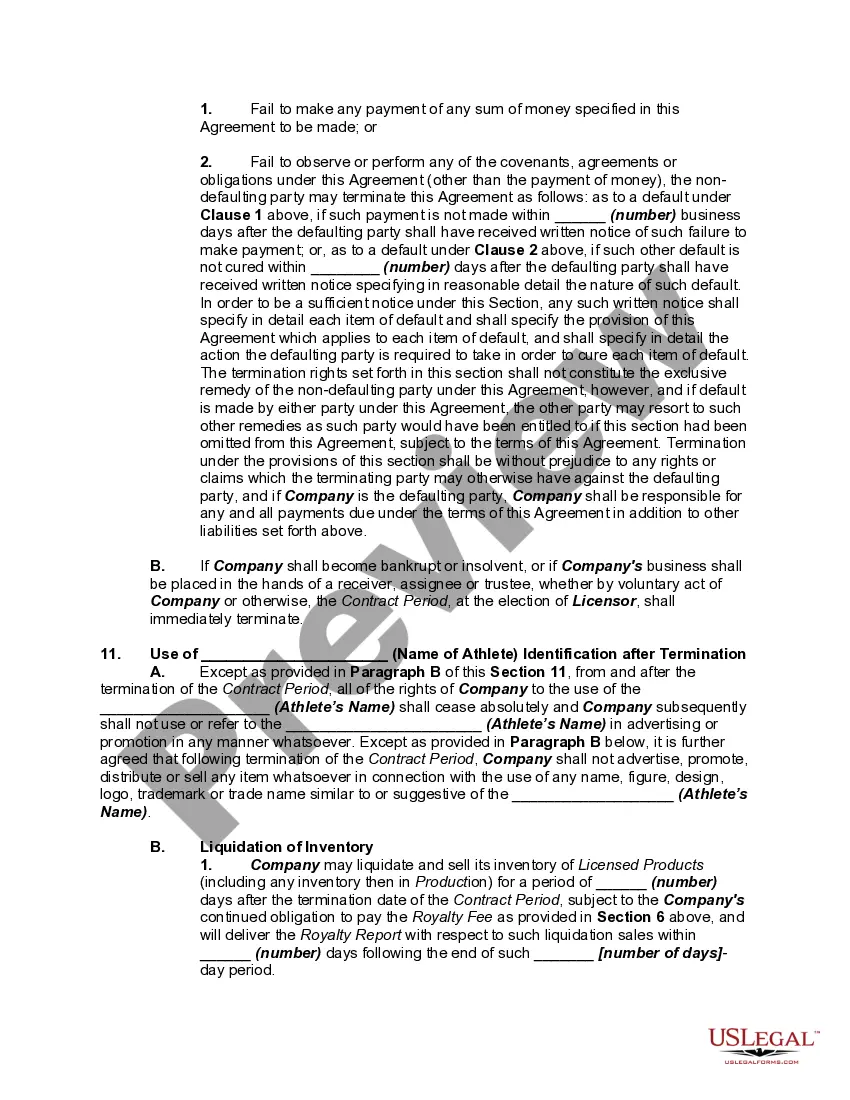
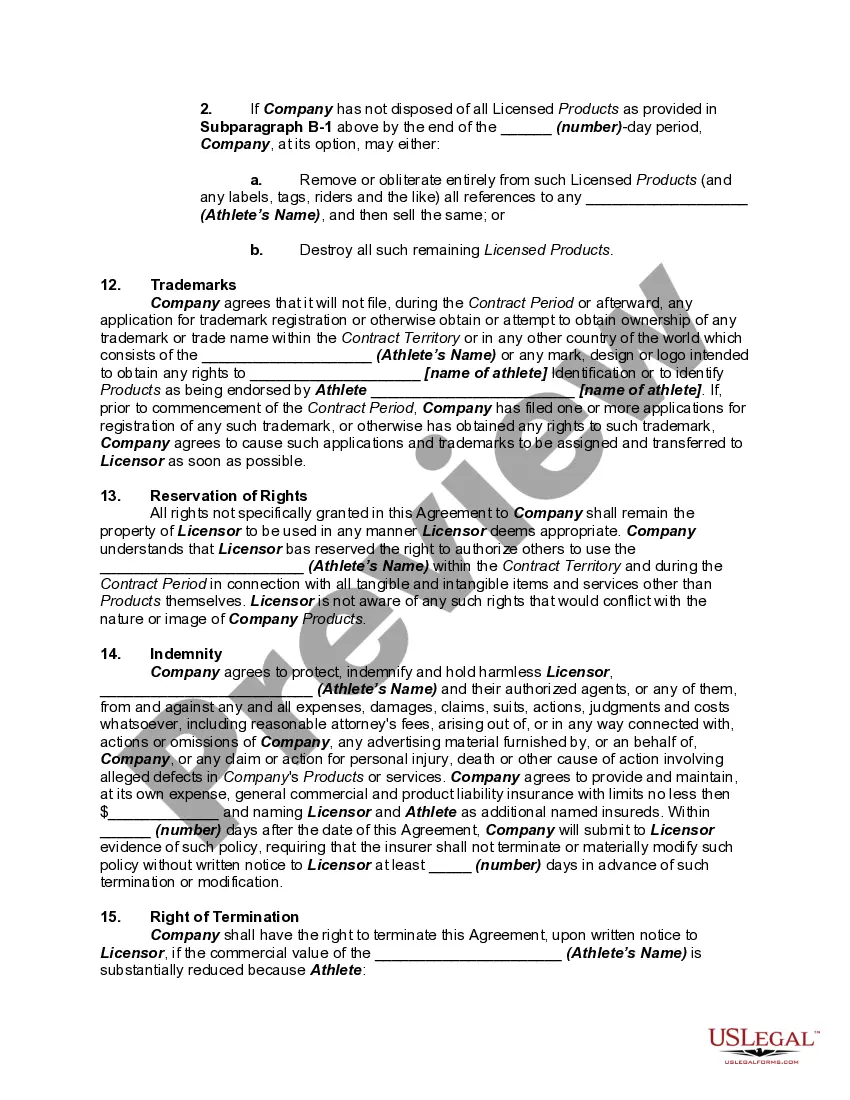
- Conditions for termination of the agreement and rights after termination.
When to use this document
This form is necessary when an apparel company wishes to enter into a new endorsement agreement with a professional athlete after terminating an agreement with a previous licensor. It is typically used in scenarios where the marketability of the athlete can significantly enhance the company's branding and sales efforts.
Intended users of this form
This agreement is suitable for:
- Apparel companies seeking to leverage athlete endorsements for marketing.
- Licensors who represent professional athletes in endorsement deals.
- Professional athletes looking to monetize their image through brand partnerships.
How to prepare this document
To complete this form, follow these steps:
- Identify and enter the names of the involved parties: the apparel company, the licensor, and the athlete.
- Specify the dates for the contract period and other timed events relevant to the agreement.
- Fill in the product lines and types of apparel to be endorsed under this agreement.
- Outline the financial arrangements, including annual fees and any conditional bonuses for performance metrics.
- Ensure both parties sign and date the agreement, along with any witnesses or authorized agents as necessary.
Notarization guidance
This form does not typically require notarization unless specified by local law. Always check local regulations for specific requirements related to legal agreements in your jurisdiction.
Get your form ready online
Our built-in tools help you complete, sign, share, and store your documents in one place.
Make edits, fill in missing information, and update formatting in US Legal Forms—just like you would in MS Word.
Download a copy, print it, send it by email, or mail it via USPS—whatever works best for your next step.
Sign and collect signatures with our SignNow integration. Send to multiple recipients, set reminders, and more. Go Premium to unlock E-Sign.
If this form requires notarization, complete it online through a secure video call—no need to meet a notary in person or wait for an appointment.
We protect your documents and personal data by following strict security and privacy standards.

Make edits, fill in missing information, and update formatting in US Legal Forms—just like you would in MS Word.

Download a copy, print it, send it by email, or mail it via USPS—whatever works best for your next step.

Sign and collect signatures with our SignNow integration. Send to multiple recipients, set reminders, and more. Go Premium to unlock E-Sign.

If this form requires notarization, complete it online through a secure video call—no need to meet a notary in person or wait for an appointment.

We protect your documents and personal data by following strict security and privacy standards.
Mistakes to watch out for
- Failing to specify the complete details of revenue sharing, leading to disputes later.
- Not consulting legal counsel to ensure the agreement complies with applicable laws.
- Overlooking the inclusion of termination conditions, risking prolonged liabilities.
Advantages of online completion
- Convenient online accessibility to legal form templates, saving time.
- Editability allows tailoring to specific endorsement deals and athlete requirements.
- Reliability from licensed attorney-drafted forms ensures legal compliance.
- The agreement is legally binding once signed by all parties, ensuring mutual rights and obligations are enforceable.
- It protects both the apparel company and the athlete's licensor against unauthorized use of the athlete's likeness.
- Termination clauses provide a clear exit strategy should the relationship need to be dissolved.
Summary of main points
- This agreement is crucial for athletic companies looking to secure endorsements from professional athletes.
- Clear definitions and terms help prevent future disputes between the parties involved.
- Proper completion and approval of this form ensure a smooth endorsement process.
- Understanding the specific roles of each party can facilitate the negotiation and execution of the contract.
Looking for another form?
Form popularity
FAQ
Licensing in the fashion industry is when a brand (ex. Dior) gives permission to a company (ex. Luxottica who makes eyewear) to use their name on merchandise.
Apparel licensing transactions generally involve a right for a licensee to use your design to make and sell licensed products. Make sure you clearly spell out what specific products you want the licensee to make using your trademark.The license agreement should also spell out how you get paid and on what basis.
A seller's permit is a state license that allows you to sell items at the wholesale or retail level and to issue resale certificates to suppliers.You are not required to hold a seller's permit if all your sales are made exclusively in interstate or foreign commerce, and you make no sales in this state.
The licensor being able to utilize the licensee's distribution network to quickly enter into new geographical regions and foreign markets. The licensor facing lower capital requirements and lower costs due to not having to invest in distribution.
In UK business, clothing is not a strictly regulated space and you won't require a specific license to sell it (unless you're trading at a market, in which case you'll need a market stall license).
Clothing retailers--and most small businesses, for that matter--should choose an LLC structure. Setting up an LLC protects you from personal liability.Corporations limit your personal liability too, but LLCs have additional merits.
STEP 1: Plan your business. STEP 2: Form a legal entity. STEP 3: Register for taxes. STEP 4: Open a business bank account & credit card. STEP 5: Set up business accounting. STEP 6: Obtain necessary permits and licenses. STEP 7: Get business insurance. STEP 8: Define your brand.
Sell, sell, sell As with many retail businesses, clothing is not a particularly heavily regulated space you don't need any kind of license or certificate to start selling clothing, and as long as you have the equipment and means to sell, you can get started at the drop of a hat.
A common example is food retail brands with large followings in their own market.Licensing the brand to a local company with market expertise allows the brand to be monetized with limited risk, as with Top Shop.