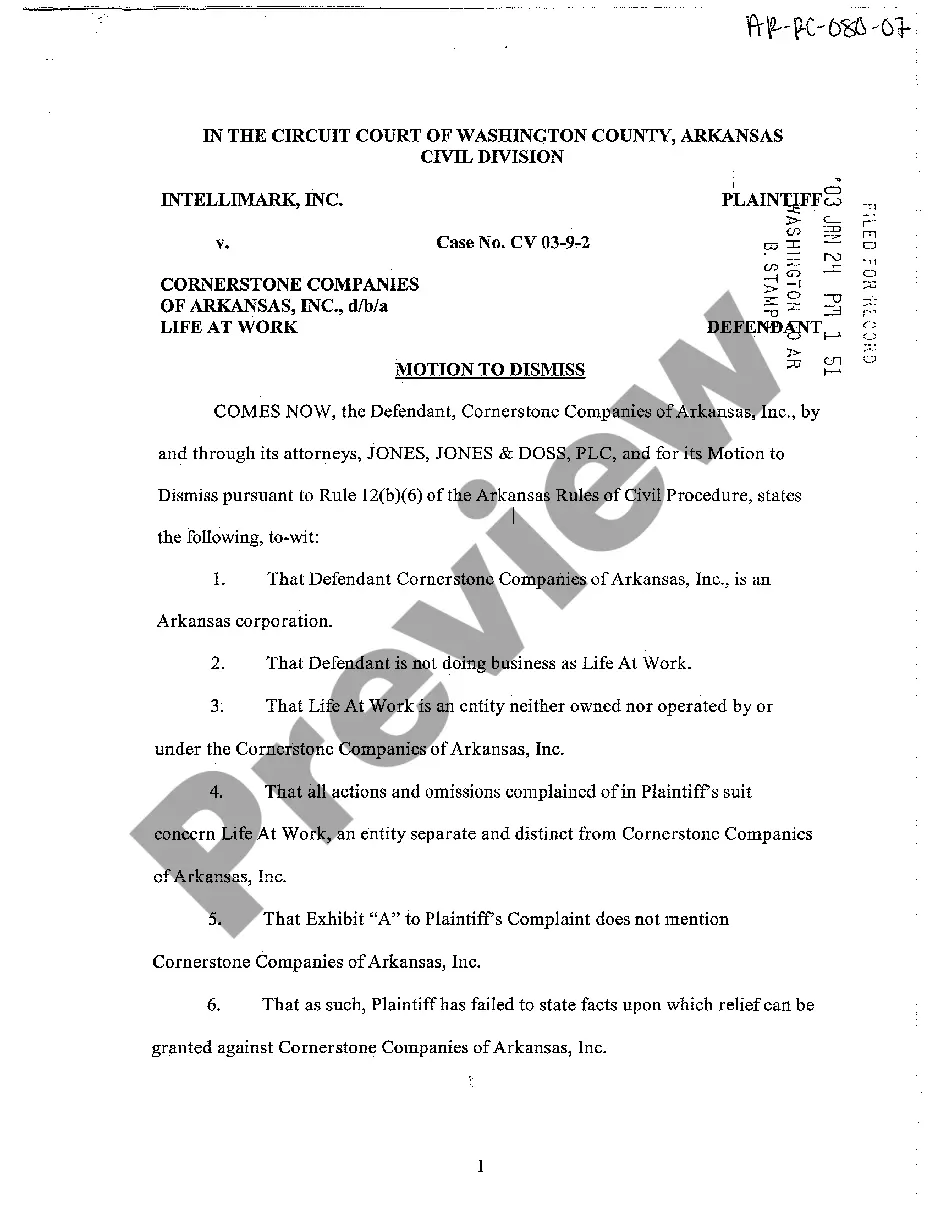
Skater and Skateboarder Assumption of Risk, Waiver and Release
What is this form?
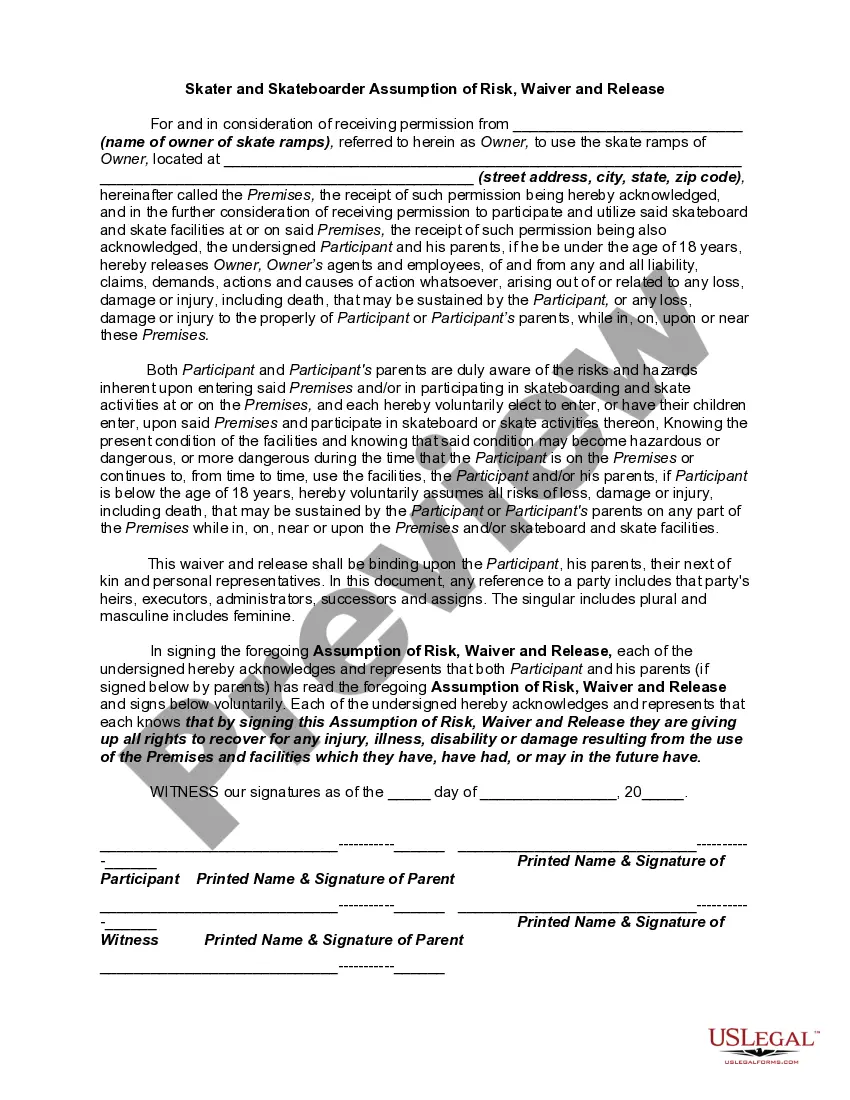
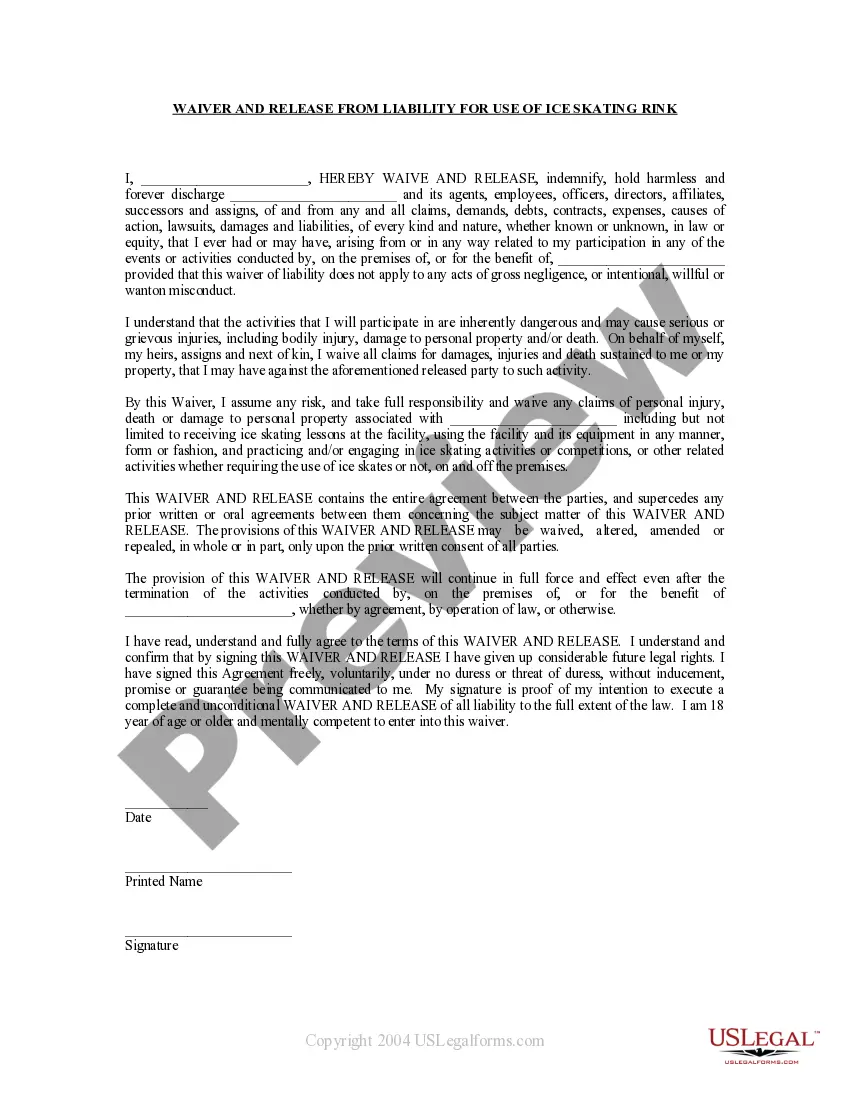
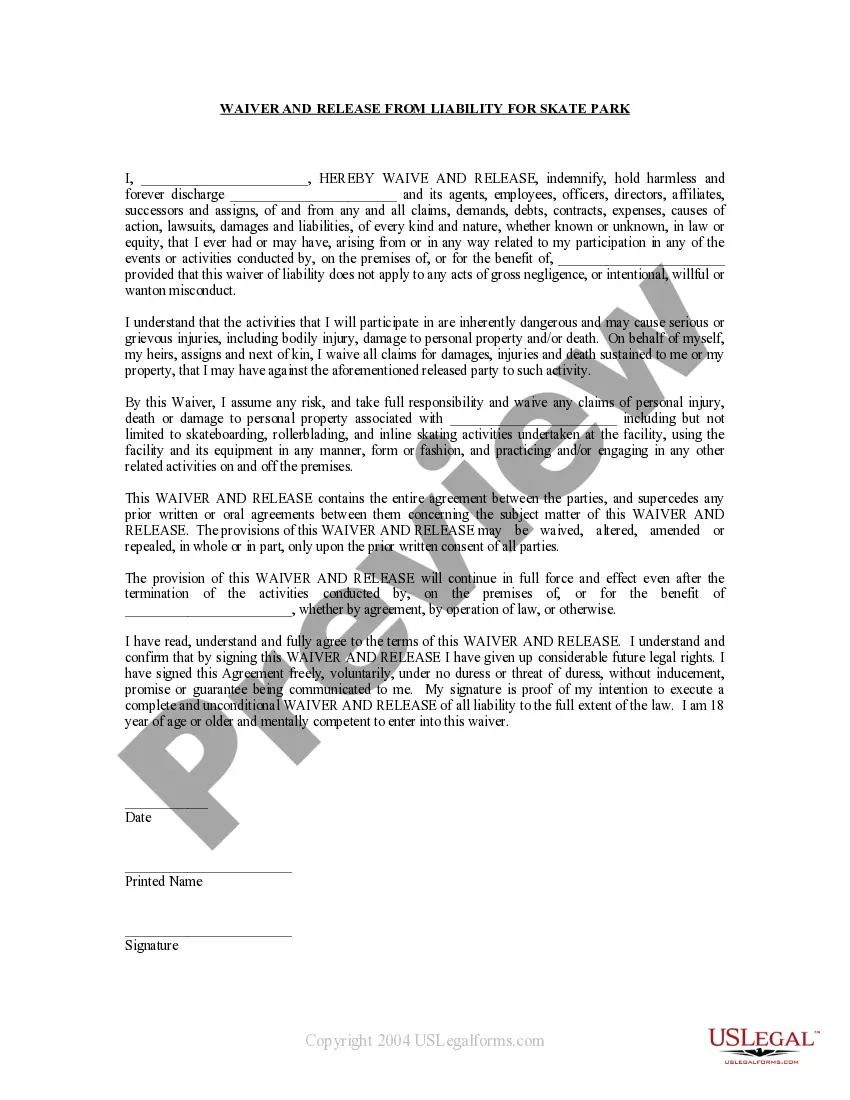
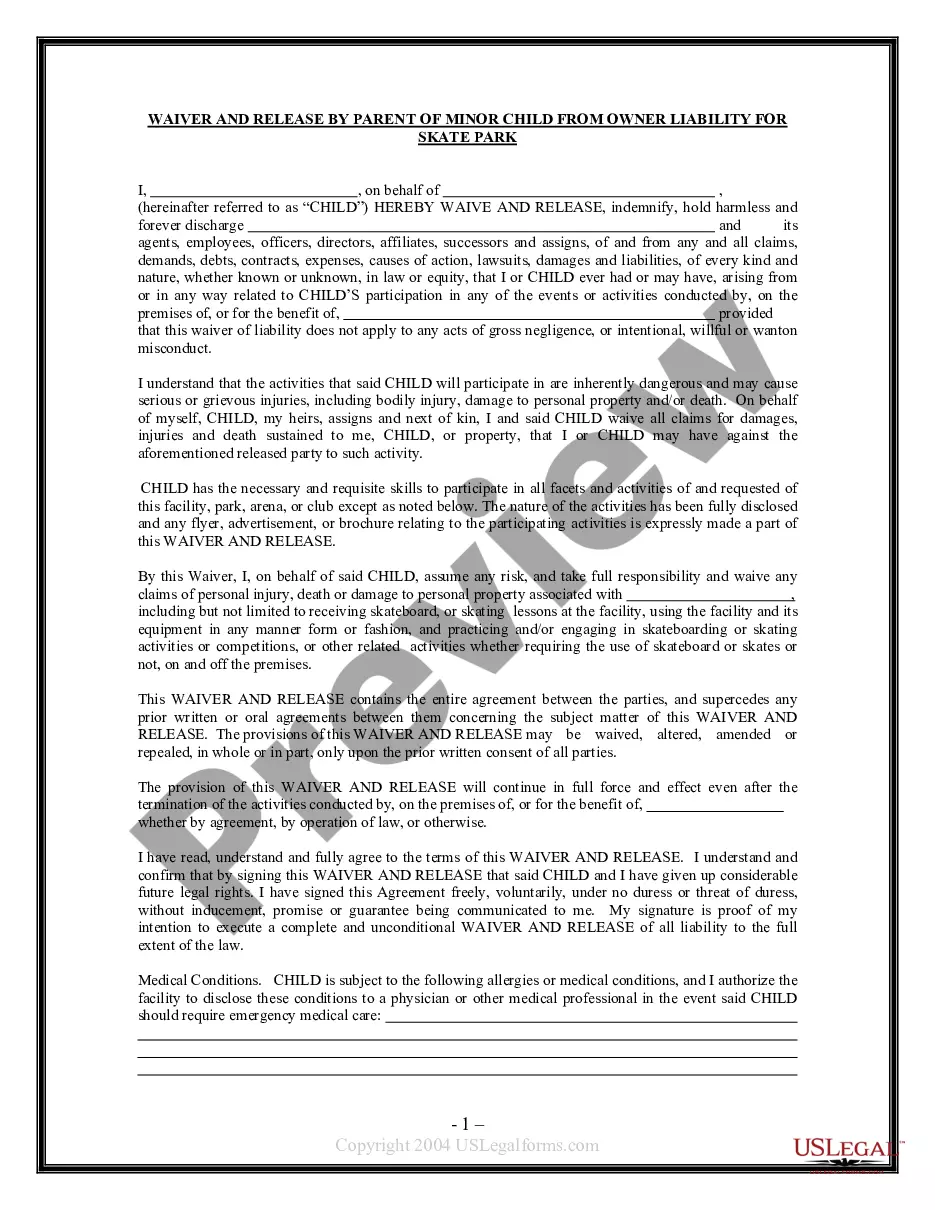
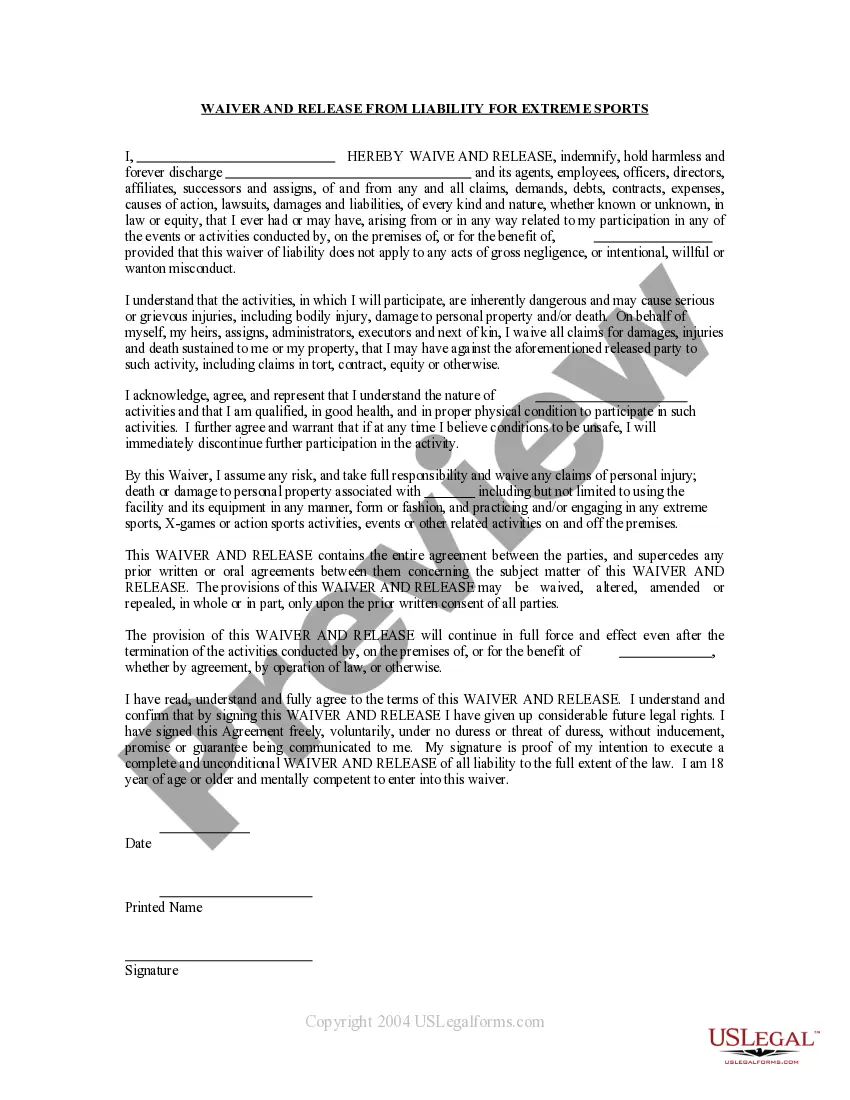
The Skater and Skateboarder Assumption of Risk, Waiver and Release is a legal document designed to protect owners of skate facilities from liability associated with potential injuries during skateboarding activities. By signing this form, participants acknowledge the inherent risks of skateboarding and agree to waive their right to hold the owner accountable for injuries sustained while using the premises. This form is crucial for both skaters and facility owners to clarify responsibilities and ensure safety during skateboarding activities.
Form components explained
- Identification of the owner of the skate ramps and the location of the premises.
- Release of liability clause, which protects the owner from claims stemming from injuries.
- Acknowledgment of risks associated with skateboarding activities.
- Assumption of risk by the participant and, if applicable, their parents.
- Signatures of the participant and their parent if under eighteen years of age.
Common use cases
This form should be used whenever a participant intends to use skate ramps or facilities operated by another party. It is particularly important in situations where skaters are performing tricks or riding in environments with inherent risks, such as skate parks or private skate ramps. This waiver is often requested before entering the premises to ensure that both the owner and participant understand their rights and responsibilities regarding safety.
Who can use this document
This form is intended for:
- Participants who plan to skate at facilities owned by others.
- Parents or guardians of minors who will be using skate facilities.
- Owners of skate ramps or facilities looking to limit liability.
Instructions for completing this form
- Identify the owner of the skate ramps and enter their name in the designated space.
- Provide the complete address of the skate facility.
- Have the participant and their parent or guardian sign the document, acknowledging the risks.
- Fill in the date of signing.
- Keep a copy of the signed form for your records.
Notarization guidance
This form does not typically require notarization to be legally valid. However, some jurisdictions or document types may still require it. US Legal Forms provides secure online notarization powered by Notarize, available 24/7 for added convenience.
Get your form ready online
Our built-in tools help you complete, sign, share, and store your documents in one place.
Make edits, fill in missing information, and update formatting in US Legal Forms—just like you would in MS Word.
Download a copy, print it, send it by email, or mail it via USPS—whatever works best for your next step.
Sign and collect signatures with our SignNow integration. Send to multiple recipients, set reminders, and more. Go Premium to unlock E-Sign.
If this form requires notarization, complete it online through a secure video call—no need to meet a notary in person or wait for an appointment.
We protect your documents and personal data by following strict security and privacy standards.

Make edits, fill in missing information, and update formatting in US Legal Forms—just like you would in MS Word.

Download a copy, print it, send it by email, or mail it via USPS—whatever works best for your next step.

Sign and collect signatures with our SignNow integration. Send to multiple recipients, set reminders, and more. Go Premium to unlock E-Sign.

If this form requires notarization, complete it online through a secure video call—no need to meet a notary in person or wait for an appointment.

We protect your documents and personal data by following strict security and privacy standards.
Avoid these common issues
- Failing to fill in all required fields accurately.
- Not having a parent or guardian sign if the participant is under eighteen.
- Neglecting to keep a copy of the signed waiver for future reference.
Benefits of completing this form online
- Convenience of downloading and completing the form at any time.
- Editability allows participants to customize their information easily.
- Reliability of using templates drafted by licensed attorneys tailored for skateboarding activities.
Legal use & context
- This form acts as a legal agreement that protects owners from liability claims.
- Courts generally uphold liability waivers unless they violate public policy or involve gross negligence.
- Participants should be aware that signing this waiver means they are giving up their right to sue the skate facility for injuries sustained.
Main things to remember
- The Skater and Skateboarder Assumption of Risk, Waiver and Release protects facility owners from liability.
- Participants must acknowledge and accept the risks associated with skateboarding.
- Both participants and their guardians should read the document carefully before signing.
Key terms explained
- Waiver: A legal document where one relinquishes their right to pursue legal action.
- Release: A specific type of waiver that typically occurs after an injury has happened.
- Assumption of Risk: A legal doctrine where participants acknowledge and accept the risks associated with an activity.
Looking for another form?




Form popularity
FAQ
The Waiver must be clearly worded and unambiguous in its intent to relieve any and all legal liability, even liability for negligence. The Waiver should be prominent and not hidden in the fine print of a long contract. The Waiver must be signed by the person who it is being used against.
Get help. Writing a waiver should not be complicated. Use the correct structure. Proper formatting. Include a subject line. Include a caution! Talk about the activity risks. Do not forget an assumption of risk. Hold harmless.
In California, a liability waiver must be clear, unambiguous, and explicit. In other words, waivers cannot be printed in faded ink, in small font, on the back of a paper, or in an otherwise ambiguous form. If the waiver that you sign is not represented clearly, it may not hold up in the event of a lawsuit.
If you've been injured due to negligent actions, you can sue even if you signed a waiver. Winning a lawsuit concerning negligence is not uncommon. Many celebrities have sued for negligence even though they signed documents stating they understood the risks.
A release and waiver agreement is an enforceable promise not to pursue legal action in exchange for compensation. The releasee gives money or some other form of compensation to the releasor, who then agrees not to press charges, sue, or take any other legal action against the releasee.
Many people believe the myth that if you sign a waiver, you're not allowed to sue. However, that is simply not true. Waivers are intended to inform the participant of possible harm. Upon signing, the participant is surrendering a known right or acknowledging that harm may occur.
In California, a liability waiver must be clear, unambiguous, and explicit. In other words, waivers cannot be printed in faded ink, in small font, on the back of a paper, or in an otherwise ambiguous form. If the waiver that you sign is not represented clearly, it may not hold up in the event of a lawsuit.
Waivers should only be signed before participating in an activity, not after you are hurt. If you are injured and given papers to sign, immediately call a personal injury attorney. You can find a personal injury lawyer by contacting your state or local bar association.