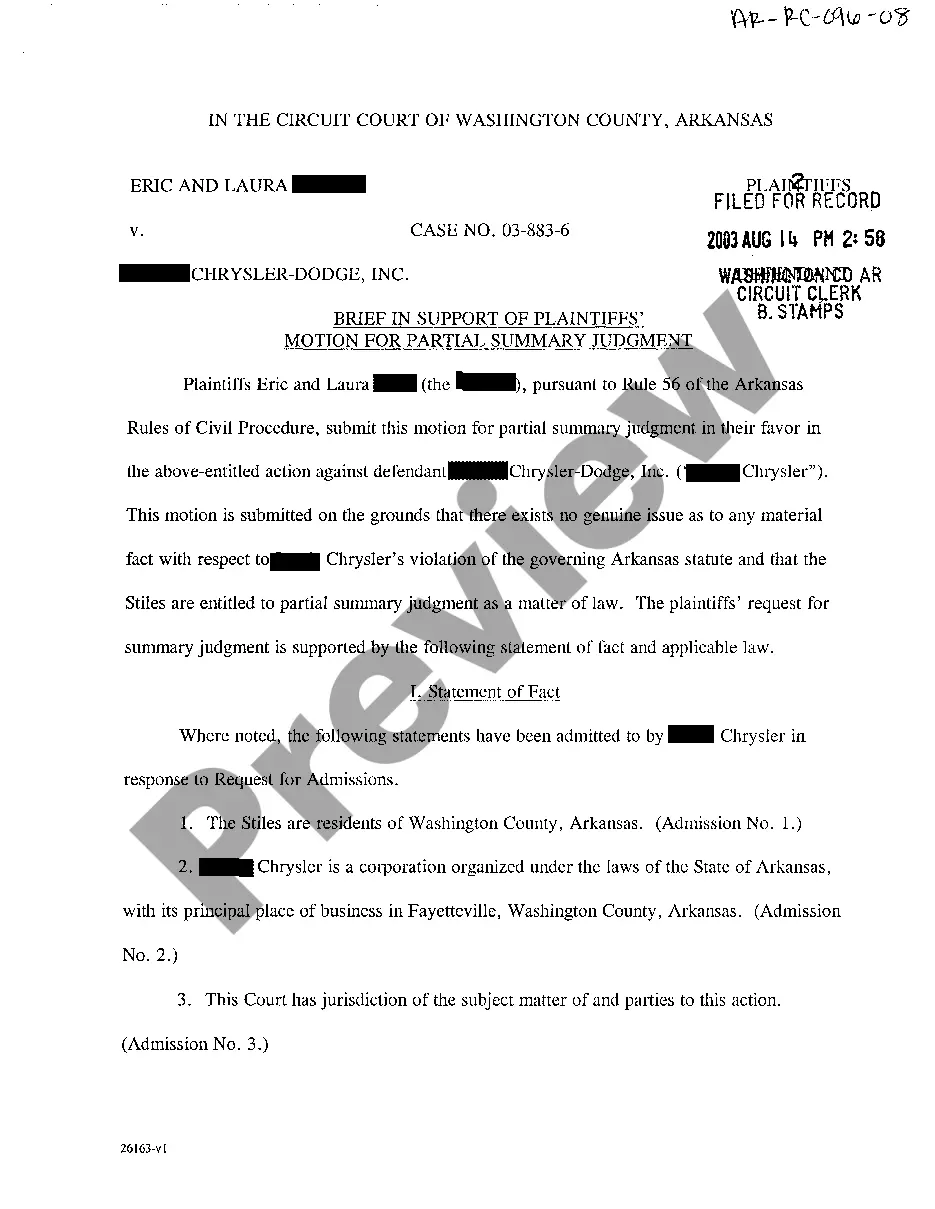
Agreement Granting Exclusive License to Sell a Line of Apparel with Reservation of Right by Licensor to Sell Licensed Product
What is this form?
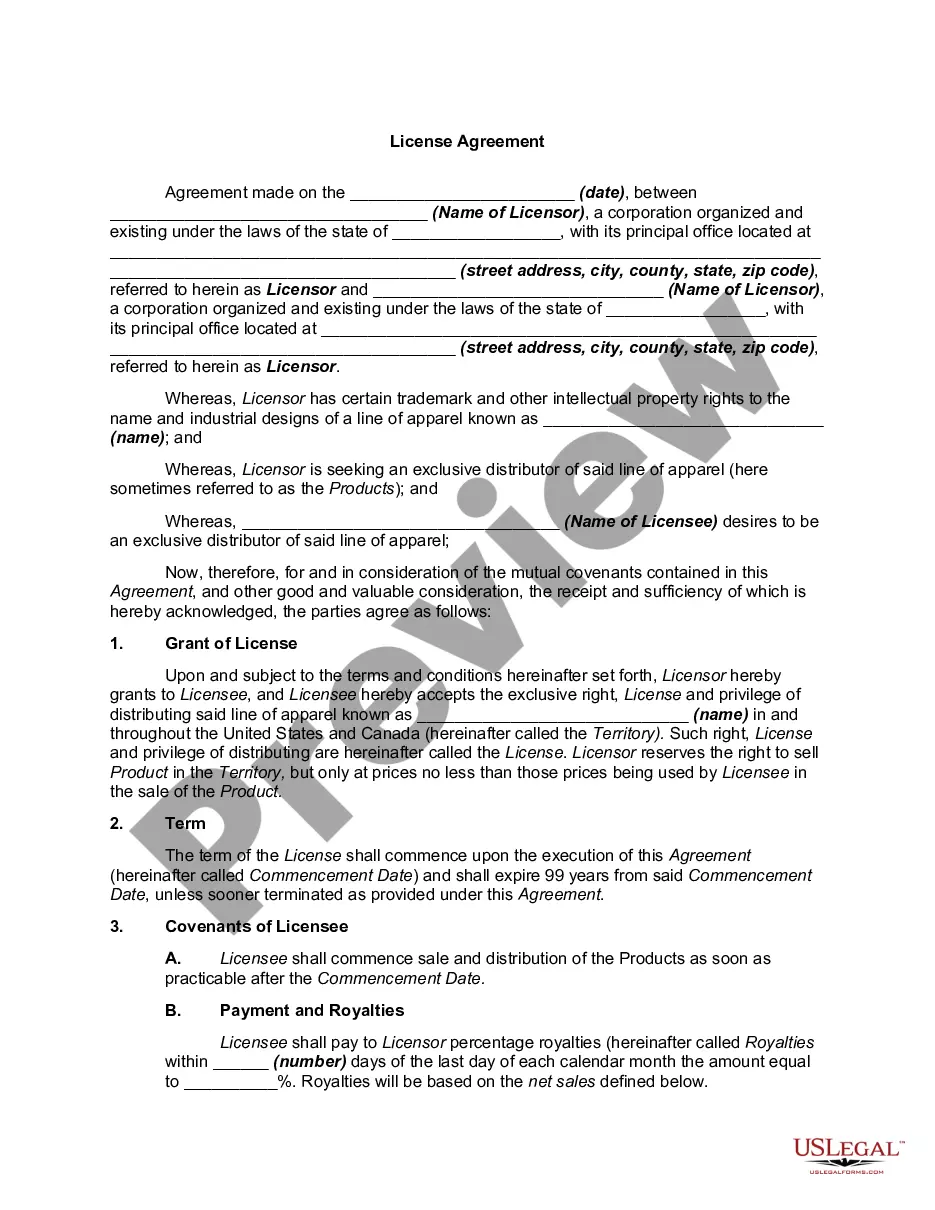
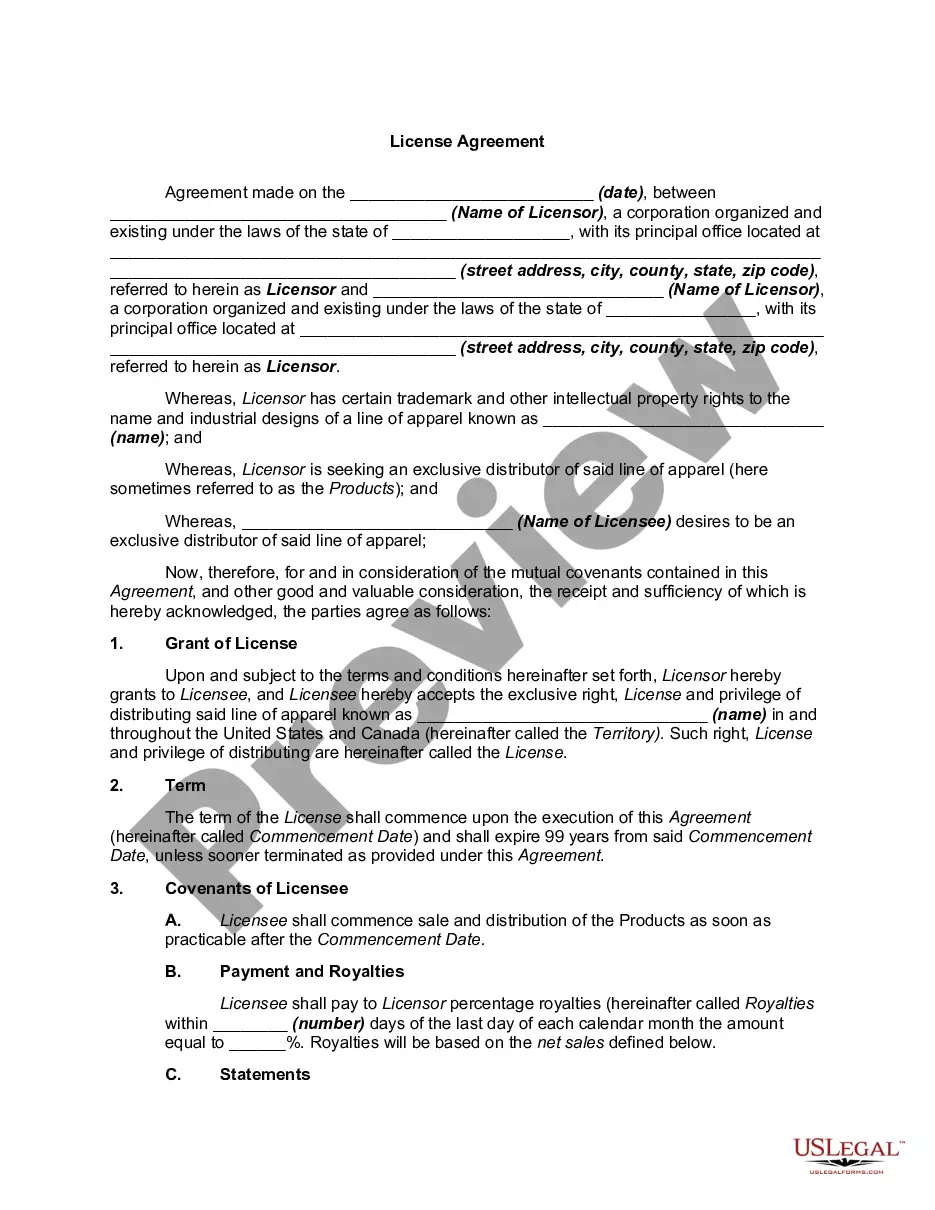
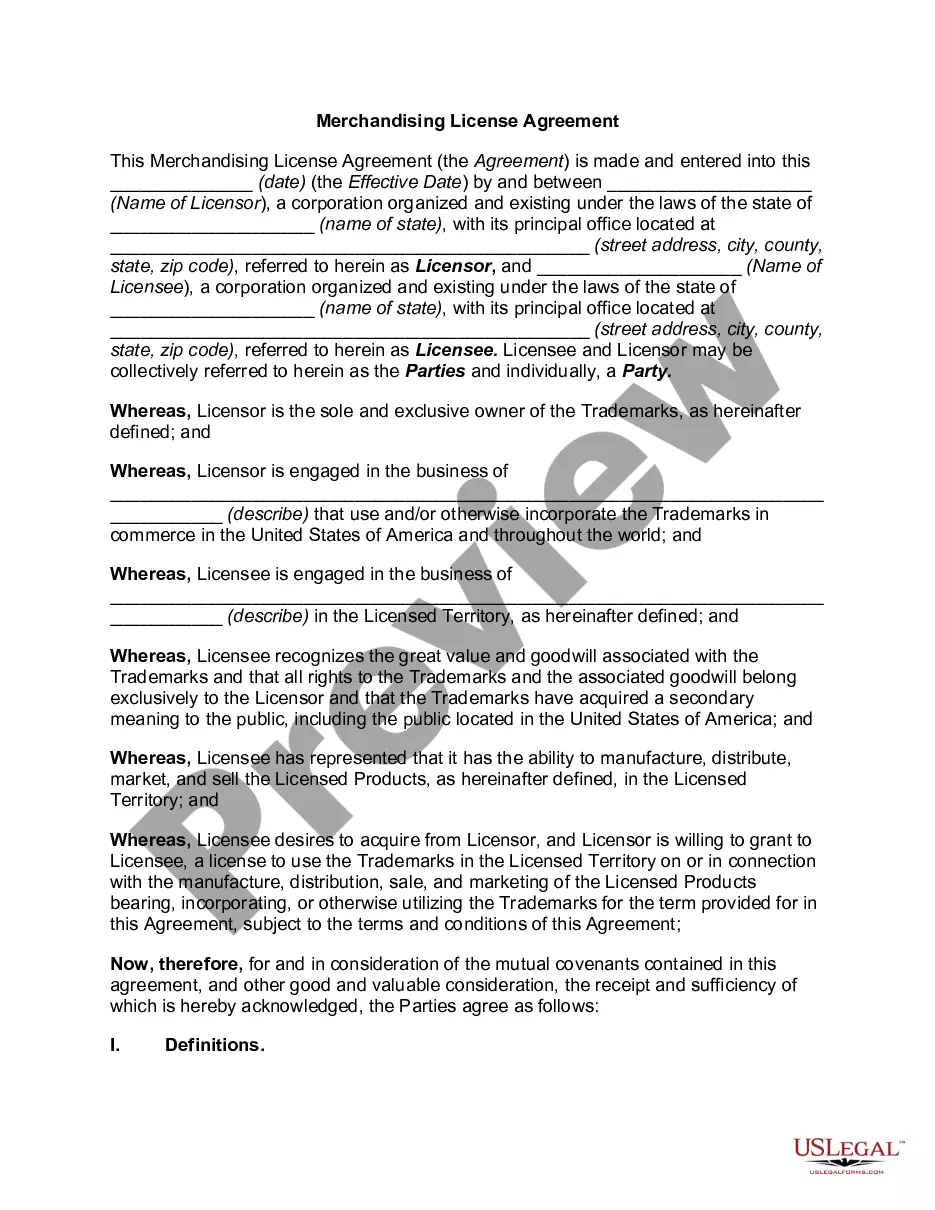
This form, titled Agreement Granting Exclusive License to Sell a Line of Apparel with Reservation of Right by Licensor to Sell Licensed Product, is a legal document that establishes an exclusive license agreement between a licensor and a licensee for trademarked apparel. Unlike other agreements, this document allows the licensee to sell the apparel under the brand name while reserving certain sales rights for the licensor. This form is essential for businesses looking to expand their brand reach through licensed sales while protecting their intellectual property rights.
Main sections of this form
- Grant of License: Defines the exclusive distribution rights granted to the licensee.
- Term: Specifies the duration of the license, which is 99 years unless terminated earlier.
- Covenants of Licensee: Outlines the obligations of the licensee, including sales initiation and royalty payments.
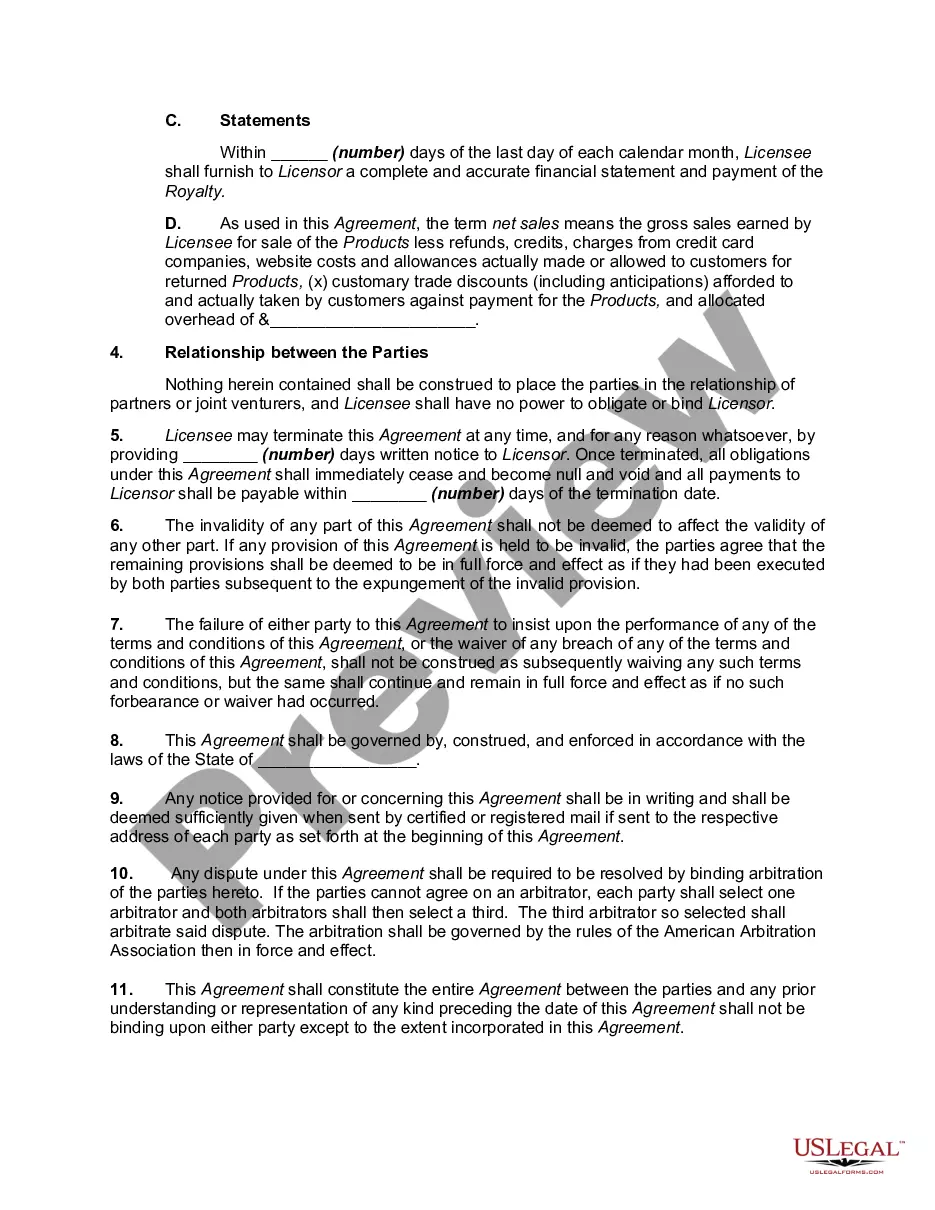
- Termination Clause: Details how and when either party can terminate the agreement.
- Governing Law: Indicates the state laws that will govern the agreement.
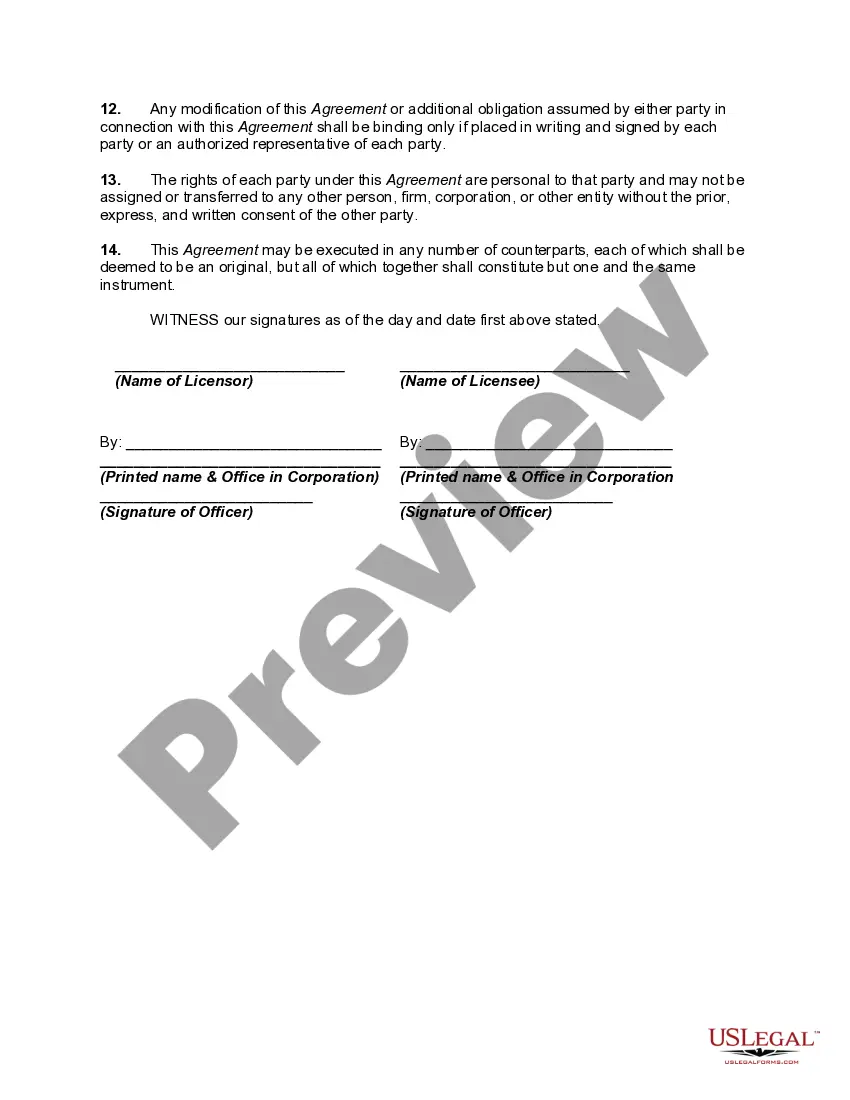
- Signature Requirements: Clarifies the necessary signatures for the agreement to be valid.
When to use this form
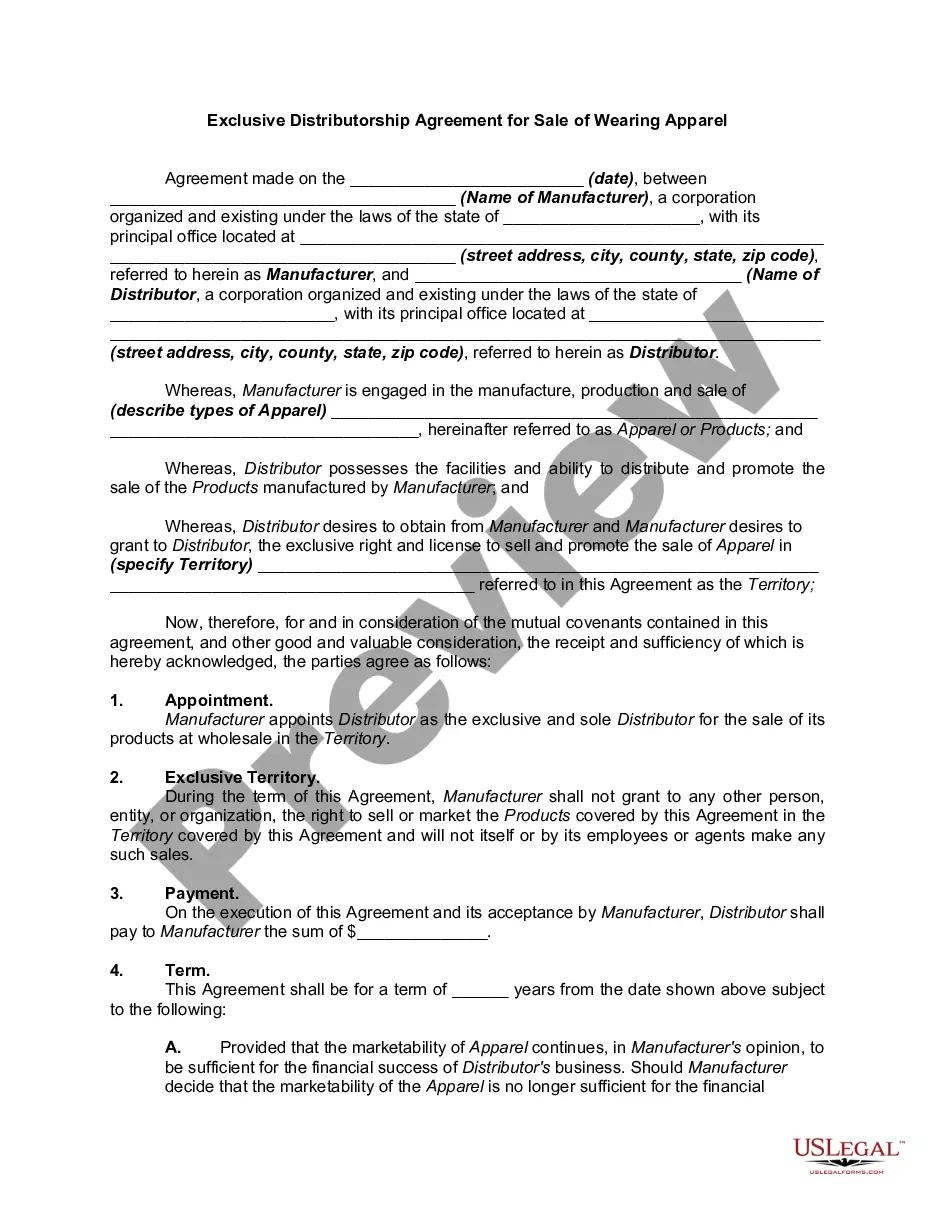
This form is appropriate when a brand owner (licensor) wants to grant exclusive rights to a third party (licensee) to sell a line of apparel under their trademark. It is useful in scenarios where a business wants to leverage another company's established brand for increased market penetration while maintaining specific rights to sell the apparel themselves.
Who can use this document
The following parties would benefit from this form:
- Brand owners looking to license their trademarks to expand sales opportunities.
- Companies wishing to become exclusive distributors of an established brand's apparel.
- Legal professionals drafting agreements related to licensing and intellectual property.
Completing this form step by step
Follow these steps to complete the form:
- Identify the parties: Enter the names and addresses of both the licensor and licensee.
- Specify the trademark: Clearly define the line of apparel being licensed.
- Set the duration: Fill in the effective date of the agreement and confirm the term of 99 years.
- Outline royalty terms: Specify the percentage royalty rate and payment schedule to the licensor.
- Include termination details: Note any required notice period for termination by either party.
Does this form need to be notarized?
This form does not typically require notarization unless specified by local law. However, signing in the presence of a notary can add an extra layer of credibility and validity.
Get your form ready online
Our built-in tools help you complete, sign, share, and store your documents in one place.
Make edits, fill in missing information, and update formatting in US Legal Forms—just like you would in MS Word.
Download a copy, print it, send it by email, or mail it via USPS—whatever works best for your next step.
Sign and collect signatures with our SignNow integration. Send to multiple recipients, set reminders, and more. Go Premium to unlock E-Sign.
If this form requires notarization, complete it online through a secure video call—no need to meet a notary in person or wait for an appointment.
We protect your documents and personal data by following strict security and privacy standards.

Make edits, fill in missing information, and update formatting in US Legal Forms—just like you would in MS Word.

Download a copy, print it, send it by email, or mail it via USPS—whatever works best for your next step.

Sign and collect signatures with our SignNow integration. Send to multiple recipients, set reminders, and more. Go Premium to unlock E-Sign.

If this form requires notarization, complete it online through a secure video call—no need to meet a notary in person or wait for an appointment.

We protect your documents and personal data by following strict security and privacy standards.
Avoid these common issues
- Failing to define the scope of the trademark rights can lead to misunderstandings.
- Not specifying dates, such as the commencement date, may result in ambiguity.
- Leaving royalty percentages blank could cause disputes later.
- Overlooking the termination notice period might make it difficult to exit the agreement.
Benefits of completing this form online
- Convenient online access allows for immediate form downloads.
- Editable templates let users customize agreements to fit their specific needs.
- Reliability of attorney-drafted forms ensures legal validity and effectiveness.
Legal use & context
- The agreement should be executed by both parties to be legally binding.
- Exclusive licenses like this one help in protecting brand identity while allowing expansion of market presence.
- In the event of a dispute, the arbitration clause provides a structured approach to resolution.
What to keep in mind
- This agreement provides exclusive rights to sell a specified line of apparel.
- Both parties must commit to the terms, including payment of royalties.
- Termination rights are clearly outlined for the licensee.
- The agreement is effective upon signature and is enforceable in multiple jurisdictions.
Looking for another form?

Form popularity
FAQ
The 3 P's of collegiate licensing are protection, promotion, and profit.
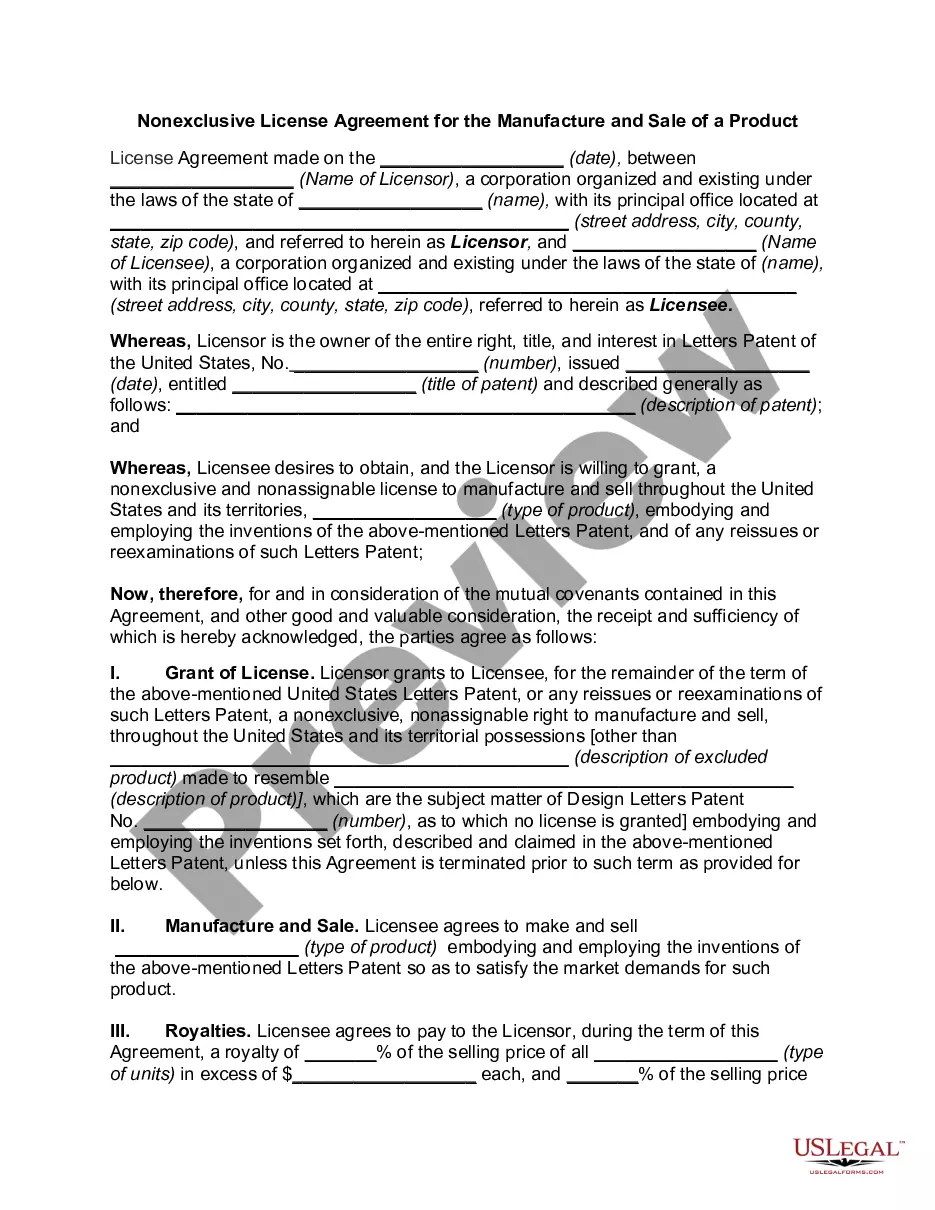
Exclusive or non-exclusive. In an exclusive license, the intellectual property holder is licensing the work only to one person, for that particular use/territory. Territory. Use. Attribution. Derivative works. Confidentiality. Time frame. Termination.
An example of a licensing agreement is a contract between the copyright holders of software and another company, allowing the latter to use the computer software for their daily business operations.
An example of a licensing agreement is a contract between the copyright holders of software and another company, allowing the latter to use the computer software for their daily business operations.
Download a template for a licensing agreement. Choose your role as the licensor or licensee. Define the license(s) in the agreement. Decide whether the license is exclusive or not. Settle the matter of fees and payment schedule. Add a renewal date and rules.
Do your homework. Before you begin negotiating, you need to understand your licensee's business. Start with a term sheet. Manage your expectations. Be patient. Have a win-win attitude. Don't lose your sense of humor. Remember to hold something back. Put yourself in their shoes.
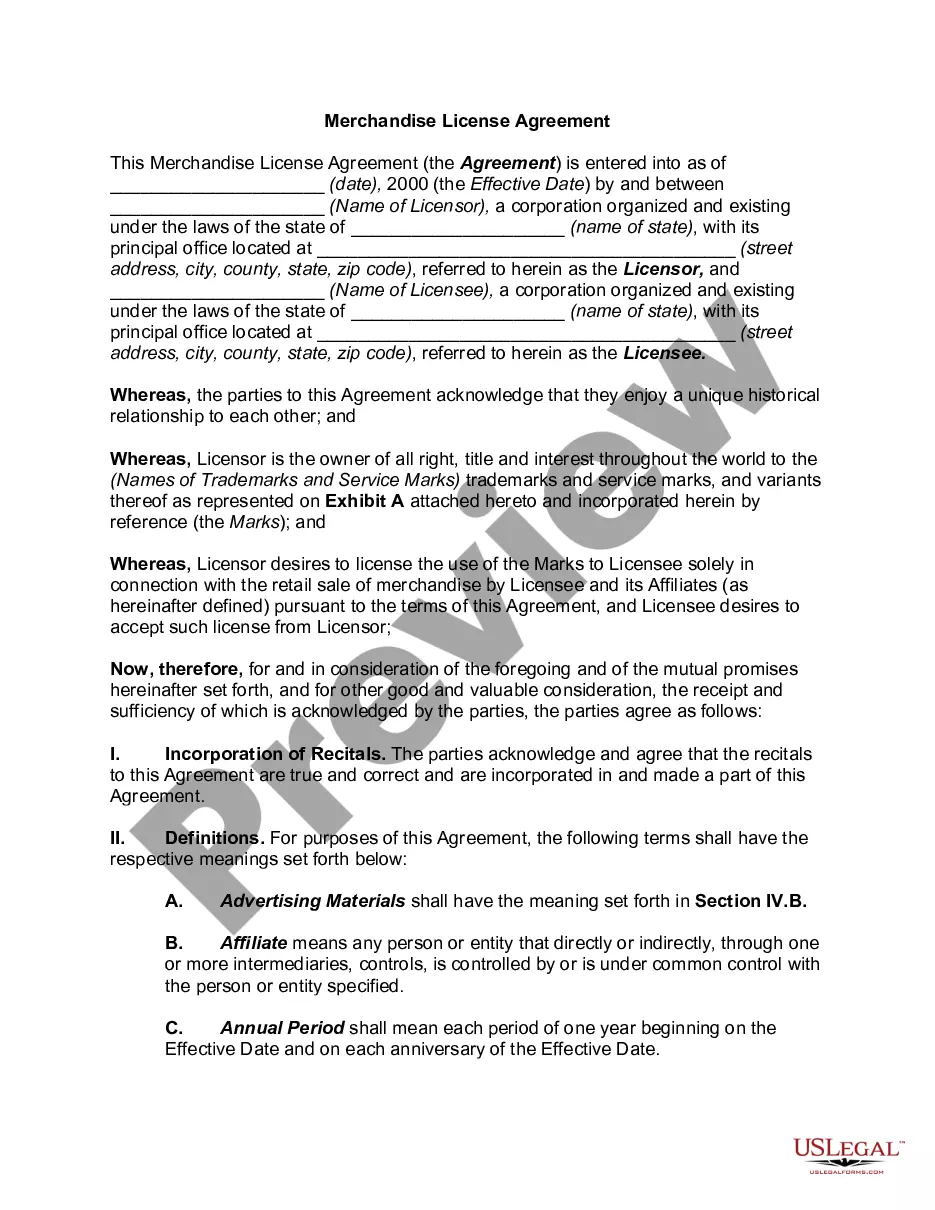
With a Merchandising Agreement, you can lay out both parties' roles and responsibilities, including who maintains the rights to the item that you are licensing. You can define the geographical areas where the product will be sold, length of the term, and financial details such as royalties or payments per unit sold.
A license agreement is a business contract between two parties. The licensor (the seller of the license) owns the asset being licensed and the licensee (the buyer) pays for the right to use the license. The licensee pays royalties to the owner in exchange for the right to sell the product or use the technology.