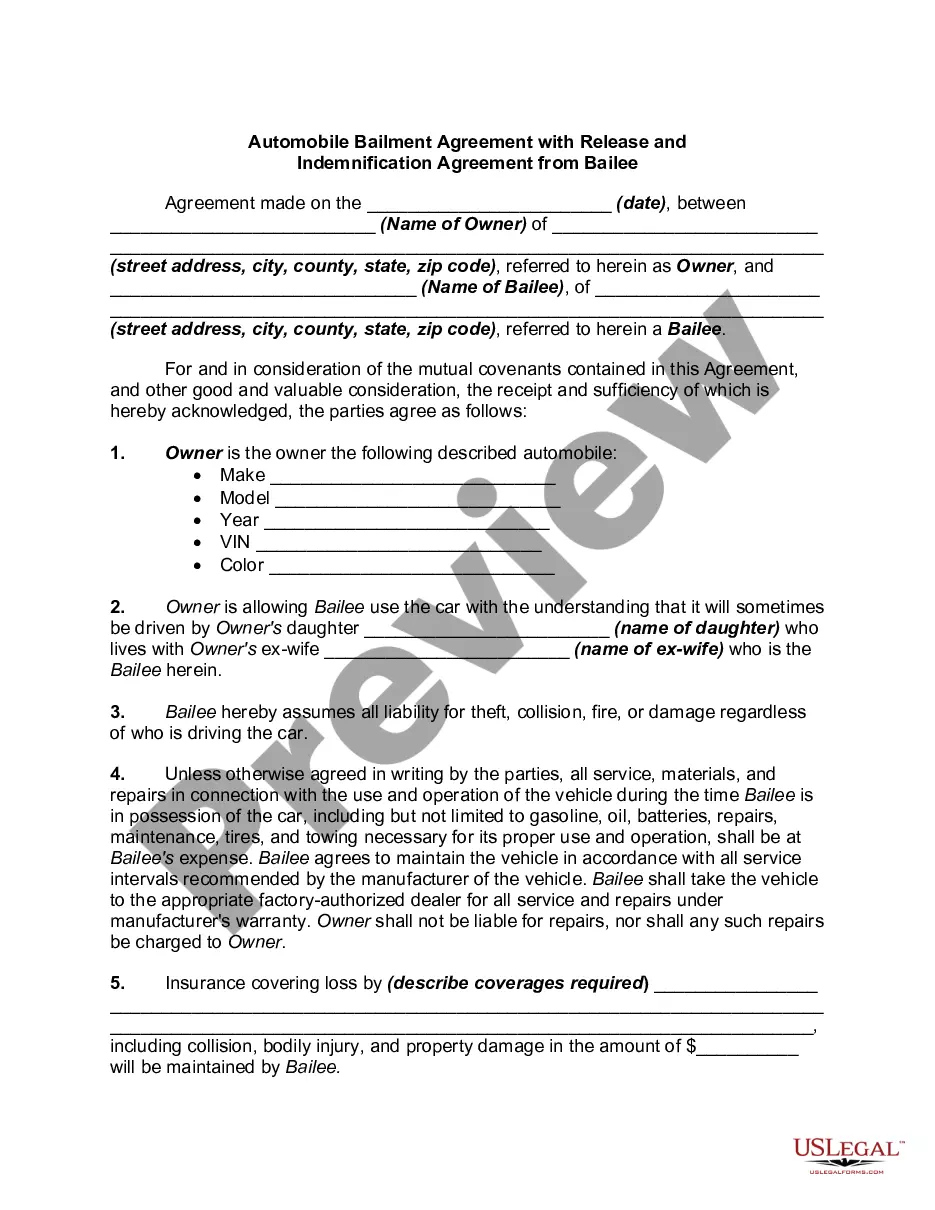
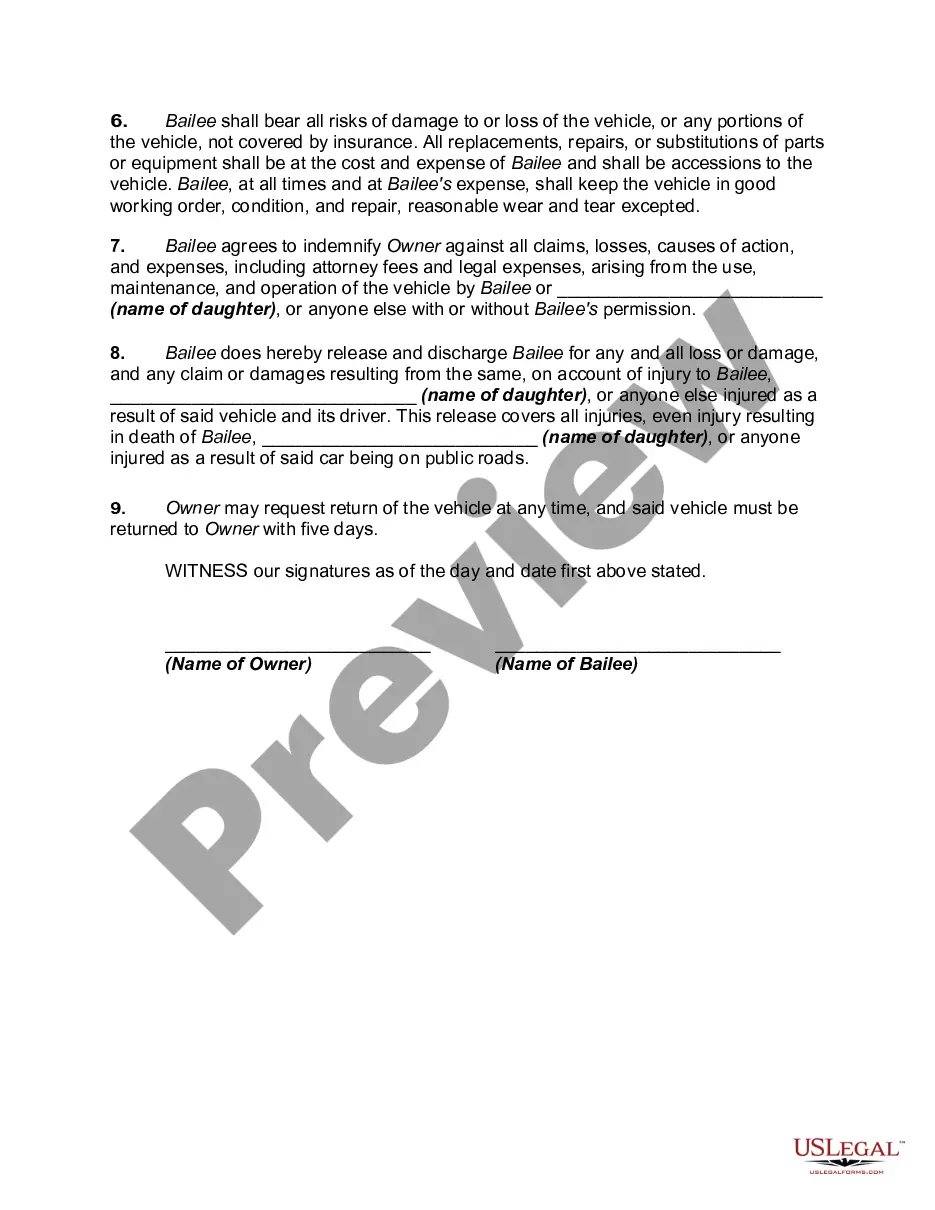
Automobile Bailment Agreement with Release and Indemnification Agreement from Bailee
What is this form?
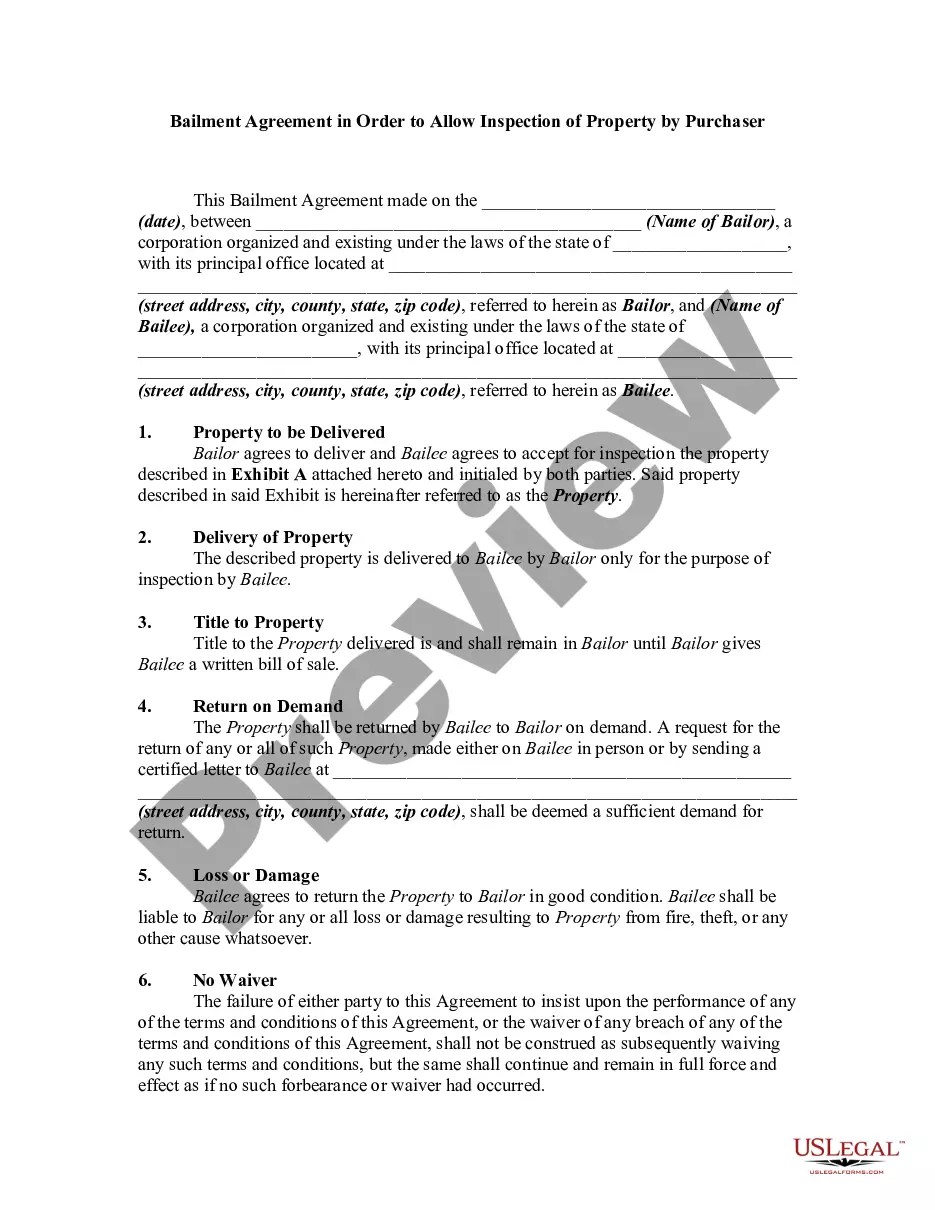
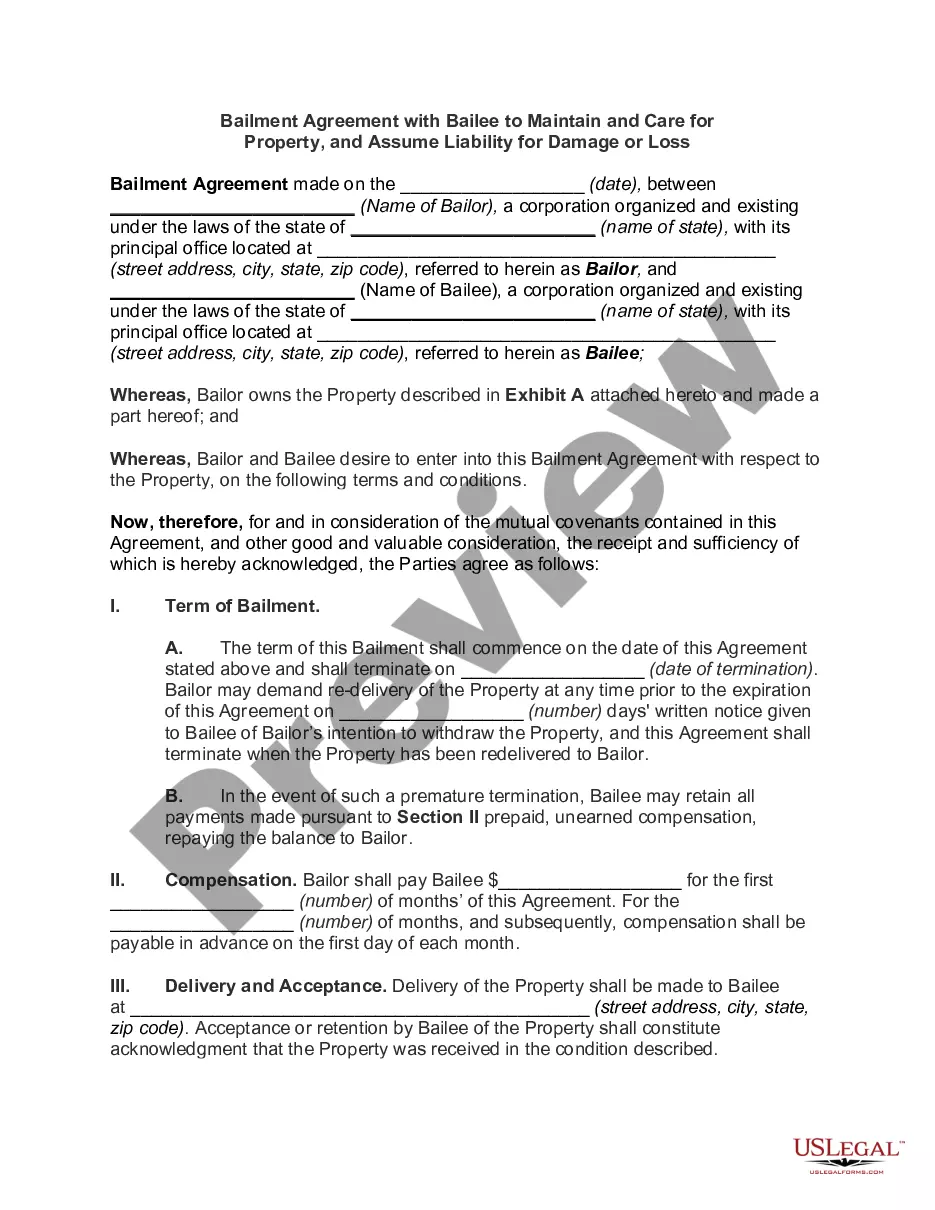
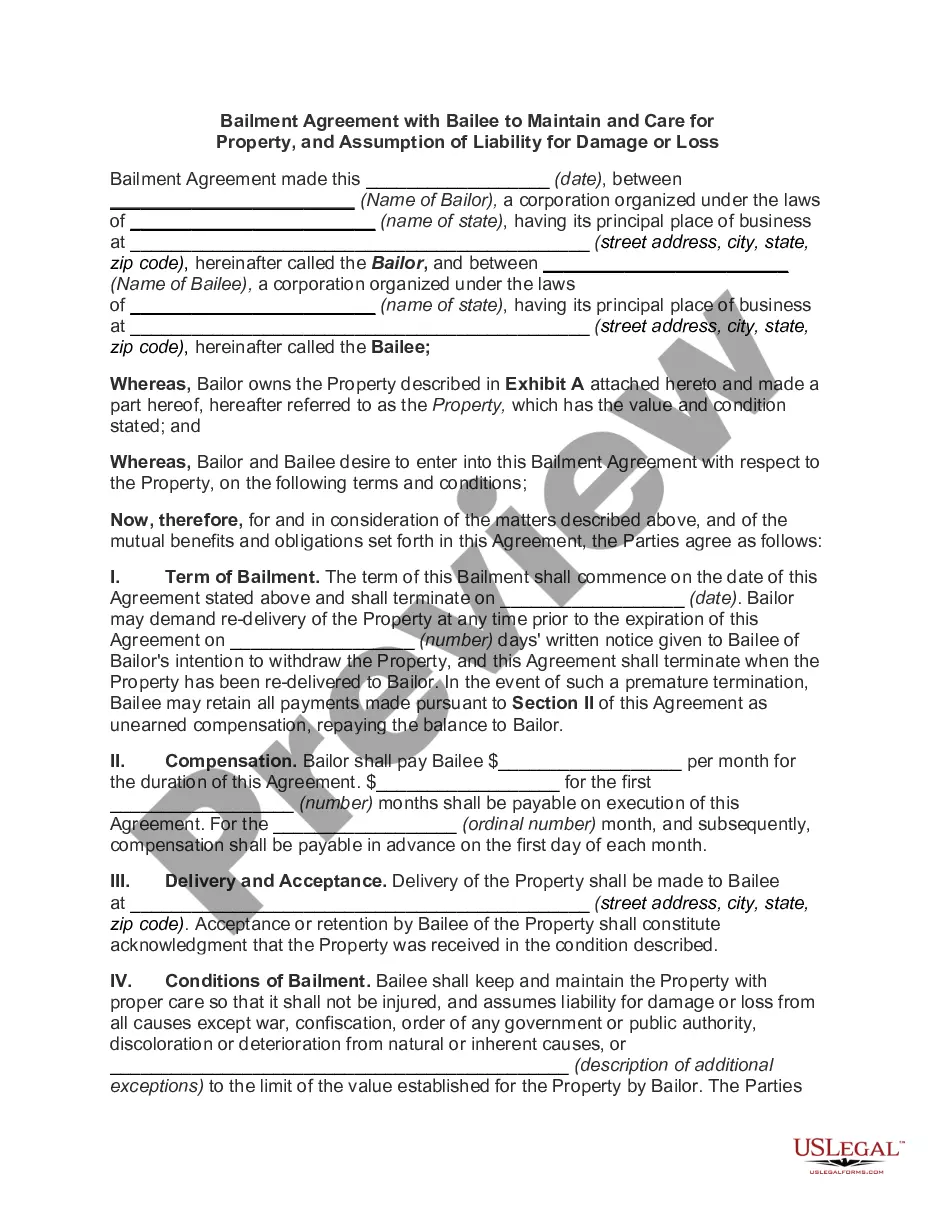
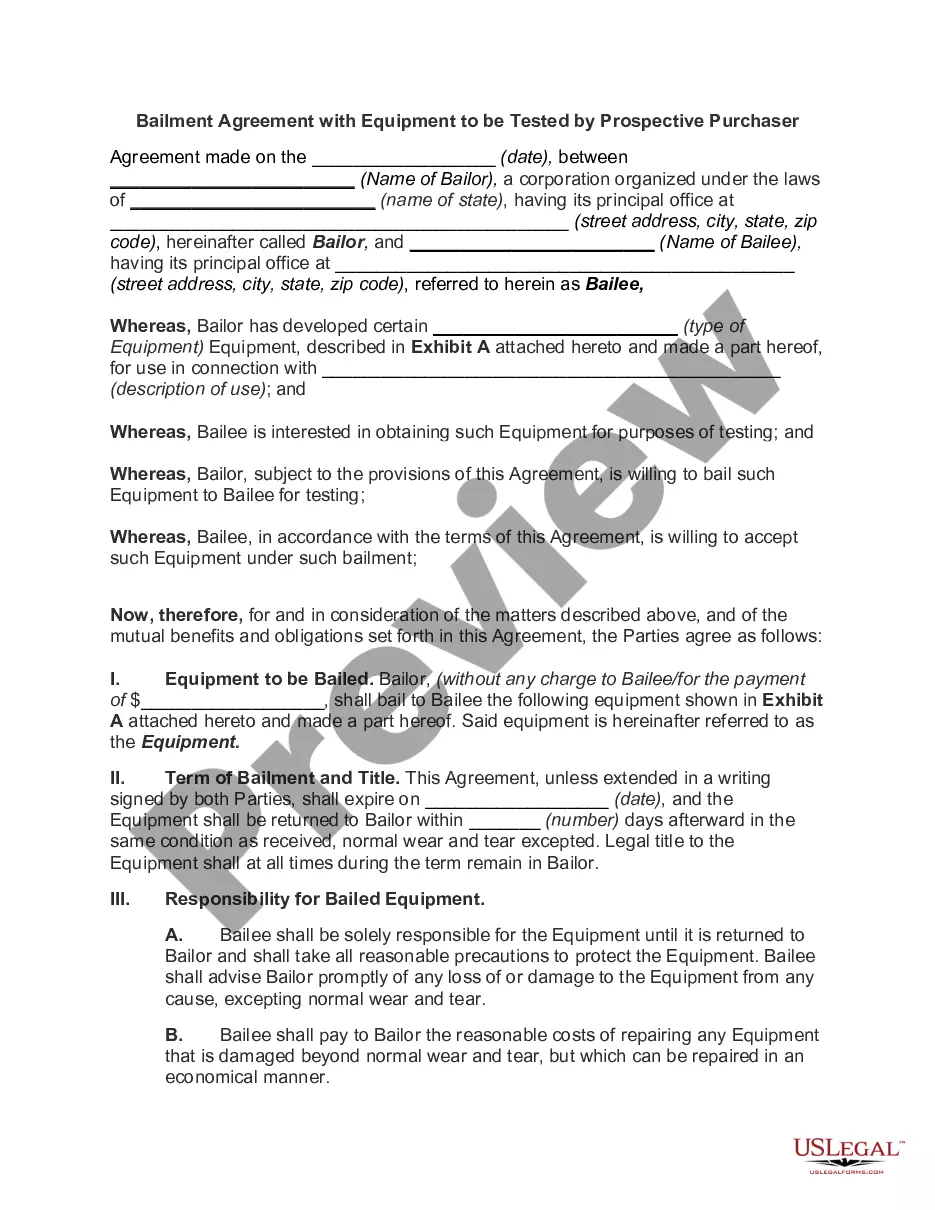
The Automobile Bailment Agreement with Release and Indemnification Agreement from Bailee is a legal document that outlines the terms of borrowing a vehicle. This agreement protects both the owner (the bailor) and the person borrowing the vehicle (the bailee) by specifying liability, maintenance responsibilities, and the proper use of the vehicle. Unlike standard rental agreements, this form focuses more on the responsibilities regarding the vehicle's care and outlines the consequences of any damage or loss incurred during the bailment period.
Key components of this form
- Identification of the parties involved, including the owner and bailee.
- Detailed description of the vehicle being borrowed, including make, model, and VIN.
- Terms regarding liability for damage, theft, or loss while in the bailee's possession.
- Maintenance responsibilities and costs incurred during the bailment period.
- Requirements for insurance coverage during vehicle use.
- Indemnification and release clauses protecting the owner from claims resulting from vehicle use.
- Conditions under which the vehicle must be returned to the owner.
Situations where this form applies
This form is essential in scenarios where you are allowing someone to use your vehicle, especially when the vehicle will be driven by another individual. For example, if a parent allows their child to use their vehicle, this form clarifies the responsibilities and liabilities of both parties, ensuring that the usage terms are legally documented. It can also be used in situations where friends or family are borrowing a vehicle.
Who this form is for
This form is suitable for:
- Vehicle owners (bailors) who want to lend their vehicle to someone else.
- Individuals (bailees) borrowing a vehicle from an owner.
- Parents allowing their children to use a vehicle owned by them.
- Divorced couples sharing vehicle usage arrangements.
Completing this form step by step
Follow these steps to complete the Automobile Bailment Agreement:
- Identify the parties: Fill in the names and addresses of the owner and bailee.
- Specify the property: Enter details concerning the vehicle, including make, model, year, VIN, and color.
- Outline usage terms: Clarify who is permitted to drive the vehicle, including any additional drivers.
- Complete liability and insurance sections: Indicate who is liable for damages and what insurance coverages will be maintained by the bailee.
- Include indemnification clauses: Ensure the agreement includes protections for the owner against liability claims.
- Sign and date the agreement: Both parties should sign and date the agreement to make it legally binding.
Does this form need to be notarized?
This form does not typically require notarization unless specified by local law. However, it is advisable to review local regulations to ensure compliance.
Get your form ready online
Our built-in tools help you complete, sign, share, and store your documents in one place.
Make edits, fill in missing information, and update formatting in US Legal Forms—just like you would in MS Word.
Download a copy, print it, send it by email, or mail it via USPS—whatever works best for your next step.
Sign and collect signatures with our SignNow integration. Send to multiple recipients, set reminders, and more. Go Premium to unlock E-Sign.
If this form requires notarization, complete it online through a secure video call—no need to meet a notary in person or wait for an appointment.
We protect your documents and personal data by following strict security and privacy standards.
Make edits, fill in missing information, and update formatting in US Legal Forms—just like you would in MS Word.
Download a copy, print it, send it by email, or mail it via USPS—whatever works best for your next step.
Sign and collect signatures with our SignNow integration. Send to multiple recipients, set reminders, and more. Go Premium to unlock E-Sign.

If this form requires notarization, complete it online through a secure video call—no need to meet a notary in person or wait for an appointment.
We protect your documents and personal data by following strict security and privacy standards.
Typical mistakes to avoid
- Failing to include all necessary details about the vehicle.
- Not specifying who will be driving the vehicle during the bailment.
- Neglecting to clarify liability and insurance requirements.
- Forgetting to sign and date the agreement.
Why complete this form online
- Convenient online access allows you to fill out the form at your own pace.
- The form is editable, so you can customize it to fit your specific situation.
- Reliability ensured as the template is created by licensed attorneys who understand legal requirements.
Main things to remember
- The Automobile Bailment Agreement helps define responsibilities between vehicle owner and borrower.
- It serves to protect both parties in terms of liability and vehicle maintenance.
- This form can be customized based on state-specific requirements and individual circumstances.
Looking for another form?
Form popularity
FAQ
There are three types of bailments: (1) for the benefit of the bailor and bailee; (2) for the sole benefit of the bailor; and (3) for the sole benefit of the bailee. A bailment for the mutual benefit of the parties is created when there is an exchange of performances between the parties.
Bailment. n. 1) the act of placing property in the custody and control of another, usually by agreement in which the holder (bailee) is responsible for the safekeeping and return of the property.
Bailment versus Sales. In a sale, the buyer acquires title and must pay for the goods. In a bailment, the bailee acquires possession and must return the identical object. In most cases the distinction is clear, but difficult borderline cases can arise.
A Bailment that Benefits Both the Bailor and Bailee: An example of this would be parking your car in a paid parking lot. You would get the benefit of parking your car and the owner of the lot would get the benefit of the fee that is paid. A bailee can face liability for damaging the bailed items if they were negligent.
So essentially, a bailment agreement is an agreement to take temporary custody of something.Commonly, under this bailment agreement, the dealer has 30 days to try to secure financing for the vehicle that a buyer has already driven home.
The bailee is liable for all injuries to the property from failure to properly care for or use it. Once the purpose of the bailment has been completed, the bailee usually must return the property to the bailor, or account for it, depending upon the terms of the contract.
To put bailee into possession (Section 149) To disclose Material faults (Section 150) To pay expenses of bailment (Section.158)
In general, the purpose of a bailment agreement is to establish the relationship and responsibilities of the parties, both the person temporarily handing over possession of his property and the person receiving it.