Estate and Inheritance Tax Return Engagement Letter - 706
Understanding this form
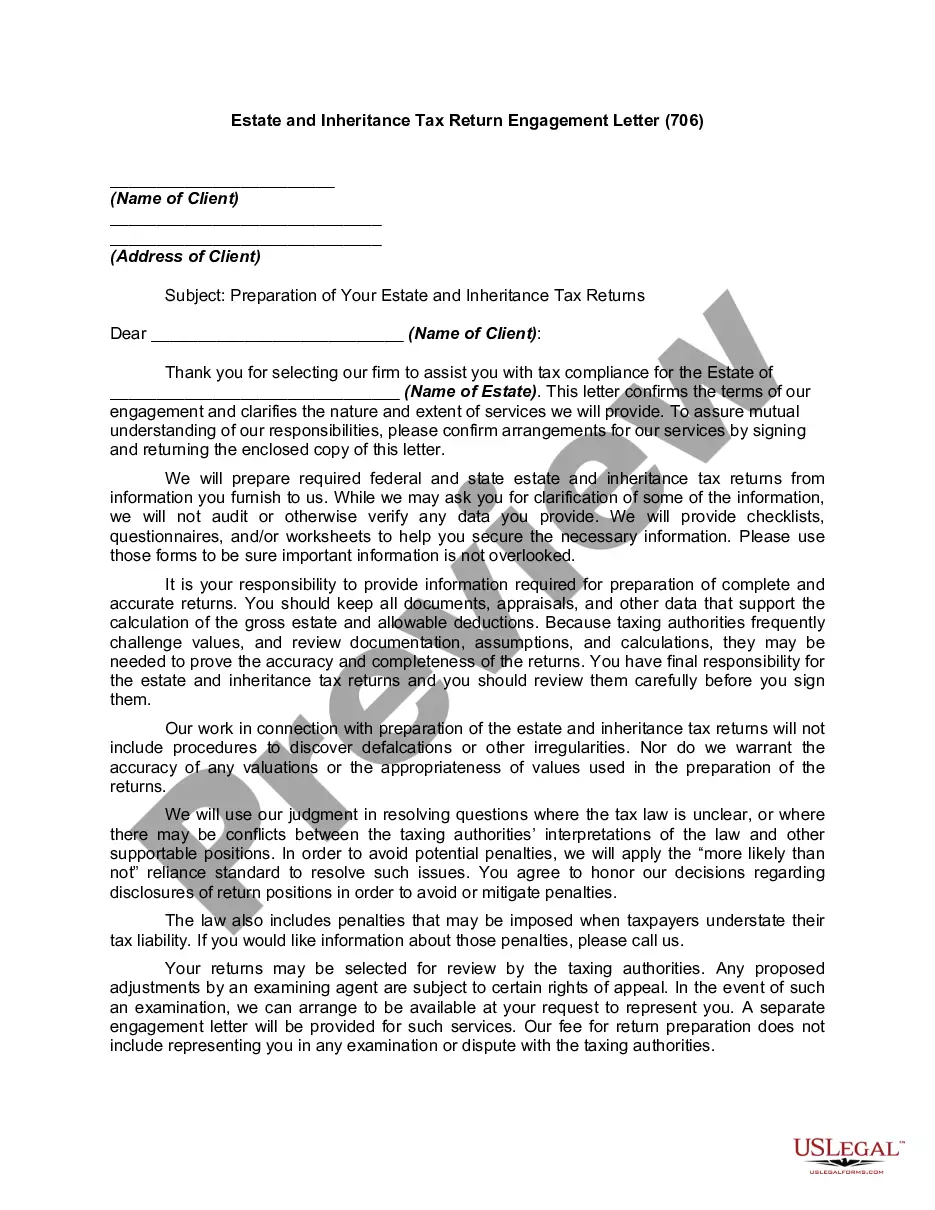
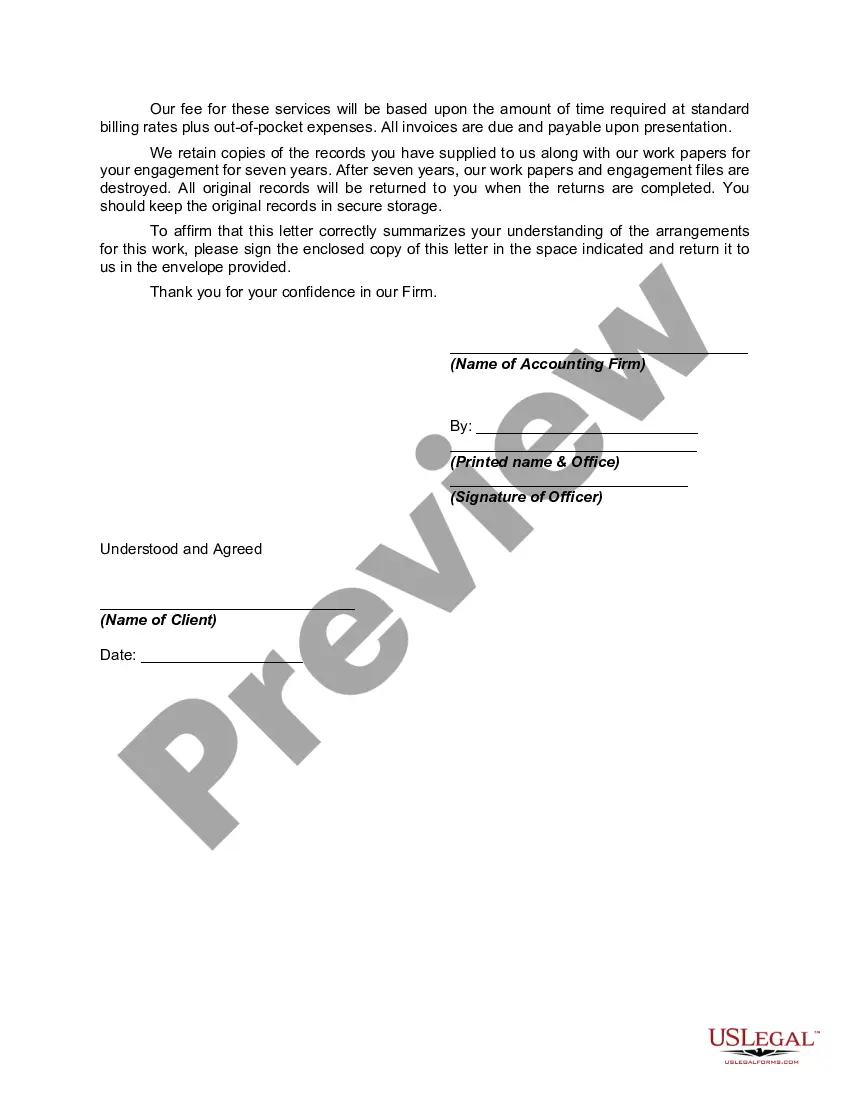
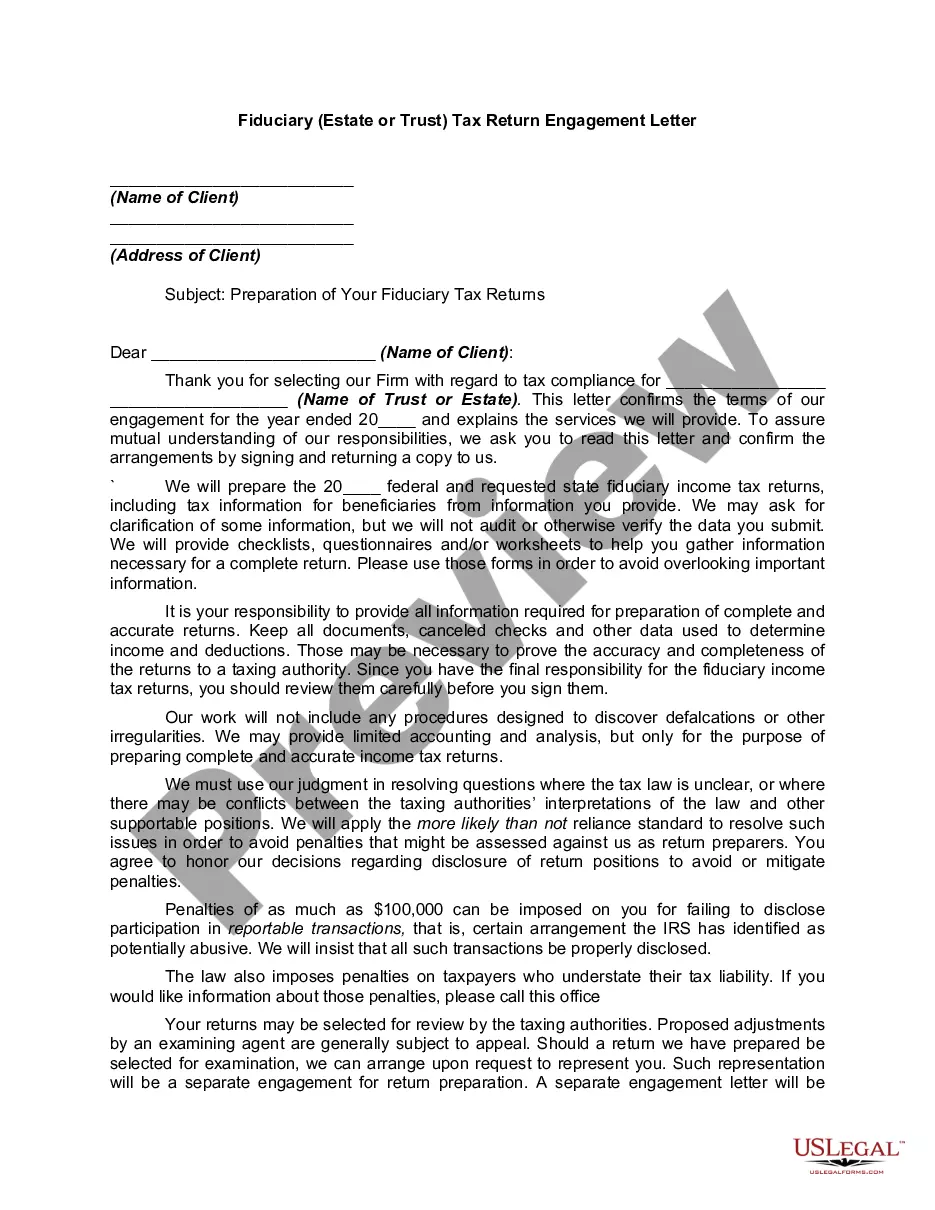
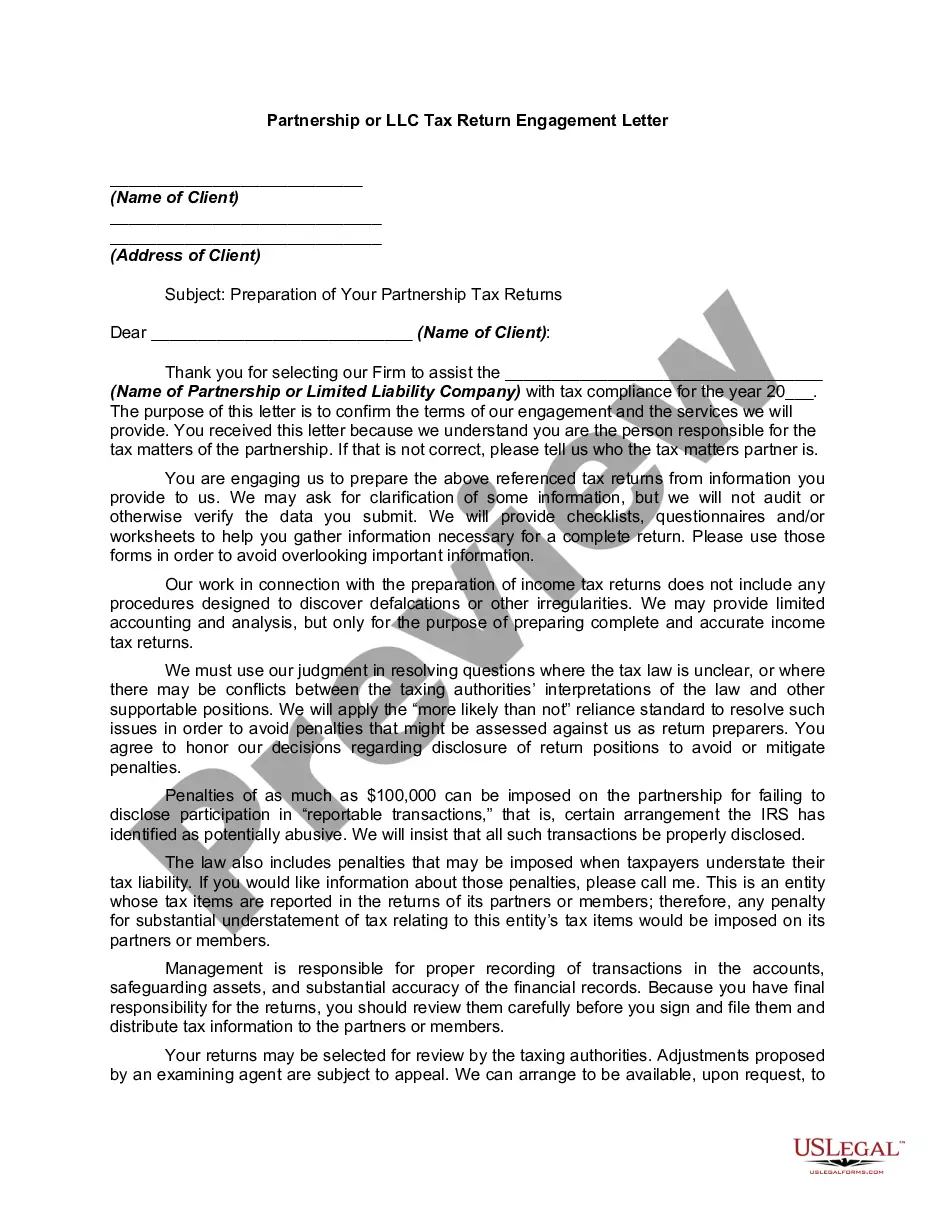
The Estate and Inheritance Tax Return Engagement Letter - 706 is a formal agreement between a client and a tax professional regarding the preparation of federal and state estate and inheritance tax returns. This letter outlines the responsibilities and expectations of both parties, ensuring clarity and understanding about the engagement. Unlike other tax forms, this letter specifically details the engagement terms for handling the complexities of estate tax matters.
Key components of this form
- Name and address of the client.
- Subject line confirming the preparation of estate and inheritance tax returns.
- Clarification of the accountant's services and client responsibilities.
- Information on documentation retention and audit preparedness.
- Fee structure and payment terms for services rendered.
- Signature section for both the client and the accounting firm.
When to use this document
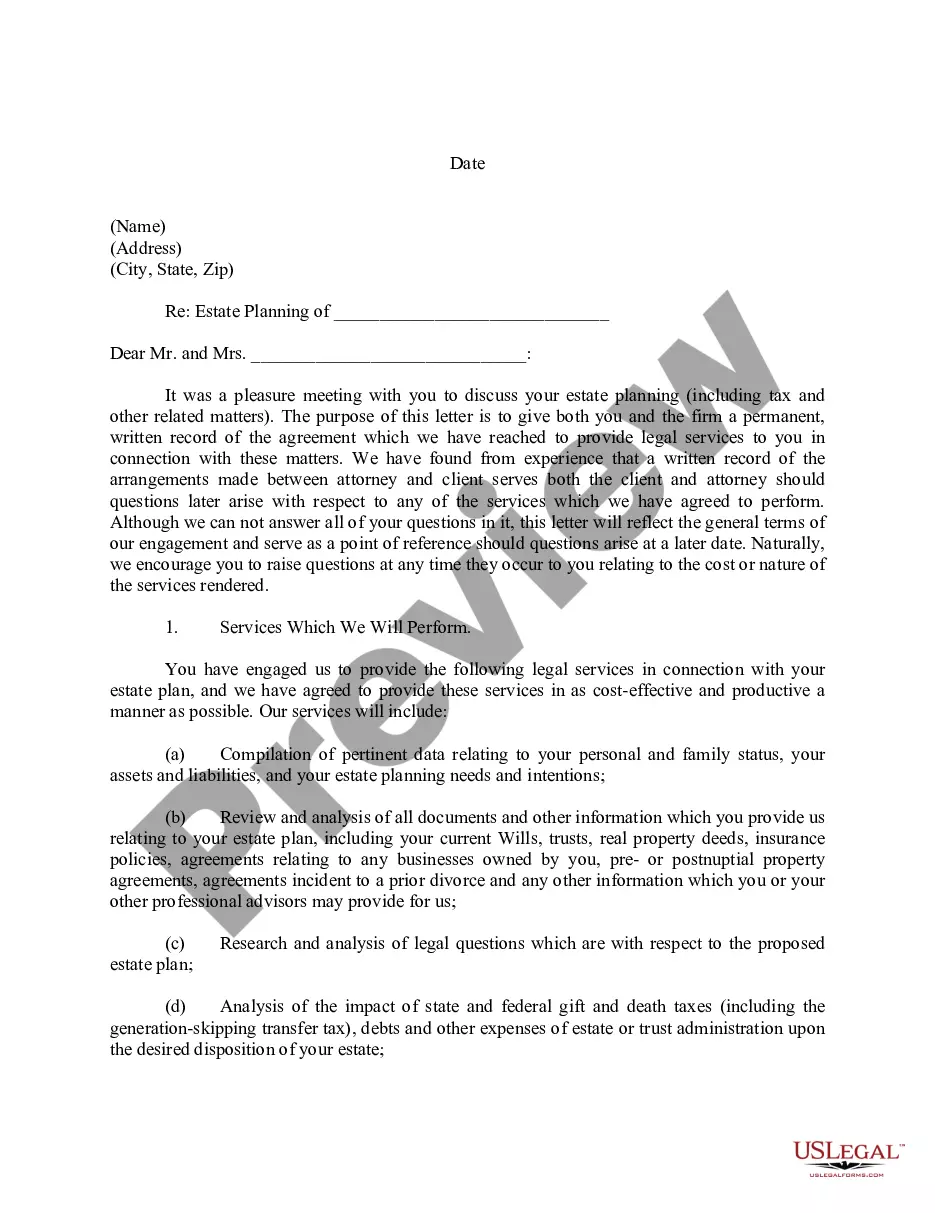
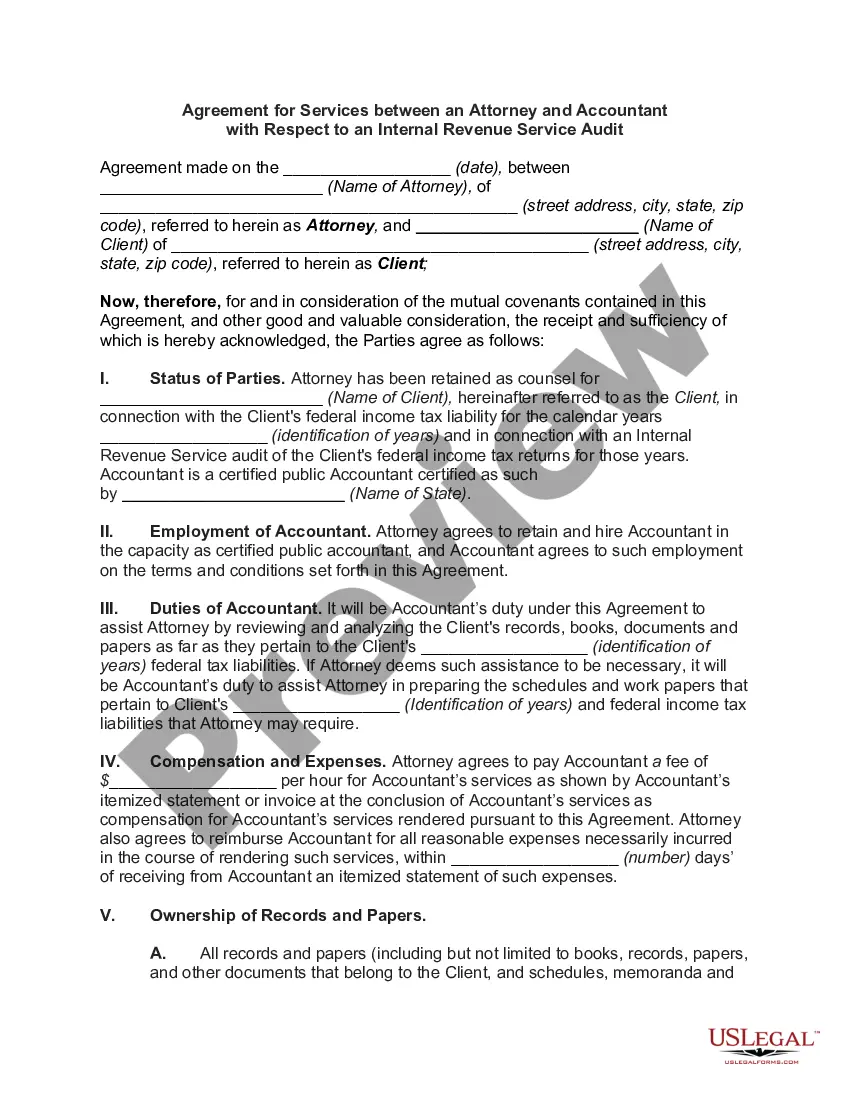
This form is used when hiring a certified public accountant to prepare estate and inheritance tax returns. You should utilize this engagement letter to ensure both parties are clear on the scope of work, fees, and responsibilities, particularly when dealing with complex tax regulations associated with estate handling.
Who should use this form
- Executors or administrators of an estate.
- Individuals responsible for filing inheritance tax returns.
- Tax professionals offering estate tax services.
- Anyone seeking to formalize a working relationship with a tax accountant regarding estate taxes.
Completing this form step by step
- Identify and enter the name and address of the client.
- Specify the name of the estate for which you are preparing tax returns.
- Attach any necessary checklists or worksheets to aid in information gathering.
- Review the terms regarding responsibilities and fee structure carefully.
- Both the client and representative must sign and date the agreement.
Notarization requirements for this form
This form does not typically require notarization unless specified by local law. However, it's important to verify the requirements of your state to ensure compliance.
Get your form ready online
Our built-in tools help you complete, sign, share, and store your documents in one place.
Make edits, fill in missing information, and update formatting in US Legal Forms—just like you would in MS Word.
Download a copy, print it, send it by email, or mail it via USPS—whatever works best for your next step.
Sign and collect signatures with our SignNow integration. Send to multiple recipients, set reminders, and more. Go Premium to unlock E-Sign.
If this form requires notarization, complete it online through a secure video call—no need to meet a notary in person or wait for an appointment.
We protect your documents and personal data by following strict security and privacy standards.

Make edits, fill in missing information, and update formatting in US Legal Forms—just like you would in MS Word.

Download a copy, print it, send it by email, or mail it via USPS—whatever works best for your next step.

Sign and collect signatures with our SignNow integration. Send to multiple recipients, set reminders, and more. Go Premium to unlock E-Sign.

If this form requires notarization, complete it online through a secure video call—no need to meet a notary in person or wait for an appointment.

We protect your documents and personal data by following strict security and privacy standards.
Common mistakes to avoid
- Not providing accurate and complete information needed for tax return preparation.
- Failing to review the engagement letter before signing it.
- Overlooking the importance of document retention for future audits.
- Not clarifying fee structures and terms upfront.
Benefits of using this form online
- Convenience of downloading and completing the form at your own pace.
- Editable fields to customize information according to your needs.
- Easy access to legal form templates drafted by licensed attorneys.
Looking for another form?
Form popularity
FAQ
Generally, the estate tax return is due nine months after the date of death. A six month extension is available if requested prior to the due date and the estimated correct amount of tax is paid before the due date.
For those who wish to continue to receive estate tax closing letters, estates and their authorized representatives may call the IRS at (866) 699-4083 to request an estate tax closing letter no earlier than four months after the filing of the estate tax return.
The executor of a decedent's estate uses Form 706 to figure the estate tax imposed by Chapter 11 of the Internal Revenue Code. Form 706 is also used to compute the generation-skipping transfer (GST) tax imposed by Chapter 13 on direct skips.
When an Estate Can Expect a Tax Closing Letter According to the IRS website, heirs can expect a closing letter within four to six months from the date Form 706 is filed. But this is if the return is without errors or special circumstances.
Statute of Limitations For all three of the above returns, the IRS generally has three years from the date the returns were filed to audit the returns.
If a deceased person owes taxes in any years prior to his or her death, the IRS may pursue the collection of these taxes from the estate. According to the Internal Revenue Code, the Collection Statute Expiration Date (CSED) for taxes owed is 10 years after the date that a tax liability was assessed.
Form 706 must generally be filed along with any tax due within nine months of the decedent's date of death.