Assignment of Publication Rights to E-Book
Understanding this form
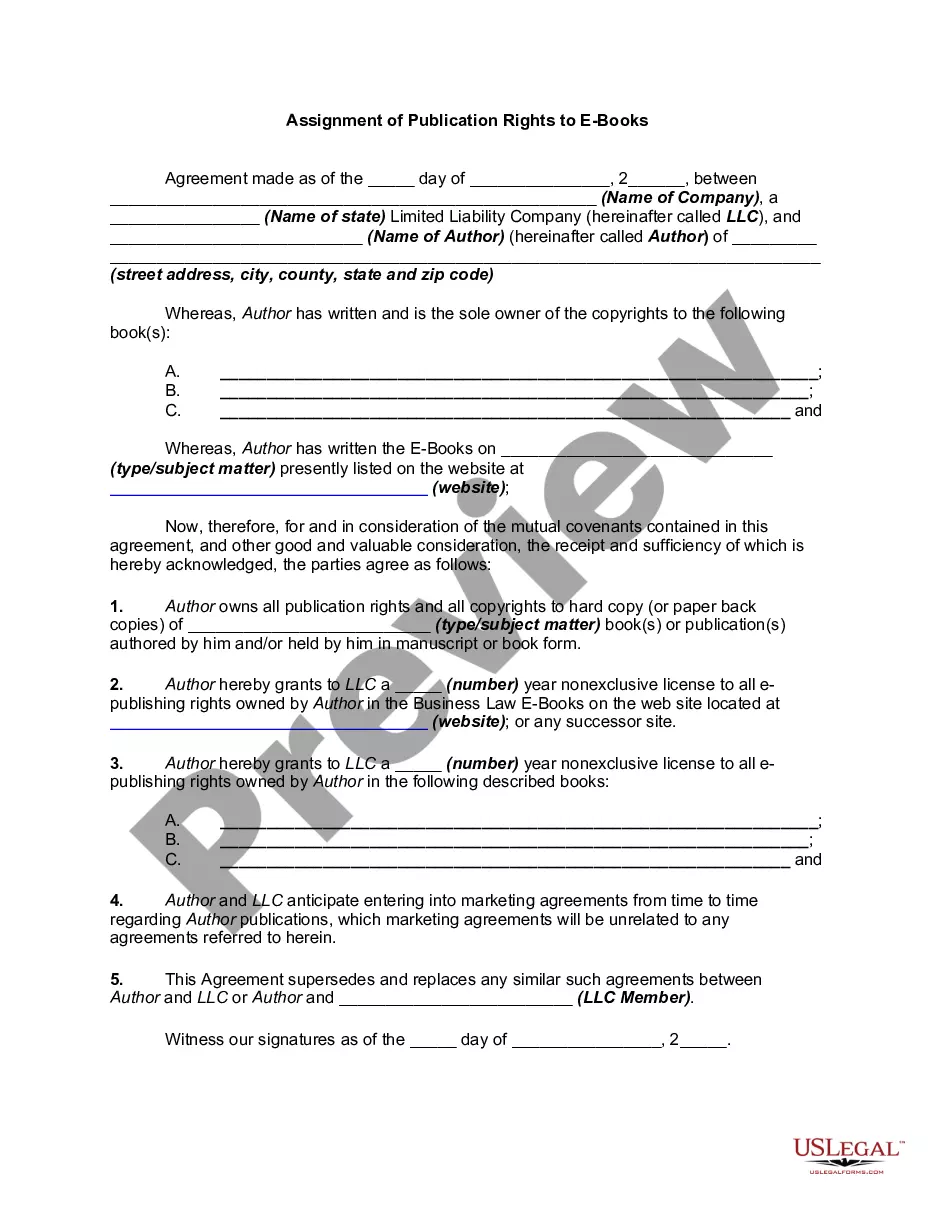
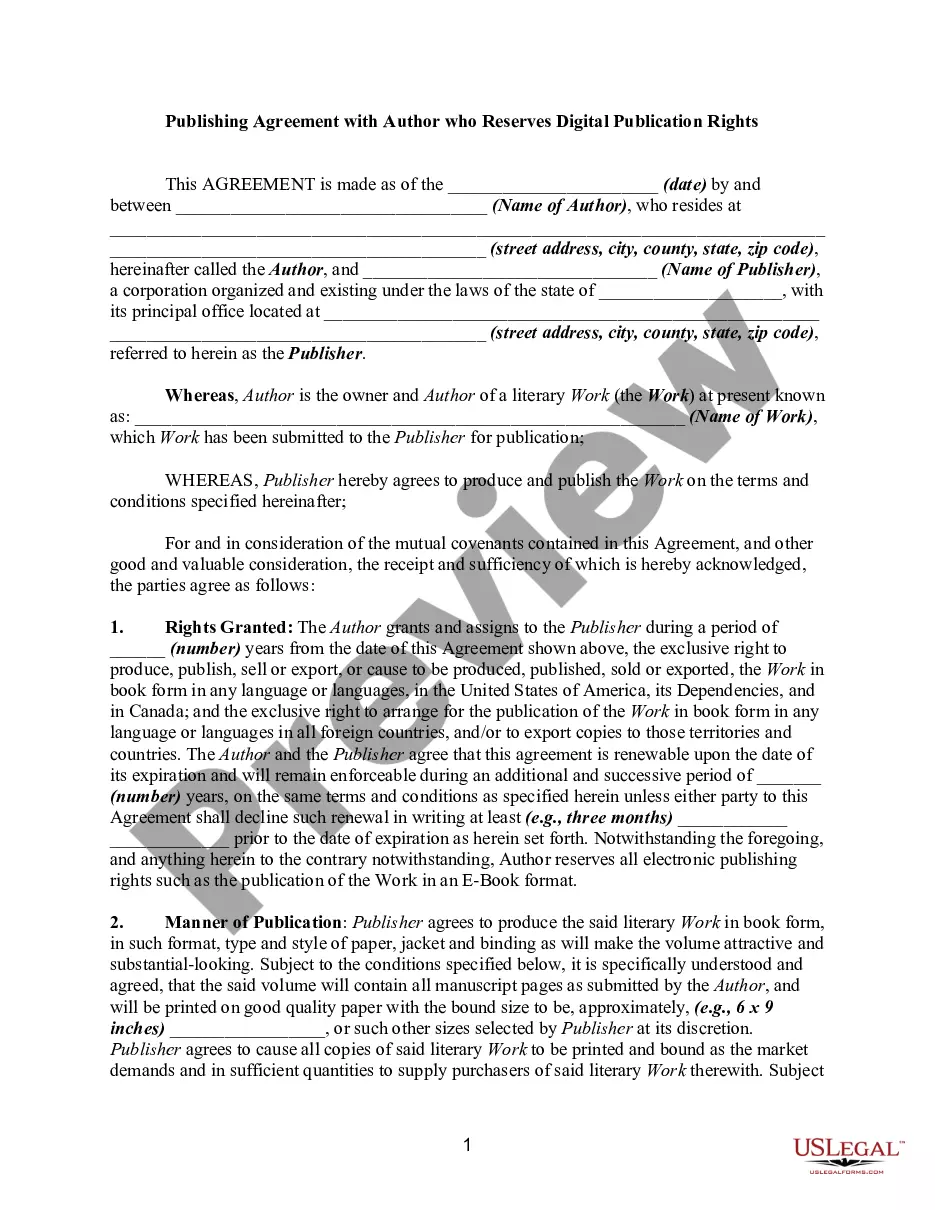
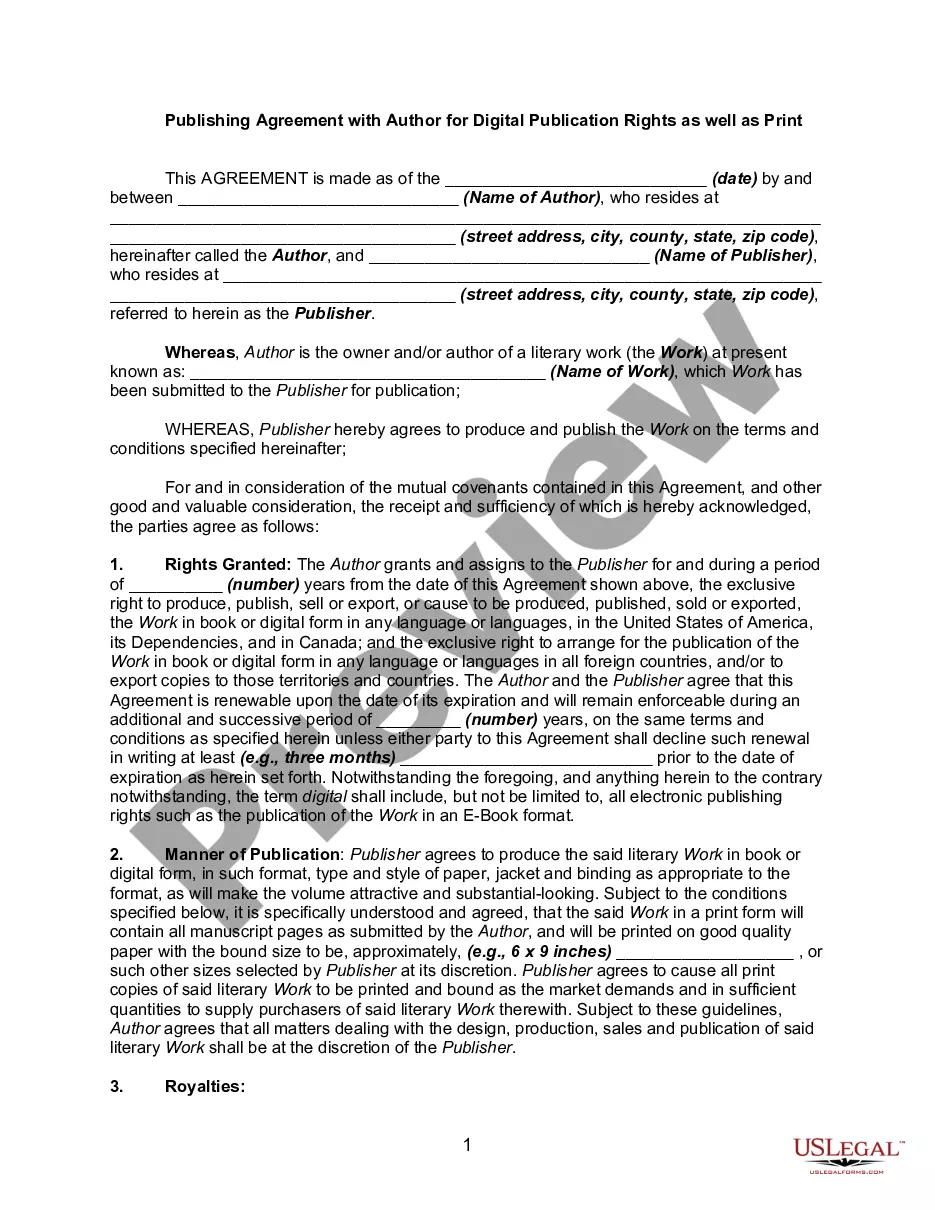
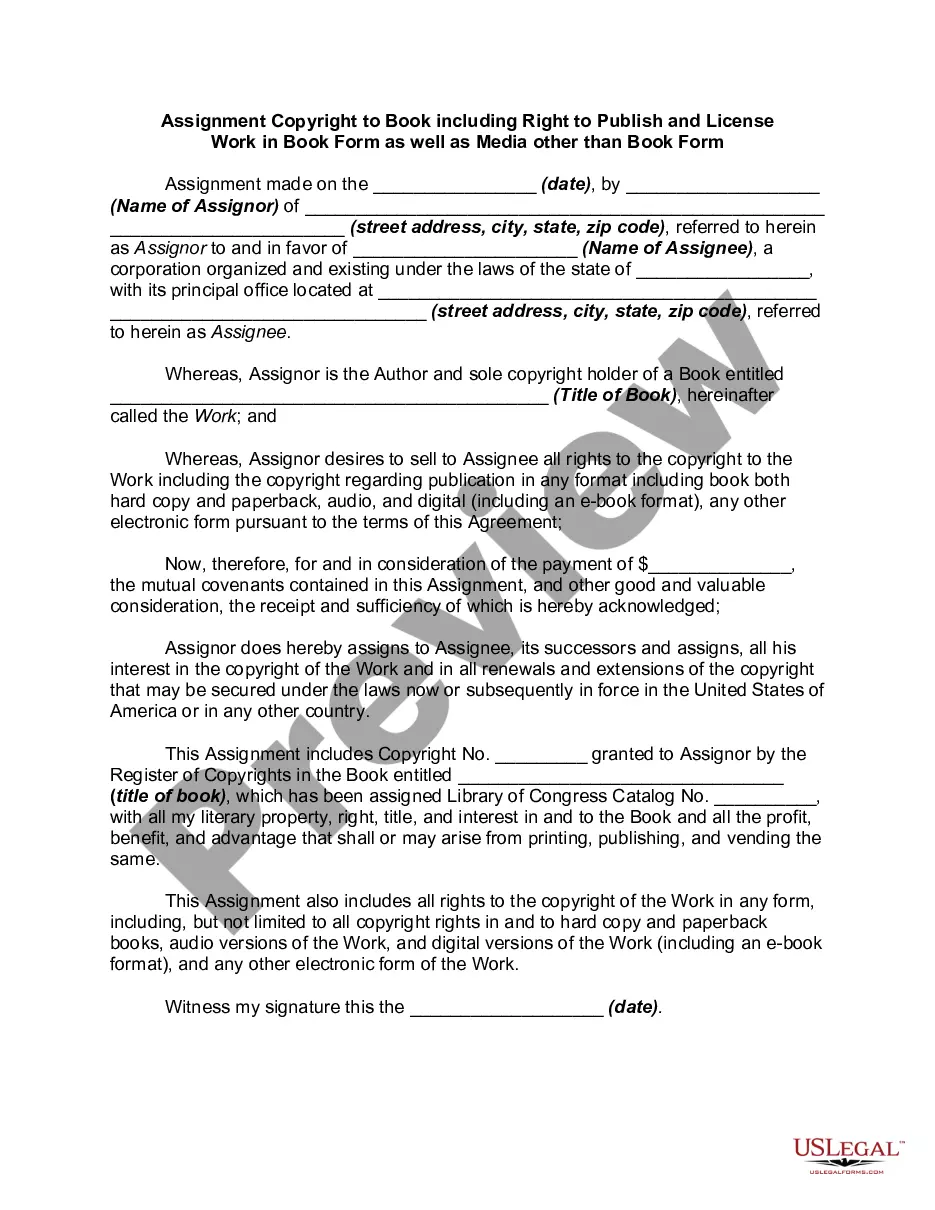
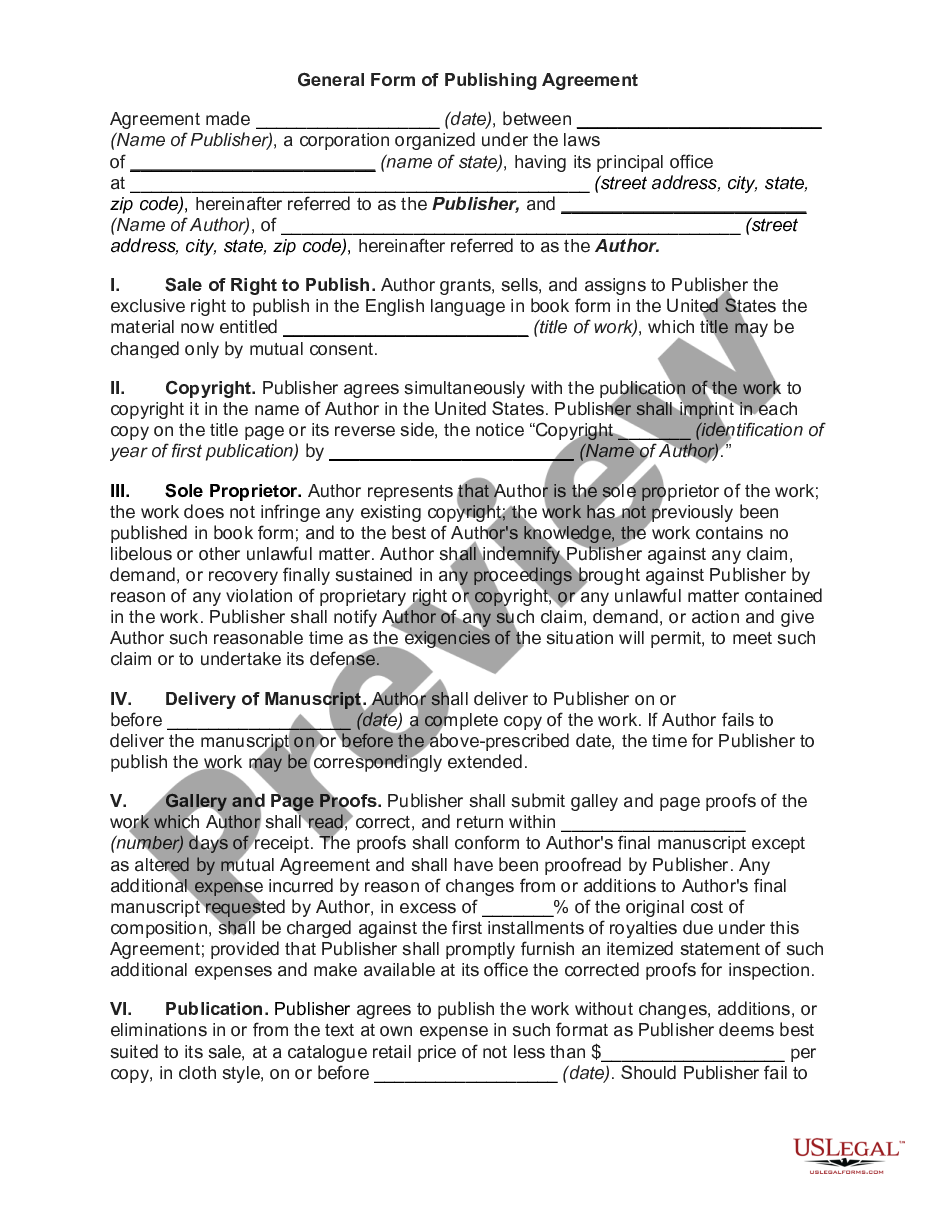
The Assignment of Publication Rights to E-Book is a legal agreement that allows an author to transfer specific publication rights of their e-book to a company. This form provides clarity on the ownership and rights associated with digital publications, differentiating it from other publishing agreements by focusing solely on e-book rights. It serves to protect both the author's intellectual property and the company's interests in marketing the e-book effectively.
Form components explained
- Details of the parties involved, including the name of the LLC and the author.
- Section identifying the copyrighted works authored by the author.
- Granting of nonexclusive e-publishing rights to the LLC for a specified term.
- Terms regarding the supersession of previous agreements between the parties.
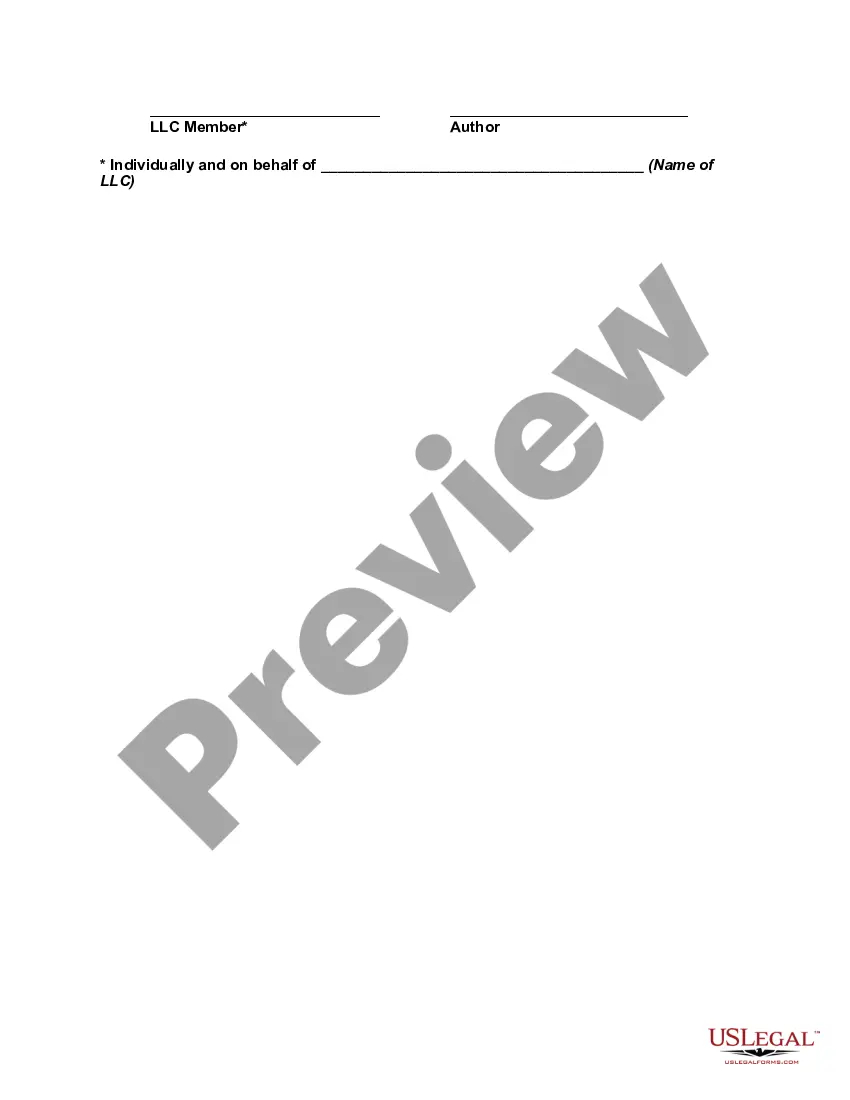
- Signatures of the LLC member and the author, confirming the agreement.
When this form is needed
This form is useful in scenarios where an author wants to authorize a company to publish their e-books. It is typically used when the author wishes to maintain ownership of the copyright while allowing a publisher to distribute the e-book for a defined period. This is important for authors who are seeking to maximize the reach of their work without losing valuable rights.
Who can use this document
- Authors who have writing rights to e-books and want to publish them through a company.
- Limited Liability Companies (LLCs) looking to acquire e-publishing rights from authors.
- Publishers seeking formal agreements with authors for digital publications.
How to prepare this document
- Enter the effective date of the agreement at the top of the document.
- Fill in the names and details of the LLC and the author, including full addresses.
- List the e-books for which rights are being assigned, including titles and subject matter.
- Specify the duration of the nonexclusive license granted to the LLC.
- Have both parties sign and date the agreement to finalize it.
Does this document require notarization?
In most cases, this form does not require notarization. However, some jurisdictions or signing circumstances might. US Legal Forms offers online notarization powered by Notarize, accessible 24/7 for a quick, remote process.
Get your form ready online
Our built-in tools help you complete, sign, share, and store your documents in one place.
Make edits, fill in missing information, and update formatting in US Legal Forms—just like you would in MS Word.
Download a copy, print it, send it by email, or mail it via USPS—whatever works best for your next step.
Sign and collect signatures with our SignNow integration. Send to multiple recipients, set reminders, and more. Go Premium to unlock E-Sign.
If this form requires notarization, complete it online through a secure video call—no need to meet a notary in person or wait for an appointment.
We protect your documents and personal data by following strict security and privacy standards.

Make edits, fill in missing information, and update formatting in US Legal Forms—just like you would in MS Word.

Download a copy, print it, send it by email, or mail it via USPS—whatever works best for your next step.

Sign and collect signatures with our SignNow integration. Send to multiple recipients, set reminders, and more. Go Premium to unlock E-Sign.

If this form requires notarization, complete it online through a secure video call—no need to meet a notary in person or wait for an appointment.

We protect your documents and personal data by following strict security and privacy standards.
Avoid these common issues
- Failing to specify the correct titles and subject matter of the e-books.
- Leaving out the duration of the nonexclusive license period.
- Not including complete addresses for both parties.
- Forgetting to obtain signatures from all involved parties.
Benefits of using this form online
- Easy access and immediate download, saving time on document preparation.
- Editable fields allow personalization to fit specific agreements and needs.
- Drafted by legal professionals, ensuring compliance with relevant laws.
Legal use & context
- This agreement establishes a clear understanding of the rights being granted to the LLC.
- It protects the author's interests by preserving their copyrights while allowing specified use by the LLC.
- Legal validity depends on adherence to copyright laws and the specific terms outlined in the agreement.
Quick recap
- The Assignment of Publication Rights to E-Book form is crucial for authors and publishers in the digital age.
- It ensures both parties are aware of their rights and responsibilities in e-publishing agreements.
- Completing this form accurately helps avoid common legal issues related to copyright and publishing.
Looking for another form?
Form popularity
FAQ
Write a strong book. Create an Amazon KDP account. Format your ebook for publishing. Upload your ebook to KDP. Choose your ebook publish date. Build your book launch team. Create hype for your ebook. Publish your ebook!
Head over to the copyright.gov portal. Click on Literary Works, then Register A Literary Work. Take a minute to create an account with the U.S. Copyright Office if you didn't do so already. Go to Copyright Registration on the left side of your screen and click on Register A New Claim.
Copyright pages in books published by traditional publishers will include the name of the publisher, address (sometimes just the city), and URL. If you're self-publishing, you can include your name or create a name for your imprint along with an address and URL, if you choose.
The author grants all their rights as author and copyright owner to the publisher.In some cases, the publisher may grant some rights back to the author that will allow them to do certain actions such as those described above. Assignment of copyright is generally permanent unless the agreement indicates otherwise.
Typically there is an option fee, option renewal fee, and then a purchase price should the producer want to secure the story rights. An option starts around $500, with $50,000 being on the high-end. A good gauge is 10% of the purchase price.
Most publishers have two physical board meetings to help make the decision whether or not to publish a book. This process varies from publisher to publisher and each company has its own name for its board meetings.
Go to the Copyright.gov portal. On the left box, select Literary Works Navigate to Register a Literary Work on the right sidebar. Select either new user or login with your account. If you're a new user, fill out your information.
Usually, the author of the creative work is the owner of the copyright. But in the publishing industry, the owner of the copyright may be the publishing company due to an agreement between the author and the publisher.Sometimes, even though a book is published by a major publisher, the author still owns the copyright.