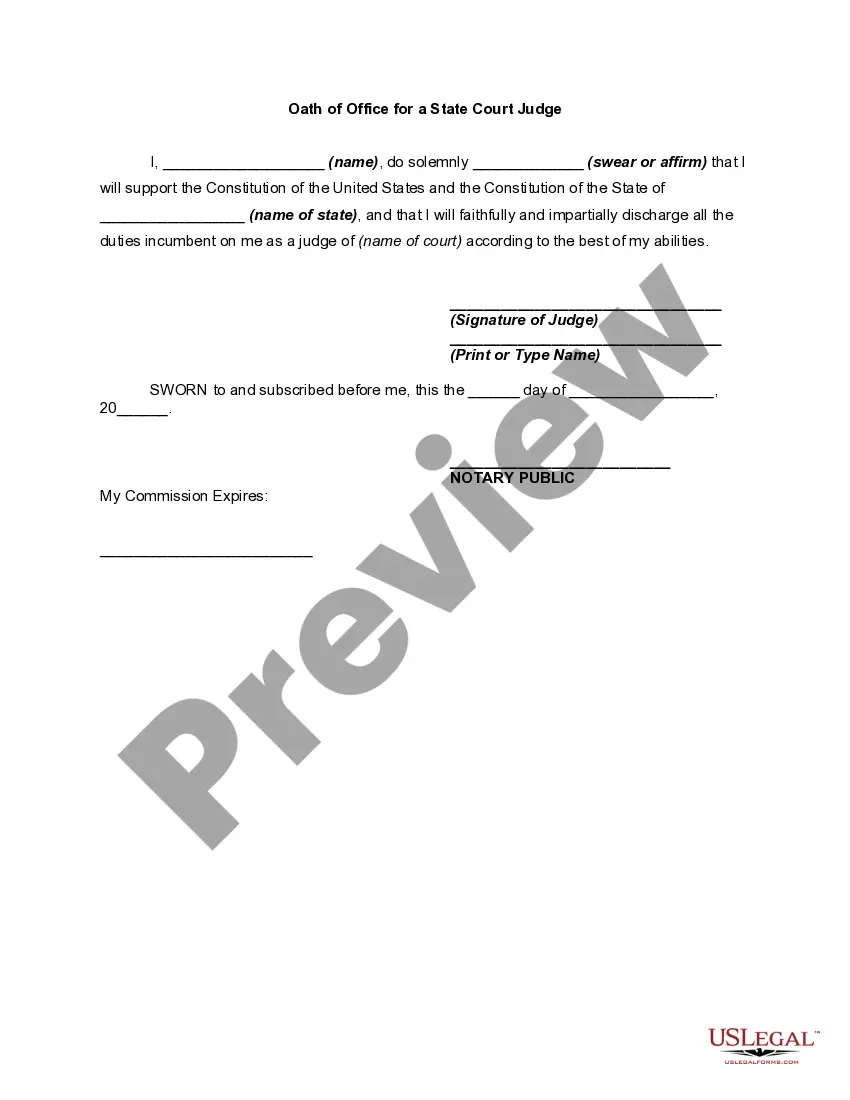
Oath of Office for a State Court Judge
What this document covers
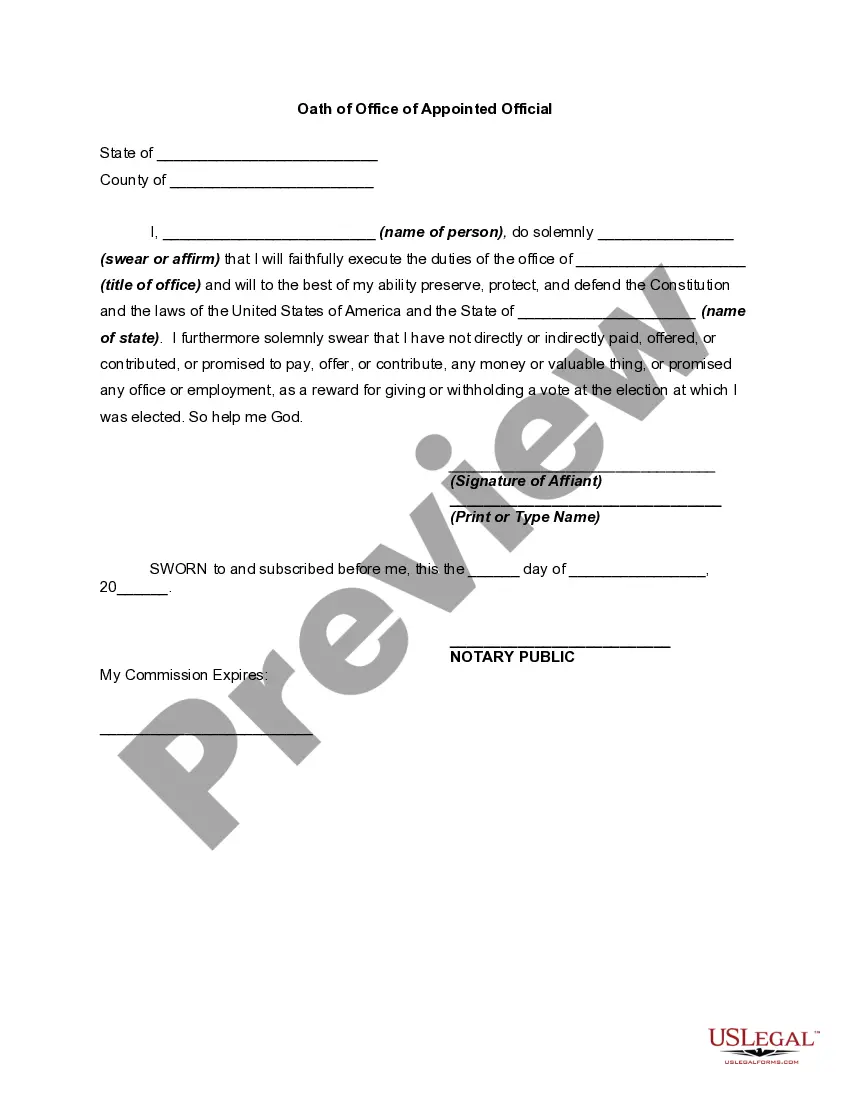
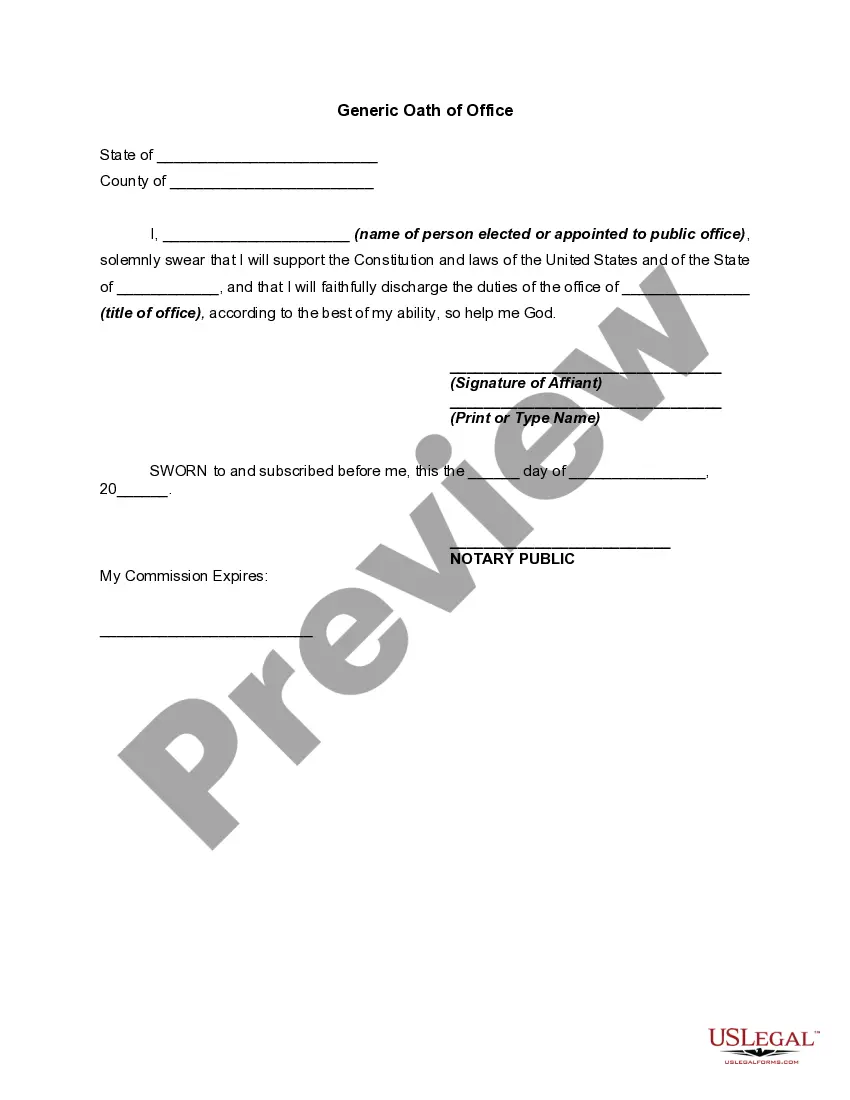
The Oath of Office for a State Court Judge is a formal declaration made by individuals who are appointed or elected to serve as judges within their respective courts. This legal document confirms the judge's commitment to uphold both the United States Constitution and the Constitution of their state, while faithfully executing the duties of the judicial office. It is essential for establishing the legal authority of the judge, ensuring accountability and impartiality in court proceedings.
What’s included in this form
- Judge's name: The individual taking the oath must provide their full name.
- Oath statement: The judge articulates their commitment to support state and federal constitutions.
- Court identification: The specific court for which the judge is assuming responsibility is named.
- Signature of the judge: The document requires the judge's signature to validate the oath.
- Notary section: The form includes an area for a notary public's signature, affirming the authenticity of the oath.
When to use this form
This form should be used when an individual is formally taking the office of a judge, either through appointment or election. It is necessary at the beginning of their tenure to establish their legal capacity to serve as a judge and to ensure adherence to their constitutional obligations. Occasions may include court swearing-in ceremonies or the administration of oaths by state officials.
Who can use this document
- Individuals appointed or elected to serve as judges in state courts.
- Judicial candidates undergoing the official process of taking the oath of office.
- Officials responsible for administering oaths to judges in their jurisdiction.
How to prepare this document
- Fill in the judge's full name in the designated space.
- Select whether to swear or affirm the commitment.
- Specify the name of the state where the judge will serve.
- Clearly state the name of the court in which the judge is assuming office.
- Have the judge sign the document in the appropriate section.
- Complete the notary public section, including the date and notary's commission expiration.
Notarization guidance
To make this form legally binding, it must be notarized. Our online notarization service, powered by Notarize, lets you verify and sign documents remotely through an encrypted video session.
Get your form ready online
Our built-in tools help you complete, sign, share, and store your documents in one place.
Make edits, fill in missing information, and update formatting in US Legal Forms—just like you would in MS Word.
Download a copy, print it, send it by email, or mail it via USPS—whatever works best for your next step.
Sign and collect signatures with our SignNow integration. Send to multiple recipients, set reminders, and more. Go Premium to unlock E-Sign.
If this form requires notarization, complete it online through a secure video call—no need to meet a notary in person or wait for an appointment.
We protect your documents and personal data by following strict security and privacy standards.

Make edits, fill in missing information, and update formatting in US Legal Forms—just like you would in MS Word.

Download a copy, print it, send it by email, or mail it via USPS—whatever works best for your next step.

Sign and collect signatures with our SignNow integration. Send to multiple recipients, set reminders, and more. Go Premium to unlock E-Sign.

If this form requires notarization, complete it online through a secure video call—no need to meet a notary in person or wait for an appointment.

We protect your documents and personal data by following strict security and privacy standards.
Typical mistakes to avoid
- Failing to use the full legal name of the judge, leading to potential disputes.
- Leaving the court name blank or incorrectly naming the court.
- Not having the form notarized, if required by local law.
- Overlooking the specific wording necessary for the oath (swear vs. affirm).
Why use this form online
- Convenience: Download from anywhere, anytime.
- Editability: Easily customize the form for your specific situation.
- Reliability: Forms are drafted by licensed attorneys to ensure legal compliance.
Summary of main points
- The Oath of Office for a State Court Judge is essential for legal authority in court.
- This form must be tailored to meet local state requirements.
- Notarization is typically required for the document to be valid.
- Accurate completion of all sections is crucial to ensure accountability.
Looking for another form?

Form popularity
FAQ
The Oath of Office for a State Court Judge is a formal declaration taken by someone appointed or elected to serve in a state court, promising to uphold the U.S. Constitution and their state constitution and to faithfully perform judicial duties. It is used at the judge’s swearing-in or official ceremony to establish authority and accountability.
Judges swear an oath to support and defend the U.S. Constitution and their state constitution, and to faithfully discharge the duties of the office. The Oath of Office for a State Court Judge form records the judge’s name, the court, the oath statement, the judge’s signature, and a notary section to witness the oath.
A judge's oath of office is the formal pledge taken when assuming the bench. For this form, it includes an oath statement to uphold constitutions and to faithfully execute duties, and it is completed with the judge’s name, court identification, signature, and notary.
The oath of a judge is the formal declaration pledging to uphold the U.S. Constitution and the state constitution and to faithfully perform judicial duties. On this form, the oath is the sworn statement completed with the judge’s name, identified court, signature, and a notary section.
The words of the oath of office are the oath statement included in this form, committing to uphold both constitutions and to discharge judicial duties faithfully. The form requires the judge’s name, court identification, signature, and a notary section to authenticate the oath.
This form is tailored for state court judges, with court identification and a built-in notary section to witness the oath. Other oaths may not reference a specific court or include notarization within the document.