Request to Lender or Loan Servicer for Loan Modification Due to Financial Hardship - Requesting Change to Fixed Rate of Interest of Adjustable Rate
Understanding this form
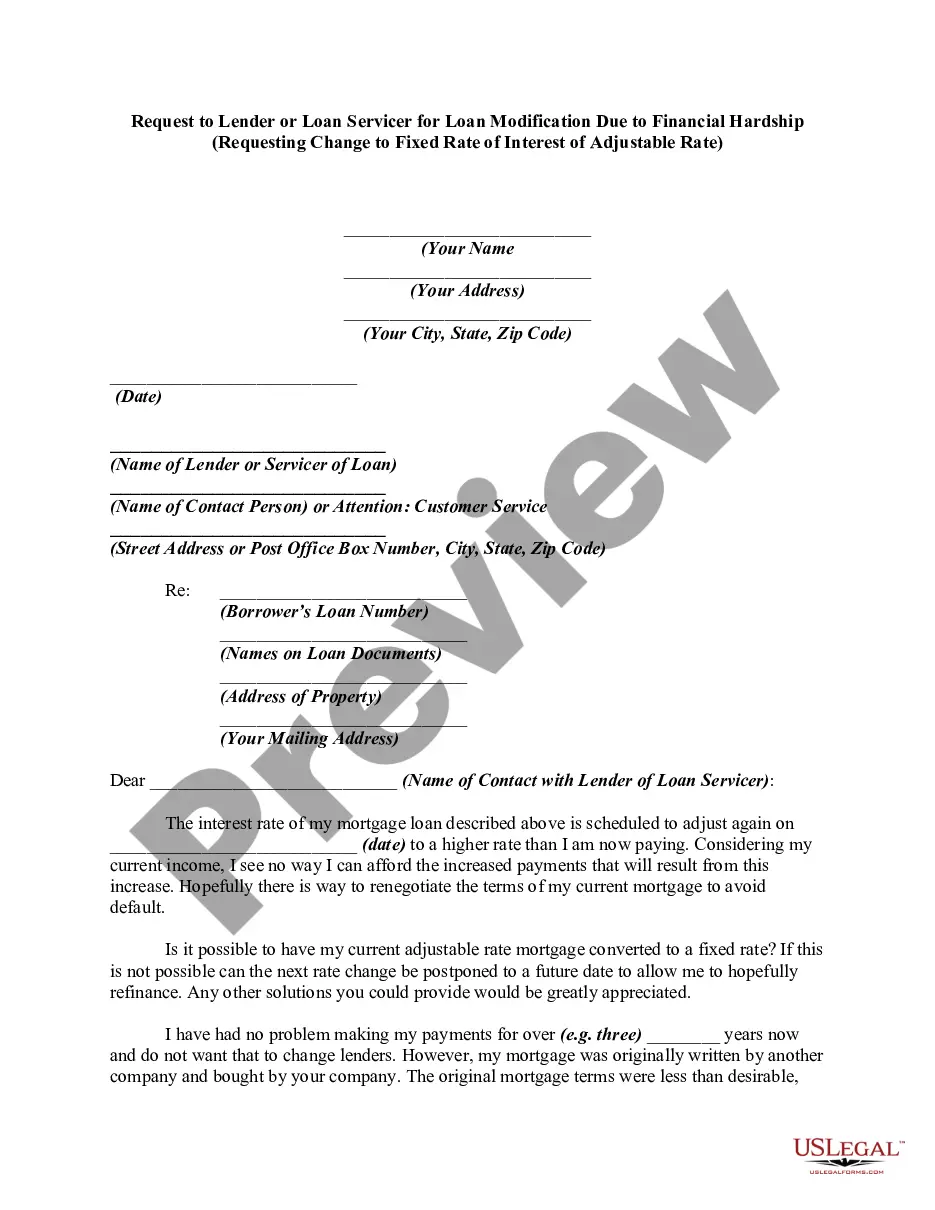
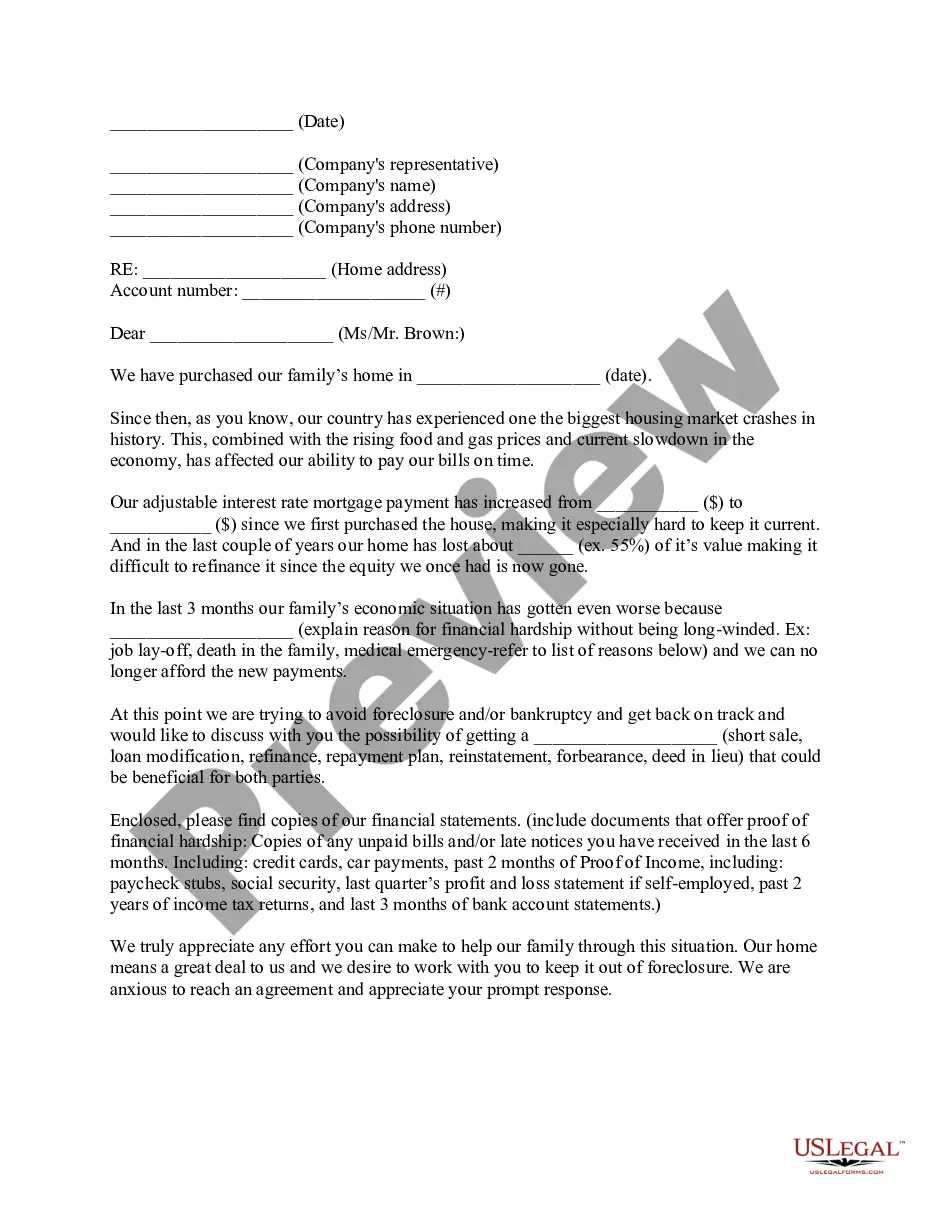
The Request to Lender or Loan Servicer for Loan Modification Due to Financial Hardship is a legal document used by borrowers to request a change in the terms of their mortgage due to financial difficulties. This form specifically addresses the need to convert an adjustable-rate mortgage into a fixed-rate mortgage, making it more manageable for borrowers facing hardship. It serves a distinct purpose by allowing borrowers to formally request modifications to their mortgage terms instead of merely seeking respite from payments.
Form components explained
- Your personal and mailing information
- Name and contact details of the lender or loan servicer
- Loan number and property address
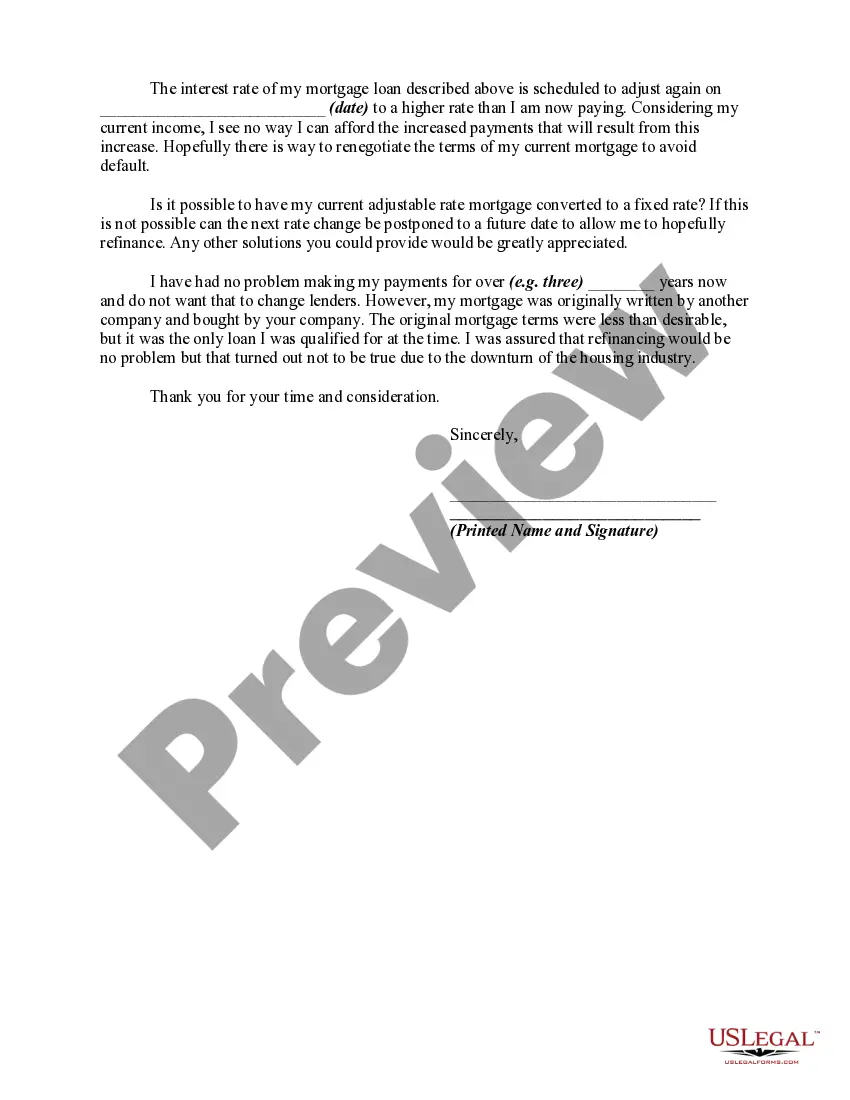
- Details of the requested modification, including interest rate adjustments
- Explanation of financial hardship justifying the modification request
- Signature and printed name of the borrower
Common use cases
This form should be used when you are struggling to make payments on your adjustable-rate mortgage due to financial difficulties. Common scenarios include loss of employment, reduced income, illness, or other major life events that impact your ability to pay. If your interest rate is set to increase and you need to request a change to a fixed-rate loan, this form is essential to initiate that process with your lender or loan servicer.
Who needs this form
- Homeowners facing financial hardship who have an adjustable-rate mortgage
- Borrowers who are at risk of defaulting on their loan due to increased payments
- Individuals who have a good payment history but need renegotiation of loan terms
- Anyone looking to convert their adjustable-rate mortgage to a fixed-rate
How to complete this form
- Fill in your name, address, city, state, and zip code at the top of the form.
- Enter the date and the name and address of your lender or loan servicer.
- Provide your loan number and the names on the loan documents.
- Clearly state your request to convert your adjustable-rate mortgage to a fixed rate, explaining your financial hardship.
- Sign and print your name at the bottom of the form.
Notarization requirements for this form
This form usually doesn’t need to be notarized. However, local laws or specific transactions may require it. Our online notarization service, powered by Notarize, lets you complete it remotely through a secure video session, available 24/7.
Get your form ready online
Our built-in tools help you complete, sign, share, and store your documents in one place.
Make edits, fill in missing information, and update formatting in US Legal Forms—just like you would in MS Word.
Download a copy, print it, send it by email, or mail it via USPS—whatever works best for your next step.
Sign and collect signatures with our SignNow integration. Send to multiple recipients, set reminders, and more. Go Premium to unlock E-Sign.
If this form requires notarization, complete it online through a secure video call—no need to meet a notary in person or wait for an appointment.
We protect your documents and personal data by following strict security and privacy standards.

Make edits, fill in missing information, and update formatting in US Legal Forms—just like you would in MS Word.

Download a copy, print it, send it by email, or mail it via USPS—whatever works best for your next step.

Sign and collect signatures with our SignNow integration. Send to multiple recipients, set reminders, and more. Go Premium to unlock E-Sign.

If this form requires notarization, complete it online through a secure video call—no need to meet a notary in person or wait for an appointment.

We protect your documents and personal data by following strict security and privacy standards.
Mistakes to watch out for
- Failing to include your loan number or correct property address.
- Not providing a clear explanation of your financial hardship.
- Neglecting to sign the form, which invalidates the request.
- Using vague language instead of specific details about your situation.
Advantages of online completion
- Instant access to a legally vetted template drafted by licensed attorneys.
- Convenient downloading options that allow you to complete the form at your own pace.
- Editability to personalize the document to your specific needs.
- Reliable and secure format ensuring compliance with legal standards.
Looking for another form?

Form popularity
FAQ
Your name, address, phone number and account number. The type of debt resolution you're seeking. Your financial situation that has caused you to fall behind in your payments. A detailed budget and your plan for making payments (if you want to keep your home)
Illness or injury. Change of employment status. Loss of income. Natural disasters. Divorce. Death. Military deployment.
Some of the most common types of hardship are: job loss, pay reduction, underemployment, declining business revenue, death of a coborrower, illness, injury, and divorce.
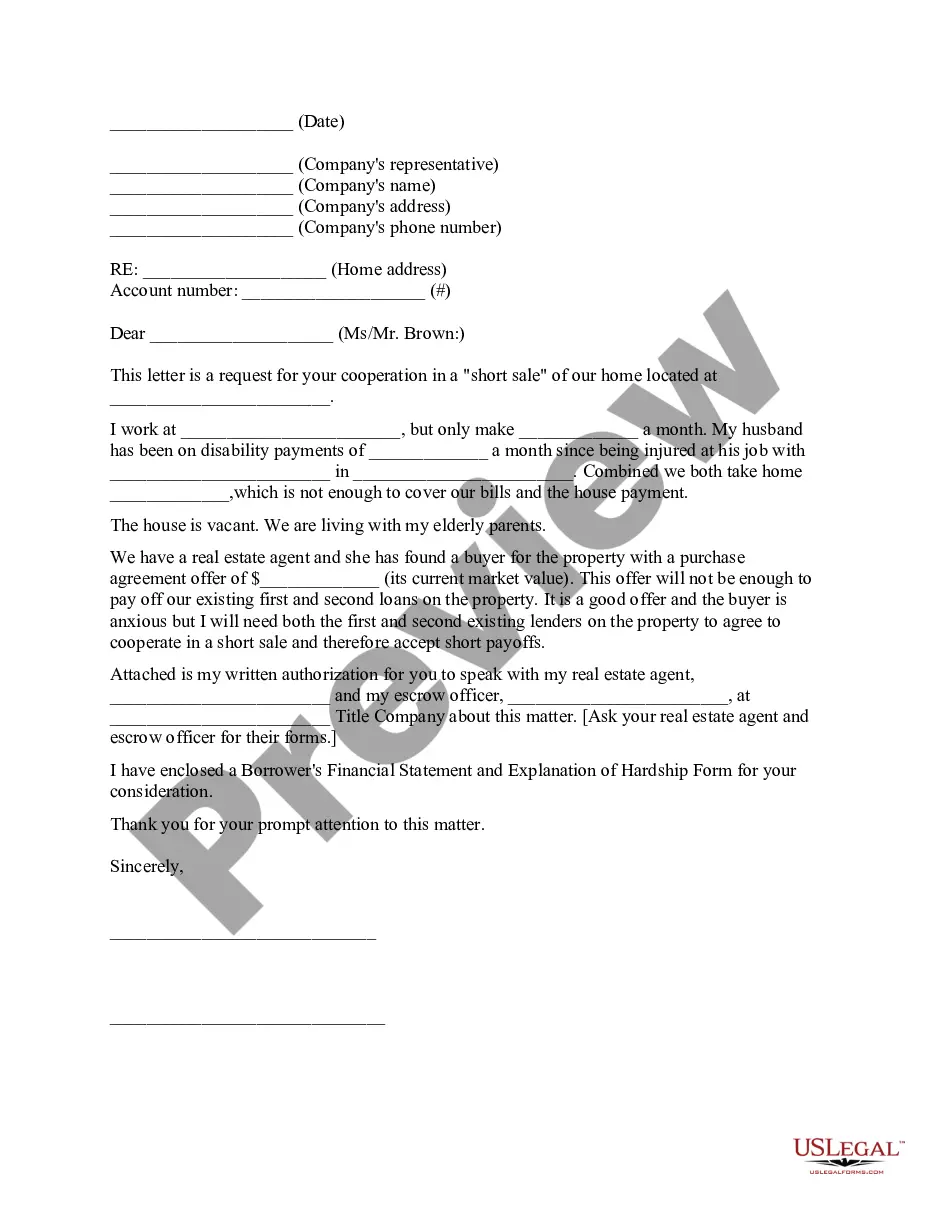
Name, address, phone number, date, loan number. Short introduction asking for permission to sell your home in a short sale. Hardship details and neighborhood comparables. Assertion that the only other alternative is foreclosure.
Proof of income (pay stubs, offer letter, etc.) proof of other income (e.g., alimony, child support, disability benefits) an expense sheet laying out all your expenses. tax returns (two years worth of returns) profit and loss statement. current bank statements.
The loan modification underwriter will analyze and review the particular circumstances which justify a loan modification. The underwriter will evaluate and assess the borrower's financial status, current income and asset situation and ability to pay.
Hardship Examples. There are a variety of situations that may qualify as a hardship. Keep it original. Be honest. Keep it concise. Don't cast blame or shirk responsibility. Don't use jargon or fancy words. Keep your objectives in mind. Provide the creditor an action plan.
Do Not Ignore Your Lender. When facing foreclosure, your lender will likely contact you regularly. Stay in the Home. Collect Evidence. Contact a Foreclosure Defense Attorney. Contact Your Lender. Be Patient. Let Our Florida Foreclosure Defense Lawyers Help With Your Loan Modification.
Financial hardship typically refers to a situation in which a person cannot keep up with debt payments and bills or if the amount you need to pay each month is more than the amount you earn, due to a circumstance beyond your control.