General Guidelines for Writing a Letter of Intent and Communicating Your Wishes to the Guardians, Trustees and the Courts about Your Child
What this document covers
This form is a Letter of Intent that serves to communicate your wishes regarding the care and support of your child. It is an essential document that, although not legally binding, provides vital information to guardians, trustees, and the courts about your child's history, preferences, and needs. This letter helps ensure that your desires are understood and honored, particularly in the event that you are no longer able to advocate for your child.
Form components explained
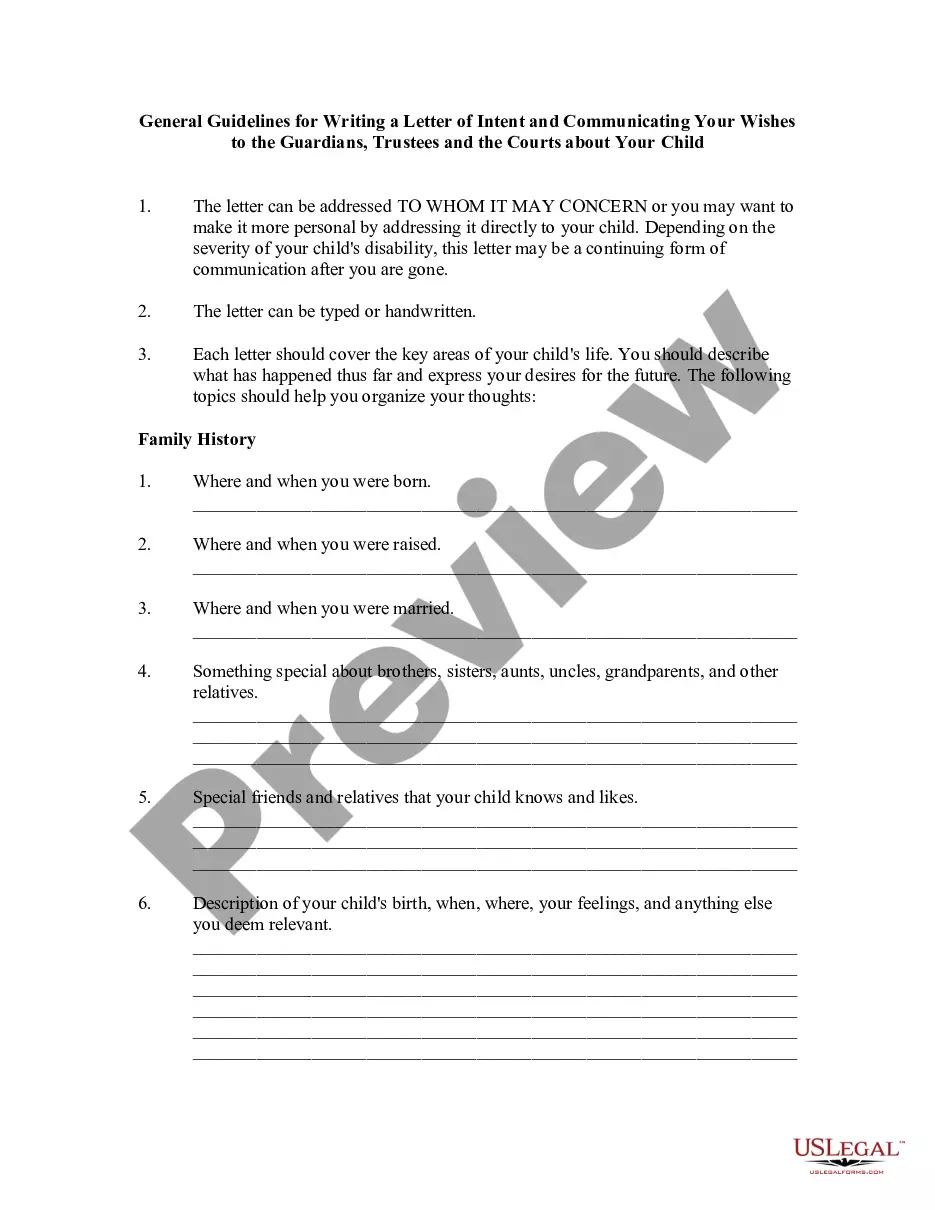
- Introduction to your childâs family history and background.
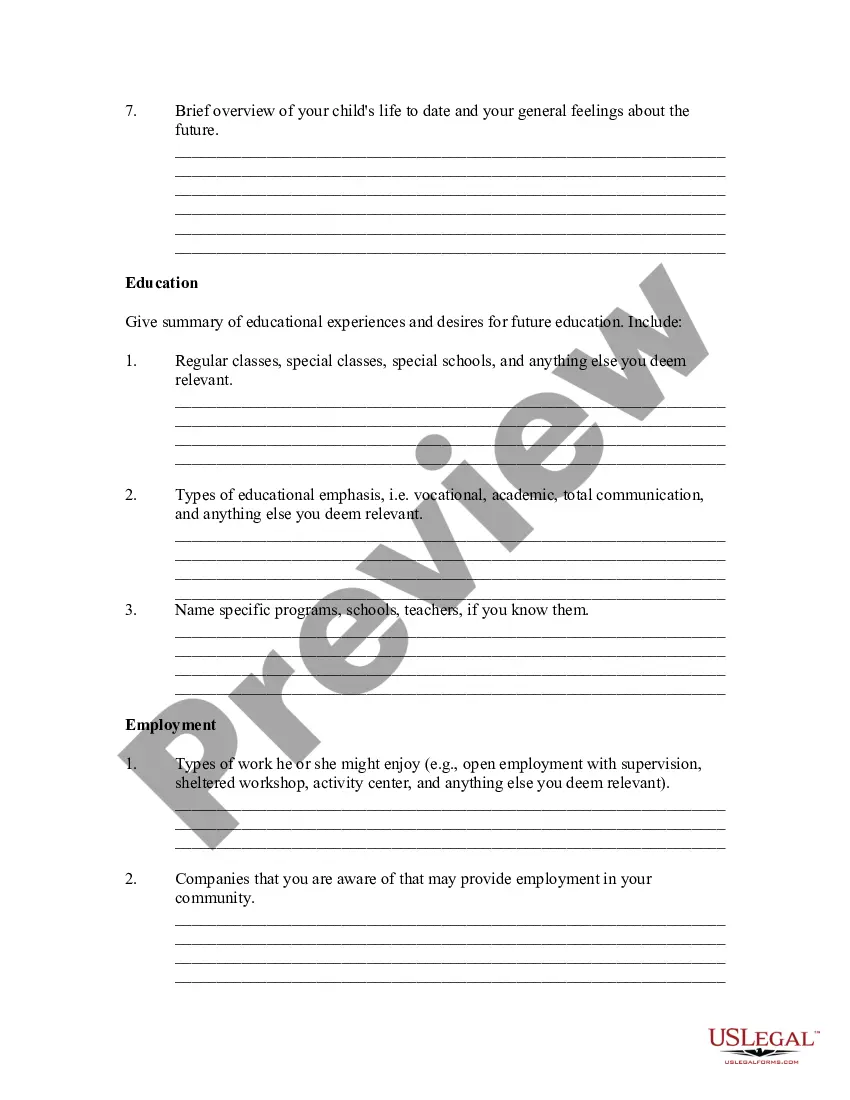
- Overview of your childâs educational experiences and aspirations.
- Details regarding potential employment options and community opportunities.
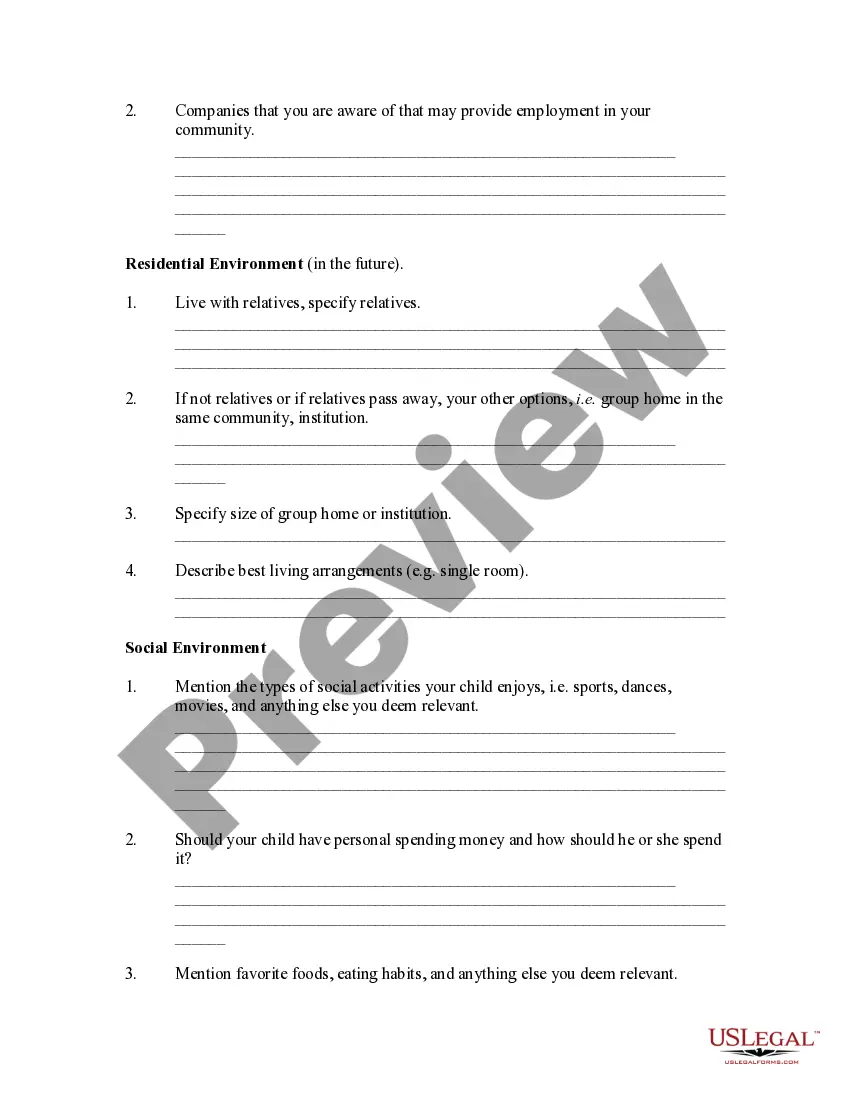
- Specifications for your child's future living arrangements.
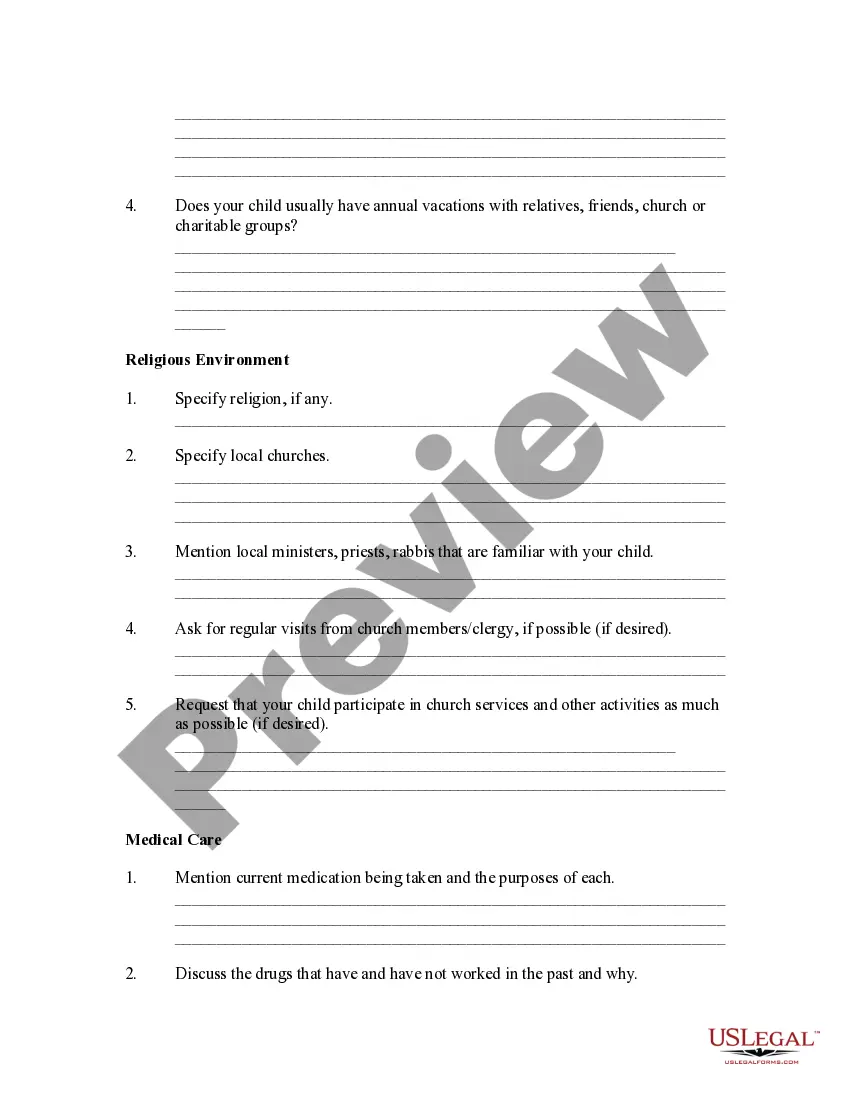
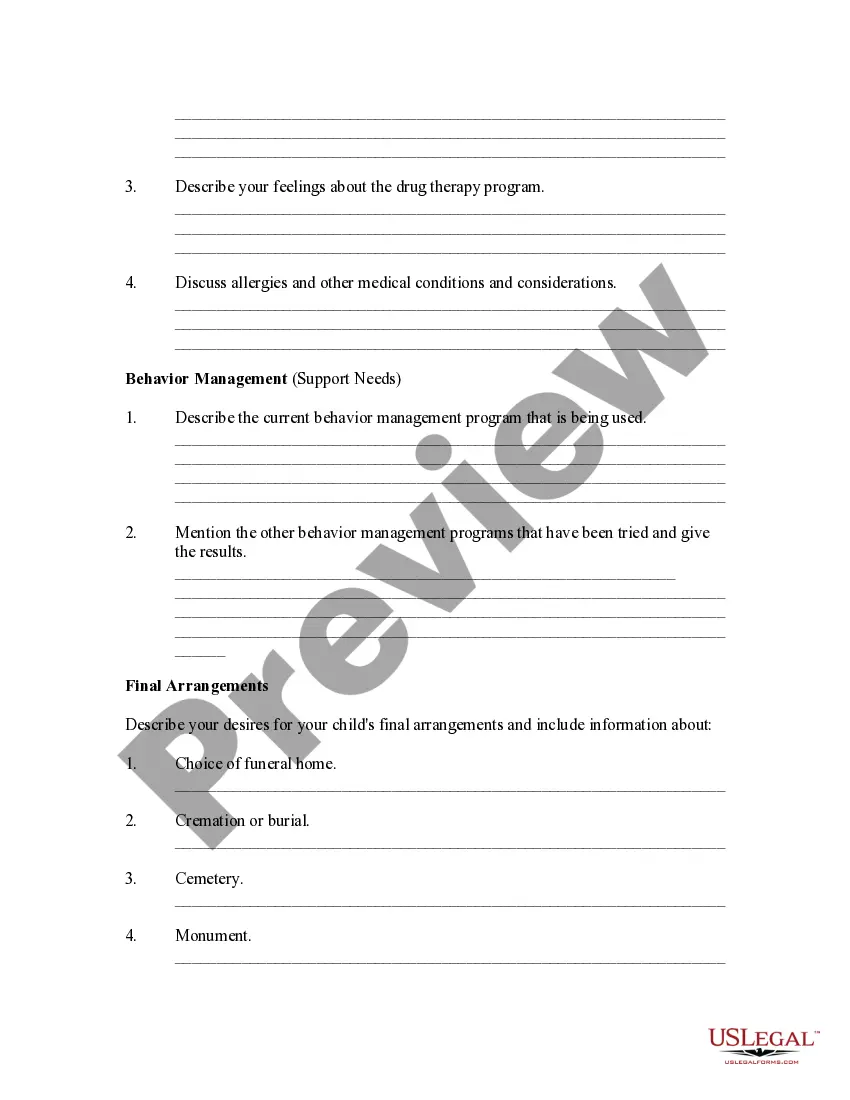
- Insights into your child's social, religious, and medical care preferences.
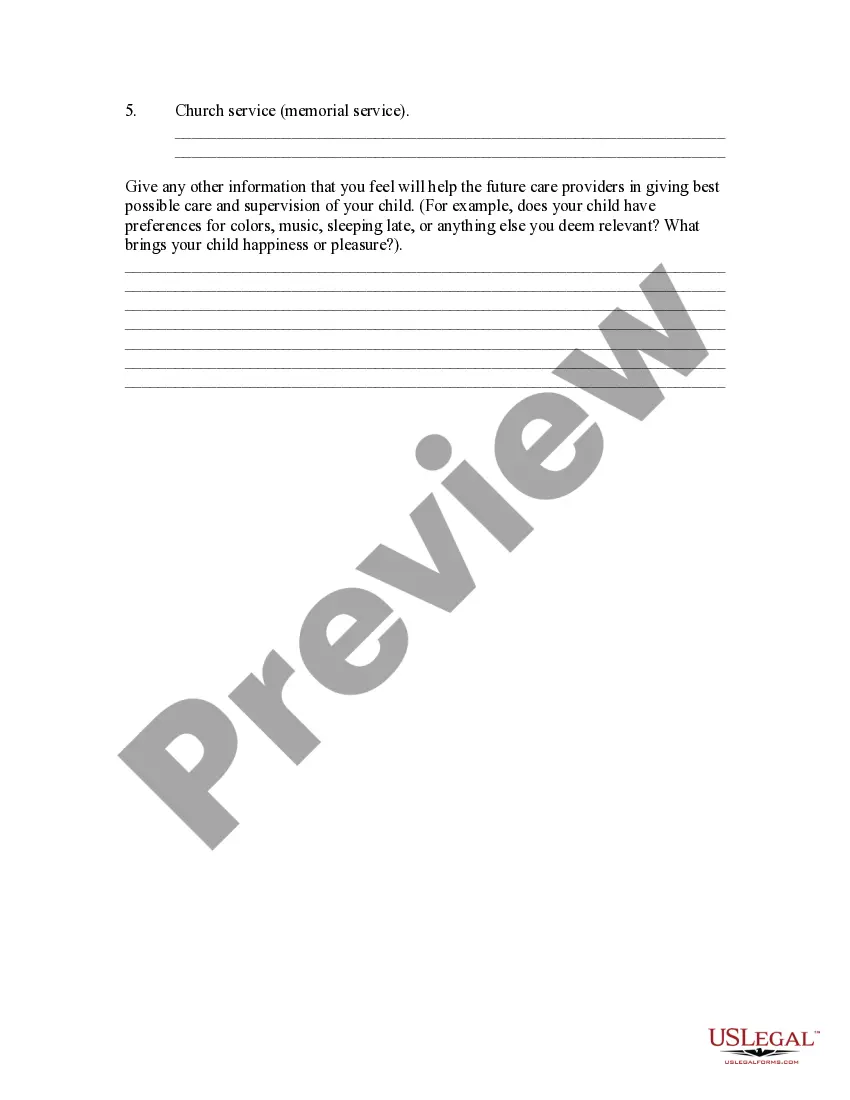
- Final arrangements and personal wishes related to your child's care and legacy.

Situations where this form applies
This form should be used when you want to provide comprehensive guidance about your childâs care and future in the event that you cannot be there to support them. It is particularly valuable if your child has special needs, as it outlines their unique preferences and requirements to future caregivers and decision-makers.
Who can use this document
This form is applicable for:
- Parents or legal guardians of children with special needs.
- Individuals planning for the future of their dependent children.
- Families who wish to provide detailed and personalized information to future guardians or caregivers.
- Anyone seeking to ensure their child's wishes and needs are communicated and respected.
How to prepare this document
- Address the letter appropriately, either to whom it may concern or personally to your child.
- Provide a thorough history of your child's life, including family background, education, and significant events.
- Detail each section based on key components such as education, employment, living arrangements, and healthcare needs.
- Regularly update the letter to reflect any changes in your childâs circumstances or needs.
- Store the letter in an easily accessible format to allow for future edits and updates.
Notarization requirements for this form
This form does not typically require notarization to be legally valid. However, some jurisdictions or document types may still require it. US Legal Forms provides secure online notarization powered by Notarize, available 24/7 for added convenience.
Get your form ready online
Our built-in tools help you complete, sign, share, and store your documents in one place.
Make edits, fill in missing information, and update formatting in US Legal Forms—just like you would in MS Word.
Download a copy, print it, send it by email, or mail it via USPS—whatever works best for your next step.
Sign and collect signatures with our SignNow integration. Send to multiple recipients, set reminders, and more. Go Premium to unlock E-Sign.
If this form requires notarization, complete it online through a secure video call—no need to meet a notary in person or wait for an appointment.
We protect your documents and personal data by following strict security and privacy standards.

Make edits, fill in missing information, and update formatting in US Legal Forms—just like you would in MS Word.

Download a copy, print it, send it by email, or mail it via USPS—whatever works best for your next step.

Sign and collect signatures with our SignNow integration. Send to multiple recipients, set reminders, and more. Go Premium to unlock E-Sign.

If this form requires notarization, complete it online through a secure video call—no need to meet a notary in person or wait for an appointment.

We protect your documents and personal data by following strict security and privacy standards.
Avoid these common issues
- Failing to update the letter regularly, leading to outdated information.
- Not addressing the letter directly to the intended audience, making it less personal.
- Including excessive legal jargon or complex language that may confuse readers.
- Neglecting key areas of your childâs life or preferences that should be documented.
- Overlooking the emotional aspect of the letter, which can provide comfort to future caregivers.
Why use this form online
- Immediate access to a professionally drafted template tailored to your needs.
- Easy to edit and update as necessary, ensuring information remains relevant.
- Convenient download options allow for printing and sharing with involved parties.
- Peace of mind knowing your child's wishes are documented comprehensively and thoughtfully.
Legal use & context
- This document serves as a guideline but is not legally binding.
- Courts typically give weight to the letter if it reflects the familyâs genuine wishes.
- While not a substitute for legal guardianship documents, it complements them.
- Encourages clarity and decision-making in the best interest of your child.
Main things to remember
- A Letter of Intent serves as a valuable tool for guiding future caregivers in understanding your child's needs and your wishes.
- It should be updated regularly to stay relevant to your child's evolving circumstances.
- The document is essential for parents of children with special needs or those who want to ensure that their child's future guardians have a clear understanding of their preferences.
Looking for another form?






Form popularity
FAQ
The key to writing a great letter of explanation is to keep it short, simple and informative. Be clear and write with as much detail as you can since someone else will need to understand your situation. Avoid including irrelevant information or answers to questions the underwriter didn't ask.
What is a Job Letter of Intent? A job letter of intent is attached to a resume and serves as an introduction to the applicant. The goal is to express genuine enthusiasm for the company's mission while providing a clear representation of why the candidate would be well-suited for a position.
Begin the letter with the date, a salutation, and an introduction of the incident or issue. Provide a short but detailed description without having to add unnecessary terms and phrases. Provide an explanation of the steps you've taken to rectify the error or to complete the missing information.
Choose the Right Letter of Intent Format and Layout. Research the Company Before You Write. Find 3 Ways You Fit the Position. Get Attention with a Strong First Paragraph. Explain Why You're Interested in Them. End Your Letter of Intent by Asking for Action. Sign off with a Professional Closing.
A letter of intent (LOI) is a document that someone uses in order to declare their intent to do something, such as make a purchase, apply for a job or education program, or to clarify points in a business transaction. They are written in letter format, and signed by one party (the party writing it).
Salutation. Begin with a professional salutation. Body Paragraph 1: Introduction. Body Paragraph 2: Highlight Relevant Skills. Body Paragraph 3: Call to Action. Closing. Use the appropriate format. When sending an email, include a clear subject line. Research the company.
You should always write your letter of intent in formal business English. Therefore, you should address your letter to a specific person, using the salutation 'Dear name'. If you do not have a specific name, you will be expected to undertake your own research to find one.
State your reasons for writing the letter of intent. Give information on how you got to know about the vacancy and why you are interested in the said position. Highlight your accomplishments. Be confident to state your achievements. Praise the institution to which you are writing to.
A standard template for a letter relating to a Will is as follows: 'I make this letter in reference to my last Will and testament dated the (insert date) and wish, without imposing any legal obligation on you my Executors and Trustees, that you act on it accordingly. '