Landlord's Waiver - needed to mortgage equipment in leased premises
What this document covers
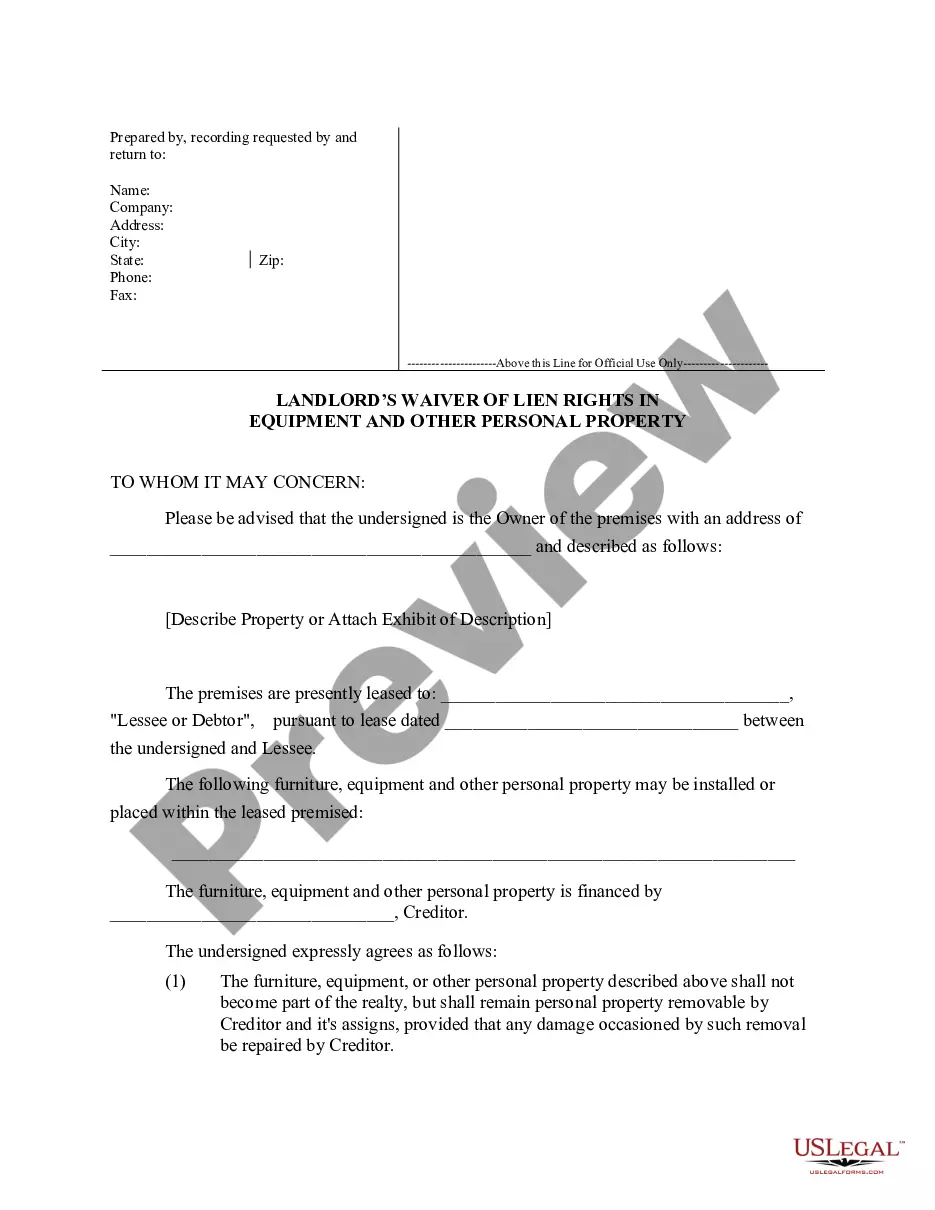
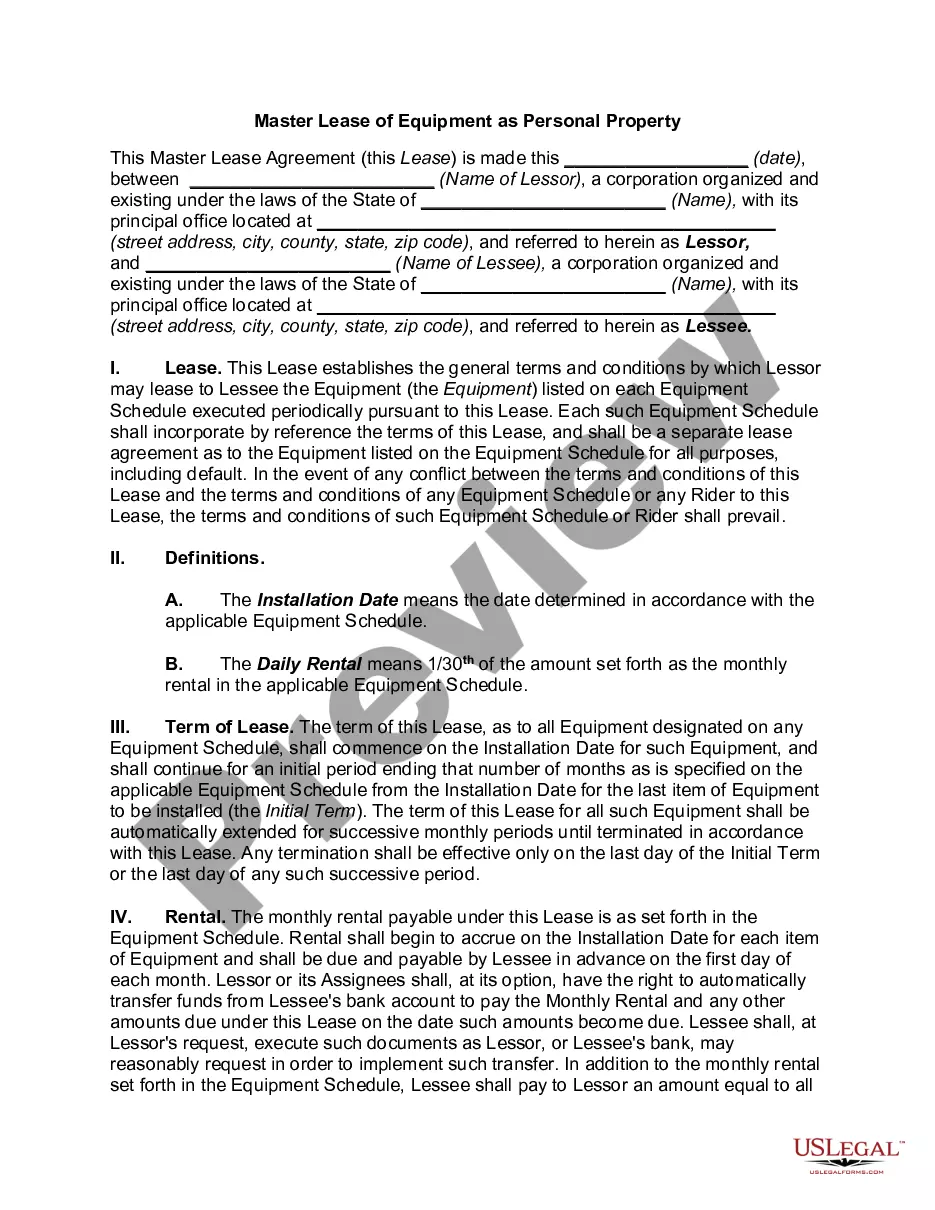
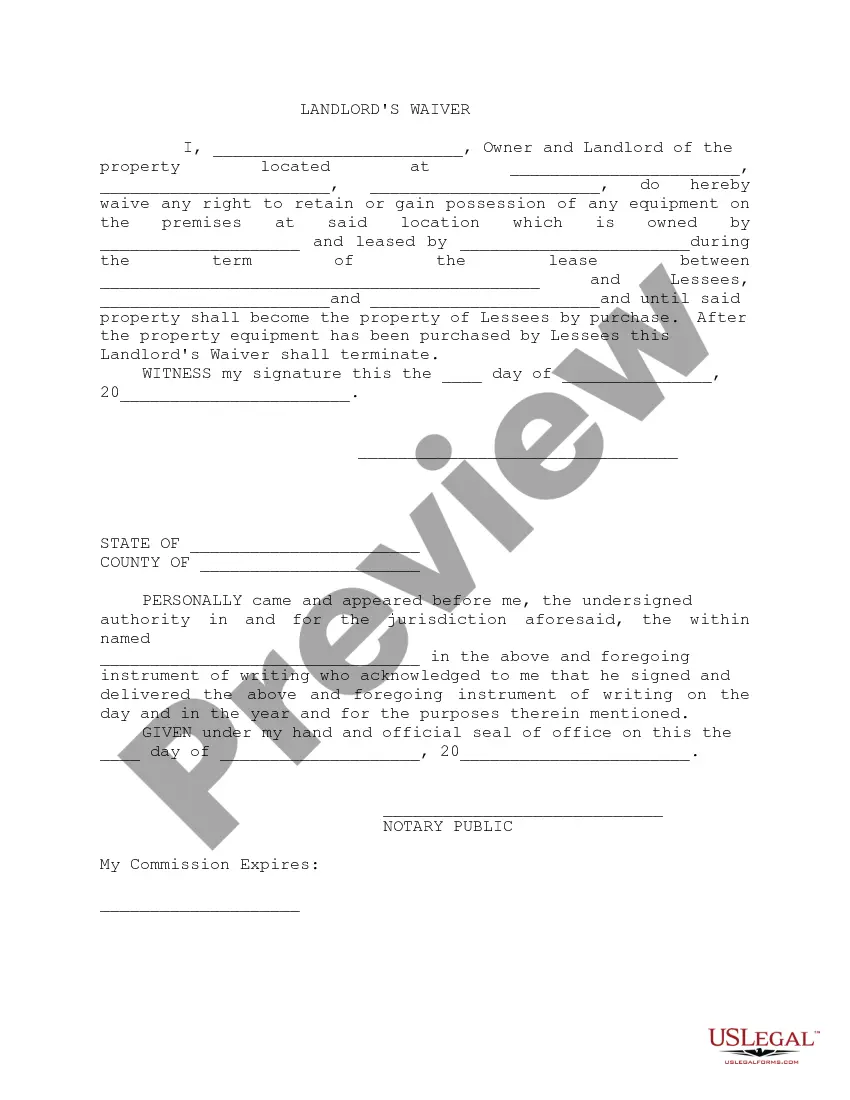
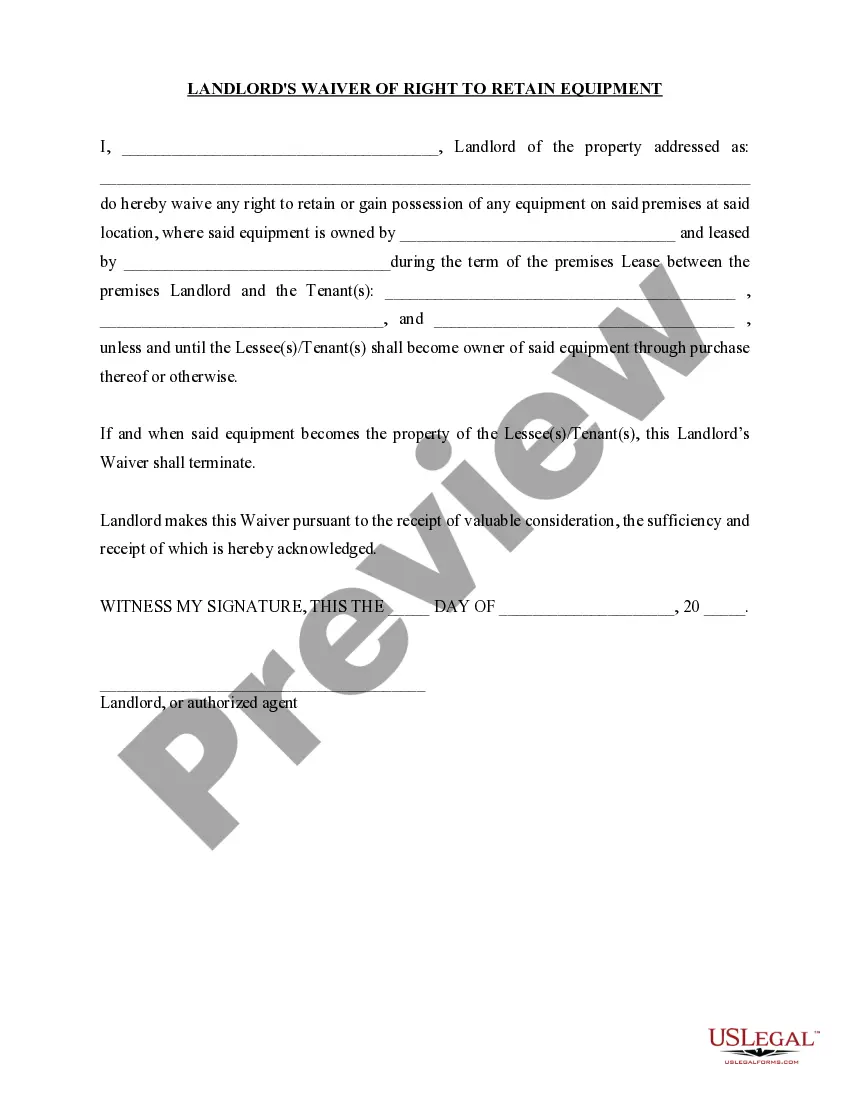
The Landlord's Waiver form allows a landlord to relinquish lien rights over furniture, equipment, and other personal property located in leased premises. This form is essential when a lender finances personal property for a tenant, ensuring that the financed items remain personal property and are not considered part of the real estate. This waiver is particularly useful in situations where the tenant needs financial assistance while safeguarding the landlord's interests.
Key components of this form
- Landlord's name and contact information
- Address and description of leased property
- Name of the tenant (lessee) and lease date
- Details of the personal property being financed
- Creditor's information providing the financing
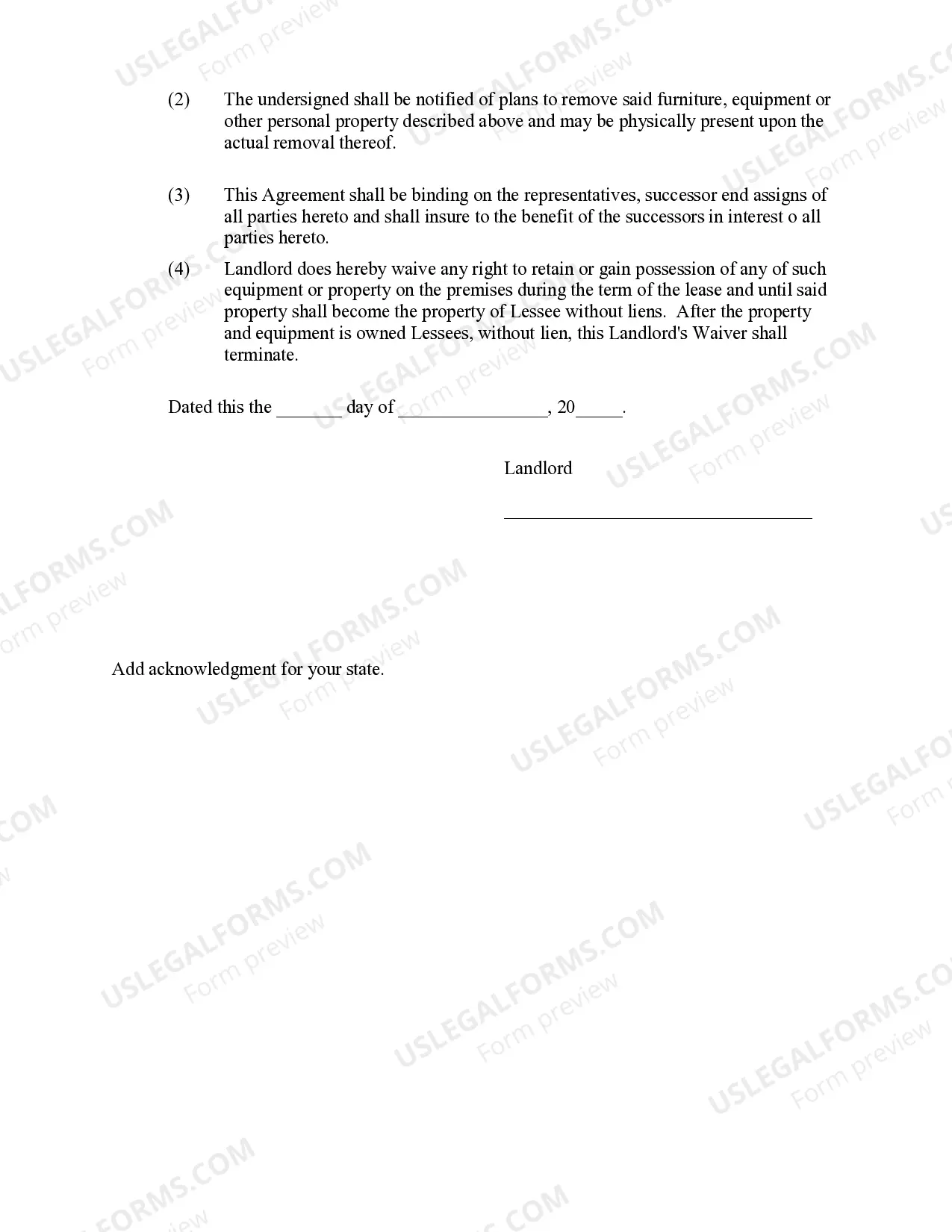
- Agreement clauses regarding the status of the financed property
When to use this form
This form should be used when a tenant wishes to obtain financing for personal property that will be placed in a rented space. It is necessary when a landlord and tenant agree that the financed property will remain the tenant's personal property and should not be subject to any liens from the landlord. Use this waiver to protect the rights of both parties during the term of the lease.
Who this form is for
- Landlords who lease property containing tenants' financed equipment or belongings
- Tenants seeking financing for personal property in leased premises
- Lenders providing loans secured by tenants' equipment within leased spaces
Instructions for completing this form
- Identify the landlord by entering their name and contact information at the top of the form.
- Provide the complete address and description of the leased premises.
- Enter the name of the tenant along with the lease date.
- List the furniture, equipment, and any other personal property to be financed.
- Include the name of the creditor financing the property.
- Ensure all parties sign and date the waiver to make it effective.
Does this form need to be notarized?
This form does not typically require notarization unless specified by local law. Ensure that you consult local regulations to confirm notarial requirements before finalizing the waiver.
Get your form ready online
Our built-in tools help you complete, sign, share, and store your documents in one place.
Make edits, fill in missing information, and update formatting in US Legal Forms—just like you would in MS Word.
Download a copy, print it, send it by email, or mail it via USPS—whatever works best for your next step.
Sign and collect signatures with our SignNow integration. Send to multiple recipients, set reminders, and more. Go Premium to unlock E-Sign.
If this form requires notarization, complete it online through a secure video call—no need to meet a notary in person or wait for an appointment.
We protect your documents and personal data by following strict security and privacy standards.

Make edits, fill in missing information, and update formatting in US Legal Forms—just like you would in MS Word.

Download a copy, print it, send it by email, or mail it via USPS—whatever works best for your next step.

Sign and collect signatures with our SignNow integration. Send to multiple recipients, set reminders, and more. Go Premium to unlock E-Sign.

If this form requires notarization, complete it online through a secure video call—no need to meet a notary in person or wait for an appointment.

We protect your documents and personal data by following strict security and privacy standards.
Mistakes to watch out for
- Not providing a complete description of the leased property.
- Failing to include all necessary party names and signatures.
- Omitting details about the financed property which can lead to confusion later.
- Not checking state-specific requirements that could affect the form's enforceability.
Advantages of online completion
- Convenience of downloading and filling the form at any time.
- Editability that allows users to customize the document according to their specific situation.
- Access to reliable legal templates drafted by licensed attorneys to ensure compliance with current laws.
Main things to remember
- The landlord's waiver protects both the lenderâs investment and the lesseeâs property rights.
- Completing the form properly is essential for legal effectiveness.
- State regulations may influence how this form is executed, so local laws should be reviewed.
Looking for another form?








Form popularity
FAQ
A written lease should protect both the landlord and the tenant. Most leases are either of six month or one year duration. A standard lease form can be obtained from a book or stationery store. You can usually add special provisions to these forms to fit your special lease problems or needs.
The right to collect rent. Simply by the fact that you are renting, your landlord has the right to collect rent and any prearranged late fees for overdue rent payments. The right to raise your rent according to your lease agreement.Your landlord has the right to evict you, especially if you do not pay your rent.
As a landlord, you have many rights that allow you to manage your rental property effectively and efficiently.Collecting rent deposits and payments, as well as any deposits or payments associated with pets, parking, and/or added amenities. Entering the tenant's unit with notice or due to an emergency. Evicting tenants.
Signing this document means a landlord agrees to give a lender access to the property, and priority to taking collateral in the event of default. This means that if you stop paying your lender, they have the right to collateral in your rented or leased premisesahead of the landlord.
While tenants cannot unreasonably deny access to a landlord, landlords must also follow all of the state and local rules regarding access to tenants' apartments. Roughly half of states have rules governing landlord entry into tenants' apartments.
A landlord cannot evict a tenant without an adequately obtained eviction notice and sufficient time. A landlord cannot retaliate against a tenant for a complaint. A landlord cannot forego completing necessary repairs or force a tenant to do their own repairs.A landlord cannot remove a tenant's personal belongings.
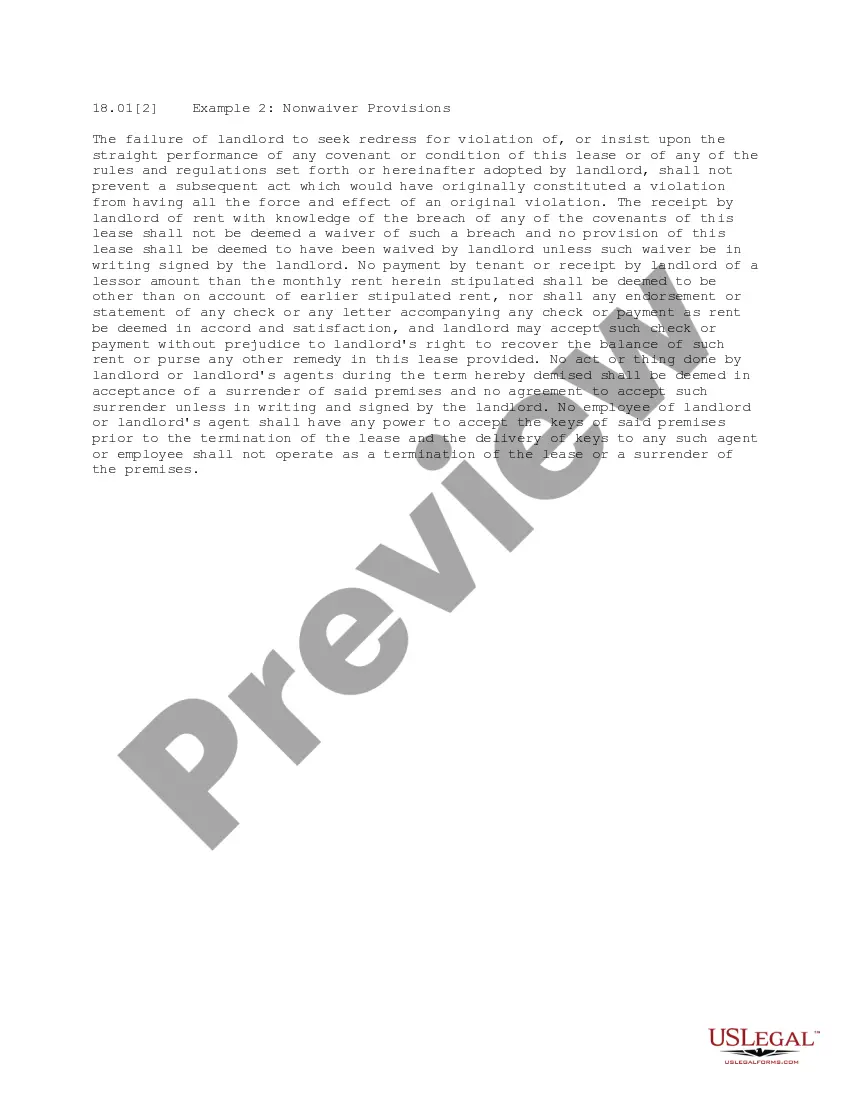
Waiver is defined as follows: When the landlord knows that the tenant is breaching the lease, yet conducts the landlord-tenant relationship in the normal course (for example, accepts rent and otherwise does nothing to object to the violation of the lease), then the court may infer that the owner has waived, or forgiven
Landlord's Waivers are intercreditor agreements for the benefit of the tenant's lender or equipment lessor, stipulating the landlord's and the lender's respective rights in certain property owned by the tenant.
This includes keeping the property clean, safe and habitable. The landlord must adhere to all building codes, perform necessary repairs, maintain common areas, keep all vital services, such as plumbing, electricity, and heat, in good working order, must provide proper trash receptacles and must supply running water.