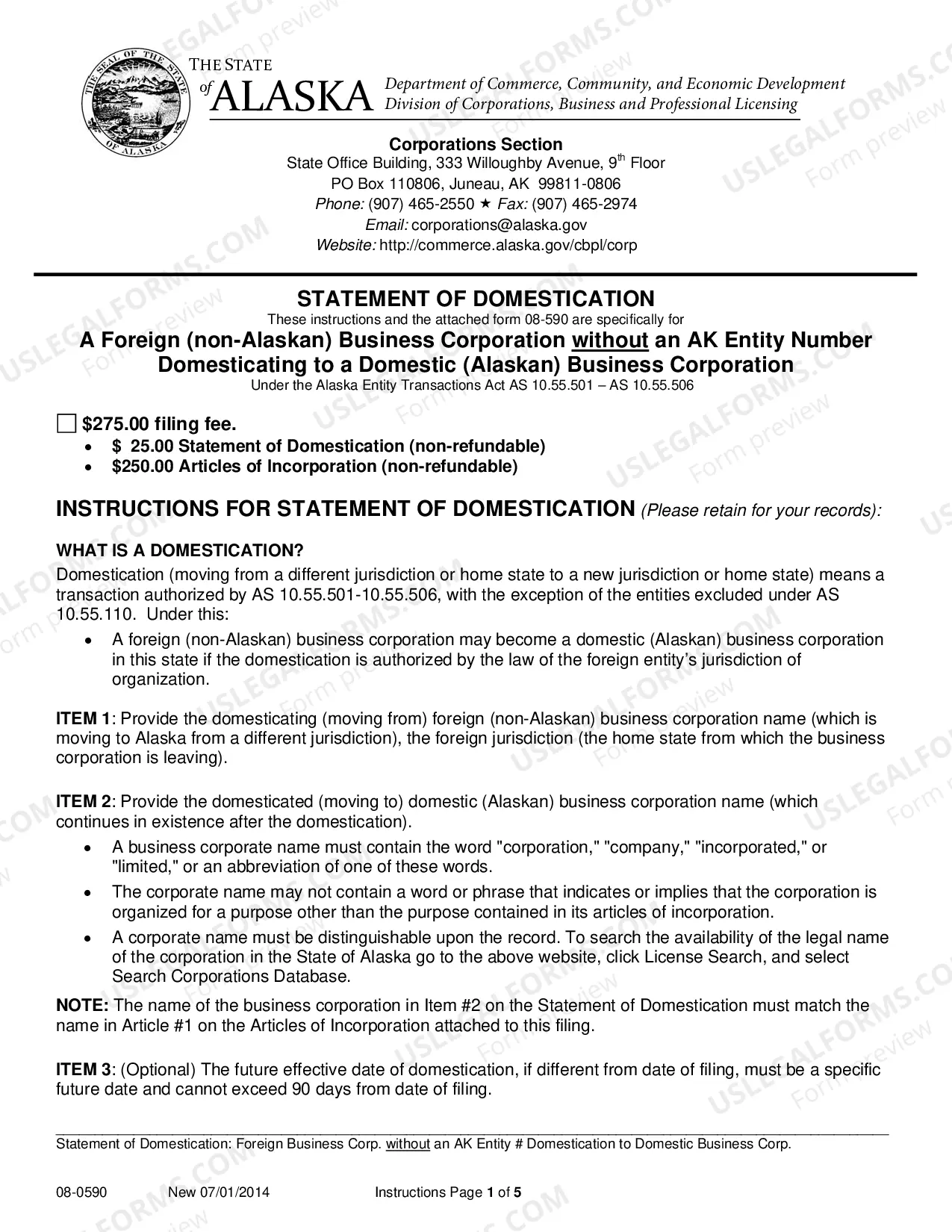
Affidavit as to Ownership of Certain Personal Property in a Country Other than the United States
Understanding this form
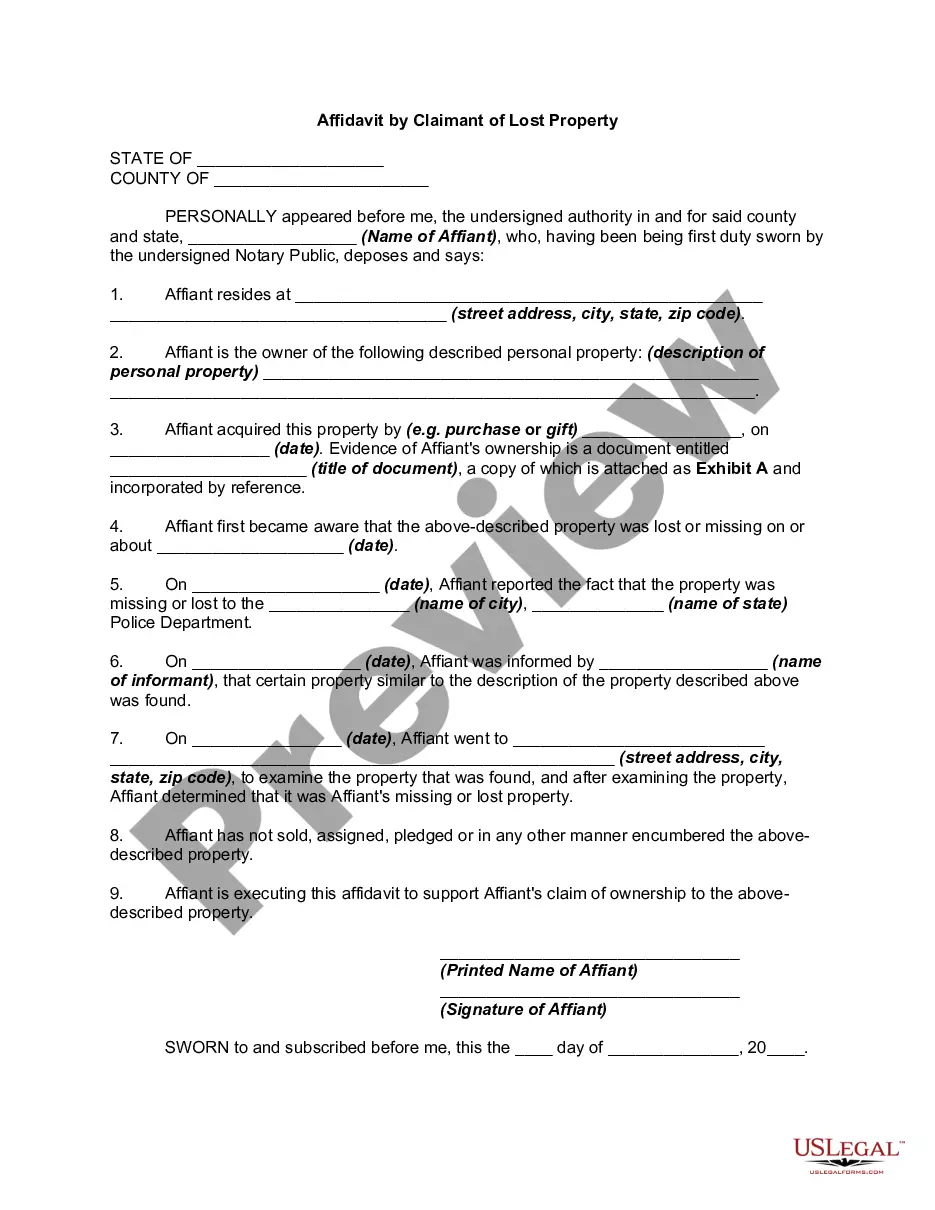
The Affidavit as to Ownership of Certain Personal Property in a Country Other than the United States is a legal document that establishes ownership of personal property acquired while residing outside the U.S. This form is essential for individuals who need to confirm their ownership of items that are currently in dispute, specifically items purchased with personal funds while living abroad. It serves a distinct purpose from similar affidavits, as it specifically pertains to property located in a foreign country.
What’s included in this form
- Identification of the affiant and their residency information.
- Details regarding the period of residence in the foreign country.
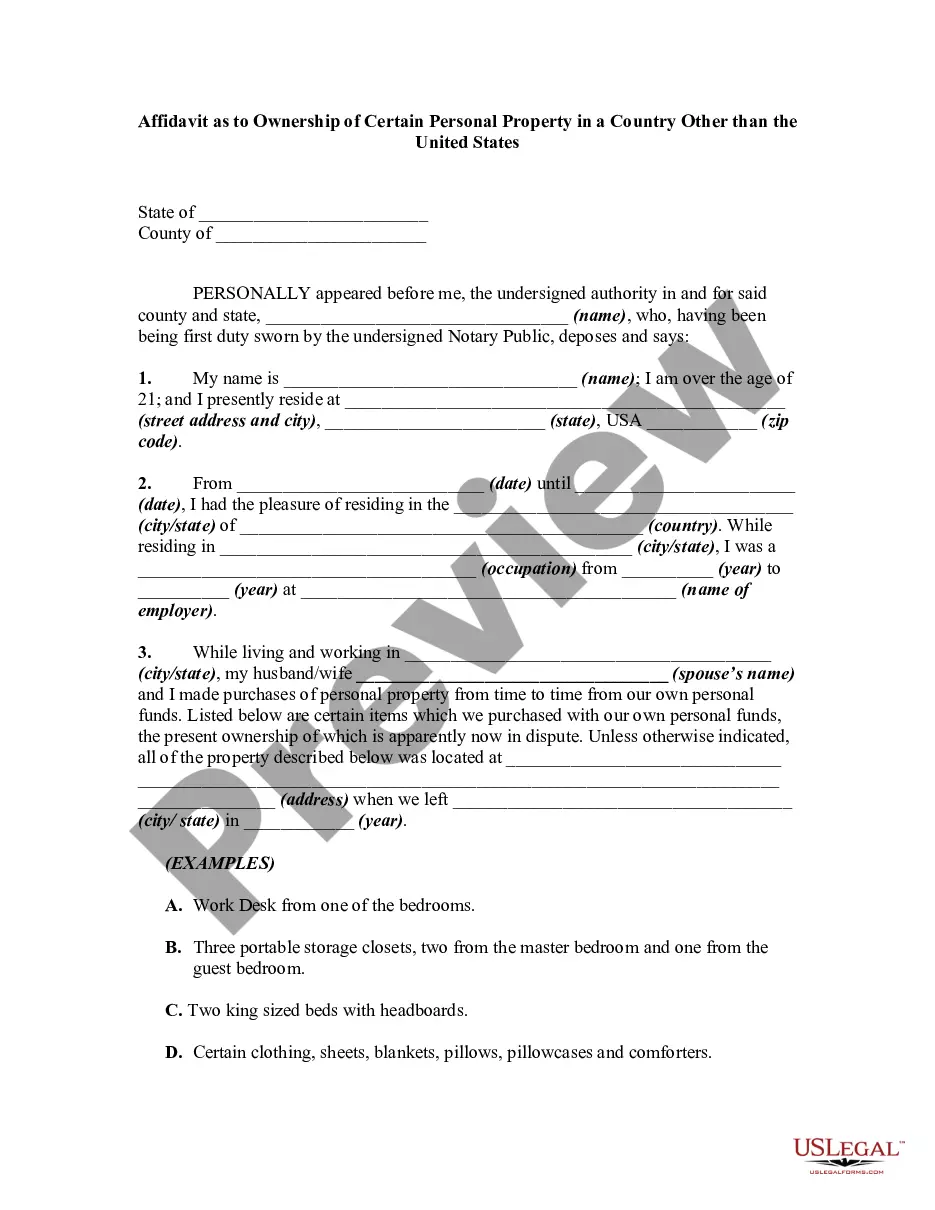
- A comprehensive list of personal property owned, including descriptions and locations.
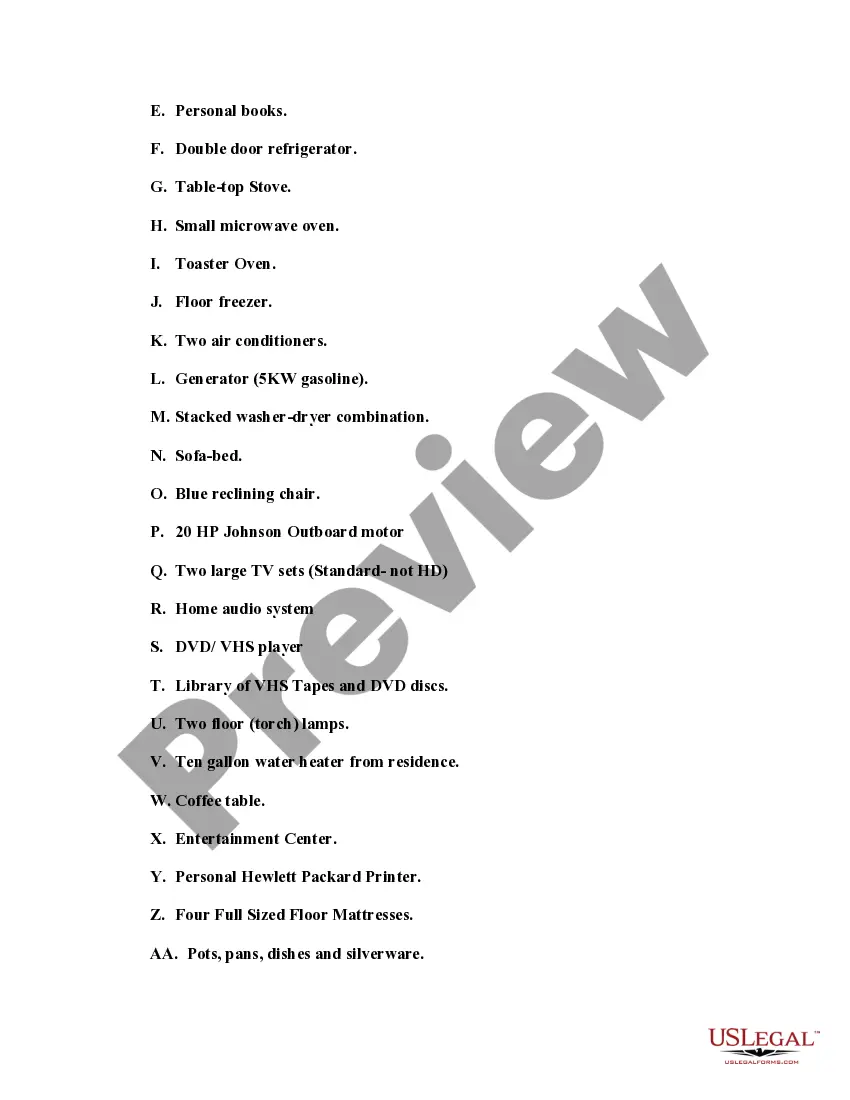
- A statement of ownership transfer for the listed items.
- Signature of the affiant and notarization section.

Common use cases
This affidavit should be used when there is a dispute regarding ownership of personal property acquired while living in a foreign country. It is particularly useful for individuals who need to provide proof of ownership in legal contexts, such as resolving inheritance issues, disputes with former landlords, or claims made by third parties regarding the property.
Who should use this form
- Individuals who have resided in a foreign country and purchased personal property there.
- Affiants needing to declare ownership due to disputes over personal property.
- People involved in legal proceedings or claims related to property purchased outside the U.S.
How to complete this form
- Identify yourself as the affiant, providing your full name and contact information.
- State the dates and location of your residence in the foreign country where the property was purchased.
- List all items of personal property, including descriptions and original locations.
- Include a statement confirming ownership and the transfer of rights for each listed item.
- Sign the form in the presence of a notary public.
Notarization requirements for this form
To make this form legally binding, it must be notarized. Our online notarization service, powered by Notarize, lets you verify and sign documents remotely through an encrypted video session.
Get your form ready online
Our built-in tools help you complete, sign, share, and store your documents in one place.
Make edits, fill in missing information, and update formatting in US Legal Forms—just like you would in MS Word.
Download a copy, print it, send it by email, or mail it via USPS—whatever works best for your next step.
Sign and collect signatures with our SignNow integration. Send to multiple recipients, set reminders, and more. Go Premium to unlock E-Sign.
If this form requires notarization, complete it online through a secure video call—no need to meet a notary in person or wait for an appointment.
We protect your documents and personal data by following strict security and privacy standards.

Make edits, fill in missing information, and update formatting in US Legal Forms—just like you would in MS Word.

Download a copy, print it, send it by email, or mail it via USPS—whatever works best for your next step.

Sign and collect signatures with our SignNow integration. Send to multiple recipients, set reminders, and more. Go Premium to unlock E-Sign.

If this form requires notarization, complete it online through a secure video call—no need to meet a notary in person or wait for an appointment.

We protect your documents and personal data by following strict security and privacy standards.
Typical mistakes to avoid
- Failing to accurately list all items of personal property, leading to incomplete claims.
- Not providing sufficient details in the descriptions of the items.
- Leaving out required signatures or notarization, which may invalidate the affidavit.
- Not checking local laws regarding the use of the affidavit in property disputes.
Benefits of using this form online
- Easy access to legally sound and professionally drafted templates.
- Convenient download for immediate use.
- Ability to edit and customize the form to fit your specific needs.
- Peace of mind knowing the form meets legal standards.
Looking for another form?
Form popularity
FAQ
In the sentence, the person writing the statement must state that he or she is stating that the information is accurate. (Example: I, Jane Doe, solemnly swear that the contents of this document are true and correct, and that I agree to abide by the terms in this affidavit.)
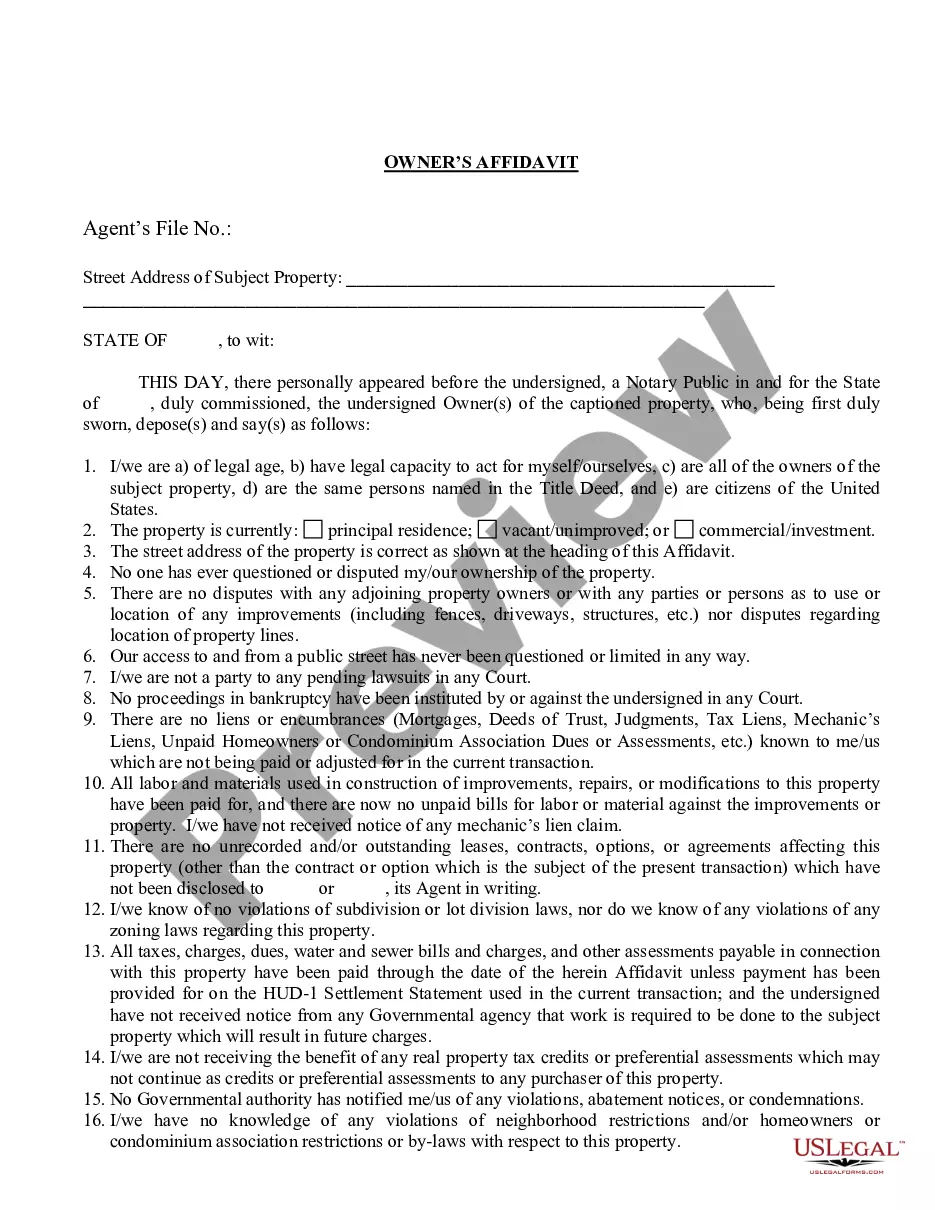
An Owner Affidavit is a document used by title and closing agencies to ensure that the current owner of a property is in ownership of the property free and clear of any encumbrances.The Owner Affidavit places the seller on the hook for any claims that may arise that are not covered by the title insurance policy.
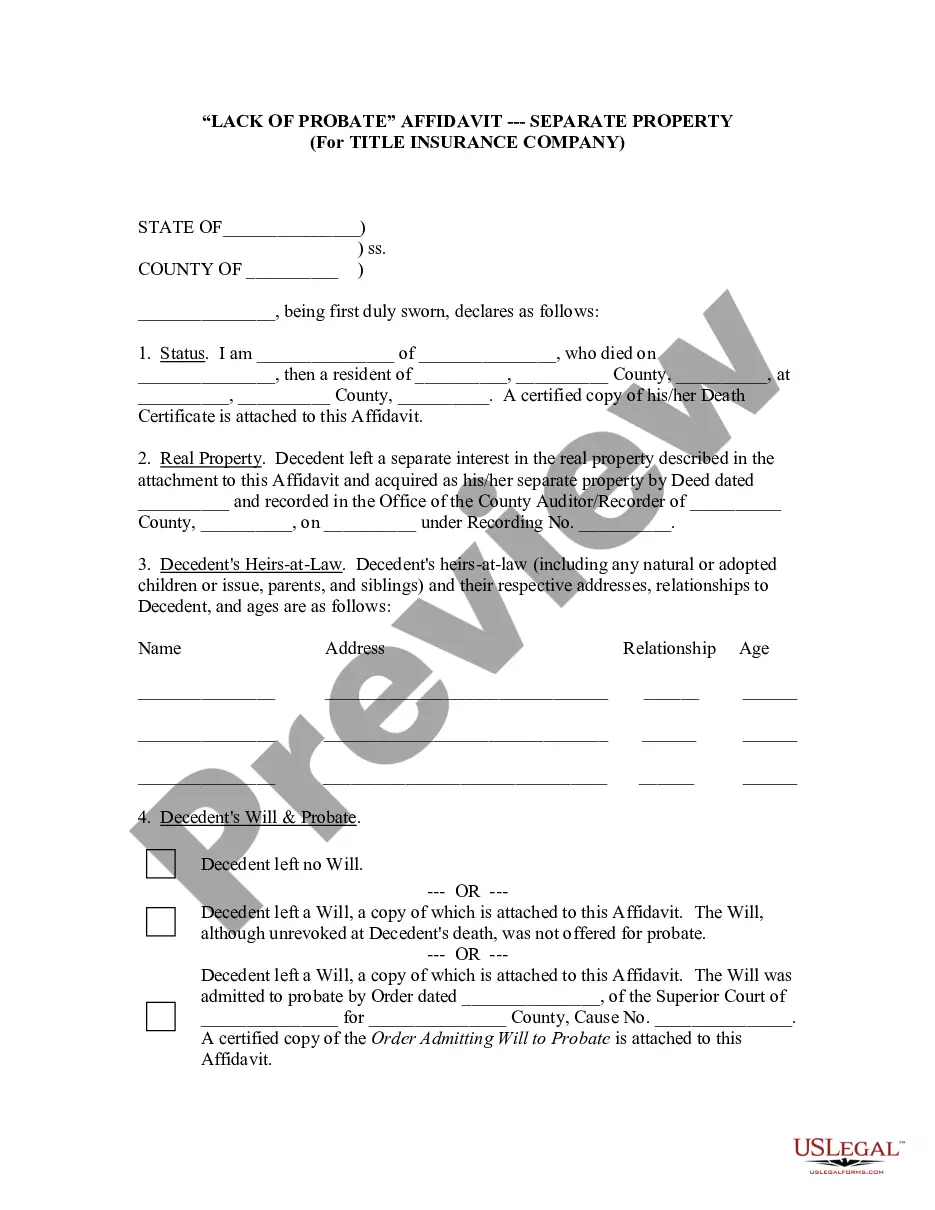
Affidavit of Descendants. Use this form to identify all the descendants of a deceased account owner or beneficiary, or to state that there are no living descendants, in order to determine (or confirm) who inherits in the event the individual has died or is disclaiming the assets.
Address of the property; Full names of the owner and the transferee, who will receive the property; Personal details of both parties; All costs the new proprietor assumes.
An affidavit is a type of verified statement or showing, or in other words, it contains a verification, which means that it is made under oath on penalty of perjury, and this serves as evidence for its veracity and is required in court proceedings.
You can use whiteout to correct the error.
An affidavit is a written statement that is considered made under oath. It is only valid when made voluntarily and without coercion. When you sign an affidavit, you are asserting that the information is true and that you have personal knowledge of the facts contained in the affidavit.
What should not be included in an affidavit? Generally, an affidavit should not set out the opinion of the person making the affidavit; that is, it must be based on facts not your beliefs or views. The exception is where the person is giving evidence as an expert; for instance, a psychologist or licensed valuer.
Title the affidavit. First, you'll need to title your affidavit. Craft a statement of identity. The very next section of your affidavit is what's known as a statement of identity. Write a statement of truth. State the facts. Reiterate your statement of truth. Sign and notarize.