Waiver and Release by Parent of Minor Child from Liability for Participation in Rock Wall Climbing Session at School
About this form
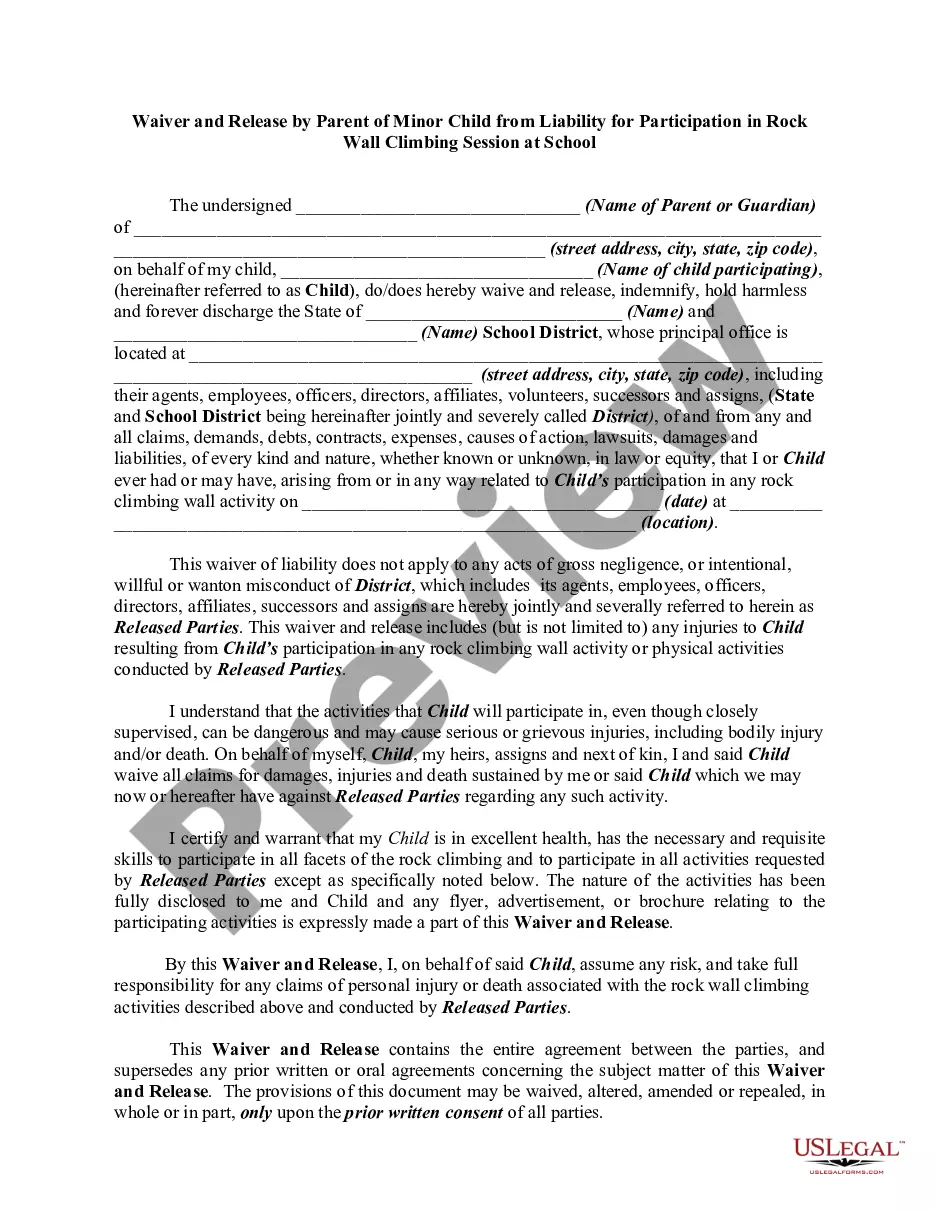
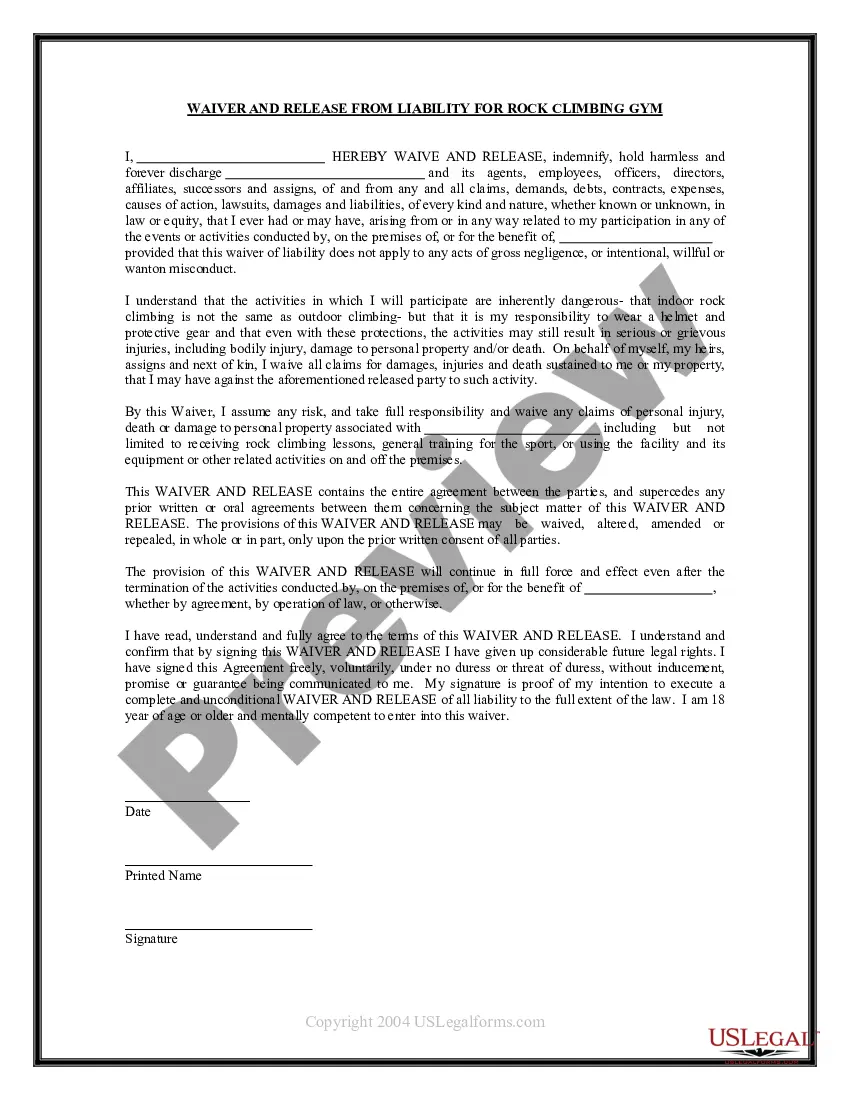
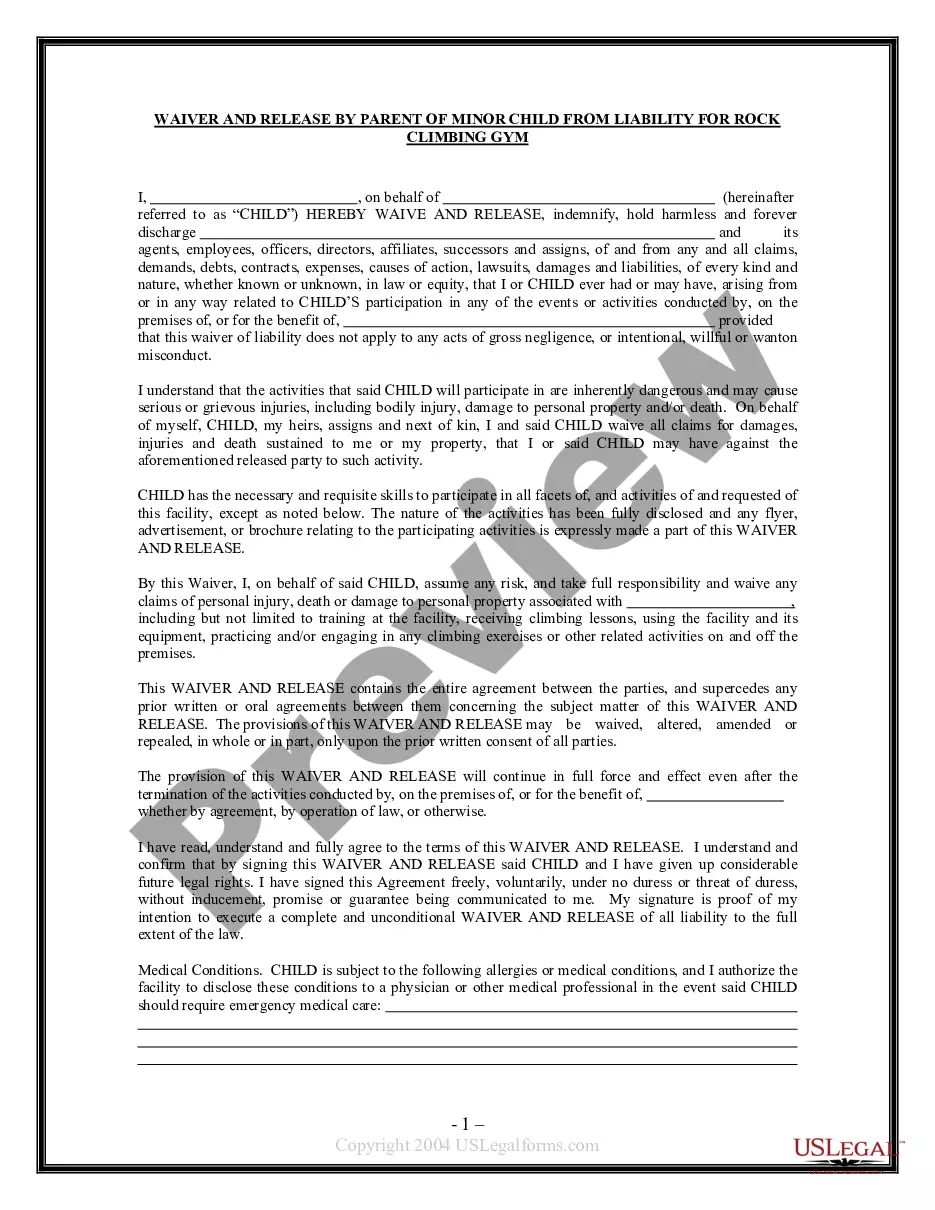
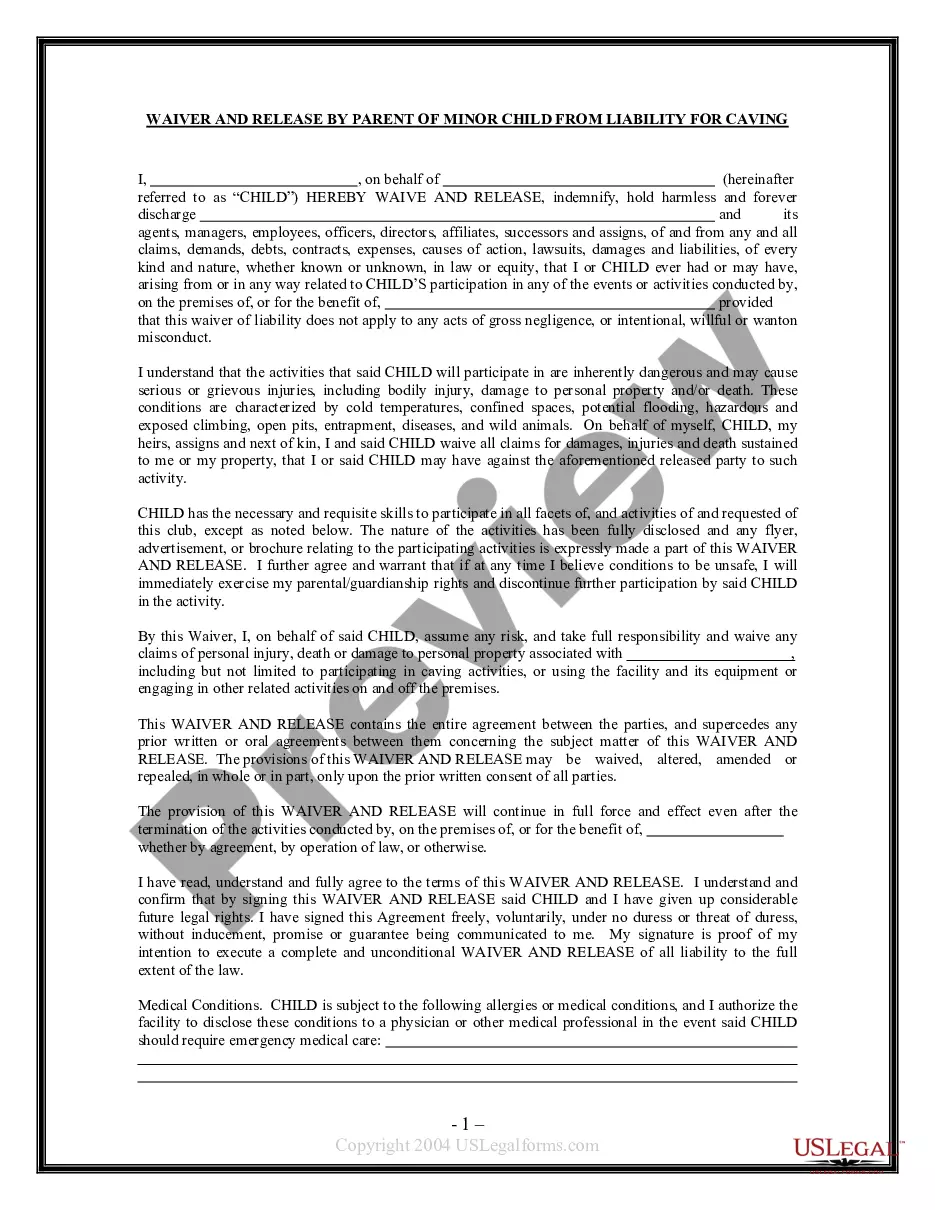
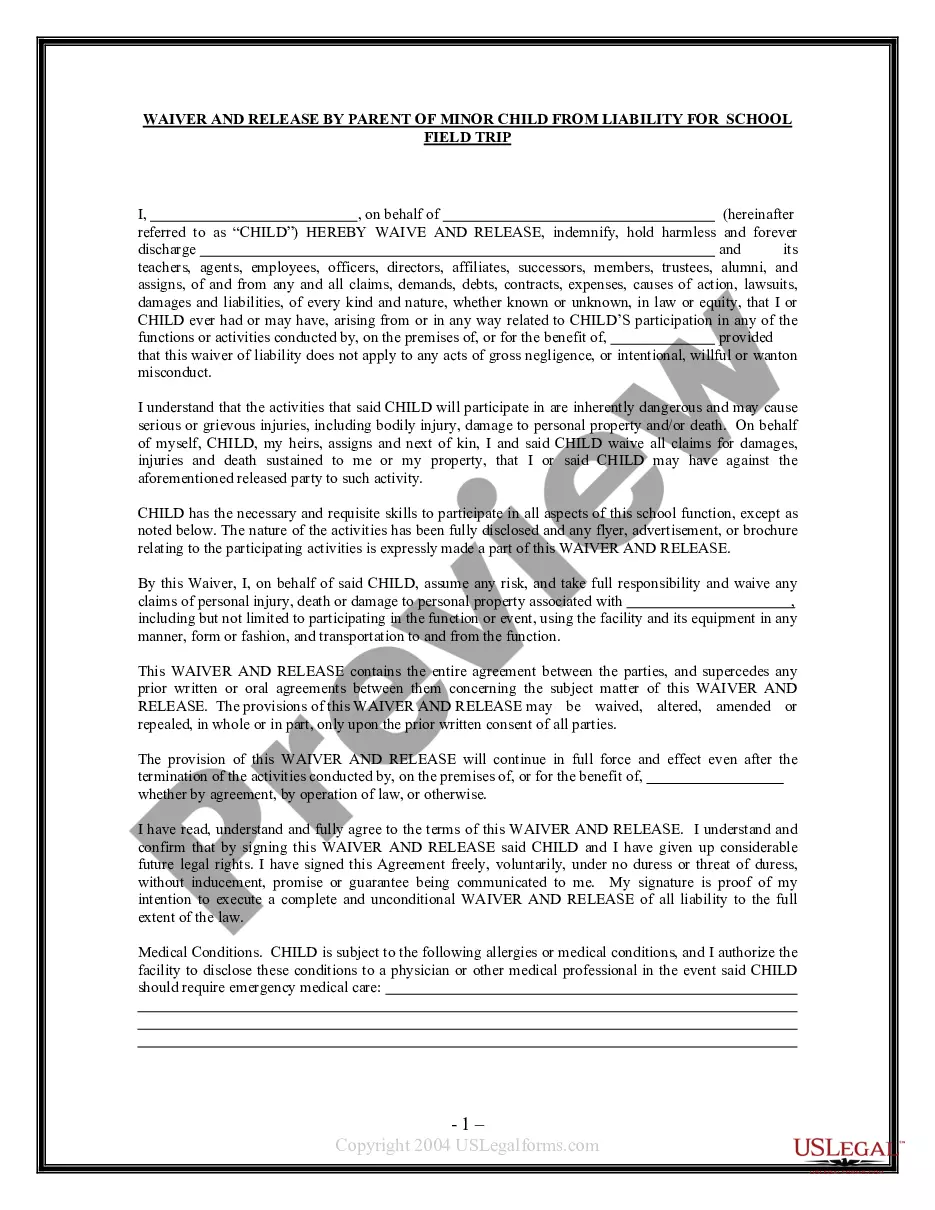
This Waiver and Release by Parent of Minor Child from Liability for Participation in Rock Wall Climbing Session at School is a legal document that allows a parent or guardian to waive potential legal claims against a school or educational institution for injuries that may occur during a rock climbing activity. It is designed to protect the school from liability while ensuring that the parent understands the risks involved in the climbing session. This form specifically addresses the unique circumstances of activities involving minors, distinguishing it from general liability waivers.
Key components of this form
- Name and address of the parent or guardian.
- Name of the child participating in the rock climbing session.
- Date and location of the activity.
- Identification of the school district and its representatives.
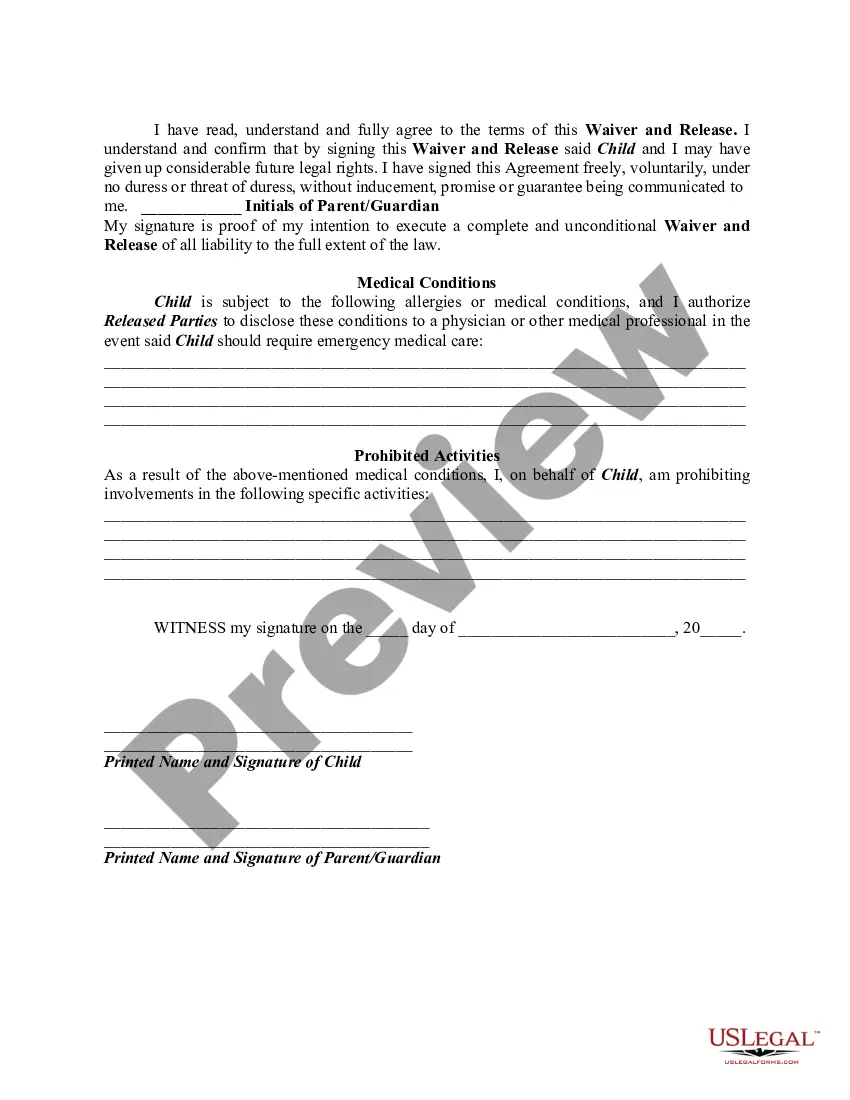
- Disclosure of known medical conditions or allergies of the child.
- Assumption of risk and waiver of liability for potential injuries.
When to use this document
This form should be used when a parent or guardian is allowing their child to participate in a rock wall climbing session organized by a school or educational institution. It is particularly important when the activity involves physical challenges that carry inherent risks, helping to clarify responsibilities between the parent and the institution.
Who should use this form
- Parents or guardians of minors participating in rock climbing activities.
- Schools or educational institutions organizing rock climbing sessions for students.
- Volunteers or staff supervising the climbing activity seeking legal protection.
Steps to complete this form
- Identify and enter the name and address of the parent or guardian.
- Provide the name of the child who will participate in the activity.
- Fill in the date and location of the rock climbing session.
- Read and acknowledge the medical conditions or allergies of the child.
- Sign and date the form to execute the waiver on behalf of the child.
Is notarization required?
This form usually doesn’t need to be notarized. However, local laws or specific transactions may require it. Our online notarization service, powered by Notarize, lets you complete it remotely through a secure video session, available 24/7.
Get your form ready online
Our built-in tools help you complete, sign, share, and store your documents in one place.
Make edits, fill in missing information, and update formatting in US Legal Forms—just like you would in MS Word.
Download a copy, print it, send it by email, or mail it via USPS—whatever works best for your next step.
Sign and collect signatures with our SignNow integration. Send to multiple recipients, set reminders, and more. Go Premium to unlock E-Sign.
If this form requires notarization, complete it online through a secure video call—no need to meet a notary in person or wait for an appointment.
We protect your documents and personal data by following strict security and privacy standards.

Make edits, fill in missing information, and update formatting in US Legal Forms—just like you would in MS Word.

Download a copy, print it, send it by email, or mail it via USPS—whatever works best for your next step.

Sign and collect signatures with our SignNow integration. Send to multiple recipients, set reminders, and more. Go Premium to unlock E-Sign.

If this form requires notarization, complete it online through a secure video call—no need to meet a notary in person or wait for an appointment.

We protect your documents and personal data by following strict security and privacy standards.
Mistakes to watch out for
- Failing to provide accurate information about the child's medical conditions or allergies.
- Not ensuring that both the parent and child understand the risks involved.
- Omitting the date or location of the climbing activity.
- Neglecting to sign and date the form, which invalidates it.
Benefits of completing this form online
- Convenience of downloading and printing the form at home.
- Easy customization to fit specific details of the rock climbing activity.
- Access to professionally drafted forms by licensed attorneys, ensuring legal compliance.
Legal use & context
- This waiver is designed to protect educational institutions from lawsuits resulting from injuries during participation in climbing activities.
- Negligence or intentional misconduct by the school or its employees cannot be waived, providing legal protection for participants.
- Judicial interpretation of waivers may vary, making it imperative to understand the context and enforceability in specific situations.
Quick recap
- The waiver is essential for protecting schools from liability in physical activities like rock climbing.
- Both parents and children must understand and agree to the waiver's terms before participation.
- Completing the form accurately ensures that all legal bases are covered and minimizes risks associated with the activity.
Looking for another form?
Form popularity
FAQ
In New Zealand a person is considered a child or "minor" until the age of 20. On reaching this "age of majority" the person is no longer a child in the eyes of the law, and has all the rights and obligations of an adult.
A minor parent is defined as a never-married individual, under the age of 18, who is pregnant or has a dependent child residing with that minor parent.
It's true that when your child reaches the age of 18, they are legally seen as an adult and are legally responsible for their own behavior instead of their parents. They can't break laws, of course being 18 just means you can be tried as an adult, not that you're free to do anything you please.
What happens to a minor child when both of his parents die? As with most estate planning issues, this is something that is unpleasant to think about but very important. If one parent dies then generally the surviving parent will have custody of the child.
A parent has no legal or financial responsibility after their children reach the age of majority. In California, that age is 18. Parents can, however, contract to obligate themselves to provide for children after he age of majority.
Minor parent means an applicant or participant parent who is less than eighteen years of age and has never been married.Minor parent means a parent less than the age of 18 years.
Parental obligations typically end when a child reaches the age of majority, which is 18 years old in most states. However, you may wish to check your state's legal ages laws to see if they vary from this standard.
Parents lose their legal rights when you turn 18. They will still try to Control you because you live there. However, it is best that you try to get along at least until you have another place.
Definition of child. For purposes of this Act, a child is a person below the age of eighteen years.