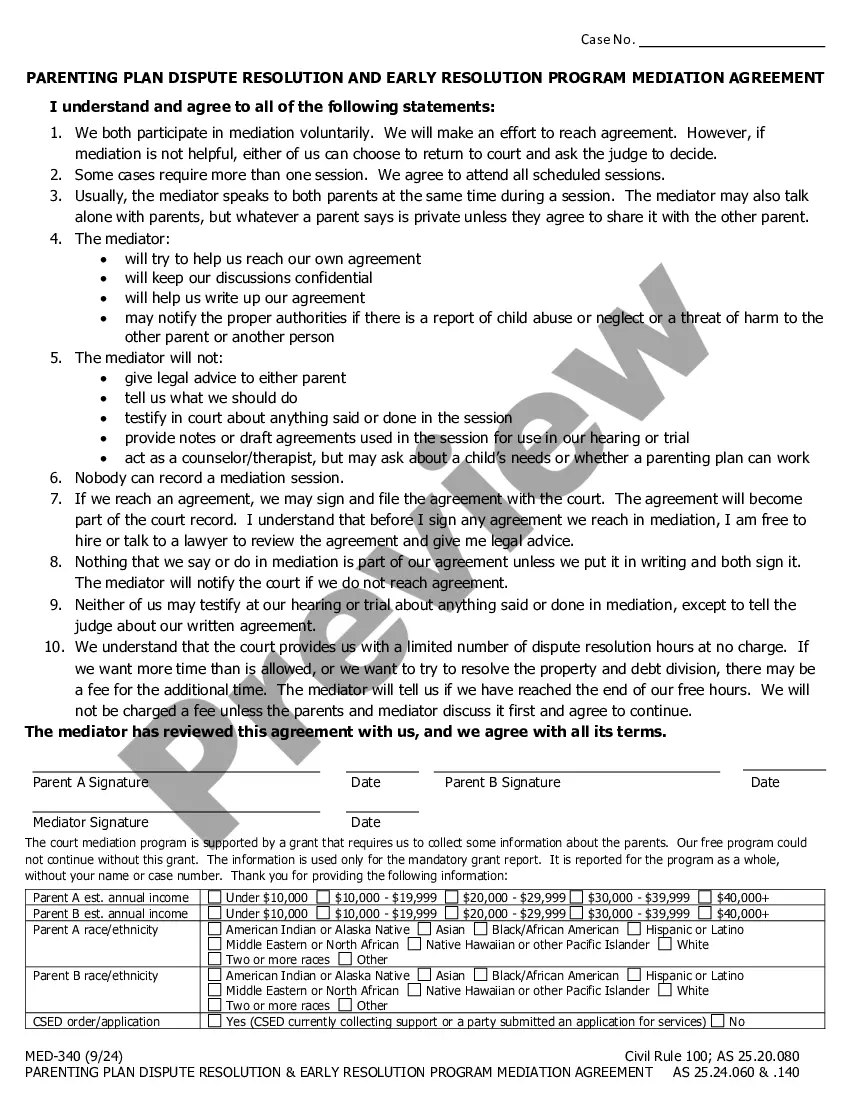
Motion to Vacate or Set Aside Entry of Default and Default Judgment Due to Mistake, Inadvertence, Surprise, or Excusable Neglect

Overview of this form
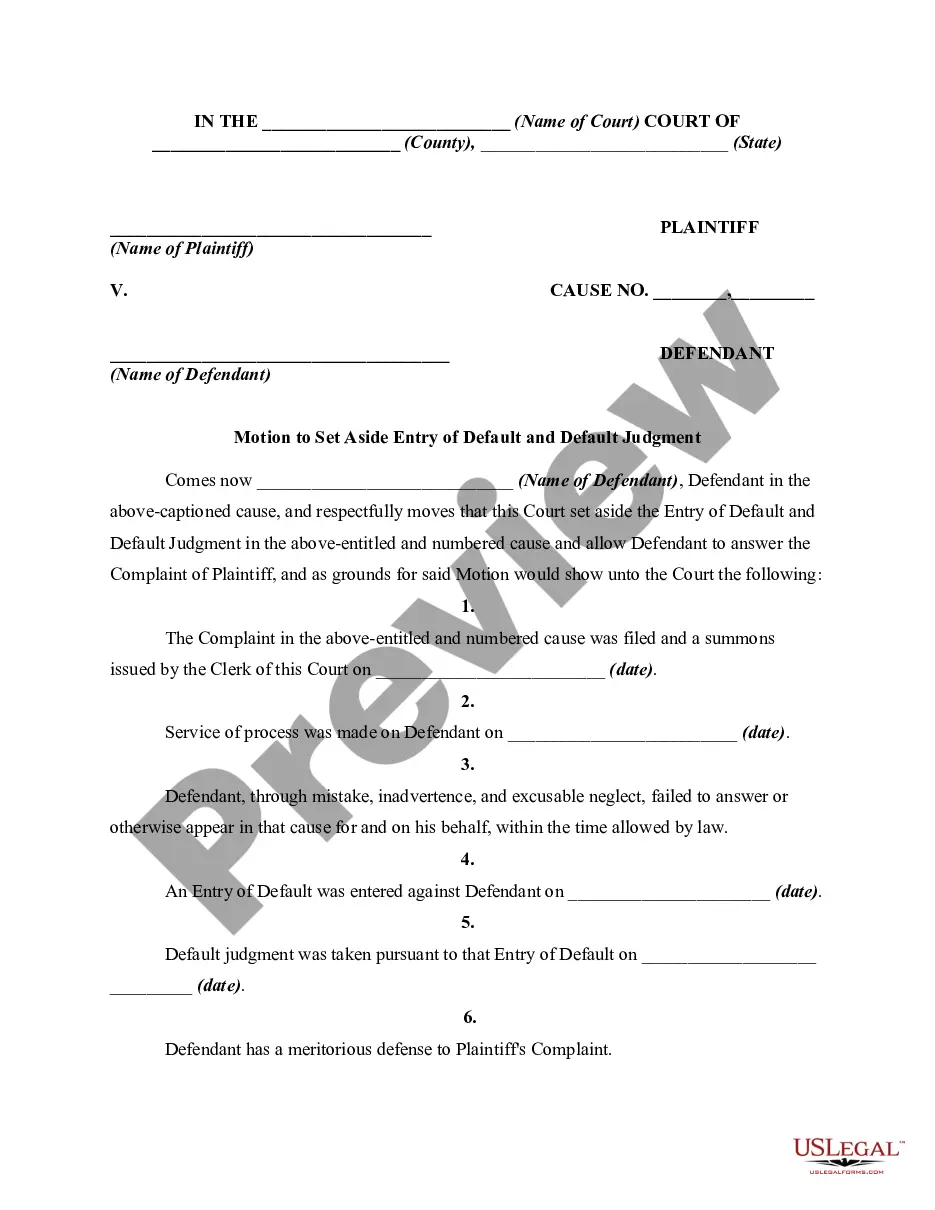
The Motion to Vacate or Set Aside Entry of Default and Default Judgment is a legal document that allows a defendant to request a court to reverse a default judgment. This form is typically used when the defendant believes the judgment was issued due to mistake, inadvertence, surprise, or excusable neglect. It primarily seeks to preserve the defendant's right to defend against the claims made by the plaintiff, balancing judicial efficiency with individual rights.
Form components explained
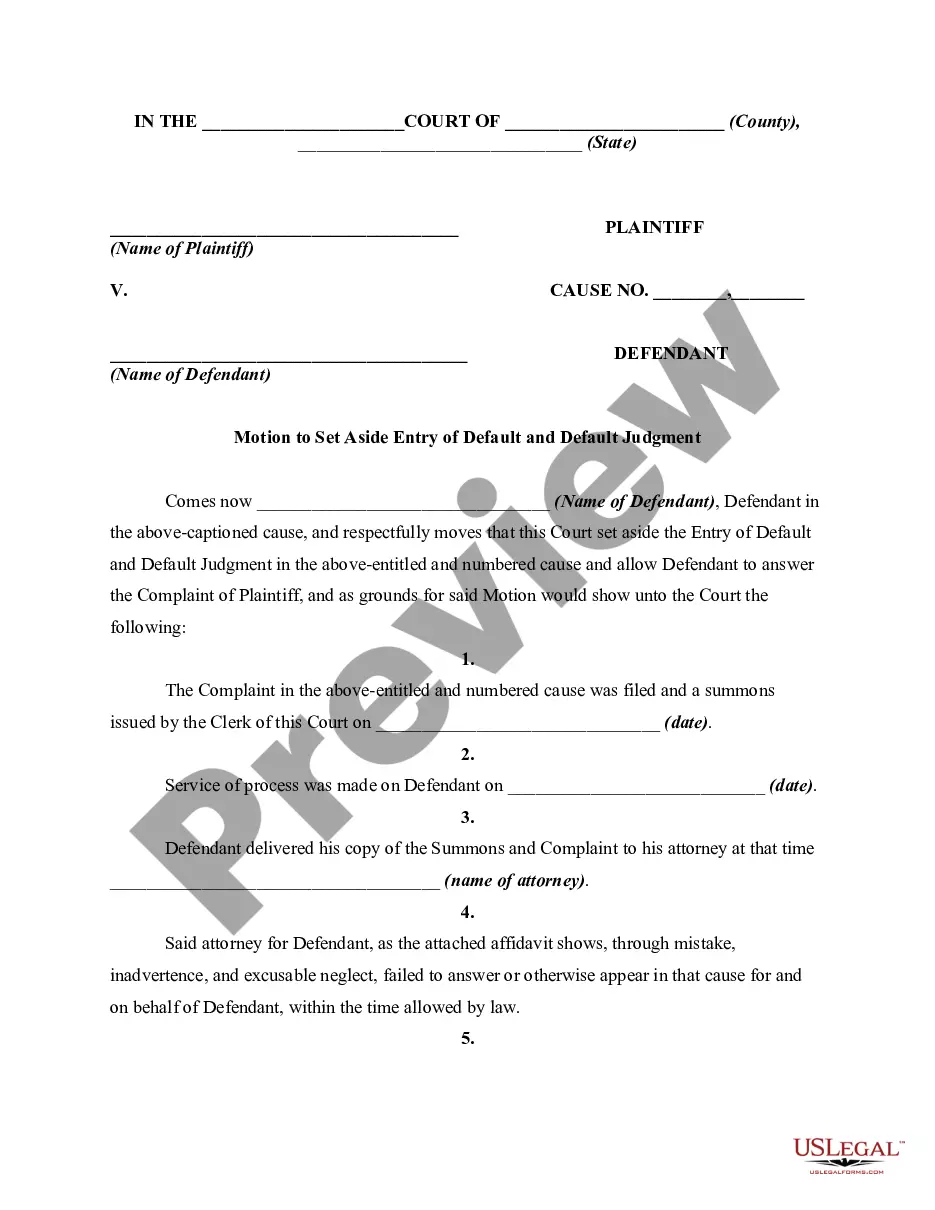
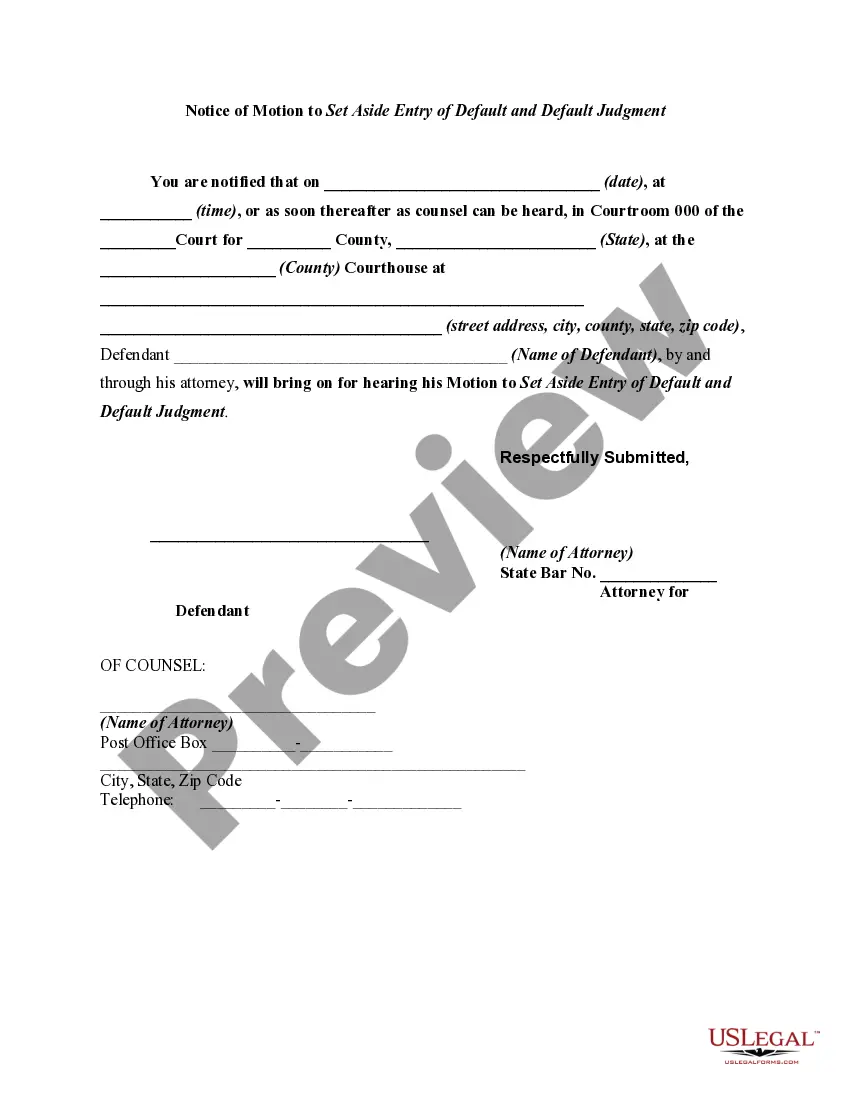
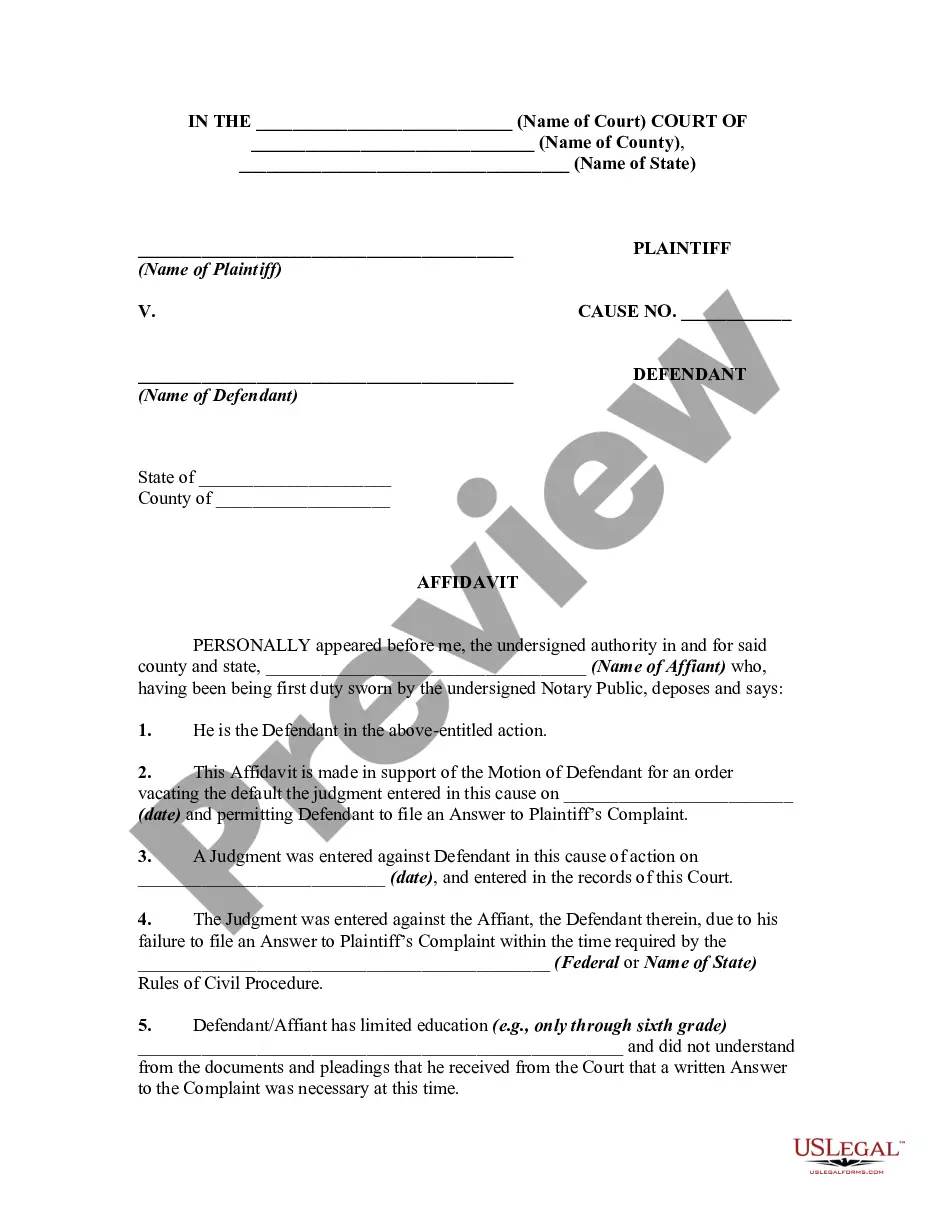
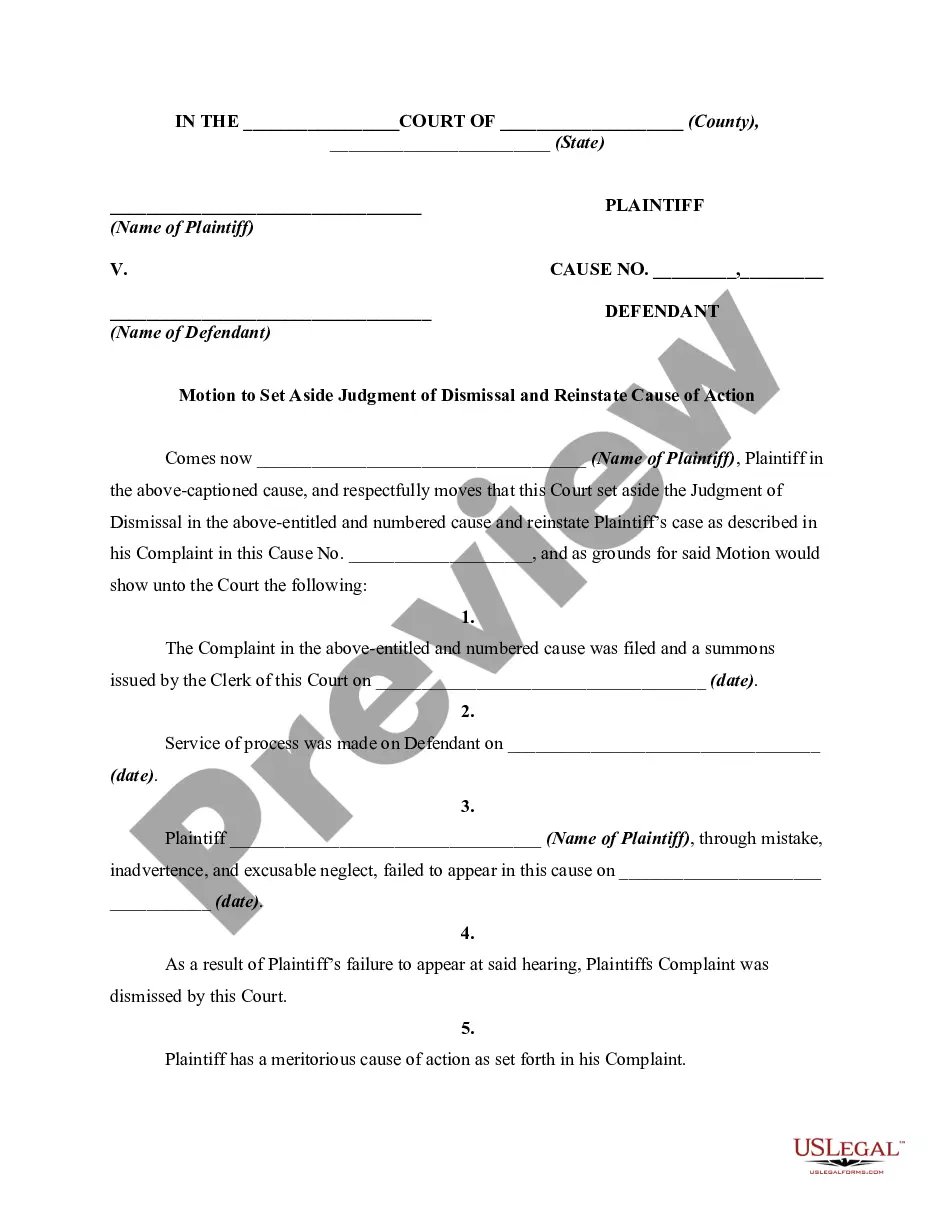
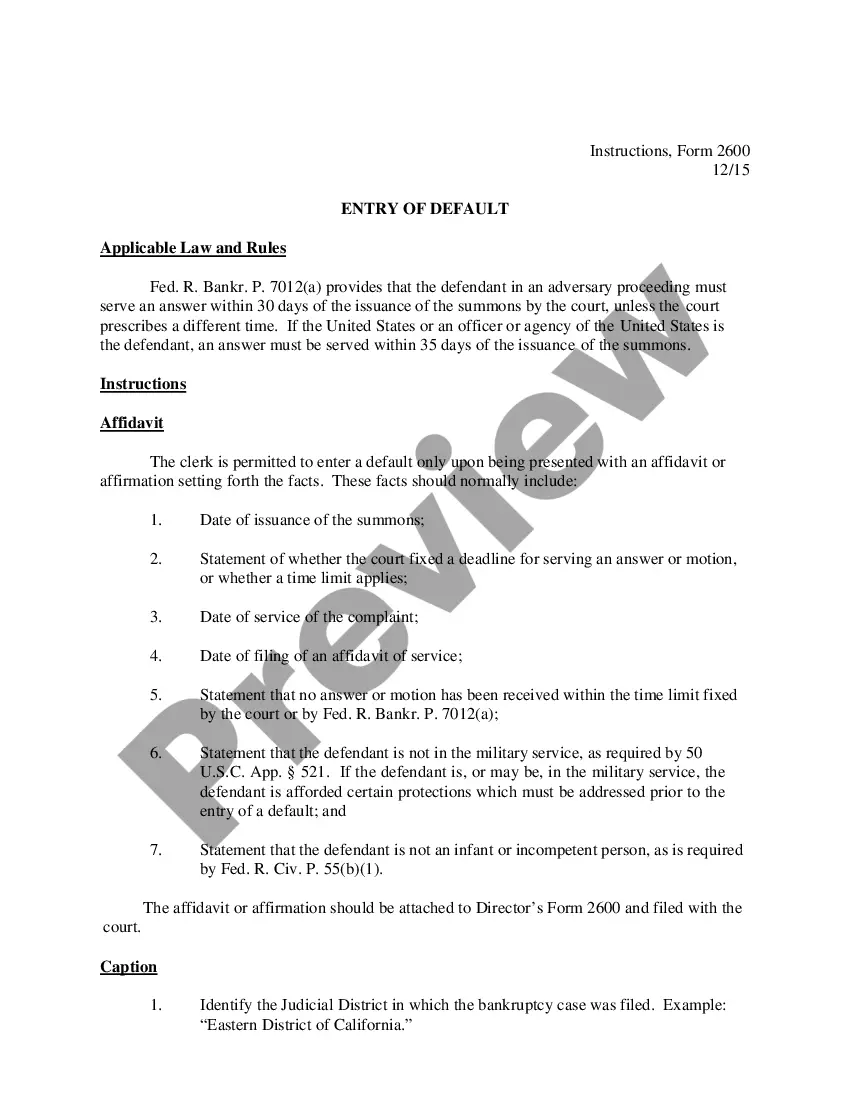
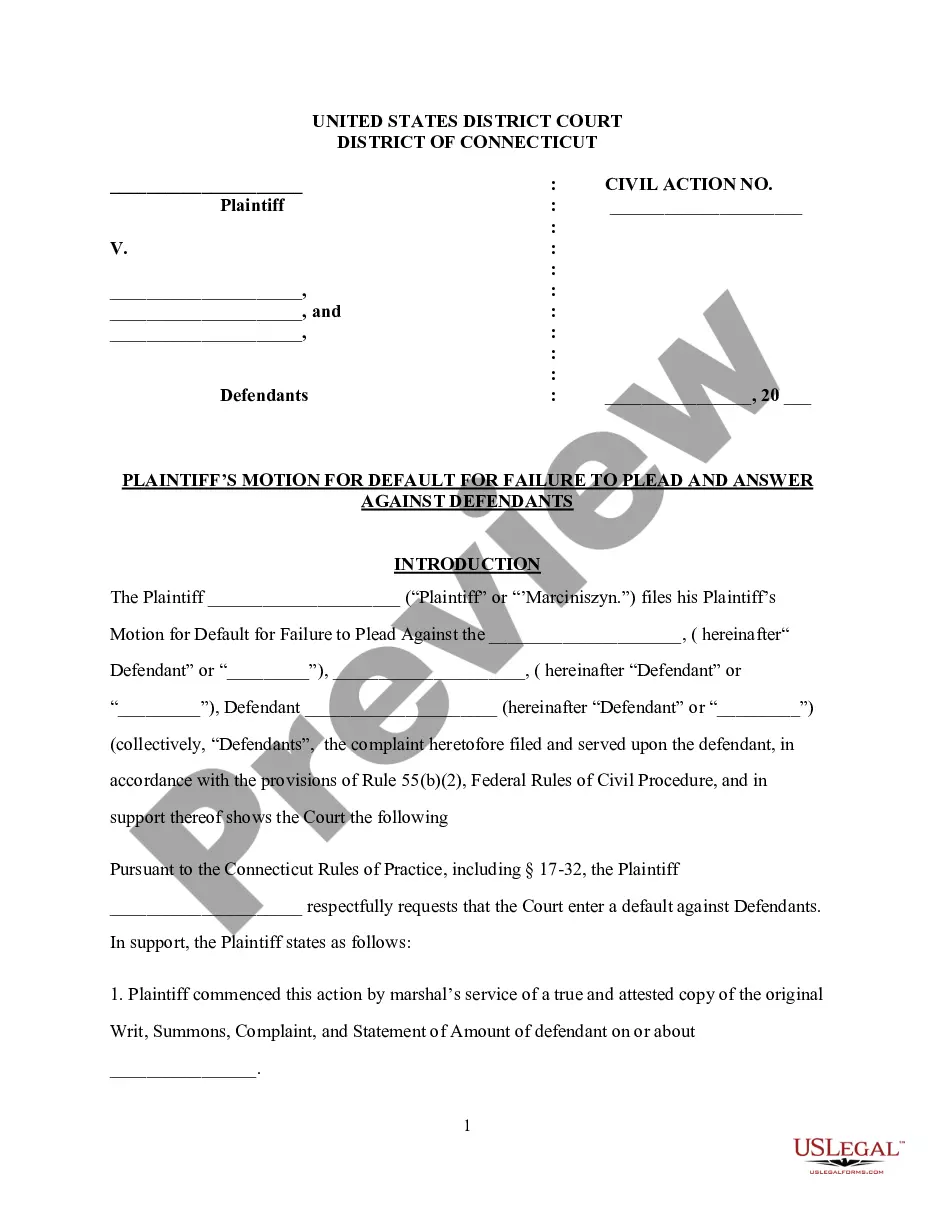
- Caption including the names of the plaintiff and defendant, and the case number.
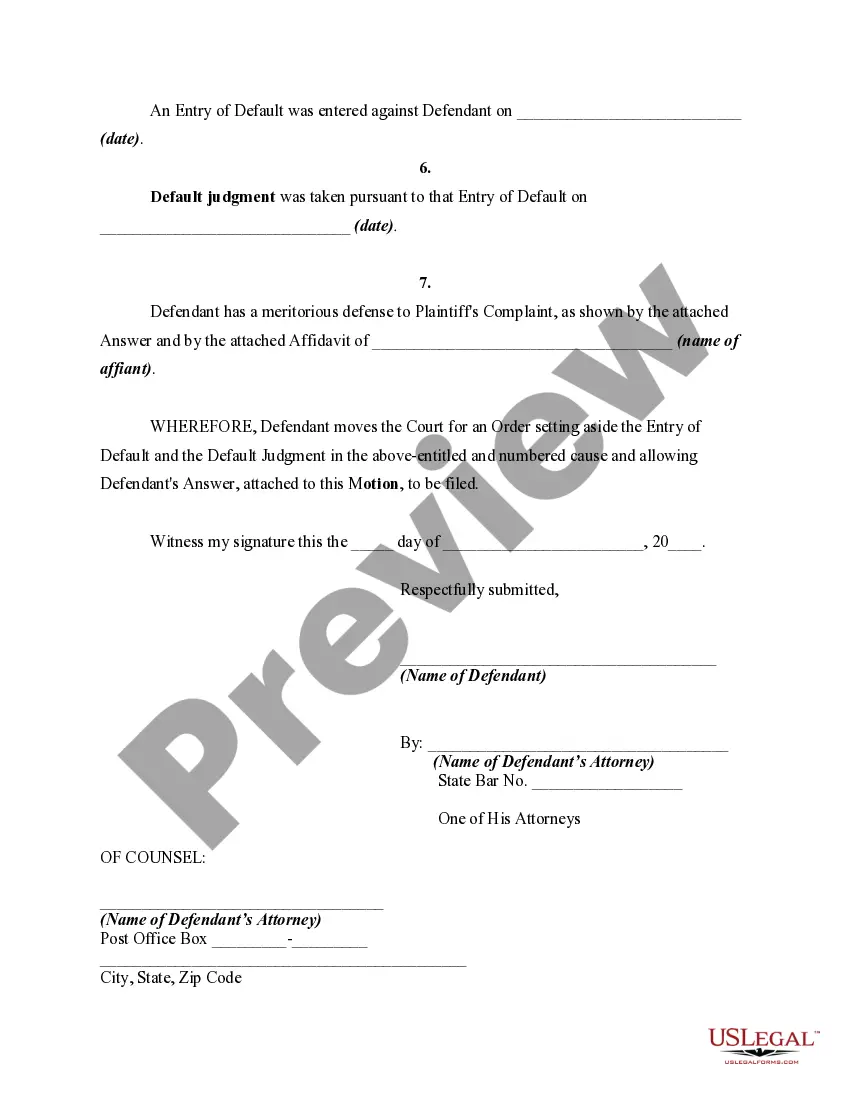
- Specification of dates related to the filing of the complaint and service of process.
- Statement explaining the grounds for vacating the default judgment.
- Details regarding the attorney's oversight leading to the default.
- Attached documents including an Answer and Affidavit demonstrating a meritorious defense.
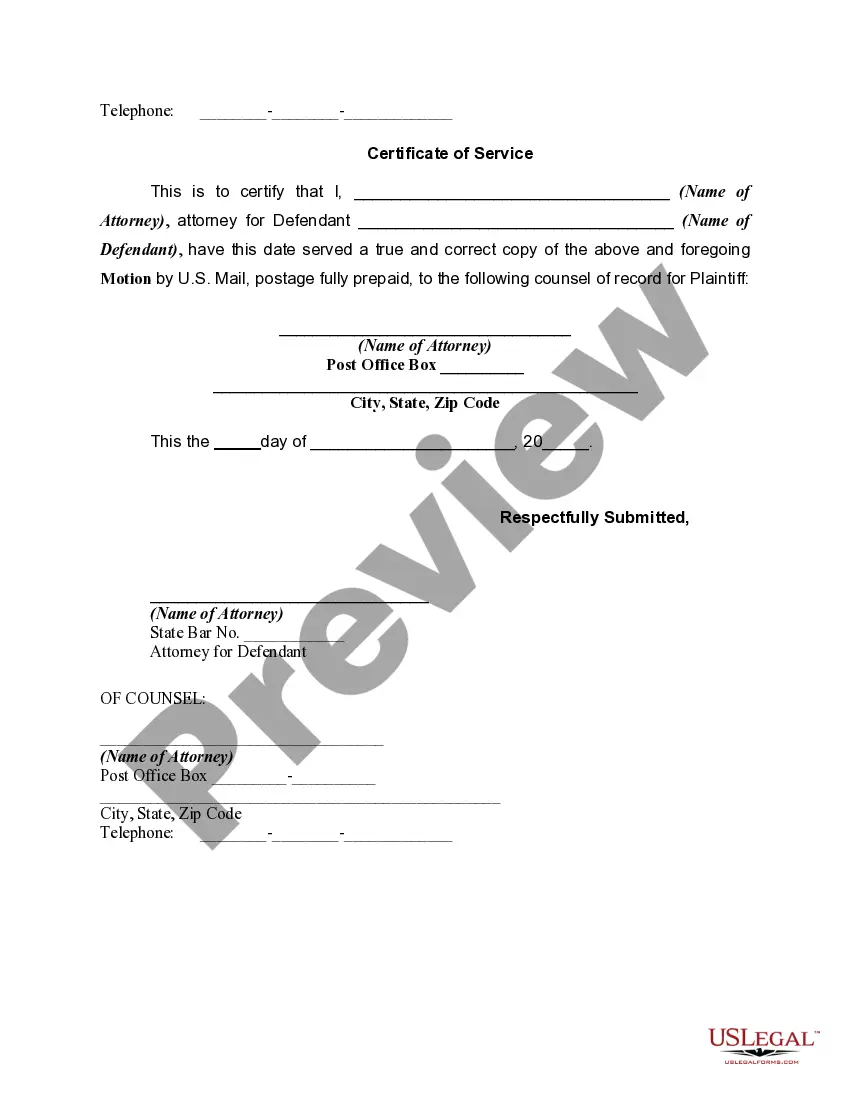
- A section for signature of the defendant and their attorney, along with a certificate of service.
When to use this form
This form is needed when a defendant has missed the opportunity to respond to a summons or complaint due to circumstances beyond their control, such as misunderstandings, clerical mistakes, or lack of notice. If a default judgment has already been entered against them, this motion can be filed to challenge that judgment and allow the defendant to submit their defense.
Who should use this form
- Defendants who have received a default judgment against them without responding in time.
- Individuals who believe that their previous inaction was due to a reasonable mistake or neglect.
- Those with legitimate defenses who wish to contest the claims made by the plaintiff.
Completing this form step by step
- Identify the parties involved by entering the names of the plaintiff and defendant, along with the case number.
- Fill in the dates of the filing of the complaint and service of process.
- State the reasons for the failure to respond, highlighting any mistakes or oversights.
- Attach supporting documents, including the Answer and any Affidavit that may support your defense.
- Ensure that the form is signed by both the defendant and their attorney, including all required contact information.
Notarization guidance
This form does not typically require notarization to be legally valid. However, some jurisdictions or document types may still require it. US Legal Forms provides secure online notarization powered by Notarize, available 24/7 for added convenience.
Get your form ready online
Our built-in tools help you complete, sign, share, and store your documents in one place.
Make edits, fill in missing information, and update formatting in US Legal Forms—just like you would in MS Word.
Download a copy, print it, send it by email, or mail it via USPS—whatever works best for your next step.
Sign and collect signatures with our SignNow integration. Send to multiple recipients, set reminders, and more. Go Premium to unlock E-Sign.
If this form requires notarization, complete it online through a secure video call—no need to meet a notary in person or wait for an appointment.
We protect your documents and personal data by following strict security and privacy standards.

Make edits, fill in missing information, and update formatting in US Legal Forms—just like you would in MS Word.

Download a copy, print it, send it by email, or mail it via USPS—whatever works best for your next step.

Sign and collect signatures with our SignNow integration. Send to multiple recipients, set reminders, and more. Go Premium to unlock E-Sign.

If this form requires notarization, complete it online through a secure video call—no need to meet a notary in person or wait for an appointment.

We protect your documents and personal data by following strict security and privacy standards.
Common mistakes
- Failing to file within the time limits specified by law.
- Not attaching necessary supporting documents like the Answer or Affidavit.
- Submitting the motion without the proper signatures or contact information.
- Not addressing all the reasons for the default adequately.
Benefits of using this form online
- Immediate access to professionally drafted templates that ensure clarity and compliance with legal standards.
- Easy customization to fit individual circumstances without the need for extensive legal knowledge.
- Convenient download options for quick filing, saving time and effort.
Legal use & context
- This form serves as a request to the court to reverse a prior decision, which is a common legal remedy available to defendants.
- It is important to substantiate claims of excusable neglect with appropriate evidence to increase the chances of the motion being granted.
- Understanding local court procedures can impact the success of using this motion effectively.
Key takeaways
- The motion is a critical legal tool for defendants seeking to defend against a default judgment.
- Filing this motion requires clear justification and supporting documentation.
- Understanding procedural rules specific to your jurisdiction is essential for successful filing.
Looking for another form?
Form popularity
FAQ
This motion lets a defendant ask the court to reverse a default entry and any default judgment when the judgment resulted from mistake, inadvertence, surprise, or excusable neglect. It preserves the right to defend and typically includes a caption, dates, grounds for vacating, notes about counsel’s oversight, and attached materials showing a meritorious defense, such as an Answer and Affidavit, plus a signature block and certificate of service.
Setting aside a default judgment means the court cancels the prior failure to respond and allows the case to proceed on its merits. This form requires identifying grounds for vacating, and it expects attached materials—an Answer and Affidavit showing a meritorious defense—plus a caption, relevant dates, and a certificate of service.
When a default judgment is vacated, the court removes the judgment and allows the case to be defended on its merits as if a response had not defaulted. This form is used to request that outcome when the judgment resulted from mistake, inadvertence, surprise, or excusable neglect and to attach a meritorious defense with supporting documents.
A good reason includes mistake, inadvertence, surprise, or excusable neglect that prevented a timely response. The form requires showing grounds for vacating and accompanying evidence such as an Answer and Affidavit demonstrating a meritorious defense, along with proper caption, dates, signer information, and service.
It means filing a formal request with the court asking to erase the default and judgment so the defendant can present their defenses. The form directs you to provide a caption with case details, specify dates, explain grounds for vacating, and attach an Answer and Affidavit showing a meritorious defense, plus signatures and service.
This form is specifically for vacating or setting aside a default or default judgment based on mistake, inadvertence, surprise, or excusable neglect and requires a meritorious defense with an attached Answer and Affidavit. It also emphasizes attorney oversight and includes a certificate of service, distinguishing it from more general, non-specific motions.