Contract with Verbatim Reporter and Transcriber of Medical Records - Proofreading not the Responsibility of Transcriber
Overview of this form
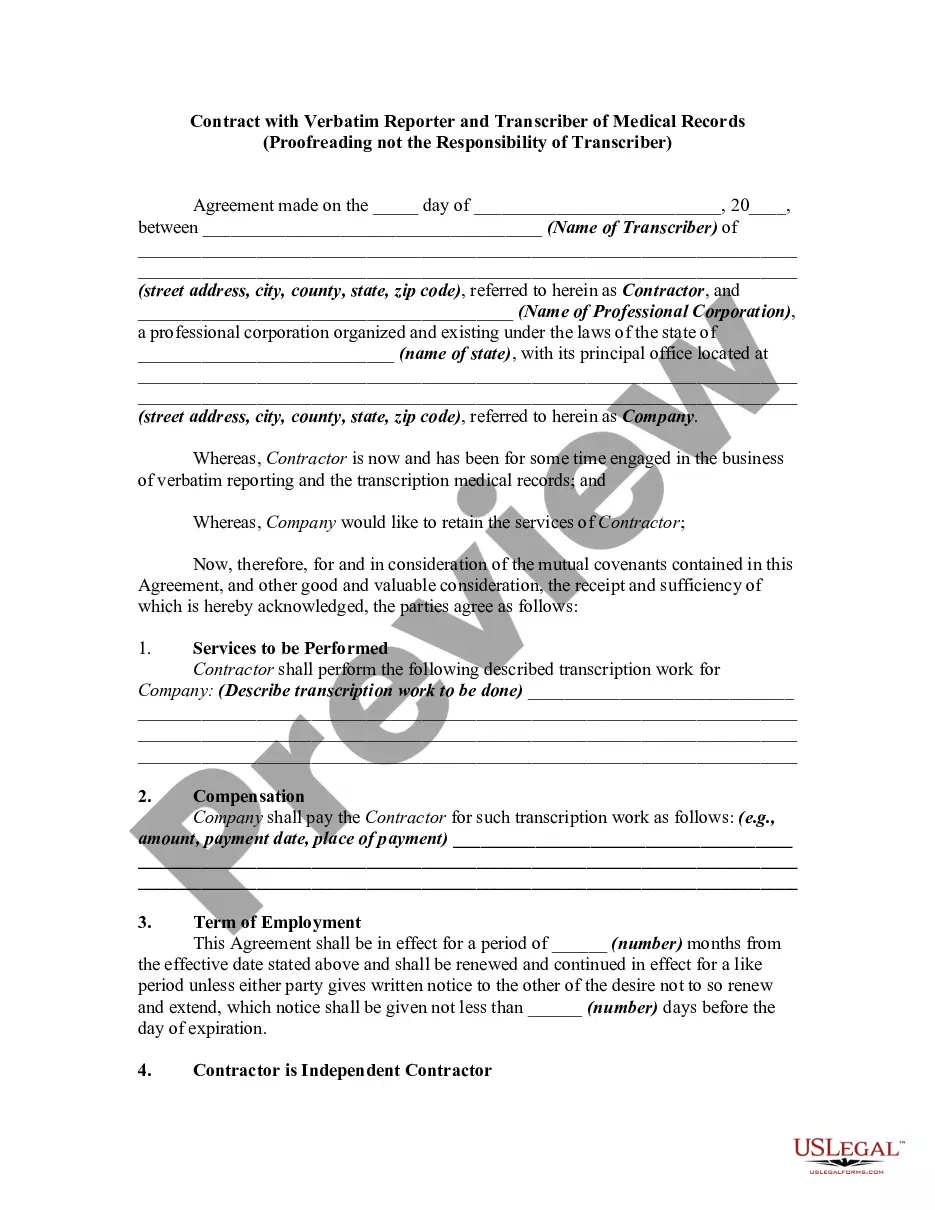
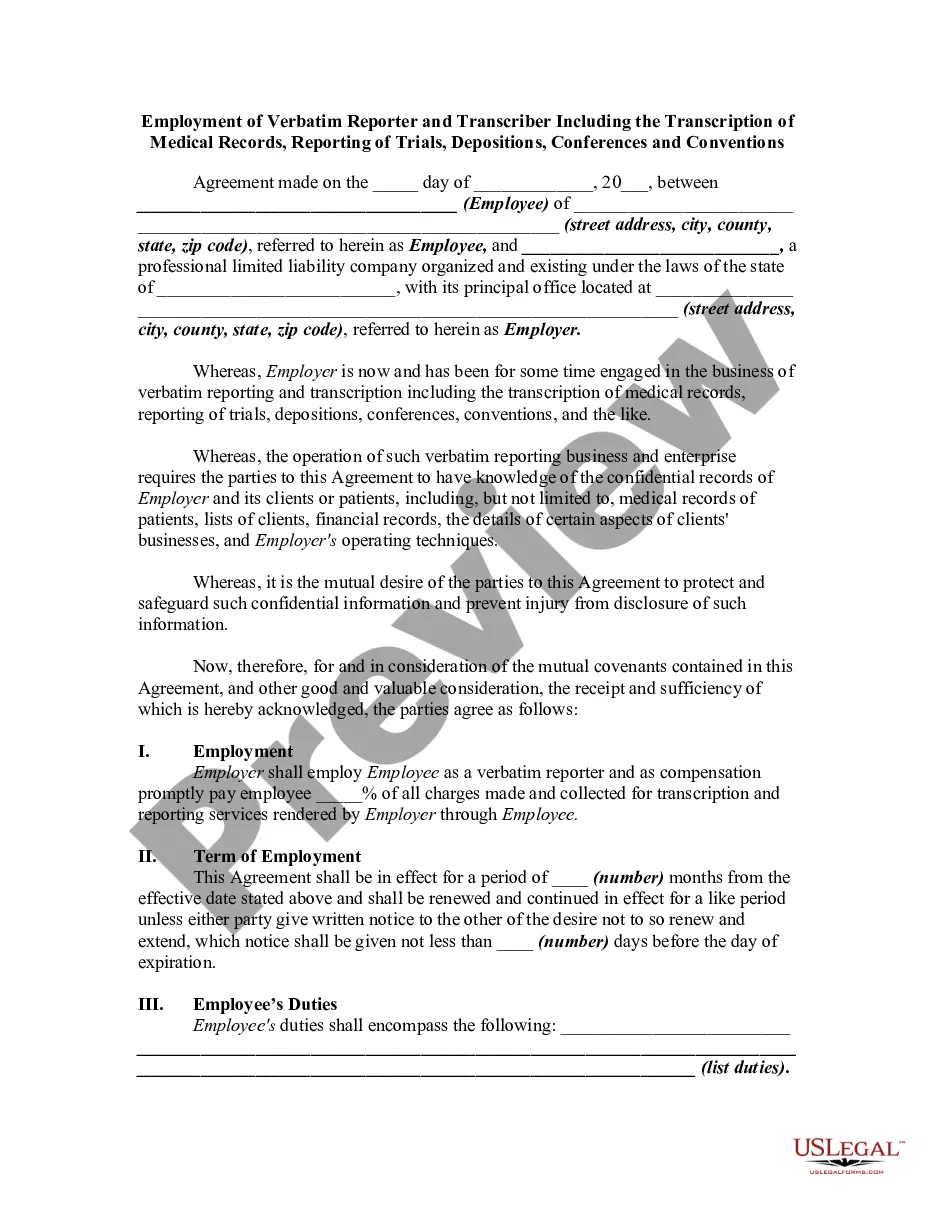
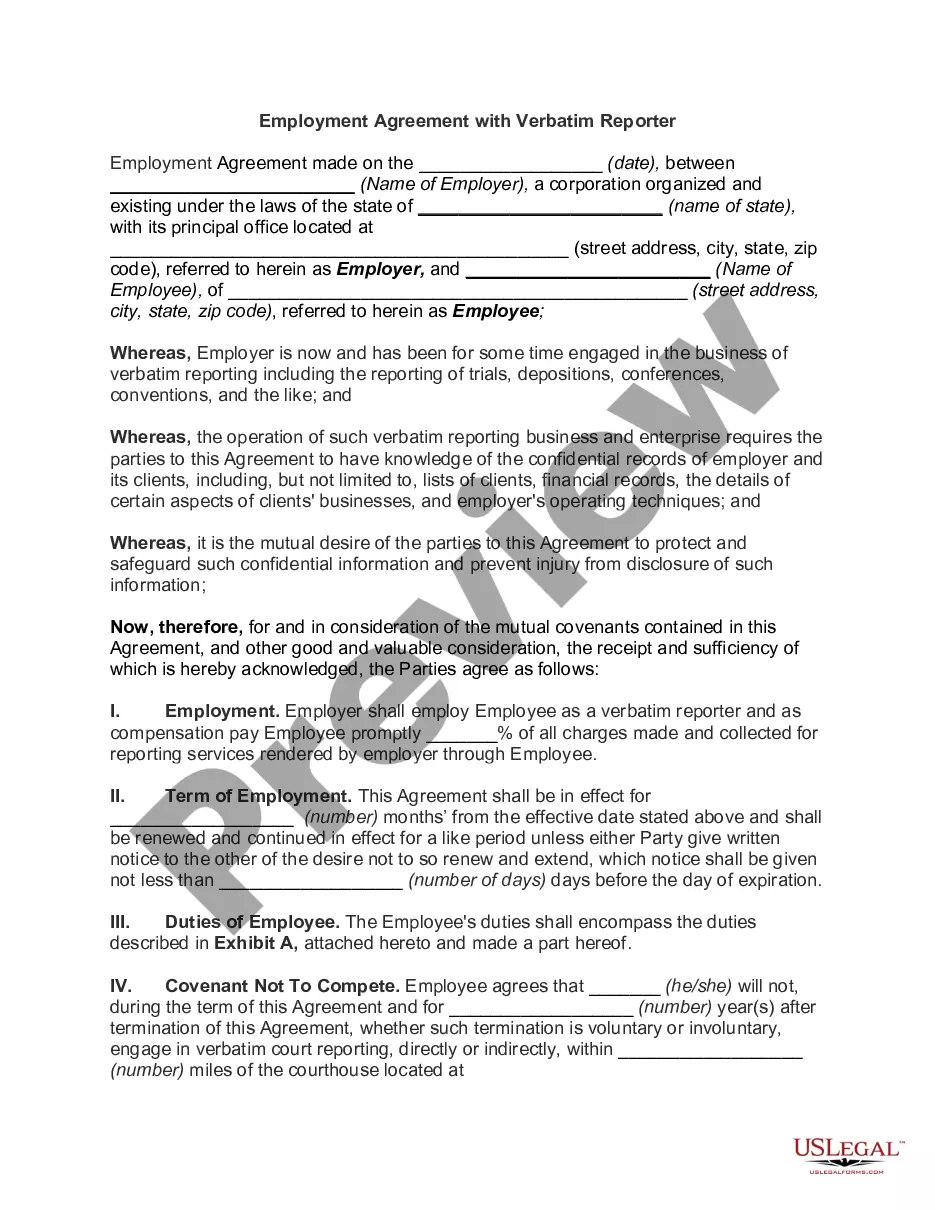
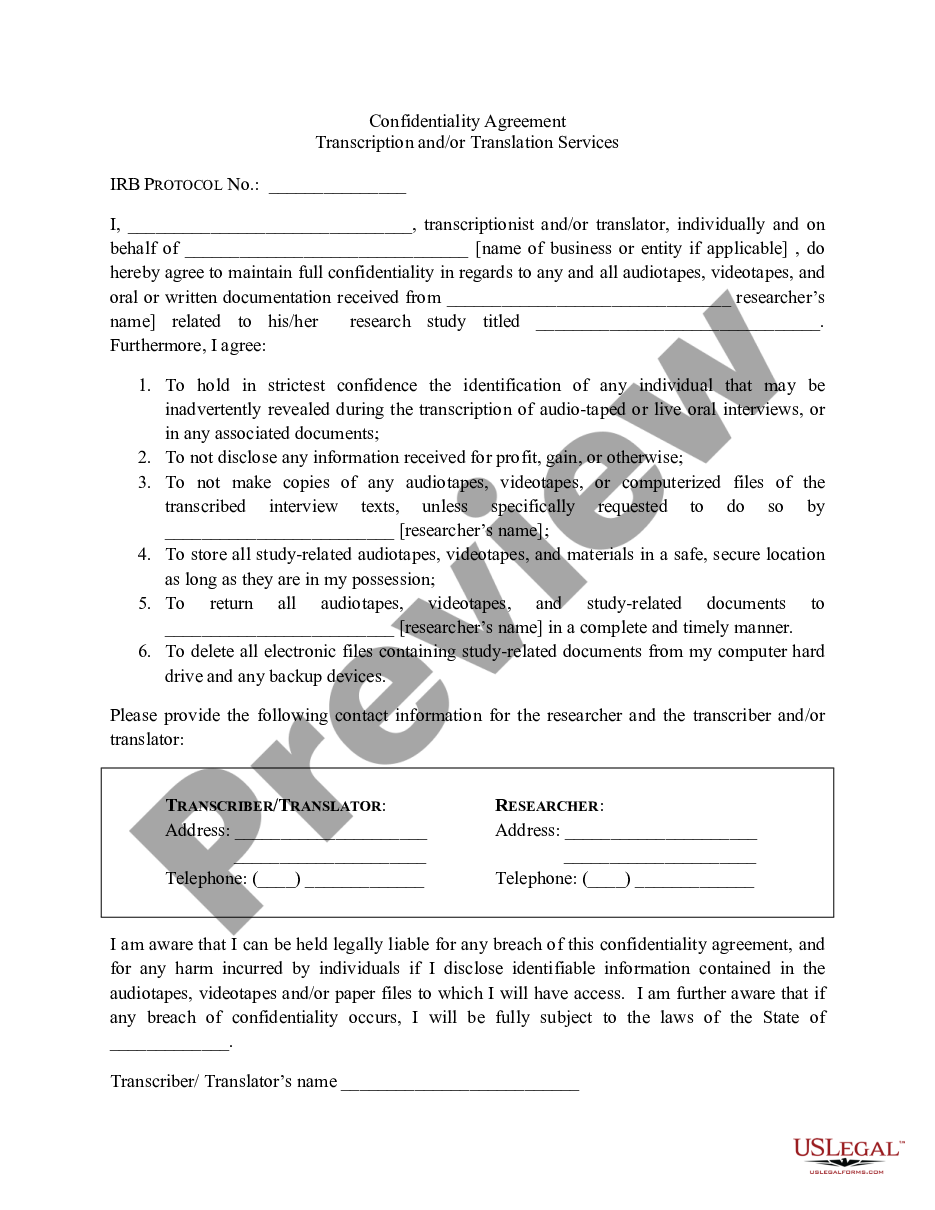
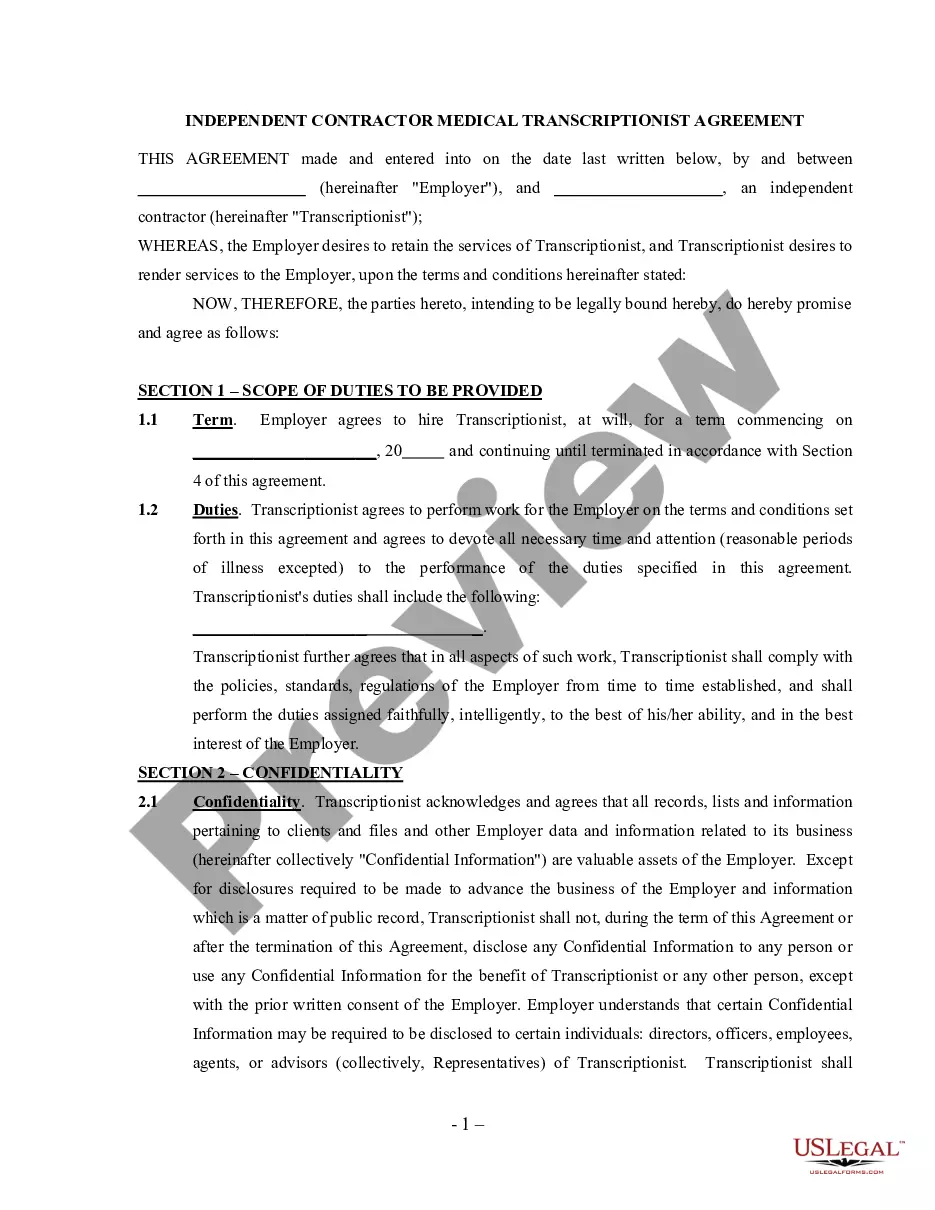
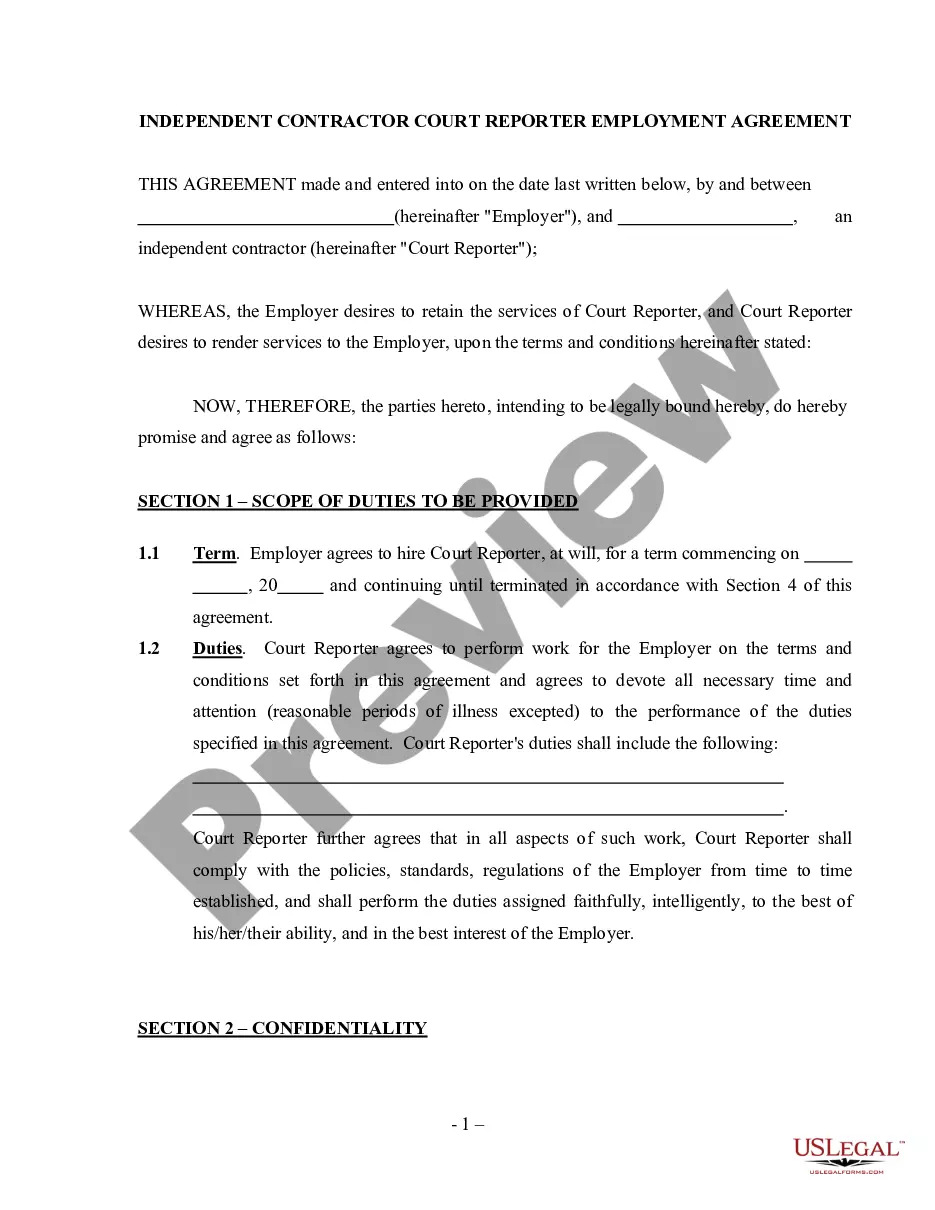
This form is a Contract with a Verbatim Reporter and Transcriber of Medical Records, specifically designed for hiring an independent contractor to transcribe medical records. The key aspect of this contract is the disclaimer from the transcriber regarding proofreading responsibilities, making it clear that the hiring company is solely accountable for any proofreading. This form helps to establish a clear agreement between both parties regarding their roles and responsibilities in the transcription process, ensuring compliance with applicable laws and protecting confidentiality.
Key components of this form
- Identification of the Contractor and Company involved in the agreement.
- Description of the transcription services to be performed.
- Compensation details, including payment amount and schedule.
- Term of the contract, including renewal conditions.
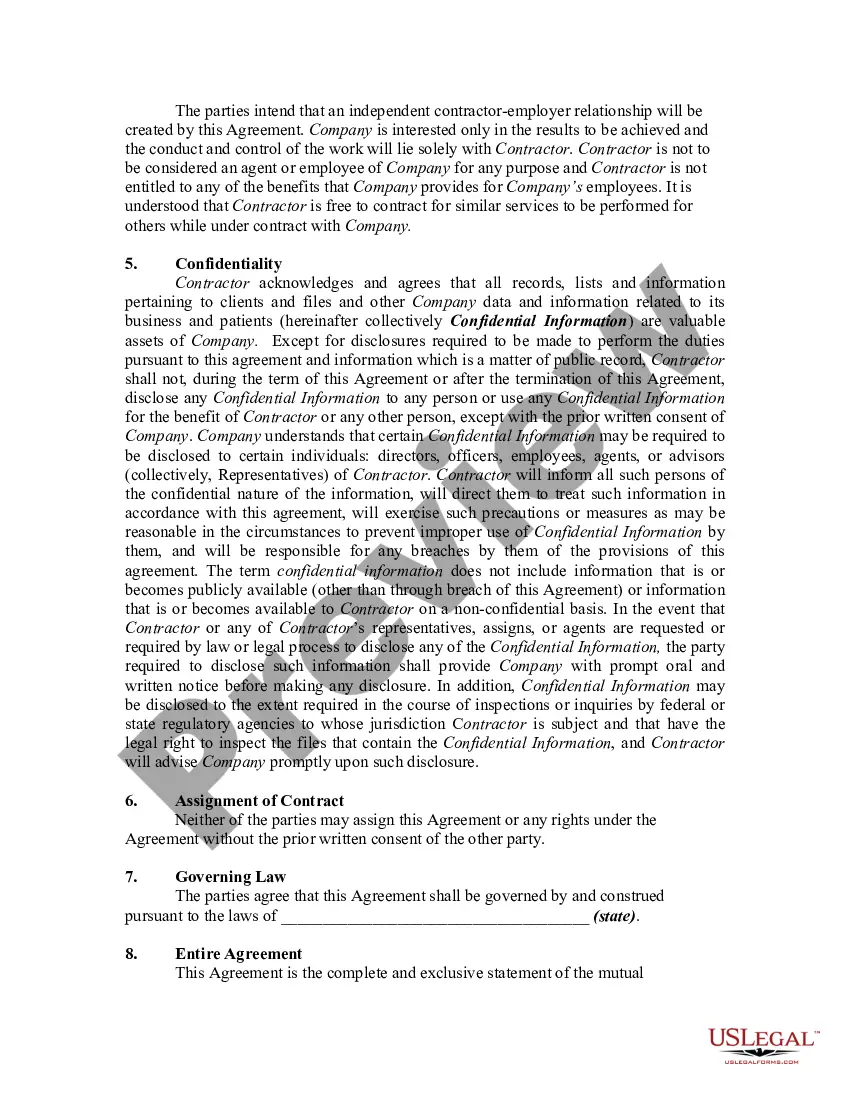
- Clauses outlining the independent contractor relationship and confidentiality obligations.
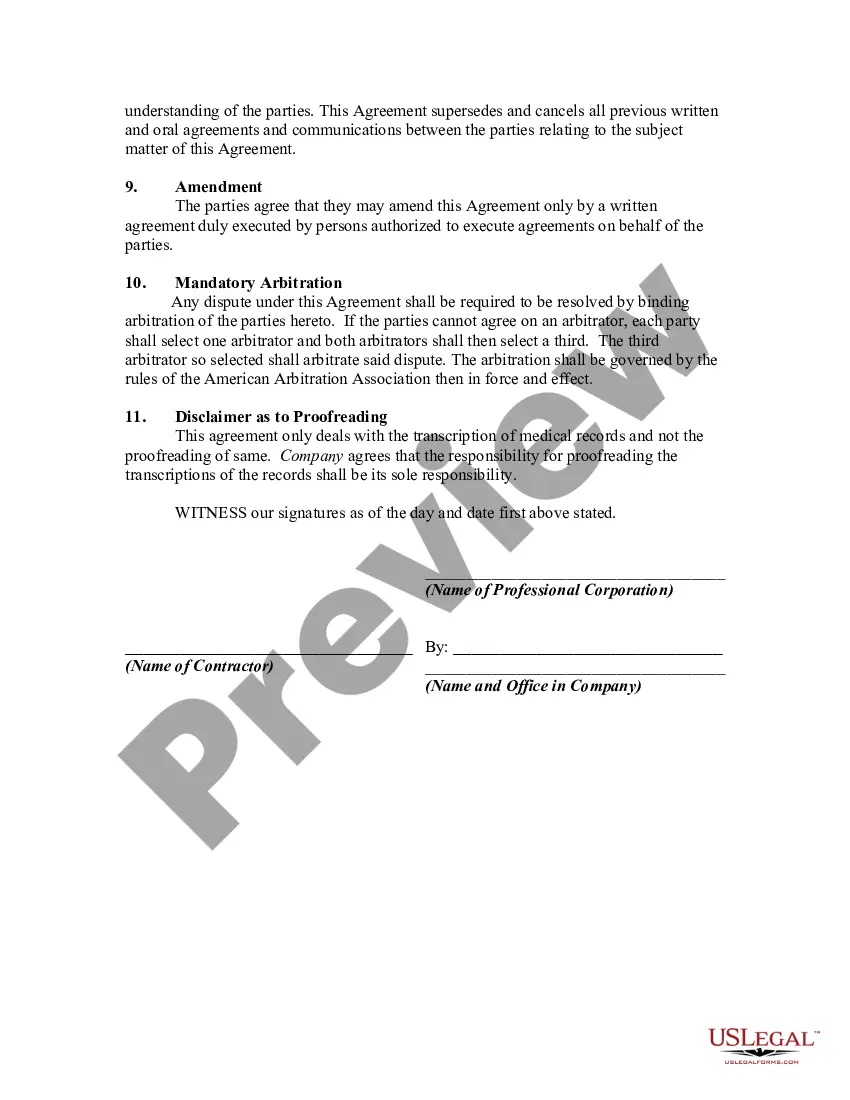
- Provisions for arbitration in case of disputes and a disclaimer regarding proofreading responsibilities.
When to use this form
This form should be used when a medical facility or professional corporation wishes to engage a transcriber for medical records without assuming proofreading responsibilities. This is particularly relevant for legal and compliance reasons, ensuring that both parties are aware of their duties and the limitations of the services being contracted.
Intended users of this form
- Medical facilities seeking to hire transcription services for medical records.
- Professional corporations needing to formalize a contract with a medical records transcriber.
- Independent contractors providing verbatim reporting and transcription services to medical organizations.
How to complete this form
- Enter the date on which the agreement is made.
- Provide the name and address of the Contractor (Transcriber).
- Specify the name and address of the Company (Professional Corporation).
- Clearly describe the transcription work and the compensation terms.
- Fill in the duration of the agreement and renewal conditions.
- Have both parties sign and date the contract to finalize the agreement.
Notarization requirements for this form
This form does not typically require notarization unless specified by local law. It is advisable to check local regulations to ensure compliance.
Get your form ready online
Our built-in tools help you complete, sign, share, and store your documents in one place.
Make edits, fill in missing information, and update formatting in US Legal Forms—just like you would in MS Word.
Download a copy, print it, send it by email, or mail it via USPS—whatever works best for your next step.
Sign and collect signatures with our SignNow integration. Send to multiple recipients, set reminders, and more. Go Premium to unlock E-Sign.
If this form requires notarization, complete it online through a secure video call—no need to meet a notary in person or wait for an appointment.
We protect your documents and personal data by following strict security and privacy standards.

Make edits, fill in missing information, and update formatting in US Legal Forms—just like you would in MS Word.

Download a copy, print it, send it by email, or mail it via USPS—whatever works best for your next step.

Sign and collect signatures with our SignNow integration. Send to multiple recipients, set reminders, and more. Go Premium to unlock E-Sign.

If this form requires notarization, complete it online through a secure video call—no need to meet a notary in person or wait for an appointment.

We protect your documents and personal data by following strict security and privacy standards.
Avoid these common issues
- Failing to accurately describe the transcription work required.
- Overlooking the confidentiality clause, which is crucial in medical settings.
- Neglecting to specify the compensation details, leading to misunderstandings.
- Not reviewing local regulations that may affect the contract's validity.
Advantages of online completion
- Convenient access to a standardized contract template.
- Editability allows users to customize sections to fit specific needs.
- Reliability, as forms are drafted by licensed attorneys to ensure compliance.
Legal use & context
- Enforcing this contract relies on mutual agreement and understanding of the terms outlined.
- The disclaimer of proofreading places the responsibility on the company to verify the transcriptions.
- Confidentiality obligations protect sensitive information from unauthorized disclosure.
Key takeaways
Key takeaways:
- The contract is specifically for hiring a transcription contractor without proofreading responsibilities.
- Confidentiality of information is critical and must be adhered to.
- Clearly outlined payment and service terms are essential for contract effectiveness.
Looking for another form?
Form popularity
FAQ
Proofreaders oftentimes hold a bachelor's degree in English or journalism. However, graduates in other disciplines also can succeed as proofreaders by demonstrating their understanding of written language. Employers frequently require candidates to take a proofreading test to show competency.
A transcriptionist is a professional typist who listens to recorded or live audio files and converts into text format what they hear. They offer their services to medical, legal, and general transcription industry.
Court transcription proofreading is a specialized field of transcription, dealing with transcript proofreading of legal documents. In the legal setting, an attorney hires a stenographer to rapidly take down notes in verbatim. The document may contain affidavits, statements and depositions among other things.
Checking for grammatical and textual errors. Filling in any words or phrases missed by the transcriptionists. Formatting document according to the client's specifications. Performing final quality check on the document.
The existence of proofreading in transcription is supported by the experimental observations that (i) mismatch insertions increase polymerase backtracking; (ii) transcript cleavage introduces mismatch discrimination; (iii) transcript cleavage rescues backtracked complexes for continued elongation (18,3941).
Proofreaders commonly earn 35 to 65 cents per double-spaced page of 25 lines. This can add up to anywhere from $35 to $65 or more per hour, depending on the type of transcript, how quickly and efficiently you read, and the turnaround speed required (regular or expedite/rush).
Medical transcription, also known as MT, is an allied health profession dealing with the process of transcribing voice-recorded medical reports that are dictated by physicians, nurses and other healthcare practitioners. Medical reports can be voice files, notes taken during a lecture, or other spoken material.
You do not need to have specific post-GCSE qualifications or a degree to become a proofreader, but studying English or other humanities subjects to A level or degree standard is highly desirable.
Proofreading is checking and rectifying the mistakes of a transcribed document. The most common errors a transcriptionist is likely to commit are omitting important dictated words, selection of the wrong word, misspelling the words, typing and grammatical errors and errors of punctuations.