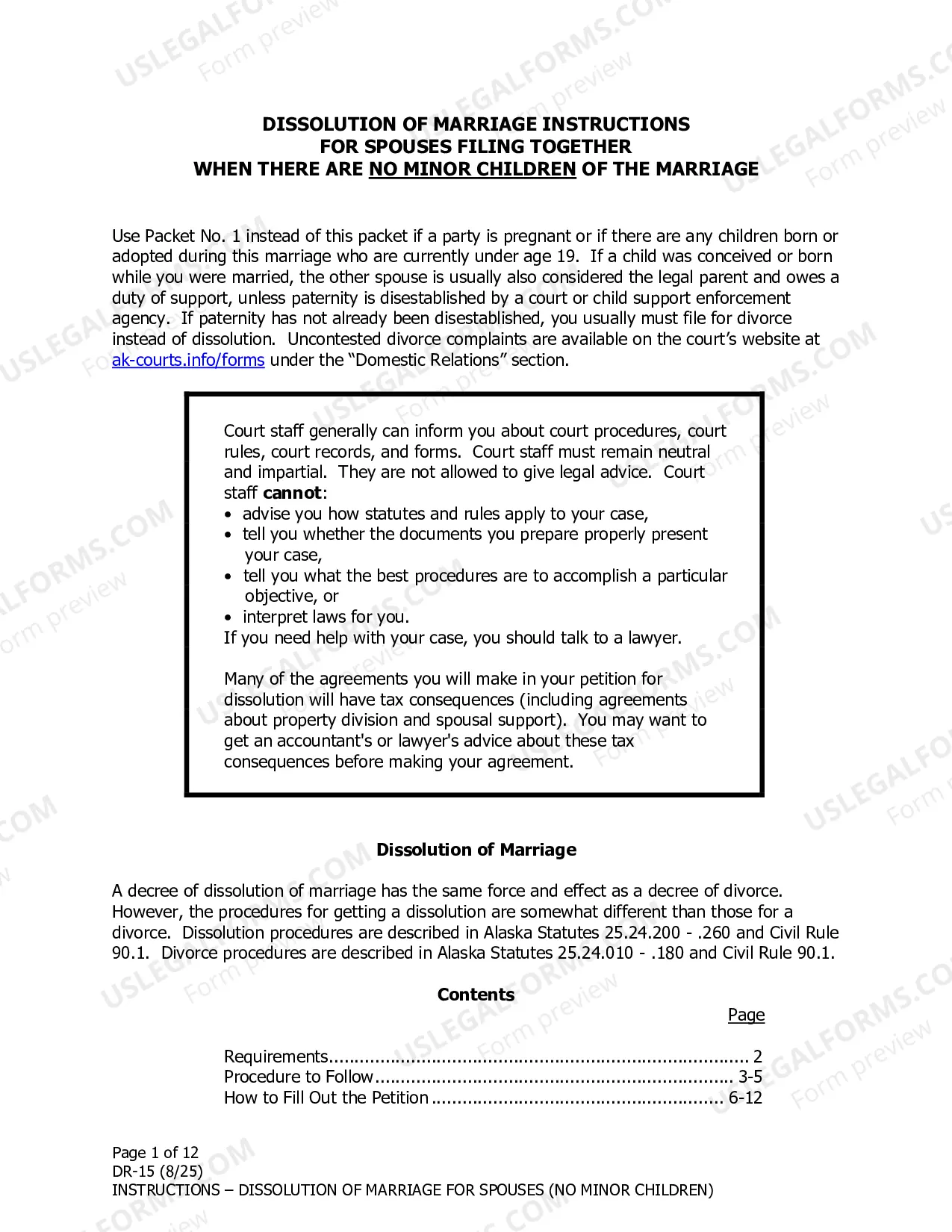
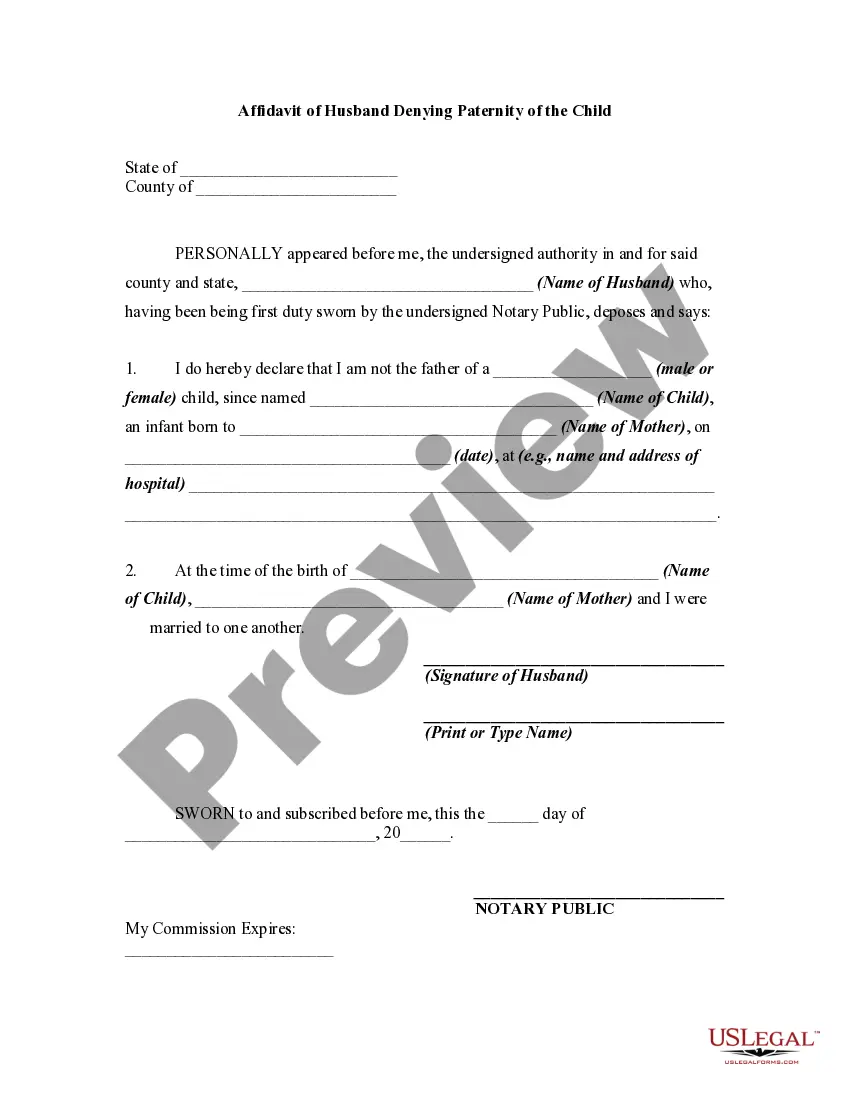
Affidavit of Husband Denying Paternity of the Child
Overview of this form
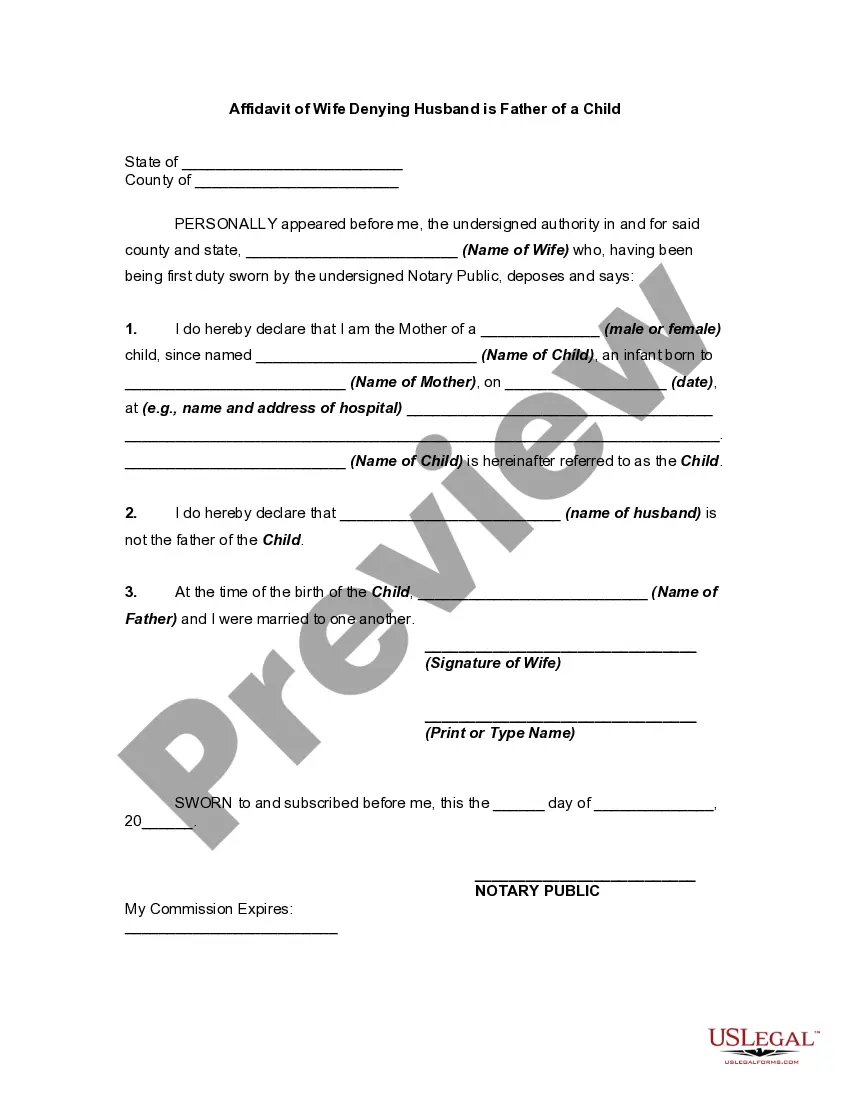
The Affidavit of Husband Denying Paternity of the Child is a legal document used by a married man to formally declare that he is not the biological father of a child born to his wife. This affidavit serves to clarify paternity disputes and differentiate it from other forms related to paternity acknowledgment or denial. It provides a legally recognized statement outlining the husband's denial of paternity, which can be important for legal proceedings and child custody matters.
Form components explained
- Name of the husband making the declaration.
- Name and date of birth of the child in question.
- Name of the mother of the child.
- Date and location of the child's birth.
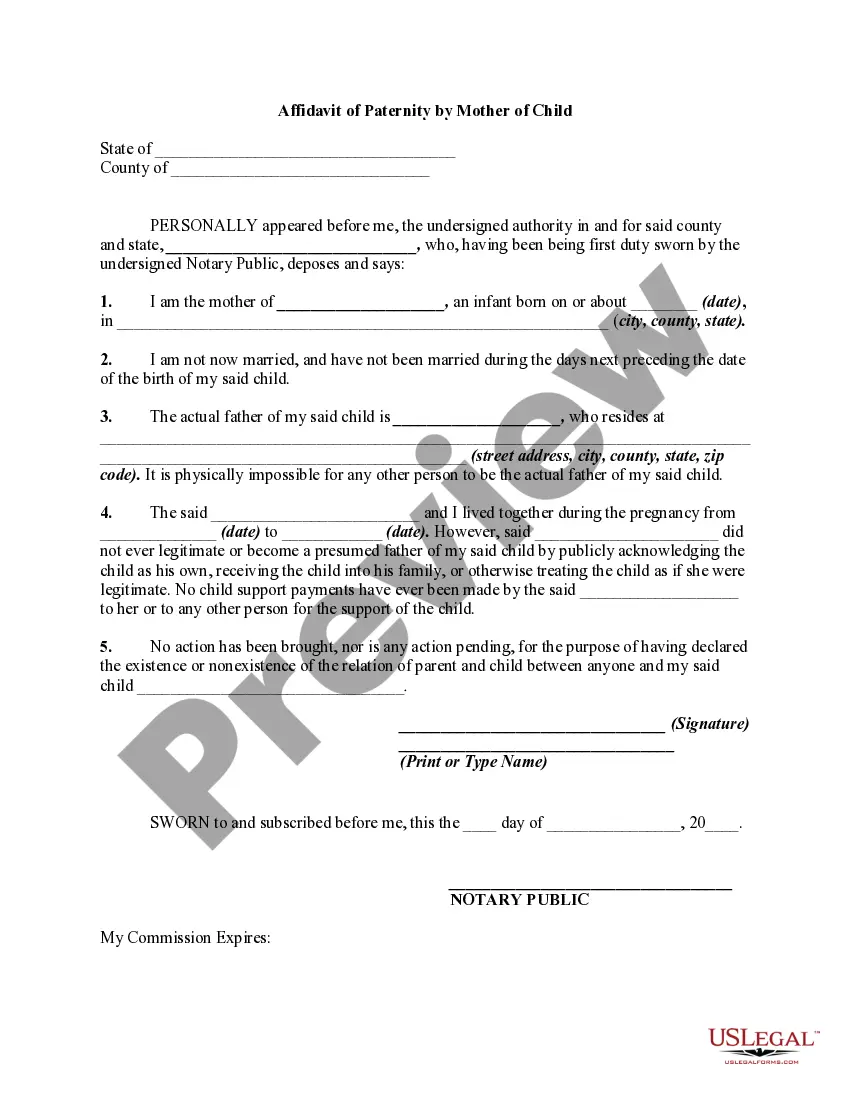
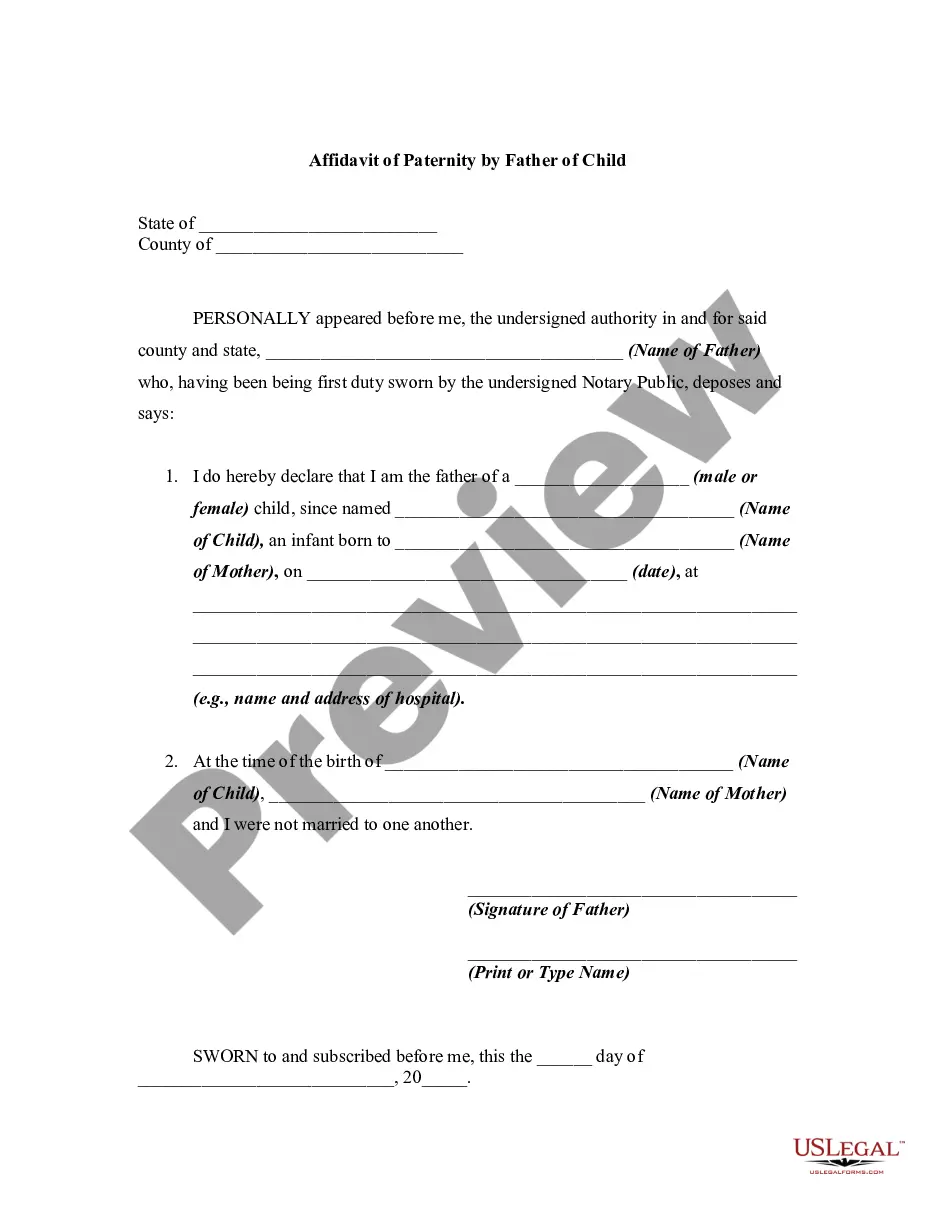
When to use this form
This affidavit is used in situations where a husband wants to legally express that he is not the father of a child born to his wife. It is essential in instances where paternity disputes arise, particularly during divorce or custody proceedings. This form can help clarify issues regarding child support and establish legal rights and responsibilities regarding the child.
Who needs this form
- Married men who wish to deny paternity of a child born to their wife.
- Individuals involved in legal proceedings regarding child custody or support.
- Parties seeking a formal declaration of non-paternity to avoid legal obligations.
How to complete this form
- Identify the husband and enter his full name at the top of the form.
- Specify the child's name and sex where indicated.
- Provide the name of the mother and the date of the child's birth.
- State the location of the child's birth, including the hospital name and address.
- Sign the form in front of a notary public, who will then notarize the affidavit.
Does this form need to be notarized?
Yes, this form must be notarized to be legally valid. The notarization process provides assurance that the affidavit was signed in the presence of an authorized notary public, confirming the identities of the signatories. US Legal Forms offers integrated online notarization services for your convenience, allowing for secure video calls and legal equivalence without the need for travel.
Get your form ready online
Our built-in tools help you complete, sign, share, and store your documents in one place.
Make edits, fill in missing information, and update formatting in US Legal Forms—just like you would in MS Word.
Download a copy, print it, send it by email, or mail it via USPS—whatever works best for your next step.
Sign and collect signatures with our SignNow integration. Send to multiple recipients, set reminders, and more. Go Premium to unlock E-Sign.
If this form requires notarization, complete it online through a secure video call—no need to meet a notary in person or wait for an appointment.
We protect your documents and personal data by following strict security and privacy standards.

Make edits, fill in missing information, and update formatting in US Legal Forms—just like you would in MS Word.

Download a copy, print it, send it by email, or mail it via USPS—whatever works best for your next step.

Sign and collect signatures with our SignNow integration. Send to multiple recipients, set reminders, and more. Go Premium to unlock E-Sign.

If this form requires notarization, complete it online through a secure video call—no need to meet a notary in person or wait for an appointment.

We protect your documents and personal data by following strict security and privacy standards.
Typical mistakes to avoid
- Failing to provide accurate names or dates, which can invalidate the affidavit.
- Not signing in the presence of a notary public, rendering the document unenforceable.
- Incorrectly assuming this form negates legal fatherhood without following appropriate legal procedures.
Advantages of online completion
- Convenient access to legal documents from home without needing a lawyer.
- Easy editing capabilities to customize the form to your specific situation.
- Instant downloads allowing for immediate use after completion.
Key takeaways
- The affidavit is essential for legally denying paternity and clarifying family responsibilities.
- It must be completed accurately and notarized to ensure legal standing.
- This form provides a clear declaration for use in any related legal matters regarding custody or support.
Looking for another form?
Form popularity
FAQ
By law, the husband is the legal father of any child born to the wife during the marriage.If the husband is not the genetic father of the child (and he does not want to be the legal father), paternity of the child must be established before you can finish your divorce.
Most paternity test labs report that about 1/3 of their paternity tests have a 'negative' result. Of all the possible fathers who take a paternity test, about 32% are not the biological father.
The birth father can voluntarily acknowledge paternity in two ways: He can be present at the birth of your child and sign a Declaration of Paternity.If he is not present at the birth, he can complete an affidavit of paternity anytime between the birth of the child up until the child turns 18.
Knowingly making a false statement on a public document is a criminal offence, including naming someone who is not the biological father. As of 2008, no individual has been prosecuted in a case involving paternity fraud. A mother is permitted to not state the name of the biological father if she does not know it.
An Affidavit of Admission of Paternity is a document wherein the person signing the affidavit acknowledges that he is the father of an illegitimate child. An illegitimate child is a child whose parents are not legally married to each other.
A non-biological father is a parent who is not related to the child by blood. Despite not being biologically related to the child, a non-biological parent can still obtain legal parental status by formally adopting the child.
By signing this Affidavit of Nonpaternity, both the husband (presumed father) and wife are stating that the presumed father is not the legal father of the child named on this form.a court determines that someone else is the father of the child.
Signing a paternity affidavit allows a father to put his name on the child's birth certificate and, if both parents agree, give the child his surname. A paternity affidavit makes a man who signs it the legal father of the child.
If a man fathers another woman's child while he is married, his wife is not the legal mother of that child. As the legal father of the children born during his marriage, a husband may have custody and parenting time. He may also be responsible for providing child support and health insurance.