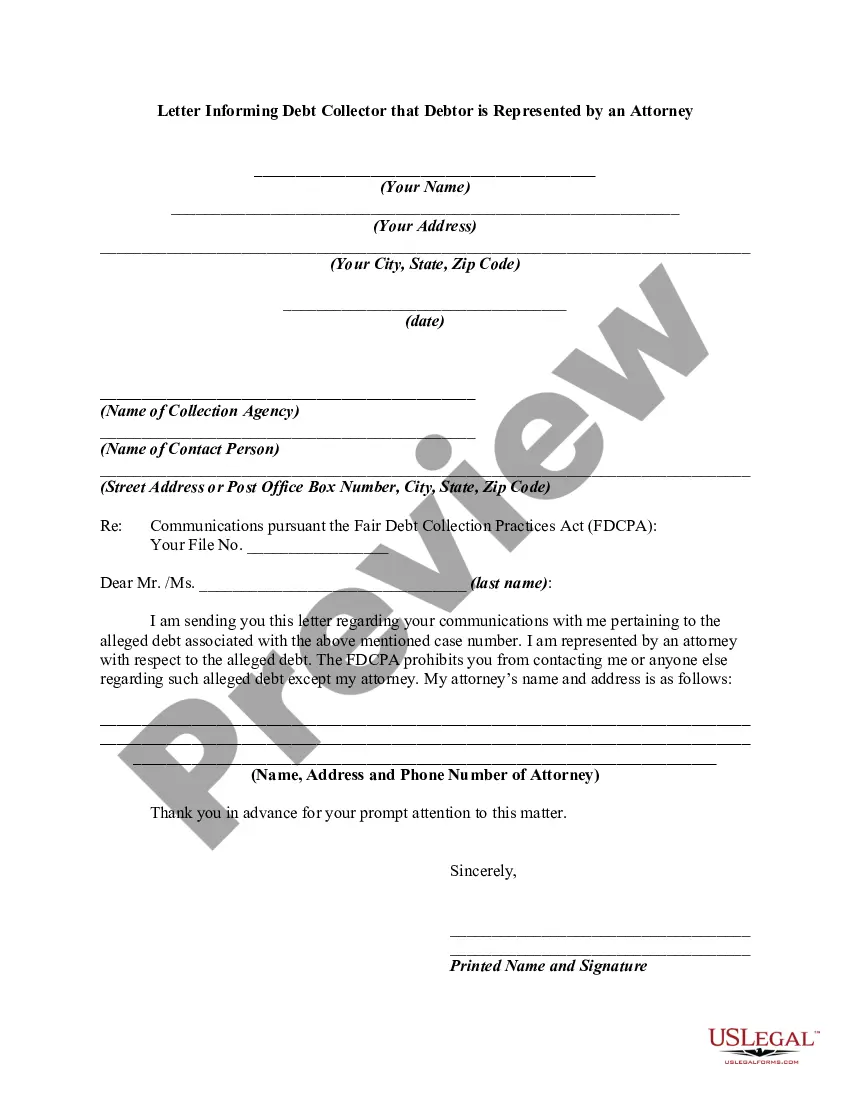
Letter Informing Debt Collector that Debtor is Represented by an Attorney
About this form
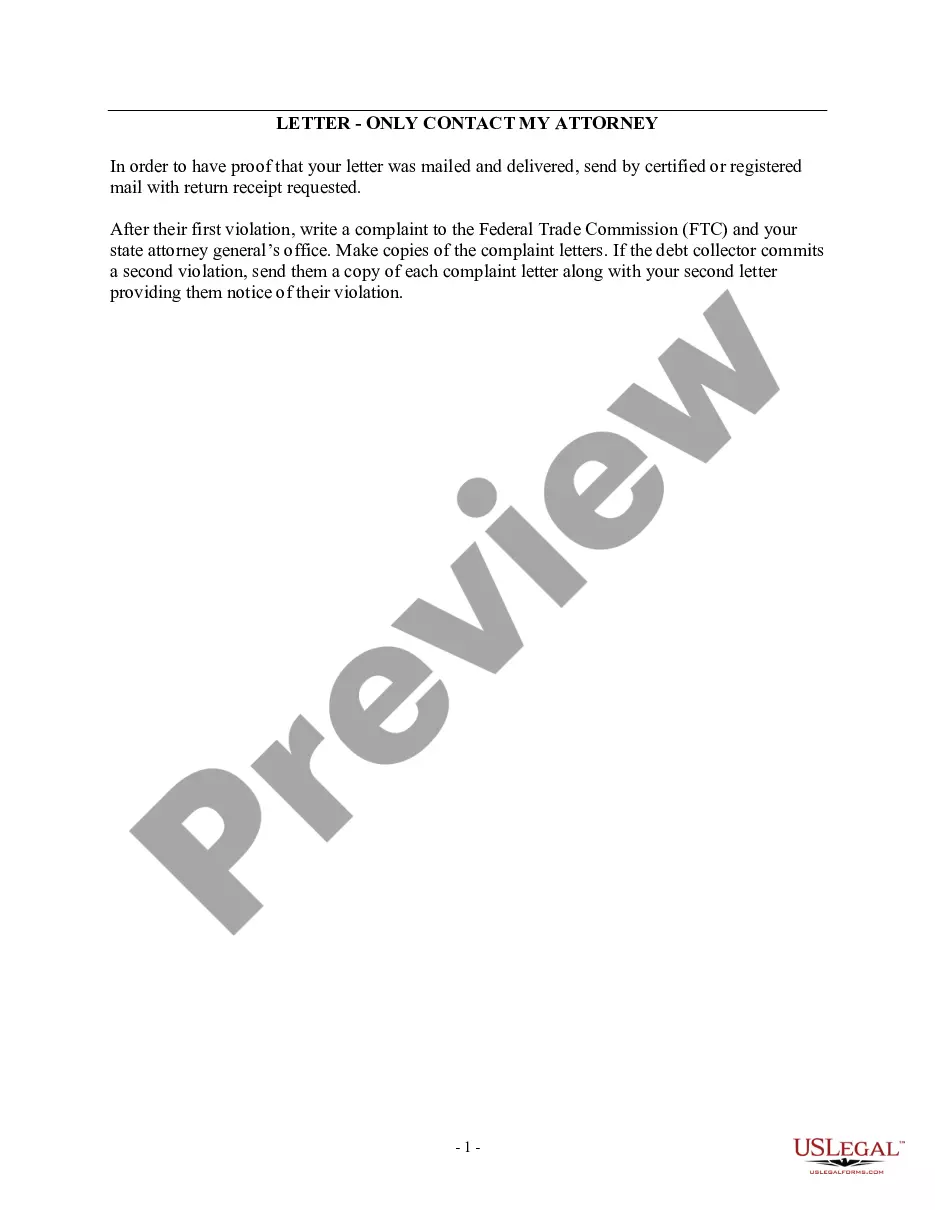
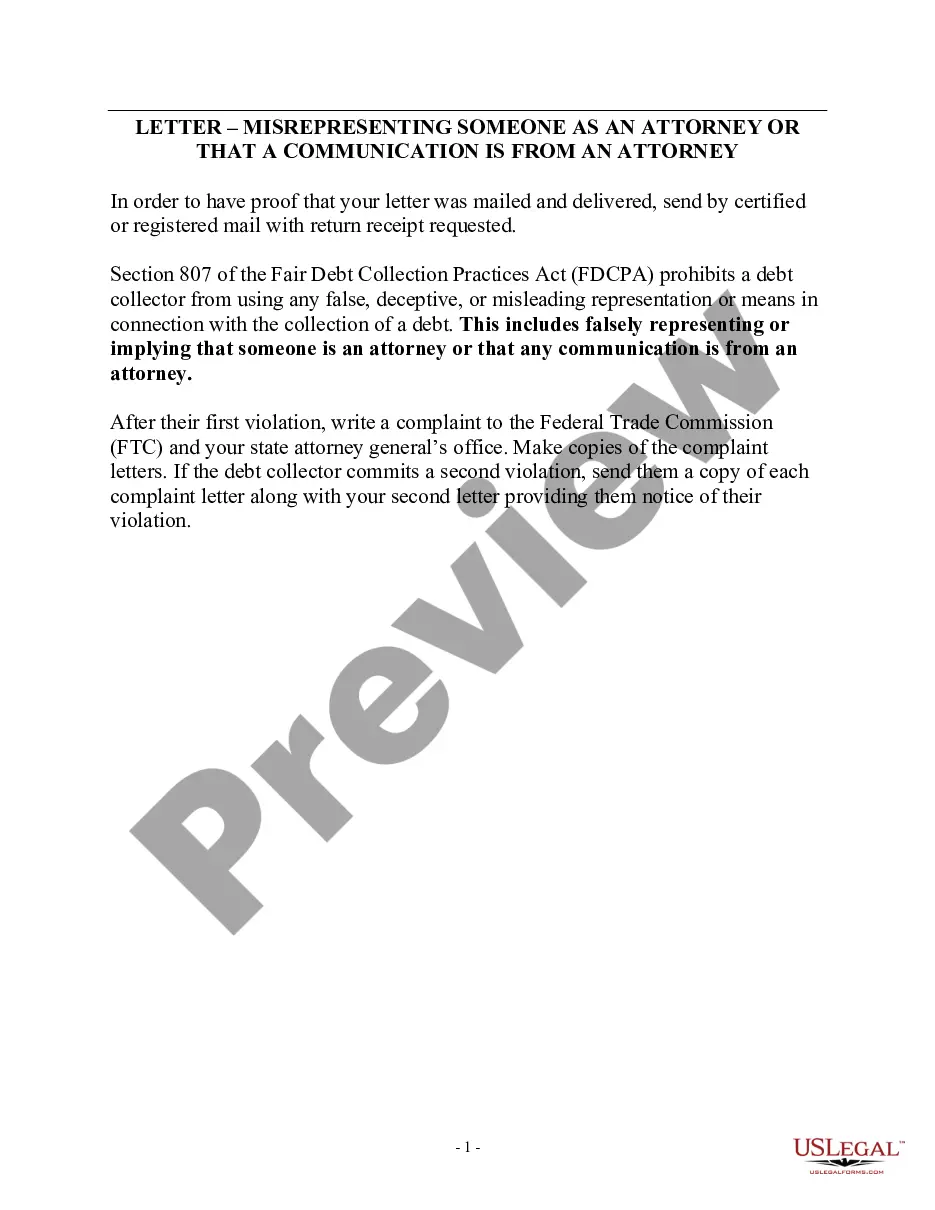
The Letter Informing Debt Collector that Debtor is Represented by an Attorney is a legal document that notifies debt collectors of the debtor's representation by an attorney. This form serves to ensure that all future communications regarding the debt be directed to the attorney rather than the debtor, thus protecting the debtor from potential harassment. This form is specifically designed for those who wish to invoke their rights under the Fair Debt Collection Practices Act (FDCPA).
Form components explained
- Debtor's name and address
- Date of the letter
- Name and contact information for the collection agency
- Reference to the FDCPA and details of the alleged debt
- Name and contact details of the debtor's attorney
- Debtor's printed name and signature
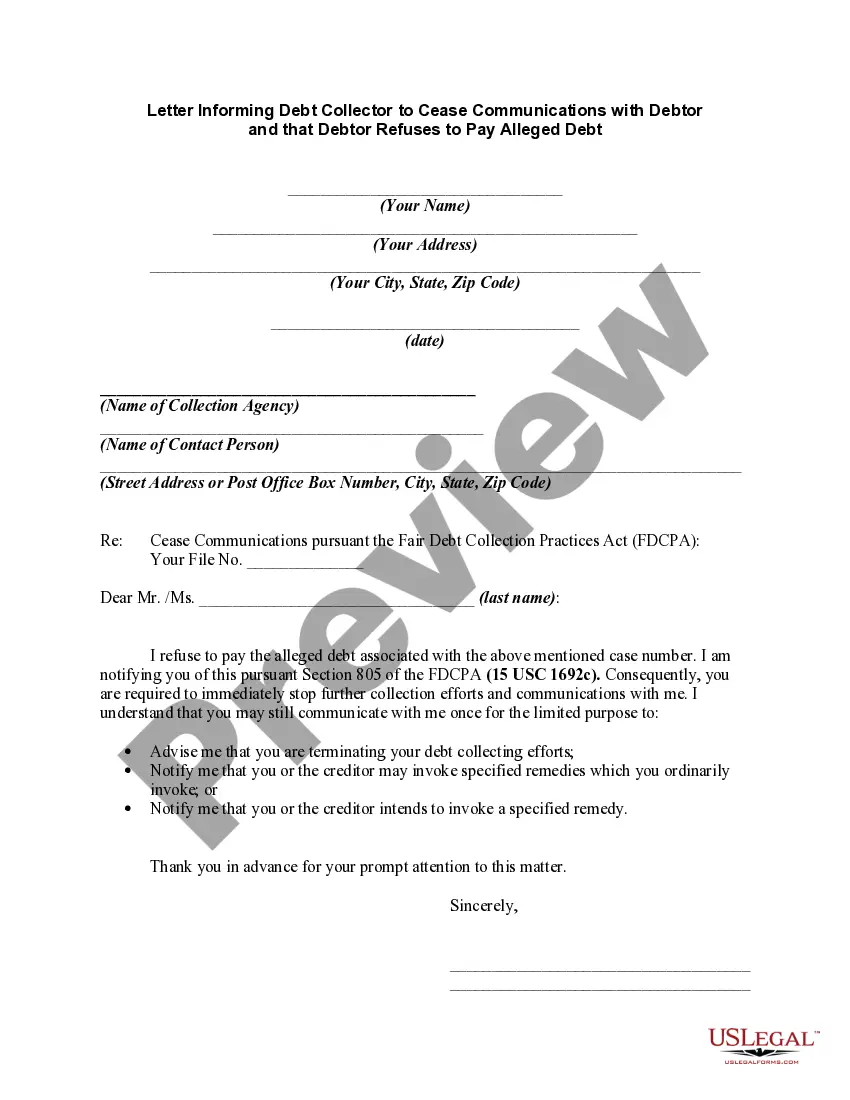
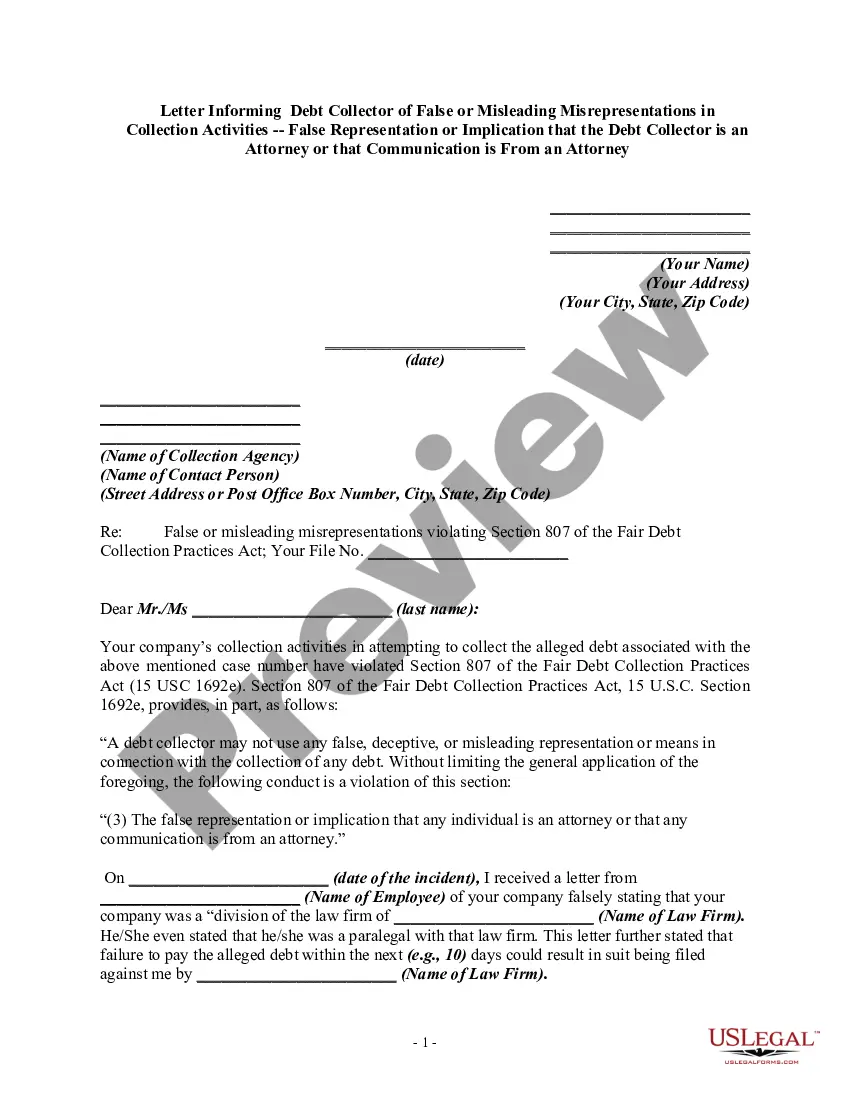
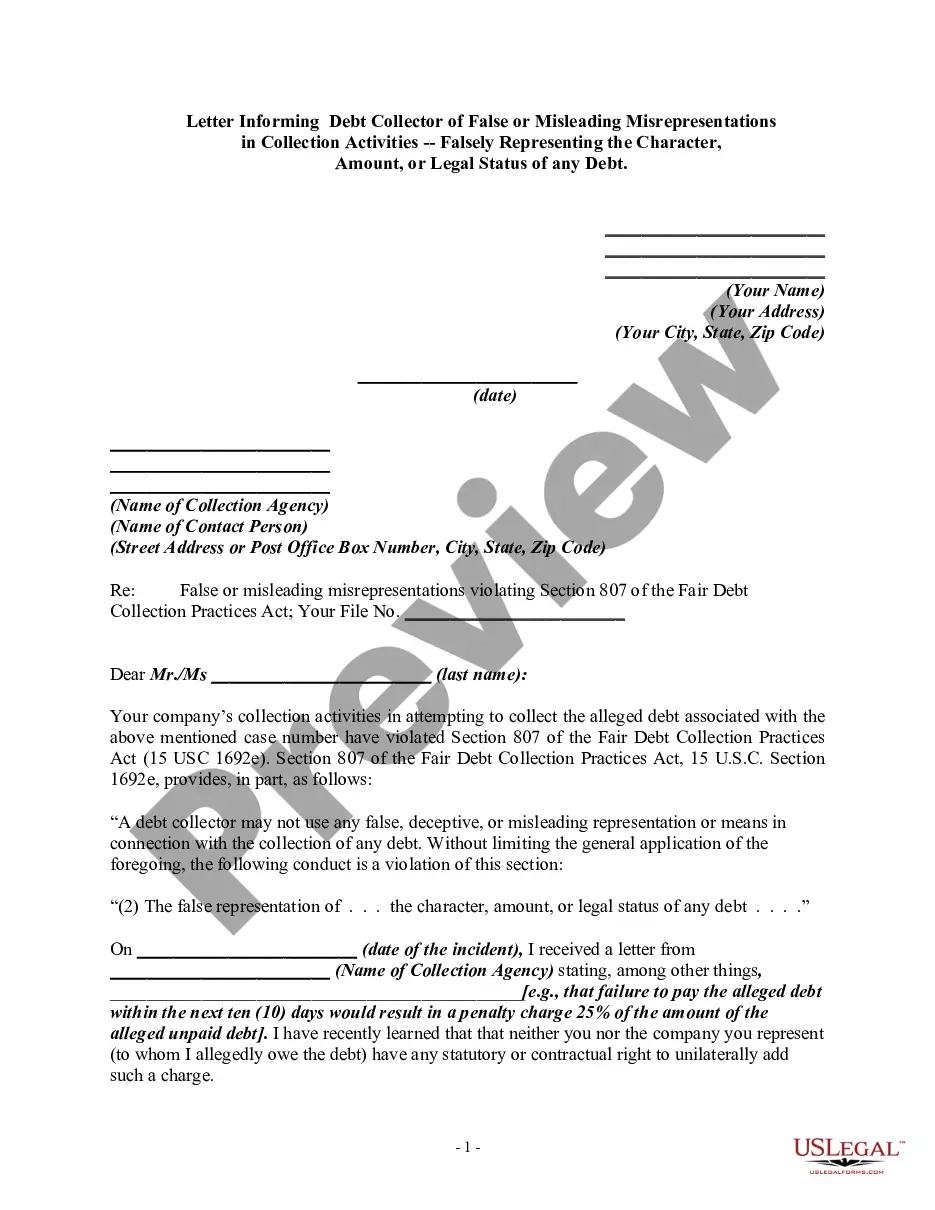
Situations where this form applies
This form should be used when a debtor has retained an attorney to address an alleged debt. It is particularly useful if the debtor wishes to stop direct communications from the debt collector and to ensure that future interactions regarding the debt go through their attorney. This can help to mitigate stress and ensure that the debtor's legal rights are upheld.
Who should use this form
- Individuals who are being contacted by debt collectors
- Debtors who have hired an attorney for debt-related issues
- People seeking to protect themselves from harassment by debt collectors
How to complete this form
- Enter your name and address at the top of the letter.
- Fill in the date when the letter is being sent.
- Provide the name of the collection agency along with a contact person's name.
- Clearly state that you are represented by an attorney and include the attorney's name and contact details.
- Sign and print your name at the bottom of the letter.
Does this document require notarization?
This form does not typically require notarization unless specified by local law. It is recommended to check if any additional legal requirements are necessary in your state.
Get your form ready online
Our built-in tools help you complete, sign, share, and store your documents in one place.
Make edits, fill in missing information, and update formatting in US Legal Forms—just like you would in MS Word.
Download a copy, print it, send it by email, or mail it via USPS—whatever works best for your next step.
Sign and collect signatures with our SignNow integration. Send to multiple recipients, set reminders, and more. Go Premium to unlock E-Sign.
If this form requires notarization, complete it online through a secure video call—no need to meet a notary in person or wait for an appointment.
We protect your documents and personal data by following strict security and privacy standards.

Make edits, fill in missing information, and update formatting in US Legal Forms—just like you would in MS Word.

Download a copy, print it, send it by email, or mail it via USPS—whatever works best for your next step.

Sign and collect signatures with our SignNow integration. Send to multiple recipients, set reminders, and more. Go Premium to unlock E-Sign.

If this form requires notarization, complete it online through a secure video call—no need to meet a notary in person or wait for an appointment.

We protect your documents and personal data by following strict security and privacy standards.
Common mistakes
- Failing to provide accurate contact information for the attorney.
- Not clearly stating that you are represented by an attorney.
- Omitting the date when sending the letter.
- Not signing the letter before sending it.
Benefits of using this form online
- Convenience of downloading the form from anywhere at any time.
- Editable template allows for personalization based on individual circumstances.
- Access to forms created by licensed attorneys ensures reliability and legal compliance.
Legal use & context
- The form is legally recognized to inform debt collectors of representation.
- Compliance with the FDCPA is crucial for ensuring the rights of the debtor.
- Failure to comply with this notification can leave the debt collector liable for violations of the FDCPA.
Main things to remember
- This form is essential for debtors who have hired an attorney.
- Properly notifying the debt collector can protect against harassment.
- Ensure that all information is accurate before submission.
Looking for another form?


Form popularity
FAQ
A term used in accounting, 'creditor' refers to the party that has delivered a product, service or loan, and is owed money by one or more debtors. A debtor is the opposite of a creditor it refers to the person or entity who owes money.
The amount owed to a business will fluctuate alongside the amount it owes, affecting the assets and liabilities on your balance sheet. Customers who don't pay for products or services up front are debtors to your business, which serves as the creditor in this instance.
In short, a creditor is someone who lends money while a debtor is someone who owes money to a creditor. Ensuring the smooth flow of working capital is done by a company keeping track of the time lag between the receipt of payment from the debtors as well as payment of money to the creditors.
A debtor is a term used in accounting to describe the opposite of a creditor an individual that owes money, or who is in debt to an organisation or person. For example, a debtor is somebody who has taken out a loan at a bank for a new car. Examples of debtors: Trade debtors money owed from customers. Staff loans.