Complaint by Debtor for Harassing and Malicious Telephone Calls Regarding Debt, Invasion of Right to Privacy and Violation of the Federal Fair Debt Collection Practices Act
What is this form?
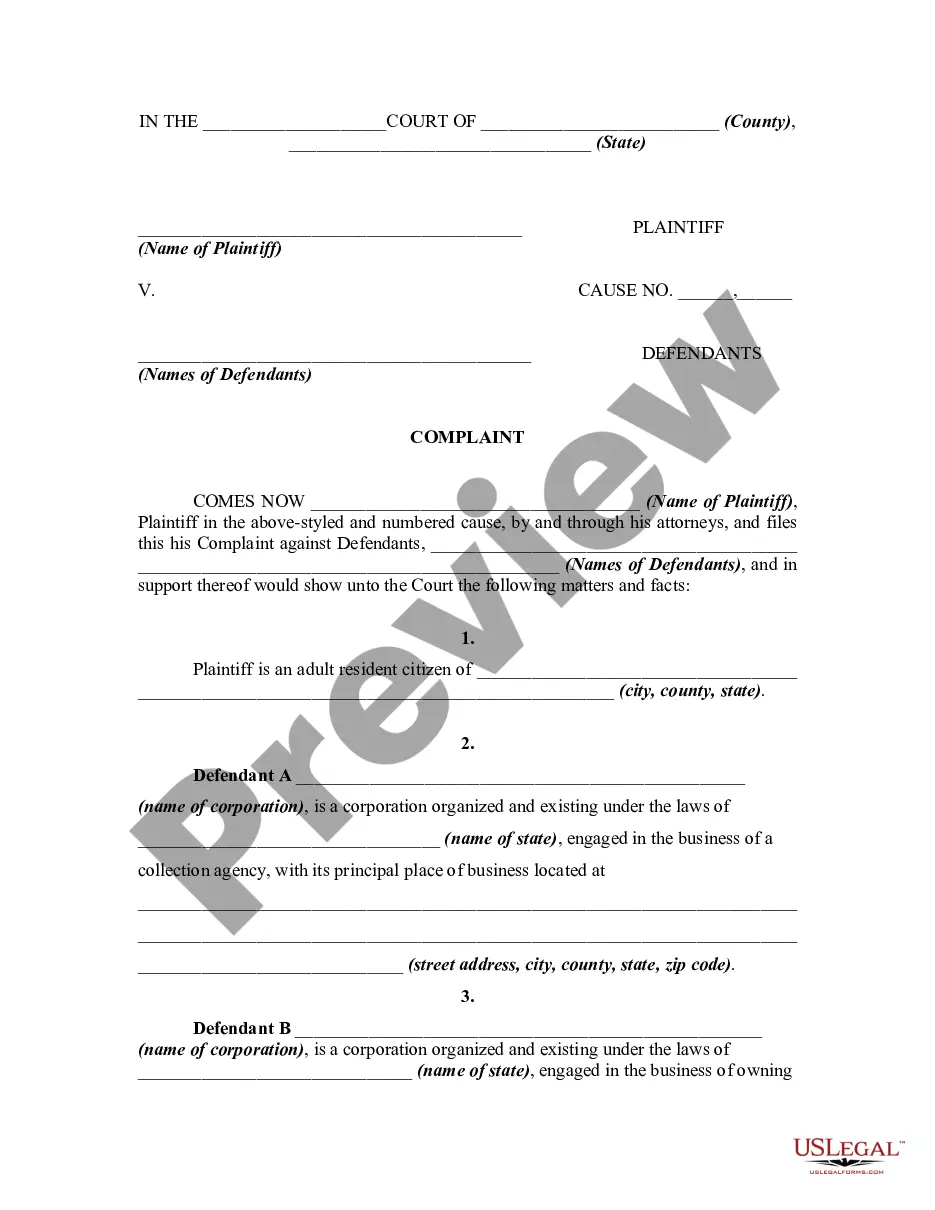
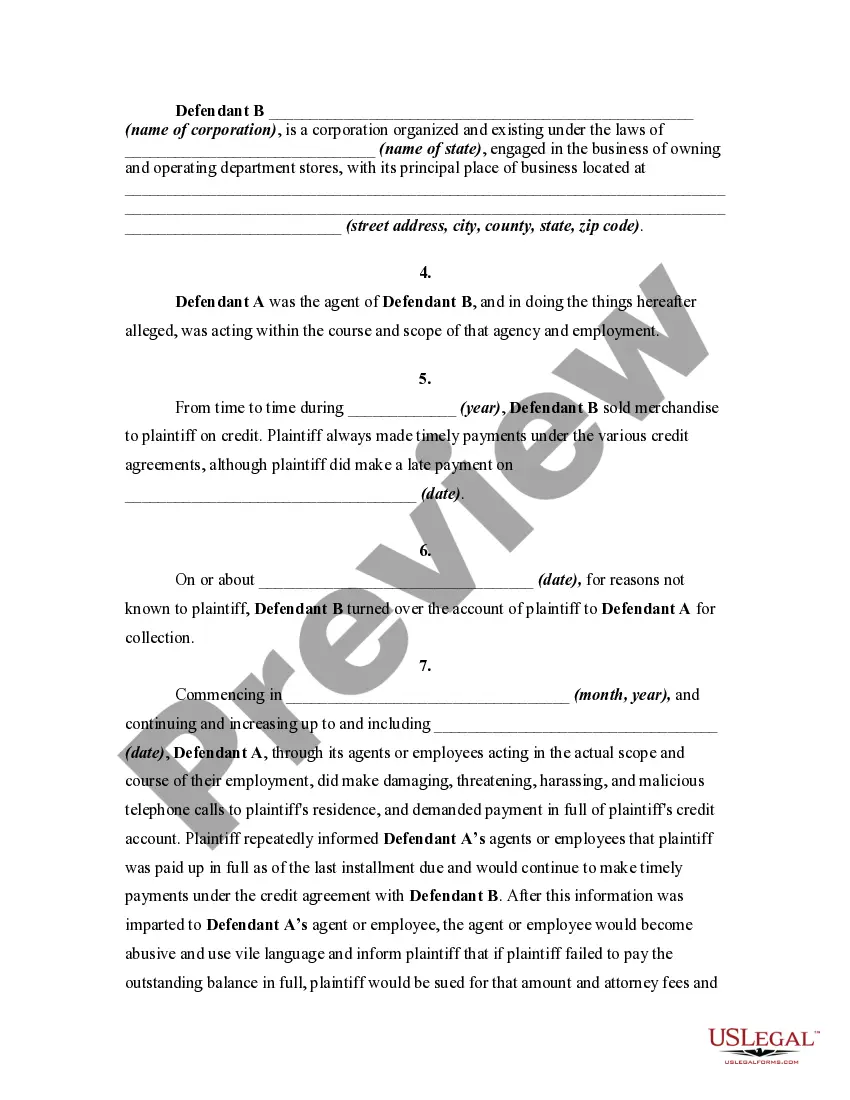
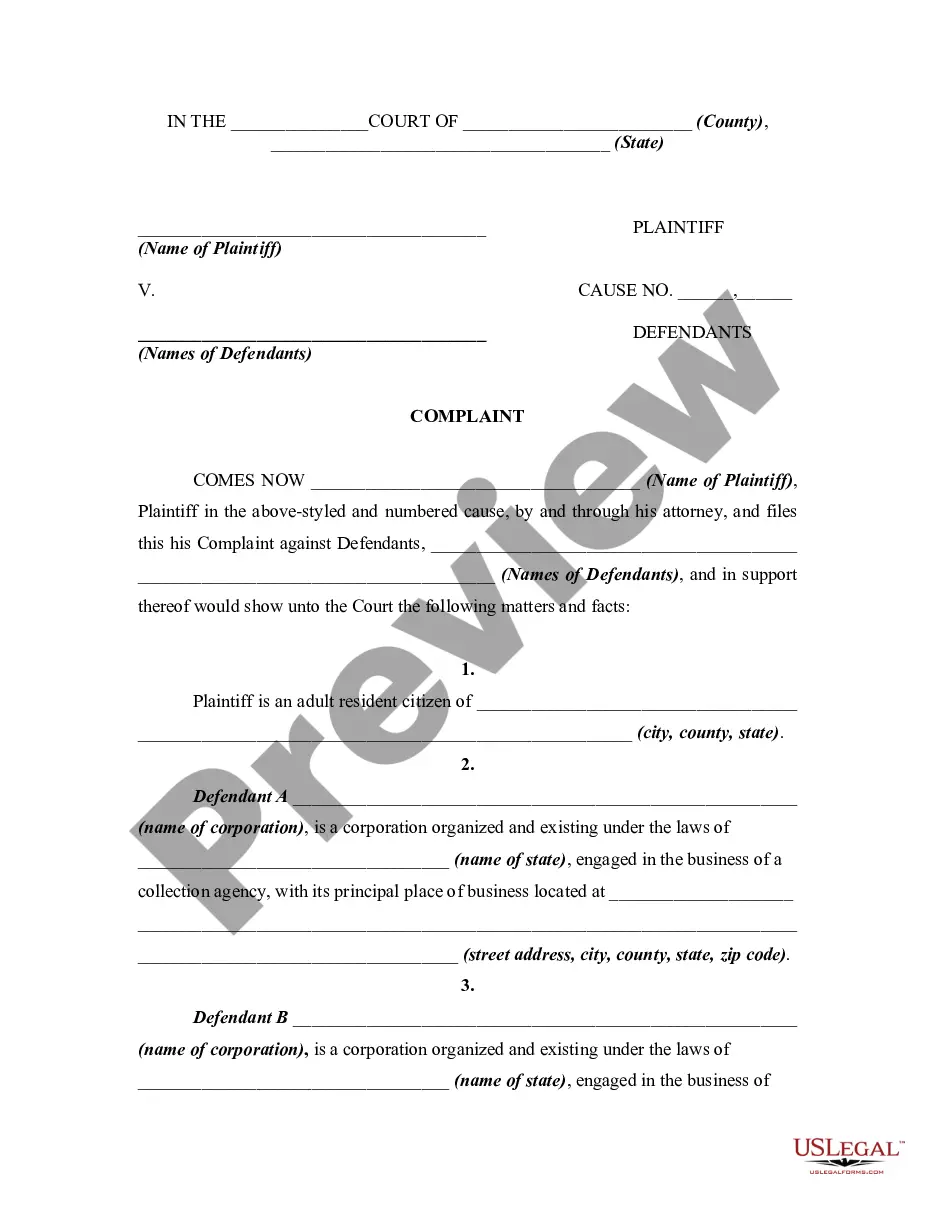
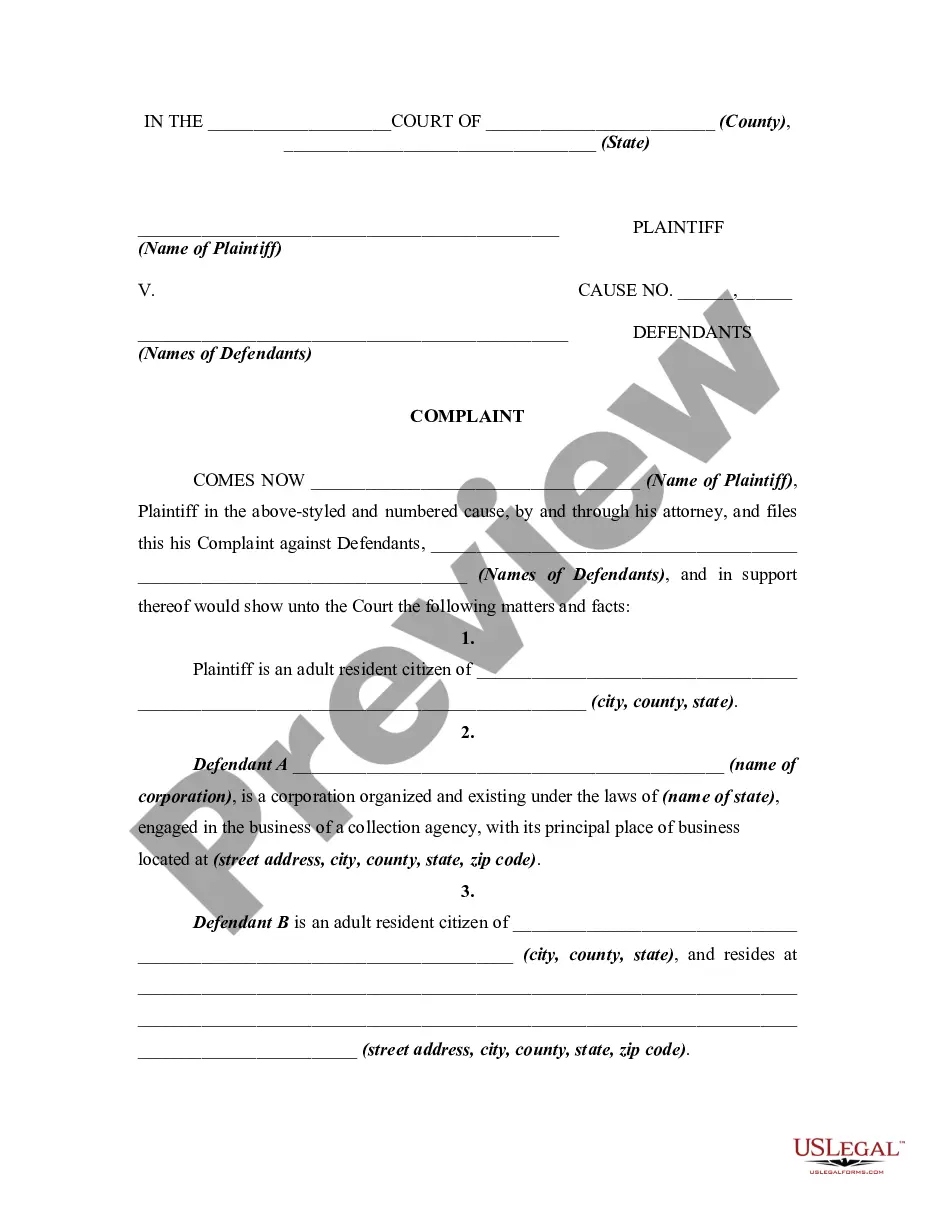
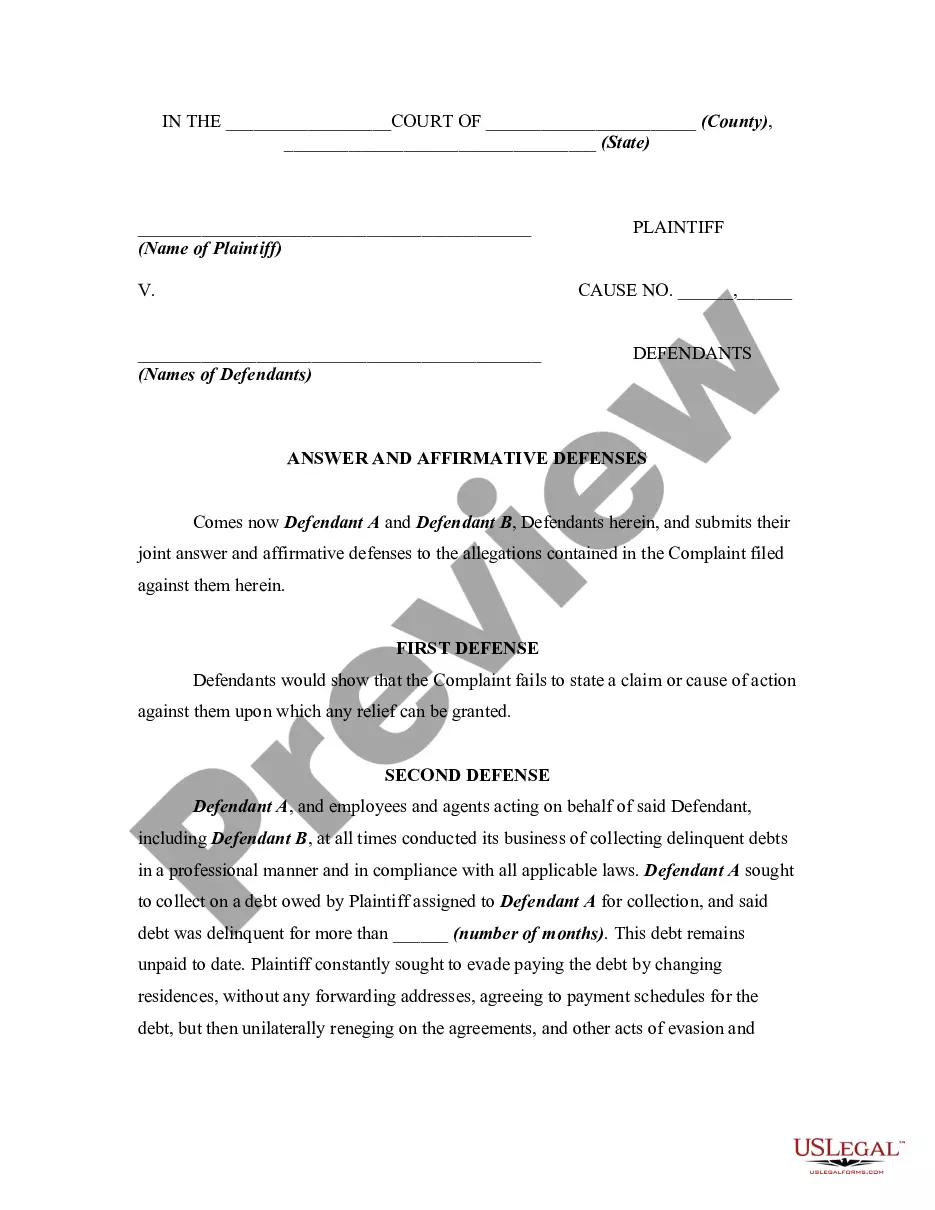
The Complaint by Debtor for Harassing and Malicious Telephone Calls Regarding Debt is a legal document used by consumers to report violations of the Fair Debt Collection Practices Act (FDCPA). This form allows debtors to outline instances of harassment by debt collectors, ensuring their rights to privacy are respected. Unlike other general complaint forms, this one specifically addresses abusive telephone practices related to debt collection and seeks restitution for damages incurred from such actions.
Main sections of this form
- Identification of the plaintiff and defendants involved in the case.
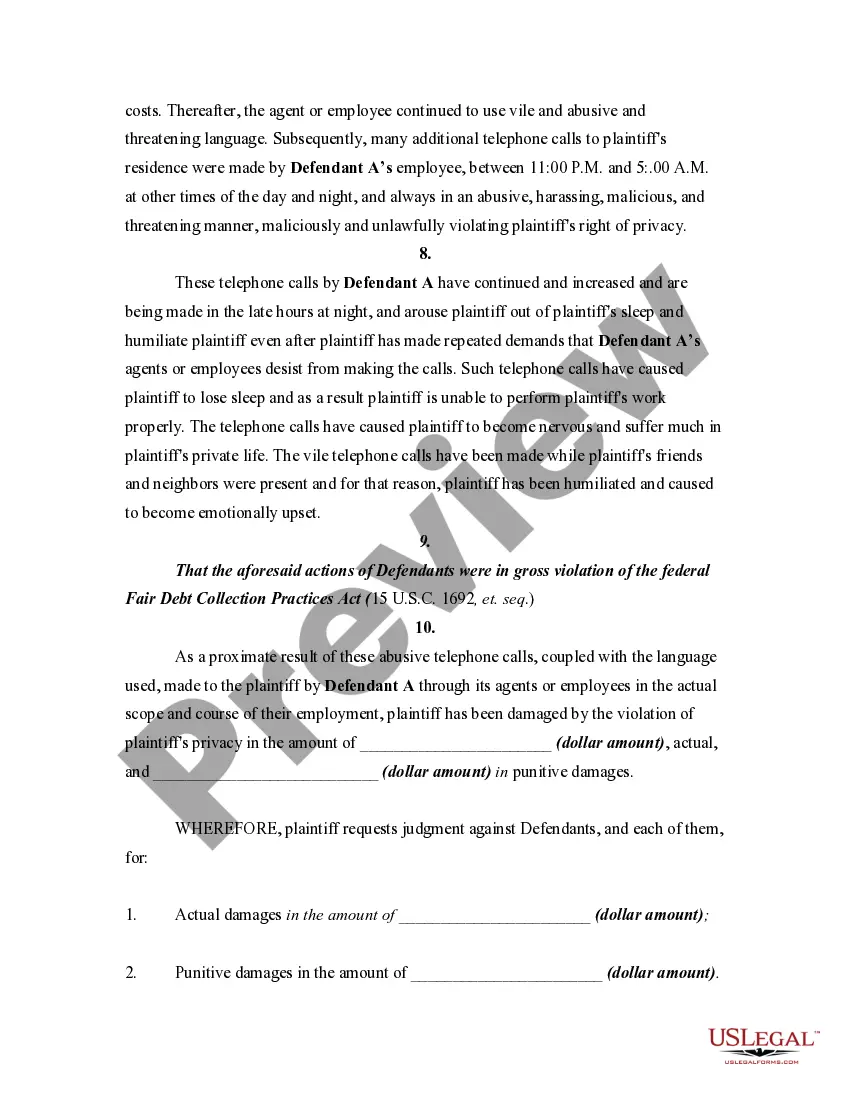
- Detailed account of the alleged harassment, including dates and specific incidents.
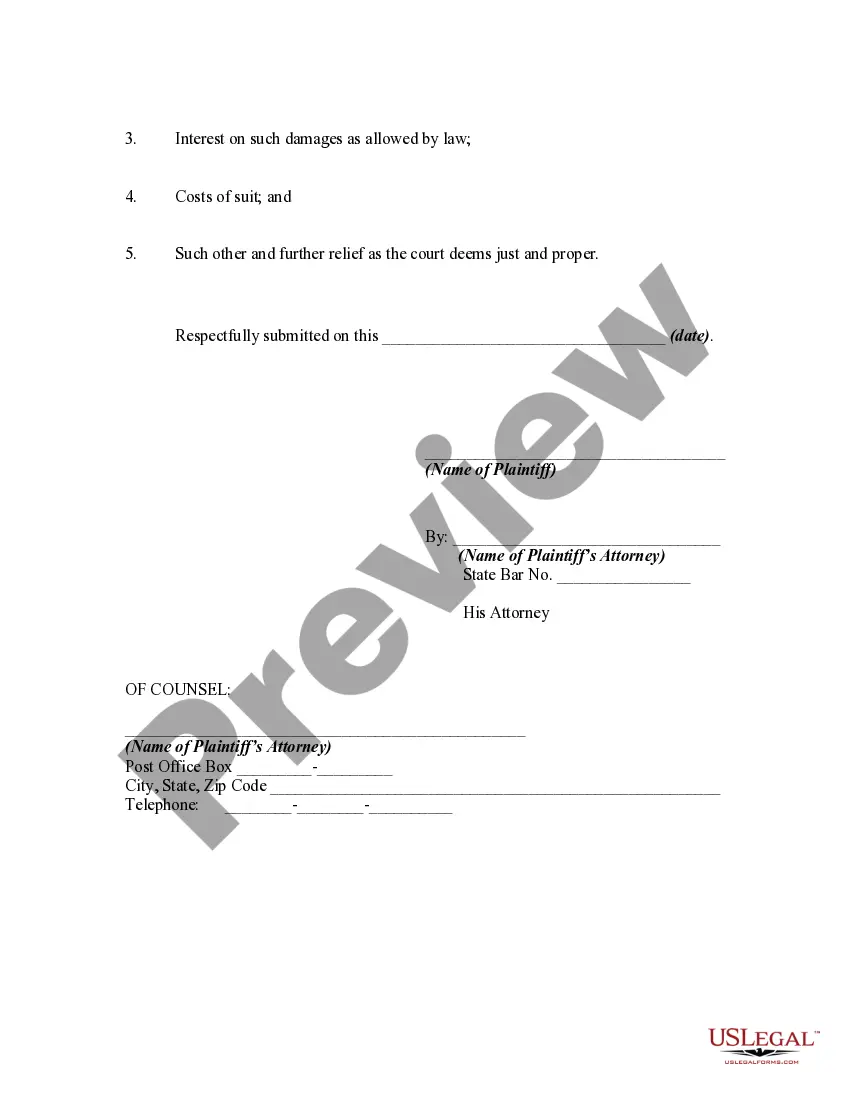
- Clauses for actual damages and punitive damages sought by the plaintiff.
- Legal basis for the complaint under the FDCPA.
- Request for judgment and reimbursement of legal costs.

Common use cases
This form is appropriate to use when a debtor receives persistent and unlawful phone calls from a debt collector that violate the FDCPA. If you have experienced repeated calls outside acceptable hours, or if those calls include threats or abusive language, this legal complaint allows you to take formal action against the offending debt collection agency.
Who this form is for
- Consumers who have been subjected to harassing telephone calls from debt collectors.
- Debtors who believe their rights under the Fair Debt Collection Practices Act have been violated.
- Individuals seeking to document their experiences and pursue legal action against abusive debt collectors.
How to prepare this document
- Identify yourself as the plaintiff and provide your contact information.
- List the defendants, including their names and business addresses.
- Detail the timeline and nature of the harassment experienced, citing specific incidents.
- Specify the amount of damages you are claiming, both actual and punitive.
- Sign and date the complaint, including your attorneyâs information if applicable.
Does this form need to be notarized?
This form does not typically require notarization unless specified by local law. However, ensuring that all statements are signed and accurately filled out is important for the legitimacy of your complaint.
Get your form ready online
Our built-in tools help you complete, sign, share, and store your documents in one place.
Make edits, fill in missing information, and update formatting in US Legal Forms—just like you would in MS Word.
Download a copy, print it, send it by email, or mail it via USPS—whatever works best for your next step.
Sign and collect signatures with our SignNow integration. Send to multiple recipients, set reminders, and more. Go Premium to unlock E-Sign.
If this form requires notarization, complete it online through a secure video call—no need to meet a notary in person or wait for an appointment.
We protect your documents and personal data by following strict security and privacy standards.

Make edits, fill in missing information, and update formatting in US Legal Forms—just like you would in MS Word.

Download a copy, print it, send it by email, or mail it via USPS—whatever works best for your next step.

Sign and collect signatures with our SignNow integration. Send to multiple recipients, set reminders, and more. Go Premium to unlock E-Sign.

If this form requires notarization, complete it online through a secure video call—no need to meet a notary in person or wait for an appointment.

We protect your documents and personal data by following strict security and privacy standards.
Avoid these common issues
- Failing to document the specific details of each incident of harassment.
- Not specifying the correct amount of damages being sought.
- Neglecting to include all necessary contact information for the plaintiff and defendants.
- Missing deadlines for filing the complaint with the appropriate court.
Why use this form online
- Instant access to the form allows for quick response to harassment.
- Editing capability enables you to customize the content to fit your situation.
- The reassurance of professionally drafted templates that comply with legal standards.
Legal use & context
- The FDCPA provides consumers with specific rights against abusive debt collection practices.
- This form serves as a legal document in initiating a complaint, which is vital for enforcing those rights.
- Consulting with a legal professional may be beneficial to understand the full implications of the complaint.
Quick recap
- This form is essential for debtors facing harassment from collectors.
- Understand your rights under the FDCPA when utilizing this form.
- Complete the form accurately to ensure it is legally binding and actionable.
Looking for another form?
Form popularity
FAQ
Yes. The federal Fair Debt Collection Practices Act specifically gives you the right to sue a debt collector for harassment. If a debt collector is found to have engaged in harassing behavior, you are entitled to up to $1,000 in damages, along with court costs and attorney fees.
Your dispute should be made in writing to ensure that the debt collector has to send you verification of the debt. If you're having trouble with debt collection, you can submit a complaint with the CFPB online or by calling (855) 411-CFPB (2372).
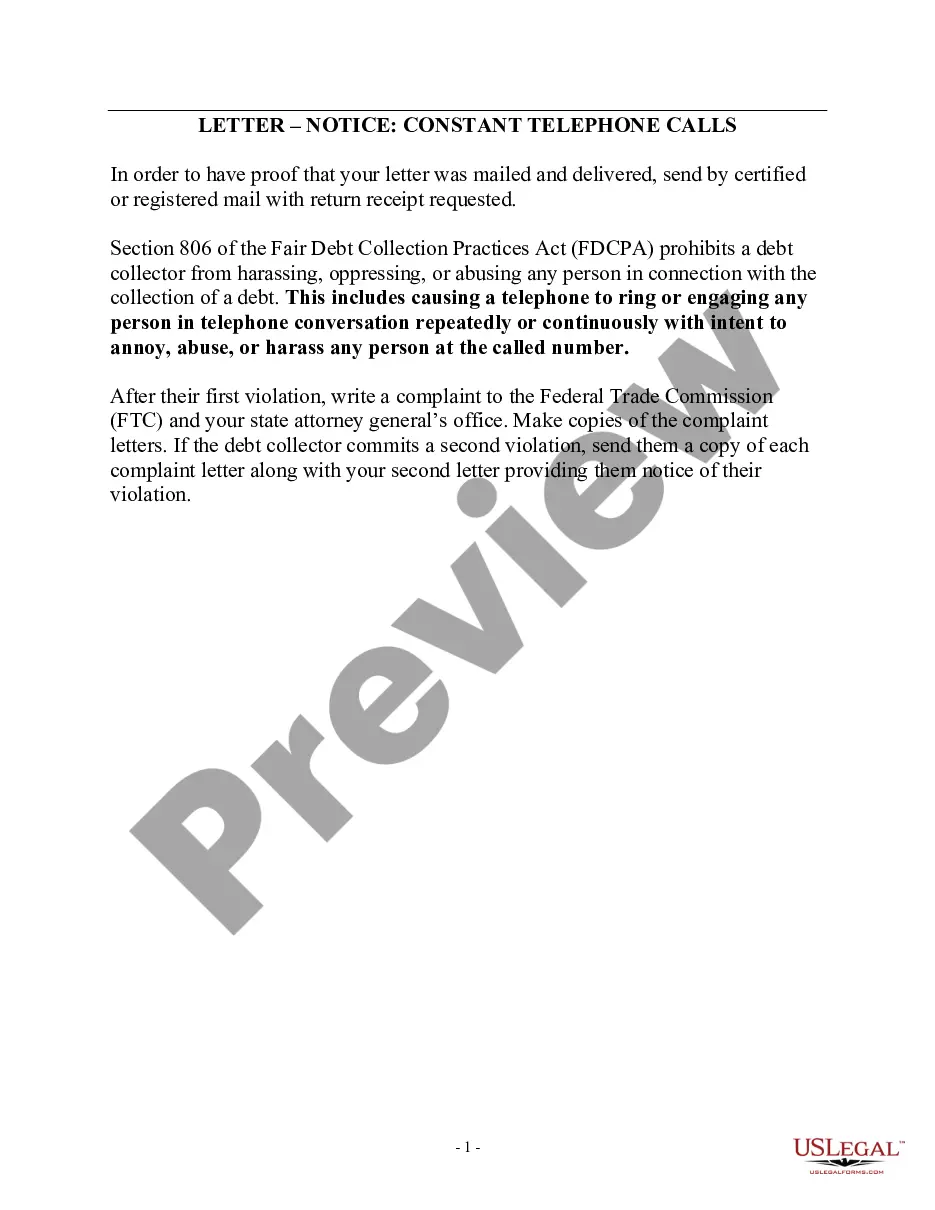
Debt Collectors Can't Call You Repeatedly to Harass You This means that while the FDCPA doesn't place a specific limit on the number of calls debt collectors can make, it prohibits them from calling you multiple times just to harass you. (15 U.S. Code § 1692d).
You're protected from harassing or abusive practices The Fair Debt Collection Practices Act prohibits debt collectors from using any harassing or abusive practices in an attempt to collect the debt.Along with other restrictions, debt collectors cannot: Use profane language. Threaten or use violence.
The Fair Debt Collection Practices Act (FDCPA) says debt collectors can't harass, oppress, or abuse you or anyone else they contact. Some examples of harassment are: Repetitious phone calls that are intended to annoy, abuse, or harass you or any person answering the phone.
Pick up the phone. Send a letter to the debt collector. Check your credit report for errors. If the problem persists, know your rights and options. Never pay someone else's debt.
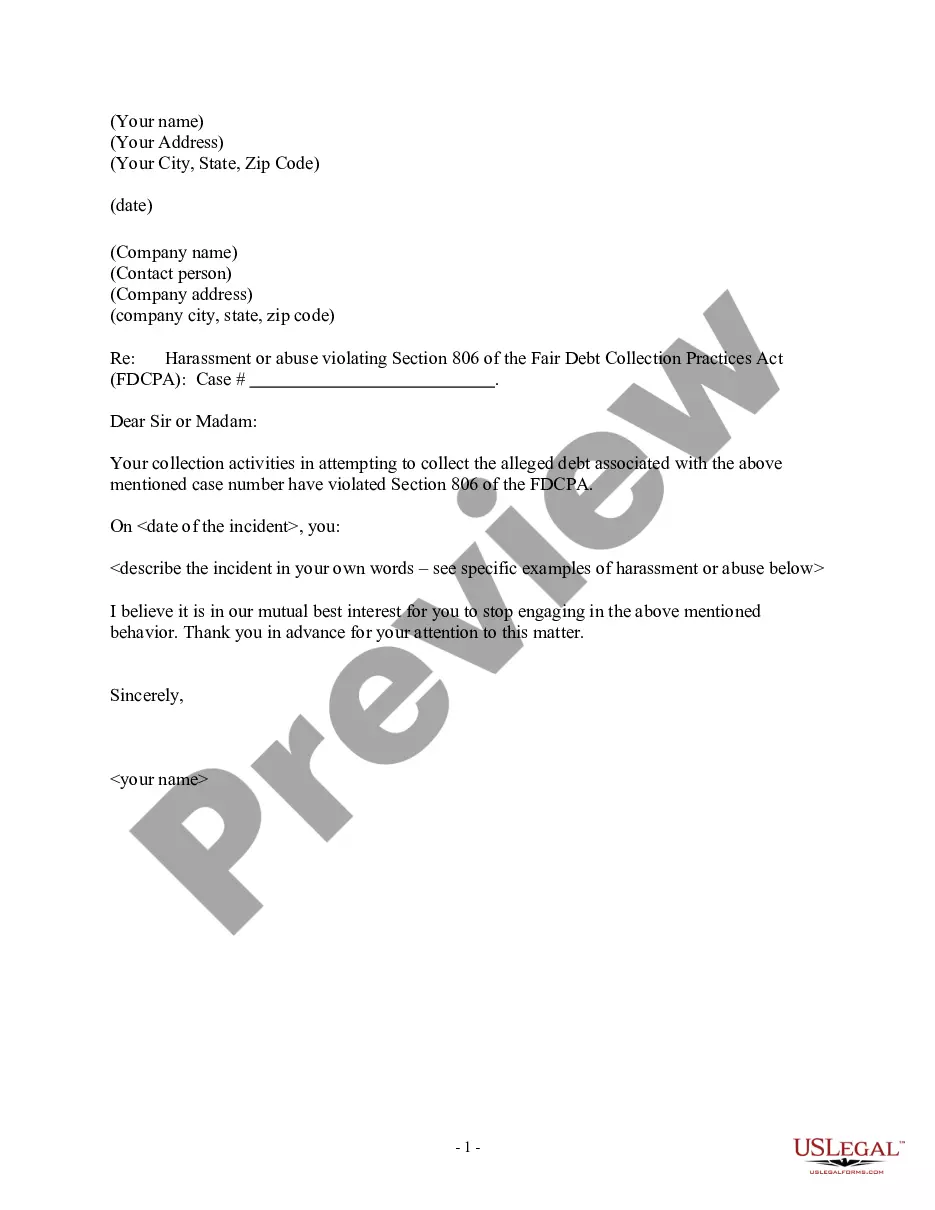
The first thing to do is to write the debt collector a letter telling them to stop calling you. You can use the sample letter language here. Under the FDCPA, they must follow your written request for no contact. If they do not, you can report them to the Federal Trade Commission (FTC).
You can file an online complaint with the CFPB, which will in turn contact the creditor and attempt to find a resolution. California consumers can also contact the California attorney general's office. The state attorney general is charged with protecting consumers from unfair or deceptive trade practices.