Agreement and Release for Working at a Non-Profit Organization as a Volunteer
Understanding this form
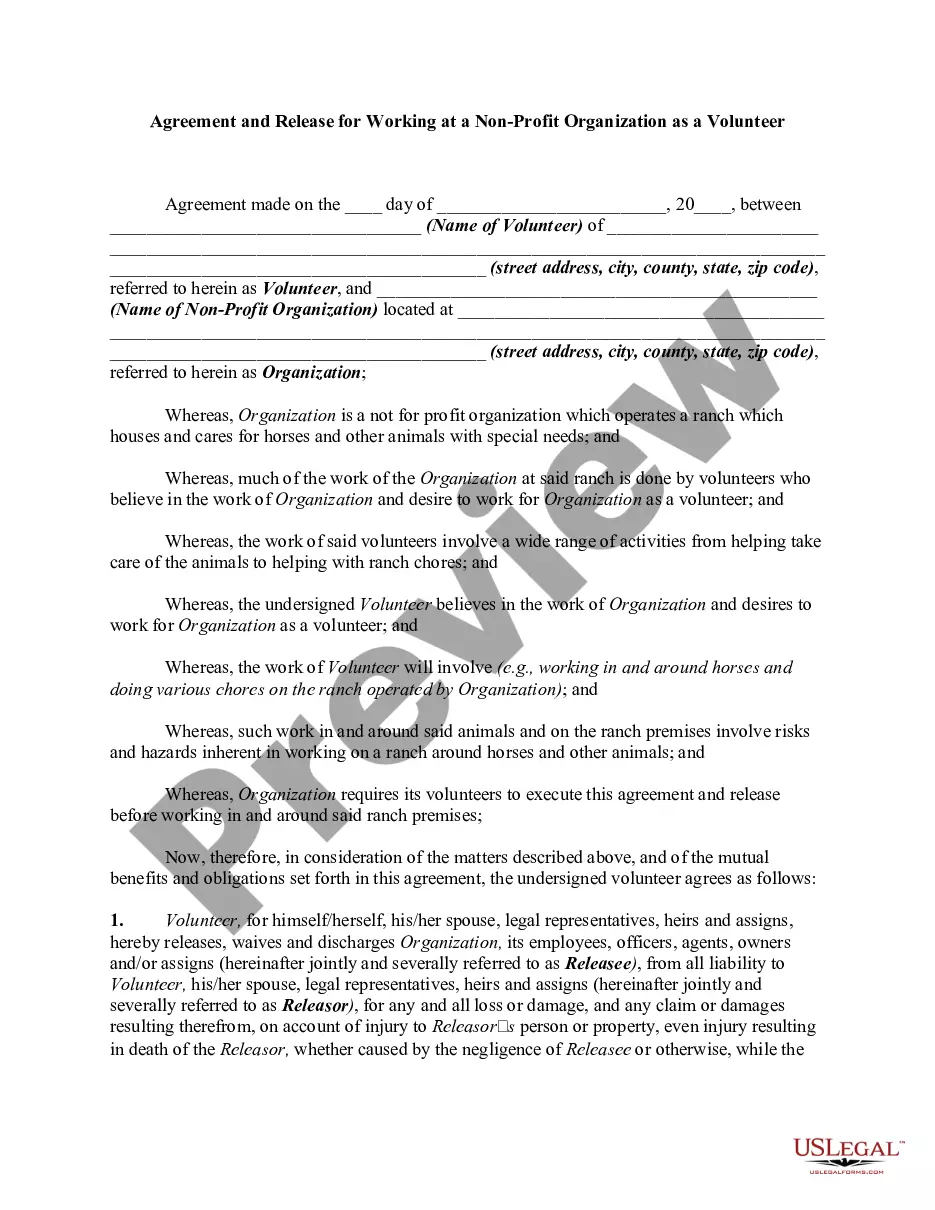
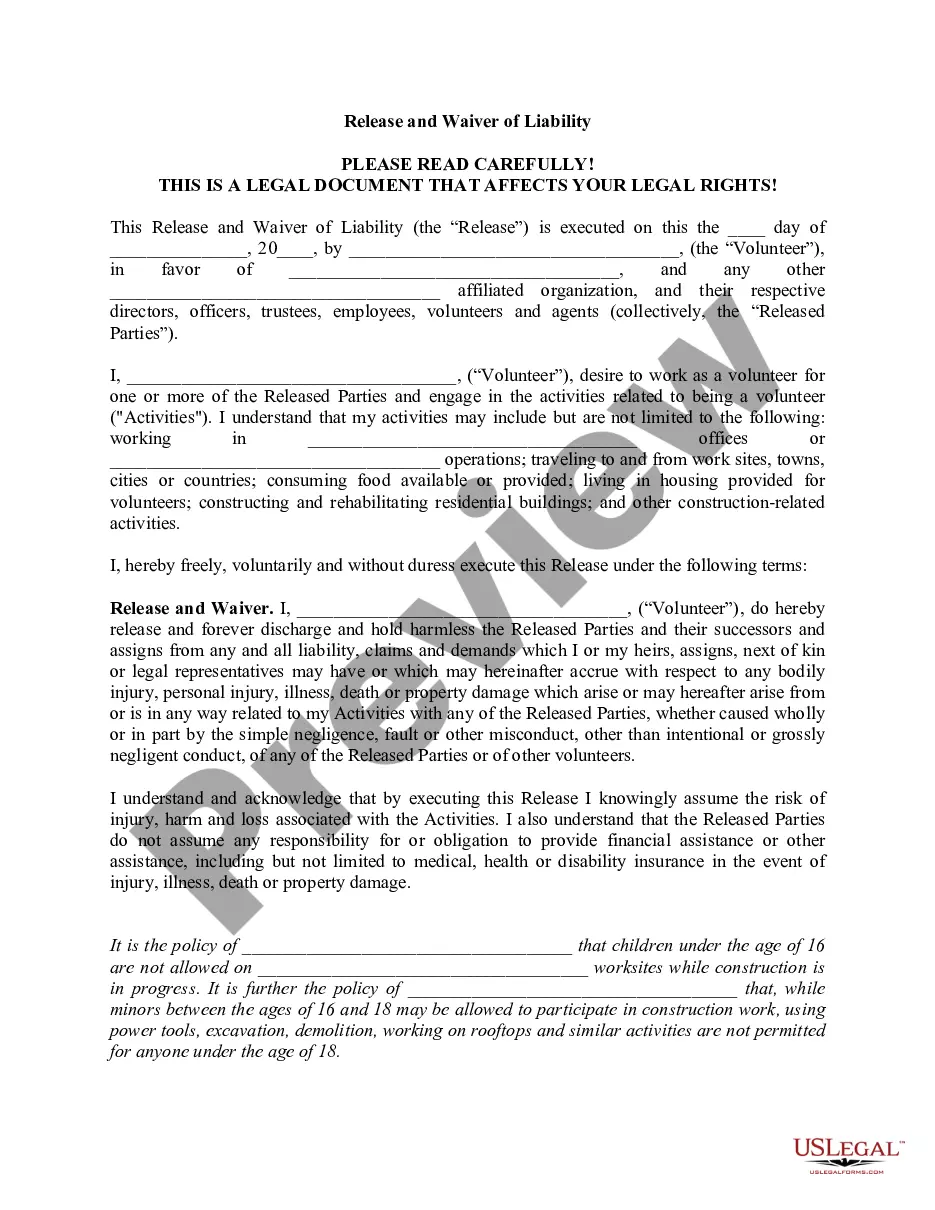
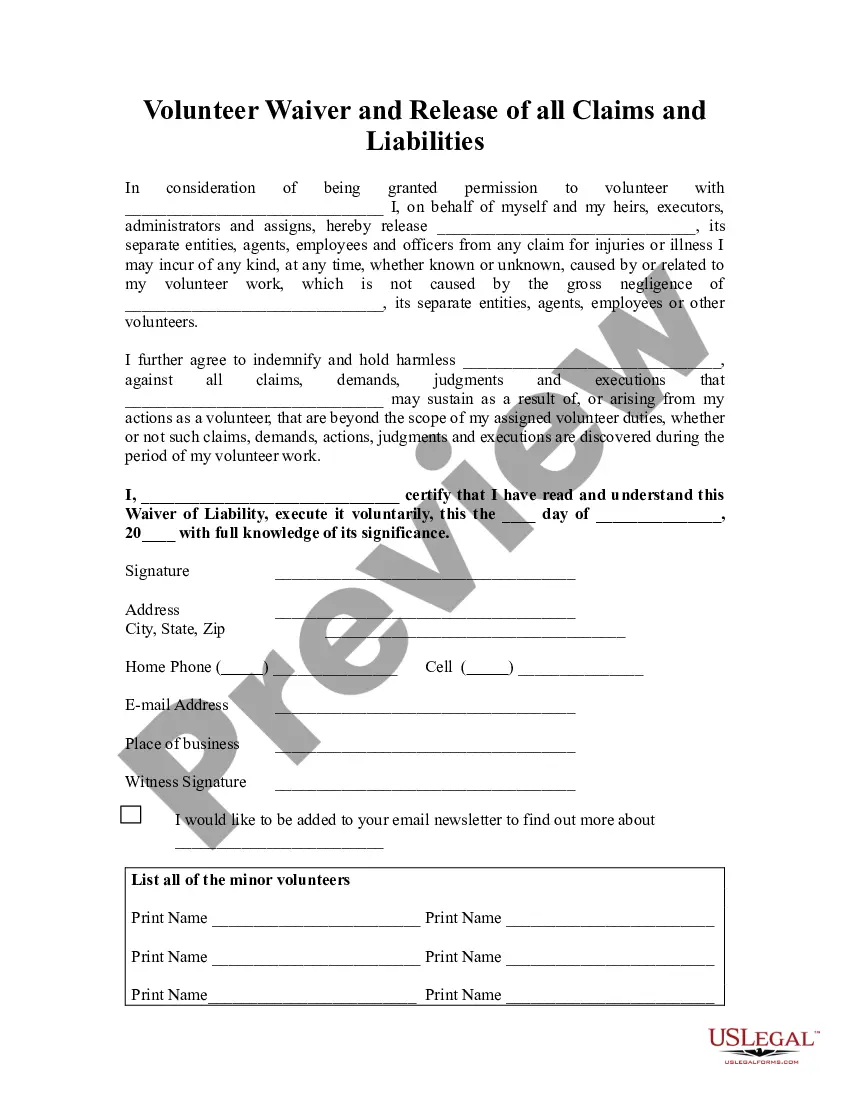
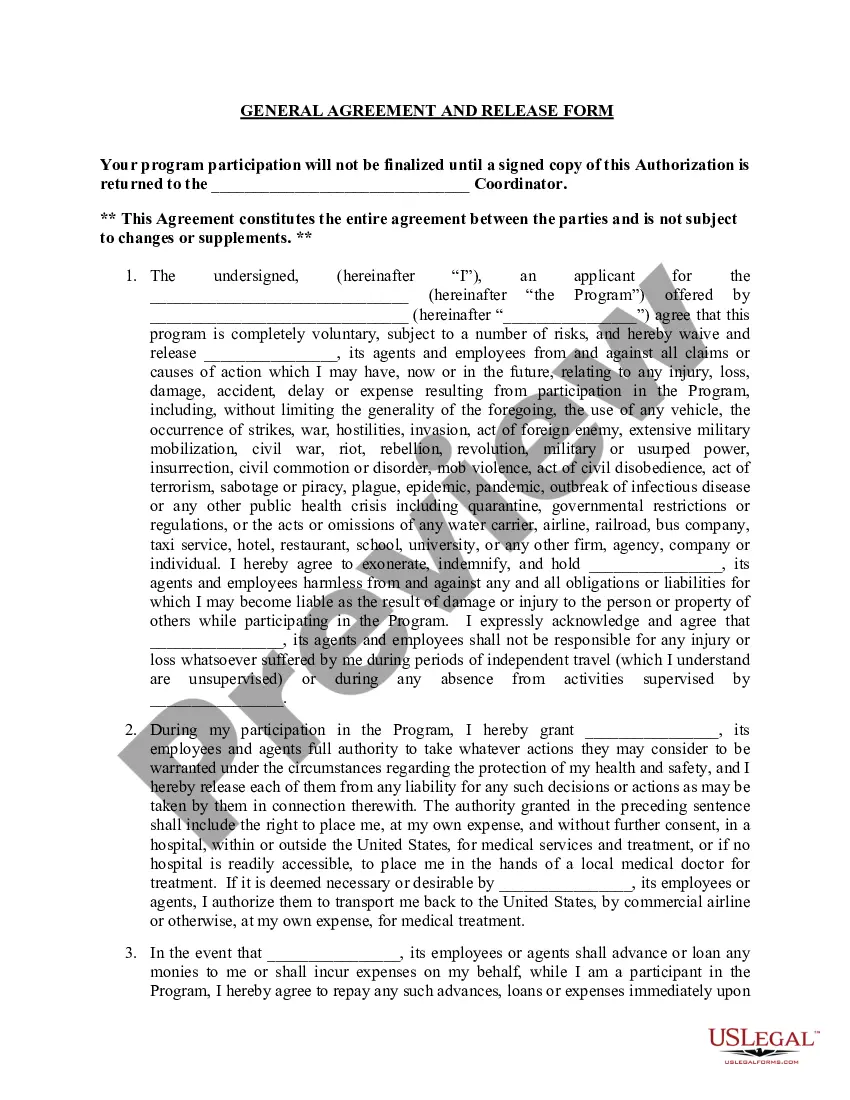
The Agreement and Release for Working at a Non-Profit Organization as a Volunteer is a legal document that protects non-profit organizations from liability while engaging volunteers. This form ensures that the volunteer understands the risks associated with their activities and waives any claims against the organization for injuries or damages that may occur. Unlike general release forms, this document is specifically tailored for volunteer activities at non-profit organizations, particularly those involving animals or ranch work.
What’s included in this form
- Identification of the volunteer and the non-profit organization.
- Details of the volunteer's intended activities and the associated risks.
- Release of liability for injuries or damages while volunteering.
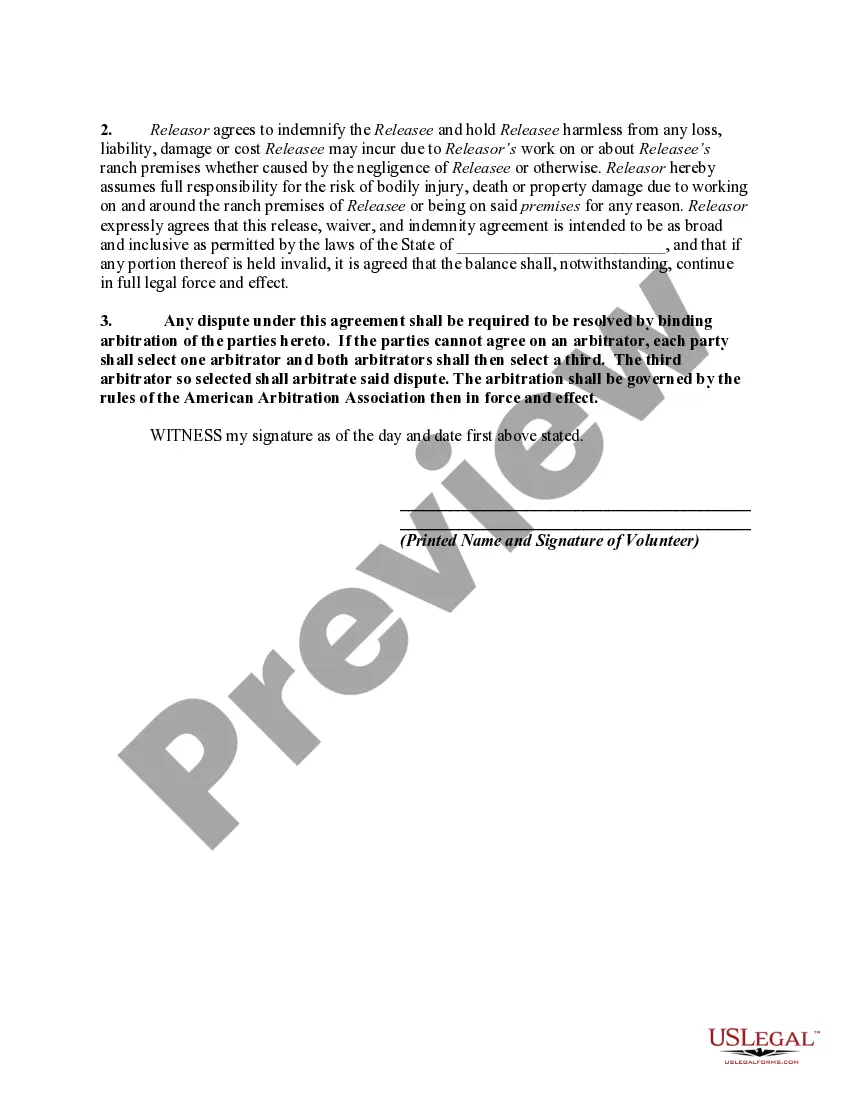
- Indemnification clause to protect the organization from claims.
- Dispute resolution through binding arbitration.
Common use cases
This form should be used when an individual wants to volunteer at a non-profit organization, especially those involving hands-on activities with animals or potential hazards. It is important when the organization requires a clear acknowledgment of the risks involved, fostering a safe environment for both the volunteers and the organization.
Who this form is for
This form is suitable for:
- Individuals volunteering for non-profit organizations.
- Non-profit organizations that facilitate volunteer work, particularly involving animals.
- Parents or guardians of minors who are volunteering, who may need to sign on their behalf.
Instructions for completing this form
- Enter the date of the agreement at the top of the form.
- Provide the volunteer's name and address in the designated sections.
- Fill in the name and address of the non-profit organization.
- Clearly outline the types of activities the volunteer will be involved in.
- Both the volunteer and an authorized representative of the organization should sign and date the form.
Notarization guidance
Notarization is not commonly needed for this form. However, certain documents or local rules may make it necessary. Our notarization service, powered by Notarize, allows you to finalize it securely online anytime, day or night.
Get your form ready online
Our built-in tools help you complete, sign, share, and store your documents in one place.
Make edits, fill in missing information, and update formatting in US Legal Forms—just like you would in MS Word.
Download a copy, print it, send it by email, or mail it via USPS—whatever works best for your next step.
Sign and collect signatures with our SignNow integration. Send to multiple recipients, set reminders, and more. Go Premium to unlock E-Sign.
If this form requires notarization, complete it online through a secure video call—no need to meet a notary in person or wait for an appointment.
We protect your documents and personal data by following strict security and privacy standards.

Make edits, fill in missing information, and update formatting in US Legal Forms—just like you would in MS Word.

Download a copy, print it, send it by email, or mail it via USPS—whatever works best for your next step.

Sign and collect signatures with our SignNow integration. Send to multiple recipients, set reminders, and more. Go Premium to unlock E-Sign.

If this form requires notarization, complete it online through a secure video call—no need to meet a notary in person or wait for an appointment.

We protect your documents and personal data by following strict security and privacy standards.
Common mistakes to avoid
- Failing to specify the activities that the volunteer will be engaged in.
- Not including the full names and addresses of all parties involved.
- Omitting signatures or dates, which can void the agreement.
Advantages of online completion
- Convenience of downloading and completing the form at your own pace.
- Editable format allows users to customize the document to their specific needs.
- Access to attorney-drafted templates ensures legal compliance and reliability.
Legal use & context
- This agreement is legally binding once signed by all parties.
- It helps protect organizations from potential litigation stemming from volunteer activities.
- Volunteers are encouraged to read the document carefully to understand their rights and obligations.
Quick recap
- This agreement outlines the expectations and liabilities for both volunteers and the non-profit organization.
- It is crucial for protecting the organization from potential legal claims arising from volunteer activities.
- Ensure that both parties understand and agree to the terms before signing.
Looking for another form?
Form popularity
FAQ
1) Posteriori knowledge : 2) Priori knowledge : 3) Dispersed knowledge : 4) Domain knowledge : 5) Empirical knowledge : 6) Encoded knowledge : 7) Explicit knowledge : 8) Known unknowns :
Ability. familiarity. insight. intelligence. philosophy. power. proficiency. wisdom.
1DO work to keep your volunteers engaged.2DON'T waste their time.3DO be flexible.4DON'T use volunteers for work that needs to stay consistent.5DO train your volunteers.6DON'T forget to show some love.7DO make sure your volunteers are legal.8DON'T overlook volunteers' motives.
Knowledge is defined as what is learned, understood or aware of. An example of knowledge is learning the alphabet. An example of knowledge is having the ability to find a location.
Knowledge is a familiarity, awareness, or understanding of someone or something, such as facts (descriptive knowledge), skills (procedural knowledge), or objects (acquaintance knowledge).The term "knowledge" can refer to a theoretical or practical understanding of a subject.
According to Krathwohl (2002), knowledge can be categorized into four types: (1) factual knowledge, (2) conceptual knowledge, (3) procedural knowledge, and (4) metacognitive knowledge.
Piaget proposes three types of knowledge: physical, logical mathematical, and social knowledge.
Knowledge is a familiarity, awareness, or understanding of someone or something, such as facts (descriptive knowledge), skills (procedural knowledge), or objects (acquaintance knowledge).The term "knowledge" can refer to a theoretical or practical understanding of a subject.