Instruction to Jury as to When Demand is not Necessary in Constituting Conversion
Overview of this form
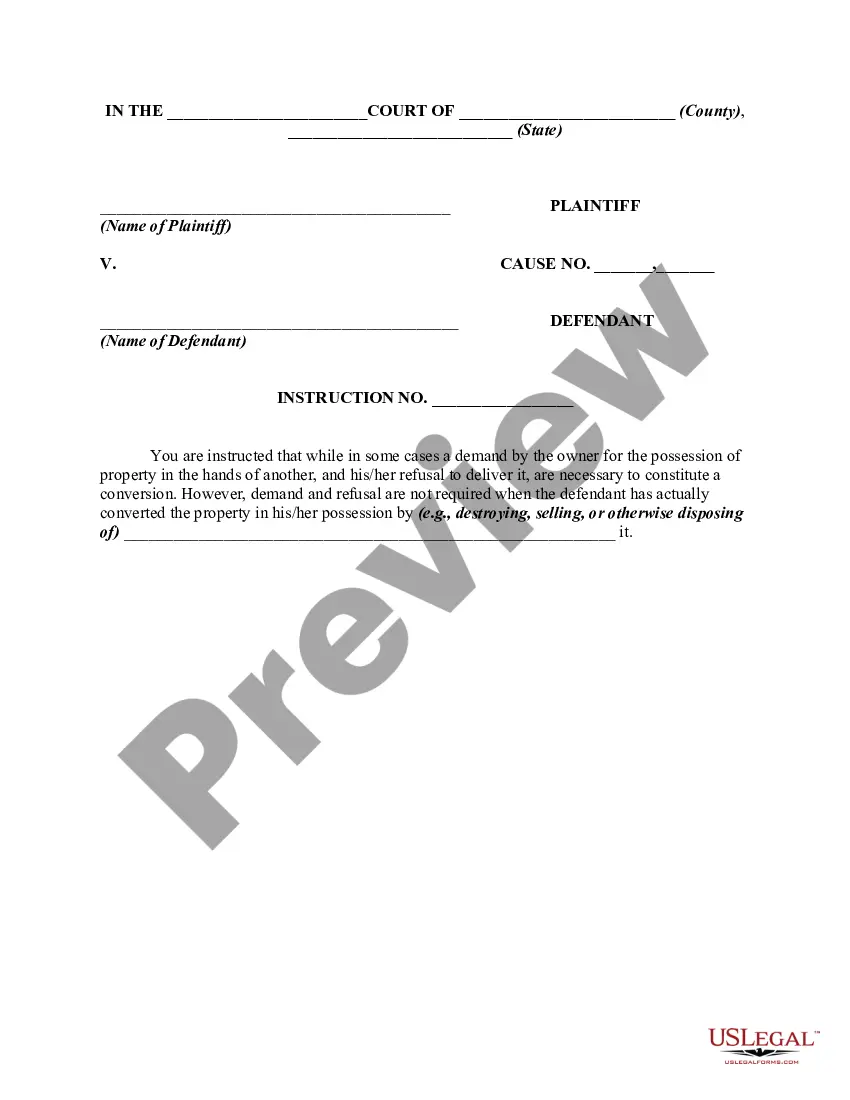
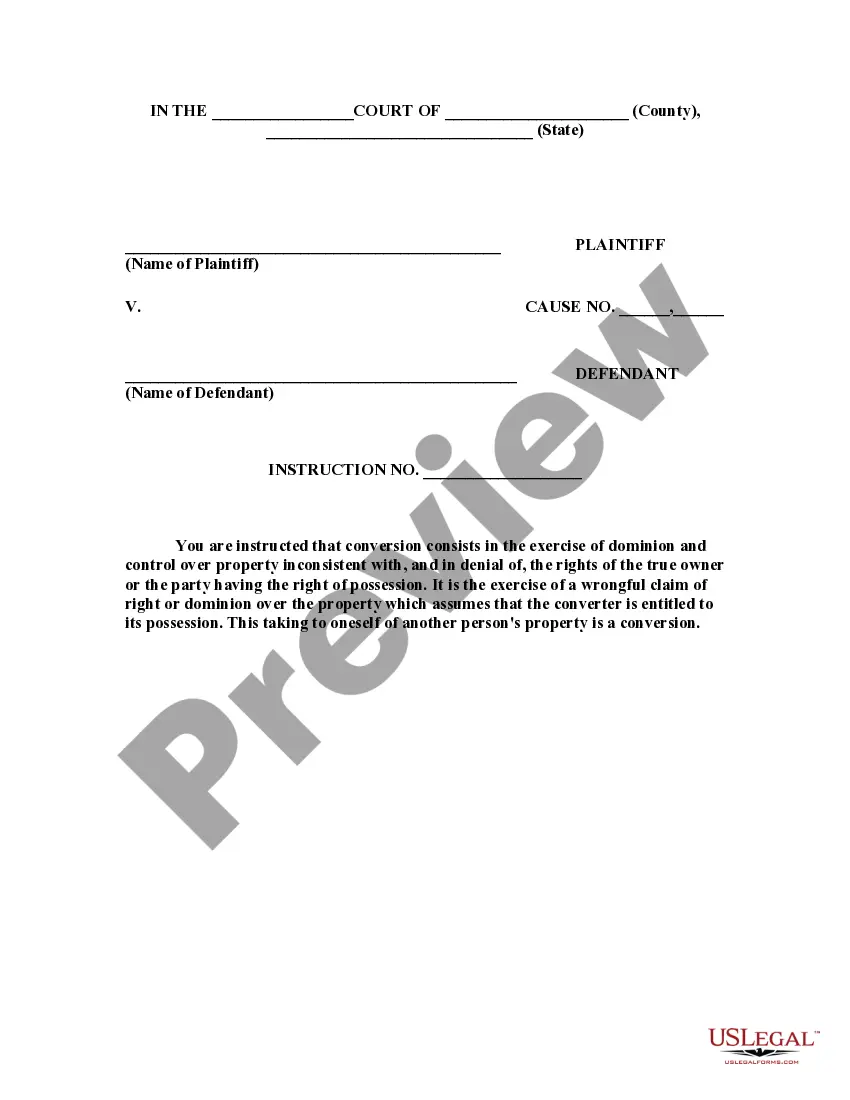
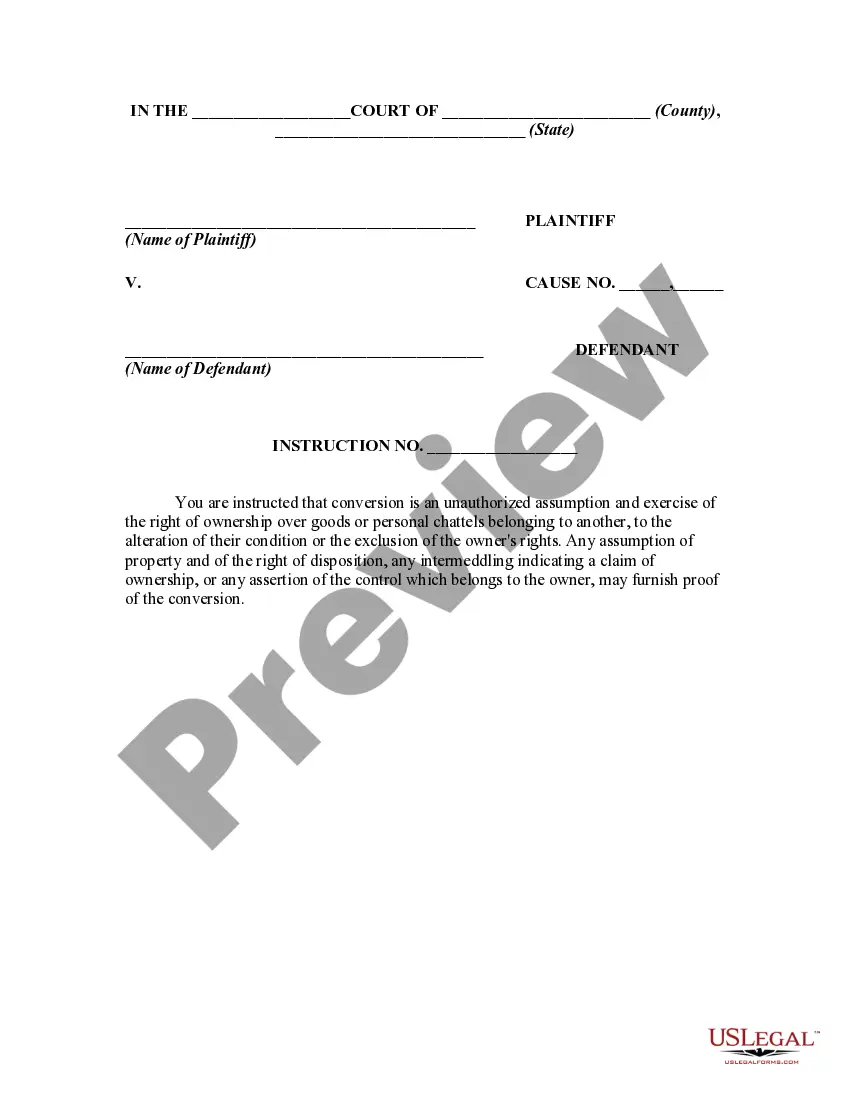
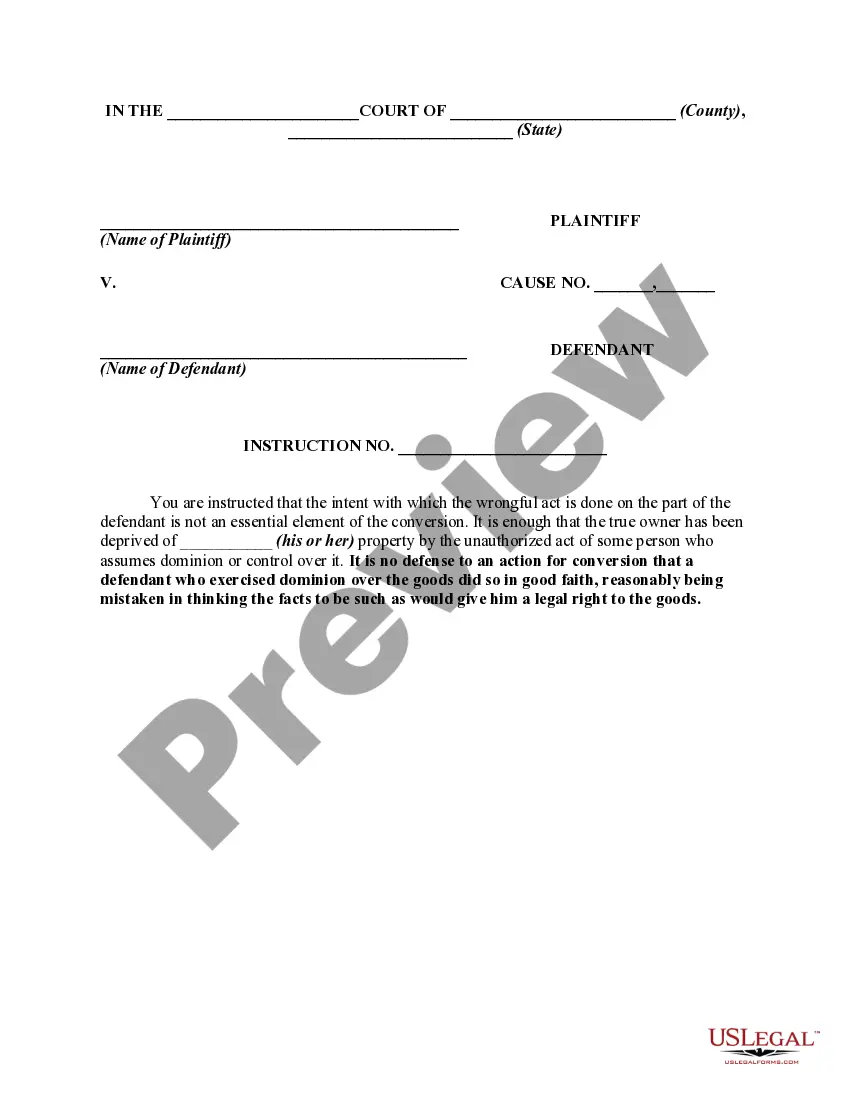
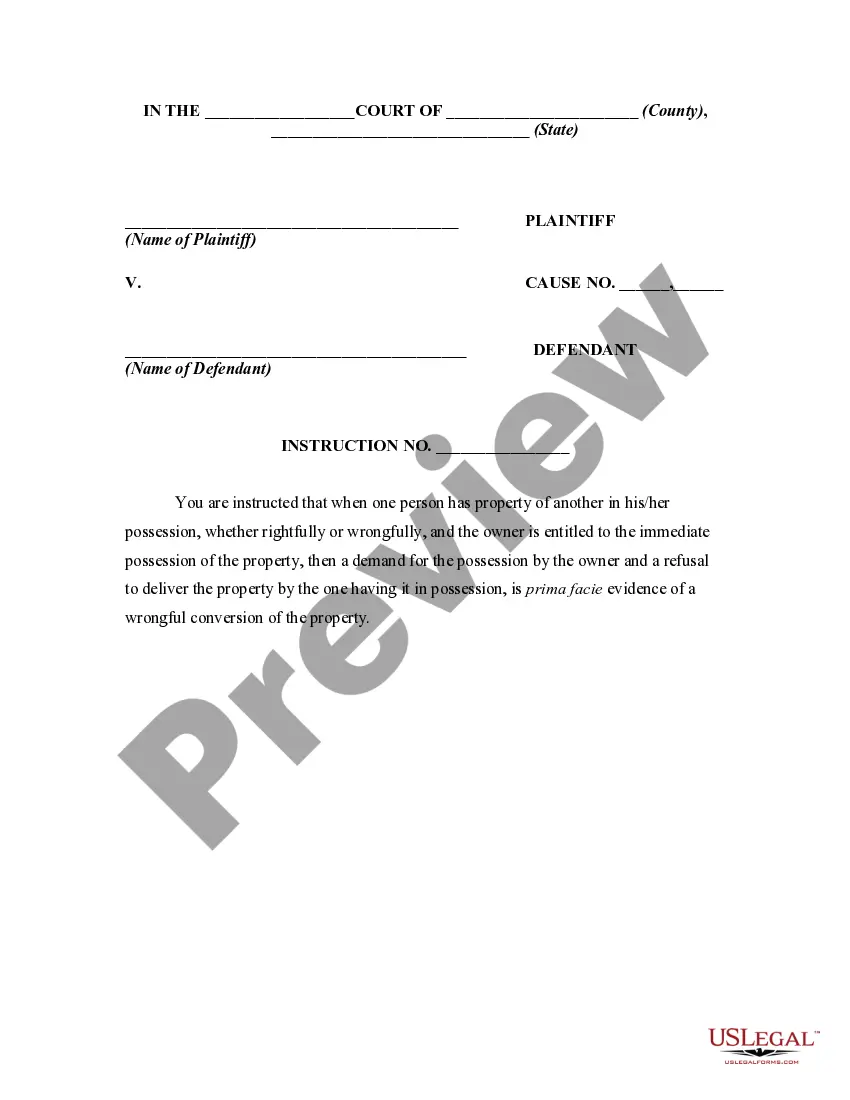
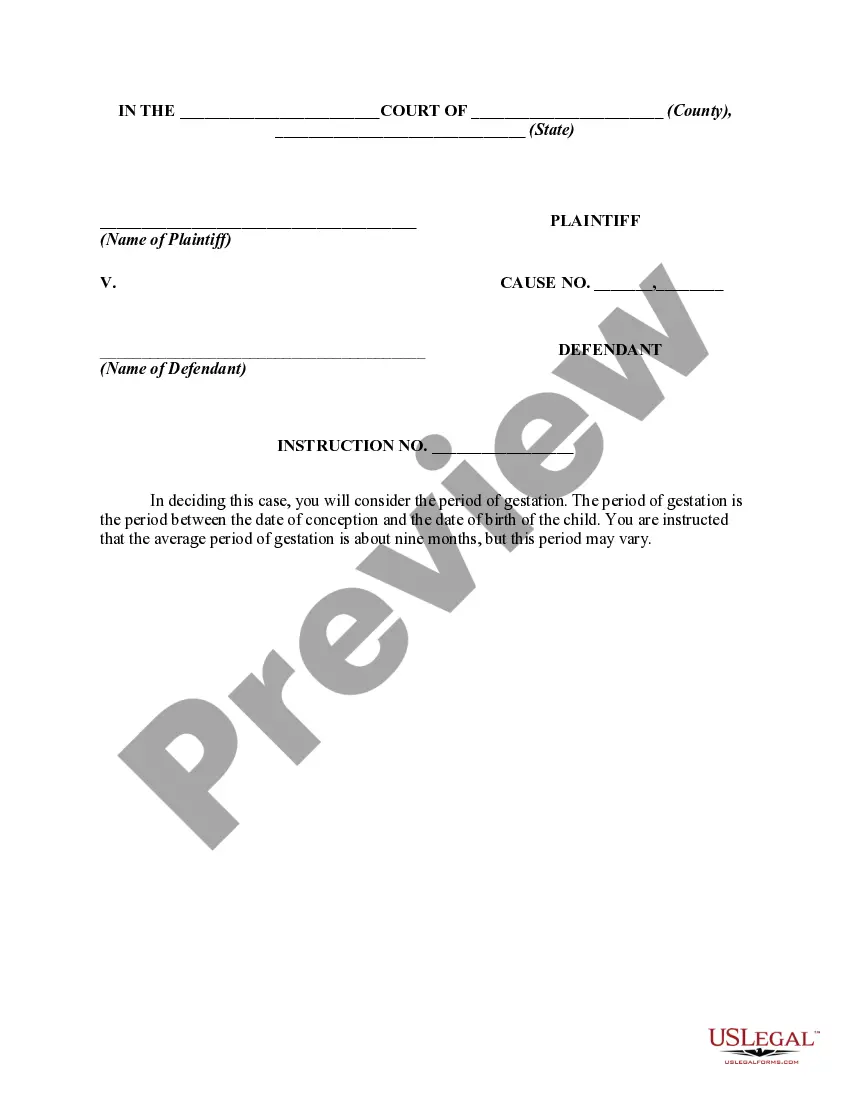
This form is a jury instruction titled "Instruction to Jury as to When Demand is not Necessary in Constituting Conversion." Its purpose is to guide jurors on the legal standards for proving conversion, particularly when a demand for property possession is not essential. This jury instruction clarifies that if conversion is clearly established, the claimant does not need to prove that they demanded the property from the defendant before proceeding with their case.
Form components explained
- Case title and number for identification.
- Instruction number for reference.
- Clarification regarding demand and refusal in conversion cases.
- Examples of actions that constitute conversion.
When to use this form
This form is used during trials involving allegations of conversion. It is applicable when the plaintiff can establish that their property has been unlawfully taken or disposed of by the defendant without needing to show that a prior demand for return was made. Jurors will need this instruction to understand their responsibilities in evaluating the evidence presented.
Who needs this form
- Judges presiding over civil litigation involving conversion claims.
- Attorneys representing clients in cases concerning property conversion.
- Jurors who require clarification on the legal standards regarding conversion.
Instructions for completing this form
- Identify the title of the case and the parties involved.
- Enter the cause number of the case.
- Assign an instruction number for future reference.
- Clearly state the property involved in the conversion.
- Provide specific examples of how the property was converted by the defendant.
Notarization requirements for this form
In most cases, this form does not require notarization. However, some jurisdictions or signing circumstances might. US Legal Forms offers online notarization powered by Notarize, accessible 24/7 for a quick, remote process.
Get your form ready online
Our built-in tools help you complete, sign, share, and store your documents in one place.
Make edits, fill in missing information, and update formatting in US Legal Forms—just like you would in MS Word.
Download a copy, print it, send it by email, or mail it via USPS—whatever works best for your next step.
Sign and collect signatures with our SignNow integration. Send to multiple recipients, set reminders, and more. Go Premium to unlock E-Sign.
If this form requires notarization, complete it online through a secure video call—no need to meet a notary in person or wait for an appointment.
We protect your documents and personal data by following strict security and privacy standards.

Make edits, fill in missing information, and update formatting in US Legal Forms—just like you would in MS Word.

Download a copy, print it, send it by email, or mail it via USPS—whatever works best for your next step.

Sign and collect signatures with our SignNow integration. Send to multiple recipients, set reminders, and more. Go Premium to unlock E-Sign.

If this form requires notarization, complete it online through a secure video call—no need to meet a notary in person or wait for an appointment.

We protect your documents and personal data by following strict security and privacy standards.
Typical mistakes to avoid
- Failing to provide a clear definition of conversion actions.
- Omitting the instruction number or case details.
- Neglecting to specify the property in question.
Benefits of using this form online
- Convenient access to the form from anywhere, allowing for quick preparation.
- Editability ensures that the form can be customized to fit specific case needs.
- Reliability through usage of templates drafted by licensed attorneys.
Legal use & context
- This jury instruction is essential for guiding jurors on the legal framework surrounding conversion cases.
- It helps ensure fair trials by providing clear guidance on legal standards.
- Using a proper jury instruction can mitigate grounds for an appeal based on improper jury guidance.
Looking for another form?

Form popularity
FAQ
Jury instructions, directions to the jury, or judge's charge are legal rules that jurors should follow when deciding a case.
These are civil or criminal jury instructions approved by a state court, bench committee, or bar association. They are commonly used by courts in the relevant jurisdiction, as they ease the process of drafting fair jury instructions and theoretically do not have errors.
In all civil actions when a jury is impaneled, a jury of six qualified jurors is sufficient and the verdict must be unanimous.
Jury instructions are important for several reasons. The primary reason is they lay out the applicable law for jurors to follow. Without jury instructions, the jury would not know the elements of a DUI or Robbery charge.That is why jury instructions are typed and printed and placed in the court file.
Conversion in California is a civil cause of action that applies when a person unlawfully and without permission, took or interfered with someone else's possession of their property. The victim can bring a claim for recovery of the property, or compensation for the value of the lost property.
Jury Instructions For your research purposes, using either one is fine. Remember that jury instructions are designed to accurately reflect the law but are not the law itself.
Jury Instructions. instructions that are given by the trial judge that specifically state what the defendant can be found guilty of and what the prosecution or plaintiff has to prove in order for a guilty verdict.
A jury for the Florida Circuit civil court contains 6 or 12 jurors. For a conviction to be made, all members of the jury must come to a unanimous decision. Otherwise, they will remain in deliberations until such a decision is reached.
A jury instruction is given by the judge to the jury to explain what is happening in the court, to explain the points of law relevant to the case, to explain certain aspects of the evidence presented and to assist the jurors in understanding their duties in reaching a verdict.